My Next Breath

Wildfires have been raging in Ontario, our neighbor to the north. Hundreds of thousands of acres of forest, land, homes, and towns have been destroyed. And the smoke from those fires is also causing damage hundreds of miles away. My husband and I woke up last week to bits of ash on our flowers and thick, smoky air causing visibility to shrink drastically, and breathing to become difficult– especially for those with lung damage or asthma, like my husband.

I was reminded of the time, in 1980, when Mount Saint Helens erupted in Washington State. Even though it is hundreds of miles away, some of the ash from the eruption made it to Michigan and coated our cars and plants. The smoke and ash caused many breathing problems and killed plants across the nation. Smoke doesn’t just “get in your eyes” as the old song claims. It gets into your lungs, it chokes out fresh air and light, hijacks rainwater, and settles in a coating on vulnerable plants, cloths, animals’ coats, standing water, and much more.

I normally don’t spend much time thinking about my next breath. I take it for granted that I will fill my lungs with fresh air and breathe out again. The carbon dioxide I produce will be absorbed by plants and fresh oxygen will be replenished into the air. I don’t have to “decide” to breathe– it happens automatically unless I choose to “hold my breath” and NOT breathe. But I also don’t think about WHAT I am breathing in. I take for granted that the air contains the appropriate amount oxygen to keep my body energized and working properly, and that it doesn’t contain noxious gases, carbon monoxide, tar, ash, etc.

I read somewhere once that God’s name (Yahweh) actually mimics the breathing process. Yahweh is two syllables– the first requires you to inhale in order to produce the right sound. The second allows you to exhale for the exact same reason. You cannot say “Yah-weh” without breathing! (Actually, you can, but you have to make a conscious effort to do so– breathing comes naturally in the two syllables otherwise.) The Bible never actually suggests this, and some religions and sects have misused this idea to suggest that God is somehow IN our breath or in the way we breathe. But I think there is something else to be pondered here.

My next breath depends absolutely on God’s sovereignty. I assume that the air I breathe is pure, healthful, and life-giving. And even when it isn’t– like the past week or so– I assume that air filters, breathing masks, or other mitigations will make the air “safe” to breathe. My husband is a little more aware of his breathing, because he has suffered from asthma attacks, apnea, bronchitis, and lung damage from COVID. Still, he doesn’t spend most of his waking hours in fear of his next breath. And even if we both spent time thinking about it, we have no way to control Earth’s atmosphere, no way to create our next clean breath and guarantee that it will be pure and good. We can buy tanks of oxygen, but even that requires that we trust what is in the tank. Our lives, and every function that sustains it– breathing, blood circulating, brainwaves, digestion, nerves, etc., are in God’s hands. And that’s an amazing and comforting thing, indeed!

Imagine a world where God was NOT in control; where the very air around us might quietly morph into noxious fumes with no warning– no smoke or clouds, no smell–just instantly shutting down our lungs, brains, heart, and life. Such things have been known to happen, in isolated incidents or in the deadly gas chambers of World War 2. We know that we could not breathe the air on other planets, such as Venus or Jupiter. But our Earth was created and is sustained by an abundant life-giving God, who cares about every aspect of our life, including our next breath.

“Father, I am so grateful for your Sovereignty and your compassion. I will fill my lungs with your gift of breath today, and I will use it to pour out praise to You!”

Out of the Static

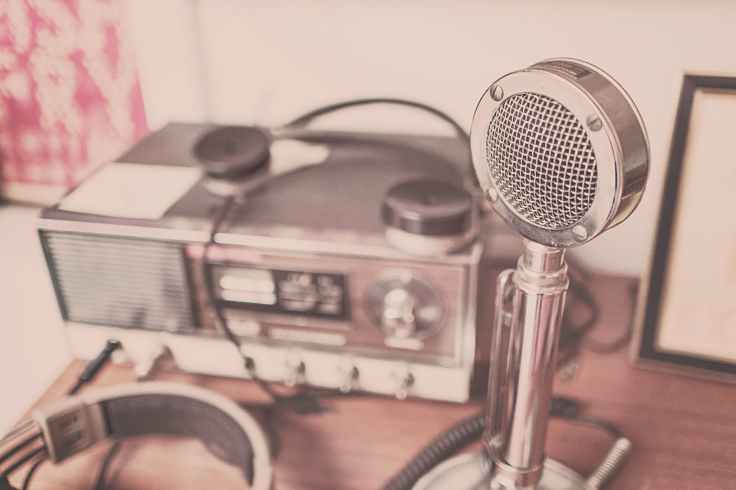
This weekend, my husband, our middle grandson, and I all participated in “Field Day.” This is a 24-hour simulation and contest for amateur radio (Ham radio) operators (like David and I) to test our skills and practice our hobby. Thousands of “Hams” across the United States and Canada spend this time trying to make as many radio contacts as possible. But the object is to try to do it under “field” conditions– many groups or clubs literally set up tents in fields during this time (weather permitting!) and use solar or battery power only. There are also ways to earn “bonus” points by setting up in a public area and teaching or training young people (like our grandson) or inviting other non-licensed people to transmit under supervision. The overall goal is to have fun and share the importance of amateur radio. At the same time, we’re testing both our equipment and our skill under situations that mimic an emergency, like an extended power outage or a natural disaster, when effective and organized radio communication may help save lives.

We aren’t trying to “win” the competition, but we do try to do our best– rising to the challenge. It was a lot of fun this year to see our grandson get excited about making contact with people from Canada, and many areas of the U.S. in states he has never visited in “real life!” In previous years, we have joined up with a local club, or invited friends or neighbors to contest with us. Each year, there is the triumph or making a “difficult” contact– someone from across the continent, or someone from a remote area. And every year there is the frustration of “the ones that got away”– listening in and finding the right frequency, but being unable to both receive AND send the message necessary for a valid contact

Every year during Field Day, I am reminded of how tenuous radio communication can be. Radios are the original “wireless” communication– the forerunners of our modern cell phones. Operators must “tune” their radios to pick up on the sound waves floating through the air. There are billions of sound waves, all floating around the atmosphere. We cannot hear them with our “naked” ears– and a good thing, too! We would never be able to distinguish all the noises that pass around and above us every moment. In fact, when radios pick up on just a single frequency at a time, much of what we hear is buzzing “static.” Most modern radios and cell phones use special equipment, such as filters and “repeaters” to find specific sound waves, translate them, amplify them “above” the static, and allow us to hear messages clearly. Field Day forces us to operate without a lot of these “helpers.” Voices and Morse Code transmissions must be carefully “brought out” of the surrounding static in order to receive even simple messages. And even if I can hear someone else’s message, they must be able to hear my response, or it isn’t a true “contact.”

Field Day also reminds me of prayer– and gives me reason to rejoice! Just imagine the overwhelming volume of prayer on a typical day! With over 8 billion people on the earth, even if only a tenth of them pray on any given day, that’s still millions of prayers all rising up and floating around the universe. And God hears them all! He doesn’t just hear the “noise” of prayer– He hears our hearts! He feels our pain– and our praise! In fact, the Bible even says of our praise, that God “inhabits” the Praises of His People (Israel– see Psalm 22:3) God rides the wavelengths of our worship! And He surrounds the soundwaves of our grieving. God doesn’t have to strain to hear us, or to understand the emotion behind our prayers. Praying is not like sending a message into radio airspace. We never have to wonder if God will be able to hear us through the static! We never have to know the frustration of screaming out into the universe and being lost in the noise.

But listening through the static on Field Day also challenges me…Am I “tuning in” to God’s messages to me? Do I surround myself with extra “static” as I go through my day? Or do I spin my dial, trying to find other voices; other messages to fill the space of my life? If God inhabits praise– Am I offering Him any dwelling space? Or have I filled it up with empty praises and pursuits? And, as God’s witness and ambassador, how well am I listening to those around me? Am I busy adding my “noise” to conversations when I should be “tuning in” to someone else’s need?

Today looks like a great day for a Prayer-themed “Field Day.” Time to test my communication with God– both sending Him praise and petition, and listening for His answer above all else! And it’s a great day for spreading the great news of God’s desire to listen to us– no matter what static we live in!

Blog at WordPress.com.

Up ↑