Every Wall Has Two Sides

A mighty fortress is our God;
A bulwark never failing…


bulwark:

noun
    1. a wall of earth or other material built for defense; rampart.
    2. any protection against external danger, injury, or annoyance:The new dam was a bulwark against future floods.
    3. any person or thing giving strong support or encouragement in time of need, danger, or doubt:Religion was his bulwark.
  1. Usually bulwarks. Nauticala solid wall enclosing the perimeter of a weather or main deck for the protection of persons or objects on deck.

see Dicionary.com for further synonyms, etc.

black cannon in front of the brick wall building

Walls, fences, borders, barriers– there are many reasons to build them, and many ways to view them, but they have only two sides, and we can be only on one side or the other.  I enjoy visiting castles and forts, monasteries, and mansions.  Nearly all have impressive walls.  From the outside, they look imposing, intimidating, and often unfriendly (especially those with armed guards and cannons!).  But inside, the walls provide protection, insulation from any outside threats, and often peace.

Most walls provide protection– from nature, from floods or winds, from predators, and from enemies.  But there are a few walls that are built, not to keep danger out, but to keep people trapped within.  Such walls are used to isolate, punish, and imprison.

God is described in the Psalms (and elsewhere) as a fortress, a rock, a safe place, a hiding place, and a sure defense.  But those attributes and qualities are for those who chose to come inside the fortress; to ask for protection and defense.

Sometimes, we approach God as an adversary, rather than a defender and protector.  We find ourselves on the outside, facing dangers unprotected and alone.  The very walls that can shield us and give us peace rise up as barriers,   We feel locked out and vulnerable.  The only difference between peace and peril is where we are in relation to the wall.  We are no stronger, our enemy is no weaker on one side or the other– only the wall makes the difference.  And the level of peace and confidence is related, not to our own ability, but to the stability and strength of the wall between us and disaster.  The higher and stronger the wall, the safer we feel.

selective focis photo of blue betta fish

Other times, we approach God as a jail-keeper.  We have lived inside the walls, and resent His protection.  We have forgotten, or we deny, that there is danger outside the walls.  Or we assume the walls are too close or too restrictive to offer us peace.  But God hasn’t built a wall to keep us near Him or to control us– He IS the wall, the fortress, the bulwark.  To approach Him is to be protected.  To resent His protection is to resent His very presence.

Earthly walls will eventually crumble and return to dust.  Even walls that have stood the test of centuries, like the Great Wall in China, or the Tower of London, or the Wailing Wall in Jerusalem– they are not perfect, nor will they last forever.  But our Bulwark, our Sure Defense, will never fail.  Not only will He never fail to stand, nor fail to protect us, He will never fail to let us in when we seek His salvation.

man wearing gray and red armour standing on the streets

Forgetting the Names of God

My given name is Lila June. I was named after my great-grandmother, Lila, and my aunt, Ila June. I have never used a nickname or my middle name, but my Aunt June rarely used her given name of Ila. In fact, she used it so seldom that she forgot it. Not literally forgot that it was her name but forgot that anyone might use it to refer to her. She and her husband lived on a series of Army bases, and when she went to the doctor’s office, they used the name on her official paperwork. A nurse would come out and call for Ila to come back to see the doctor. Startled at first, she looked around the waiting room to see who else could possibly have the same unusual name– only to hear the nurse call for Ila Mellinger! SHE was the Ila being called. But it took her a few moments to respond.

I was reminded of my aunt, and her name, this week. On my Facebook feed, there was a short video by a pastor. In the video he was lamenting that, in his view, the modern Christian church is so focused on practical Christian living– on good deeds and kind words; on outreach programs and building projects– that we have lost sight of WHO GOD IS! We serve the church; we serve the community; we serve our own notion of what makes us “good people,” but we do not serve God, because we don’t really know Him.

He was placing much of the blame for this on other pastors and institutional leaders– saying that they were at fault for not teaching the names of God. I’m not sure I totally agree with him. I think there is some merit in what he said, but ultimately, when I stand before the throne of judgment, I’m not going to be asked whether my pastor taught me the names of God. I will not be asked how much I knew ABOUT God. I won’t even be asked whether or not I know God–I will either hear that my name is in the Lamb’s Book of Life, or it isn’t! My pastors might face judgment for how true they were in teaching the Gospel, but my mission is to know God experientially. It is MY job to learn who God is, and to follow Him— to trust and obey Him.

But I DO agree that modern churches spend less time on this subject than I remember in my church growing up. Not because we spent so much time on the list of individual “names” of God, but we spent more time in worshipping God for WHO HE IS, and not for what he’s done for me, or what I can be doing for Him, saying about Him, or “identifying” as a Christian, a Christ-follower, or a Believer (and all the tiny differences in meaning that those terms might have).

Part of that comes from the habit of studying the Bible as a narrative. We used to study the “patriarchs” of the Old Testament, the “red letter” words of Jesus Christ, and the letters and “acts” of the Apostles. In fact, it is no longer politically correct to even use words like “patriarchs,” and out of fashion to teach the Bible as historical fact. But there is a value in studying this way– not because the characters are mostly men, or even because they are “heroes of the Faith.” It is important to study them precisely because they are so flawed and broken and in need of a Savior– just as we are! And as they encountered God or walked with Jesus, they saw Him– and NAMED Him– for all of His attributes.

In the Old Testament, He is Yahweh, Jehovah, the LORD. He is Almighty. He is the God who sees, the God who hears, the God who saves, the God who provides, the God who saves, the All-sufficient One, the Lord (who) is my Shepherd, the Most High God, the One whose name is a Strong Tower, the Everlasting God and the Lord of Hosts, among others. Jesus, the promised Messiah, also has a host of names, including Wonderful Counselor, Mighty God, Everlasting Father, Prince of Peace, Lion of Judah, Son of God, Son of Man, Emmanuel, Light of the World, the Living Word of God, Savior, Master, Redeemer, Rabboni, the Bread of Life, the Living Water, the Lamb of God, the Risen Lord, the Alpha and Omega, and many more. What a rich picture of God we get from His Names!

I also remember the old hymns and worship songs doing a better job of helping us to see the God of the Bible. I know we have modern worship songs that include God’s many names and attributes, but others seem to concentrate, not on who GOD is, but who I AM because of God–I’m forgiven, I’m a Child of God, etc. I miss the old hymns that remind me that God is a Mighty Fortress, He is my Vision, my Blessed Redeemer, the Rock of Ages, whose grace is Amazing, and whose Love is “greater far than tongue or pen could ever tell!”

I don’t want to “forget” any of the many titles and attributes of my Father, His Son, or the Holy Spirit. When I lose track of them, I am less likely to worship, less likely to obey, and less likely to turn to Him first in every situation. As we close in on Easter this year, I want to spend some time looking at some of His many Names. But for today, I want to take a deep breath, and worship the one who is “worthy, O LORD, to receive Glory and Honor and Power” (Revelation 4:11).

Arguing With the Almighty

Our country has recently weathered (pun intended!) two major hurricanes which caused devastation and chaos. It seems like an unlikely connection, but I was thinking the other day about the movie, “Forrest Gump.” In it, a bitter, beaten, and angry character begins arguing with God– in the midst of a hurricane!

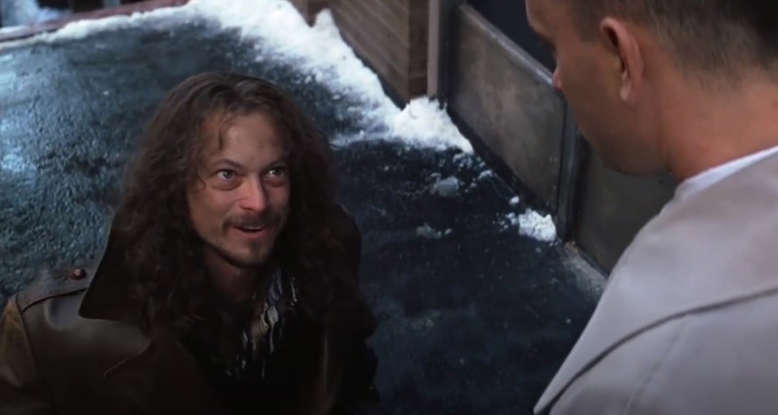
“Lieutenant Dan” was an able soldier, fighting in Vietnam and in charge of a small unit, which included the simple-minded Forrest Gump. When their unit was ambushed, Dan was badly injured and lost the use of his legs. Meanwhile, Forrest Gump received only a small flesh wound, and managed to save several of his fellow soldiers, receiving a medal for bravery. One of the soldiers rescued by Forrest, Dan resented his situation– disabled and ignored– while Forrest went on to become successful and celebrated.

Worse, in the years after the war, Forrest found Dan, homeless and dejected, and offered him a job and a home– on his shrimping boat. Forrest knew next to nothing about shrimping, and Dan, torn between bitterness and gratitude, gave Forrest a hard time. Dan’s life had gone nowhere, and Forrest seemed to dodge every bullet (literally), finding success in spite of his naivete and seemingly stupid choices.

It is a very relatable situation. We all know someone who seems to sail through life, while others seem to have nothing but bad luck and hardship. The class clown who ends up “making it big”– they spend money like it’s going out of style, and yet it keeps flooding in, seemingly without any effort. The neighbor who loses his job, and then his house catches on fire. And that person whose entire life seems to be lived under a cloud of misery and bitterness.

Gary Sinise as “Lieutenant Dan” in the movie Forrest Gump.

When the two men find themselves in the middle of a hurricane, Dan can take it no longer. He lashes out– not at Forrest this time, but at God. How could a loving God allow Dan to go through trial after trial– the loss of his legs and so many of the men under his command, the loss of his dignity and productivity, the loss of his independence, and now, another deadly situation beyond his control. He yells at God–“Come and get me!” He challenges God to just kill him; just finish him off–or leave him alone.

But God is silent– and soon, so is the hurricane. Forrest and Dan have survived. In fact, Forrest’s decision to be out of the harbor means their boat is the only one to survive–suddenly, they can’t catch the shrimp fast enough! Forrest becomes a millionaire and hires a fleet of fishing boats. But what about Dan?

Somewhere in the middle of the storm, Dan’s heart is pierced by a simple and life-changing thought. God has not been the one “ruining” Dan’s life– He is the one who has been preserving it! God brought him through war, disability, injustice, loneliness, frustration, and the raging sea. God was not a cosmic bully. God was not singling out Dan for punishment– after all, thousands of others had been wounded and killed in the war; millions of people knew what it was like to be hungry, homeless, and lonely; and hundreds had been devastated by the hurricane– even while they were safely evacuated or hunkered down on land. Forrest had not dodged every “bullet.” He had lost his best friend in battle; he had been rejected (time after time) by the woman he loved; he had been teased, bullied, and cheated dozens of times, and he had been tossed about by the same waves and winds Dan had survived. Dan ends up leaving Forrest, and setting off on his own, having found a peace that transcends his pain and bitterness. He swims off with a smile, leaving behind the opportunity to remain with Forrest and make millions.

Arguing with the Almighty is very tempting when we face difficult circumstances– and when we focus on our own lot, and not on the bigger picture. God is bigger than any of the troubles we face. And He is not unaware or unconcerned about whatever we are going through. Just as Lieutenant Dan challenged God, the biblical character of Job challenged God to vindicate him as he went through trials and pain. God finally answered, and Job realized that God was far bigger than anything Job had ever known or experienced. And in the end, God restored Job– giving him a new family, and even more material wealth than he had before!

Sometimes, God allows us to go through periods of pain and struggle– not because He is punishing us or because He is a tyrant, but because He is more interested in our ultimate salvation than He is in our immediate comfort. We moan and complain that God “doesn’t want us to be happy,” as if our momentary happiness is more important than our character development, than the happiness of those around us, or than God’s design for the world.

Near the end of the movie, Lieutenant Dan visits Forrest. He is transformed. No longer angry and bitter, he is quiet, self-assured, and standing! He has “new legs” made of titanium, and he has found joy, love, and success of his own.

Of course, many of us, regardless of our situations, have tried arguing with God at certain times of our lives. The loss of a loved one; the breakup of a marriage; a diagnosis of cancer; a miscarriage of justice and the loss of a reputation– it is natural to be angry, hurt, and confused. And God is more than big enough to “take it” when we ask “WHY?!!” But we will never “win” such arguments– not because God is a tyrant who won’t let us have what we want– but because God is GOD, and we are not. He alone knows how our story ends, and what trials– and blessings– await us. He alone knows what is “right” in the scope of eternity– not just for us, but for our loved ones, our neighbors, our nation, and our times. God can see that we get, not just “new legs,” but a new heart, and a new mind!

Hurricanes happen– so do hurts and hurdles. We can choose to see God’s hand–and believe that it is raised in anger, or reaching out to hold us. That choice is yours. That choice is mine. Every day.

God’s Mysterious Ways

I write about prayer as a pursuit. Prayer is, at once, both simple and mysteriously complex.

It is a simple thing to pray–to direct one’s thoughts and words toward God. It is no more difficult than having a conversation with another person.

And yet it is not the same as talking to another person. God’s ways are not our ways. He is Holy, Sovereign, and Almighty. We come to God in need, but God has no “needs.” He has no need to confide in us, or ask for our help, or plead with us. Instead, He chooses to share with us His promises and His plans. He allows us to be part of His great work, and asks us to be His hands and feet and voice in this world. He pleads with us to come and spend time with Him and walk in relationship with Him.

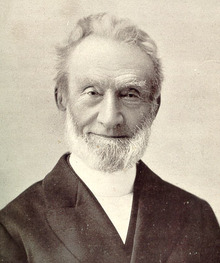
I spent some time recently reviewing the life of George Muller. https://www.georgemuller.org/ George Muller was born over 200 years ago. He was, by his own admission, a liar and a thief in his early years. But when we came to Christ, his life changed dramatically. His life was a series of miracles that attested to his great faith and active practice of prayer. Muller founded several orphanages in England, and he did all of it through prayer. He never did traditional fund-raising: he never asked anyone for money or donations, he didn’t take out loans, he didn’t find “partners” or “sponsors” to pay for any of the needs. He simply prayed. He prayed for money to buy buildings. He prayed that God would send workers. He prayed for food and clothing and furniture that the children would need. And he vowed to take in any (and as many) children who came.

The stories of George Muller’s faith are legendary. He prayed for money to start one orphanage– he ended up with enough for several! He prayed for supplies– people came and gave furniture. Milk wagons broke down and the milk was donated to the orphanage. One story states that there was no food one morning. Muller prayed. Shortly afterward, he went to the door, and there, on the doorstep, lay a 50-lb. bag of rice. No one knows who left it or how it got there. God showed up in miracle after miracle in Muller’s life. And that doesn’t mean that his life was without struggle or heartache. He agonized over friends who were unsaved; he prayed for them over a period of years. One close friend remained unsaved until after Muller’s death. He experienced the heartbreak of losing his wife. But he was consistent in his witness about the power of prayer.

Muller prayed about everything– as we all should, all the time. (Philippians 4:6, 1Thessalonians 5:17) Little, seemingly unimportant things; huge, seemingly impossible things. God cares about them all. He is the Almighty– there is nothing so big (or so tiny) that He cannot do it! There is no heartache or struggle that He doesn’t want to hear about! Nothing can separate us from His Love (Romans 8:38). No matter what we’re going through, we can bring it to God.

But God’s ways– powerful, compassionate, miraculous– remain mysterious. We can trust that God will hear our prayers. But we cannot predict how, or when, or if He will let us see the answers we seek. Nor can we predict how God will use our simple prayers to impact the world around us! George Muller’s orphanages helped more than 2,000 homeless children survive, grow, and in many cases thrive and contribute to the lives of countless others. And the stories of his faith and the hundreds of small but significant miracles he experienced have inspired generations of people for more than a century and a half! And his story is not unique–we have an amazing “cloud of witnesses” (Hebrews 12:1) throughout history testifying to the power of God to hear and answer prayer in mysterious, miraculous, even mischievous ways! From finding lost keys to feeding multitudes; from protecting kittens to rescuing captives; from stretching budgets to saving souls– God’s ways are mysterious, Holy, and wholly good.

Prayer can be such a simple thing– and it can have eternal impact!

Lord, I’m Tired

This past month has been tiring for me. I’ve been clearing out two “estates.” My mother died at the end of last month. She was a hoarder– she saved everything, and it was kept in piles and drawers and closets. My brother, sister, and I (and our families) must sort through all the “junk” to find things of importance or value, and decide how to share it, dispose of it, or give it away. Old books, old clothes, old papers– some have sentimental or material value. Others have been exposed to mildew or they’ve been torn or damaged or stained. Mom had a big house, and she had lived there for over 60 years, so the piles are tall, deep, and everywhere!

At the same time, we had a loss in my husband’s family that required that we clean out the family homestead. This home had been in the family for over 5 generations, and included a farm and workshop, complete with machinery, vehicles, and furniture that had to be removed in less than 30 days! While not as cluttered with old papers and clothes, this estate included bigger, bulkier items, often covered with grit, grime, oil, and dirt.

Photo by Andrea Piacquadio on Pexels.com

We had to finish up with the old homestead earlier this week. And we are exhausted. I have found it difficult to concentrate on this blog, on Bible study, on personal prayer time, and just getting “normal” things done around the house. I’m sore, I’m trying to fight off an early Spring cold, and I’m mentally and emotionally drained.

Photo by Andrea Piacquadio on Pexels.com

BUT

Photo by Ketut Subiyanto on Pexels.com

God has sent wonderful reminders of His comfort, His strength, His peace, and His care in the past few weeks. My prayers may have been hurried or shortened lately, but I can FEEL the prayers of others on our behalf. As tired as we have been lately, we have also been blessed. Wonderful family (even under difficult and trying circumstances!), kind and helpful friends, unexpected (and much needed) resources–God has not left us to face this season alone.

It is not God’s will or His plan that we should exhaust ourselves. That doesn’t mean that He won’t allow us to travel through periods of stress, work, grief, pain, or even temporary exhaustion. Jesus himself stayed in the wilderness for 40 days without food. He was exhausted and hungry when Satan tried to tempt Him to turn His back on the Father. Satan’s temptations are no different today. He tempts us with empty promises of ease and rest– IF we depend on someone or something other than God! He tempts us with the idea of fame and fortune– IF we abandon God’s provision and His purposes. He tempts us with immediate solutions–IF we stop waiting on the Lord to come to our rescue.

The Test

1-3 Next Jesus was taken into the wild by the Spirit for the Test. The Devil was ready to give it. Jesus prepared for the Test by fasting forty days and forty nights. That left him, of course, in a state of extreme hunger, which the Devil took advantage of in the first test: “Since you are God’s Son, speak the word that will turn these stones into loaves of bread.”

Jesus answered by quoting Deuteronomy: “It takes more than bread to stay alive. It takes a steady stream of words from God’s mouth.”

5-6 For the second test the Devil took him to the Holy City. He sat him on top of the Temple and said, “Since you are God’s Son, jump.” The Devil goaded him by quoting Psalm 91: “He has placed you in the care of angels. They will catch you so that you won’t so much as stub your toe on a stone.”

Jesus countered with another citation from Deuteronomy: “Don’t you dare test the Lord your God.”

8-9 For the third test, the Devil took him to the peak of a huge mountain. He gestured expansively, pointing out all the earth’s kingdoms, how glorious they all were. Then he said, “They’re yours—lock, stock, and barrel. Just go down on your knees and worship me, and they’re yours.”

10 Jesus’ refusal was curt: “Beat it, Satan!” He backed his rebuke with a third quotation from Deuteronomy: “Worship the Lord your God, and only him. Serve him with absolute single-heartedness.”

11 The Test was over. The Devil left. And in his place, angels! Angels came and took care of Jesus’ needs.

Matthew 4:1-11 (The Message)

I’m tired today. But God knows better than I do how to give me rest, how to “recharge my batteries,” and how to guide me through the days ahead. I don’t think God is “testing” me in the same way He allowed Jesus to be tested. But I think He has allowed me to experience a season that is testing me. Will I keep looking for Jesus in my weariness and grief? Will I be tempted to find my rest in someone or something other than Him? Will I recognize the resources and help He sends during this time? One of the things He has provided is this blog– a chance for me to stop, reflect on, and write about what’s going on. I’m tired, but I’m also being held in God’s Almighty and capable hands. God has provided helpers, counselors, friends, and family to lean on, and who can lean on me in turn. God has laid out His promises for a bright future and eternal Joy, Peace, and Rest. God has given me a moment to reflect on His Goodness! Now, back to work for today!

AMEN!

Prayer Priorities

What’s the most “important” prayer you can pray today? Sometimes, we think it is the prayer we pray in a moment of crisis. Or maybe the one we are asked to lead in front of a congregation. But the setting or the situation doesn’t make one prayer more important than any other.

It’s almost a trick question, really. Jesus never taught that some prayers were more “important” than others. But He did teach the some prayers were more effective than others. And His answers may be surprising to some.

Photo by sergio omassi on Pexels.com

The prayers Jesus praised were prayers of humble confession and needy request. God doesn’t judge our prayers– He judges the heart of the Pray-er. Jesus praised the prayer of the Tax Collector over that of the self-righteous Pharisee (Luke 18:10-14). While others might have been impressed by the Pharisee’s words and confidence, Jesus heard the desperation and the dependence of the Tax Collector. Just before this exchange, Jesus told the parable of a persistent widow, whose constant nagging resulted in getting justice from corrupt judge (Luke 18:1-8). It’s a strange parable–the woman is not meekly accepting of her situation; the judge is corrupt, initially refusing to do the right thing. Yet Jesus prefaces the story by telling his followers to “always pray and not lose heart.” (v. 1) So, the very prayers we dismiss– the nightly prayers for our loved ones, the “unspoken” request we lift up on behalf of a friend, or the seemingly unanswered requests–are no less important than any others.

Finally, Jesus praised (and prayed!) prayers that were “real.” He poured out His heart to His Father in the Garden of Gethsemane; He lifted up His friends’ needs at the Last Supper (John 13-17); He said simple grace before feeding the crowds.

Photo by RODNAE Productions on Pexels.com

So often, we judge our efforts when we pray– did we say the “right” thing? Did we say it the “right” way? Did we leave something out? Forget to say something? But God knows what is on our heart and in our mind. He knows what we “meant to say.” He knows everything we need– and all the needs of everyone else we could mention! He already knows all His names and attributes! And though He loves to hear us speak words of praise, He also listens to our heart, and–26 In the same way, the Spirit helps us in our weakness. We do not know what we ought to pray for, but the Spirit himself intercedes for us through wordless groans. 27 And he who searches our hearts knows the mind of the Spirit, because the Spirit intercedes for God’s people in accordance with the will of God. (Romans 8:26-27 NIV via biblegateway.com)

There is one caveat– because God knows our heart, He also “sees through” prayers that are insincere, proud, self-centered, and thoughtless. Some of the most “important-sounding” prayers fall short of touching God’s ears. He will not listen to the prayers of those who wish to “strike a bargain” with Him, or convince Him of their own self-worth. That doesn’t mean that God doesn’t value each one of us– after all, He became Sin who knew no sin, so that we could become the Righteousness of God (2 Corinthians 5:21). But God’s love is a gift–when we try to bargain for His gifts and earn His Grace with our eloquence, we lose sight of Who He Is.

Photo by Alex Green on Pexels.com

Many centuries before Jesus walked the earth, Hannah poured out her heart in tears, wordless anguish, and groaning. (1 Samuel 1). Her prayer was such a mess, the priest, Eli, accused her of being drunk! But God heard her heart, and answered her prayer, and because of her great faith, her son, Samuel led Israel through some of its most trying times. Hers was a very “important” prayer.

What if our stumbling effort to pour out whatever is on our hearts and lift it up to Almighty God–our praise, our failings, our grief, our desperate need–is be the most important prayer we can pray today?

Thou Preparest a Table Before Me

Mighty God,
You could demand…
Anything.
You need nothing.
You are worthy of
Endless adoration.

Photo by Julian Jagtenberg on Pexels.com

Yet You prepare a table–
Lavish with blessings,
Personalized to the last detail–
For me.

Photo by Adhitya Rizky on Pexels.com

You, who could reserve all the
Wonders of nature for your own pleasure;
Cause the sun to rise, the birds to sing
For me.

Photo by Pixabay on Pexels.com

You lay the plates,
Polish the silver,
Serve out the banquet with
Flourishes, garnishes– All the best
For an unworthy beggar–for me.

Photo by sergio omassi on Pexels.com

You pour the wine,
Wash my feet,
Break the bread
(Even give your body and blood),

Photo by Pixabay on Pexels.com

All for me.

Merciful and gracious God,
Humble and victorious Savior,
Mysterious and mighty Spirit–
I am undone by Your invitation to
This eternal banquet.

Photo by Pixabay on Pexels.com

“Do This in Remembrance of ME”
Remember My Creation.
Remember My Life.
Remember My Humble service.
Remember My Death and Resurrection.
Remember My Victory.
Remember I am Coming Soon!

Blog at WordPress.com.

Up ↑