Out of the Static

This weekend, my husband, our middle grandson, and I all participated in “Field Day.” This is a 24-hour simulation and contest for amateur radio (Ham radio) operators (like David and I) to test our skills and practice our hobby. Thousands of “Hams” across the United States and Canada spend this time trying to make as many radio contacts as possible. But the object is to try to do it under “field” conditions– many groups or clubs literally set up tents in fields during this time (weather permitting!) and use solar or battery power only. There are also ways to earn “bonus” points by setting up in a public area and teaching or training young people (like our grandson) or inviting other non-licensed people to transmit under supervision. The overall goal is to have fun and share the importance of amateur radio. At the same time, we’re testing both our equipment and our skill under situations that mimic an emergency, like an extended power outage or a natural disaster, when effective and organized radio communication may help save lives.

We aren’t trying to “win” the competition, but we do try to do our best– rising to the challenge. It was a lot of fun this year to see our grandson get excited about making contact with people from Canada, and many areas of the U.S. in states he has never visited in “real life!” In previous years, we have joined up with a local club, or invited friends or neighbors to contest with us. Each year, there is the triumph or making a “difficult” contact– someone from across the continent, or someone from a remote area. And every year there is the frustration of “the ones that got away”– listening in and finding the right frequency, but being unable to both receive AND send the message necessary for a valid contact

Every year during Field Day, I am reminded of how tenuous radio communication can be. Radios are the original “wireless” communication– the forerunners of our modern cell phones. Operators must “tune” their radios to pick up on the sound waves floating through the air. There are billions of sound waves, all floating around the atmosphere. We cannot hear them with our “naked” ears– and a good thing, too! We would never be able to distinguish all the noises that pass around and above us every moment. In fact, when radios pick up on just a single frequency at a time, much of what we hear is buzzing “static.” Most modern radios and cell phones use special equipment, such as filters and “repeaters” to find specific sound waves, translate them, amplify them “above” the static, and allow us to hear messages clearly. Field Day forces us to operate without a lot of these “helpers.” Voices and Morse Code transmissions must be carefully “brought out” of the surrounding static in order to receive even simple messages. And even if I can hear someone else’s message, they must be able to hear my response, or it isn’t a true “contact.”

Field Day also reminds me of prayer– and gives me reason to rejoice! Just imagine the overwhelming volume of prayer on a typical day! With over 8 billion people on the earth, even if only a tenth of them pray on any given day, that’s still millions of prayers all rising up and floating around the universe. And God hears them all! He doesn’t just hear the “noise” of prayer– He hears our hearts! He feels our pain– and our praise! In fact, the Bible even says of our praise, that God “inhabits” the Praises of His People (Israel– see Psalm 22:3) God rides the wavelengths of our worship! And He surrounds the soundwaves of our grieving. God doesn’t have to strain to hear us, or to understand the emotion behind our prayers. Praying is not like sending a message into radio airspace. We never have to wonder if God will be able to hear us through the static! We never have to know the frustration of screaming out into the universe and being lost in the noise.

But listening through the static on Field Day also challenges me…Am I “tuning in” to God’s messages to me? Do I surround myself with extra “static” as I go through my day? Or do I spin my dial, trying to find other voices; other messages to fill the space of my life? If God inhabits praise– Am I offering Him any dwelling space? Or have I filled it up with empty praises and pursuits? And, as God’s witness and ambassador, how well am I listening to those around me? Am I busy adding my “noise” to conversations when I should be “tuning in” to someone else’s need?

Today looks like a great day for a Prayer-themed “Field Day.” Time to test my communication with God– both sending Him praise and petition, and listening for His answer above all else! And it’s a great day for spreading the great news of God’s desire to listen to us– no matter what static we live in!
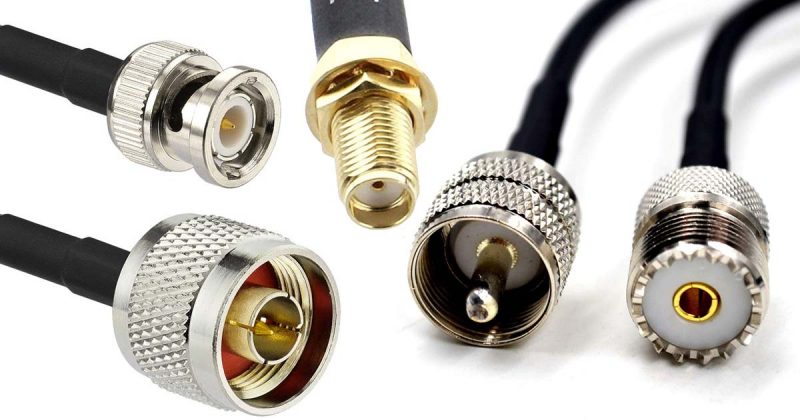
Connectors

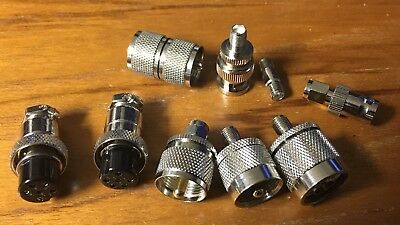
My husband and I own a shop. It is a dual shop: one part is a resale/collectibles/vintage and antiques shop, while the other part sells amateur radio equipment. We sell new and used radios, antennas, coaxial cable, power supplies, amplifiers, and other, smaller accessories, including connectors.

Photo by IT services EU on Pexels.com

Connectors are small (usually only about an inch or two in length). But there are dozens of different types, connecting various sizes of cable and wire to various types of equipment. We have BNC connectors, SMA connectors, PL259 connectors, “male” to “female” connectors, and many more, with different sizes and styles in each type! I find it very confusing. It seems as though it would be much simpler if there was just one universal type of connector, that would work for all the radios and accessories.

Photo by Markus Erichsen on Pexels.com

I have a similar sense of confusion with other electronic connections– jacks and USB ports and charging ports–without the correct connection, many of our electronics just don’t work!

Photo by Kindel Media on Pexels.com

Human beings often have trouble with connections, as well. We speak different languages (even different dialects of the same language sometimes), have different interests and personalities, different life experiences– we just can’t seem to understand one another or connect to one another. We end up being confused, offended, hurt, angry, and isolated. Worse yet, our connections can break down– interests change, resentments build up, life experiences pull us in new directions, and sin corrupts relationships.

Photo by Yan Krukov on Pexels.com

I’m so glad that God is the Universal Connector! No matter what I’m going through; no matter what I am thinking or feeling; no matter how I express myself, God understands me– even better than I understand myself! Others– even those closest to me– may misunderstand my words, my motives, or my emotions, but God knows exactly what I mean. And that connection is eternal. If I feel “disconnected” from God, there may be something wrong with my understanding, or I may choose not to listen to His wisdom. I may be “plugged into” something that distorts or distracts the message. But God never “tunes out” or loses the ability to hear my prayers or understand my thoughts.

Photo by Luis Quintero on Pexels.com

Amazingly, God is connected in the same way to everyone! There is no need for Him to have hundreds of different connectors in order to get the message. He never needs a replacement part to enhance or clarify His understanding– no matter the language of the speaker, her/his life circumstances, or emotions. God understands the broken-hearted, the hurting, the overjoyed, the overwhelmed, and the confused among us. He lovingly listens to billionaires and bums alike. Drug addicts, rape victims, murderers, self-righteous snobs, “grammar police,” Pharisees, nose-pickers, thumb-suckers, braggarts, liars, thieves, model citizens, and PTSD patients– God “connects” with each one who seeks Him. God meets us where and how we are, because He knows and loves us without limits.

Photo by August de Richelieu on Pexels.com

It can be frustrating to try to connect with some of our neighbors, co-workers, enemies, and even some of our family members. That’s one great reason to pray about our relationships– God can make connections even when and where we cannot. God can also build, strengthen, and redeem relationships that lack connection or have broken connections. Even those relationships that seem solid need help from the Universal Connector. Instead of trying to “make things fit” with someone else, or working harder to force an understanding, maybe today is a good day to stop saying more, and start praying more!

Static

This past weekend, my husband and I participated in “Field Day.” It is an annual Amateur Radio contest, in which operators have 24 hours to make as many unique “contacts” as possible within the U.S. and Canada, using low power and simulating “field” conditions (many operators and clubs literally set up with tents in fields and use only solar or battery power for their radio equipment).

Photo by Gratisography on Pexels.com

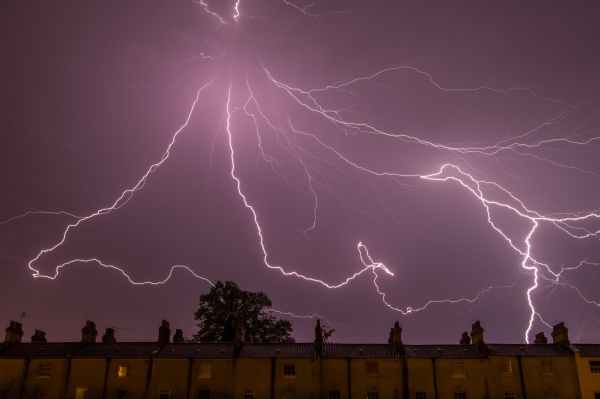
Field Day can be a lot of fun, but it can also be very frustrating. Depending on where and how you set up, the weather conditions, and other random factors, you may end up with very few contacts, and a lot of static! Radio static comes from three main sources– natural electromagnetic atmospheric noise, such as lightning, high winds, and solar pulses; radio frequency interference, when the radio equipment picks up pulses from nearby electrical devices, including TVs, other radios, or even power lines; and thermal noise coming from within the radio device itself.

Photo by cottonbro on Pexels.com

We chose to set up for Field Day at our radio store, which is located in town, just beneath our apartment. We have several antennas set up on the roof, along with a solar panel and battery, which can power all of our radio equipment. So we met the basic requirements for Field Day, operating the radios on Solar and Solar Battery power, without extra amplifiers and power boosts. We set up two stations, and we were able to make contacts through voice transmission or by Morse Code. But we were not exposed to the weather and discomfort of a tent in the field– we had a refrigerator stocked with food, we had air conditioning and comfy chairs, and we were able to sneak upstairs for a nap in our own bed, if we felt tired.

Photo by Ketut Subiyanto on Pexels.com

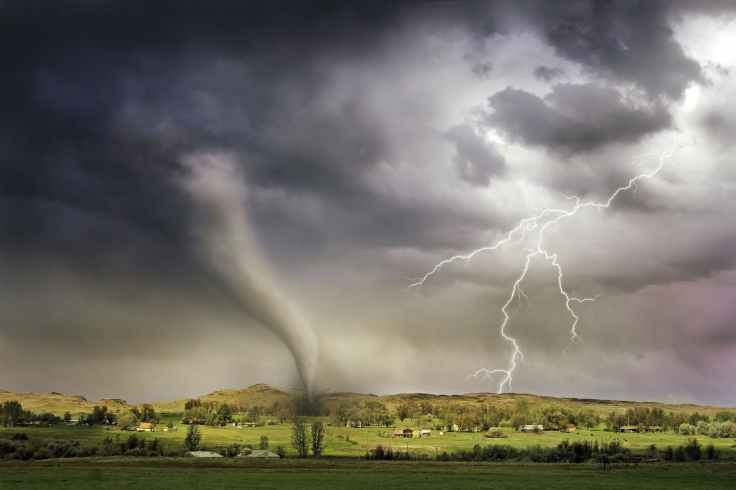
Atmospheric conditions were not so good this year for Field Day– not in Michigan, at any rate. We had a series of extreme storm cells coming through, with torrential rains, thunder and lighting, and a tornado watch, which spanned the first six hours of the contest. We were lucky not to have a tornado touch down, but other areas were not as lucky…

Photo by Ralph W. lambrecht on Pexels.com

Staying in town also provided some complications– we are surrounded by power lines, neighbors with electronic equipment, street traffic, including cars with loud stereo systems and radios, and our own electronic and radio devices– cell phones, air conditioners, computers, etc.

Photo by Jonas Ferlin on Pexels.com

Finally, we had an ongoing issue with our two radios. If we were using certain frequencies, the two radios interfered with each other. As I was listening to one radio, my husband would try tuning his radio. Suddenly, the noise of his radio could be heard over the sound of other transmissions.

All of this made for a somewhat frustrating contest, but it reminded me of some important aspects of prayer:

  • Prayer can be “choked out” by atmospheric conditions. If we are not “tuned in” to God’s presence, the noise of other worries, interests, concerns, and even “good” things can cause static. Life struggles, changes in our routine, or the “high winds” of adversity can seem louder than the faithfulness and compassion of the One who never changes and never leaves us. This is one reason we are to make prayer more than a habit or routine– it is to be a lifestyle and a blessed and constant pursuit– regardless of our circumstances or feelings at a given moment.
  • Prayer can also be derailed by “frequency interference.” If we don’t spend time in deep prayer and meditation with God, listening to His Word, or making ourselves accountable to Him, we will be susceptible to interference from other voices, other philosophies, and other “static” influences. Jesus’ prayer life included many times of retreat and separation from the crowds and stress of His ministry; not because He didn’t love others, but because He loved and honored God more.
  • Finally, prayer can get lost in the “internal” static of our wayward hearts. The heat of anger, bitterness, selfishness, pride, greed, and lust can keep us from meaningful communication and communion with our Father. Often, we struggle with prayer, because we are hanging on to the “static” of our own desires and fears. King David wrote: “Search me, O God, and know my heart; test me and know my anxious thoughts. Point out anything in me that offends you, and lead me along the path of everlasting life.” (Psalm 139:23-24, New Living Translation, via bible.com)
Photo by Luis Quintero on Pexels.com

Field Day is over for another year. We were somewhat disappointed in our performance, but, in the end, it is just a contest– an opportunity to learn and grow in our hobby. While we enjoy being amateur radio operators, and we feel it is an important and worthwhile hobby, it pales in comparison to growing in our Faith and our pursuit of praying and obeying Jesus Christ!

In the middle of our contest this year, we had a singular opportunity– to leave the contest for a few hours and visit a local church where my niece and two of my nephews were getting baptized. It would mean fewer contacts for the contest, at a time when the atmospheric conditions were the best they had been for several hours. After a dismal evening, we could have chosen to focus on our own pursuits. We didn’t have to witness the baptism to rejoice in it. They would have been no “less” baptized, and they had other family and friends there to see it. And going there didn’t make us “better” or more righteous people. But we chose to shut down our contesting activities, pick up my Mom, and join in the happiness of watching three precious young people publicly declare their choice to follow Jesus. And they were among others who made that decision– others whose joy and radiance also filled the church that day.

Photo by Transformation Films on Pexels.com

Field Day is about listening through the static, reaching out, and making contact with others. Yesterday, I was reminded that there is a much more important “Field Day.”

Do you not say, ‘There are still four months, and then comes the harvest’? Behold, I tell you, raise your eyes and observe the fields, that they are white for harvest.

John 4:35 (NASB, via biblehub.com)
Photo by Anna Shvets on Pexels.com

What static is preventing us from making “contact” with those who need to hear the Good News? What static is preventing us from hearing God’s voice? What static is keeping us from seeing the “fields” ready for harvest?

Missing Pieces

My husband and I run a shop. He sells new and used amateur radios and supplies; I sell antiques, collectibles, and resale items. The nature of our business means that we often get merchandise that is “incomplete.” We have used radios– occasionally, there is a knob missing, or a component that needs to be replaced or repaired. We have used games and jigsaw puzzles, packs of playing cards, sets of dominoes, old silverware and buttons and dishes–mismatched, incomplete, and sometimes damaged or chipped. I spend many of my days surrounded by items that some would consider “junk.”

Photo by Quoc Nguyen on Pexels.com

But what some would consider junk, others consider treasure. Collectors come in looking for specific items– old tobacco tins, embroidery samplers, antique kitchen tools, wooden toys, fishing rods, or costume jewelry. Crafters come in looking for old buttons, clothespins, linens, or keys. Some people come in to browse, and end up finding an old book, or a doll that catches their eye. And most items create conversations, spark memories, or inspire curiosity.

Photo by Madison Inouye on Pexels.com

Ours is not a busy shop. We don’t sell convenience foods or new shoes or cell phones. We don’t offer fancy coffees or tea “bombs,” or expensive hand lotion. We don’t sell sporting goods (other than really old skis or the occasional tennis racket). We sell a few new batteries and antennas, and we offer a few local packaged food items (honey and maple syrup, craft sodas, etc.). We don’t make a lot of money at our shop–but we’ve made some friendships, and we’ve had the joy of seeing our customers find unique and useful items. We’re part of something bigger than just making a sale: like so many others with small businesses, we’re making a difference.

Photo by rawpixel.com on Pexels.com

God created each of us to interact– to be part of something bigger than ourselves. Each of us has a need to find “missing pieces”– friendships, experiences, conversations, ideas, even old chipped dishes– that help us discover where we “fit” into a larger picture. As we interact, we make a difference, for better or for worse. We smile or we scream, we create unity or division, we spread hope or we spread hatred, we destroy or we build up. And we search for meaning and fulfillment. Ultimately, we are searching for God, who has promised to make all things new and bring wholeness, completion, and life to our “used” world. There will be no “junk;” no missing pieces or chipped plates or broken antennas in God’s perfect plan. Each of us is treasured by our creator. Even if others see us as filthy, broken, rusted, or worn out, God can says we are priceless and worth redemption. He has a place for us.

Photo by Artem Beliaikin on Pexels.com

10 For if, while we were God’s enemies, we were reconciled to him through the death of his Son, how much more, having been reconciled, shall we be saved through his life!

(Romans 5:10 via biblestudytools.com)
Colossians 1:20-22 NIV

Field Day

My husband and I are licensed amateur radio operators.  This weekend, we participated in an exercise/contest known as “Field Day.”  Every year for Field Day, tens of thousands of radio operators across North America spend twenty-four hours trying to make as many radio “contacts” as they can, in conditions that mimic being “in the field” or off-grid.  Many groups, clubs, and even individuals will set up in camp sites, open fields, county fairgrounds, barns, sheds, and other locations.  Some will use their radios on generators, batteries, solar power, or the lowest power settings available.  Some will have campfires and cookouts; others will order in pizza, but all of them will be seeking to make radio contact with people from all over the continent.

bryce canyon canyon clouds dawn
Photo by Lukas Kloeppel on Pexels.com

To make an official “contact,” certain key elements have to be exchanged.  Every licensed amateur operator has a “call sign”– a unique identification code.  There is also a “report”, telling how many radio stations are being used by the group, and what kind of conditions and power supplies are being utilized.  Finally, there is a section code, telling where the station is located.  Most codes are similar to the two-letter state codes used for mailing letters, GA for Georgia, CT for Connecticut, BC for British Columbia.  All three elements must be sent, received, and understood by both operators to qualify for a “contact”.  In other words, if I am listening, and I hear an operator in Texas give his call sign, his report code and his section code, it doesn’t count unless I know he has heard my information, and he knows I have his.  Only if both parties have exchanged and verified all information can the contact be “logged” and counted.

notebook writing pencil start
Photo by Dom J on Pexels.com

Communicating via radio is an amazing experience, even in this age of cell phones, and Skpye, and social media utilizing satellites.  Knowing that your voice is being carried by the thin air and transmitted to someone across miles using simple machines that use less power than a desk fan or a microwave oven is mind-blowing.  But on Field Day, it is even more miraculous to listen as thousands of voices are carried simultaneously.  The radio hums and crackles with the static of ten thousand tongues all trying to get their message out–“Here I am!”  “Can you hear me?”  “Did you get my message?”  “Where are you?”  “Who are you?”  Letters and numbers and codes all mingle and form a messy barrage of sound.  Voices, beeps, pops, whistles, and more assault your ears, before you can tune into just one understandable voice.  There is a thrill in hearing that lone voice calling out their message..they could be anyone from any number of places.  You get ready to respond, and then you hear it—static of a hundred other stations trying to get through.  All those radio waves carrying the hopes and messages of a hundred or a thousand others just like you, wanting to make contact; wanting to be heard and understood.

antenna clouds equipment frequency
Photo by Pixabay on Pexels.com

Sometimes, miraculously, you get through on your first try– you send your call sign, and the other operator repeats it back, telling you it’s ok to send the rest of your message and receive his/hers.  The two of you exchange the three elements, sign off, and you can tune to another frequency and try to make another contact.  Most of the time, though, you spend several minutes calling out your ID, hoping to be acknowledged, only to listen as others get to make their contact, waiting your turn.  Even more frustrating, as you wait, sometimes the atmospheric conditions change and the voices all fade out into a low buzz of static– the contact opportunity is lost.  Conditions may change in another minute– or an hour– or not at all.  I may hear from someone in Alaska, or Vermont, but I won’t be able to count them as a contact this year.

Field Day is exciting; sometimes frustrating, sometimes exhilarating.  There is a thrill to making a contact and finding out that you’re talking to someone from Alberta, Canada, or South Florida, or Rhode Island, or the San Joaquin Valley in California.  It’s exciting to make a contact, and realize it’s someone you know from a neighboring county!  We have a logbook program on our computer that “shades in” the various sections as you key in a contact, so our map becomes colorful as the contest period continues, and we tense up to see if we can fill in most of the sections– can we “get” Hawaii?  Nova Scotia?  Wyoming?  South New Jersey?  Will the weather and atmospheric conditions cooperate?  Sometimes a series of thunderstorms or solar flares can break through or distort the radio waves and make it impossible to stay tuned in long enough to send and receive even a short message.  Sometimes, you can make clear contacts with certain regions and not with others, even ones close by– one year, we got zero contacts with a neighboring state, while getting several other regions hundreds of miles away!

photo of green grass and tress
Photo by Brett Sayles on Pexels.com

While Field Day is exciting, and it serves as a great way to test and practice with radio equipment in case of a nationwide or region-wide emergency, it is still just an event–a single 24-hour period of making contacts with complete strangers (in most cases) for a couple of minutes.

Prayer is a thousand times more amazing than Field Day for a number of reasons.  Think about it:

  • God is ALWAYS listening–twenty-four hours, seven days a week, every moment, every year of our lives.
  • God is ALWAYS tuned in to our cries– there is no distortion, no static.  He hears millions of cries simultaneously and with perfect clarity.
  • We don’t need a “call sign” or identity code.  God knows each voice intimately..He doesn’t have to ask us to speak louder or more distinctly.  He doesn’t hear an “accent” or lisp, or rasp in our voice.  He doesn’t have to ask us to repeat our request three or four times because He didn’t understand us the first time.
  • We don’t need a section code– God knows where we are better than any GPS system every invented.  We can’t hide from Him, and He isn’t surprised to find out where we are, or where we came from.  He already knows where we are and where we’re going!
  • Our messages can be as personal and as lengthy as we want.  God doesn’t need to “hurry up” to get to the next person’s request, and He wants to hear all our thoughts and needs.
  • Prayer is not an event or a contest– it’s not a practice run–it is an actual conversation with our Loving Father!
  • You don’t need a license, or a radio, an antenna, or a microphone to contact God!
  • We can pray for others anywhere, anytime, for any reason, and God already knows the details– where they are, what their needs are, and what is best in the long run.  Just as He already knows us intimately, He knows the needs of everyone we’ve ever met– and everyone we haven’t met yet!  Some groups will have made upwards of 500 contacts over the course of Field Day– God can make millions in the same moment, and not miss a single one!
  • God doesn’t want to make contact with us to fill a quota for a contest; He doesn’t want to hear from us because it’s thrilling to hear from someone new.  He wants to have a relationship with us– filled with love and trust and hope and joy.  He doesn’t just want a Field Day with us– He wants Eternity!

prayermotherdaughter

Blog at WordPress.com.

Up ↑