“Thy Will Be Done”

At the age of 14 months, just after I had learned to walk well, and had learned to say “Mama” and “Da-da”, I became very ill.  Our doctor was baffled– I was tired and weak, I was losing weight, but I wasn’t carrying a fever.  It wasn’t any of the “usual” culprits– we did find out I was allergic to penicillin, but other antibiotics had no effect.  We tried a different doctor– he was also stumped, and all the while, I got weaker.  My desperate parents prayed for healing as the weeks went on.  I was too little to even describe any symptoms– I whimpered and slept; I ate very little, and became too weak to walk.

God was listening to my parents’ prayers, even though the situation seemed impossible and tragic, and God seemed silent and distant.  My mother, in the years since this incident, has shared with me the “breakthrough” moment for her– that moment when her prayers changed from “heal my little girl”, to “thy will be done.”  Not immediately, but shortly after that, the new doctor was inspired to look for another cause.  After some blood tests, he determined that my body wasn’t absorbing and processing protein.  As soon as I began a regimen of protein booster shots, my health began to improve.  I was still sickly as a child; I had immunity issues, and I was small for my age, but I was out of grave danger.  I had to relearn how to walk, and my return to solid foods (especially meat) was a gradual one.  I have no actual memory of these events, but I learned a valuable lesson about prayer.

Praying hands

When we pray “Thy will be done,” we sometimes think it is “our” will vs. “God’s” will… that God’s will is always opposed to ours; that it will lead to us losing whatever it is we are holding on to.  That may be the case, sometimes.  We grapple with God’s will, struggling and wrestling, like Jacob, until we are forced to give in.  Some of us limp our way to the altar of prayer.  But God’s will is not set in relation to ours– His will is His own.  It is higher than ours.  It is perfect and complete.  That doesn’t always make it pleasant, comfortable, or easy.  In my family’s case, it meant months of trips to get shots– every day for the first few weeks; every week for months afterwards, and every month after that until the time I started Kindergarten (a year later than I might have if I had been healthier).  For many, “Thy will be done,” means saying goodbye to a loved one.  Sometimes it means losing a limb, or letting go of a cherished dream.  But what we see; what we experience; these are mere moments in God’s plan for our eternity.  Like the booster shots I had to have as a child, they bring a momentary sting, and the fear of them may loom large, but in God’s plan, they bring us the opportunity for life and health and ultimately, triumph.

Sometimes God’s will means walking through the fire, or walking through the valley of the shadow of death.  Long before my birth and health scare, my mother had lost twins, and been a divorced mother of a young son.  She had already faced death and heartbreak and hardship.  After this incident, she would be hurt by my brother’s teenage rebellion, face depression, and go through health issues with my father before his death; but she would also gain another daughter and live to see grandchildren and great-grandchildren who brought her joy.  In my own life, I have faced the shattered dream of wanting children of my own. I struggled for years with singleness, when I wanted to be married and have a family.  But God’s will was for me to learn patience, compassion, and empathy for others who hurt in these areas.  And he has blessed me with a family I would never have imagined–not only the husband, step-children, and grandkids, but all the students and children I met through my careers in education and public libraries.

It is natural and easy to pray for what our will, our feelings, or our intuition tells us is best– healing for the sick (immediate healing is even better), success for our ventures and those of our families and friends, safety in travels and daily routines, prosperity, and happiness.  It is not wrong to want these things.  But it is better by far to remember that God is sovereign and good.  Giving him complete control over our situations is not weakness; it is not “giving up”.  Instead, it is investing our future– putting it in the hands of the one who holds tomorrow, and all of eternity!  It is trusting the one who is most trustworthy to make the most of our hours and days, our treasures and our dreams.

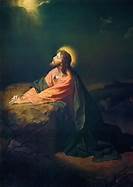
Even Jesus taught His disciples to pray “thy will be done on earth as it is in heaven” (Matthew 6:10b). But He didn’t just teach that phrase to His disciples– He prayed it Himself in the Garden of Gethsemane. “Father, if you are willing, take this cup from me; yet not my will, but yours be done” (Luke 22:42). Jesus knew he would face humiliation, torture, and death. He knew that He would take on the punishment for all the sins of the world– punishment He did not deserve– and that He would be subject to the full wrath of God. In His humanness, He was anguished to the point of sweating drops of blood. Yet He chose to pray, “Thy will be done.”

I have never been in that kind of anguish– even when I was so very sick or depressed about seemingly broken dreams. But I still find it difficult to fully surrender to God’s sovereign will when the future is in doubt, and when the present looks overwhelming. But growth and victory come when I let God take the reins and guide me through the valleys and wilderness walkways of life. His will is mysterious and sometimes scary, but He is always faithful. And I know that from experience.

Hannah and Her Son

1 Samuel 1:11 New International Version (NIV)
11 And she made a vow, saying, “Lord Almighty, if you will only look on your servant’s misery and remember me, and not forget your servant but give her a son, then I will give him to the Lord for all the days of his life, and no razor will ever be used on his head.”

http://www.biblegateway.com

Today, we get to the essence of Hannah’s prayer. And it is not a prayer that most of us would pray. Hannah asks for a son to take away her misery and show her God’s favor. But in the same breath, she promises to give her son back to the Lord forever. How many of us would ask for something so rare and precious just to turn around and give it away?

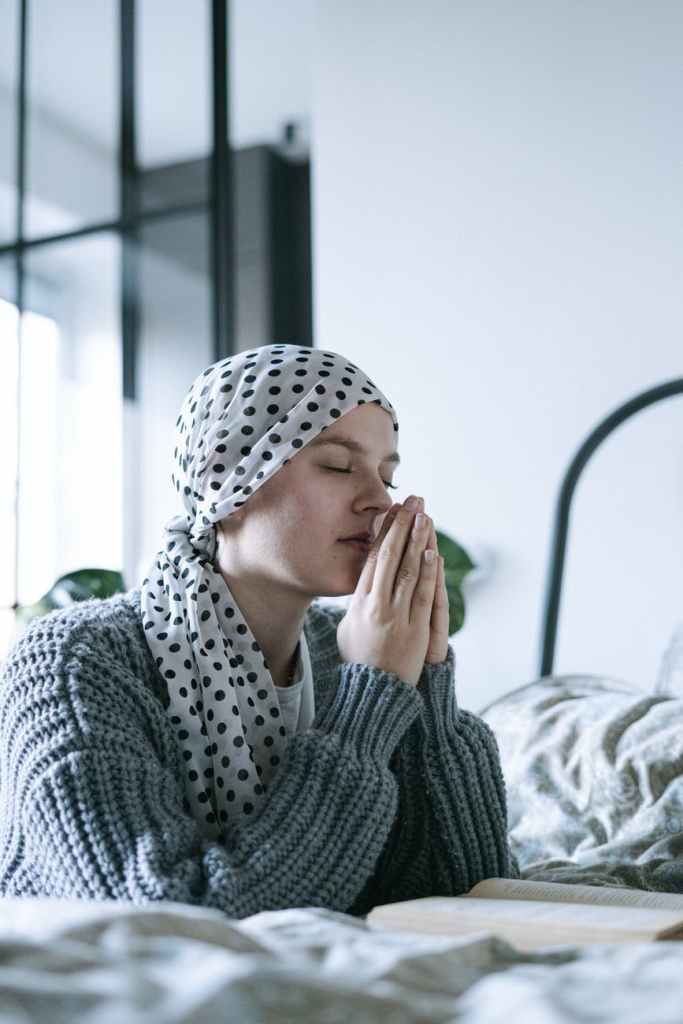
Photo by Victoria Borodinova on Pexels.com

As I write this, my country, my friends, and even my family are deeply divided over the issue of abortion. Much is being made about a woman’s “right” to decide whether and when she will have a child. “My body, My choice,” is a common cry among the pro-choice crowd, while the other side points fingers and yells, “baby killer” at those women who choose to end their pregnancy. But yelling and chanting don’t change hearts or facts. A woman cannot actually “choose” to become pregnant at will. In Hannah’s case, she was in anguish over her inability to “choose” to become pregnant. In the case of a modern woman, she may be in anguish over not being able to avoid an unwanted pregnancy or avoid unwanted complications resulting from her pregnancy. She may, like Hannah, be in anguish over her inability to conceive or to carry to full term. But in any case, the idea that pregnancy and birth are simply a matter of “choice” is based on a false reality. There is an illusion of “reproductive autonomy” because of modern medicine. We have birth control that makes claims of being “safe and effective”; we have methods to increase fertility, regulate menstruation, reduce the chances of conception, and even stop the fertilization process within a day or two. But no woman can simply “choose” to become pregnant (or stop being pregnant) at will. Women cannot choose the gender of their children; they cannot guarantee the date of birth; they cannot produce a future world leader or athletic prodigy just by force of will. They cannot guarantee their child perfect health, long life, wealth, or happiness. And reproduction among human beings is never “autonomous”!

Hannah’s story seems the antithesis of abortion– here we have a woman begging for a child; she is in anguish over her inability to conceive. And God hears her cry and blesses her with a son.

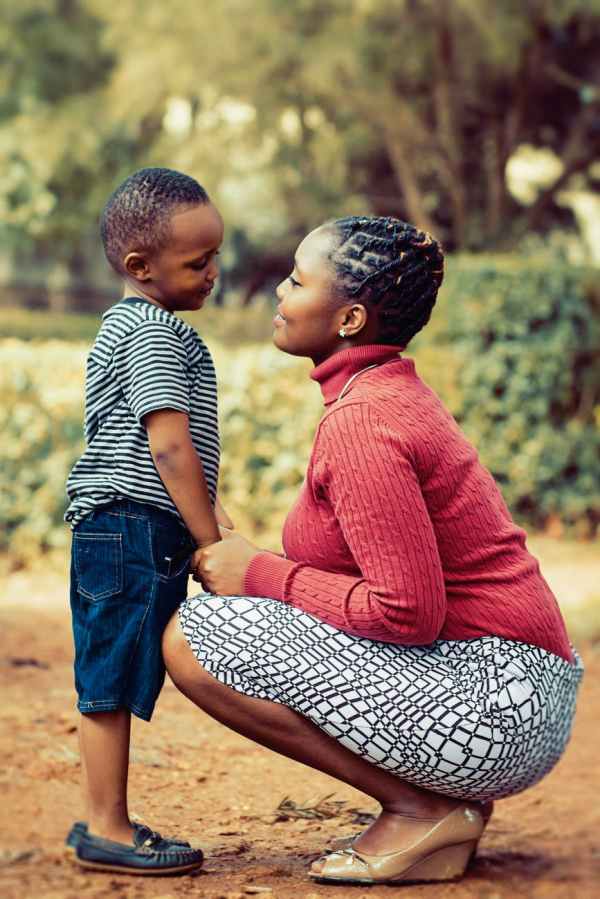
Photo by Pixabay on Pexels.com

But today, I want to look at Hannah in a slightly different light. I think Hannah would have a great deal of compassion for those women who suffer anguish because of their womb– women whose wombs are achingly empty; women whose wombs seem to betray them as pregnancy after pregnancy ends in a miscarriage; women who long for their womb to be home to a little girl, even as they have a house full of much-loved little boys (or vice versa); women whose wombs hold anger and bitterness because they have been the unwilling vessel of abuse, incest, and rape.

Infertility and “unwanted” pregnancy are not mutually exclusive. They are distant cousins–manifestations of a fallen world where none of us control even the circumstances of our own bodies. And it is in this context that Hannah makes an extraordinary vow.

Hannah gives birth to a son– the fulfillment of all her longings. Or is he? Hannah gets to carry him in her womb; she gets to wean him. But then she vows that she will give him up– relinquish all rights to be there when he scrapes his knee or loses his first tooth, when his voice begins to deepen and his hugs require her to stand on tiptoe. What kind of mother is Hannah? She will never have all those stories of the little “mom” moments; no memories of tucking him in after a long day, or watching him climb a tree, or run after his dad. She will never hold his hand on dark stormy nights, or ruffle his hair after it gets a new cut (in fact, she vows he will never GET a haircut).

Photo by Pixabay on Pexels.com

There are moms–unsung, living in the shadows– who have made the incredible sacrifice of “giving up” their children. Sometimes by choice, sometimes by force. Some have given them up for adoption at birth. Some have lost parental rights due to divorce, incarceration, or other life circumstances. Some have had their children stolen or taken from them in tragic circumstances. Hannah was given other children after she gave up Samuel, but she never “got over” the loss of her son. No one ever does.

Which brings me back to the debate about abortion. We do not have “reproductive autonomy.” Our wombs are not just another part of our bodies. They are designed to nurture and prepare for new life. To the extent that they fulfill that design, they bring joy and pain, hope and hurt. In denying that reality and embracing the false promise of “my body, my choice”, we don’t erase the lives lost to abortion– we just bury them. And for the women who are making that choice, we must offer compassion. The pain and anguish they suffer before and after an abortion are every bit as real as that suffered by Hannah in her quest to have a son, only to give him up.

Blog at WordPress.com.

Up ↑