I like to know things–I like to solve puzzles, figure out mysteries, learn trivial facts. I want answers. So when I go before God in prayer, I often ask questions. Why is this person suffering? When will their suffering end, and how? Where were you in this disaster (as though God had stepped out for a minute and wasn’t aware of what happened)?
God stays silent.
I can grow frustrated in the silence or I can learn to trust. That doesn’t mean that I no longer want answers; just that I am willing to wait on God’s sovereign timing. It also means that I am need to more about God’s nature–God doesn’t keep secrets or withhold knowledge because He wants to torment me, or frustrate me, or play some cosmic mind game (though some people accuse Him of doing just that). God withholds full disclosure of His plans, His reasoning, and His nature out of love and compassion. Suppose I could see into the future, even give out warnings, but had no power to stop disaster from coming. Not only would I be haunted by the disaster itself, but by the full knowledge of its coming. Suppose I could see a miracle in advance; know when and how it would unfold. There would still be joy, but it would be muted by the foreknowledge– of course there would be a happy ending; of course there would be a miracle– I saw it all from afar off.
The Apostle Paul touches on this in 1 Corinthians, chapter 13. This is commonly known as the “Love Chapter”, and the first half is frequently quoted at weddings and church sermons. But the end of the chapter is a wonderful message of hope and faith, ending with Paul’s triumphant statement about all three:
1 Corinthians 13:8-13English Standard Version (ESV)
8 Love never ends. As for prophecies, they will pass away; as for tongues, they will cease; as for knowledge, it will pass away.9 For we know in part and we prophesy in part,10 but when the perfect comes, the partial will pass away.11 When I was a child, I spoke like a child, I thought like a child, I reasoned like a child. When I became a man, I gave up childish ways.12 For now we see in a mirror dimly, but then face to face. Now I know in part; then I shall know fully, even as I have been fully known.
13 So now faith, hope, and love abide, these three; but the greatest of these is love.
God loves us with a perfect love. Because of that, I can trust Him, and have hope in the midst of my questioning. So when I pray with questions, I can know that God has “filed them away”– He is fully aware of my situation, questions and all, and He is fully faithful to answer them all in His perfect wisdom and timing. Someday, I will know– not only all that I don’t know now, but why I had to wait.
God will provide full disclosure. with compassion, love, and wisdom that only He can give.
I’ve been asking myself “why?” a lot lately in regards to this blog. Why am I spending my time writing about prayer? Wouldn’t I be better served to spend my time productively– making something useful, keeping the apartment cleaner, going to the gym–even spending more time in prayer instead of dissecting it and babbling on to an invisible audience?
But the truth is that I began writing this blog in response to another question, a more basic question thrown at me (not personally, but thrown out to all who believe in the power of prayer)– “WHY?” They weren’t asking the question because they really wanted to know my reasons for praying; instead, they wanted to make me feel ashamed and embarrassed, to doubt God’s goodness and my faith. In fact, they weren’t asking “WHY” so much as asking “HOW”. How can you continue to believe in God and continue praying in light of random shootings, manifest injustices, rampant corruption, and senseless tragedies? How can you say that God is good, when people continue to get away with evil? If God exists, where is he, and how can you just sit back and trust in him?
The fact that I DO continue to trust God doesn’t mean I don’t have questions and concerns, and even righteous anger about the state of the world and the tragedies that fill it. The questions come pouring out, sometimes keeping me awake at night, sometimes catching me at a raw moment– and they are important questions. To pretend that I never wrestle or struggle with the questions is to say that good and evil, justice and mercy, that God himself– none of it really matters enough to seek an answer. God forbid!!
But there is a vast difference in asking “Why?” and challenging God by saying “How? or How come?”
Consider a small child who asks, “Why is the sky blue?” (Don’t you just love the inquisitiveness of small children?) “Well…” I can explain that the sky itself isn’t really blue…I can go on to talk about scientific principals– the property of light, refraction through water molecules and dust particles, and more..I can point out that the sky doesn’t always appear blue, etc. At the end of my long and factual discourse (assuming the child hasn’t already interrupted), s/he is likely to simply shake their head and ask, “But, why?” WHY? Because I haven’t really answered the heart of the question. I explained HOW, not WHY.
Now suppose I don’t feel like being pedantic, and I simply answer “Because.” You can guess what comes next. The child will ask, “Because WHY?” Because “Because” isn’t a sufficiently satisfactory answer. The child wants more; he/she yearns for more comprehension; more understanding.
As an adult, we find this kind of questioning frustrating and annoying. I think it is because we have been conditioned to think that questions either have a “How come” explanation that sweeps away much of the wonder and mystery, or a “because” answer that leaves us unsatisfied. We are frustrated by questions to which we already have a pat answer, and we are frustrated by questions to which we have never received a satisfactory answer.
As an adult, I may well ask, “Why is there evil in the world?” This is an important question; one I should be asking. Experts can and will give me all kinds of “how” answers– how the brain is wired, how emotions work, how society has failed various groups of people, how political structures create oppression, how religion teaches intolerance, how poor diet or lack of sunny days … there are a million explanation of “how” evil exists or why it persists. And many of these explanations contradict each other, so they can’t even give a conclusive answer. But just throwing up my hands, and saying, “just because” does nothing to answer my question OR provide understanding that could help alleviate the effects of evil in the world. “Because” communicates my powerlessness to comprehend.
BUT
Something amazing happens when I stop merely asking people for answers to these questions and start asking God. I don’t get a magical, comprehensive, incontrovertible answer to life’s thorny questions. God doesn’t send me a “cheat sheet” with all the “right” answers. I’m not suddenly an expert on good and evil or what should be done to eliminate crime and disease and poverty. I still have to wade through the “how come” explanations and use my limited judgment to decide what course of action I can take to try to make a positive difference. And I will make some mistakes along the way. But when GOD says, “Because”, there is an authority, a majesty, and a wisdom that can never be present in my answer. I say “because,” because I have no more to say; no better answer. God says, “Because,” because HE IS the answer! And the cause! And he gives explanations in his word for many of my questions– even if I don’t like the answers! He doesn’t explain “how come” the sky is blue–even though science can tell me the “how come.” God doesn’t have to explain the blue sky –He causes it to be blue. “Why is the sky blue?” God makes it so. “But why?” Because He is God and I am not. God explains “how come” there is evil in the world– it’s called SIN–but he doesn’t leave it there. “Why?” Because we have the free will to choose good or evil. “Why?” Because God wants willing obedience and loving companionship with us. “Why?” Because God is love! “So why does he allow evil to continue?” Because he has a plan that involves redemption and restoration and renewal. He is the cause of this plan, he is its author and finisher. Moreover, he is the cause of my desire to ask “why?”, to seek for a more fulfilling answer, to yearn for a solution to the very evil that prompts my questions.
I won’t stop asking “why.” Not because I don’t have any answer, or because I don’t know the answer. It’s just that the answer is so much bigger, so much better, so much MORE than I can handle in the shortness of this lifetime. And it’s important that I not only keep asking the question, but that I keep defending the answer. Because perhaps today, or tomorrow, or every day next week, someone may ask me WHY?
1 Peter 3:14-16English Standard Version (ESV)
14 But even if you should suffer for righteousness’ sake, you will be blessed. Have no fear of them, nor be troubled,15 but in your hearts honor Christ the Lord as holy, always being prepared to make a defense to anyone who asks you for a reason for the hope that is in you; yet do it with gentleness and respect,16 having a good conscience, so that, when you are slandered, those who revile your good behavior in Christ may be put to shame.
I pray every day. But why? There are short, glib answers– “Prayer works,” or “The Bible tells me to.” Or I could say that it’s just a “good” habit, or that it “does something” for me. But prayer is more complex than that. I can give a lot of generic reasons for someone to pray. I can list (and have listed) many benefits of regular prayer. But what are my personal reasons for praying?
Prayer does “do something” for me– lots of somethings. Not every time; not always in the same measure, but prayer can:
Put me in a better mindset; it changes my focus and my attitude. When I pray, the world around me shrinks, along with all the worries and distractions it presents. Instead, I begin to focus on “God” things– the metaphysical reality that I am not the center of the universe, and my limited understanding is not enough to navigate life in its fullest sense. Jesus offers “abundant life” (See John 10:10)– life to the full. And prayer ignites that, taps into that, and lifts me from futility and confusion to meet with One who sees the end from the beginning.
“Recharge my batteries.” Prayer, meditation, “quiet time”– they are all similar, and they all have a physical benefit. Spending time in prayer can lower blood pressure, promote clearer thinking, and increase a person’s ability to withstand stress. Prayer can improve mood, but it can also improve the body’s ability to fight off depression, infection, and other stress-related issues. This is very personal for me, because I have struggled with stress and depression at various times in my life, and prayer can calm me, help me to change negative thought patterns, and endure hardship better than anything else. (Please note this does not mean that I don’t also need to do other things– proper diet, plenty of sleep, hydration are all necessary. Some people may require medication– prayer is not a substitute for good health advice, rather it is an integral part of being physically and spiritually healthy.)
Deepen my faith. God doesn’t always give immediate and clear answers to my prayers. In fact, it may feel sometimes as though He has forgotten me. So why continue to pray? Because God DOES answer prayer. Often, He answers in surprising and unexpected ways. Sometimes His answers come so slowly, so subtly, that I might miss them– if I weren’t keeping track. This is one of the great benefits of keeping a prayer journal or diary…I will often see an old entry, one that I had given up on or forgotten, and realize that God answered it weeks ago without any startling revelation or dramatic rescue. If I only pray when I expect God to do the impossible immediately, I may miss the development of something even more amazing that I imagined!
Become a vital part of my discipleship. Being a disciple literally involves discipline…I can’t say that I follow Christ part-time. Ignoring daily habits, like prayer and Bible study; failing to make time for fellowship with others; depending on my feelings instead of God’s Truth to guide my life– is hypocritical. Also, prayer should open my heart and mind to others who need to BE discipled. And this leads me to another benefit…Prayer can
Help me develop empathy for others. As I pray for others, I learn more about the struggles they face; I learn about their deeper needs. For instance, I may begin praying for someone with a chronic illness to be healed. And that is good. But as I pray for them daily, I learn that along with healing, they desire help with everyday chores that they can no longer do, or they need support and encouragement. Maybe they need rides to doctor appointments and tests. If I am praying for someone struggling with past mistakes or addictions, I learn to see with eyes of compassion and encouragement, rather than judgment and self-righteousness. It’s not just about praying for the “big” needs but learning to pray for (and find ways to help with!) intermediate needs as well. Finally, prayer can…
Remind me that I am never alone! I don’t pray to a brick wall, nor do I pray in a vacuum. I LOVE meeting with our local prayer group every week. I love hearing the others pray. I love being reminded that God listens to my prayers– The Father listens; The Son is my intercessor; The Spirit translates even my groans and mumbles–God delights in hearing from me! (See Zechariah 3:17; Hebrews 13:5; others)
So, Yes, I would say that “Prayer works.” But not in the sense that I can show that God has answered my requests exactly how or when I wanted. There are prayers I have prayed for most of my life that have not been answered “my way” yet. Reckoning with hurtful words and deeds from my past; family members who still haven’t accepted Christ; friends who are still facing the consequences of sinful life choices; situations and circumstances that I would like to see changed. And I don’t have any jaw-dropping evidence that my prayers can cure cancer or end world hunger or make my life problem-free. Quite the opposite. But I DO have evidence that Prayer has made a difference in my life; that I HAVE seen lives changed in ways that are impossible to explain away; that prayer is worth pursuing.
Most days, I post about Pursuing Prayer from the “praying” end…how do I pray, what attitude do I have about praying, why do I pray, etc.
Today, I want to explore the “responding” end…how do I know when God is answering my prayer, or what he’s asking me to do in response to his will? While I don’t have a complete answer, I do want to share some wisdom– some from experience and some from Biblical principles and others’ testimony.
Isaiah 55:8-9English Standard Version (ESV)
8 For my thoughts are not your thoughts, neither are your ways my ways, declares the Lord. 9 For as the heavens are higher than the earth, so are my ways higher than your ways and my thoughts than your thoughts.
God moves in a mysterious way, His wonders to perform. He plants his footsteps in the sea, and rides upon the storm. William Cowper
It often surprises people to learn that “God works in mysterious ways” is not actually in the Bible. God’s ways are NOT our ways, and his thoughts are not our thoughts, but his answers to prayer are not always obscure and unknowable. God does not delight in vexing us and making us guess and second-guess his will. It would be easy if God always answered our prayers with a flashing neon sign that gave a simple, one-sentence directive– “Take two aspirin and call me in the morning.” “Click your heels together and say, ‘There’s no place like home.'” “Hakuna Matata.” But pithy platitudes and easy answers are not God’s way, either. God created each of us as a unique reflection of his divine image– his answers will be uniquely designed to fulfill his will and meet our deepest needs, not always in ways we expect or understand.
So how do we discern God’s will when there is no neon sign or simple answer to our prayers? Here are a few guiding principles:
God will NEVER answer your prayer by contradicting himself or compromising his holiness.
God will not answer your prayer for money by giving you an opportunity to cheat or steal. He will not answer your prayer for a husband by throwing you into the arms of someone else’s.
Just because God doesn’t send a lightning bolt or physically stop you from doing something doesn’t mean that he has given his OK. If he ALLOWS you to sin, that doesn’t mean that he APPROVES of your sin or that it is his answer to your prayer.
God will never ask you to do harm to yourself or others as an answer to your prayer. Vengeance, sacrifice, atonement, and retribution are the province of God alone. I believe that God asks us to be vigilant in defense, and allows us to take up arms in defense, but to initiate a feud, to seek personal vengeance, or to act out vigilante justice is to flout both God’s authority and the authority of the powers God has set in place over us.
God MAY use circumstances or people to answer your prayer. But the same principle above applies– circumstances that lead to sinful actions are NOT God’s answer to your prayer; people who advise you to do what you know is contrary to God’s holiness are not sent from God– no matter how appealing the prospect, no matter how powerful the person or persons. That being said, God may choose to use the most unlikely of persons or events to bring about a resolution to your need–LET HIM! Don’t judge a gift by the size, the shape, or the wrapping paper!
God may use time to answer your prayer. I prayed for a husband from the time I was a young girl– I married at age 46. Waiting doesn’t mean that God has forgotten about you; it doesn’t mean that you aren’t worthy of an answer or ready for an answer– sometimes your answer isn’t ready for you! There are two caveats I want to share from my own experience of waiting for an answer:
Don’t give up! God knows the desires of your heart– but keep praying anyway. Well-meaning people will say awful, hurtful things– that you aren’t praying enough, or praying the “right” way; that you must be hiding un-confessed sin; that you need to try some other way to get what you want, or to hurry God along. In my case, I had people trying to fix me up, suggest dating services, remind me that my “clock” was ticking (it was broken, but they didn’t know that), or suggest that it just wasn’t God’s will that I marry, and I should pray for him to take away the desire for a husband. Listen to folks like this (if you must) with half an ear and less than 10% of your heart– let them cause you to re-examine your heart and your desires, but don’t let them cause you to give up or doubt God. That was not their intention, but it can often be the result of their ill-considered words.
Do the next right thing. Doing nothing while you wait for the perfect answer gets you nowhere. Wringing your hands and pacing gets you nowhere. God wants our trust and our obedience. As we wait for more specific direction, we need to trust that doing the next right thing IS the RIGHT thing to do. This was the hardest lesson for me, but the one I most needed to learn. So while I waited, I moved ahead step-by-step. I made a lot of friends, gained a lot of experiences, and learned about marriage by watching the examples of others (both good and bad). I got involved working with children, first as a secondary teacher, and then as a librarian. I got to spend nearly thirty years of my working life surrounded by young people. I got to laugh with them, love on them, mentor them, dream with them, discipline them, and cry over them (and send them home). I didn’t just “settle for” a single lifestyle– I learned to embrace it. I learned to be grateful for the wonderful opportunities I had as a single woman, and to anticipate the changes that marriage would bring, should it come along. I learned that marriage should be a means to an end, not the end itself– that marriage done right is not about my growth and fulfillment; not even about his growth and fulfillment; but about OUR growth together and toward Godliness.
Trust “that voice in your head”– (not the one that speaks out loud and gets you strange looks!) –but your God-given conscience, and the guidance of the Holy Spirit. “That still, small voice” is often the most personal way God speaks to us. In my own life, it was taking the risk to leave a career I loved (teaching) to reach for a deeper dependence on God. I left the security of my teaching position for three part-time jobs (at one point), no health insurance, and a move to a new community where I knew virtually no one. I had other choices, other more appealing options, chances to reconsider. I wasn’t being pushed out of teaching–in fact, I left just as my options at the school were opening up for bigger and better things. Yet I felt compelled to leave. I had no safety net waiting– I ended up in libraries, but that wasn’t my original plan. There were many people counseling me to reconsider– and their reasons were compelling. But as I stood firm, other voices came along to encourage me. I believe they were sent by God to confirm that this risk was from him and for my good.
Don’t trust “that voice in your head”–No, I’m not trying to confuse you or contradict what I just said. But this is another caveat (see above). We are told to “test the spirits”, and sometimes, that voice in your head is NOT the Holy Spirit. In the case I mentioned above, I had to follow all the other principles of discerning God’s will. In my case, leaving teaching did not violate God’s holiness or come about because I wasn’t willing to follow God’s leading–I wasn’t leaving teaching to try my hand at a get-rich-quick scheme, or because I had lost my desire to work with students, or had lost faith in God’s sovereignty in my life. God DID use circumstances and people to confirm my decision and help me grow through the experiences that followed. God used time to help me transition from schools to libraries, and prepare me for other opportunities, including short-term missions trips and marriage. I can’t even begin to list all the ways I tested and examined what I felt God was leading me to do before I made the leap. That much testing may not always be necessary, but we need to be careful not to rely on our own understanding (Proverbs 3:5-6), but to Trust in the Lord with all our hearts. He WILL direct our paths when we do that.
Finally, Pray for it– pray for discernment, for wisdom, for strength to do the right thing! Won’t God DO IT!
Our current culture is obsessed with “fixing” things– including ourselves. Makeovers, plastic surgery, Botox injections, even gender reassignment. We seem to be convinced that God, who knit us together in our mother’s womb, got it “wrong.” I’m not opposed to someone wanting to look or feel more attractive, and there are many surgeries and makeover techniques that can actually improve our physical health. Not all such actions come from a rebellion against God’s design, but in many cases, people are trying to remake themselves in their own “fantasy” image– women having plastic surgery to make themselves look more like a Barbie doll, or like their online avatar; some people even risking their lives just to look like something they’re not.
The smug Christian may answer such behavior with, “God made you that way, and God doesn’t make mistakes!” But such an answer is dismissive of some very real concerns. In fact, it may lead people who experience dysphoria and chronic health crises to conclude that God either doesn’t care about them, or that He simply doesn’t exist.
What about my family member who was born with a rare condition? She experienced strokes in utero– she was stricken in the womb–and she had to have urgent brain surgery at six months. She is bound to a bed or wheelchair for life. Yet God created her. Did He make a mistake? What about the person who was born a biological boy, but an accident in his infancy crushed his “boy parts” and the doctors did emergency surgery and reassigned his gender? Was God sleeping on the job? If He knows all that will happen to us, why not just create that person to be a girl from the beginning? What about children born with a cleft palate? Or those born without hands? How can a loving God sit back and let such things happen? And how can a Christian say, “God doesn’t make mistakes.”
I don’t have a mic-drop, definitive, uncontestable answer for such questions. I don’t know why God chooses to allow certain people to suffer physically, mentally, or emotionally, through no fault of their own. I don’t understand why some people develop ALS or dementia, either. What I do know is that God’s original creation was perfect. And when Sin entered the world, it wasn’t just that people sinned– the whole world was infected. It’s not just that people are born with defects– all of nature suffers. There are diseases that cause deformity in animals, diseases that attacks certain species of trees or plants. We have earthquakes and volcano eruptions, sink holes, and hurricanes. And some people carry genetic diseases that impact their life from conception to death. Others will face mental health issues– some of which won’t show up for many years.
But God doesn’t MAKE such things happen. How do I know this? Jesus Himself addressed this issue during His ministry. In the gospel of John, chapter 9, Jesus and His disciples come across a man born blind. The disciples assume that the “cause” of this man’s affliction is a particular sin– either his own or his parents’. They assume that bad things happen to people because God is punishing them for something they’ve done. But Jesus dismisses that reasoning. “This happened so the power of God could be seen in him” (John 9:3 NLT). LIFE is God’s gift– not necessarily perfect health or a problem-free existence. In fact, later in John’s gospel, Jesus says, “In this world you WILL HAVE TROUBLE. But take heart! I have overcome the world.” (John 16:33 NIV–emphasis added)
God doesn’t make mistakes– He offers redemption. There are some things in this world that we have the power to “fix”– we can forgive those who wrong us. We can work to bring justice and peace to those around us. We can build and re-build relationships. But there are many things that only God can “fix.” God has the power to heal bodies, minds, and hearts. He has the power to give us the strength necessary to endure trials and afflictions and grief. And He can give us a peace that passes all understanding when we trust Him in the middle of life’s struggles.
That doesn’t mean that we will always understand or enjoy what life brings our way. We DO live in a fallen and disease-ridden world. But this is NOT the ultimate fate for those who trust God.
It is when we refuse to trust God and His design that we lose out on the strength, peace, and joy of walking (or even lying in bed) by His side! It is when we try to “fix” things in our own power that we miss out on seeing the mighty power of God working for our ultimate GOOD. God allows for mistakes– but His joy and His plan are to make all things NEW!
A priest, a Baptist minister and a rabbit go to a pub for lunch. The hostess meets them at the door with a message. “Today, we are helping a local blood bank. Your lunch is free if you donate a pint of blood.” All three agree to donate blood in exchange for a free lunch. The hostess asks each one in turn for his blood type. The priest says, “I believe my blood type is A negative. The minister says, “It’s been a long time, but I seem to remember that I am AB positive.” Finally, she turns to the rabbit. “I was supposed to be a Rabbi, so I must be a Type O!”
I love puns, and like many puns, the humor in this one comes from a grammatical or spelling error. Something in the story is almost, but not quite, as it should be. It is a good thing to be able to laugh at small mistakes. But what happens when things are terribly wrong? It’s not funny at all. It’s devastating, confusing, and frightening. We want answers. We want the situation “fixed.” We want to find out what went wrong, why it went wrong, and who is responsible.
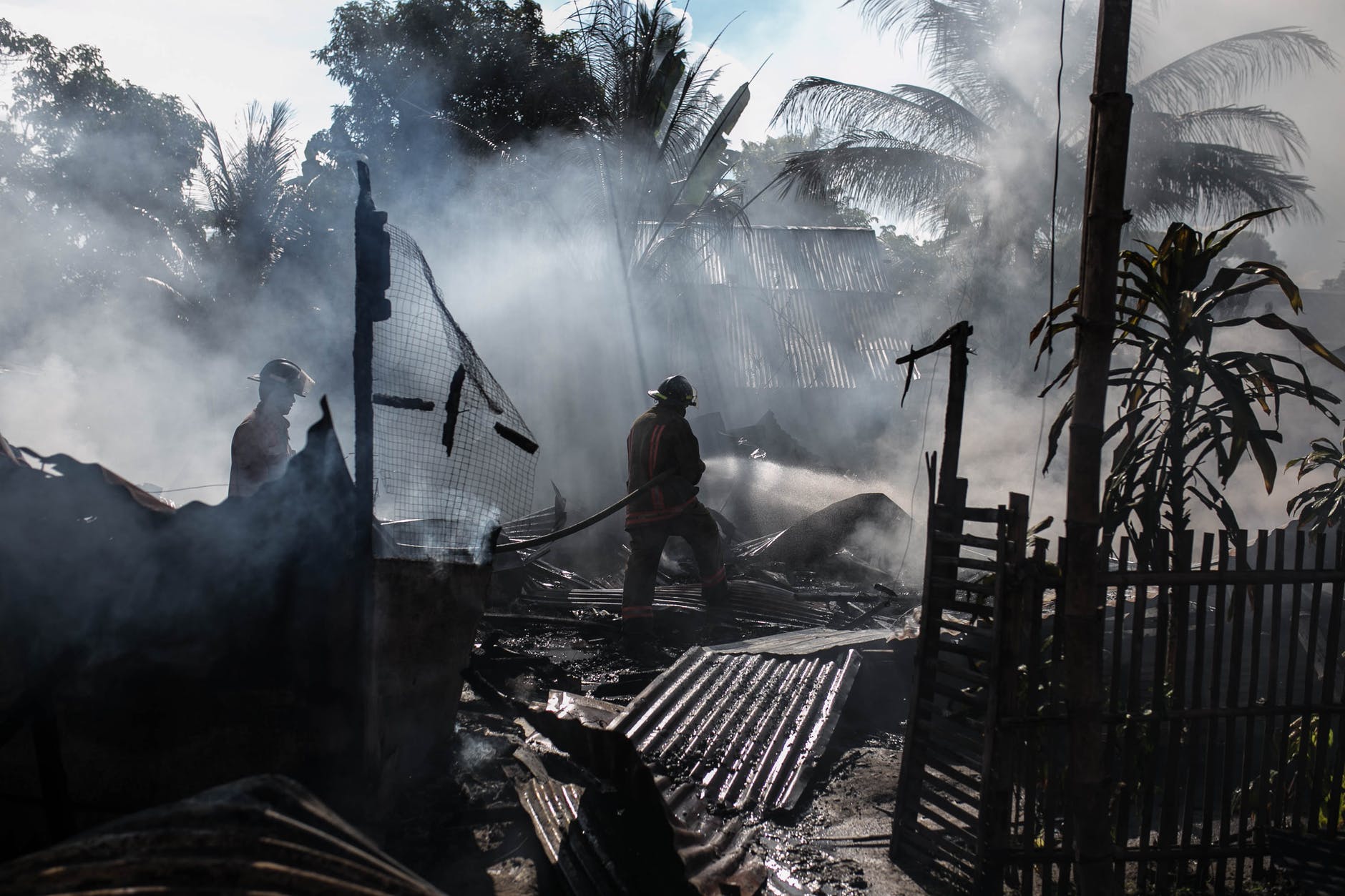
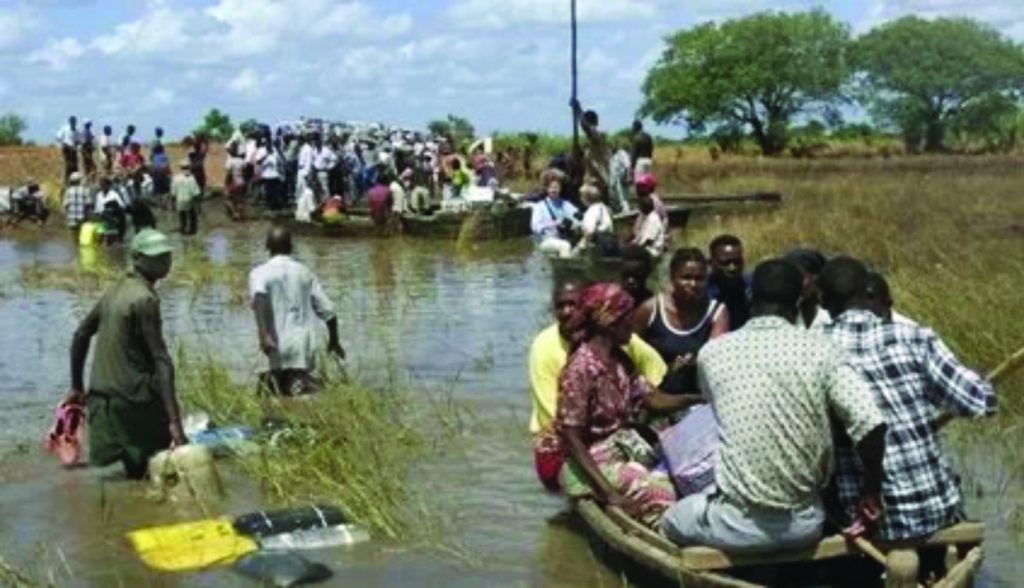
California is burning as I write this. Thousands of acres destroyed; hundreds of homes and businesses reduced to ashes; thousands of people left homeless. Where is God in these fires? When an innocent child is abducted, raped, mutilated and left for dead, where is God? Where is God amid the unrest in Mozambique, where typhoons and political unrest have caused so much havoc? Where was God when the hurricane and storm surge displaced tens of thousands of people in North Carolina, Tennessee, and Georgia less than six months ago? Where is God in the war-torn regions of the world, where innocent families are being terrorized by bombing raids and invading armies? Where was God when millions were dying of COVID just a few short years ago?
I’d love to say that I have an answer. One that is comfortable, unassailable, logical and easy to understand. But I don’t. The “glib” answer is that God is on His Throne, omnipotent and all-wise. And He is. He is not to “blame” for personal tragedies or for sweeping disasters. Sometimes, God intervenes in miraculous ways to “save” us from certain death, “accidents,” or even attacks. But often, He chooses not to do so. And I have no explanation, no all-encompassing, deeply soothing answer for those who are left suffering.
What I do know is this: God is a redeeming God. He is a God who can and often will turn tragedy into triumph. And even if, in such cases, the triumph is often bitter-sweet. This is a God who created mankind, knowing we would reject His goodness and go our own way. This is a God who took a single faithful man (Abraham) and made him the father of many nations– some of whom are still at war to this very day. This is a God who did not spare His Only Begotten Son, but allowed Him to go through a sham trial, be falsely convicted, and die a painful, publicly humiliating death. And then, Christ arose!
What does that mean for someone whose son or daughter is still dead after five (or 25) years of grieving? For someone who lives every day with the trauma of having been raped or abused as a child. It does not give immediate comfort. It does not take away the sting of injustice, pain, and questioning. But it is the promise of redemption– that just as Christ rose victorious, He will cause the pain and grief of the past to disappear in the Joy and Wonder of Eternity with Him. He WILL bring ultimate and complete justice, and it will be perfectly overwhelmed with mercy, grace, and freedom from the past.
It may seem slow and painful, but it WILL happen. Those who have suffered; they will laugh again. Those who are drowning in the senselessness of their own sorrow will experience healing and have answers to their questions. Those areas of the world where suffering is so great in the present– they will recover. Trees and gardens will grow again. Houses will be rebuilt. And yes, there will still be disasters and devastation in our lifetime, and in the years to come– UNTIL THAT DAY. That day when Christ returns to make all things new. Whatever hurts and griefs we carry now, they will be overtaken by joy and healing. No more fires, no more floods, no more war, no more disease, no more “mistakes.”
I don’t know why God allows us to suffer now. I’ve heard some philosophers try to explain, and they have many “good” reasons:
Suffering often leads to growth and necessary change. Suffering produces resilience and develops character. Suffering teaches us that there are consequences to our selfish and sinful actions. Suffering often brings people closer together and brings out the best in us as we offer help and hope and encouragement. Suffering teaches us to be compassionate toward others in their suffering and grief. Suffering contrasts with joy, helping us to appreciate what is truly good in our lives.
These are not bad answers. But they are not complete. They are not “enough.” And I think that’s part of God’s plan. God doesn’t want us to live life on autopilot. He doesn’t give us “easy” answers– just like He doesn’t give us a life without any purpose or challenge. He doesn’t want us to focus on having all the answers. He wants us to learn from each other, depend on one another, and ultimately to trust that He knows best. It’s not an easy lesson to learn. But if we stay in pursuit of Prayer, and closeness to God, it’s a lesson well worth struggling through.
And sometimes, we can learn to laugh at life’s “typos” and other little mistakes as we travel this life.
Advent is a time of waiting. It is a time of wonder. But it is also a time to wonder–to ponder and reflect on the meaning of Jesus Christ. Why did He come? Why did He choose to be born where and when and how He did? The Bible gives us some of the “big” answers– He came to give His life as a ransom for many (Matthew 20:28, Mark 10:45); He came to “bear witness to the truth” (John 18:37); He came to fulfill the law and the prophets (Matthew 5:17); He came to give salvation and everlasting life (John 3:16)–and more. But there are still many things to ponder.
I wonder why Jesus came as a helpless infant. He could have taken on flesh and appeared as a full-grown man, and a king at that. He chose to come in weakness and in need– the Lord of all Creation needing to be fed and clothed and carried from place to place.
I wonder about His early life. Jesus had to learn how to crawl, to walk, to talk, to run, to write. Imagine, the eternal Word of God having to learn to speak! The One who would one day walk on water had to learn to take His first steps on land. He was once toothless! Did He lisp when He was first learning to talk? Did He fall down as He learned to walk? Did He run too fast, and skin His knees? Were there foods He didn’t like, or others He preferred? Did the other kids tease Him and hurt His feelings? Did He suffer from headaches or toothaches or upset stomach (or even diarrhea)? Did He get splinters working with Joseph in the carpenter’s shop? Did He have a favorite teacher? When did Joseph die, and how did this change Jesus’s family situation?
Jesus was fully human, and He lived as a baby, and a child, and as a man. His ministry spanned only a short three years– less than a tenth of His earthly life. What did He see in those years? What did He learn? What did He “wonder?”
I wonder.
What if part of the process of Jesus’s earthly life was to remind us that God is with us from our earliest, neediest, and most vulnerable moments to our last breath? What if it was to remind us that even Jesus had “bad hair days” and skinned knees? That He came to experience ALL that is part of being human, including the long wait to grow to maturity and to fulfill His mission, and the hundred little obstacles of everyday life? Or maybe it was to remind us that there is awesome wonder in the ordinary–that even God found it worth marveling over those little moments with family or friends, or watching a glorious sunset, or catching a firefly.
It’s so easy for us to lose the wonder of the Christmas season. But it’s also easy to lose the wonder of those ordinary moments–a shared smile or tear, the excitement of someone else’s birthday, the taste of fresh-baked bread, the way the sun sparkles on the lake. Jesus came to redeem us. And in the process, He came to redeem our sense of Wonder, too.
We are a curious race, humans–we ask a lot of questions of ourselves, each other, and even of God. How did He make the universe? When will Jesus return? Who can we trust in this world? Where is Heaven? What must we do to be saved? But the majority of our questions are “Why” questions. Why did Jesus come? Why did He have to die? Why did God make snakes and mosquitoes and platypuses? Why are men and women so different? Why am I… (short/tall, fat/thin, clumsy, “odd,” misunderstood, etc.)? Why are You so mysterious? Why do bad things happen to “good” people?
I was thinking about this last question this week. I don’t have any definitive answer to that– no one I know has any better answer. God has not given us a definitive answer, either. We are to trust that His ways are wise and best and perfect, but faith and trust require–well, Faith and Trust! We know God has done good things in the past. We know He has redeemed what seemed like hopeless situations. We know His promises, and we have seen some of them fulfilled. Still, such a question can often leave us blindsided and tongue-tied.
There are many learned thinkers, philosophers, and apologists who have written whole books on this subject, but I want to just pose a couple of ideas to help us, not ANSWER the question, but understand the question a little better.
First, the question, “Why do bad things happen to good people?” is really two questions: “Why do ‘bad’ things happen?” AND “Why do they happen to ‘good’ people?” So let’s look at the questions separately.
“Why do ‘bad’ things happen?” What do we mean when we say “bad things?” There are many circumstances, events, diagnoses, and occurrences that may be called “bad.” Death is “bad.” Indigestion is “bad.” Stubbing one’s toe is “bad.” Being diagnosed with Alzheimer’s Disease is “bad.” Divorce is “bad.” Slavery and abuse are “bad.” House fires, job losses, being mugged, being stranded without heat in a blizzard, an outbreak of acne, being laughed at– all these are “bad.” But they are all different. Many “bad” things are the direct result of sin–we suffer the consequences of our own sin; we are the victims of the sins of others. The consequences of addiction can be horrific, but we often lack compassion for those who are suffering, because “they brought it upon themselves.” But what about the innocent victim of rape or child sex trafficking? Such acts leave victims traumatized and broken. Both are “bad,” but we are angered and frustrated even more when “bad” consequences also seem unjust and unfair. And what about natural disasters? Are they the result of sin, as well? The Bible suggests that they are. When God placed Adam and Eve in the Garden of Eden, they lived naked, carefree, and unafraid. Only after their sin did God place a curse on the land– Adam would now have to cultivate the land in order to get food. There would be enmity between the woman and the serpent. Eve (and all women after her) would have pains in childbirth. (see https://www.biblegateway.com/passage/?search=genesis+3%3A+14-20&version=NIV) There is no mention of hurricanes, blizzards, or earthquakes prior to the Fall of mankind, though it is speculation on my part, to say that there were none.
God has promised to make all things new. There will be a time when the consequences of Sin will be eradicated. We will not even remember the suffering we endured in life, in light of the blessings of eternity. So, though God doesn’t answer our question of why “bad” things happen, He does give us the assurance that such “bad” things do not determine our destiny, nor do they happen without His knowledge or outside of His will! We cannot understand God’s purposes in allowing us to suffer, though sometimes we may see a hint of good even in the midst of tragedy.
And God is loving and gracious in the face of our confusion and pain. We CAN ask God “Why?!” “Why me?” “Why this?” “Why now?” “Why them?” Why, O Lord!?” Many of the Psalms speak to this very question. But in the middle of his anguish, the psalmist often finds comfort and renewed strength to face the struggle, when he turns to God. Asking why is not always a sign of weak or failed Faith. Instead, it is acknowledging before God that we ache. We grieve. And we NEED HIM!”
And what about the second part of the question: “Why do (bad things) happen to ‘good’ people?” What makes a person “good?” Jesus was “Good,” And yet He questioned the rich young ruler, “Why do you call me good? No one is Good– except God alone.” (see https://www.biblegateway.com/passage/?search=Luke+18%3A18-27&version=MSG) We tend to think of the people we know and like as “good.” And we have a natural expectation that their lives should be “good” also– free of pain or struggle. But that is not realistic in this world. The actor, Michael J. Fox has been suffering for years with Parkinson’s Disease. This seems unfair and cruel. How could God let him suffer like this? But there are many thousands of people suffering from Parkinson’s Disease. Some of them are homeless addicts; some are in prison for rape or embezzlement. Is their suffering any less than that of Mr. Fox? Is it somehow less tragic or unjust?
The sad and shocking truth is that none of us “deserves” a pain-free, struggle-free life. Bad things DO happen. And they happen to people we like, and people we hate; people we judge to be “good” and people we judge to be “bad.” God does not “play favorites.” Yes, God can, and often does intervene on someone’s behalf through prayer, or for His own bigger purposes. But He does not “dish out” suffering to those He dislikes out of spite or revenge. Nor does He cause His faithful to float through life without ever tasting bitterness and grief. Jesus made many promises, but one of them was this: “in this world you will have trouble; but be of good cheer, I have overcome the world.” (John 16:33) He didn’t promise that you might have a little spot of trouble, or that you might look around and see others in trouble– He promised that we would have trouble. Not because we are “bad” or “good” but because that’s the way this world is.
I find it odd that atheists often pose this question as a way of trying to “prove” that God doesn’t exist. They pose the question as an accusation. “If there is a kind and loving God, why do bad things happen to good people?” But if they believe that there ISN’T a kind and loving God, how do THEY explain why bad things happen to good people? How do they define “good” people and “bad” things? Without a Good God, where is the expectation of good things happening to good people? Without God, there are no objectively “good” things or “bad” things happening– only random events without divine cause or purpose. You can’t blame a non-existent God for things He either caused or didn’t prevent. Such questions are meant to plant doubt in the mind of a believer, but they fail to answer the greater question– Why do Good things happen to undeserving people? Why do we sometimes find joy and peace and strength in the midst of our suffering? Why do human beings continue to Hope?
Finally– the ultimate example of God letting something “bad” happen to someone “good” can be seen in the central image of our Faith– the crucifixion of Jesus Christ. Jesus was sentenced unjustly to a torturous death and public humiliation. He was separated from God the Father, and carried the punishment for OUR sins so that WE could be reconciled to God. Even though the purpose of Christ’s suffering has been revealed to us, it doesn’t negate the agony and trauma He faced. And even HE cried out from the Cross– “My God, My God, WHY have YOU forsaken ME?!” (Matthew 27:46)
God does not answer the question of why “bad” things happen in this world. But in the crucifixion, Jesus proves to us that He shares and understands our suffering; that He has the power to overcome and redeem our traumas; and that He will hear our sincere cries of “WHY?!” He will hear when we turn toward Him, instead of turning our back on Him. He will hear our broken heart. He will heal our broken heart.
I am just finishing the book of Job in my daily Bible studies. Job is an interesting book. It begins with a discussion between God and Satan, in which God seems to “set up” Job. God points out Job and his righteous life. Satan (The Accuser) fires back that Job is only enjoying God’s favor; that, given hardship and pain, Job will turn his back on God and embrace evil. God allows Satan to ruin Job’s life– taking away his property, his status, and even all his children. (Ironically, Satan doesn’t cause any harm to Job’s wife, who acts as “devil’s advocate” later, telling her husband to “Curse God and die!”)
Job passes the first test. Satan asks for a “second chance,” saying that Job is still enjoying God’s physical protection. So God allows Satan to cause a painful, wasting disease to attack Job.
But the narrative shifts dramatically at this point. The next several chapters focus on Job’s confusion; his suffering; his bitter quest for answers to the age-old question– Why does God allow bad things to happen to good people? Job’s friends, who start out sharing his sorrow, end up being of very little help and no comfort at all. They insist that God wouldn’t– couldn’t– allow bad things to happen to an innocent man. Therefore, they conclude that Job “deserves” his pain and misfortune. Job insists that God is Righteous, but he wants God to answer his questions– WHY? WHY ME? WHY THIS? WHAT HAVE I DONE TO DESERVE THIS?
And God is silent. Through several rounds of discussion and argument, God is nowhere to be found or heard. Job’s complaints and questions anger his friends, but God remains silent and seemingly unmoved. The central question is not so much about God’s righteousness, but about His Goodness. Is God Good? Can a loving God allow people to suffer– especially if it is unjust– and still be called “Good”?
Reading through the book of Job, we are aroused to the same kind of anger that Job expresses. There are times when I have questions; times when I am suffering; times when I just don’t understand– “What have I done to deserve this?”
And yet.
The Bible is full of “and yet” moments. God finally speaks, but He never answers Job’s questions directly. Job did nothing to “deserve” his suffering. And yet, God allows him to be tested, tormented, and stretched to his breaking point. Not because Job has done something wrong, but because he has been faithful! God never answers Job’s complaints– and yet, God does not leave Job without any answer. In fact, God restores Job’s fortunes and gives him more children, so that his final condition is even better than before! God justifies Job in front of his friends, restoring his status, as well. Job complains about not having a mediator to defend him before the Almighty. And yet, Job trusts that such a mediator– such a redeemer– exists. He cannot see Jesus– and yet He puts his faith in the promise of His coming!
The book of Job ends with Job praising God–BEFORE his restoration– acknowledging that God is not just Good, but that He is Great! He is Great beyond our understanding. He is Holy, and His ways are higher and greater than our ways. Job’s suffering, while painful and undeserved, allowed him to understand God in a new and deeply personal way. God allowed Job to be crushed but not destroyed; tested, but not terminated. God was silent, but never absent.
In fact, the one character who is conspicuously absent at the end of the story is Satan! He has “lost” his challenge to make Job repudiate his right living and his love of God. He has been given two chances to strike at the authority and character of God– and he has left the battlefield in contempt and defeat. He has caused Job pain and suffering, but he has not caused Job to quit.
Job’s questions throughout the book which bears his name are really prayers. He is talking about God, and talking TO God, even as he addresses his friends. He is bitter and angry and confused– AND YET– he prays!
May that be said of me today, as I face questions, trials, and suffering. I can “Take it to the Lord in Prayer.” Not just when things are going well, and I am praising God, but when life seems bitter and I am questioning God’s justice. He IS Sovereign. He IS Good. He IS listening. He DOES Love me.
I Know That God Lives
13-20 “God alienated my family from me; everyone who knows me avoids me. My relatives and friends have all left; houseguests forget I ever existed. The servant girls treat me like a deadbeat off the street, look at me like they’ve never seen me before. I call my attendant and he ignores me, ignores me even though I plead with him. My wife can’t stand to be around me anymore. I’m repulsive to my family. Even street urchins despise me; when I come out, they taunt and jeer. Everyone I’ve ever been close to abhors me; my dearest loved ones reject me. I’m nothing but a bag of bones; my life hangs by a thread. 21-22 “Oh, friends, dear friends, take pity on me. God has come down hard on me! Do you have to be hard on me, too? Don’t you ever tire of abusing me? 23-27 “If only my words were written in a book— better yet, chiseled in stone! Still, I know that God lives—the One who gives me back my life— and eventually he’ll take his stand on earth. And I’ll see him—even though I get skinned alive!— see God myself, with my very own eyes. Oh, how I long for that day! (Job 19:13-27 The Message)
I keep a prayer journal. Every day, I have a list of people, places, and issues that prompts me to pray. Of course, I can pray about other things, as well. I can praise God for the day’s blessings, the weather (or provision in spite of the weather); I can confess failings and ask for God’s forgiveness. I can lift up things that are not on “today’s” list. But the list reminds me of so many things– the blessings of family and friends; the richness and vastness of God’s power and sovereignty; His faithfulness over so many years…
In my journal, I also keep a “running tab” of God’s many answers to prayers. Some of the answers bring joy; some bring wonder; some even bring tears. I have prayed for several people battling cancer. Many have gone into remission, but most have eventually died. I prayed for people during COVID. Many recovered– some slowly, some miraculously– but many others died. I have prayed for “little” things, like finding my keys (YES!), or making a sales goal at the store (NO). And some prayers have yet to be answered–I don’t know why or when, but I trust God has heard them all, and that His will and His answers will come– in His good time.
Often, I will look at the front side of the journal page (requests and reminders), and some of the requests are a year or more old. Then, I turn to the back side and look for the answer. Sometimes, in my haste, I have neglected to write the answer, so I will add it, with a small prayer of thanks. Sometimes, I have forgotten the exact outcome. Sometimes, I am encouraged to keep praying for a clear answer or outcome for an ongoing situation. But I am amazed at the number of prayers I have prayed over a year’s time, and how God has provided answers, big and small.
It is sometimes easy to forget the answered prayers amidst the worries of daily life. We are more concerned with the next crisis or the immediate needs before us. But it is helpful to record God’s answers (even the “NOs”) as we receive them. When we “count our blessings,” we can often stand amazed at some of the ways that God has “moved in mysterious ways” to answer things we once thought impossible, or overwhelming in the moment. Looking back, we can sometimes see how, and even why God has allowed us to go through experiences that seemed strange or unwelcome. And we can be reminded that the same God who answered all those prayers is listening to our current requests (and praises!).
God DOES answer prayer. He IS faithful. And when we keep a record of it, it increases our faith for the moments when we are still waiting on His answers!








































 Pursuing Prayer