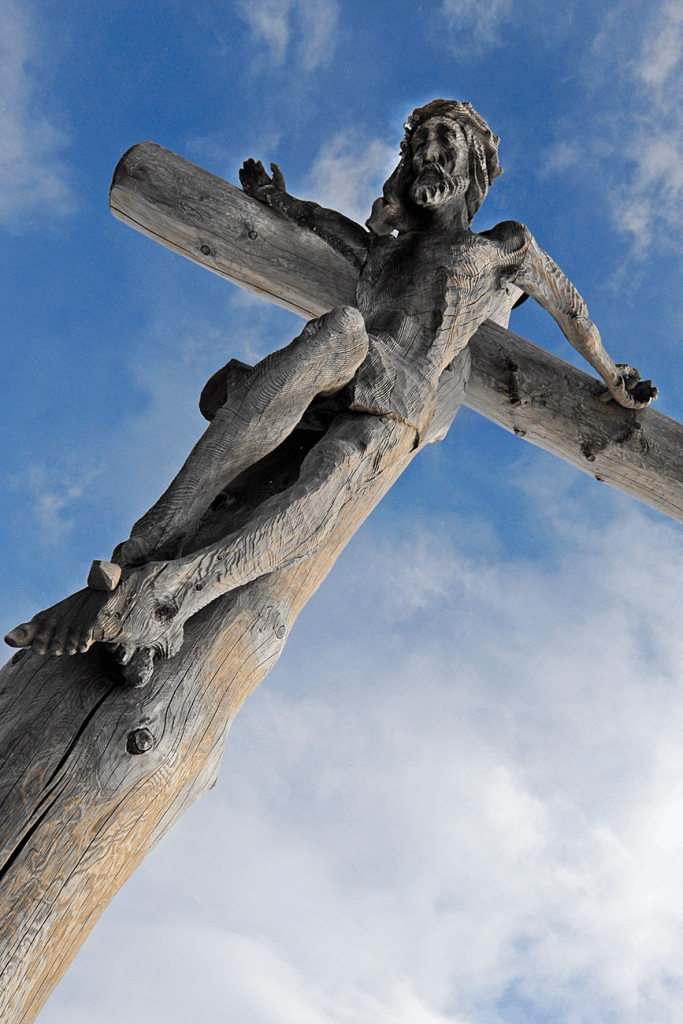
“Praying” Favorites

There is a very dangerous mindset that many Christians fall into– that somehow, God has “favorites” among His children. That He listens to and answers prayer for certain people “better” or more often than others. As someone who has pursued a lifestyle of prayer for more than fifty years, I can categorically state that this is false. Time after time, the Bible teaches us that God does NOT play favorites. He listens to each of us and loves each of us with a boundless and eternal Love!

Yet, I often hear people say, “Please pray for me. You are a prayer warrior. God will listen to you.” Is this wrong? Is it wrong to ask others to pray for us?

Of course not. And it is good to find other Christians who are devoted to praying for others. We ARE “prayer warriors!” But that doesn’t mean that God listens to any of us more than anyone else, or that some prayers are somehow better or more powerful than others.

There are three aspects of this mindset that I think are particularly dangerous:

First– we can feel that our prayers are not important; that they are not “good enough.” Satan loves to have us wallow in our inadequacies and focus on our faults and shortcomings. Maybe I have trouble finding the “right” words when I pray. Maybe I don’t feel comfortable praying aloud in a group. And I hear someone else who sounds eloquent and polished. While that may impress or intimidate me, it cannot make a difference to God! NONE of us is “good enough” to impress God! He loves to hear from each unique and precious child! If we believe that God somehow has “favorites” in prayer, we will believe that He has favorites in other areas, too. That our gifts aren’t as “holy” as someone else’s, or that our faith depends on us working harder or doing “more.” And this is idolatry–saying that God’s grace is not sufficient for Him to accept us and bless us without some extra effort on our part.

Secondly– we can feel that prayer is for “other” people. If there are special people whose prayer lives are strong, then we can let them do the “heavy lifting” of praying, while we concentrate on giving or preaching, etc.. We SHOULD develop the particular gifts that God has given us– that is true– but prayer, just like spending time in worship, studying God’s word, practicing fellowship, and showing grace, is something everyone should be practicing. The Apostle Paul compared the Christian life to being an athlete or a soldier. We are ALL in training and part of a team. Prayer is not specialized training– it is basic and fundamental to the Christian Walk.

Finally–“Prayer Warriors” are fellow workers, not specialized saints. Some people practice prayer because they have more time to do so. Many of those who are considered “prayer warriors” are widows or widowers, retired, or even bedridden. Many of us are prayer warriors for a season. When we believe that God has “favorites” in prayer, we may elevate them beyond what we should. Once again, Satan loves to have us compare ourselves with others, rather than focus on how we can each serve God.

There are some Bible verses that speak to this, and many of them, taken out of context, can reinforce the wrong mindset. For example: James 5:16 says that the “fervent effectual prayer of a righteous man availeth much.” But the context is that of people praying for one another, not a single man doing the praying. It says more about passionate and persistent prayer than any identity as a prayer warrior among other “lesser” pray-ers.

First John 5:14 says, “This is the confidence we have in approaching God: that if we ask anything according to his will, he hears us.” That applies to any of us!

“The Lord is near to all who call on him,
to all who call on him in truth.” Psalm 145:18

“Call to me and I will answer you and tell you great and unsearchable things you do not know.” Jeremiah 33:3

“Let us then approach God’s throne of grace with confidence, so that we may receive mercy and find grace to help us in our time of need.” Hebrews 4:16

“But when you ask, you must believe and not doubt, because the one who doubts is like a wave of the sea, blown and tossed by the wind.” James 1:6

“If you believe, you will receive whatever you ask for in prayer.” Matthew 21:22

There are only two things that the Bible says about “better” or more effective prayers. We must pray in FAITH, and in OBEDIENCE, (or praying within the will of God). NOTHING else is required for God to listen and respond. We are all “prayer warriors.” Prayer is part of our warfare against the enemy. And while it is wonderful to come together and know that others are praying for you, it is also important to remember that God has no favorites. His Grace, Power, Protection, and Love are equally available to anyone who asks in faith! There may be millions of pray-ers, but only one Sovereign, All-Powerful, Majestic and Loving God!

Ask…


Matthew 7:7-12 New International Version (NIV)

Ask, Seek, Knock

“Ask and it will be given to you; seek and you will find; knock and the door will be opened to you. For everyone who asks receives; the one who seeks finds; and to the one who knocks, the door will be opened.

“Which of you, if your son asks for bread, will give him a stone? 10 Or if he asks for a fish, will give him a snake? 11 If you, then, though you are evil, know how to give good gifts to your children, how much more will your Father in heaven give good gifts to those who ask him! 12 So in everything, do to others what you would have them do to you, for this sums up the Law and the Prophets.

I’m really bad about asking for help.  I don’t mind asking for advice or opinions– I can listen and take the advice or ignore it; accept someone else’s opinion or not.  But asking for help puts a certain obligation to accept whatever help is given.  It also announces that you have a need; that you are struggling and can’t do “it” on your own.  This is especially true in situations where we are embarrassed to admit to shortcomings, inabilities, or perceived failures.

background conceptual contemporary creativity

Asking is difficult for most of us.  Not just because we must swallow our pride and admit to a need, but because we must hope that whoever we ask will be willing or able to meet that need.  Asking becomes more difficult when we don’t know who we can trust.  Admitting weakness to someone who is kind is a small risk–it may bruise our pride, or cause the other person to pity us.  Asking for help from someone who is deceitful, arrogant, incompetent, or abusive is a recipe for disaster.

Sometimes, we are afraid to ask for help because we sense that there is no help to be given.  We wallow in despair, thinking all is lost or hopeless.  But fear and despair are not wise counselors–they cannot help us out of our problems; they can’t even see beyond the current chaos or the next panic.  Sometimes, we are too proud to ask someone else to do what we feel we should be able to do– others can manage, others can triumph “on their own”– not realizing that they had help along the way, or that they need help in other areas where we are strong.

girl in pink jacket on wooden bridge in the forest

And sometimes, we don’t want the kind of “help” that is offered.  We want help to stay in our comfort zone, even if it means bondage to addiction, or losing an opportunity that comes only with hard work or sacrifice.  We want someone to lie to us, keep us comfortable, or flatter us, when our greatest need is someone to challenge us, coach us, and give us the truth, even when it stings.  In fact, if we have grown lethargic, entitled, and arrogant, we won’t ask for help– we will demand a lesser form of help that enables us to stay as we are and not help us become who we were meant to be.

sky sunset person silhouette

So consider this as you pray today– the God of the Universe– creator of galaxies and microcosms, ruler of eternity, the God who hears every sigh of every human on the face of the planet and knows who made it and why, the God who gave His only Son to fulfill the law and restore your soul–this God is waiting for you to ASK Him for help, for guidance, for wisdom, for your daily needs, for forgiveness that only He can give completely.  And He promises to give good gifts– joy, peace, hope, love.  He will not scorn us in our need– He already knows it, Why are you waiting?

Ask, Seek, Knock

God knows our innermost thoughts, wishes, and needs.  So why do we pray?  We’re not telling God something he doesn’t already know.  He asks us to seek him, though he is omnipresent.  He tells us to knock, and the door will be opened, yet he also says he stands and the door and knocks.  Is this another Bible mystery?  An oxymoronic enigma?

I don’t think so– I think it is a case of God laying out some ground rules of relationships– his with us, us with him, and even us with each other.  God is spirit, but he ask us to build dwelling places where he can meet with us– temples, tabernacles, churches.  He wants to abide, to live in relationship and companionship.  Ultimately, he offers to dwell in each of us.  But he has created each of us as a unique being. And just like a unique building, we have walls and windows and doors.  When we reach our eternal dwelling place, this will still be so.  We will be changed, purified, sanctified, and glorified, but our souls will not be subsumed or merged into a single temple or a single “soul.”   Heaven is not like Nirvana.  God is eternally God and we are eternally his creation.  Living in communion is not the same as merging or evolving into something not ourselves.  We remain uniquely individual, and as such, we need to learn to take initiative to open our doors and windows– to interact, to serve, and to honor each other.

pexels-photo-813870.jpeg

Have you ever been blindsided by someone who expected you to read their mind?  You know they are hurt and angry, but you find out later (sometimes much later!) that they wanted you to comment on their new hairstyle, or they expected you to ask them out for coffee.  Maybe you know the pain of being on the other end– wishing someone would notice your weight loss or ask about your day.  God wants us to learn to reach out, to ask, seek, and knock, instead of isolating ourselves behind locked doors.  We are to be active, not passive, about noticing others, sharing with and including others, and serving others.  But we are to do it in love and humility– with grace and mercy and love, not with bullhorns, fists, or combat boots.

God is the Almighty one– yet he stands at the door and knocks.  He could barge through our stubbornness and rebellion, and drag us kicking and screaming to the altar.  He could tear down the walls of isolation and storm crush our pretentious justifications and excuses.  But he stands, waiting for us to open the door, and seek his face.  The one who spoke the universe into being waits for us to begin the conversation!

Building Blocks of Healthy Prayer

When I was in elementary school, we learned about nutrition. Back then, we were taught that there were four basic food groups (nutrition education has gone through several “cycles” since then– food pyramid, healthy plate, “eating the rainbow”, etc.). Eating a healthy balance of foods is essential to good health. If I only eat meat, or only sweets, I will not be healthy. If I just eat whatever or whenever I feel like it, my body won’t get all the necessary nutrients to grow, fight off diseases, and stay strong.

Pursuing a healthy prayer life includes essential “building blocks” or nutrients, as well. Over the course of many years, I have seen various guidelines and acronyms to help include different building blocks in prayer. I want to share a couple of them again today. These guidelines are just that– guidelines. But they can help balance our prayer life, and help it grow.

The first acronym I learned, and the one I have used for decades, is ACTS. Here’s how it works:

  • Adoration/Acknowledgement– begin each prayer by acknowledging God’s Sovereignty, His Holiness, His Goodness, and other qualities worth worshipping. This helps put you in the right frame of mind when talking to God. I am not just talking to a neighbor or a “good buddy”– I am speaking with the One who holds all of Creation in His hands! And He WANTS a relationship with me! He is all-powerful: there is nothing I can ask that He cannot do! His is all-loving: there is nothing I can ask that He won’t filter through His loving wisdom and will. Even if I don’t know what to ask for; even if I ask for the “wrong” thing– God will only allow those things that He can use for good. God is beyond space and time: He knows all that has happened– all the triumphs and tragedies of my life so far, and all that is to come. He is LORD: He is in control– now and forevermore. Whatever seemingly impossible circumstances I face, they are nothing compared to the eternal, almighty plans of God.
  • Confession–This doesn’t mean an endless repetition of all my failures and sins from six months ago, or raking myself over the coals for not being “holy enough.” This is an honest assessment of who I am in relation to God. God is Holy and perfect. I am not. If I acknowledge God’s goodness, I must also acknowledge that I fall short. I don’t know everything. I don’t always act with the right motives. I NEED the Holy Spirit’s guidance, and I DEPEND on Christ’s finished work on Calvary for my Salvation. This should naturally lead to
  • Thanksgiving/Trust– I can trust God to save me, NOT because of who I am, but because of what He has done. I can see God’s hand working in and around and through me as I yield to His Spirit in me. I can recall, and acknowledge so many of the ways that God has blessed me and others around me. Once I have these building blocks in place, I can bring burdens to God through
  • Supplication– this is just a fancy term for asking God to work His will in specific areas– healing, guidance, encouragement, strength, understanding, submitting to His will, and following Him. I can ask for personal help, or lift up family members, neighbors, friends, and yes, even enemies! I can pray about situations great and small–from wars and famines to lost keys and short tempers.

I learned about ACTS when I was in college, and I have found it to be a great guideline. While I don’t use it for every prayer– sometimes an issue calls for immediate and direct supplication, for instance– I find that using this in daily prayer helps me grow in faith, patience, endurance, and hope. When I come to God in panic or stress, and I haven’t built up a healthy, consistent practice of prayer, my words can be anemic– lacking in faith and based on my fear or anger. I pray with my focus on problems, rather than on God’s power to overcome any circumstance. Using ACTS helps me remember that it is GOD who “acts,” and always for the best!

The second acronym I have used is PRAY. It is very similar to ACTS, but the end focus is slightly different:

  • Praise/Adoration– once again, it begins with praising the God who is worthy; the God who hears me, sees me, loves me, and knows what is best. I cannot live victoriously without remembering the source of hope and victory, and putting my heart in HIS hands.
  • Repentance– as with Confession above, this is not an act of groveling and rehearsing past shame. It is acknowledging anything that I might be holding on to that gets in the way of my worship of and submission to God’. E.M. Blaiklock, the Christian apologist from New Zealand once said: “God alone knows how to humble us without humiliating us and how to exalt us without flattering us.”  Repentance is not about humiliation or holding on to guilt, but rather about staying humble and honest about our need for God’s Grace and Power. And turning from anything that might get in the way of following Jesus Christ.
  • Ask– once we have a right view of who God is, and who we are, we are free to ask Him whatever is on our mind, and share our questions, fears, burdens, etc., with the One who has all the answers!
  • Yield/ “Yes, LORD!”– The final step is making sure we are ready to listen and respond to God as we expect His answer. No matter what God’s answer may be, we should trust and obey His wisdom above our own.

I have come to value PRAY as a wonderful tool to help in my pursuit of prayer, and in my broader pursuit of Christlikeness. Both ACTS and PRAY help me pray “better.” It’s not that God grades my prayers or listens more or responds differently: but it helps me to better appreciate the power of prayer, and the power behind prayer. Individual prayers can change circumstances, but the pursuit of prayer is meant to change US as well. Prayer that shapes us, helps us grow– if that isn’t at least part of our pursuit of prayer, we are missing out on what God wants to do through us, and not just for us.

It is important, just as with nutrition, that we have a healthy balance in our prayer life. That balance consists of worship, repentance, sharing our burdens, showing gratitude, and offering ourselves in humble service. Prayer is too important to just “wing it.” We need to pursue it with the same (or better!) dedication that we give to our physical health.

Hallelujah! Amen!

At least once a month this year, I hope to include a post on helpful tips to improve our pursuit of prayer. These are tips I’ve gathered over the years, and it helps me to remember as I write about them.

Today, I want to talk about starting and finishing well.

Beginning prayer with a Hallelujah helps focus my attention where it should be– on God! Too many times, I start praying with a “need” mindset. I’m focused on a need or a situation in my life or the lives around me. But the greatest “need” I have is to lift my eyes and focus on the ONE who is higher and greater and more powerful than any situation; the ONE who can satisfy every “need” and bring justice, restoration, and hope to any situation.

I have learned two different acronyms for prayer over the years– ACTS and PRAY. ACTS stands for Adoration, Confession, Thanksgiving, and Supplication. PRAY stands for Praise, Repent, Ask, and YES! (action). In both, the first step is to bring praise and adoration to the One who is worthy of it.

Sometimes, this is easy to do. Sometimes, it is painful. When I am stressed, worried, grieving, or convicted, my focus is inward and downward– and I can spiral into depression, isolation, and fear. The last thing I want to do is turn my focus away. God’s glory and righteousness can be blinding in the face of dark depression and despair. And yet–

Start small. Begin with one aspect of God’s character that you have experienced– His Grace, His Faithfulness, His Love. Meditate on it. Express it. Expand on it. Recall some of the specific ways in which God has been gracious, faithful, or loving. Think about some of God’s other attributes– His wisdom, power, omnipresence; His eternal nature, His creation. Soon, it becomes easier to speak, and even sing, His Praise!

Often, this will lead naturally into confession and repentance. When we begin by focusing on God’s greatness, His Holiness, and His majesty, our worries show themselves for lack of faith; our needs, while still real, reveal opportunities for God to “show up!” and for us to learn new depths of His character IF we are humble, obedient, and willing to learn.

Praise and Adoration are important first steps in prayer. But it is equally important to end our prayers well. Sometimes, our “Amen” is muted as our focus returns to our requests. And sometimes, it can be difficult and even painful to say “Amen!” I KNOW God is all-gracious, all-knowing, and all-powerful. But I also know that I don’t have enough money to pay the latest bill, or that I have been diagnosed with an incurable disease, or that my son or daughter is still lost. And I know that God may be asking me to walk through the valley of the shadow of death. He will be beside me, but He’s not going to remove the shadow or the valley to make it easier.

Over the years, I have found that it is better to wrestle IN prayer than to end with a half-hearted Amen. I must go back to Adoration; find my Thanksgiving, reclaim my Yes, Lord! before I say, “AMEN!” Otherwise, I am like the double-minded person in the book of James: being tossed like a wave in the ocean and filled with petty doubts in spite of my knowledge of God’s goodness.

End your prayer on a high note today. Remember to sandwich requests and concerns between hymns of praise and odes of thanksgiving. “Amen” should always echo our “Hallelujah!”

When God Asks a Question…

We often fear questions. We are afraid to ask questions; we are afraid of being questioned; we are afraid of asking the wrong questions or not asking the right ones. And we are often afraid of the answers, too.

Photo by samer daboul on Pexels.com

God is not afraid of our questions. In fact, He wants us to ask, to seek, and to knock (Matthew 7:7, Jeremiah 33:3, and others). God knows the answers to our questions– He even knows our motives in asking them! God may not give us the answers we expect, or answer in the manner or time we expect. But God encourages us to ask anyway, and to trust in His ability and His desire to give us what we need in the moment we most need it.

Photo by Munmun Singh on Pexels.com

God also asks questions–not because He doesn’t already know the answers, but because we can learn from the questions He asks, and the answers we give. Some of God’s questions seem self-evident; others are probing. Some are rhetorical; others are anguished. Let’s take a look at just a few, and see what we might be able to learn from them:

  • In Genesis 3, God asks some very obvious questions of Adam and Eve after they hide from him. “Where are you?” Adam and Eve had not successfully hidden from God. He knew exactly where they were and even why they were hiding. But instead of storming into the Garden of Eden with condemnation and instant judgment, God asked a simple question, giving them both the opportunity to confess, and a clear reminder of their broken relationship. There had never been a need (on either side) to ask “Where are you?” After Adam responds with the excuse of being naked and ashamed, God asks his second question, “Who told you that you were naked?” God knew the answer to this, as well, but He added a third question that forced Adam to get to the heart of the matter and tell Him the truth– “Have you eaten from the tree…?” God could have asked condemning questions– “How could you disobey me like this?” “Do you have any idea what you’ve done?!” But God isn’t asking questions to overwhelm Adam and Eve with their guilt and shame. He’s asking for truthful acknowledgment of their disobedience, so their broken relationship can begin to be repaired. God assigns punishment, but He does not bring additional questions and condemnation
Photo by Chinmay Singh on Pexels.com
  • In the very next chapter, God asks Cain a probing question, “Why are you angry? (And why has your countenance fallen?)” God knows the answer. He knows how Cain feels and what Cain is thinking. God knows it so well, that He challenges Cain to master his anger and turn his face upward (i.e. seek God’s counsel over his own emotions). We don’t like probing questions, because they reveal our selfish motives and dark impulses. But God actually WANTS us to be aware of our own tendencies–and our need for His wisdom and grace! God is not afraid of our darkest thought– He doesn’t want to expose them for our shame, but enlighten us for our own good!
  • In Genesis chapter 18, the Lord asks a rhetorical question, “Shall I hide from Abraham what I am about to do…” (concerning the destruction of the cities of Sodom and Gomorrah). God had already determined that they should be destroyed; He had no need to share this information with Abraham. But in asking the rhetorical question, God gave us a glimpse into His character (as well as a window into Abraham’s character!) God does everything with purpose. He is not willing to hide information we need, nor to waste time or energy on useless information. Imagine if we knew everything–everything!- that would happen to us for the next year? If we knew about that near miss at the intersection on May 22, or the toothache on June 2, or the “surprise” birthday party in October? But when God does choose to open a window, He gives us a chance to respond. Abraham did not choose to argue that Sodom and Gomorrah were not wicked cities, or that God had no business destroying them. His heart was driven to discover if God would destroy the innocent with the wicked. He got his answer (several times over!) And even when God did not find ten innocent people in the cities, He still offered rescue for Abraham’s nephew, Lot, and his family.
Photo by Pixabay on Pexels.com

  • It isn’t only God the father who asks questions. Jesus the son asked two agonizing questions in the New Testament. While He was dying on the cross, He asked the Father, “My God, My God, why hast Thou forsaken Me?” (Matthew 27:46). Jesus knew, intellectually and spiritually, why God had forsaken him; but His question echoed the one found all the way back in the Garden of Eden– “Where ARE you?” The ultimate anguish of being separated from God’s presence was felt by God himself! The agony of loneliness that comes from sin and shame and guilt– God knows it intimately from both sides!
  • Jesus also asked and anguished question of Saul of Tarsus– “Saul, Saul, why are you persecuting Me?” (Acts 9:4) Just as God asked Cain to look carefully at his motives and emotions, so Jesus challenges Saul to reexamine his activities and ambitions. Jesus knew, of course, why Saul was hunting down those who were preaching the Good News. He knew Saul’s ambition and his zeal for the Law. He knew that it had blinded him to the truth. And in Saul’s physical blindness, Jesus could “open his eyes” to a greater ambition and zeal–to preach this same Good News to the Gentiles– the same Gospel that is opening eyes around the world to this day to see the Awesome, Eternal, Victorious, and All-Encompassing Love of God.

Today, may we ask, seek, search out, study, cry out, knock on doors, and pursue this truth–God wants to meet with us! He wants to talk to us, to listen to us, to share closeness, to increase our Joy and be joined to us in our Grief, to lift up our countenance, end our isolation, and be the ultimate answer to our questions.

Photo by Saulo Zayas on Pexels.com

Could You Repeat That?

“Peter, do you love me?” Three times asked. Three times answered. (See John 21) Once for each time Peter had denied his Lord. You’d think the lesson had been learned. But when Peter had a vision filled with food that he refused to eat, it took another three times before he got the message.(Acts 10) We could say that Peter was consistently stubborn. But maybe Peter is not so different from us.

Photo by Ketut Subiyanto on Pexels.com

Fear not. Do NOT be afraid. Be strong and courageous. The Bible is filled with such messages. Over and over, God’s people need reminders to look beyond fear and find faith. Go and preach the Gospel. Go out into all the world. Go make disciples. Love one another. Love your neighbor. Love your enemies. Pray without ceasing. Run the race. Don’t give up. Ask. Seek. Knock.

Photo by RUN 4 FFWPU on Pexels.com

God is not annoyed or afraid of repetition. He uses it when speaking patiently to us. He welcomes it from us in prayer. Sometimes, I feel like I’m “nagging” God about certain things. After all, He already knows my needs, so why am I bringing the same request for the 19th time this month? Except God not only knows about my need, He knows my tendency to get discouraged and distracted. God doesn’t need to hear my request again, but He wants to hear me ask. More than that, He wants to hear me ask with confidence, knowing that He HAS heard and WILL provide– in ways and times I cannot know.

Photo by Arina Krasnikova on Pexels.com

God hears. God knows. God cares. It’s worth repeating! It’s worth asking– again!

But I Don’t Understand…

I’m getting a double whammy this week–two Bible study groups; one studying Daniel and the other Job.  Some of you will groan just reading the first sentence.  Along with the book of Revelations, these are two of the most difficult and misunderstood books in the Bible.  And for good reason.  The book of Daniel doesn’t just contain the favorite stories of Daniel in the Lions’ Den and Shadrach, Meshach, and Abednego, it also contains prophetic visions that seem to foreshadow two distinct sets of events– one set that happened in the time between Daniel’s life and the birth of Christ, and another set of events yet to come.

lion sleeping beside rock
Photo by Aldo Picaso on Pexels.com

The book of Job is puzzling– there are no good clues as to when it took place, or exactly where, or even if it is real or a parable.  There is a curious interchange between God and Satan that is unlike any other passage in scripture.  Finally, it is filled with difficult dialogues from Job and his friends, as they try to make sense of his suffering as God stays silent.  When God finally speaks, He doesn’t directly answer Job’s questions or his friends’ misleading statements.

grayscale photography of man praying on sidewalk with food in front
Photo by sergio omassi on Pexels.com

What happens when I don’t understand what God is doing (or seemingly NOT doing) in my life or the lives of others?  What happens when the world doesn’t make sense, and the Bible doesn’t seem to shed any light?  What happens when I pray, but God seems silent?

I think the answer has a lot to do with where I am in my relationship with Christ:

  • I can panic, lose faith, or become angry and insolent.  If I don’t know God or don’t trust him; if I doubt his goodness or wisdom or power, I may run from his word and his presence.
  • I can lean on my own understanding.  I can substitute my own limited wisdom for God’s, and try to “explain away” all the things I don’t quite understand.  I may ignore the Bible passages I don’t understand, in favor of doubling down on the ones I think I know.  I can insist on my own interpretations of difficult or disturbing passages, even if someone points out inconsistencies in my logic, or context clues that disagree with my view.

arrogant

  • I can lean on someone else’s understanding, listening to their views without question or without reading and praying through it myself.  If someone else has an answer, shouldn’t that be enough?  Even if I still don’t fully understand, at least I have an answer…
  • I can ignore the question–after all, do I really need to know about God?  Isn’t it enough that He exists and He is good?  If I say it loud enough and often enough, won’t that make the questions go away?

adult beautiful casual cute
Photo by Pixabay on Pexels.com

It seems that there is a better way– God never promises us easy answers or complete answers to all the questions in this life.  We can be angry or grateful for that truth, but most of all we must accept it.  God will answer many of our questions–maybe not in the time and manner we expect.  And some of them we won’t understand this side of heaven.  But the Bible is clear in calling us to pursue answers, and be honest when we don’t understand.  God may not give us a simple answer, but He promises to give us wisdom– wisdom to seek, and wisdom to wait; wisdom to trust, and wisdom to keep knocking.
Ask, Seek, Knock, Wrestle, Search, Pray, Plead, Study, and Learn.

pexels-photo-935944.jpeg

Blog at WordPress.com.

Up ↑