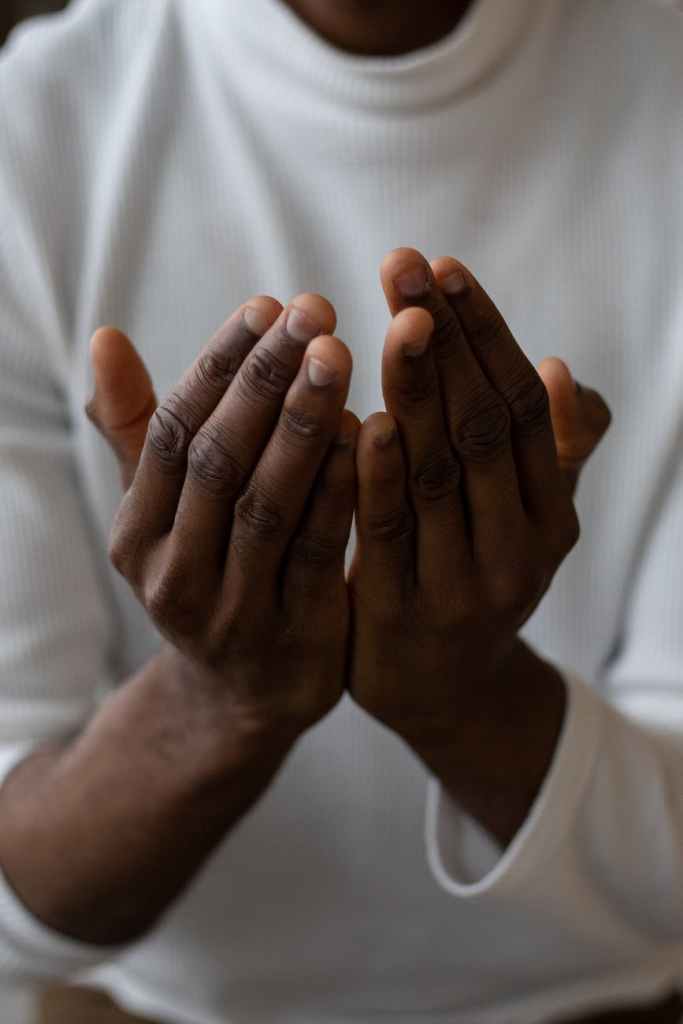
Why Do I Pray?

I pray every day. But why? There are short, glib answers– “Prayer works,” or “The Bible tells me to.” Or I could say that it’s just a “good” habit, or that it “does something” for me. But prayer is more complex than that. I can give a lot of generic reasons for someone to pray. I can list (and have listed) many benefits of regular prayer. But what are my personal reasons for praying?

Prayer does “do something” for me– lots of somethings. Not every time; not always in the same measure, but prayer can:

  • Put me in a better mindset; it changes my focus and my attitude. When I pray, the world around me shrinks, along with all the worries and distractions it presents. Instead, I begin to focus on “God” things– the metaphysical reality that I am not the center of the universe, and my limited understanding is not enough to navigate life in its fullest sense. Jesus offers “abundant life” (See John 10:10)– life to the full. And prayer ignites that, taps into that, and lifts me from futility and confusion to meet with One who sees the end from the beginning.

  • “Recharge my batteries.” Prayer, meditation, “quiet time”– they are all similar, and they all have a physical benefit. Spending time in prayer can lower blood pressure, promote clearer thinking, and increase a person’s ability to withstand stress. Prayer can improve mood, but it can also improve the body’s ability to fight off depression, infection, and other stress-related issues. This is very personal for me, because I have struggled with stress and depression at various times in my life, and prayer can calm me, help me to change negative thought patterns, and endure hardship better than anything else. (Please note this does not mean that I don’t also need to do other things– proper diet, plenty of sleep, hydration are all necessary. Some people may require medication– prayer is not a substitute for good health advice, rather it is an integral part of being physically and spiritually healthy.)

  • Deepen my faith. God doesn’t always give immediate and clear answers to my prayers. In fact, it may feel sometimes as though He has forgotten me. So why continue to pray? Because God DOES answer prayer. Often, He answers in surprising and unexpected ways. Sometimes His answers come so slowly, so subtly, that I might miss them– if I weren’t keeping track. This is one of the great benefits of keeping a prayer journal or diary…I will often see an old entry, one that I had given up on or forgotten, and realize that God answered it weeks ago without any startling revelation or dramatic rescue. If I only pray when I expect God to do the impossible immediately, I may miss the development of something even more amazing that I imagined!

  • Become a vital part of my discipleship. Being a disciple literally involves discipline…I can’t say that I follow Christ part-time. Ignoring daily habits, like prayer and Bible study; failing to make time for fellowship with others; depending on my feelings instead of God’s Truth to guide my life– is hypocritical. Also, prayer should open my heart and mind to others who need to BE discipled. And this leads me to another benefit…Prayer can
  • Help me develop empathy for others. As I pray for others, I learn more about the struggles they face; I learn about their deeper needs. For instance, I may begin praying for someone with a chronic illness to be healed. And that is good. But as I pray for them daily, I learn that along with healing, they desire help with everyday chores that they can no longer do, or they need support and encouragement. Maybe they need rides to doctor appointments and tests. If I am praying for someone struggling with past mistakes or addictions, I learn to see with eyes of compassion and encouragement, rather than judgment and self-righteousness. It’s not just about praying for the “big” needs but learning to pray for (and find ways to help with!) intermediate needs as well. Finally, prayer can…
  • Remind me that I am never alone! I don’t pray to a brick wall, nor do I pray in a vacuum. I LOVE meeting with our local prayer group every week. I love hearing the others pray. I love being reminded that God listens to my prayers– The Father listens; The Son is my intercessor; The Spirit translates even my groans and mumbles–God delights in hearing from me! (See Zechariah 3:17; Hebrews 13:5; others)

So, Yes, I would say that “Prayer works.” But not in the sense that I can show that God has answered my requests exactly how or when I wanted. There are prayers I have prayed for most of my life that have not been answered “my way” yet. Reckoning with hurtful words and deeds from my past; family members who still haven’t accepted Christ; friends who are still facing the consequences of sinful life choices; situations and circumstances that I would like to see changed. And I don’t have any jaw-dropping evidence that my prayers can cure cancer or end world hunger or make my life problem-free. Quite the opposite. But I DO have evidence that Prayer has made a difference in my life; that I HAVE seen lives changed in ways that are impossible to explain away; that prayer is worth pursuing.

And that is why I pray.

Arguing With the Almighty

Our country has recently weathered (pun intended!) two major hurricanes which caused devastation and chaos. It seems like an unlikely connection, but I was thinking the other day about the movie, “Forrest Gump.” In it, a bitter, beaten, and angry character begins arguing with God– in the midst of a hurricane!

“Lieutenant Dan” was an able soldier, fighting in Vietnam and in charge of a small unit, which included the simple-minded Forrest Gump. When their unit was ambushed, Dan was badly injured and lost the use of his legs. Meanwhile, Forrest Gump received only a small flesh wound, and managed to save several of his fellow soldiers, receiving a medal for bravery. One of the soldiers rescued by Forrest, Dan resented his situation– disabled and ignored– while Forrest went on to become successful and celebrated.

Worse, in the years after the war, Forrest found Dan, homeless and dejected, and offered him a job and a home– on his shrimping boat. Forrest knew next to nothing about shrimping, and Dan, torn between bitterness and gratitude, gave Forrest a hard time. Dan’s life had gone nowhere, and Forrest seemed to dodge every bullet (literally), finding success in spite of his naivete and seemingly stupid choices.

It is a very relatable situation. We all know someone who seems to sail through life, while others seem to have nothing but bad luck and hardship. The class clown who ends up “making it big”– they spend money like it’s going out of style, and yet it keeps flooding in, seemingly without any effort. The neighbor who loses his job, and then his house catches on fire. And that person whose entire life seems to be lived under a cloud of misery and bitterness.

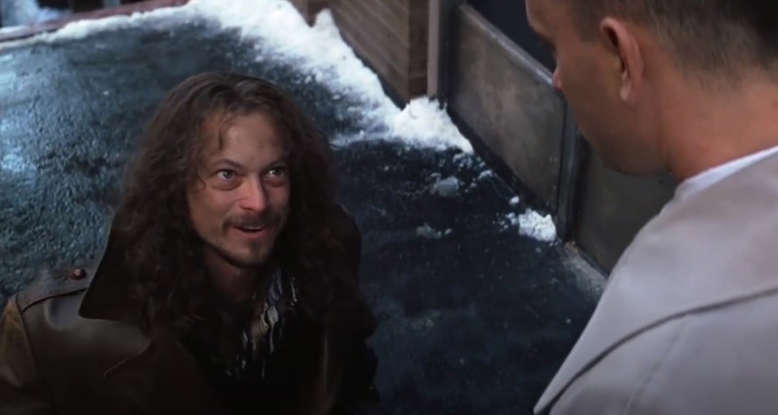
Gary Sinise as “Lieutenant Dan” in the movie Forrest Gump.

When the two men find themselves in the middle of a hurricane, Dan can take it no longer. He lashes out– not at Forrest this time, but at God. How could a loving God allow Dan to go through trial after trial– the loss of his legs and so many of the men under his command, the loss of his dignity and productivity, the loss of his independence, and now, another deadly situation beyond his control. He yells at God–“Come and get me!” He challenges God to just kill him; just finish him off–or leave him alone.

But God is silent– and soon, so is the hurricane. Forrest and Dan have survived. In fact, Forrest’s decision to be out of the harbor means their boat is the only one to survive–suddenly, they can’t catch the shrimp fast enough! Forrest becomes a millionaire and hires a fleet of fishing boats. But what about Dan?

Somewhere in the middle of the storm, Dan’s heart is pierced by a simple and life-changing thought. God has not been the one “ruining” Dan’s life– He is the one who has been preserving it! God brought him through war, disability, injustice, loneliness, frustration, and the raging sea. God was not a cosmic bully. God was not singling out Dan for punishment– after all, thousands of others had been wounded and killed in the war; millions of people knew what it was like to be hungry, homeless, and lonely; and hundreds had been devastated by the hurricane– even while they were safely evacuated or hunkered down on land. Forrest had not dodged every “bullet.” He had lost his best friend in battle; he had been rejected (time after time) by the woman he loved; he had been teased, bullied, and cheated dozens of times, and he had been tossed about by the same waves and winds Dan had survived. Dan ends up leaving Forrest, and setting off on his own, having found a peace that transcends his pain and bitterness. He swims off with a smile, leaving behind the opportunity to remain with Forrest and make millions.

Arguing with the Almighty is very tempting when we face difficult circumstances– and when we focus on our own lot, and not on the bigger picture. God is bigger than any of the troubles we face. And He is not unaware or unconcerned about whatever we are going through. Just as Lieutenant Dan challenged God, the biblical character of Job challenged God to vindicate him as he went through trials and pain. God finally answered, and Job realized that God was far bigger than anything Job had ever known or experienced. And in the end, God restored Job– giving him a new family, and even more material wealth than he had before!

Sometimes, God allows us to go through periods of pain and struggle– not because He is punishing us or because He is a tyrant, but because He is more interested in our ultimate salvation than He is in our immediate comfort. We moan and complain that God “doesn’t want us to be happy,” as if our momentary happiness is more important than our character development, than the happiness of those around us, or than God’s design for the world.

Near the end of the movie, Lieutenant Dan visits Forrest. He is transformed. No longer angry and bitter, he is quiet, self-assured, and standing! He has “new legs” made of titanium, and he has found joy, love, and success of his own.

Of course, many of us, regardless of our situations, have tried arguing with God at certain times of our lives. The loss of a loved one; the breakup of a marriage; a diagnosis of cancer; a miscarriage of justice and the loss of a reputation– it is natural to be angry, hurt, and confused. And God is more than big enough to “take it” when we ask “WHY?!!” But we will never “win” such arguments– not because God is a tyrant who won’t let us have what we want– but because God is GOD, and we are not. He alone knows how our story ends, and what trials– and blessings– await us. He alone knows what is “right” in the scope of eternity– not just for us, but for our loved ones, our neighbors, our nation, and our times. God can see that we get, not just “new legs,” but a new heart, and a new mind!

Hurricanes happen– so do hurts and hurdles. We can choose to see God’s hand–and believe that it is raised in anger, or reaching out to hold us. That choice is yours. That choice is mine. Every day.

Nothing to Fear But Fear Itself

When I taught public speaking in a local public high school several years ago, we had an entire unit on “stage fright.” Studies showed that the fear of public speaking ranked right alongside the fear of death! But why? Why are we afraid to speak in front of a group? Especially a group of our peers?

It turns out that stage fright has two perfectly logical and definable causes: first is the desire to do well/be successful/be understood, appreciated, and accepted. But this natural desire collides with the realistic possibility that we will make a mistake, or that something will happen to keep us from being understood (like a problem with microphones, or interruptions), or that our message will not be accepted or appreciated. Neither of these thoughts, individually, is unreasonable. But the more we exaggerate them, the less our brain can process the duality. We cannot guarantee that all will go perfectly, nor can we assume that all will go horribly wrong. But the more we worry about all the things that MIGHT go wrong, the more we create stress. Ironically, the stress and fear we generate often leads to mistakes we otherwise might NOT have made!

Part of combating fear, then, is to acknowledge that we want to do well– our best, in fact– in spite of whatever circumstances we might face. Instead of exaggerating what MIGHT go wrong, we must put more energy into what we can control, practice, and mitigate. We also have to stay realistic about what we are likely to achieve in our efforts. This is especially true in a situation where we face an unknown or potentially hostile audience. Our goal is to do the best we can with what we have, not worry about achieving the impossible or controlling what is beyond our ability to control.

I was thinking about this recently as I watched several political candidates in debates, town halls, interviews, and even in their TV ads. Many of them show fear, and even a bit of panic over questions from interviewers, reactions from audiences, and attacks from their opponents. It can be nerve-wracking to face “gotcha” questions from an interviewer– questions that ask you to defend or explain things you said years ago or actions you took under different circumstances. But it can also be an opportunity to clarify a position, show growth and how to learn from past mistakes, or create healthy discussions.

The same holds for Christians who face a hostile or unknown audience for the Gospel. We can be very fearful of sharing the Good News if we allow ourselves to fall into worry and negative thinking. We can face “gotcha” questions from opponents– “Why does a ‘Good’ God allow Evil and suffering in the world?” “Why does God send people to Hell?” “What about good people who die without hearing the Gospel?” “I know you. You’re not perfect. Who are you to judge me?”

But the truth is that God hasn’t asked us to have all the answers to “gotcha” questions. He hasn’t asked us to produce “mic-drop” moments in which we stun our opponents into humiliation. But we ARE to be ready, willing, and able to defend– and let’s be clear about this– OUR hope in the Gospel. It is not our job to force everyone around us to accept a particular doctrine, or set of beliefs. It is not our job to make others change their minds or hearts. It IS our job to testify to the Goodness that God has shown to us– even while acknowledging that we continue to suffer in this life– not to explain away God’s actions or other people’s experiences. We don’t have to be out there winning arguments. We just have to be prepared to Speak UP!

The Apostle Peter seems not to have suffered from “stage fright.” He always spoke out– and sometimes regretted it later! But he gives us this wise advice in his first epistle:

 If with heart and soul you’re doing good, do you think you can be stopped? Even if you suffer for it, you’re still better off. Don’t give the opposition a second thought. Through thick and thin, keep your hearts at attention, in adoration before Christ, your Master. Be ready to speak up and tell anyone who asks why you’re living the way you are, and always with the utmost courtesy. Keep a clear conscience before God so that when people throw mud at you, none of it will stick. They’ll end up realizing that they’re the ones who need a bath. It’s better to suffer for doing good, if that’s what God wants, than to be punished for doing bad. That’s what Christ did definitively: suffered because of others’ sins, the Righteous One for the unrighteous ones. He went through it all—was put to death and then made alive—to bring us to God. 1 Peter 3:14-18 (The Message)

Peter doesn’t give us a false promise that everyone will like us or accept our message. In fact, he makes it clear that even Jesus was rejected and suffered at the hands of those who heard the truth from His own lips! Our goal is not to force someone else to accept the truth– but to testify to the truth as we know it, understand it, and live it out. We are not the ones who will judge who goes to Heaven or Hell. We are not the ones who wrote the Law. But we speak of these things because we hold them to be eternal, vital truths. Our job is to let Christ speak through us– not just in our words, but in our Christlike attitude and actions.

We don’t have to fear the crowds– though they may pose very real dangers. We don’t have to fear even those who oppose or oppress us. If we are following our Savior, the only thing in this world to fear…is fear itself.

“Lord, today, I ask for a heart of joy and boldness as I prepare to have an answer for those who would question my Faith and Hope in You. Help me to remember how much You love them, even if they are not willing to accept my words or actions. May I speak to them as You would– with unwavering truth, and unwavering compassion. Thank you for the reminder that you have not given me a ‘spirit of fear, but of power and of love and of a sound mind.’ (2 Timothy 1:7 New King James Version) Keep my mind focused on You and immune to fear. In Jesus’ name, AMEN!”

“I Would Prefer Not To..”

Years ago, our high school class read a classic short story by the American author, Herman Melville. Bartleby the Scrivener tells the story of an unusual clerk– one who begins as a good worker, efficient and conscientious, but ends up dying in prison, hopeless, ruined, and broken. His tragic downward spiral begins one day when the lawyer for whom he works asks him to examine a short document. This is a commonplace request, much like asking a writer to proofread her final draft before submitting it to the editor. However, Bartleby responds by saying “I would prefer not to.” The startled lawyer decides not to force the issue, and gives the task to someone else.

Bartleby’s refusal to do what is expected of him escalates until he no longer does ANY work. He refuses to work, refuses to leave the office, and refuses to eat. He isn’t angry or violent, but he remains defiant until the very end.

So it is with us when we are living in sin and rebellion against God. It may start out small– some little habit or attitude. We know it is wrong, but instead of obeying God’s word, we calmly say, “I would prefer not to…” not to tell the truth, not to turn away from porn, not to help my neighbor, not to agree with God about my behavior.

8 The Lord is merciful and gracious,
    slow to anger and abounding in steadfast love.
He will not always chide,
    nor will he keep his anger forever.
10 He does not deal with us according to our sins,
    nor repay us according to our iniquities.
11 For as high as the heavens are above the earth,
    so great is his steadfast love toward those who fear him;
12 as far as the east is from the west,
    so far does he remove our transgressions from us.

Psalm 103:6-12 (ESV)

God is patient. He is gracious and kind. He does not treat us as our offenses deserve. He gives us the chance to repent. He offers forgiveness. But every time we say to God, “I would prefer not to,” we get a little more like Bartleby– isolating ourselves, wasting our potential to be all that God created us to be, growing more defiant and more rebellious, until we waste away into a prison of our own making, and, finally, death.

One of the things that makes Melville’s story so disturbing is that the narrator keeps trying to explain away Bartleby’s defiance–perhaps he is having trouble with his eyesight and doesn’t want to admit it; perhaps he was traumatized at a previous job; maybe there is a reason for his passive aggression. But in all of his attempts to understand, the narrator cannot save Bartleby from prison and death.

Understanding sin cannot change us. Excusing sin does nothing to stop its consequences (see Romans 6:23). No one killed Bartleby, yet he died because he “would prefer not to” do the things he needed to do to live. His small act of defiance, which starts out singular and almost heroic (after all, who wouldn’t like to tell the boss, “I would prefer not to,” every once in awhile?), sounds innocuous. Such a little thing to refuse. Surely God would not punish us for so small a thing…until one small thing leads to another…and another; a bigger rebellion; a numbing complacency; loss of perspective; a heart of stone; isolation; starvation; imprisonment; death.

What am I refusing to do for God today? What am I refusing to give up? Refusing to admit? Refusing to listen to? Am I excusing myself? Do I tell myself I am not in rebellion because I have been polite in my refusal to obey? Do I comfort myself that my rebellion is really just a matter of “preference,” and will not be consequential? That God’s Holiness is less important than my comfort or convenience?

Many people coast through life in the belief that God is SO merciful and SO loving that He can’t also be Holy and Just– that His commands are really suggestions; that His wrath is mythical; that our own wisdom is sufficient for living a “good” life and pleasing Him. But God isn’t concerned about whether we live a “good” life– He wants us to have an abundant life– filled with joy and peace, love and relationship, both now and forevermore. In fact, He would “prefer not to” punish us. He is not “willing” (i.e. desirous) that any should perish (2 Peter 3:9), but that everyone would some to repentance. That doesn’t mean that He won’t punish those who refuse to obey Him, or those who refuse to turn from their rebellion and trust Him; only that He will continue to give us the opportunity to recognize our need for forgiveness.

10 If you keep my commandments, you will abide in my love, just as I have kept my Father’s commandments and abide in his love. 11 These things I have spoken to you, that my joy may be in you, and that your joy may be full.12 “This is my commandment, that you love one another as I have loved you. 13 Greater love has no one than this, that someone lay down his life for his friends. 14 You are my friends if you do what I command you. 15 No longer do I call you servants, for the servant does not know what his master is doing; but I have called you friends, for all that I have heard from my Father I have made known to you.

John 15:10-15 ESV– taken from biblegateway.com

God has made it possible for us to be more than servants. We don’t have to respond to God as Bartleby responded to his boss– though God has the ultimate authority to demand our loyalty and obedience. Through Jesus, we are sons and daughters and friends! When God gives us commands, like “Love one another,” they are still commands. But His heart is that we should trust that all of His commands are righteous, life-giving, and in our eternal best interest. But some of us are still saying, “I would prefer not to.”

Nacho Prayers

Have you ever ordered nachos at a restaurant? I’m not talking about just tortilla chips with sauce– I mean the loaded, deluxe, supreme nachos that some with everything but the kitchen sink. There are several layers of goodness: crispy tortilla chips, smothered in rich, gooey nacho cheese sauce, and piled with spiced meat, tomatoes, green onion, black olives, salsa, chilies, beans, more cheese (shredded), maybe even some mango or avocado, and sour cream. Each flavor is distinct– different textures, different temperatures–yet they come together as they land on your taste buds. And each bite is just a little different– a different ratio of cheese to meat to veggies to chips in each taste.

And that means that my nacho is “not ‘cho” nacho. Even with all the same ingredients, my nacho experience will never be exactly the same as yours.

In a strange way, prayers are kind of like nachos. Prayers have many distinct “ingredients”– confession, praise, anguish, supplication, thankfulness, even questions. And many people can pray with the same ingredients and still offer up unique prayers. My prayer is “nacho” prayer– and your prayer is not mine; even when we are praying together about the same thing.

God loves the variety and uniqueness of our individual prayers. He never tires of “nacho” prayers. And He never compares my “nacho” prayers with yours, or your prayers with mine. Indeed, He loves tasting the individual ingredients in their unique ratio of flavors and elements. He loves hearing our gooey, cheesy emotions, as well as our crisp list of needs; He appreciates the savory outpouring of our praise, as well as the spicy and even bitter tang of our grief.

Can you imagine the tantalizing aroma of our prayers as they rise to Heaven? What satisfaction it brings to God as we pour out our thoughts and concerns to the One who loves us best? God isn’t looking for gourmet prayers. Our prayers may be neatly arranged or completely sloppy. They may contain lumps of worry, or be soggy with emotion; they may be spiced with urgency, or smothered in majestic outpourings of praise. God is still hungry to hear from us!

Praying in Tune

I have a song that Jesus gave me,
It was sent from Heaven above;
There never was a sweeter melody,
‘Tis a melody of love.

I love the Christ who died on Calvary,
For He washed my sins away;
He put within my heart a melody,
And I know it’s there to stay.

‘Twill be my endless theme in Glory;
With the angels I will sing;
‘Twill be a song with glorious harmony,
When the courts of Heaven ring!

In my heart there rings a melody,
There rings a melody with Heaven’s harmony;
In my heart there rings a melody;
There rings a melody of Love.

Hymn by Elton M. Roth (1891-1951)

close up of ukulele

My grandfather had perfect pitch–he could hear a musical note and tell you what the note was or whether it was “in tune”.  He loved music and taught himself to play several musical instruments, including trombone, ukulele, auto harp, thumb harp, saxophone, violin, flute, banjo, dulcimer, trumpet, penny whistle, ocarina, and harmonica.  My grandmother played piano, organ, and a host of percussion instruments.

brass classic classical music close up

My grandfather could hear perfect pitch, but he rarely sang.  He could make wonderful music with instruments, but not with his own voice.  He might have done so, but he never bothered to practice.  In fact, while he could play a multitude of instruments, he never became proficient on any of them.

music note book and silver soprano flute close up photography

Prayer is accessible to anyone, as is music, but tuning and practice are required if we want to pursue prayer as a discipline and a means to develop a more harmonious relationship with God.  Prayers that are out of tune can be sharp– nagging, complaining attempts to bargain with God; or they can be flat– lifeless and empty of trust and affection.  Prayers that lead to growth, healing, and change are those that are “attuned” to the heart of God.  What a sweet song of praise when we live in harmony with God and others– working, growing, sharing, and singing together.

pexels-photo-730588.jpeg

I don’t have perfect pitch– I can usually hear if my voice or my flute seems out of tune with another instrument or other voices, but sometimes I need help.  The same is true of my pursuit of prayer.  I need help to keep in tune– a prayer journal is one tool I use.  But it also helps to have a prayer group or prayer partner, a prayer list, or a book of prayer.  For more ideas, see:  Proactive Prayer Points  and Prayer Journal.

ancient antique architecture art


Just 10 Percent

Bible teacher and author Chuck Swindoll is credited with saying, “I am convinced that life is 10 percent what happens to me and 90 percent of how I react to it. And so it is with you. We are in charge of our attitudes.” When I was younger, I liked this quote, but I quibbled with the numbers. Surely, we are in control of our reactions and attitudes. And our circumstances don’t determine our lives completely. But just 10%?! What about those whose circumstances are overwhelmingly tragic?

I thought of some of my father’s experiences, and it seemed as though what happened to him in four short years should have had a greater impact on his life. During the four short years that my father was in high school (1945-1948), his family experienced at least three tragedies. Dad grew up on a farm. His dad was a dairy farmer, as was his grandfather. Dad grew up expecting that he would, along with his father and brothers, spend the rest of his life as a farmer. But then, everything changed. First, Dad’s oldest brother was drafted into the Army at the very end of World War 2. Though my uncle was not in combat, he was badly wounded in Germany, as his unit was sent in to find unexploded bombs and land mines, and ordered to clear out rubble. Dad had lost one cousin in the war, and several others had come home wounded or changed, but my uncle’s situation was post-war, and unexpected. It meant more work for my grandfather and the two younger sons, even as they were still in school. It meant uncertainty, as they waited for word from thousands of miles away over several months.

Uncle Jack recovered and returned to the farm. But then, on Christmas Eve, there was a house fire. While the family escaped without major injuries, the house was a total loss. Furniture, clothes, pictures, heirlooms, farm records and financial papers– all gone. Dad moved in with his aunt and uncle to continue his education. But two weeks before graduation, his father died suddenly from complications from emergency gall bladder surgery. My father’s world had been turned upside-down in just a few short years and at a critical juncture in his life.

Photo by Pixabay on Pexels.com

However, as I’ve matured and thought about it over the years, those events, among other tragedies and triumphs in Dad’s life, really DID only amount to a small percentage of his life. Even numerically/chronologically, those four years were less than ten percent of Dad’s time on earth. Dad couldn’t control the events of those years. He couldn’t have predicted them, and he couldn’t erase them or go back and undo them. But he chose how to respond and react to those events. He learned from them.

Circumstances in our lives, whether tragic or terrific, present us with choices. Will we turn to God, or away from Him? Will we become better, or bitter? Will we seek to assign blame, or seek solutions? My dad and his brothers were not able to continue the dairy farm their father had built up. Without the records and registration papers for the various cows, without their father’s experience and acumen, without money to upgrade their facilities and equipment, they had to sell most of what their father had built up. Uncle Jack kept the farm land, but he took a second job. Dad was drafted and sent to Korea for his own post-war odyssey, and came home to work at the local feed mill, and later in a factory job. He passed away several years ago, partly as a result of complications from gall bladder surgeries.

My dad’s life was impacted and shaped in part by tragic circumstances. But Pastor Swindoll is right– at least 90 percent of my dad’s LIFE was shaped by his attitude and character. My father was a man of faith and integrity. He cherished his family and his role as a father– partly because of the loss of his own dad; but also because of the lasting legacy his father had passed on. He spoke often of his wonderful memories growing up on the farm. He lost out on his dream of being a farmer. But he also made wonderful memories with the life he chose to pursue off the farm– picnics and vacations, family reunions, family devotions, watching baseball (live or on TV), sharing laughter and tears, and making sure we knew we were loved and protected. He ministered to people in the community, mowing lawns for widows, or visiting shut-ins. He taught us to love music, baseball, and animals. He taught us the value of prayer, reading the Bible, and living a life of faith. Dad could have been bitter. He could have chosen to wallow in self-pity or anger. He could have become obsessed with rebuilding the life he “lost” to circumstances. He could have decided that God had “robbed” him of the future he had expected to have. But he chose to believe that God had a plan for his life; one that was bigger than his boyhood dreams and bigger than his expectations. Dad didn’t rise to great wealth and power. In the world’s view, his life was not a great success. He never became rich or famous; he wasn’t powerful or important in politics or business. But the memories he treasured and the relationships he developed were far more than 10% of his life!

As I get older, and look back on the circumstances of my own past, I am encouraged and challenged to think that they represent only a small fraction of my life. I can’t control many of my circumstances– health setbacks, financial struggles, accidents and tragedies. But I can control my attitude and my response. I wanted to marry young and have children and raise a family. But that never happened. I married late, I was barren, and my step-children were already grown. I wanted to live in a big farmhouse; instead I live in a small apartment. But I would not go back and undo the circumstances that have shaped my life. I have marvelous step-children and grandchildren. I have had opportunities that were only possible because I was single for so long and because I was childless. I have a better appreciation for the family I have– including nieces and nephews and cousins– than I might have had if I had been wrapped up in my own smaller family. Dad taught me to trust God’s plans for my tomorrows. That’s what he did. And I choose to do the same– after all, God controls 100% of my future!

Recording God’s Answers

I keep a prayer journal. Every day, I have a list of people, places, and issues that prompts me to pray. Of course, I can pray about other things, as well. I can praise God for the day’s blessings, the weather (or provision in spite of the weather); I can confess failings and ask for God’s forgiveness. I can lift up things that are not on “today’s” list. But the list reminds me of so many things– the blessings of family and friends; the richness and vastness of God’s power and sovereignty; His faithfulness over so many years…

In my journal, I also keep a “running tab” of God’s many answers to prayers. Some of the answers bring joy; some bring wonder; some even bring tears. I have prayed for several people battling cancer. Many have gone into remission, but most have eventually died. I prayed for people during COVID. Many recovered– some slowly, some miraculously– but many others died. I have prayed for “little” things, like finding my keys (YES!), or making a sales goal at the store (NO). And some prayers have yet to be answered–I don’t know why or when, but I trust God has heard them all, and that His will and His answers will come– in His good time.

Often, I will look at the front side of the journal page (requests and reminders), and some of the requests are a year or more old. Then, I turn to the back side and look for the answer. Sometimes, in my haste, I have neglected to write the answer, so I will add it, with a small prayer of thanks. Sometimes, I have forgotten the exact outcome. Sometimes, I am encouraged to keep praying for a clear answer or outcome for an ongoing situation. But I am amazed at the number of prayers I have prayed over a year’s time, and how God has provided answers, big and small.

It is sometimes easy to forget the answered prayers amidst the worries of daily life. We are more concerned with the next crisis or the immediate needs before us. But it is helpful to record God’s answers (even the “NOs”) as we receive them. When we “count our blessings,” we can often stand amazed at some of the ways that God has “moved in mysterious ways” to answer things we once thought impossible, or overwhelming in the moment. Looking back, we can sometimes see how, and even why God has allowed us to go through experiences that seemed strange or unwelcome. And we can be reminded that the same God who answered all those prayers is listening to our current requests (and praises!).

God DOES answer prayer. He IS faithful. And when we keep a record of it, it increases our faith for the moments when we are still waiting on His answers!

Prepare Him Room

“Let every heart prepare Him room,
And Heaven and Nature sing!”

from “Joy to the World”, by Isaac Watts

I cleared a space in my living room for a tree.
I placed a Nativity set on our newly-cleaned mantle place.

I found a cozy nook to wrap all the Christmas gifts,
And I used candles and decorations to fill all the empty space.

I cashed in my Christmas club money to buy the gifts
For friends and family.

I set aside money to buy stamps for Christmas cards
And to give to charity.

I cleared my schedule and made time for
All the extra running this Holiday season.

For parties and shopping with friends;
For Church and family–all excellent reasons!

But it wasn’t until I made time and space for the Babe–
God come to Earth as a baby Boy–

It wasn’t until I let go of all of “it” for “HIM,”
That my heart was transformed with Unspeakable Joy!

Christmas has room for bells and lights,
For carols, and cookies, and festive nights.

Christmas has room for laughter and presents.
But it isn’t really Christmas without HIS PRESENCE.

“Let every heart prepare Him room” this year.
Let every heart be filled with true cheer.

Let us Adore Him–far and wide–
This Savior who was born; who died

And rose victorious over the tomb!
Who entered our world in a Virgin’s womb,

The one who came to save the human race;
The one who is filled with “redeeming Grace!”

May Christmas Day, and ALL our days
Be filled with Wonder, Joy, and Praise!

Today, as we celebrate the coming of Jesus Christ into the world, let us remember that He came into a world that wasn’t prepared. There was no room in the inn. There was no baby shower, anticipating the arrival of a long-expected birth. In fact, His birth came without all the trappings that we have added to the Holiday. I love all the wonder of the Christmas Season– all the lights and songs; gathering with family, and friends, Advent services and Christmas Eve candlelight vigils, gifts and cookies, Christmas movies and Christmas cards– I could go on for pages!

But the heart of Christmas comes quietly and simply; when we step back from all the glitter and activity and take in the absolute wonder that the God of the Universe stepped into all the limitations of His Creation– a world of time and space, dirt and disease, broken hearts and broken bodies–and He did it for YOU and for ME. He had to be fed and changed–the ruler of Nations!–and placed in a manger to lie in all the helplessness of infancy. He had to walk wherever He wanted to go. He had to eat and sleep and wait in lines and wash away the dirt and sweat of His exertions. He had to listen to the foolish arguments and explain Himself to critics whose very souls He had lovingly created. And He let them condemn Him unfairly and kill Him in the most painful and humiliating way they could dream up.

Christmas is about Joy bursting into a world that was NOT prepared for it. It is about the inextricable link between suffering and celebration; between seeking and being sought out; between salvation and sacrifice.

Our Joy at Christmas cannot be manufactured by songs or gifts or entertainments. It can’t even be found in rituals and traditions. But when Jesus finds room in our meditations, our relationships, and our lives, Joy is the overflow.

May we all find Joy this Christmas– whether or not we prepared in advance; whether or not we checked off all the items on our “to-do” lists; whether we can afford all the trimmings and decorations; even if we are crying out in the darkness– may the Joy of Christmas burst upon us, just as Jesus burst upon a weary world so long ago! 

“Joy to the world! The Lord has Come!”

Give Thanks!

At least once each month, I want to share some practical thoughts about pursuing a life of prayer. Since we are in the Thanksgiving season, I thought I would share some ideas about giving thanks.

It’s easy enough to say, “Thank You!” when we receive a gift or someone does something special for us. After all, it’s just two small words, and they are (usually) welcome words at that. But what are some practical ways to grow in our expression of thankfulness and gratitude this season?

  • Of course, we can make a list– “Count Your Blessings”– of all the things we have to be grateful for. But what do we do with the list AFTER we write or type it out? What are some ways to keep a running list of blessings? In what ways can you keep a list visible and interactive? Keep a special journal. Challenge yourself to fill it with all the things you have (tangible and intangible). Keep a whiteboard where the family can add things each week. Can your family fill the white board? Can you fill an entire notebook?
  • Make thankfulness shareable each day. Thank the cashier at the grocery store. Thank your children when they go above and beyond (and see if it doesn’t happen more often!) with their chores. Thank your parents. Thank your spouse. Thank your pastor. Point out to others when there are things that make you grateful– a beautiful day, a favorite sweater, a good meal at a restaurant (or at home!) It will naturally grow thankfulness in your prayer life if you are growing thankfulness in your other relationships– and vise versa!
  • Demonstrate thankfulness– practice random acts of kindness. Be an encourager. Give compliments freely. Donate. Volunteer. Take positive action. You might give OTHERS a reason to be thankful, as well.
  • Seek out gratitude. On days when it seems hard to give thanks, look for it. Look backward– remember better days, and God’s faithfulness in other hard times. Look forward– look at the promises of God for the future. Look sideways– rejoice with those who rejoice. Instead of comparing your lot with others, join in their happiness. Look for ways to be glad for others, just as you would want them to join in your happiness. This is easier to write than to put into practice, but practice will make it easier to do.
  • Practice starting prayer with praise and thanksgiving. It is so tempting, especially when we are facing trials and an unknown future, to start our prayers ASKING, instead of ADORING. It won’t change your situation, but it will change your attitude when you begin with THANKS!
  • Break down your big “thank yous” into little ones. “Thank you for my house..” can become “Thank you for the floors and the roof and the bedroom and the kitchen and the dishes in my kitchen and the tub in the bathroom and for running water…” You get the idea. It will amaze you how detailed God is in meeting ALL our needs!
  • Practice the art of “letting go” of what you do NOT need, and keeping what you will actually use. How much of your clutter can help others? How much stress comes from hanging on to things we no longer need or use? There are many websites and books on this topic; some from a Buddhist perspective, but the idea is valid for all faiths. Jesus said, “Where your treasure is, there will your heart be also.” Matthew 6:21 “Seek first the kingdom of God and His righteousness, and all these things will be added to you.” Matthew 6:33 It is possible to have TOO MUCH to be thankful for! And it is possible to be more thankful for less!
  • Break the complaining habit! Whenever you find yourself complaining, try to stop and replace your complaint with a thank you for something else in your life. Having a bad hair day? Thank God for comfy shoes! Having a difficult day with a teenage child? Thank God that you survived your own teenage years!

Thanksgiving is so much more than just a holiday. It is a way of life– a pursuit that relates very directly to the pursuit of Prayer!

Blog at WordPress.com.

Up ↑