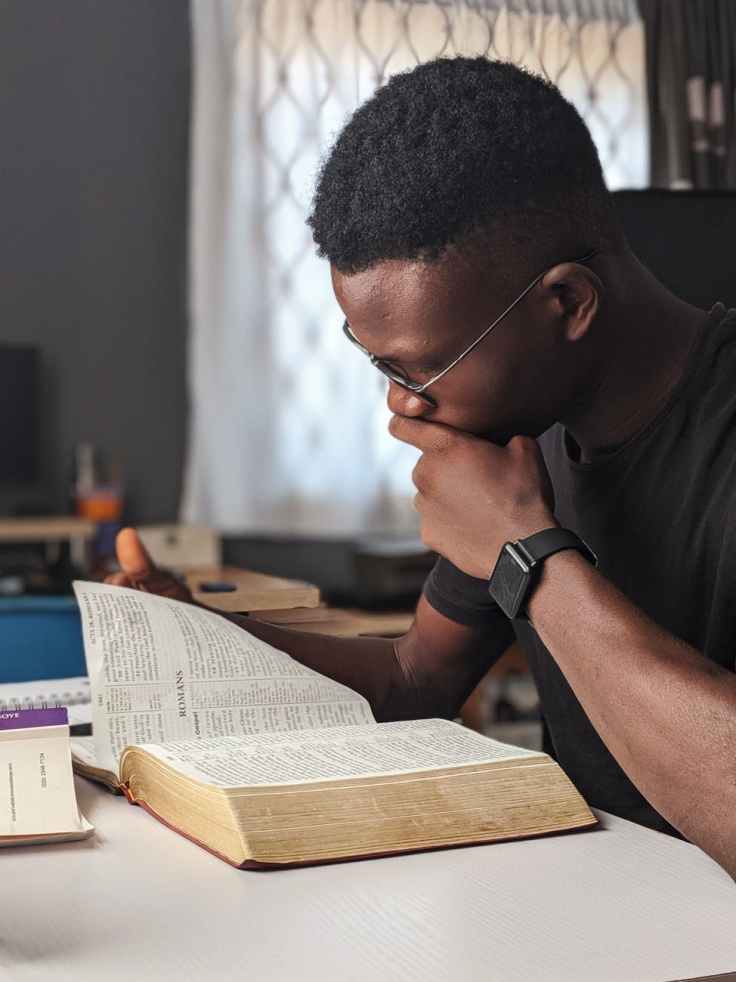
The Lost Art of Saying Grace

“God is great, God is Good…”
“Come, Lord Jesus, be our guest…”
“For what we are about to receive…”
“Bless us, O Lord, and these, Thy gifts…”

Saying grace at the family dinner table used to be a tradition.  So much so, that it has been made fun of several times in the movies and on television.  Some families recited a favorite prayer; others selected a family member to do the honors.  Some families held hands; some closed their eyes; some stood.  But NOBODY touched their plate until the Amen.

Grace has fallen out of favor in recent years.  Some families still practice it for the holidays or special occasions, but many of us have lost the art of saying grace.  In fact, many of us no longer have a family dinner table.  Some of us eat, sleep, and live alone; others share a house, but rarely a meal, and never a grace.  I would like to think that many of us WOULD say grace more often if  we made time and effort for it, but many others actually hold grace in contempt, calling it old-fashioned; a senseless ritual, or a meaningless tradition.

I want to look a little more closely at grace– how and why we say it, and what it means (or should mean) as part of our daily walk with God.  Calling grace a meaningless tradition may sound harsh, but it may also be a valid criticism.  If “Come, Lord Jesus…” could be replaced with “Gentlemen, start your engines…”, then it might be time to rethink the entire practice.  Similarly, if we dust off grace, only to say it for company, or to show that we still acknowledge tradition and have “good manners”, we’re missing the point.  Grace should be more than just a moment to bow our heads, say a few familiar words, and dig in…grace has become laughable and spoof-able precisely because it has become senseless, formulaic, awkward, and grudging.

I am a big fan of Jimmy Stewart. And this short clip from the beginning of the movie Shenandoah is a prayer said sarcastically by a bitter man who lost his wife and promised her that he would continue to raise their children in a “Christian” home, in spite of his own anger against God. (He later has a change of heart in the movie.) There are many other film and TV scenes that make fun of saying grace without any remorse, repentance, but with a heavy dose of disdain.

I read a tragic statement by someone who claimed that saying grace is actually “graceless”– tactless and inane.  The writer suggested that when we thank God for food, we are really thanking him for feeding us, and choosing to bless us, as he allows others to starve– that saying grace makes us feel more special/less guilty in light of social and economic inequities, which he blithely allows.  In other words, saying grace, in this person’s opinion, makes us arrogant and apathetic to the condition of others, while giving an unjust God undeserved thanks.

I would posit that it should be just the opposite.  I suppose there are many who pray with the arrogant mindset suggested above, but their mindsets and their hearts are not mine to judge.  True grace is not about the recipient of the grace, or the other potential recipients of grace, but about the giver–God– and his worthiness to receive our sincere thanks.  If I believe that God is indeed unjust, then it makes little sense to feel “blessed” or “special” at all– an unjust God is also capricious and unreasonable is not likely to be impressed or swayed by my smug “thank you,” anyway.  So not praying doesn’t make me any less arrogant or apathetic toward others, nor does it move me to be more grateful or more generous than one who prays.  It merely passes the blame for all injustice to God, leaving me off the hook, and making me feel more just than God.
tablegrace

However, if God is loving and gracious, promising perfect justice in his time, and forgiveness to those who seek him; a God who promises to be close to the poor in spirit, those who hunger and thirst for righteousness, and who are broken and contrite; I am not thanking him for who I am, for what I have, or for what I think he should do.  I am thanking him for who he is and for what he has chosen to give.  Some days, I may NOT have a lot to eat, or pleasant surroundings. I may be the victim of injustice done by evil people. But I can still thank God for what I DO have and for who HE is. And on those other days, in thanking him for the very things I would take for granted, I am reminded that blessings are not given for me to boast about or hoard, but to share with others.  That’s what saying grace SHOULD do–cause us to reflect on God’s goodness, our true neediness, and our call to share God’s blessings with a needy world.

Grace is also an invitation– asking God to be part of every moment of our day.  According to his Word, he’s always present, anyway.  But grace is a way of acknowledging and welcoming that presence.  And that invitation isn’t limited to Thanksgiving or Sunday dinner with the whole gang.  That invitation can be made anywhere, by anyone, at any meal (or snack, or midnight raid on the fridge!)

Is God welcome at our dinner table?  Does he share in our drive-thru breakfast, or our trip to the deli?  Do we allow him to join us at the restaurant, where others might overhear and find us quaint and old-fashioned?  Does he sit with us in front of the TV or computer as we absent-mindedly munch on a sandwich?  Grace isn’t about our goodness, our riches, or worthiness to enjoy God’s blessings.  Grace is about a gracious God who has poured out blessings on a graceless and fallen world; a God who loves us all equally and offers to give us something more precious than food– freedom, forgiveness, and family–forevermore.
gracelady

“God IS great; God IS good; Now we thank him for our food.”
“Come, Lord Jesus, be our Guest; let this food to us be BLESSED”
“For what we are about to receive, may the Lord make us TRULY grateful.”
“Bless us, O Lord, and these, THY gifts, which we are about to receive from THY bounty. Through Christ, our Lord. Amen.”
“Dear Heavenly Father, thank you for this day and this food. Bless it to our good and to your glory. May all we say and do bring honor to Your Name. Amen.”

 

Why Being “Nice” Matters

(I am re-posting an article from a few years ago. This first appeared in August of 2018.)

I spent the day with my granddaughter today.  We went to the bakery, the bank, the grocery, and the library.  Some days we visit the post office or a local cafe.  We live downtown, so we walk everywhere, and say hello to people we meet along the way.  At each stop, we thank the people behind the counter or desk.  My granddaughter is learning manners– how to be polite in public.  Her parents do a wonderful job of this, and it’s very easy for me to bask in the proud glow of people remarking on how cute and polite and engaging she is.  (I may be a little biased, but they DO say such things…)

shoes

Years ago, when I worked at a library, there were always families who came in and practiced good manners– “Please” and “Thank You,” “Excuse me,” “I’m sorry,” and “May I?”  Often, the children were prompted, especially when they were young.  Sometimes, they didn’t understand why they were being told to say such things.  A couple of times, I had other parents roll their eyes and comment negatively on such practices.  “They don’t even understand what they’re saying.”  “I’ll bet they don’t say any of those things at home– what hypocrites.  They’re just trying to make people think they’re better than everybody else.”  “You shouldn’t force kids to say such things.  They’ll just resent you for it later.”

woman in black long sleeved shirt

There are actually parenting articles about forcing children to say “I’m sorry.”  They are well-intentioned, and some are helpful about explaining what the issues are (here’s a link to one of the articles) .  Other articles advise parents not to prompt children to say, “Thank You.” (Here’s another link.)  I don’t disagree with these authors.  In fact, I think they make a valid point about teaching our kids “shallow” manners and neglecting the deeper values of gratitude and empathy.  But I think children need both.

bullseye center illustration round

Manners (especially as they reflect deeper values) are important.  We live in a society where manners are becoming relics–laughable reminders of a quaint culture we have long outgrown.  There are pockets of the country (and the larger world) where politeness is almost an obsession.  It is not polite or helpful to be facetiously “nice” or sarcastically “nice”.  But what happens when we no longer dare to show gratitude or empathy without inviting ridicule and contempt?  What happens when saying “Please” and “Thank you” make you a target for mockery? When and how did this happen to our culture?

With all due respect to the recent spate of articles, I think something gets lost in the hyperbolic headlines and fascination with “feelings”–manners should originate, not with feelings, but with the acknowledgement of some basic truths:

  • I am not the center of the universe!
  • Other people– all other people–have value, worth, and dignity.
  • I need other people, and they need me–I am not an island.
  • There is a God who is kind, forgiving, loving, and wise.
adult back view bald crowd

I am polite to others, not because I feel “nice”, but because I recognize that God created all people; He loves us all equally, and I have a duty to treat others with dignity, respect, and kindness– even if I don’t “feel” it; even if they don’t respond in kind.  Do I always remember and acknowledge this, even as an adult?  Sadly, no.  But I practice politeness as a discipline and a reminder that this should be so.  I teach it for the same reason.  And the amazing thing is that it makes a huge difference.  Maybe not in the moment, with all my emotions running wild…but in the quiet aftermath of knowing that I said “Thank you” instead of the hurtful and sarcastic comment.  I said “I’m sorry” instead of holding on to my pride and bitterness.  And I may never know the difference it made to the harried waitress, or lonely shopper, or tired mechanic to hear two or three kind words– “Thank You” (You are noticed– you matter).  “I’m so sorry” (you have dignity–you are worthy of kindness) “Please” (you have value–your time, skill, or service is special)

I’m not a “nice” person– I am often hateful and stubborn and impatient.  But God has been abundantly gracious and merciful to me when I don’t deserve it.  Being polite is such a small thing in light of God’s eternal and boundless love toward us.

backlit clouds dawn dusk

Do Be Do Be Do…

I was reading the other day, and thinking about how often we read the Bible with preconceived notions. We sometimes think the Bible is a guide that tells us what to do or not to do. But a good portion of the Bible tells us, not what to do, but how to be. Even the Ten Commandments don’t tell us what to do— rather they tell us what we should NOT do.

God has given each of us free will, and created us with distinct skills and personalities and sets of circumstances. We will not– indeed we cannot– all do the same things. God doesn’t expect it of us. And He does not expect us to earn our salvation by what we do. What He does expect is that we will do those things that bring us closer to Him and closer to the people we were meant to be. His power will take care of the rest.

Photo by Klaus Nielsen on Pexels.com

We have a tendency to get caught up in what we (and what others around us) are doing; we tend to judge and compare and criticize. Instead, we should concentrate on who and what we are becoming:

  • We want to learn–but do we want to be teachable?
  • We want to make money– but do we want to be generous?
  • We want to build a reputation– but do we want to be honest and reliable?
  • We want to have friends– do we want to be available?
  • We want a family–do we want to be intimately known and knowable?
  • We want freedom–do we want to be responsible?
  • We want justice– do we want to be just?
  • We want happiness–do we want to be content with what we have?

Jesus didn’t give His disciples a long “to do” list. He didn’t give them detailed lists of things to do. He gave them “Beatitudes”– “Be” “Attitudes”

Blessed are the poor in spirit, for theirs is the kingdom of heaven.

Blessed are those who mourn, for they shall be comforted.

Blessed are the meek, for they shall inherit the earth.

Blessed are those who hunger and thirst for righteousness, for they shall be filled.

Blessed are the merciful, for they shall obtain mercy.

Blessed are the pure in heart, for they shall see God.

Blessed are the peacemakers, for they shall be called sons of God.

Blessed are those who are persecuted for righteousness’ sake, for theirs is the kingdom of heaven.

Matthew 5:3-12

Of course, much of who we are and who we become depends on what we do. And it is important to do what is right and honorable, just and compassionate. But it’s the “being” that is the goal, not merely the “doing.” God knows we cannot “do” what it takes to be perfectly righteous in our own power. But He will give us the guidance, the strength, and the encouragement to “become” more like Him as we live out the above attitudes.

Blog at WordPress.com.

Up ↑