
From Fiery Furnace to “The Dew of Heaven”

God is all-powerful. He is sovereign over all the universe for all eternity. He is the King of Kings and the Lord of Lords. Yet, in His majesty, He is merciful; unwilling that any should perish.

In the book if Daniel, we encountered the familiar story of Shadrach, Meshach, and Abednego, who were thrown into a fiery furnace for failing to bow down to a giant statue commissioned by King Nebuchadnezzar. The mighty king of Babylon was an absolute ruler, and failure to obey one of his decrees could result in death. That it did not end in death for the three young men baffled and impressed their king. But it didn’t change him.

The very next story in the book of Daniel is one that is less familiar– it is another curious interjection into a book of (seemingly) disjointed stories. In chapter three, Daniel narrates his friends’ story, in which he is curiously absent. In chapter four, Nebuchadnezzar is the narrator, Daniel is one of the characters, and his three friends are never mentioned. (Because Nebuchadnezzar is narrating, he uses Daniel’s Babylonian name, Belteshazzar.)

The chapter begins almost as a mirror image of chapter 2, except the writing style is very different–more formalized, and written more as a proclamation. (https://biblia.com/bible/esv/Dan%204) Nebuchadnezzar is being troubled by a recurring dream. Once again, he calls in all the astrologers, sorcerers, etc., to interpret the dream. However (whether because Nebuchadnezzar is narrating, or because he has learned a little self-control), this time there are no threats involved, and when the lesser wise men fail, Nebuchadnezzar himself sends for Daniel, confident that Daniel can provide an answer. Nebuchadnezzar actually flatters Daniel as he asks for an interpretation, but Daniel is still cautious. This dream is more disturbing than the first, because it is more personal and immediate. God is warning Nebuchadnezzar directly that his pride has gotten out of control and God is about to step in a pronounce judgment on it. God will teach Nebuchadnezzar about humility by causing him to lose everything, including his mind!

Daniel carefully gives Nebuchadnezzar the interpretation and the warning from God, and adds his own wish that his king might escape punishment by humbling himself before the Almighty God. But in a year’s time, Nebuchadnezzar forgets. In the very act of praising himself, Nebuchadnezzar hears the voice of God, who drives him away from his kingdom, from society, and from rationality. For seven years, Nebuchadnezzar lives as a beast, eating grass, roaming outdoors, and covered with “the dew of heaven”. At the end of that time, he comes to his senses and is restored to his mighty kingdom a wiser, humbler, and grateful monarch.

What a contrast between these two rulers! Nebuchadnezzar demanded total loyalty and obedience. When it wasn’t given, the reaction was instant fury and a sentence of death. God is the One who ultimately deserves our total loyalty and obedience. When it isn’t given, the sentence is death (Romans 6:23a). But God, who has the complete authority to pronounce the death sentence, is more interested in deliverance than in destruction. Make no mistake, God will punish Sin; God will destroy those who persist in evil and rebel against Him. But God’s heart is reconciliation and redemption. God did not kill Nebuchadnezzar; He didn’t strike out at him in fury and cast him immediately into the fiery furnace of Hell–though He had the power and authority to do so. God had given Nebuchadnezzar his life, his power and his kingdom. He took it away. And then he restored it. God took away Nebuchadnezzar’s ability to reason– and he restored that too. And while Nebuchadnezzar was living as a brute beast– in the middle of his punishment– he was covered with “the dew of heaven.”

Curiously, this phrase, “the dew of heaven” is used all the way back in the book of Genesis. It is used by Isaac as he blesses his son Jacob (disguised as Esau). https://www.biblegateway.com/passage/?search=Genesis+27%3A+27-29&version=ESV Even as Jacob was practicing deception that would have dire consequences, God’s blessing was being poured out on him by his father. And centuries later, in his midst of punishment, Nebuchadnezzar was blessed by God, who provided for his needs, and ended up giving back all that had been lost because of Nebuchadnezzar’s pride.

God punishes– He punishes those He loves! He teaches, humbles, and disciplines. But He is not in the business of destruction. He was with Nebuchadnezzar throughout his period of madness and humiliation, ready to restore (and even increase) all that he had lost.

May we honor this God of grace and mercy– his mercies are greater than his wrath, and his grace is greater than all our sin! Nebuchadnezzar finally learned to praise, worship, honor, and obey the “Most High God.” May we do the same.

Things That Make You Wonder…(Daniel, Chapter 3)

The Biblical book of Daniel can be difficult to read. It contains stories, but they don’t seem to tie together. And sprinkled among the stories are visions, dreams, and prophecies. In chapter two, King Nebuchadnezzar threatens all the wise men of Babylon in his fear over a disturbing dream. (https://pursuingprayer.blog/2019/07/17/daniel-prayer-under-pressure/ and https://pursuingprayer.blog/2019/07/19/daniel-prayer-under-pressure-part-2/) At the end of the chapter, Nebuchadnezzar falls prostrate in awe of the God of Daniel, and rewards Daniel with a high position. He even rewards Daniel’s friends who prayed for him.

None of this context seems to carry over into the next chapter. If Nebuchadnezzar listened to Daniel’s interpretation; if he was in awe of the God of Daniel (the God of Israel– the God of Jacob), he forgot it all. The events of chapter three may have happened months or even years after the earlier episode; they may even have happened before(!)– we don’t know. But chapter three feels almost like a wholly disconnected story. Another thing that makes this story perplexing is the absence of the central character of Daniel. His name never appears in the story, and his friends are only given by their Babylonian names (unlike in chapter 2, where both the Hebrew and Babylonian names are given).

The story in Daniel chapter 3 is a familiar one to many children. (https://www.biblegateway.com/passage/?search=Daniel+3&version=MSG) Nebuchadnezzar orders an enormous statue to be built in Babylon. When it is complete, he orders all the administrators of his kingdom– minor rulers, judges, treasurers, advisers–to come to the dedication, where they are to fall prostrate and pay homage to the statue as soon as they hear the music that has been commissioned for the event. This is not a suggestion, it is an order, and anyone who fails to do this will be thrown into a fiery furnace.

Suddenly, there is a group of troublemakers (some translations call them astrologers or fortune tellers, others list them as Chaldeans–a people whose empire predated the Babylonian dynasties and whose culture and religion had produced great scholars and sorcerers). These men come forward with a single purpose– to denounce the Jews. Oddly, they only mention three names– Shadrach, Meshach, and Abednego. They don’t mention Daniel, nor do they mention any of the other Jewish captives who were in service to the king as administrators. Not only are Shadrach, Meshach, and Abednego accused of disobeying the king’s order, they are described as being disrespectful and contemptuous of the king (and the ancient gods of Babylon and Chaldea).

Much is made about the amazing things that happen next–Shadrach, Meshach, and Abednego are called before the king, who gives them a chance to answer the charges and he offers to give them another chance to bow down before the great image. When the three men refuse, Nebuchadnezzar is furious and orders the fire to be made seven times hotter. Men are killed in the process of stoking the flames, but Shadrach, Meshach, and Abednego are thrown in, and begin walking around unfazed. Not only so, but Nebuchadnezzar is astounded to see a fourth figure walking with them, and looking like “a son of the gods.” He calls the three men out, and everyone is astonished to note that they are completely unharmed. Their clothes and hair are not singed or scorched, they are not hot, and they don’t smell of fire.

Just as in the previous story, Nebuchadnezzar’s reaction is emotional and immediate. He gives praise to the God of Shadrach, Meshach, and Abednego, and makes orders that will protect them from future harassment. But there are some interesting undertones in this story that I think we ought to consider, and things we can learn about prayer in the process.

  • We called Daniel’s dilemma in Chapter two “Prayer under Pressure”. The pressure was not just on Daniel, though he stepped up to face the king. When Shadrach, Meshach, and Abednego prayed with Daniel–when they stood apart with him during their training– when they took a stand to follow the God of Israel in a land of ancient and powerful ‘gods’, they did so knowing that there would be pressure, powerful enemies, and potential persecution. God asks us to be faithful to him, regardless of our circumstances. Nebuchadnezzar had promoted Daniel and his friends to positions of power and privilege. They were grateful to the king, and loyal and devoted to serving him– except when that service called them to dishonor God. Many of us today face the pressure of honoring rulers or leaders who do not acknowledge or serve God; leaders who are corrupt or seem unworthy of our honor. We are to serve faithfully and show respect for their authority unless we are asked to disobey God’s laws or to disown or dishonor God. HE makes rulers to rise and fall. As we will see, Nebuchadnezzar’s power is far more precarious than it looks.
  • Following God will always bring confrontation and bring false accusations. Jealousy, guilt, envy, greed, anger, and malice will come to those who prosper under any circumstances. How much more to those who prosper at the hand of God? Those who have not schemed, stolen, or crushed others, and yet have been elevated to power, wealth, or honor– such people baffle and frustrate those who are grasping and clawing their way “to the top.” Those who deal in lies and stealth cannot accept truth and integrity. They will seek to twist others’ words, deeds, and reputations– sully names, destroy legacies, start rumors, invent grievances. We can let these little “fires” distract us from the “fiery furnace.” We can spend so much time defending ourselves, retaliating with our own rumors and grievances, or seeking revenge, that we become no better than our enemies. I know this from shameful personal experience. We can destroy ourselves in the struggle to justify ourselves. God doesn’t listen to rumors! God ignores false accusations, because He KNOWS the heart of every person. No matter how hot the “fire” gets, God is with us. He may not put the fire out. He may allow it to get seven times hotter, but He will be with us. If we are trusting Him, we will still have to walk around in the flames, but He will see to it that (ultimately) we are not singed or scorched!
  • Frequently that attacks we face (see above) are not about us at all. They are about people in rebellion against the God we serve. The men who spoke against Shadrach, Meshach, and Abednego may have had a personal grudge, but the Bible story points out a bigger plot. Daniel’s friends may have “felt the heat”, but the fire was not burning just for them. Daniel, Shadrach, Meshach, and Abednego were recent captives from a conquered nation who rose very quickly to power by openly serving their “foreign” God. The Babylonians (and the Chaldeans before them) had risen to power through violence, intrigue, and reliance on sorcery, sacrifice, and ancient rituals that were abhorrent to the God of Israel. He had allowed them to do so to be the agents of punishment against His own rebellious people. But the power of the Babylonian empire was not of their own making, nor was it greater than God’s power to deliver the remnant of His faithful servants. Many times, we are oppressed by others whose anger and viciousness hide their rebellion against God. They fear those who serve Him, because they fear His justice and His wrath. They hate those who serve Him, because they hate Him. When we pray for deliverance from their schemes and violence, we need to know that God hates injustice; He hurts with us as we suffer; but He wants two things for our tormentors and bullies– 1) to see God’s example of faithfulness in our lives, so they have no excuse for their rejection; and 2) to give them an opportunity to repent and receive mercy. He also wants to do two things for us–1) to refine us and show us how faithful He is; and 2) to use our struggle to encourage and embolden others. Very few people would have noticed that three men out of several thousand disobeyed the king’s command. But because of the opposition they faced, and their total commitment to follow God in the face of it, crowds witnessed their vindication and God’s salvation.
  • Notice that Nebuchadnezzar, while he acknowledges that God has saved Shadrach, Meshach, and Abednego, does not tear down the statue, humble himself to serve their God, or abandon his arrogance. Twice, God has shown His awesome power to this proud and powerful ruler; twice Nebuchadnezzar has been impressed, even awed– but he hasn’t been changed. Yet!
  • Where is Daniel? We don’t know. He may have been sent to one of the distant provinces and wasn’t in attendance for the dedication ceremony. He may have had a moment of weakness and joined the others in bowing down to the statue! All we know is that he is absent from one of the great miracles of his day. (He’ll have his own scary confrontation with a different king later in life.) This baffles me, but it also gives me hope. If Daniel DID bow down and worship the statue while his friends were faithful, God obviously forgave him and used him in a mighty way for the rest of his life. If he missed this fiery trial, perhaps God’s mercy was in it. God does not ask all of us to suffer the same trials, or have the same triumphs. God’s plan for each of us is unique. He doesn’t ask all of us to be “spiritual superstars.” He DOES ask each of us to be faithful for the fiery trials that come our way– whether fiery furnaces of persecution, or wildfires of hectic distractions and temptations, or the sudden flames of disaster or tragedy.

Today, as we pray, let us remember to thank God that, even when trials and fires come into our lives, He knows why. He knows how hot they will get. He knows how long we will be in the flames. And He is right there with us, so that we, too, may walk around, unbound and unharmed by the fires meant to destroy us.

God’s Mighty Right Hand

“Your right hand, O Lord, glorious in power, your right hand, O Lord, shatters the enemy.” – Exodus 15:6

“You give me your shield of victory, and your right hand sustains me; you stoop down to make me great.” – Psalm 18:35

“So do not fear, for I am with you; do not be dismayed, for I am your God. I will strengthen you and help you; I will uphold you with my righteous right hand.” – Isaiah 41:10

There are many verses in the Bible about the mighty right hand of God. God’s might and power, His authority and sovereignty are all represented by his “right hand.” It is His right hand that protects us, upholds us, and gives us victory over the Enemy. God’s right hand spread out the heavens, and rules over the stars.

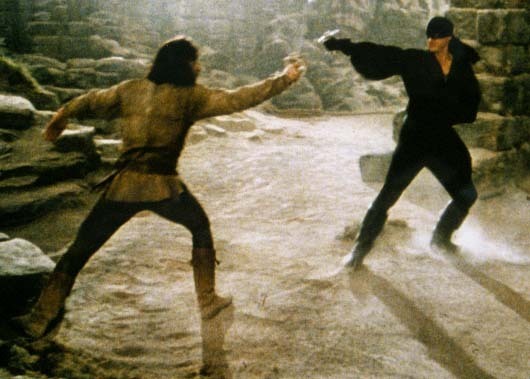
Today, I was thinking about one of my favorite movies– The Princess Bride. In one scene, two mighty swordsmen are fighting a duel. They are fighting with all their might, but they are evenly matched, and neither one is winning. Then, with a flourish, the challenger moves the sword from his left hand (which he had been using) and confesses that he is really right-handed. To his surprise, his opponent does the same! Each man has been fighting with his “lesser” hand, giving his opponent a (supposed) advantage. The fight continues with a similar ferocity. The two opponents later become allies in finding and saving the Princess.

So what if God fought for us with His left hand? What if (and I suppose He is) God is ambidextrous? God could defeat the enemy blindfolded and with one arm tied behind His back! Yet God assures us that His protection and provision are never second-best. If we suffer the attacks of the enemy, it is NEVER because God just didn’t fight hard enough, or that He didn’t have the means to win that battle. He doesn’t send in a junior varsity team of Angels to fight on our behalf. He doesn’t call a “time out” in the middle of fighting to catch His breath or re-evaluate His strategy.

God’s “Mighty Right Hand” isn’t just a metaphor for super-human physical power. He isn’t a muscle-bound hero in a comic book or legend. His mighty right hand is not an eternal fist. God is the One who holds the entire universe in His Hand. It is open. He doesn’t hold us in a choking grip; He holds us in the same gentle hands that hold a newborn chick or a delicate snowflake. God’s mighty right hand is also our safe haven. God’s hand guides and directs, as well.

God IS powerful and sovereign. He could choose to use His mighty right hand to squash us, or pound us into dust. He could hold us in a suffocating grip. But God’s mighty right hand is always directed by His LOVE. His Love cradles us, defends us, lifts us up, encourages us, works alongside us, and welcomes us into His arms!

For more about God’s Mighty Right Hand, see https://explainingthebible.com/bible-verses-about-right-hand/

ACT-ing On Prayer

Pursuing a lifestyle of prayer means more than just coming to God with a list of requests and a couple of scattered “Thank You’s” every now and again. Prayer is a discipline– that means being a disciple of prayer! How can I learn to pray for effectively? Commune with God in a richer and more satisfying way? There are many tools and methods that can help with this. One of them is called the ACTS method.

ACTS is an acronym for Adoration, Confession, Thanksgiving, Supplication. And praying in this order can radically transform the way we enter into prayer and the way we respond to God’s answers. On a busy day, I often start prayer with my supplications– my requests, my needs, my hopes and desires. I may be approaching God, but my thoughts and heart are all about “what’s in this relationship for me!” “I want healing for ______, and protection for my family, and a resolution to this problem at work, and…”

But the ACTS method flips this order–it starts with Adoration. It begins by coming to God and acknowledging who HE IS. Worship will outweigh worry. Adoration accentuates God’s Ability and His Authority over whatever is on our mind. It also leads naturally into

Confession. Not the kind that masks false humility– “Woe is me, I’m so unworthy. I am a worm, and I don’t deserve to be happy or free or victorious in Christ.” Rather, confession comes as we recognize who we are in relation to God. We are not worthy of God’s blessings in our own righteousness, but IN CHRIST, we are able to come boldly before God in dependence and joyful acceptance of HIS righteousness. And we can’t accept it if we are still hanging on to old habits and sinful ways of thinking. We must agree with God, let go of whatever is holding us back, and gladly prepare to move forward!

Now we are in Thanksgiving mode. We are reminded of God’s mercy, and His faithful care of us. He has been faithful to answer prayers in the past, and to be with us, even in times of trouble and seeming silence. He IS there. He DOES listen. His mercies are new every morning! (Lamentations 2:22-23)

NOW, we are ready to present our Supplications. In fact, we are ready to follow the direction of the Apostle Paul, when he told the Philippian believers: “Do not be anxious about anything, but in every situation, by prayer and petition, with thanksgiving, present your requests to God.  And the peace of God, which transcends all understanding, will guard your hearts and your minds in Christ Jesus.” Philippians 4:6-7 (NIV).

There are many times when we pray in desperation or in a hurry about a specific need, when this approach can be modified. But for deep prayers during a quiet time, or in a small group, the ACTS method can really boost our connection with the Holy Spirit. We begin by thinking we are praying about “something,” and are amazed to re-discover that prayer is really about “someone!”

I have found that such prayers also cause me to more readily ACT in the matters I bring up for request. I’m not just turning them over to God because I am helpless and He is my last resort. Even when I “know” that is not the case, when I focus on the problem and not the Provider and Protector, I forget that He can give me the power to “do all things” (see Philippians 4:13) in Christ’s strength and for His Glory!

Almighty!

I’ve been looking at the Names of God lately. In my last post, I meditated on “Adonai”– The LORD. God has the ultimate authority over all things. He is the Master; the King; the Ruler; the One LORD of All.

Today, I want to explore a related Name– Almighty. It is often used in conjunction with LORD. God is the LORD ALMIGHTY. Whereas LORD refers to God’s ultimate authority, Almighty refers to His Absolute Ability. He is all-powerful, all-wise– able to do exceedingly, abundantly, above all that we could ever ask or imagine (see Ephesians 3:20). There is literally nothing that God cannot do. There are many things He WILL not do– He will never leave or forsake those who are His; He will never be untrue to His own Word or break His promises; He will never change His nature or be untrue to it– but He CAN do whatever He wants.

And this is where we sometimes fail to grasp the fullness of His name, Almighty. We know that He is Mighty; that He is mightier than we are, at least. But He is the source of Everything! He is mightier than Nature–He spoke all of it into being! He is mightier than Time– He is unbound by time or age or deterioration. He is mightier than Sin and Death– He proved that through the death and resurrection of Jesus Christ! He is mightier than the dark emptiness of space– He holds the entire Universe in His Hands!

And that brings me to the subconscious wonder of the name, Almighty. God is not JUST all-powerful and eternally capable. His Almighty nature is GOOD! All of His power is regulated and matched by Mercy and Grace! He has the authority (as LORD) and the power (as the Almighty) to be a terrible enemy. In fact, Job speaks of this repeatedly when he feels that God is punishing him unfairly (see Job 27). I can’t argue against God and win; I can’t grapple with God and defeat Him (Jacob tried that in Genesis 32). I am powerless against God– physically, mentally, spiritually–I cannot “win” against God by fighting, arguing, cajoling, bargaining, or using any weapon. There is no army, no spirit, no power that can budge God from His plans.

But God is NOT my enemy or my rival! Only Sin and my own rebellion and pride can make me an enemy of God. In fact, He wants a relationship with me; He wants me to live in peace and harmony with Him! He has moved Heaven and Earth to reconcile me to Himself through the death and resurrection of Jesus Christ! He is like a mama bear or a lioness with their cubs, jealously guarding me from Sin and Death. He is my Father, my protector, my provider, and my Shepherd– the ALMIGHTY! And yet He cares about the smallest details of my life– He numbers the hairs on my head and keeps track of any injustice that has ever been done to me (or by me!) to be settled and made perfect on the Day of Judgment.

What a humbling thought! What a joyous reality! The Almighty LOVES ME! He LOVES YOU! And His Love is all-powerful and eternal. The ALMIGHTY IS LOVE! How can I not praise Him! How can I not see Him in every moment!

“Lord, Lord…”

21 “Not everyone who says to me, ‘Lord, Lord,’ will enter the kingdom of heaven, but the one who does the will of my Father who is in heaven. 22 On that day many will say to me, ‘Lord, Lord, did we not prophesy in your name, and cast out demons in your name, and do many mighty works in your name?’ 23 And then will I declare to them, ‘I never knew you; depart from me, you workers of lawlessness.’
–Matthew 7:21-23 (ESV)

As someone who spends her time “in pursuit” of prayer, I pay close attention when I hear others praying. People use many different phrases to address God when they pray– “Our Father in Heaven,” “Father God,” “Heavenly Father,” “Daddy,” “Papa God,” “Lord Jesus,” and many others. And there is no “right” phrase or “wrong” phrase to use. But there definitely IS a right and wrong mindset and heart attitude!

Jesus himself, shortly after teaching His disciples what is known as “The Lord’s Prayer,” talks about those who go around calling Him “Lord, Lord.” But they do not obey God, and they will not enter the Kingdom of Heaven. This suggests that that have “prayed” in some form or other, but it is merely a formality or a ritual, and not something that comes from a humble heart. Jesus goes on to tell of their insistence that they “deserve” to enter Heaven based on the incredible things they have done “in (your) name.” Most people, looking at their outward success and good works, would surely assume that they are sincere followers of Christ– after all, how else could they perform such miracles? They have called on the Name of Jesus and they have called Him, “Lord.” Yet, Jesus says of them, “I never knew you.”

What terror those words strike in the heart of those who desire to follow Christ! Is it possible that God will reject those who have called on His Name and believed on Him?

Well, Yes and No… Later in Matthew, Jesus is teaching His disciples about the final judgment, and He tells a similar story, but with more “context:” In the following parable, both the sheep and the goats claim to have done good works and both groups believe they will enter into the Kingdom of Heaven. It can be assumed that both groups have prayed at various times and believe themselves to be “known” to the Father…

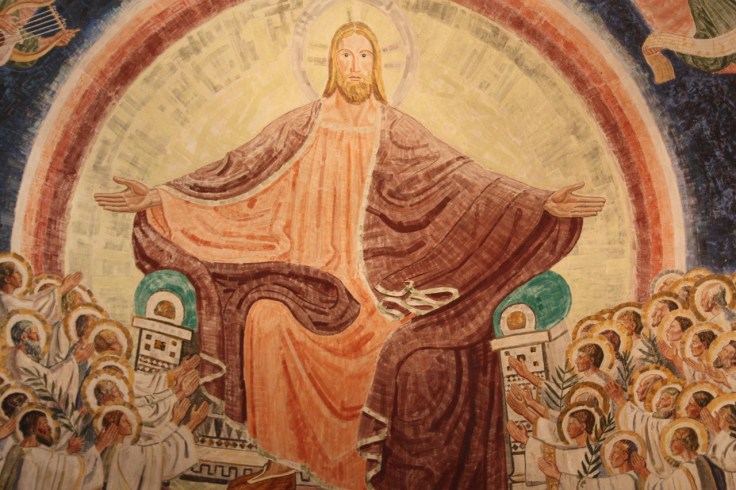
31 “When the Son of Man comes in his glory, and all the angels with him, then he will sit on his glorious throne. 32 Before him will be gathered all the nations, and he will separate people one from another as a shepherd separates the sheep from the goats. 33 And he will place the sheep on his right, but the goats on the left. 34 Then the King will say to those on his right, ‘Come, you who are blessed by my Father, inherit the kingdom prepared for you from the foundation of the world. 35 For I was hungry and you gave me food, I was thirsty and you gave me drink, I was a stranger and you welcomed me, 36 I was naked and you clothed me, I was sick and you visited me, I was in prison and you came to me.’ 37 Then the righteous will answer him, saying, ‘Lord, when did we see you hungry and feed you, or thirsty and give you drink? 38 And when did we see you a stranger and welcome you, or naked and clothe you? 39 And when did we see you sick or in prison and visit you?’ 40 And the King will answer them, ‘Truly, I say to you, as you did it to one of the least of these my brothers, you did it to me.’ 41 “Then he will say to those on his left, ‘Depart from me, you cursed, into the eternal fire prepared for the devil and his angels. 42 For I was hungry and you gave me no food, I was thirsty and you gave me no drink, 43 I was a stranger and you did not welcome me, naked and you did not clothe me, sick and in prison and you did not visit me.’ 44 Then they also will answer, saying, ‘Lord, when did we see you hungry or thirsty or a stranger or naked or sick or in prison, and did not minister to you?’ 45 Then he will answer them, saying, ‘Truly, I say to you, as you did not do it to one of the least of these, you did not do it to me.’ 46 And these will go away into eternal punishment, but the righteous into eternal life.”
–Matthew 25:31-46 (ESV)

We can call Christ “Lord” without actually making Him our LORD. We can pray to God without seeing Him for who He really IS. And we can follow “Christianity” without actually following CHRIST.

I think the phrase that Jesus uses in the first quote is very telling. The people call Him “Lord, Lord.” And then, they go into a litany of things “WE have (done) in your name” (emphasis added). They do NOT call Him “Father” or even “LORD” (In the Bible, the term, “LORD” is “Adonai”, which is the substitute for Yahweh– the actual NAME of God, sacred to the Hebrew authors. It is not like “lord” as we might use for any nobleman or someone in authority, but is reserved only for the One with ultimate authority and majesty. In other words, not “Lord, Lord” but “LORD– the ONLY LORD”). Instead, they call Him, “Lord, Lord”. And they boast of the spectacular and even superhuman things THEY have done. But one of the things they fail to mention is prayer. They have used His name, but they have not necessarily called on His name– except as a formality. They have not spent time in communion with Jesus. They have not asked for His will to be done. They have not come to Him in humility or praise for HIS mighty works, only in arrogance of how they have done miracles similar to His. Nowhere do they mention following in service, as Jesus taught His disciples, nor do they mention suffering in His Name! In the later parable, both groups (the “sheep” and the “goats”) were startled by the examples Jesus gave of what they HAD or HAD NOT done. These were simple acts– humble acts rendered to outcasts, rather than showy acts of power. They were acts that materialized (or didn’t!) out of humility and compassion, rather than power or favor.

True followers of Christ will take up His yoke. They will listen for His voice, and they will be eager to obey. They will serve like Him– they will stay yoked to Him in humility and in submission. If you wonder whether or not you are truly following Christ– this is a good test. Satan will always try to make us feel as though WE must carry the load, proving ourselves worthy. He may tempt us to compare ourselves with others who seem to be “winning” at Christian service by getting noticed or listing multiple achievements. But our eyes should not be on others or even on ourselves or our accomplishments. Our eyes should be focused on God– what He has done for us on the Cross; what He is doing in our lives as we obey Him; and what He chooses to do through us as we continue to follow Him–even when it seems that we are doing very little things. We may never know in this life how important our small acts of service really are. In God’s economy, they are huge. Heaven rejoices over such small things as giving a cup of water to a thirsty child, or smiling at a lonely person on the bus, or visiting someone in the hospital or in a jail cell. The world needs more humble servants and fewer TV evangelists. (Note: I am not saying that TV evangelists cannot be doing the work of God– but I am saying that I see very few humble celebrity pastors…just an observation.) And, as the Apostle Paul reminds us, God’s strength is shown best in our weakness. (see 2 Corinthians 12:9) As we come to Him in prayer, in dependence and in humility, God’s power is perfected. As we respond in obedience, our life is brought into conformity with His.

Today, as I pray, “Lord Jesus” or “Heavenly Father,” I pray that I will do it with the right spirit. I pray that I will be quick to praise, quick to obey, and eager to seek my Father’s face, instead of my own validation. After all– Jesus is LORD!

It’s Not Enough!

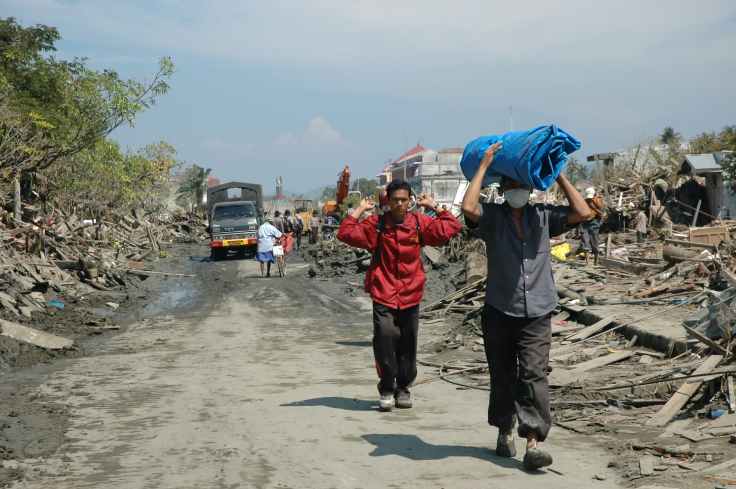
Often, when there is a disaster– especially one that seems preventable and senseless, like a mass shooting or a horrible crash–thousands of people reach out with “thoughts and prayers” for the victims and their families. And, predictably, others will angrily comment that thoughts and prayers are “not enough.” What good are thoughts and prayers in the face of senseless violence or preventable dangers? Shouldn’t we be driven to action? Shouldn’t we focus our efforts on justice or working to guarantee that such disasters can never happen again?

Such anger is natural, and such sentiments may seem more virtuous than offering nebulous emotional support. What, after all, can thoughts and prayers really DO in the face of evil, injustice, pain, and grief?

Well, I can’t speak for “thoughts”, but I have studied prayer for most of my life. I would offer the following words about the effects of prayer:

  • First, prayer reminds me that I am NOT in control of my circumstances– only my reaction to them. I cannot control what happens, what HAS happened, or what WILL happen. And my anger will not change what has already happened, nor will it prevent future disasters from happening. And while I may not be able to prove to others that prayer CAN prevent future disasters or heal present grief, I have known it to do both in my life and in the lives of others.
  • Second, prayer reminds me that there is Someone Bigger than me– Someone Bigger than my circumstances– who has the wisdom and the power to do what even thousands of well-meaning people cannot. Thousands of people coming together can make a difference over time, but God can do miraculously more than we can imagine!
  • Third, praying for others is something I CAN DO— anywhere, anytime– across distances, cultures, time zones, and circumstances. Prayer doesn’t cost anything. It doesn’t require that I have specialized skills or access to physical resources. It may not seem very active, like ranting or screaming, marching or protesting, but it isn’t the same as inaction or apathy.
  • Lastly, praying for others is a first step in helping others. My prayer alone may not seem like “enough”, but prayers have a way of multiplying, and inspiring, and intensifying in positive and impactful ways.

But more than just talking about the effectiveness of prayer, I’d like to pose a couple of questions for those who dismiss prayer as “not enough.”

  • What are you offering (instead of prayers)? Will your thoughts, plans, and actions have immediate or eternal results? Do you have the solution to all the world’s problems? Will you be able to control what happens in the future, or make sense of what has happened in the past? Will your solutions be perfect– no unintended consequences or necessary casualties?
  • If you are so angry about others praying, why waste your energy complaining about it? Go ahead with your own solution/reaction/plan.
  • Is your solution “enough?” Is your anger “enough?” Are your good intentions “enough?” Ultimately, you must wrestle with the existence of evil and injustice in this world. Senseless things happen. Good people suffer, and guilty people enjoy “success.” And nothing we offer is ever “enough” to change the world around us.

Our efforts and actions will never be “enough.” But prayer taps into the reality that God IS ENOUGH. His Grace is sufficient; His Love endures forever; His wisdom is higher than ours, and His power is boundless. He doesn’t always remove us from the chaos and suffering of this world, but He redeems us, and He enters into the circumstances of our own suffering and grief. He gives us courage, strength, hope, and a sense of purpose that goes beyond what we can find in ourselves.

But Even If He Does Not…

16 Shadrach, Meshach and Abednego replied to him, “King Nebuchadnezzar, we do not need to defend ourselves before you in this matter. 17 If we are thrown into the blazing furnace, the God we serve is able to deliver us from it, and he will deliver us[c] from Your Majesty’s hand. 18 But even if he does not, we want you to know, Your Majesty, that we will not serve your gods or worship the image of gold you have set up.”

Daniel 3:16-18 (NIV)

I hear a lot of American Christians complaining about the “dark days” in which we live. And indeed, they are dark. There is great evil in the world– wars, famines, injustices, hatred, division, greed, and immorality. But, along with complaints, I hear a note of whining. Isn’t God supposed to deliver us from just such evil? Isn’t He supposed to clear the way for us to love one another in peace and harmony? Surely, it can’t be His will for us to be laughed at, spit upon, misunderstood, and treated with contempt?!

The ancient nation of Israel was conquered and sent into exile. Israelites who had abandoned their faith, as well as those who had steadfastly served the Lord, were ripped from their homeland and marched to Babylon. Worship in the Temple of Jerusalem ceased. The Temple itself had been destroyed. There were no tabernacles, no festivals– none of the systems and structures of worship left available to God’s people. Yet some still worshipped– in homes, isolated from their fellow Jews, or in secret groups. They were not surrounded by reminders of when “their” religious beliefs were considered the cultural norm. Nor did they live in a culture that practiced religious “toleration” as we understand it today.

In the book of Daniel, the commitment of s handful of exiles is detailed as it comes in conflict with the oppressive control of the Babylonian (and later the Persian) Empire. Daniel and his three friends are challenged by the pressure to compromise and adapt to their surroundings. They are tempted and bribed by the promise of power in the court– if they can compete with other Babylonians. But they secretly hold fast to their “old” diet, and religious practices. They refuse to eat the rich food of Babylon– or bow to its gods.

In Chapter 3 of Daniel, the three friends, Shadrach, Meshach, and Abednego, refuse to bow to a golden statue of Nebudchadnezzar, the megalomaniac for whom they worked. Even though he had appointed them to high offices, he refused to “coddle” them in their worship of a foreign god. He demanded that they bow to his statue– something God had commanded them NOT to do.

It might have been easy enough to secretly meet in homes and celebrate Passover without alerting those around them. It would have been possible for them to hide scrolls containing the ancient words of their historians and prophets, to be read or studied. But they were being asked to publicly bow to a statue of their King– to acknowledge him as a “god.” And they refused. As court officials, their refusal was not just a minor snub, but a scandalous insult. Yet they stood firm.

Shocked and angered, Nebuchadnezzar, a notoriously cruel and impulsive king, gave them a generous “second chance” to save their careers and lives by obeying his orders. Amazingly, the three did not even spend a moment considering their options. They answered, boldly, courageously, and graciously, that they would not bow down to the statue. And God rescued them from the fiery furnace, so that not even their hair was singed by the flames– even though their captors were killed in the very act of pushing them into the furnace! God not only rescued them– He appeared WITH them in the midst of the flames. This so astonished Nebuchadnezzar, that he ordered them released and proclaimed that no one should say anything against the God of Shadrach, Meshach, and Abednego–an incredible act of religious toleration for that culture and time.

The story of The Fiery Furnace is well-known. I’ve used it before in my posts. But today, I’d like to focus on just one little phrase that stood out to me this week. When brought before Nebuchadnezzar the first time, the three men said, “we do not need to defend ourselves before you in this matter…” (v. 16).

How tempting it might have been to have defended their refusal– to give Nebuchadnezzar a lecture on God’s Law and His past miracles. But they refused to explain or defend their actions. They merely gave testimony of their faith that God COULD save them, and that, “even if He does not..” they were willing to die rather than dishonor Him. And Nebuchadnezzar SAW the proof of their faith in a way that their words and arguments could not have accomplished!

Most of the time, when I hear Christians talking about this story, they focus on the miraculous deliverance of the three men from the flames. The lesson is that God will be with us, no matter what. He can deliver us FROM the flames, but often, He chooses to deliver us THROUGH the flames. And that is a wonderful lesson and a true promise.

But that deliverance should not overshadow the quiet dedication of the three men. Before God joined them in the fire, they were already committed to dying in silence to obey God rather than their earthly king. They stood to lose everything– their lives, their legacy of faith, their service, their families (who might have been left destitute or even subject to punishment)– all of it was riding on their willingness to suffer injustice and torture. We know that God “showed up”– literally– in their defense. And they certainly knew that God COULD save them. But they also acknowledged that “if He does not..” they were still willing to die. And they were willing to do so, not acknowledged as martyred heroes, but as convicted criminals.

Centuries later, Jesus Christ would appear before Pontius Pilate, who asked Him to give a defense. Astonished at Jesus’ refusal to argue and plead for His life, Pilate came to the conclusion that “I find no fault in Him.” (John 19:4) Jesus willingly accepted an unjust sentence of Death, offering no argument or defense, except the Truth. No one came to His rescue. And God did NOT spare His life! The Son of God died as a criminal on a Roman cross, betrayed by Jewish leaders. Yet, Jesus’ obedience; His willingness to die brought US life, and forgiveness and peace!

There are millions of believers in Christ today who must be prepared to face a “fiery furnace” moment–maybe it involves death or torture. Perhaps it only involves being teased or despised by a neighbor or a classmate at school. And we may pray for deliverance–that is natural. But how often do we give up the chance to argue, and justify our diligence, our “right” to worship “our” way? How ready are we to be seen as foolish, or even rebellious to the culture of the day? We long for God to come to our physical rescue– to join us IN the fire– but are we willing to let Him be our defense? Are we willing to be humble in the face of obvious injustice, and let God speak up on our behalf? And what if He does not?

The Apostle Paul also faced this dilemma. Not only were there Greek and Roman officials who thought him a fool, there were Jews– his own people– who were going around defaming him, denouncing him, and spreading lies and rumors. Paul (never one to let a good argument go unargued!) spent much of his time in letters writing out his defense of the Gospel. But, in his own defense, he downplayed his position and his great knowledge of the scripture. He was not defending himself “in these matters”– he was defending the Truth of the Gospel! He also acknowledged that God could use even detractors and tormentors to spread the Gospel. And he often urged fellow believers to live in peace with their unbelieving neighbors, even those who taunted them!

It is tempting in Western Culture, where Christianity has been normalized, to think that when we defend ourselves, we are defending Christianity. But what if, like Shadrach, Meshach, and Abednego, we let God be our defense– in the flames, in the courtroom of public opinion, in our own families? What if we followed Jesus’ example and remained calm and confident, even under duress? What if we lived humble and quiet lives of integrity, ready to submit even to the flames or the cross, serving even those who would stoke the fires or pound the nails? God might just “show up” in ways we never could have imagined! Courage is often seen as boldness and speaking up in our own defense. But, sometimes, it takes greater courage to stand silent and let our actions– even when they are disparaged and misinterpreted– speak as a testimony of God’s power.

The Value of a Life

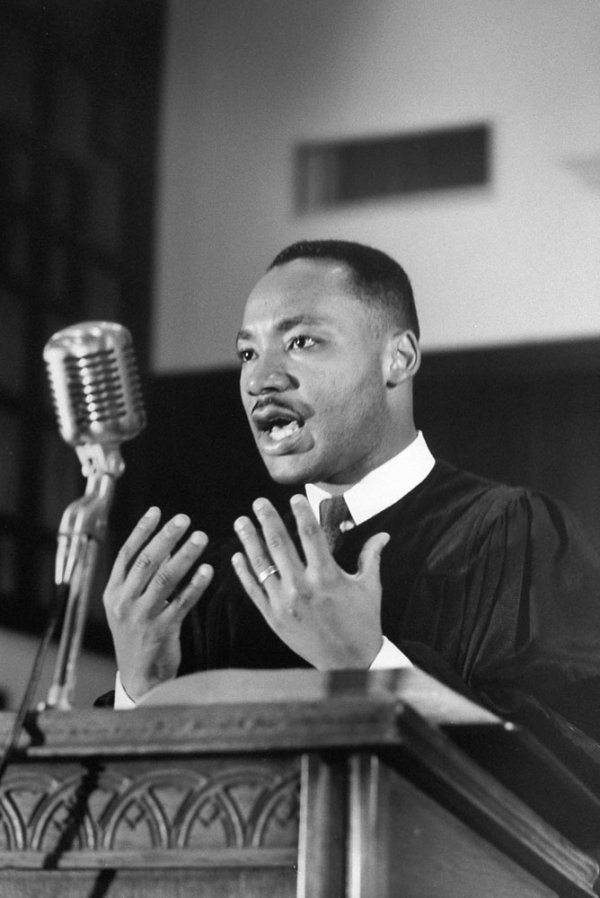
Today in America, we celebrate the life of Dr. Martin Luther King, Jr. Dr. King was a minister, a brilliant writer and student of theology, a leader in the Civil Rights movement of the late 1950s and early 1960s, a noted speaker, and man who arguably made a difference in the world. Dr. King was murdered in 1968, at the age of only 39, leaving a family and a nation devastated by his loss.

Next Monday, we will observe the 51st anniversary of the Supreme Court decision Roe v Wade, in which nine judges effectively legalized abortion in the U.S. for over half a century. Even though this decision has been overturned, many states, using the precedent of Roe v Wade, have changed their state laws to allow for abortion. In many states, it is now legal to abort a child right up to the moment of birth!

What is the value of a single life? Who gets to decide that they have the right to take another person’s life– whether by assassination, capital punishment, abortion, murder, or euthanasia?

It is a question that our society has struggled with for centuries. Who can give life? Who can take life? Who can determine the conditions of another person’s existence? And, for those who live, what is the “value” of their life–to their family, to their neighborhood, to their nation, or to history? Who gets to set the standard of what constitutes a “worthwhile” life or the “quality” of life for someone else? For themselves?

I’ve been reading through the book of Genesis this month, and, according to the Bible, this subject is as old as human life on earth. Cain decided that Abel’s life was expendable, so he killed him– the first murder. The people of Sodom and Gomorrah felt they had the right to enslave and rape anyone they wanted to. Joseph’s brothers plotted to kill him, before selling him into slavery, instead.

The Bible doesn’t hide this history, nor does it sugar-coat the actions of those featured in its pages. But, the Bible offers us a clear picture of WHO gives life, and WHO has the authority to decide what life is worth. God alone has this authority. It is God alone who can create and sustain life. Mankind has the choice– to protect life or destroy it; to treat life with respect or with disdain; to honor the Giver of Life, or to rebel against Him.

All the atrocities of the Old Testament lead to the ultimate decision on the value of a single life. Jesus lived a simple, ordinary human life. He lived with compassion, with purpose, and with humility. And He was willing to GIVE His life to atone for all the murders, all the abortions, all the slavery, all the injustices in history, so that WE could enjoy abundant, eternal life with Him. By looking to this singular life, and trusting in the power of His death and resurrection, we can choose to honor all life. We can make a difference. We can live with purpose and joy.

Dr. King’s legacy is one of honoring life, and pointing out the evils of those who seek to devalue the lives of others based on the color of their skin. Abortion’s legacy is one of destroying life, and promoting those who devalue the rights of the helpless.

The choice is still before us. How will we determine the value of a single life in the coming week? How will be add value to life on earth? How will we live for more than just the moment?

Keep Praying!

My prayers will not change the world. Read that again, because it is important to come to grips with certain realities, and with certain half-truths. My. Prayers. Will. Not. Change. The. World. BUT…

My prayers WILL be heard and answered.

My prayers WILL reach the throne of Heaven.

My prayers WILL make a difference!

Photo by Ian Panelo on Pexels.com

We have a great tendency to think in extremes. And the subject of prayer is no exception. Either our prayers seem powerful or they seem empty. But we live in a world of limitations, a world of boundaries. I can do small things– things that make a small difference. I can help a neighbor. I can give out of my abundance. I can exert whatever power or influence I might have. I can write or speak in an effort to persuade.

But I can’t move mountains. I can’t fix a broken soul. I can’t end wars or stop famines or control the wind and waves. And my prayers cannot FORCE God to bend to MY will; to act as I see fit, or in My timing. It is not my actions or my wishes or my words– even in prayer– that will ever change the world.

Sometimes, others will see this as failure. They will say that prayer is ineffective, or weak, or no more than wishful thinking. They see it as an abdication of power– asking God to do something instead of taking action. And that kind of faulty thinking can take root and cause me to stop praying as fervently or as faithfully as I once did. It might make me doubt God’s goodness or His willingness to hear me, or to bless others. Worse, I may see His blessing of others as a slight to my own prayers and pains. I may see my prayers as a waste of time, and I may place more value on striving and struggling and fighting over the power of Faith and Obedience.

Keep Praying!

The truth is that God is the only one who has both the power and the wisdom to save the world– and us– from all the problems we see around us. And the other truth is that HE is the one who invites us to pray as an act of communion with Him IN all his power, wisdom, mercy and love. Our “small” prayers are tied to a Great and Mighty God!

Photo by stein egil liland on Pexels.com

My prayer will not CAUSE God to change circumstances, but it WILL involve me in the process of change– it will allow me to confirm and acknowledge God’s work as it unfolds.

My prayer may not result in immediate change of my circumstances or in the face of great disasters. But it will result in a change in ME. And it will result in changes I can’t even begin to imagine– changes that may unfold over generations; changes that may multiply ten-thousand-fold! Prayer will put me in a place where God can more easily mold me and shape my character to endure and thrive and even ACT in ways that make a positive and lasting difference.

Even prayers of worship and thanksgiving, that may seem to go in only one direction– we have no idea how God uses such prayers to pour out His greatness and worthiness on those of us who are unworthy. God’s ways are mysterious and unpredictable– but they lead to unexpected miracles and unmerited blessings.

Keep Praying!

Photo by Pavel Danilyuk on Pexels.com

Keep praying in the face of doubt. Keep praying in the face of exhaustion and pain. Keep praying in the face of persecution and misunderstanding. God is listening. God is at work. And others are watching and listening, too. Your prayers may be the inspiration to someone else who is struggling. Your prayers may be the seed that is being planted in the very person who is persecuting you. Your praise may be the fuel that will start a fire elsewhere in the world!

Keep Praying!

Blog at WordPress.com.

Up ↑