4:13

My husband and I spent last week suffering from the flu. We slept– a lot! And we woke up at odd times, day and night, with coughing fits, getting medication, etc., only to fall back to sleep in minutes. One such time, I woke up and looked at the bedside clock– 4:13 a.m.

But the numbers stood out to me, not as a reminder that it was the early part of a new day, but as a reminder of a Bible verse– Philippians 4:13: “I can do all things through Christ, which strengtheneth me”(KJV).

Growing up, we attended a small country church, and every summer, I attended Vacation Bible School, where we got points and prizes for memorizing certain verses. I also joined my mother in participating in a Bible memorization program sponsored by our church. We memorized entire passages and chapters, as well as several key verses, like the one above. I say all this, not to brag about myself, my mother, or our church, but to testify to the power of memorizing scripture– especially when one is young. It’s been nearly 50 years since we did the program, and I don’t remember all the verses we studied. But often, in moments when I’m not even thinking clearly, those sacred words are still stored away in my heart and mind. Something as simple as a clock’s numerals can unlock the truth of scripture. I was certainly not rehearsing Scripture’s promises as I woke up nauseous and achy, but three numbers were enough to give me a lifeline of hope!

Did I feel as though I could “do all things” at 4:13 in the morning as I fled to the bathroom? Not a bit. But I took great comfort in the remembering that I can do all things “through Christ, who gives me strength (NIV)” I can trust HIM for healing, and that He will be present even when– especially when– I have no strength of my own.

Later in the day, reflecting on the way that just a few numbers can redirect my thoughts to God’s promises, I remembered other “timely” hints. I’ll leave just a few here below:

  • 1:03– 2 Peter 1:3 “His divine power has given us everything we need for a godly life through our knowledge of him who called us by his own glory and goodness.”
  • 1:09– Joshua 1:9 “Have I not commanded you? Be strong and courageous. Do not be afraid; do not be discouraged, for the Lord your God will be with you wherever you go.”
  • 3:23– Lamentations 3:23 “They (Your mercies/Your compassions) are new every morning’.; Great is your faithfulness.”
  • 4:18–Proverbs 4:18 “The path of the righteous is like the morning sun, shining ever brighter till the full light of day.”
  • 4:19– 1 John 4:19 “We love because He first loved us.”
  • 5:25– Galatians 5:25 “Since we live by the Spirit, let us keep in step with the Spirit.”
  • 6:33– Matthew 6:33 “But seek first his kingdom and his righteousness, and all these things will be given to you as well.”
  • 8:28–Romans 8:28 “And we know that in all things God works for the good of those who love him, who have been called according to his purpose.”
  • 9:25– Luke 9:25 “ What good is it for someone to gain the whole world, and yet lose or forfeit their very self?”
  • 10:10– John 10:10 “The thief comes only to steal and kill and destroy; I have come that they may have life and have it to the full.”
  • 11:01– Hebrews 11:1 “Now faith is confidence in what we hope for and assurance about what we do not see.”
  • 11:25– John 11:25 “Jesus said to her, “I am the resurrection and the life. The one who believes in me will live, even though they die”
  • 12:12– Romans 12:12 “ Be joyful in hope, patient in affliction, faithful in prayer.”

These Three Remain–Faith

(I will be working at our church’s Vacation Bible School all this week, so I am re-posting three entries from a couple of years ago on Faith, Hope, and Love. I will be back with new posts next week.)

If I speak in the tongues of men or of angels, but do not have love, I am only a resounding gong or a clanging cymbal. If I have the gift of prophecy and can fathom all mysteries and all knowledge, and if I have a faith that can move mountains, but do not have love, I am nothing. If I give all I possess to the poor and give over my body to hardship that I may boast, but do not have love, I gain nothing.Love is patient, love is kind. It does not envy, it does not boast, it is not proud. It does not dishonor others, it is not self-seeking, it is not easily angered, it keeps no record of wrongs. Love does not delight in evil but rejoices with the truth. It always protects, always trusts, always hopes, always perseveres.Love never fails. But where there are prophecies, they will cease; where there are tongues, they will be stilled; where there is knowledge, it will pass away. For we know in part and we prophesy in part, 10 but when completeness comes, what is in part disappears.  11 When I was a child, I talked like a child, I thought like a child, I reasoned like a child. When I became a man, I put the ways of childhood behind me. 12 For now we see only a reflection as in a mirror; then we shall see face to face. Now I know in part; then I shall know fully, even as I am fully known.13 And now these three remain: faith, hope and love. But the greatest of these is love.

1 Corinthians 13 (NIV) via http://www.biblegateway.com

I love reading God’s word. I spent much of my youth memorizing scripture, and much of my adulthood trying to recall what I learned then! One chapter I memorized was 1 Corinthians 13– commonly known as the “Love” chapter.

But near the end of the chapter, Paul talks about what remains, and what doesn’t–he says that prophecies and knowledge will pass away, and things that are incomplete will disappear. He lists three things that will remain. We often spend a lot of time on Love (and I will get there eventually), but I want to talk about all three, why they must remain, and why they are connected in prayer. I will begin today with Faith.

Faith, as we learn in Hebrews 11:1, is “the substance of things hoped for, the evidence of things not seen.” Faith is foundational. Faith gives us roots. Faith is an anchor. Faith keeps us grounded and strong. But Faith, as the above metaphors suggest, is deep and unseen. I can’t “show” you an anchor when it is in use. If I pull up a tree to see its roots, or tear down a building to show off its foundations, I will destroy the very thing I am trying to illustrate.

And Faith demonstrates itself best under testing. I have to admit, the last couple of years have been a difficult test of my Faith, and that of many others. Do I REALLY believe that God exists? That He cares? That He listens to prayer? That He answers? It is easy enough to say all that, but when everything around looks murky and uncertain, do my actions match my words? Do I live as though God is in control? Is His word still an anchor for me when it doesn’t seem to “work?” Do my prayers reflect confidence and praise in the midst of unrest, disease, and death? Are my prayers filled with Faith that God is who He says He is, and that He will do what He has promised? Or are my prayers timid and empty– wispy wishes, instead of honest heart-cries?

Where is my faith? Is it in myself? My words? The words of other people?My actions and deeds? In powerful groups? Governments? Money? Chance? Even Religion? Does my Faith rest in following the laws of the Bible? Does it rest in knowing the “right” picky points of theology? Or does it rest in the One who is unchanging, eternal, and all-powerful?

The world is screaming. The world is filled with fire, smoke, flashing lights and violent voices. Is God silent? Is He being drowned out or hidden by the chaos we’re walking through? Or am I listening to wrong voices, and focusing on smoke and fog?

I can’t show you the roots of my Faith in this moment. I can’t see them, and sometimes, I feel shaken. But, as Job declared, “I know my Redeemer lives” (Job 19:25a)! I will continue to declare that God DOES exist. He DOES care. He DOES listen. And He WILL answer. And I will continue to Hope and Love in light of this Faith. I will continue to seek patience, and kindness, humility, truth, justice, and perseverance as I reach out to others. And I must continue to develop Faith in the midst of difficult times. It is the anchor upon which Hope and Love rest.

Tips for Praying Scripture

At least once each month, I want to give some practical tips I have learned that have improved my pursuit of prayer over the years. Today, I want to talk about praying scripture.

On its surface, praying scripture just means reading or saying Bible verses back to God. Of course, some Bible verses or passages lend themselves to this practice, while others do not. (Lists of genealogies in the Chronicles come to mind…) Sometimes, it requires that we change a pronoun or verb tense, or otherwise personalize the scripture, but we are echoing God’s “Word” back to Him in an act of worship. We may be echoing God’s literal words, or repeating words of worship spoken centuries earlier. Some examples:

“Lord, in the beginning YOU created the heavens and the earth”…(from Genesis 1:1)
“Give praise to the Lord, proclaim his name;
    make known among the nations what he has done.
Sing to him, sing praise to him;
    tell of all his wonderful acts.
Glory in his holy name;
    let the hearts of those who seek the Lord rejoice.
Look to the Lord and his strength;
    seek his face always.” 1 Chronicles 16:8-11

Create in me a pure heart, O God,
    and renew a steadfast spirit within me.
Do not cast me from your presence
    or take your Holy Spirit from me.
Restore to me the joy of your salvation
    and grant me a willing spirit, to sustain me.
(Psalm 51:10-12)

“On my bed I remember you; I think of you through the watches of the night” (Psalm 63:6)

“Search me, God, and know my heart; test me and know my anxious thoughts. See if there is any offensive way in me and lead me in the way everlasting” (Psalm 139: 23-24)

Now to YOU who are able to do immeasurably more than all we ask or imagine, according to Your power that is at work within us, to You be glory in the church and in Christ Jesus throughout all generations, for ever and ever! Amen. (taken from Ephesians 3:20-21)

There are some benefits of doing this, but also some pitfalls. First the benefits:

  • Praying scripture can help us when we just don’t know what to say. Sometimes, we are so burdened or so exasperated, or so overwhelmed with emotion, that our words are swallowed up. But a remembered passage of scripture may allow us to speak our emotions in a way that our own words cannot. Sometimes, scripture will give us a focus that we lack, allowing us to put aside distracting thoughts, as well.
  • Praying scripture can help us memorize or review scripture. It can be helpful to read scripture aloud as a prayer, or even repeat key verses as prayer. Sometimes, we will be studying scripture and it speaks to us in a way that causes us to stop and pray it back.
  • Praying scripture can keep our prayers grounded. When we are tempted to pray selfish, momentary requests, scripture reminds us of God’s majesty, sovereignty, and timeless nature. Scripture magnified God and puts our petty worries and desires in their proper perspective.
  • In a group setting, praying scripture can help others focus better, or inspire them to remember another scripture passage that relates to what you have just prayed!

There are many other benefits of praying scripture, but there are also a few pitfalls:

  • Beware of using scripture as a substitute for your own thoughts and concerns. It is powerful to pray the Bible as it relates to your own worship and emotions, but God doesn’t want to hear only the echo of His words– He wants to hear them coming from your heart, as well as your lips. The ancient prophets warned against those who used a form of worship that lacked conviction and submission to His will.
  • Don’t feel bad when you say a prayer that does not contain a direct scriptural quotation– praying scripture is a tool and a guide, not a ritual or requirement. Don’t feel arrogant or superior when you DO pray scripture– it is a tool and a guide, but it does not make your prayer more effective or more Godly than an earnest prayer without a scripture reference.
  • Don’t “cherry-pick” scripture to pray in a way that is out of context or goes against the overall flow of scripture. Two of the most overused and misused scripture passages are Romans 8:28 and Jeremiah 29:11. They are both verses of promise and encouragement, and certainly can be used in prayer. But in context, they are meant to encourage those who are in the midst of anguish and despair, NOT promises to make life carefree or answer a selfish desire for an immediate good outcome.

If you have never (or rarely) tried praying scripture, I hope you will incorporate this tool into your pursuit of prayer. Whether you use a print Bible, scroll through a list of verses on line, or draw upon memory, you will find God’s words to be uplifting, convicting, encouraging, and wholly sufficient as you pour out your heart to your Maker. And if you already use this practice, I hope these tips will help you remember to use scripture wisely and appropriately as you pursue and practice a closer walk with God.

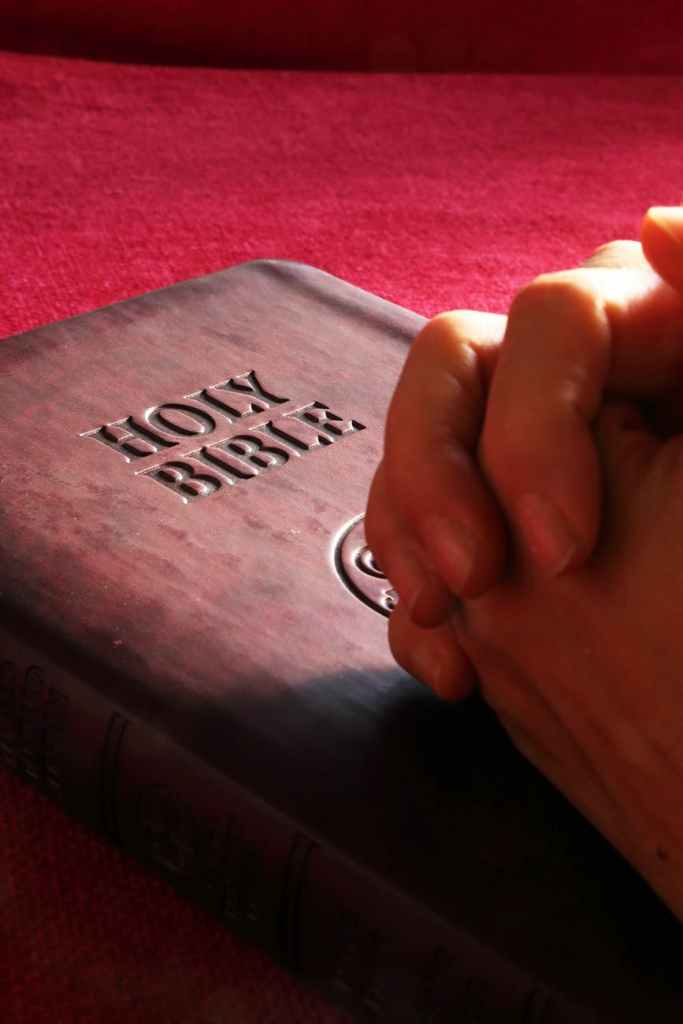
Praying Scripture

At least once a month throughout this year, I want to write about some practical ways to freshen the pursuit of a life of prayer. Today I want to discuss several ways of praying scripture.

Photo by Pixabay on Pexels.com
Photo by Tima Miroshnichenko on Pexels.com
  • Probably the most common way people think of praying scripture is to actually pray the words of a Psalm or Biblical prayer. Many of the psalms ARE prayers in poetic form, so this makes sense. Some excellent “prayer psalms” include Psalm 3, 8, 15, 16, 18, 25, 30, 51, 54, 57, 63, 66, 71, 84, 98, 101, 103, 108, 123, 130, 138, 139, 142, 143, 145, 146, and 150 (among several other passages throughout the others). There are also wonderful “prayer” passages throughout the rest of the Bible. In the New Testament, there are the prayers of Jesus, as well as prayers throughout the Epistles. Choose a familiar one. Choose one that is new to you. Choose an entire passage, or just a few verses…
  • A second way to “pray scripture” is to read a passage and “pray it back” in your own words. Echo the praises (or the confessions or requests) of the original speaker. Add your own personal words and thoughts to those of others through the ages.
  • Another method is to read a passage of scripture, or a story from scripture, study it, meditate on it–then use what you have just learned about God’s character to inform your prayer. Did God show Himself to be powerful, merciful, faithful, Holy, patient? Reflect that back to Him in prayer.
  • Related to this method is praying back to God His attributes and names as found in Scripture. “The God who sees.” “The God who hears.” “The Almighty.” “The God of Abraham, Isaac, and Jacob.” The God of Israel.” “Wonderful Counselor.” “The Son of Man.” “The Lamb of God.” etc.
Photo by Pixabay on Pexels.com
  • Yet another way to use scripture in prayer is to reflect on a person in the Bible and how God used that person, blessed that person, or dealt with that person. David, Daniel, Ruth, Hannah, Jonah, Samson, Gideon, Esther, Paul, Peter, Mary Magdelene– there are several examples of real, fallible, often ordinary people who encountered God. How did God find them? What did He do for them (or in spite of them!)? What could He be planning to do in YOUR life if you follow Him?
  • Finally, there are scriptures that leave us with questions. Why not use these questions as a opportunity to pray!? Take a passage of scripture that you find confusing or even contradictory, and pray about it. Ask God for wisdom and understanding. Come to Him believing that there is a purpose to each word and passage of the Bible, and that He can reveal Himself through even those words that seem to make no sense!
Photo by Tima Miroshnichenko on Pexels.com

Of course, not all of our prayers will be “scripture-based” in this way. But what might happen if we try praying this way once this week? Prayer is so mysterious and multi-faceted–we should engage and explore as we pray. After all– it’s more than just prayer– it’s a pursuit!

Blog at WordPress.com.

Up ↑