No Detail Too Small

Have you ever wondered about some of the minute details that made it into the Biblical accounts? And some of the details that DIDN’T?

Photo by Luis Quintero on Pexels.com
  • There are hundreds of prophesies about the birth of Christ, and at least two detailed genealogies listed in the gospels. We know that He was born in Bethlehem (and the circumstances that caused Him to be born there). We know about the angels and the visits of the shepherds and Wise Men (right down to the dreams that caused the Wise Men to change the route of their return!) Yet, the Bible never tells us the exact date of His birth.
  • Parts of Leviticus go into great detail describing skin rashes and infectious diseases; other parts discuss in detail the kinds of animals that are acceptable for food, and those that are not; and there are the various types of sacrifices– which to offer when, what could be offered, and how it should be prepared (and/or disposed of) before and after. But in the very few descriptions of festivals or Temple procedures throughout the time of the Kings and Judges, there is very little detail, except in the number of sacrifices offered, or in the way that some of the priests disregarded the rules. (See 1 Samuel 2:12-36; 2 Samuel 6:-7; Micah 3, etc.)
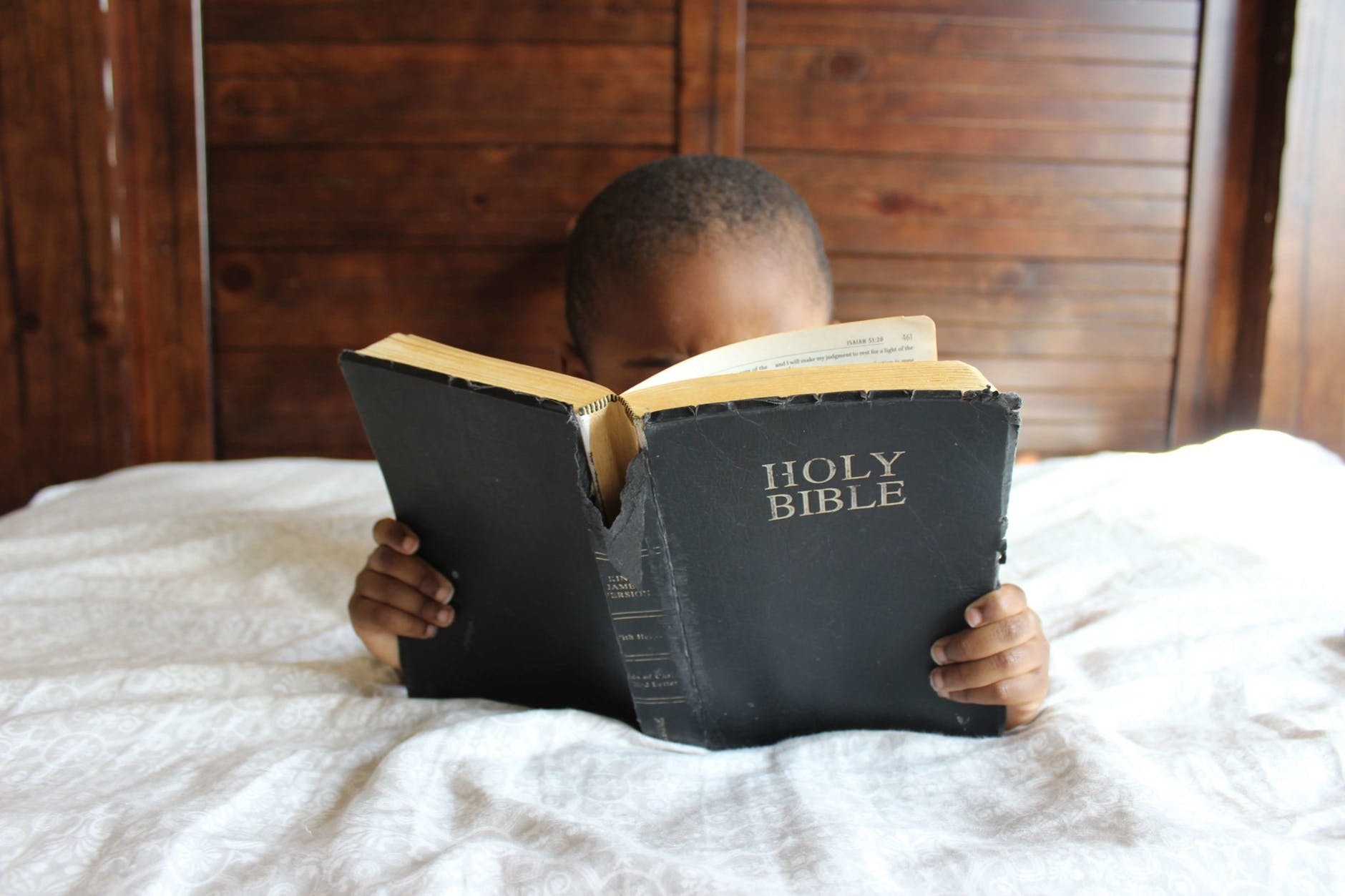
  • During the building of the Temple, and the rebuilding of Jerusalem, there are long lists of names of workers; in Paul’s letters, there are dozens of names of people to whom he sent special greetings. Yet we never learn the names of many Biblical “characters.” What was the name of Naaman’s wife, or her servant girl who directed Naaman to Elisha the prophet for healing? What was the name of Job’s wife? The Rich Man who ignored poor Lazarus in Luke 16?

Photo by Oladimeji Ajegbile on Pexels.com

The Apostle John comes closest to addressing this issue near the end of his gospel. He says: “Jesus performed many other signs in the presence of his disciples, which are not recorded in this book. But these are written that you may believe that Jesus is the Messiah, the Son of God, and that by believing you may have life in his name.” (John 20:30-31 NIV via biblegateway.com). Details help us visualize, understand, and remember. Details remind us that God sees and knows everything about us. And they confirm for us that God is interested in the details of life– from our scattered thoughts, to the hairs on our head; from our rising up to our lying down; from the grain of rice on our fork to the hole in our sock; from our first breath to our last gasp.

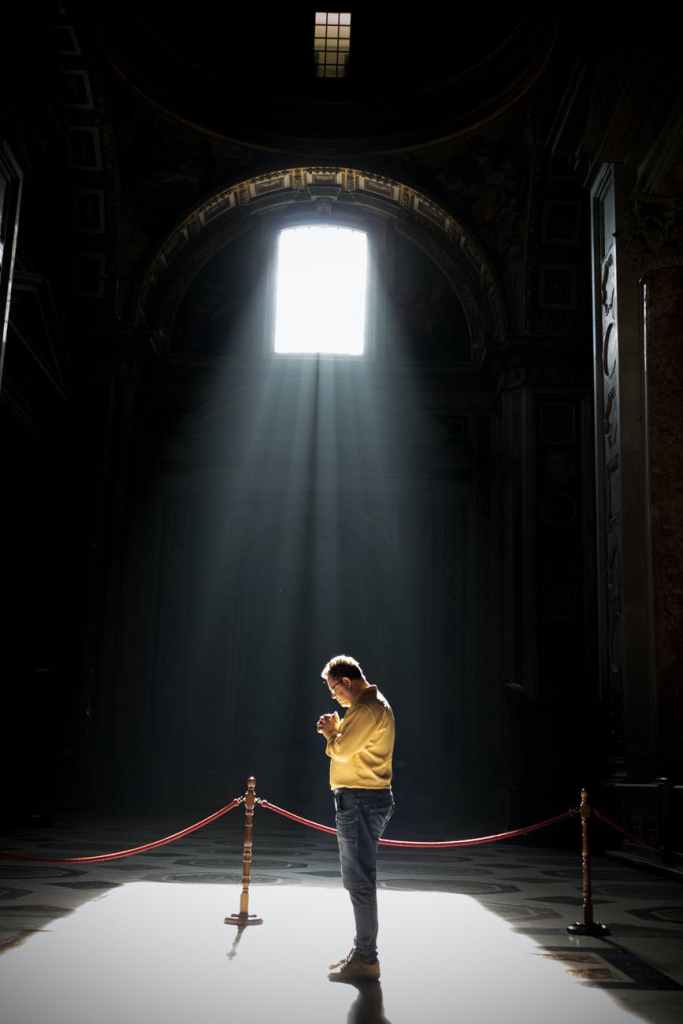
And so it is with prayer. There are times when we lift up to God the details of our day– the unkind word we regret saying about our neighbor, or the ache in our right pinky finger, or the amount we need (but don’t have) to pay the water bill or buy flour. There are other times when we cry out in desperation– no time for details. Sometimes, we make the mistake of believing that the details will make a difference in whether or not God will hear or answer our prayers. But God hears each prayer, and He already knows. He knows the details, whether we include them or not, and He knows our heart. He loves to hear from us–details or desperation– He is waiting with delight to meet with us! And each type of prayer involves “believing” and “(having) life in His Name.”

Photo by Mary Taylor on Pexels.com

Sometimes, we get tired of listening to details; tired of reading the lists of names in our Bible; tired of slogging through a long description, or waiting for someone to “get to the point.” God has infinite patience. God who already knows the end of every story, who already knows the “point” we long to make, never shuts us down or rolls His eyes as we pour out our heart to Him. Nor does he get upset when we cry out in panic or frustration, with groans and wordless expressions that don’t begin to “tell the whole story.” There is no detail too small to share with God– and no detail so important that God cannot understand or meet our need.

Fast Forward

I’ve written dozens of blog posts about prayer, and very little about fasting. Fasting is a practice that is often coupled with prayer, but fasting rarely appears in my blog.

There are several reasons for this. I don’t make a practice of dedicated fasting, so I don’t feel comfortable writing about something I don’t know well. or practice often. I also don’t want to give fasting equal time or importance, because I feel it can become a substitute or even an obstacle to prayer if done for the wrong reasons.

Photo by RODNAE Productions on Pexels.com

The Lenten season is fast approaching, and it is a time when many people choose to fast, so I am stepping out of my comfort zone a little to give more time and effort to fasting (and discussing it here). Here are a few things I have found:

Photo by Marx Alexei Illaconza on Pexels.com
  • While we often think of fasting as going without food or water (or both), there are actually many kinds of fasting. Fasting simply means that we do without or set aside something as an act of obedience, reverence, contrition, or worship. Fasting should be done with the goal of getting closer to God, increasing our focus and our dependence on Him. When we fast, we are creating a “space” of dependence– separating ourselves from one thing to be available for another thing– namely prayer and worship. It isn’t about not eating, so much as not allowing food and drink (or other things) to call us away from time with God.
  • Fasting is Biblical. It was practiced by Biblical figures from Moses to King David, Ezra, Daniel, Nehemiah, Esther, and the entire nation of Israel! Jesus fasted and members of the early church practiced fasting as well. Fasting is encouraged, but not required. It is never prohibited, but there are several biblical warnings about improper fasting (see below).
  • For an excellent discussion (by people who have studied longer and know far more than I do), see: https://www.biblestudytools.com/bible-study/topical-studies/what-exactly-is-fasting-all-about.html or any number of other excellent blogs and websites, many of which are linked in the site I’ve listed.
  • Fasting is NOT meant to be an end in itself. There are many people who use fasting as a diet plan, or as an exercise in self-control. This is NOT biblical fasting. Whatever you are “setting aside” in your fast should be “filled” with prayer, meditation, and worship, and that should always be your focus. If you have health issues, a history of eating disorders or obsessive behavior, you should be very careful about fasting. Consider seeking advice or an accountability partner to help you remained focused on the real goals.
  • Fasting will not make you more righteous, or better than someone else who does not practice fasting. In fact, Jesus warned that when we fast, we should not do anything to call attention to the fact– no moaning or sighing, etc. Fasting isn’t about impressing others with our religious devotion. God knows our actions, but He also knows our heart.
  • Fasting is a commitment, and should not be taken lightly. If you decide to do a fast, and you’ve never done one, it’s best to start small and complete it, than to jump in headfirst and fail to keep your commitment. Not because God will be angry or disgusted– remember that God LOVES you and wants you to desire a closer relationship. But God wants each of us to grow to maturity. God will give us grace to do what He asks us to do; but He won’t honor our efforts to “outdo” Him.
Photo by Paulo Mu00e1rcio Dos Santos on Pexels.com

In taking a closer look at fasting, I am encouraged to do it more often. I have done short fasts, food fasts, and fasting from activities, and I can say that such practices often have surprising results. If you are planning to do any kind of fast for Lent, I pray that you will find it brings you closer to God and helps you in your own pursuit of prayer.

Photo by John Ray Ebora on Pexels.com

For Thou Art With Me…

Photo by Korhan Erdol on Pexels.com

“Social Distancing” is the latest buzz-phrase in the media. With the spread of COVID-19, governments and health officials are asking people to avoid meeting in groups, avoid physical contact, and keep our distance from those outside our immediate family. Those who are most susceptible to the disease are being asked to self-quarantine; those who contract the disease are put in isolation. This is causing many people additional suffering, because they feel alone and even abandoned.

Photo by Engin Akyurt on Pexels.com

But God assures us that He will never leave nor forsake us. No matter how “distant” we may be from others, God is always with us– ALWAYS. Prayer does not summon God to our side, or capture His focus and attention from someone or something else. Our God is omnipresent and omniscient– He know our every thought; He is with us through every moment and every breath.

So why do we feel so alone and frightened at times like these?

Photo by Anna Shvets on Pexels.com

I think there are several reasons:

  • Disaster, disease, hardship– especially when they come unexpectedly or develop rapidly– remind us that we live in a fallen world. We KNOW our world isn’t perfect. We know that life is fragile. We know that health and comfort are not guaranteed. But sudden tragedy leaves us unable to deny that our world is broken and we cannot, by our own efforts, fix it. We expect that God’s presence means God’s perfection will surround us, protect us, and shield us from the reality of Sin and its consequences– including the reality of Sin in the natural world around us. Hurricanes, earthquakes, infections, climate change– God allows them to happen. They will continue to impact our fallen world until God chooses to step in and put a permanent end to them. But He is still here WITH us through the storms and sicknesses and trials of life.
  • God’s voice is often gentle and comforting. Panic and fear are loud and insistent. We will hear the voice we focus on most. God whispers in our ear if we are listening to Him– if we concentrate on spending time with Him. How much of my time today was spent in Scripture and prayer? How much of it spent listening to the news or reading FB posts full of anger and confusion?
  • Sometimes, in the good times, we pay God lip service; taking for granted that He is there, but not acknowledging His presence. Sure, we say that He walks with us (or we walk with Him); but we don’t take a moment to look up and see where He is leading us. Instead of being close to God by following our Shepherd, we are close to Him because He is chasing us down to bring us back to the right path. He is right there, but in our panic, we don’t see Him, because He is no longer leading us.
  • Fear and panic draw our attention inward. It’s one of the reasons “social distancing” causes emotional distress. We are social creatures, but our focus is easily drawn inward, and more so when there seem to be no other people around. Our own thoughts, fears, and questions grow bigger– enough to consume us if we are not careful.
Photo by samer daboul on Pexels.com

God IS with us–let’s rejoice and embrace it:

  • Pray. Pray some more. Pray without ceasing! (2 Thessalonians 5:17)
  • Let God speak– meditate on God’s word. Meditate on His names and His character.(Psalm 19) Seek out websites that magnify God. Call or e-mail friends who can pray or praise with you.
  • Sing! Worship the God who is bigger than any crisis we may face. Sing at the top of your lungs– if you are alone, there is no one else to hear you, but the one who adores your “joyful noise” (Psalm 100)
  • Encourage others– Be the reminder that someone else needs today. (1 John 4)
Photo by Vlad Cheu021ban on Pexels.com

He Knows My Name

The Bible is full of names. Some we know well– Adam, Eve, Abraham and Sarah, Joseph, David, Moses, Mary and Joseph, Jesus, John, Peter, Paul, Mary Magdalene. Others are less familiar–Nimrod, Eli, Darius, Deborah, Ezekiel, Jezebel. Some are just unbelievable– Keren-Happuch, Maher-shalal-hash-baz, Basemath, Abishag, Shammuah, Pallu…you get the idea.

Photo by Min An on Pexels.com

But sometimes, the Bible seems to get carried away with names. Take the lists of genealogies and “begats” found in Genesis, Matthew, and Luke. Endless names of fathers and sons, tribes, and descents. They can be boring to read; even mind-numbing. But there is also important information included in these lists, if you just take the time to look closely. https://christinprophecy.org/articles/those-boring-begats/

Similarly, in places like Exodus and Leviticus, 1 Samuel, 1 Chronicles, Ezra, and Nehemiah, and elsewhere, there are extensive lists of those who were leaders of clans and families, workers who helped build (or rebuild) the temple and walls of Jerusalem, those who served in the tabernacle, and those who were among the heroes of King David’s army. In the New Testament, there are lists of people in Paul’s letters– greetings, rebukes, side-notes and requests meant for various people who are never mentioned again. Why include what amounts to a post-script in Holy Scripture?

Photo by Pixabay on Pexels.com

It turns out that many of these names give us valuable clues about development of the nation of Israel– how the tribes settled and spread out; how they interacted with each other and with the surrounding nations. The names in Ezra and Nehemiah help us connect the returning exiles with their ancestors (and confirm the extent of the destruction of entire clans and families in the fall of Jerusalem). The names in the New Testament show a picture of the early Church– how it spread, who joined the early believers, and where they came from.

What does all this mean to us hundreds of years later? It show us:

  • God’s plans are detailed and inclusive–The Biblical writers did not have to include so many names– they could simply have condensed the story to say that Abraham had hundreds of descendants; that the tabernacle was built; that many people returned to Jerusalem to rebuild the temple and walls, and that the early Church grew rapidly. But God wanted names included (even the strange ones) so generations of readers would see the scope and detail of God’s unfolding plan. These were real people– individuals–cherished by God and worth including in the Biblical narrative.
  • The Bible is more than a series of mythical adventures or allegories. Many of the names (of people and places) in the Bible have been confirmed in historical and archaeological records– even those that were thought to be “wrong.”
  • God’s plans are universal. The Bible lists include names from various nations and cultures– Jewish names, Egyptian, Ethiopian, and Babylonian, Roman and Greek names, the names of tribes and clans that spread throughout the Earth. God knew them all. God watches over us all.
Photo by malcolm garret on Pexels.com
  • Each of us has an important role to play in the ongoing story of God’s grace. Our names may not all end up in the pages of Scripture, but our names can be in the Lamb’s Book of Life. God knows the name of every person who has ever existed! He doesn’t call us by the name of our younger sister, or get confused by our nickname or birth/adopted name– He knows us intimately like no one else ever will!
  • Names are important. None is more important than the Name that is above all Names– Jesus. Messiah, Christ, Savior, Immanuel. His is the Name that saves. Let’s call on Him today!

Tending the Garden of Prayer

I don’t think it’s any accident that God placed Adam and Eve in a garden, or that Jesus used so many farming metaphors in his teachings. There are a lot of Biblical lessons to be learned in gardening and farming–lessons about living, about relationships, and, of course, about prayer.

Photo by Lukas on Pexels.com
  • Start by preparing the soil. No good crop comes from randomly throwing seeds up in the air and leaving them untended. We cannot expect our lives to produce peace, love, patience, and joy if our hearts are hard, unbroken, and unable to accept God’s mercy, wisdom, conviction, and discipline. We cannot expect friendships or family ties to grow without time, effort, and vulnerability. And prayer requires faith and a sincere desire to meet with God–to listen, learn, and draw near. https://www.biblegateway.com/passage/?search=Hosea+10%3A12&version=ESV See also https://www.biblestudytools.com/bible-stories/parable-of-the-sower.html
  • Plant seeds! It seems almost too basic to list, but how many of us (and I count myself) have a tendency to hold on to our faith, to the wonderful promises of God, to the grace He has given, to the love we should be sharing with others? How many opportunities do we lose because of fear, busyness, or self-interest over the interests of others? Today will soon be yesterday– it will never return to give us another, better chance to make a difference. Small steps taken are better than grand plans that never come to fruition! ” Whatever you do, work at it with all your heart, as working for the Lord, not for human masters.” Colossians 3:23 Pray boldly, pray deliberately, pray consistently.
Photo by Binyamin Mellish on Pexels.com
Photo by Bibhukalyan Acharya on Pexels.com
  • Expect a harvest–but expect some surprises, too! God’s ways are not our ways (https://bible.knowing-jesus.com/topics/God~s-Ways-Beyond-Human-Understanding) God often chooses to answer our prayers or alter our circumstances in ways that defy or exceed our expectations. God never answers our prayers only to gratify us in the moment– His plans are mysterious and eternal. They are also righteous and perfect and just.
  • Give Thanks and Rejoice!
Photo by Chan Walrus on Pexels.com

Can You Hear Me Now?

We experienced some storms last week, and while we didn’t have a lot of damage from the winds and rain, my husband and I lost our internet connection over the weekend.  No wireless internet meant no Facebook, no WordPress, no e-mail, and no cash register at our little shop downstairs.  We had to do every transaction by hand until we could rig up something so our smart phone could accept cards; no new chip cards, no Apple Pay or PayPal.  And while our phone could begin to accept limited credit payments, it could not provide any printed receipts, nor could it do double duty– we either had a phone or a point-of-sale device, but not both!

It was an inconvenience, but not a disaster.  I thought about thousands of people who are stuck in the aftermath of hurricanes, tornadoes, floods, earthquakes, and blizzards who have no electricity, no phone lines, no cell service, no roads, no water or sewer lines–cut off from common necessities and basic communication.  Suddenly, an emergency becomes even more tragic because of the isolation, and the inability to ask for help or to hear any message of hope.  (Of course, my husband would like me to put in a short plug here about the advantages of amateur radio– the radios can run on battery power and still connect over hundreds of miles!)

sound-speaker-radio-microphone.jpg

Isolation is an earthly concept.  God is eternally Triune.  He created us for relationship; from the very beginning, he declared that it is not good for “man” to be alone (Genesis 2:18)  God instituted marriage, and families, and communities so that we would stay connected, and he himself came to walk and talk with mankind in the Garden of Eden before the Fall.  It is mankind who hid from God and broke off communication– one of the effects of Sin is the desire to run away, to separate, to isolate and cut off relationships and break off contact.

That is one reason that prayer is so basic; so essential.  It is a lifeline to the one who loves us best, who knows what we need, and has the power to hear us, to help us, to lift us up wherever we may be, whatever our circumstances.

pexels-photo-787452.jpeg

But sometimes, even when we want to talk to God, it seems impossible to speak or feel like he hears us.  Sometimes, we are the ones who can’t come up with words, or can’t settle our minds to seek his face.  Sometimes, we pour out our hearts and wait in silence for an answer.   Why should it be that just when we need it most, prayer seems the hardest?

I wish I had a pithy, perfect answer.  I don’t know.  I have a few incomplete thoughts, though:

  • what comes easily has less value to us.  Cheap and pointless conversation doesn’t make us work hard, but it also leaves us empty and unsatisfied.  Crying out to God is hard–it humbles us, it strips us bare and uncovers all our pretenses and subterfuge.  The true depth of our need is ripped out of us like a tumor, and it hurts, but it is a healing hurt.  Waiting in silence can cause us to become restless and to doubt, but it also can cause us to listen more attentively– we strain to hear the answer; we stop the white noise of busyness and half-hearted hand-wringing, and listen with our whole being.  And the smallest whisper– that still, small voice– has the power of the first rain after a long drought.  We are revitalized and our strength renewed as never before.

pexels-photo-546657.jpeg

  • sometimes, though not always, we find prayer difficult because we have not really prayed for a long time (if ever)– we have developed a habit of saying words to the empty air and thinking that the words themselves hold some power of hope or magic or self-fulfilling prophecy.  When life’s realities cannot be wished away with simple words, we search for distractions, for other types of words, for other “realities”, when we should be searching for our maker and the lover of our souls.
  • sometimes, it is a matter of unacknowledged or unconfessed sin that keeps us from breaking through in prayer.  However, there are many people who will use this as a default position, and that, too, is wrong.  Jesus had such difficulty in praying at Gethsemane that he sweat drops of blood— NOT because of unconfessed sin, but because his heart was that overwhelmed.  Still, we should examine ourselves to see if we have started to move away from God– better to turn back than to go father afield.
  • sometimes, as with Christ in the Garden, our hearts are just overwhelmed in the moment– it’s hard to breathe!  It’s hard to go on; it’s hard to ask for help; it’s hard to keep the faith.  Just because it’s difficult, don’t give up– even if all you can do is groan or whimper–even if it feels like God has closed up the heavens and left you alone–don’t give up.  God DOES hear, he DOES care.  Sometimes, we are inches from victory– don’t give up!

And what can we do during those times?  Again, I wish I had better answers, but what I have, I want to share– some from my own experience, some wisdom from others, some of both:

  • Learn to “pray outside the box”–
    • Sing–sing the blues, sing an old hymn, sing along with the radio, sing like nobody else is listening
    • Write it out– write a letter, write an angry letter if you have to– write a rant, write a poem, write out all your questions
    • Move– dance, pace, run, punch a pillow, do some sit-ups, mop the floor, scrub the sink– as you get a rhythm going, add your thoughts or questions to your movements
    • Cry it out– it’s ok to cry, moan, sob, weep, or just stare into space and rock yourself to sleep after all the tears have dried up.  Jesus wept (John 11:35)– what makes us think that we can’t?

landscape-nature-man-person.jpgpexels-photo-256658.jpeg

  • Count your blessings
    • Make a list of what you have; what you have to be grateful for; what you have experienced and enjoyed now or in the past
    • Make a list of your questions, concerns, needs, wants, wishes–Now think back ten years and make a list of what you wanted then, and how many of those concerns have been answered, altered, or forgotten.
    • Put yourself in another time or place– what do you have here and now that others lack?  How do your present troubles compare to what others have had to deal with?
  • Ramp up your pursuit of God in other areas–
    • Search for answers in His word
    • Seek the companionship of someone you trust who will help you keep on going
    • Seek out counselors, web sites, and/or a church group or family who can keep you from becoming isolated

pexels-photo-935944.jpeg


The single most important thing is to continue the pursuit– seek God with all your heart–and you will find him sufficient through the silent times, as well as through the roaring of the fiercest storms.


Blog at WordPress.com.

Up ↑