For anyone familiar with the Star Trek series, the phrase, “To boldly go…” conjures up pictures of galactic travel at warp speed, with haunting soprano voices, uniforms in mustard yellow, red, and black, and the voices of actors William Shatner or Leonard Nimoy (or Patrick Stewart, et al.) It probably does not make anyone think of The Lord’s Prayer, or the teaching ministry of Jesus Christ. I hope to change that today!
There is a running theme throughout scripture of God asking people– from Abraham to Moses to Mary and Joseph to the Disciples and Apostles and on to all of us– to COME, and to GO. BOLDLY! Abraham left all that he knew to follow God’s prompting to the promised land. Moses was told to Go and confront Pharaoh, Mary and Joseph were to Go– to Bethlehem, to Egypt, and then to Galilee. The Disciples were to Go into all the world! We are to continue this Great Commission.
But Jesus, in His teaching on Prayer, also told His Disciples to Come to the Father with boldness:
One day Jesus was praying in a certain place. When he finished, one of his disciples said to him, “Lord, teach us to pray, just as John taught his disciples.” He said to them, “When you pray, say: “Father, hallowed be your name, your kingdom come. May your will be done on earth as it is in heaven. Give us each day our daily bread, Forgive us our sins, for we also forgive everyone who sins against us. And lead us not into temptation but deliver us from the evil one.” Then he said to them, “Suppose one of you has a friend, and he goes to him at midnight and says, ‘Friend, lend me three loaves of bread, because a friend of mine on a journey has come to me, and I have nothing to set before him.’ Then the one inside answers, ‘Don’t bother me. The door is already locked, and my children are with me in bed. I can’t get up and give you anything.’ I tell you, though he will not get up and give him the bread because he is his friend, yet because of the man’s boldness, he will get up and give him as much as he needs. So I say to you: Ask and it will be given to you; seek and you will find; knock and the door will be opened to you. For everyone who asks receives; he who seeks finds; and to him who knocks, the door will be opened. Which of you fathers, if your son asks for a fish, will give him a snake instead? Or if he asks for an egg, will give him a scorpion? If you then, though you are evil, know how to give good gifts to your children, how much more will your Father in heaven give the Holy Spirit to those who ask him!”
As Christians, we often quote the Beatitudes, where Jesus said, “Blessed are the meek..” We should not be pushy, arrogant, or selfish in our actions or our prayers; but we should be bold, confidant, and eager. God doesn’t want us to be timid, coy, or “fake” in asking for wisdom, power, and basic needs– He wants to give us good gifts. He also wants us to trust Him enough to ask forthrightly and boldly.
So let us pursue the “Enterprise” of prayer by “boldly” going before God’s throne, and then “boldly” going forth in the power of His Holy Spirit.
When I taught public speaking in a local public high school several years ago, we had an entire unit on “stage fright.” Studies showed that the fear of public speaking ranked right alongside the fear of death! But why? Why are we afraid to speak in front of a group? Especially a group of our peers?
It turns out that stage fright has two perfectly logical and definable causes: first is the desire to do well/be successful/be understood, appreciated, and accepted. But this natural desire collides with the realistic possibility that we will make a mistake, or that something will happen to keep us from being understood (like a problem with microphones, or interruptions), or that our message will not be accepted or appreciated. Neither of these thoughts, individually, is unreasonable. But the more we exaggerate them, the less our brain can process the duality. We cannot guarantee that all will go perfectly, nor can we assume that all will go horribly wrong. But the more we worry about all the things that MIGHT go wrong, the more we create stress. Ironically, the stress and fear we generate often leads to mistakes we otherwise might NOT have made!
Part of combating fear, then, is to acknowledge that we want to do well– our best, in fact– in spite of whatever circumstances we might face. Instead of exaggerating what MIGHT go wrong, we must put more energy into what we can control, practice, and mitigate. We also have to stay realistic about what we are likely to achieve in our efforts. This is especially true in a situation where we face an unknown or potentially hostile audience. Our goal is to do the best we can with what we have, not worry about achieving the impossible or controlling what is beyond our ability to control.
I was thinking about this recently as I watched several political candidates in debates, town halls, interviews, and even in their TV ads. Many of them show fear, and even a bit of panic over questions from interviewers, reactions from audiences, and attacks from their opponents. It can be nerve-wracking to face “gotcha” questions from an interviewer– questions that ask you to defend or explain things you said years ago or actions you took under different circumstances. But it can also be an opportunity to clarify a position, show growth and how to learn from past mistakes, or create healthy discussions.
The same holds for Christians who face a hostile or unknown audience for the Gospel. We can be very fearful of sharing the Good News if we allow ourselves to fall into worry and negative thinking. We can face “gotcha” questions from opponents– “Why does a ‘Good’ God allow Evil and suffering in the world?” “Why does God send people to Hell?” “What about good people who die without hearing the Gospel?” “I know you. You’re not perfect. Who are you to judge me?”
But the truth is that God hasn’t asked us to have all the answers to “gotcha” questions. He hasn’t asked us to produce “mic-drop” moments in which we stun our opponents into humiliation. But we ARE to be ready, willing, and able to defend– and let’s be clear about this– OUR hope in the Gospel. It is not our job to force everyone around us to accept a particular doctrine, or set of beliefs. It is not our job to make others change their minds or hearts. It IS our job to testify to the Goodness that God has shown to us– even while acknowledging that we continue to suffer in this life– not to explain away God’s actions or other people’s experiences. We don’t have to be out there winning arguments. We just have to be prepared to Speak UP!
The Apostle Peter seems not to have suffered from “stage fright.” He always spoke out– and sometimes regretted it later! But he gives us this wise advice in his first epistle:
If with heart and soul you’re doing good, do you think you can be stopped? Even if you suffer for it, you’re still better off. Don’t give the opposition a second thought. Through thick and thin, keep your hearts at attention, in adoration before Christ, your Master. Be ready to speak up and tell anyone who asks why you’re living the way you are, and always with the utmost courtesy. Keep a clear conscience before God so that when people throw mud at you, none of it will stick. They’ll end up realizing that they’re the ones who need a bath. It’s better to suffer for doing good, if that’s what God wants, than to be punished for doing bad. That’s what Christ did definitively: suffered because of others’ sins, the Righteous One for the unrighteous ones. He went through it all—was put to death and then made alive—to bring us to God. 1 Peter 3:14-18 (The Message)
Peter doesn’t give us a false promise that everyone will like us or accept our message. In fact, he makes it clear that even Jesus was rejected and suffered at the hands of those who heard the truth from His own lips! Our goal is not to force someone else to accept the truth– but to testify to the truth as we know it, understand it, and live it out. We are not the ones who will judge who goes to Heaven or Hell. We are not the ones who wrote the Law. But we speak of these things because we hold them to be eternal, vital truths. Our job is to let Christ speak through us– not just in our words, but in our Christlike attitude and actions.
We don’t have to fear the crowds– though they may pose very real dangers. We don’t have to fear even those who oppose or oppress us. If we are following our Savior, the only thing in this world to fear…is fear itself.
“Lord, today, I ask for a heart of joy and boldness as I prepare to have an answer for those who would question my Faith and Hope in You. Help me to remember how much You love them, even if they are not willing to accept my words or actions. May I speak to them as You would– with unwavering truth, and unwavering compassion. Thank you for the reminder that you have not given me a ‘spirit of fear, but of power and of love and of a sound mind.’ (2 Timothy 1:7 New King James Version) Keep my mind focused on You and immune to fear. In Jesus’ name, AMEN!”
9 He also told this parable to some who trusted in themselves that they were righteous, and treated others with contempt: 10 “Two men went up into the temple to pray, one a Pharisee and the other a tax collector. 11 The Pharisee, standing by himself, prayed[a] thus: ‘God, I thank you that I am not like other men, extortioners, unjust, adulterers, or even like this tax collector. 12 I fast twice a week; I give tithes of all that I get.’ 13 But the tax collector, standing far off, would not even lift up his eyes to heaven, but beat his breast, saying, ‘God, be merciful to me, a sinner!’ 14 I tell you, this man went down to his house justified, rather than the other. For everyone who exalts himself will be humbled, but the one who humbles himself will be exalted.” Luke 19:9-14 (ESV)
I study prayer. I write about prayer. But I am not an “expert” on prayer. That is not to say that one cannot become proficient in prayer or learn to pray “better.” But prayer is ultimately the pursuit of a relationship. I can pray eloquently in public. I can pray earnestly at home. I can pray fervently every day. And I will still pursue prayer– “more” “deeper” “better” prayer.
But it can be easy to fall into the trap of thinking that my relationship with God is based on my own efforts. That the “more” or “better” I pray, the more God will listen; the more God will accept me. That is a lie. God doesn’t want my “best.” He wants my all. He wants me to come to Him “just as I am”– not in an idealized version of myself.
Jesus spoke of this kind of prayer in the parable of the Pharisee and the Sinner. The Pharisee knows how to pray eloquently about himself. He is confident in his own righteousness. He does not need to ask God for anything. He really doesn’t need to thank God for anything. He has secured his own righteousness in his own eyes, and he wants to thank God for noticing (and surely rewarding?) his goodness.
We are sinners saved by grace. Yet we often act like sinners saved by our own cleverness in accepting God’s gracious gifts. Sure, Jesus paid a price for our sin on Calvary– but that was nearly 2,000 years ago. We are saved! We are justified! We “get it.” And our prayers are offered up in pride and self-confidence. God will hear us. God loves us. God will be impressed by our discipline and our fervor. When we do this, we are like the arrogant Pharisee in the parable. Such prayers do not honor God. They do not honor the work of the Cross. They do not reflect a right relationship with our LORD and Savior.
However, we are not exactly like the Sinner in this parable, either. If we have confessed our sins, and believe on Jesus Christ, our sins HAVE BEEN forgiven, and we have been justified. We do not need to offer sacrifices or beg for mercy over and over again for our past offenses. Our guilt has been washed away. We come humbly, but we come as sons and daughters of the King– co-heirs with Jesus.
God does not want wimpy, doubtful prayers. He does not want us to waver or hide from Him. He wants us to come boldly to the throne of Grace (See Hebrews 4;14-16). But we do so knowing that it is Jesus’ righteousness that gives us the right and His love that gives us the desire to come. It is the finished work of the Resurrection that makes us confident. We should pray honestly and humbly–whether in thanksgiving or confession of new sins– but with confidence and joy in our restored relationship with God through Jesus Christ.
Let us never forget that we pray to an all-powerful, Holy God, who is also gracious and merciful. We can come with TRUE thanksgiving for what God has done; for who He is; and for who we are IN Him.
“Lord, I thank you that YOU are not like other men and women. I thank you that You have made a way for me to be cleansed. I thank you that no matter what I have done, or what I do, Your love for me never changes. And I thank you that You listen to, and answer my prayers! You are Holy, Faithful, and True.”
16 Shadrach, Meshach and Abednego replied to him, “King Nebuchadnezzar, we do not need to defend ourselves before you in this matter. 17 If we are thrown into the blazing furnace, the God we serve is able to deliver us from it, and he will deliver us[c] from Your Majesty’s hand. 18 But even if he does not, we want you to know, Your Majesty, that we will not serve your gods or worship the image of gold you have set up.”
Daniel 3:16-18 (NIV)
I hear a lot of American Christians complaining about the “dark days” in which we live. And indeed, they are dark. There is great evil in the world– wars, famines, injustices, hatred, division, greed, and immorality. But, along with complaints, I hear a note of whining. Isn’t God supposed to deliver us from just such evil? Isn’t He supposed to clear the way for us to love one another in peace and harmony? Surely, it can’t be His will for us to be laughed at, spit upon, misunderstood, and treated with contempt?!
The ancient nation of Israel was conquered and sent into exile. Israelites who had abandoned their faith, as well as those who had steadfastly served the Lord, were ripped from their homeland and marched to Babylon. Worship in the Temple of Jerusalem ceased. The Temple itself had been destroyed. There were no tabernacles, no festivals– none of the systems and structures of worship left available to God’s people. Yet some still worshipped– in homes, isolated from their fellow Jews, or in secret groups. They were not surrounded by reminders of when “their” religious beliefs were considered the cultural norm. Nor did they live in a culture that practiced religious “toleration” as we understand it today.
In the book of Daniel, the commitment of s handful of exiles is detailed as it comes in conflict with the oppressive control of the Babylonian (and later the Persian) Empire. Daniel and his three friends are challenged by the pressure to compromise and adapt to their surroundings. They are tempted and bribed by the promise of power in the court– if they can compete with other Babylonians. But they secretly hold fast to their “old” diet, and religious practices. They refuse to eat the rich food of Babylon– or bow to its gods.
In Chapter 3 of Daniel, the three friends, Shadrach, Meshach, and Abednego, refuse to bow to a golden statue of Nebudchadnezzar, the megalomaniac for whom they worked. Even though he had appointed them to high offices, he refused to “coddle” them in their worship of a foreign god. He demanded that they bow to his statue– something God had commanded them NOT to do.
It might have been easy enough to secretly meet in homes and celebrate Passover without alerting those around them. It would have been possible for them to hide scrolls containing the ancient words of their historians and prophets, to be read or studied. But they were being asked to publicly bow to a statue of their King– to acknowledge him as a “god.” And they refused. As court officials, their refusal was not just a minor snub, but a scandalous insult. Yet they stood firm.
Shocked and angered, Nebuchadnezzar, a notoriously cruel and impulsive king, gave them a generous “second chance” to save their careers and lives by obeying his orders. Amazingly, the three did not even spend a moment considering their options. They answered, boldly, courageously, and graciously, that they would not bow down to the statue. And God rescued them from the fiery furnace, so that not even their hair was singed by the flames– even though their captors were killed in the very act of pushing them into the furnace! God not only rescued them– He appeared WITH them in the midst of the flames. This so astonished Nebuchadnezzar, that he ordered them released and proclaimed that no one should say anything against the God of Shadrach, Meshach, and Abednego–an incredible act of religious toleration for that culture and time.
The story of The Fiery Furnace is well-known. I’ve used it before in my posts. But today, I’d like to focus on just one little phrase that stood out to me this week. When brought before Nebuchadnezzar the first time, the three men said, “we do not need to defend ourselves before you in this matter…” (v. 16).
How tempting it might have been to have defended their refusal– to give Nebuchadnezzar a lecture on God’s Law and His past miracles. But they refused to explain or defend their actions. They merely gave testimony of their faith that God COULD save them, and that, “even if He does not..” they were willing to die rather than dishonor Him. And Nebuchadnezzar SAW the proof of their faith in a way that their words and arguments could not have accomplished!
Most of the time, when I hear Christians talking about this story, they focus on the miraculous deliverance of the three men from the flames. The lesson is that God will be with us, no matter what. He can deliver us FROM the flames, but often, He chooses to deliver us THROUGH the flames. And that is a wonderful lesson and a true promise.
But that deliverance should not overshadow the quiet dedication of the three men. Before God joined them in the fire, they were already committed to dying in silence to obey God rather than their earthly king. They stood to lose everything– their lives, their legacy of faith, their service, their families (who might have been left destitute or even subject to punishment)– all of it was riding on their willingness to suffer injustice and torture. We know that God “showed up”– literally– in their defense. And they certainly knew that God COULD save them. But they also acknowledged that “if He does not..” they were still willing to die. And they were willing to do so, not acknowledged as martyred heroes, but as convicted criminals.
Centuries later, Jesus Christ would appear before Pontius Pilate, who asked Him to give a defense. Astonished at Jesus’ refusal to argue and plead for His life, Pilate came to the conclusion that “I find no fault in Him.” (John 19:4) Jesus willingly accepted an unjust sentence of Death, offering no argument or defense, except the Truth. No one came to His rescue. And God did NOT spare His life! The Son of God died as a criminal on a Roman cross, betrayed by Jewish leaders. Yet, Jesus’ obedience; His willingness to die brought US life, and forgiveness and peace!
There are millions of believers in Christ today who must be prepared to face a “fiery furnace” moment–maybe it involves death or torture. Perhaps it only involves being teased or despised by a neighbor or a classmate at school. And we may pray for deliverance–that is natural. But how often do we give up the chance to argue, and justify our diligence, our “right” to worship “our” way? How ready are we to be seen as foolish, or even rebellious to the culture of the day? We long for God to come to our physical rescue– to join us IN the fire– but are we willing to let Him be our defense? Are we willing to be humble in the face of obvious injustice, and let God speak up on our behalf? And what if He does not?
The Apostle Paul also faced this dilemma. Not only were there Greek and Roman officials who thought him a fool, there were Jews– his own people– who were going around defaming him, denouncing him, and spreading lies and rumors. Paul (never one to let a good argument go unargued!) spent much of his time in letters writing out his defense of the Gospel. But, in his own defense, he downplayed his position and his great knowledge of the scripture. He was not defending himself “in these matters”– he was defending the Truth of the Gospel! He also acknowledged that God could use even detractors and tormentors to spread the Gospel. And he often urged fellow believers to live in peace with their unbelieving neighbors, even those who taunted them!
It is tempting in Western Culture, where Christianity has been normalized, to think that when we defend ourselves, we are defending Christianity. But what if, like Shadrach, Meshach, and Abednego, we let God be our defense– in the flames, in the courtroom of public opinion, in our own families? What if we followed Jesus’ example and remained calm and confident, even under duress? What if we lived humble and quiet lives of integrity, ready to submit even to the flames or the cross, serving even those who would stoke the fires or pound the nails? God might just “show up” in ways we never could have imagined! Courage is often seen as boldness and speaking up in our own defense. But, sometimes, it takes greater courage to stand silent and let our actions– even when they are disparaged and misinterpreted– speak as a testimony of God’s power.
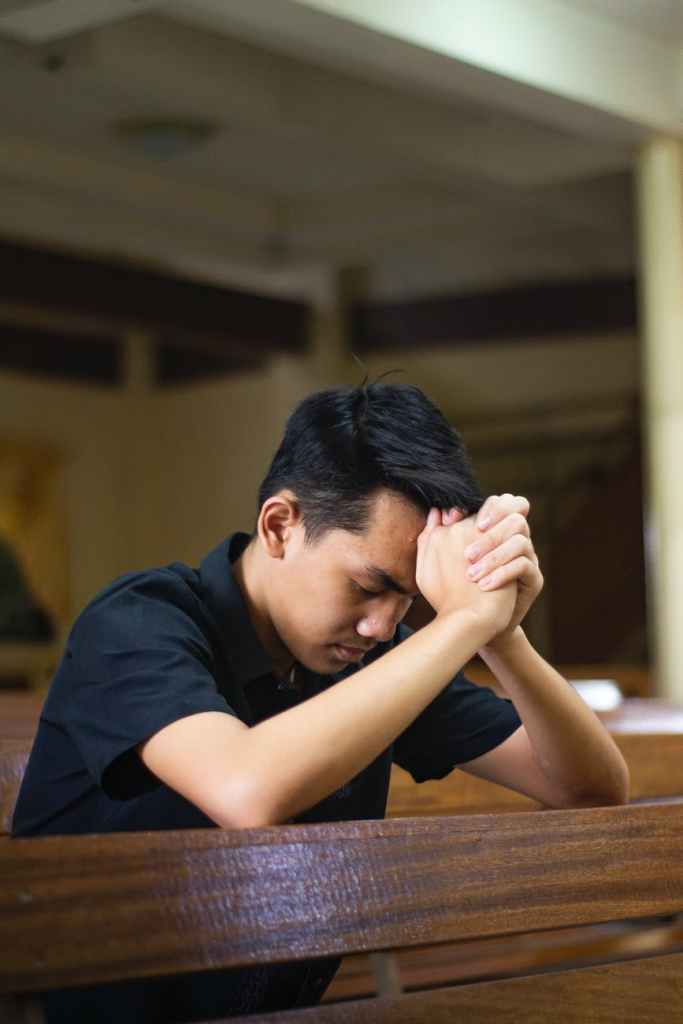
The Bible is full of examples of prayer– long prayers, elegant prayers, short prayers, confident prayers, even arrogant and angry prayers. Much has been written about praying boldly and with confidence. But I want to say just a few words about timid prayers.
Sometimes, our awe of God is so powerful, and our awareness of our own shortcomings so deep, that it makes us pause. We “know” that God hears us; we “know” that God has made it possible to approach Him with assurance in His Love and Grace. But what we “know” and what we “feel” don’t always align. Sometimes this may make us “feel” as though our prayers are lesser, somehow– that God may still listen to our prayers, but will count them as less worthy or that they will be less effective.
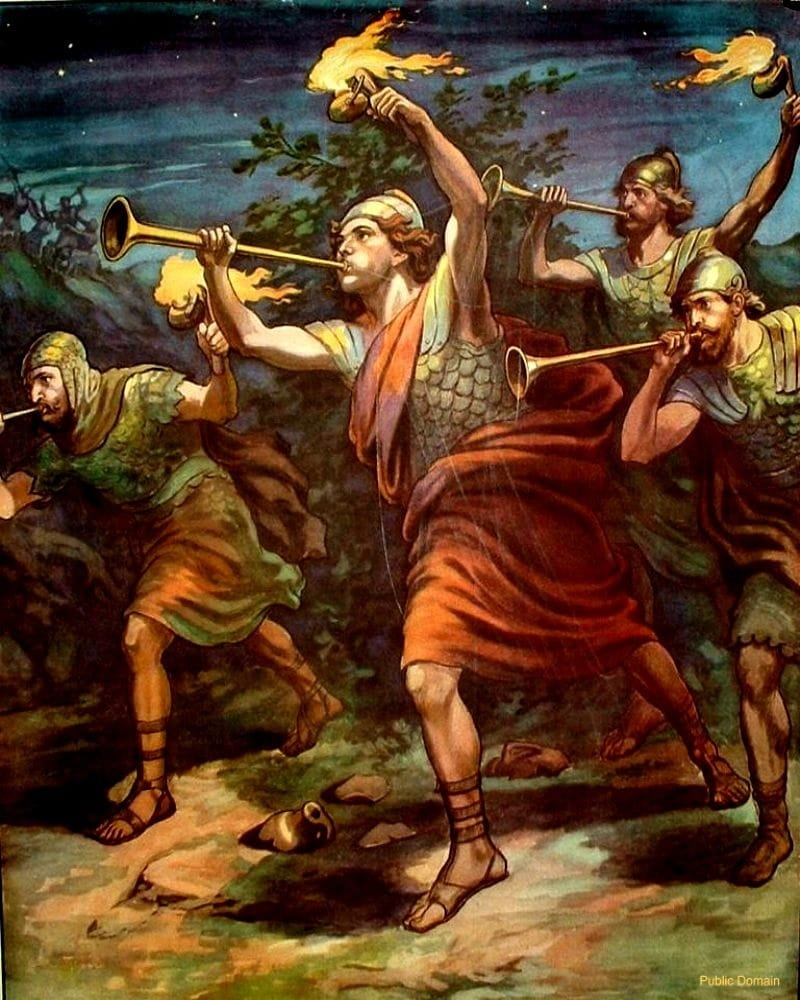
God listens to the spectrum of our prayers–including those when we are timid and fearful, confused and anxious, even those for which there are no words (see Romans 8:26)! Gideon (see Judges 6-8) was timid and reluctant; and yet he prayed for God’s help to strengthen his resolve. He ended up defeating a mighty army with just 300 men, and was listed in Hebrews 11 as one of the heroes of Faith. David’s psalms and prayers include many that are timid and questioning, yet God described King David as a man after His own heart. Even Moses doubted his abilities and prayed that God would send someone else to speak to Pharaoh. God answered Moses’s request, sending Aaron to help, but it was through Moses that God delivered an entire nation!
Sometimes, our timidity can be traced to our doubts or fears. Sometimes, it can be traced to guilt or shame. There are many reasons why we may “feel” timid, frightened, or unworthy to come before a Holy God, to ask for His help or guidance when we feel inadequate, or to admit that we have failed. But we must remember that NOTHING can separate us from God’s Love or from the privilege of praying to Him. A timid heart is not always a humble heart, but a humble heart is often a timid heart. And God promises to give grace to the humble (James 4:6).
We should rejoice with those who pray boldly (and not arrogantly). But never despise the lowly and timid prayer. After all, what makes prayer effective and powerful is not who is doing the praying or what words we use, or even how we feel– it is to WHOM we pray that makes all the difference.
I was reading from the book of Judges today, and a curious phrase jumped out at me. The entire book of Judges is filled with the failure of the people of Israel to fully claim their promised inheritance from God. Generation after generation passes, with a cycle of sin, enslavement, and deliverance as God raises up various judges and heroes, like Gideon, Deborah, or Samson.
Already in chapter one, there is a hint of the trouble to come. The book begins with several successful battles after the death of Joshua. The people of Israel consult the Lord, who fights with them in several key battles. But in verse 19, it says: “The Lord was with the men of Judah. They took possession of the hill country, but they were unable to drive the people from the plains, because they had iron chariots.”
Say what? The Lord was with the men of Judah– the LORD! They had taken possession of the hill country– rough terrain that would have been filled with natural barriers, rocky fortresses, and literal “uphill battles.” They had destroyed massive cities like Jericho less than a generation before. They had defeated armies far larger and better positioned. They had defeated giants! And now, suddenly, they are “unable” to drive the people from the plains– because the enemy had chariots of iron?
https://www.biblestudytools.com/commentaries/gills-exposition-of-the-bible/judges-1-19.html I think this commentary says it well. The chariots of iron became the excuse for the Israelites’ unwillingness to obey; to trust in God’s strength instead of their own. After all, it wasn’t that long before in their history when God had drowned the entire Egyptian army, including all its chariots, in the Red Sea.
I don’t think it was about the chariots of iron. I think it was about the plains. I think sometimes it can be more difficult to fight on “the plains.” When God sends us on an “impossible” mission, we must face our own fears and acknowledge our weaknesses– we KNOW we cannot do it in our own power. But when we face an enemy on “equal footing,” we are tempted to trust in our own resources– the toughness of our armor, the skill of our generals, the speed of our horses, and the superiority of our weapons. We hope and expect God to fight for us where we cannot hope to win alone, but we don’t ask for God’s help or protection in areas where we believe our own strength should be sufficient. Israel had a fine army– seasoned veterans of battle. If they HAD iron chariots of their own, victory might have been expected– with or without God’s divine intervention. But victory eluded them, because they didn’t finish the fight!
We do the same thing today–we fail to march into battle because the enemy has “chariots of iron.” Maybe they have more social status, more political or economic power then we have. Perhaps we see that they have the means to make our lives painful “on the plains.” We see their arrogance, and their wealth and success, and we let ourselves be intimidated. We know that God has promised never to leave us or forsake us, but He has not given us chariots of iron to match those of the enemy. We don’t pray for the courage to face their chariots, or the wisdom to trust that the battle belongs to the Lord. Instead, we make excuses for not fighting the battle at all.
The rest of the book of Judges is filled with war, slavery, corruption, death, and evil. The very last verse sums it up: “In those days Israel had no king; everyone did as he saw fit.” (Judges 21:25)






















 Pursuing Prayer