Lamb of God

Abraham put the wood on Isaac’s shoulder, but he carried the hot coals and the knife. As the two of them walked along, Isaac said, “Father, we have the coals and the wood, but where is the lamb for the sacrifice?”
“My son,” Abraham answered, “God will provide the lamb.”
(Genesis 22:6-8 Contemporary English Version)

The next day John saw Jesus coming toward him and said, “Look, the Lamb of God, who takes away the sin of the world!  (John 1:29 NIV)

After this I looked, and there before me was a great multitude that no one could count, from every nation, tribe, people and language, standing before the throne and before the Lamb. They were wearing white robes and were holding palm branches in their hands. 10 And they cried out in a loud voice:
“Salvation belongs to our God,
who sits on the throne,
and to the Lamb.”
(Revelation 7:9-10 NIV)

In my last post, I spoke of Jesus being “The Good Shepherd.” But He is also the Lamb– the Lamb of God, who takes away the sin of the world! This image may seem to contrast with the previous Names of God– names full of authority, power, might, wisdom, and strength. A lamb is powerless and has no authority. So, what can this name possibly tell us about God?

From the beginning, God used a lamb to represent innocence and sacrifice. Cain and Abel brought sacrifices to God– Cain brought crops he had grown; Abel brought a lamb. God was pleased with Abel’s sacrifice, more than Cain’s. The Bible doesn’t spell out exactly why, but I think the context of the rest of the Bible gives us a clue. When God gave His laws and regulations to the nation of Israel, He specified that the sacrifice for sin, for guilt, for peace, and for worship were to be animals–pure and innocent– their blood the factor that would bring atonement and peace. The innocent lambs would be killed, their blood poured out on the ground, their meat sacrificed on the altar, and the rest of their bodies (skin, bones, offal, etc.,) taken outside of the camp and destroyed. Vegetables, bread, herbs, wine– these could all be offered as free-will offerings, but they were not to be used for sacrifice. And the lambs (or other animals) had to be spotless and free of disease or disfigurement– perfect.

Sin is death– it doesn’t just bring disruption– it is fatal. Because God is HOLY, He cannot dismiss Sin with a shrug and say, “humans will be humans…”, or “it’s ok this once…” or “at least you learned your lesson.” But because the world is infected with Sin, even lambs and goats are not good enough to fully remove the stain and sentence of Sin. Only Holiness could do that.

Jesus is the Lamb of God. Just as Abel offered a lamb for a sacrifice; just as Abraham was ready and willing to offer his beloved son of the promise, God offered His only begotten Son as the only possible perfect sacrifice for Sin. Jesus came as a helpless, powerless babe. He lived a humble and obedient life of service and sacrifice. And He became the ultimate Sacrifice on the Cross.

Jesus is also the victorious Lamb of Revelation, worthy of all praise and adoration! God’s Might and Power are equaled only by His Grace and Lovingkindness. He is both Shepherd and warrior– fiercely protective of His people– and the sacrificial Servant Lamb who humbly serves both God and mankind. He is NOT a lamb without power or authority. But He willingly lays aside all the trappings of authority in order to teach us how to obey and follow Him.

He is God ALMIGHTY, and Ruler of All– but He is also gentle and humble. I do not pray to a God who is far off, aloof, distant, or unfeeling. I pray to the Lamb of God who was wounded for me, who willingly offered to become the sacrifice for my sins, and who died the death I deserved. And I pray to the Lamb who rose victorious, making what should have been the darkest day of history Good Friday!

The Value of a Life

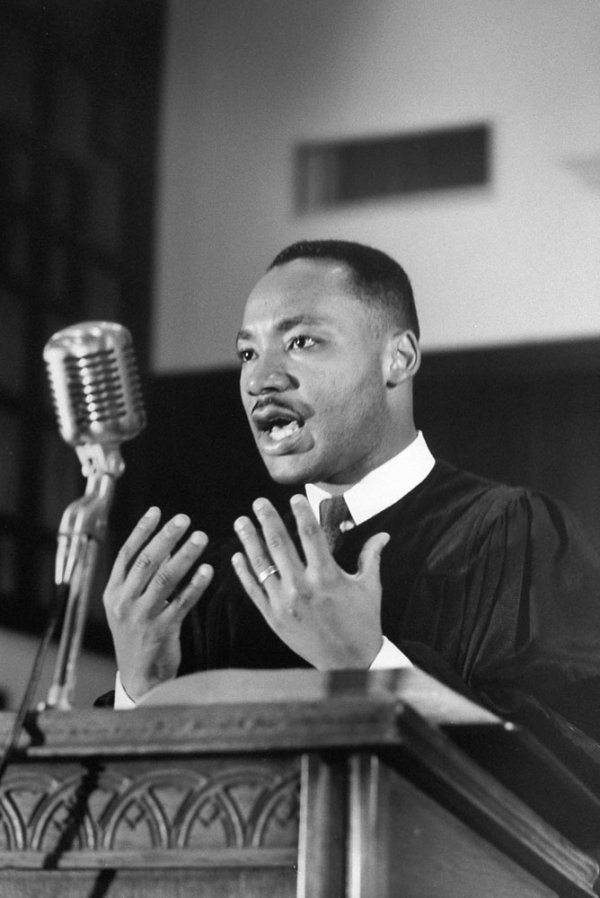
Today in America, we celebrate the life of Dr. Martin Luther King, Jr. Dr. King was a minister, a brilliant writer and student of theology, a leader in the Civil Rights movement of the late 1950s and early 1960s, a noted speaker, and man who arguably made a difference in the world. Dr. King was murdered in 1968, at the age of only 39, leaving a family and a nation devastated by his loss.

Next Monday, we will observe the 51st anniversary of the Supreme Court decision Roe v Wade, in which nine judges effectively legalized abortion in the U.S. for over half a century. Even though this decision has been overturned, many states, using the precedent of Roe v Wade, have changed their state laws to allow for abortion. In many states, it is now legal to abort a child right up to the moment of birth!

What is the value of a single life? Who gets to decide that they have the right to take another person’s life– whether by assassination, capital punishment, abortion, murder, or euthanasia?

It is a question that our society has struggled with for centuries. Who can give life? Who can take life? Who can determine the conditions of another person’s existence? And, for those who live, what is the “value” of their life–to their family, to their neighborhood, to their nation, or to history? Who gets to set the standard of what constitutes a “worthwhile” life or the “quality” of life for someone else? For themselves?

I’ve been reading through the book of Genesis this month, and, according to the Bible, this subject is as old as human life on earth. Cain decided that Abel’s life was expendable, so he killed him– the first murder. The people of Sodom and Gomorrah felt they had the right to enslave and rape anyone they wanted to. Joseph’s brothers plotted to kill him, before selling him into slavery, instead.

The Bible doesn’t hide this history, nor does it sugar-coat the actions of those featured in its pages. But, the Bible offers us a clear picture of WHO gives life, and WHO has the authority to decide what life is worth. God alone has this authority. It is God alone who can create and sustain life. Mankind has the choice– to protect life or destroy it; to treat life with respect or with disdain; to honor the Giver of Life, or to rebel against Him.

All the atrocities of the Old Testament lead to the ultimate decision on the value of a single life. Jesus lived a simple, ordinary human life. He lived with compassion, with purpose, and with humility. And He was willing to GIVE His life to atone for all the murders, all the abortions, all the slavery, all the injustices in history, so that WE could enjoy abundant, eternal life with Him. By looking to this singular life, and trusting in the power of His death and resurrection, we can choose to honor all life. We can make a difference. We can live with purpose and joy.

Dr. King’s legacy is one of honoring life, and pointing out the evils of those who seek to devalue the lives of others based on the color of their skin. Abortion’s legacy is one of destroying life, and promoting those who devalue the rights of the helpless.

The choice is still before us. How will we determine the value of a single life in the coming week? How will be add value to life on earth? How will we live for more than just the moment?

Praying in Anger

Ephesians 4:25-32 English Standard Version (ESV)

25 Therefore, having put away falsehood, let each one of you speak the truth with his neighbor, for we are members one of another. 26 Be angry and do not sin; do not let the sun go down on your anger, 27 and give no opportunity to the devil. 28 Let the thief no longer steal, but rather let him labor, doing honest work with his own hands, so that he may have something to share with anyone in need. 29 Let no corrupting talk come out of your mouths, but only such as is good for building up, as fits the occasion, that it may give grace to those who hear. 30 And do not grieve the Holy Spirit of God, by whom you were sealed for the day of redemption. 31 Let all bitterness and wrath and anger and clamor and slander be put away from you, along with all malice. 32 Be kind to one another, tenderhearted, forgiving one another, as God in Christ forgave you.

I grew up hearing that anger is a sin.  Yet God experiences anger and wrath.  And the Apostle Paul says in this passage that we are to “Be angry and do not sin” (Eph. 4:26a).

Anger is an emotion; feeding on anger, wallowing in it, stewing and screaming and acting out under the control of our anger– that is sin.  That is why Paul goes on to say that we should “not let the sun go down on your anger ” (4:26b).  Anger doesn’t have to be a bad emotion, but it is a bad master.  We need to take control over our anger to resolve it, and let it go.  In Genesis, God spoke to Cain about this very thing–Cain and his brother Abel had brought sacrifices to God; Abel’s sacrifice was pleasing to God, but Cain’s sacrifice did not find God’s favor.  The sacrifices were voluntary– Cain and Abel were not in competition to see who could bring the “best” sacrifice.  God had not ordered them to bring a sacrifice only to find fault with Cain’s efforts or the way he chose to present the sacrifice.  The scriptures don’t even say that God rebuked Cain or pointed out a flaw in his offering.   He simply found favor with Abel’s offering– Abel had brought the best he had; the firstborn of his flocks.  Cain had brought “some” of his crops. 

garlic beside ginger and pepper on brown wooden table

The difference in the sacrifices had nothing to do with the content or the manner of offering, but in the intent to worship God halfheartedly, instead of wholeheartedly.  God saw that Cain was angry (as well as proud and envious of his brother).  Instead of rebuke, God offered grace and wisdom:

man head face portrait

Genesis 4:6-7 New Revised Standard Version (NRSV)

The Lord said to Cain, “Why are you angry, and why has your countenance fallen? If you do well, will you not be accepted? And if you do not do well, sin is lurking at the door; its desire is for you, but you must master it.”

God doesn’t want us to deny our anger or pretend we are never angry.  But He does want us to acknowledge it, and deal with it.  Why am I angry?  What should I do about it?  Anger can motivate us to do the wrong things, but it can also spur us to change our course, and do something good.  Righteous anger can spur us to speak out about injustice, and seek to correct wrongs.  Anger can lead us to our knees, asking God for direction, strength, or His intervention and justice.  King David often prayed angry prayers asking God to strike down the people who were plotting against him, or those who were doing evil or mocking God’s people.

walk human trafficking

I wish I could say that I had mastered this area, but I’m writing as much for my own instruction today as anything else.  Here are some wonderful steps we can and SHOULD take to deal with anger:

  • Pray!  Anger can strangle us, or it can sneak up and suffocate us, but the worst it can do is drive us away from our source of help and hope.  God WANTS us to come to him.  He reached out to Cain in his anger, wanting to draw him near and help him overcome it; He offers us the same help.  God can handle our anger– he can give us the power to let it go, and direct our feelings appropriately.
  • Own it–Angry people tend to deflect responsibility.  Yes, other people can say or do things that make you angry, but they can’t make you say or do sinful things in response to their actions.  You still bear the responsibility for what you do with your anger– even “righteous indignation.”
  • Question it!–This is something I have found helpful.  Just as God asked Cain, ask yourself, “Why am I angry?  Why am I downcast?”  And then, answer them honestly.  Many times, the root of my anger isn’t justified–instead it’s “just a lie”.  I have no right to be angry with someone else when I chose to waste time, cut corners, or neglect to do what was necessary.  I have no right to be angry or outraged because someone else feels differently or sees a different side of an issue.  In fact, if I keep listening instead of exploding, I might find compassion overriding the anger.  I might even learn something new!  Or I might better understand why I feel or think as I do, and be better able to explain it to others, instead of just yelling the same thing over again.
adult anger angry angry face
  • Deal with it–This is a difficult one for me.  I don’t like confrontation.  If someone hurts me, I just want to walk away and lick my wounds.  And we shouldn’t confront others WITH our anger, striking out at them and seeking to hurt them.  But I have found that a lot of anger and hurt that I have harbored is not only unjustified, but is based on misunderstandings and pride.  It takes humility, but it also takes courage to seek out someone to offer an apology you don’t want to give, or to ask for clarification instead of harboring hurt.
women typing on the notebook
  • Don’t spread it!  “Don’t let the sun go down upon your wrath”  is not permission to “vent” to seven (or seven hundred) friends by spreading your hurt and outrage  until you feel calmer.  This is particularly true in the age of Facebook, Twitter, and Instagram.  In the short-term, this may seem right– “they need to know what is happening”– but it is just the opposite.  Anger often leads to rash judgments, and hasty actions that we can’t undo or call back.  If you are not talking with the object of resolving a misunderstanding, apologizing, or offering a positive solution, you are engaging in sin.  The old saying, “If you can’t say something nice about a person, say nothing at all” applies here.  And it applies about situations and circumstances, too.  I am angry about various practices and policies by governments, companies, even churches; what I need to spread is not my anger about them, but awareness of how God can change them, and why we should be seeking His justice, His righteousness, and His grace toward those who have been impacted by them.
  • Repent of any anger-related sin.  Remember, anger itself is an emotion.  God experiences it; we are made in His image, so we experience it, too.  But God’s anger is Holy; ours is often tainted with other feelings and thoughts– pride, envy, greed– or even other human frailties like misunderstanding, exhaustion, hunger and pain. Instead of feeling guilt over the anger, we need to turn away from the sin that overpowers us in our anger.

For more Biblical wisdom about dealing with anger, see the following:

belief bible book business

https://www.biblestudytools.com/topical-verses/anger-bible-verses/

https://www.biblegateway.com/passage/?search=Matthew%205%3A21-26&version=NCV

https://thewisebeliever.com/anger-bible-examples/

Beyond Our Anger, Lord, Give Us Resolve!

There are a lot of angry people out there. They have ample reason to be angry. The world is filled with darkness, injustice, pain, sickness, violence, oppression..the list goes on. Such things should make us angry. Such things are wrong. They are destructive. They are evil.

Photo by Pixabay on Pexels.com

But anger, even justified, cannot heal. It begets more anger, and yet more evil in the name of vengeance. Anger alerts us to evil, but it cannot be allowed to fester and corrode all that is good.

God created us with emotions, like anger, but He desires us to bring them under His discipline to become instruments of good. All the way back in Genesis, God cautioned Cain in his anger https://www.biblegateway.com/passage/?search=Genesis+4%3A1-16&version=NIV God did not condemn Cain for his anger, but he warned him not to be mastered by it. Cain did not listen, and in his anger, he committed the first murder. God’s wrath against Cain was swift and terrible– God cursed the ground, so it would not produce for Cain; He drove Cain to wander in the barren wilderness. Even so, God put a mark of protection on Cain, and promised His own vengeance on anyone who would try to kill him. God’s mercy overwhelmed simple retribution. God had the power (and the right) to strike Cain dead. He chose to let Cain live with the dark consequences of his anger.

Photo by Pixabay on Pexels.com

God understands that we will get angry– He gets angry, too! But God sees beyond anger, beyond the immediate pain and rage that we feel when confronted with evil. God’s ways are eternal and Holy and right.

If we turn to God in our anger– if we cry out to Him and wait for His wisdom, He can turn even our anger and bitterness into something far better– resolve. We can resolve to bring good out of tragedy; we can resolve to work, and sweat, and pray, and stand firm in the midst of the storm. If anger is like fire– swift and destructive, then resolve is like a mountain–enduring and offering shelter, protection, and a fixed reference. Fire can scorch the mountain. But it cannot move it or destroy it.

Photo by Pixabay on Pexels.com

We are living in uncertain and evil times. Let us acknowledge it; even be angered by it. But then, let us bring our anger, our pain, our confusion– and our hope–to God. As God warned Cain, if we do not do what is right, sin will be crouching at our door, desiring to have us; to destroy us and drive us away from God’s presence. If we deny our anger, if we push it down and pretend that it has no power to touch us, we are playing with fire. But if we bring it to God, acknowledging the struggle, crying out in our pain, God can turn our anger into resolve– steadfast through fire and storm and wind and time. Solidly committed to what is good and right and truly just.

Photo by August de Richelieu on Pexels.com

Anger, violence, vengeance–all promise easy justice and powerful change. But once the fire of emotion and action has passed, we are left with ashes and death. But on the mountain of resolve, even the ashes become mixed with the good soil underneath to produce new life and growth. The good endures. The good resolves to endure. Goodness is eternal. Let us seek the good, and seek that God would, beyond our anger, grant us resolve.

Blog at WordPress.com.

Up ↑