Casting Shadows

Today is “Groundhog Day.” Tradition says that on this day, if a large rodent called a groundhog peeks out of its hibernation burrow to see its shadow, there will be six more weeks of winter. For more history about this observation, see https://www.yahoo.com/lifestyle/groundhog-day-five-things-didn-095407401.html?fr=sycsrp_catchall .

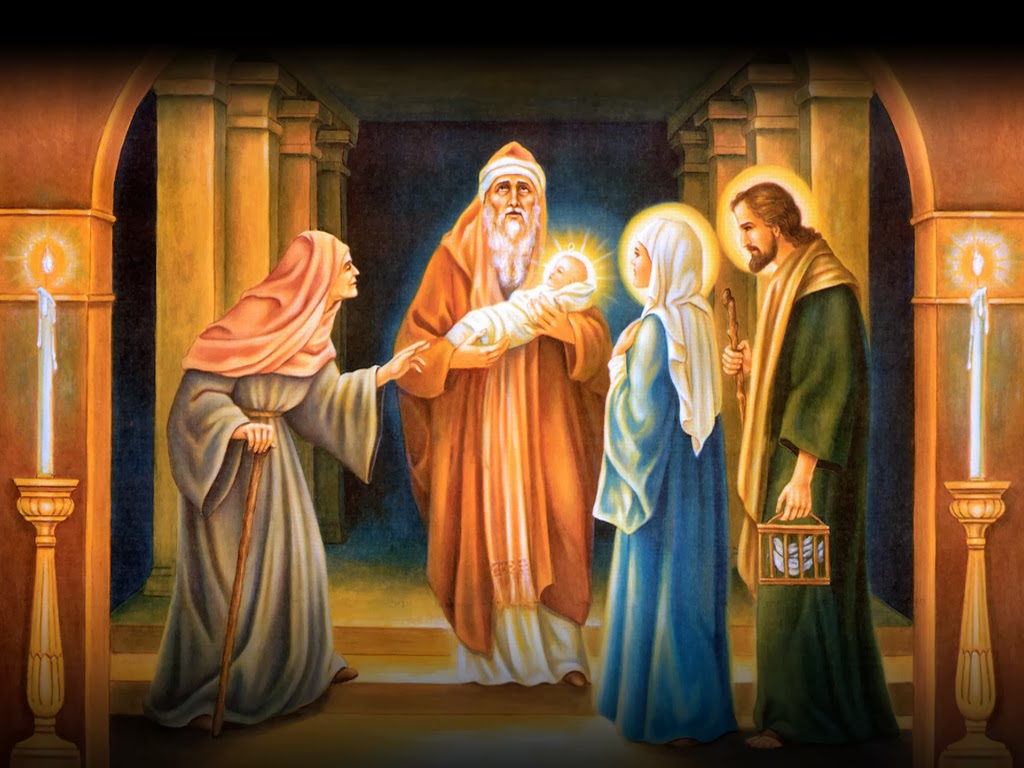
Candlemas, the celebration on which Groundhog Day is founded, is actually the day of the Baby Jesus’ presentation in the Temple (see Luke 2:22-40). Forty days after his birth, every first-born male child in Israel was to be presented at the temple, and a sacrifice was to be made for his redemption. This traces back to the Passover tradition, when the angel of death passed over the houses of the Jewish families who had painted their door frames with blood. Meanwhile, the first born sons (and animals) throughout Egypt were slaughtered. In this way, God showed His Power and His Mercy, leading Israel out of Egypt in triumph, while showing judgment on the Egyptians. (See Exodus 12).
History and tradition cast long shadows. The Jews had been slaves in Egypt for nearly 400 years. A new tradition helped them remember where they had come from and celebrate the promise that God would lead them to their own land. The Jewish people had kept this sacrificial tradition for centuries, reminding them of God’s mercy in saving their sons, and in redeeming them as a people from slavery in Egypt. Christians, realizing that this tradition “foreshadowed” the coming of Christ, adapted it into a new celebration. Christians celebrated Candlemas for centuries, remembering that Jesus was presented as OUR sacrifice, OUR redemption from Death into eternal Life Jesus came to be our Sacrifice, and also our Light. 

But somewhere along the way, pagan beliefs and rituals were woven into the story of this day, until it has become “Groundhog Day.” Instead of the Lamb of God, we celebrate a common rodent. Somewhere in Pennsylvania (Punxsutawney), a small crowd gathers as someone lifts up a frightened groundhog and pronounces a weather prediction (one that is less than 50% accurate!) And everyone is looking for a shadow, instead of celebrating the Light.

The thing about shadows is that you cannot see them when you are looking INTO the light. You have to look away, turn around, look back, to see a shadow. Shadows are cast when something gets between the source of light and a flat surface. History casts shadows. Memories cast shadows. Sin casts a huge shadow. But Jesus is pure light. The Word of Life came to be a “lamp unto (our) feet and a light unto (our) path” (Psalm 119:105 KJV). We are meant to learn from the shadows of the past, but not to walk in them. We are to walk in the light, looking forward to the fulfillment of God’s promises, even as we celebrate the faithfulness of His past actions in the lives of others.

Light casts no shadow. But it banishes the darkness where shadows live. Our choices have consequences. We can turn away from the light, or step in opposition to the light, and cast shadows that may follow for generations–cycles of abuse, isolation, hatred, anger, or regrets. Or we can choose to follow the light, and banish the shadows of the past– bringing peace, repentance, reconciliation, and hope.

Heavenly Father, today, I pray that I will be a reflection of Your light in the world; that my actions would help banish shadows of doubt and despair, and shine with Your truth and hope for others to see. Where there are shadows in my life from the past, may I learn from them and leave them behind as I follow you more closely. Where I have cast shadows in the lives of others, help me to bring light and healing in Your name. Amen.

Shadows…

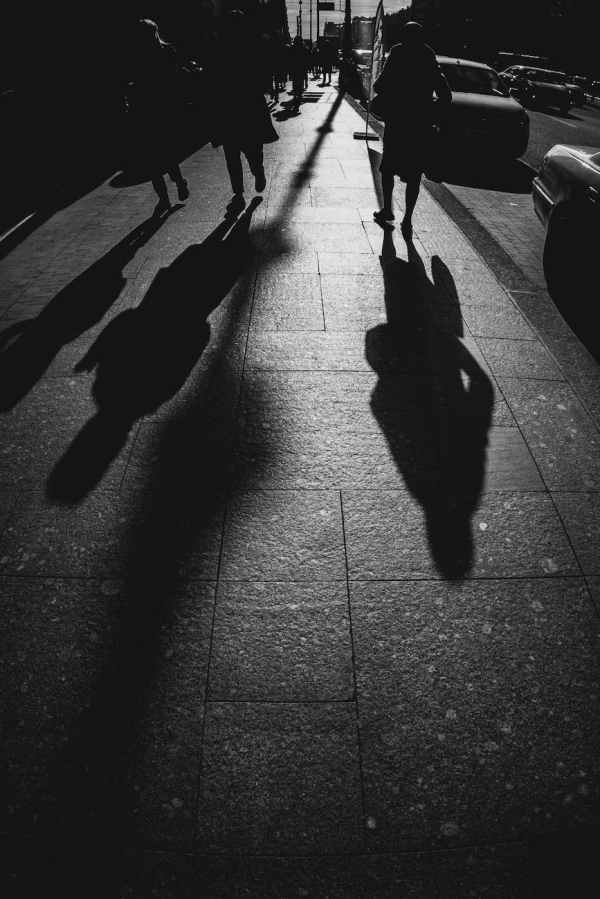
Today is a day of shadows.

Photo by Aaron J Hill on Pexels.com

In the U.S. and Canada, it is “Groundhog” Day: on this day, tradition says that if a groundhog (a rodent also known as a woodchuck) comes out of its burrow and sees its shadow, we will have six more weeks of winter. (If it doesn’t see its shadow, we’re supposed to have an earlier spring, but I have never known this to be the case.) Supposedly, the groundhog is frightened of its shadow and returns to hibernate for six weeks. It seems sort of counter-intuitive: a sunny day should indicate that spring is just around the corner. Seeing its shadow should be a “good” sign for the groundhog.

Today is also a special day in the global Church calendar. Known as “Candlemas” or Presentation Day, it represents the day that Jesus was presented in the Temple and Mary went through the purification rites required for Jewish women after the birth of a son. (see Leviticus 12:1-8; Luke 2:22-40) The gospel writer includes two other encounters that took place in the Temple courts. A man named Simeon, and a woman named Anna both offer praises for this child– the fulfillment of hundreds of years of prophecy, dating back to the Mosaic Laws. And Simeon also offers a warning to Mary– a “shadow” of things to come and prophecies yet to be fulfilled (v. 35).

Photo by Martin Mariani on Pexels.com

Winter can be dreary, and filled with shadows– both real and figurative, natural and spiritual. But shadows only appear when there is also light. May we be reminded on this day– whether it is a day of shadows, sunshine, or cloud cover– that Jesus came to be the “Light” of the world. And we should never be “afraid of our own shadow.” Indeed, as we cast our own shadows through our words and actions, may they point others toward the true light. And as we face the shadows that fall in our way, may we remember that they are only that– shadows– Light has overcome the darkness!

Photo by Pixabay on Pexels.com

My Eyes Have Seen Your Salvation!

Tomorrow marks the Christian observation of Candlemas, or Presentation Day. The Gospel of Luke (Luke 2:21-40) recounts the presentation of the infant Jesus at the temple. This was a purification ritual, and it involved bringing a small sacrifice (https://www.biblegateway.com/passage/?search=Leviticus%2012&version=ESV) Luke records the sacrifice as “a pair of doves,” underscoring that Joseph and Mary were unable to afford a lamb for the sacrifice. Kind of ironic, given that Jesus was the “Lamb of God.”

Photo by Pixabay on Pexels.com

This would normally have been a quiet ceremony. The sacrifice would be offered. The priest might say a few words of blessing and purification for Mary, and spoken of the traditions of Israel and the redemption of the firstborn son. There might have been a few other “new” parents coming to the temple that day– or not. The priest would have gone through the motions and left the new parents to attend to his other duties of the day.

Photo by nappy on Pexels.com

But on this occasion, Mary and Joseph were surprised by an elderly gentleman, who came up to them and took their son in his arms as he praised God in song:


“Sovereign Lord, as you have promised,
now dismiss your servant in peace ,
For my eyes have seen your salvation,
which you have prepared in the sight of all people,
a light for revelation to the Gentiles
and for the glory of your people Israel.”

Luke 2:29-32 (NIV)
Photo by cottonbro on Pexels.com

We know nothing about Simeon, other than what Luke tells us– He was a man from Jerusalem, devout and religious, who was waiting for the Messiah to be born. He had been told that he would not die before the Messiah appeared, and he had been led by the Holy Spirit to go to the temple on that day.After his song of praise, Simeon blessed Jesus’ parents and spoke prophetic words. Not comforting words about glory and redemption, but rather words of truth and warning.

After the surprising visit from Simeon, Joseph and Mary had another encounter; this time an old prophetess named Anna. Anna was a widow living in the temple, worshiping, praying, and fasting there daily. As soon as she saw the small family, she approached and she too offered blessings, praises, and prophetic words.

Photo by Nashua Volquez-Young on Pexels.com

Simeon and Anna weren’t the only other people in the temple courts that day. They weren’t high-ranking church officials or priests. But they were the only ones who recognized in this tiny child the wonder and majesty of God Almighty, and His Messiah.

Photo by Jeswin Thomas on Pexels.com

It was an ordinary day; an ordinary Jewish custom; an ordinary occasion. It went largely ignored by most. But for Simeon and Anna (and for the gospel writer Luke) it was a revelation.

I don’t expect Candlemas 2021 to be as momentous as that first presentation day. But I hope that we will have eyes and hearts like Simeon and Anna– ready to see the Salvation of the Lord, to recognize it right before our eyes in a hundred seemingly ordinary moments. May we be ready to step forward in praise and share the glory and wonder with others around us.

Photo by Pixabay on Pexels.com

Blog at WordPress.com.

Up ↑