The Twenty-third Psalm is one of the most quoted and well-known poems in the Bible. In its short six verses are contained some of the deepest truths and most beautiful images in scripture.
Today, I want to look at just the first five words of the psalm: The Lord is my shepherd. Familiarity with these words can rob them of their true power. Imagine if we used a modern-day analogy: The Prime Minister (or King or President) is my life coach, or home health care nurse, or bodyguard. Can you imagine!?
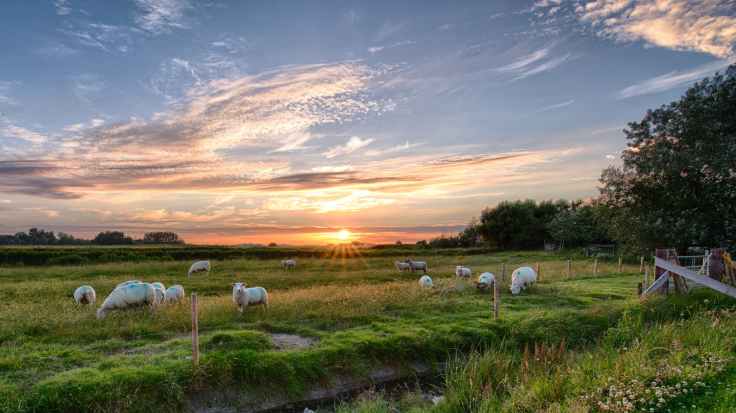
How often do we gloss over these words and fail to see the amazingly powerful message there. The LORD– Yahweh, the Almighty, Ruler of the Universe– is MY shepherd. He does all the kind of things a shepherd does for his sheep– feeds, leads, protects, and provides. He fights off predators, binds up wounds, and shears off the extra wool that can get us entangled in briers or slow down our progress. He stands with us in the heat and cold, and finds shelter for us from the wind and rain. He does all of this for me, when I can’t; because I can’t. He knows everything about me– my strengths and weaknesses and limitations. He knows everything about what I need– where the best grass and water are and how to get there; how much rest I need before the next stage of our journey; the likelihood that I will wander off and need to be called back to the flock. He knows what dangers lie ahead, and how to deal with them.
The Lord IS my shepherd– He is always on the job. He hasn’t left me alone in green pastures, or sent someone else to take me through the valleys. He didn’t start out as my shepherd and then decide to quit. He isn’t waiting for me to reach a certain stage or measurement before I qualify to be His sheep.
The Lord is my Shepherd– not my task-master, nor yet my servant. He is both my Lord and my caretaker– my master and my minister. When I pray today, it is not to someone remote and aloof or powerless and malleable– I am bleating in my sheepish voice all my praise, my love, my irrational worries, and my sincerest gratitude, to the eternal and all-powerful shepherd who calls me by name.
For many years, I owned a cat named Galahad. He was not, as his name suggests, a brave, noble sort of cat. He was often skittery, nervous, demanding, or absent. As he got older, he was sometimes irascible, and hissed at strangers and children. But he could also be cuddly and engaging, playful, and present.
Like many pet cats, Galahad would “meow” when he wanted attention–if he wanted to play, or wanted more food, or wanted me to stop singing along with the radio (or wanted the radio to be silent). Recently, I read an article that analyzed the different types of “meows” of a pet cat, and claimed that cats do not “meow”, except to communicate with humans. See https://www.psychologytoday.com/us/blog/all-dogs-go-heaven/201809/why-do-cats-meow-humans for more details. Cats have an entire language of “meows”– a language meant just for humans–to communicate their needs and moods more effectively. With other cats or other creatures, they communicate through scent, movement, growls and purring.
Galahad liked to “speak” to me, and I tried to respond to his needs and understand “his” language. But when Galahad was very happy, well-fed, content, or, late in life when we was in pain from arthritis, he would purr. This was intimate communication of a kind reserved for other cats and trusted humans. He would curl up in my lap, or near my feet, or on the bed by my side, and purr. Sometimes, he would lie, belly exposed, feet drawn up, head flopped back– completely vulnerable; completely relaxed–purring, snoring, drooling with absolute abandon.
When we pray, we often “meow”– we use formal prayer language, and try very hard to get God’s attention and express a variety of needs, as though God cannot understand an other expression. But God’s understanding goes beyond language. “26 In the same way, the Spirit helps us in our weakness. We do not know what we ought to pray for, but the Spirit himself intercedes for us through wordless groans. 27 And he who searches our hearts knows the mind of the Spirit, because the Spirit intercedes for God’s people in accordance with the will of God.” (Romans 8:26-27 NIV via http://www.biblegateway.com).
We don’t need to “meow” to get God’s attention. We can purr, content in the knowledge that God hears us, loves us, and knows our needs, wants, and moods– better than we know ourselves! In fact, God promises to keep “in ‘purr-fect’ peace” those whose minds are focused on Him; those who trust Him faithfully.
And God saw everything that he had made, and behold, it was very good. And there was evening and there was morning, the sixth day. Genesis 1:31 ESV (emphasis added)
I love spending time in nature– walking, riding, or biking through woods and meadows, hills and valleys, along lakes or rivers. God has created such beauty and majesty in every part of our world! I grew up surrounded by woods and water– lakes, rivers, old forests and new-growth woods, with lots of farmland and meadows spread out over low rolling hills. So it is always with wonder that I look upon mountains, deserts, rain forests and jungles, and tropical settings because they are not part of the “normal” landscape for me. Even so, I never tire of the sites that greet me year-round–the steady breaking waves rolling in off Lake Michigan; the babbling of a small river or stream over field stone as it races down a small hill toward a pond; trees bowing and dancing in the wind just before a storm, or snow sparking across the frozen fields…
Nature is not just beautiful. It gives us yet another way to experience God’s “nature”– his character and provision. God is steady like a rock– strong, enduring, a safe refuge. God is refreshing and life-giving as a river– ready to wash away aches and soothe us. God is eternal, and his love is as vast and deep as the ocean. God is mysterious as the forest–giving shade and cover, and concealing treasures, and ancient secrets. God is faithful and steady as the sunrise and sunset and the pattern of the seasons. God is as open as a meadow, as pure as an ice shelf, as glorious as a desert sunset.
My husband and I recently returned from a vacation in which we drove through mountains and valleys, traced rivers and streams, and watched the rain falling gently on thirsty fields and meadows. We saw crags of ancient rock, watched happy cows resting in the shade of a copse of trees, saw herons at the edge of a small lake, and dipped our toes in a natural warm spring. We saw geese flying south for the winter, and squirrels chattering as they gathered nuts. It was beautiful, and it all spoke of a God who created variety and complexity, who cares for the land, the flowers of the field, and the birds of the air, and who calls to us through the beauty and grandeur of ordinary days in His Nature.
I pray that we can experience both aspects of God’s nature today–His Sovereignty and His Creation–and praise Him for who He is and how He has revealed Himself all around us.
Pursuing a lifestyle of prayer means more than just coming to God with a list of requests and a couple of scattered “Thank You’s” every now and again. Prayer is a discipline– that means being a disciple of prayer! How can I learn to pray for effectively? Commune with God in a richer and more satisfying way? There are many tools and methods that can help with this. One of them is called the ACTS method.
ACTS is an acronym for Adoration, Confession, Thanksgiving, Supplication. And praying in this order can radically transform the way we enter into prayer and the way we respond to God’s answers. On a busy day, I often start prayer with my supplications– my requests, my needs, my hopes and desires. I may be approaching God, but my thoughts and heart are all about “what’s in this relationship for me!” “I want healing for ______, and protection for my family, and a resolution to this problem at work, and…”
But the ACTS method flips this order–it starts with Adoration. It begins by coming to God and acknowledging who HE IS. Worship will outweigh worry. Adoration accentuates God’s Ability and His Authority over whatever is on our mind. It also leads naturally into
Confession. Not the kind that masks false humility– “Woe is me, I’m so unworthy. I am a worm, and I don’t deserve to be happy or free or victorious in Christ.” Rather, confession comes as we recognize who we are in relation to God. We are not worthy of God’s blessings in our own righteousness, but IN CHRIST, we are able to come boldly before God in dependence and joyful acceptance of HIS righteousness. And we can’t accept it if we are still hanging on to old habits and sinful ways of thinking. We must agree with God, let go of whatever is holding us back, and gladly prepare to move forward!
Now we are in Thanksgiving mode. We are reminded of God’s mercy, and His faithful care of us. He has been faithful to answer prayers in the past, and to be with us, even in times of trouble and seeming silence. He IS there. He DOES listen. His mercies are new every morning! (Lamentations 2:22-23)
NOW, we are ready to present our Supplications. In fact, we are ready to follow the direction of the Apostle Paul, when he told the Philippian believers: “Do not be anxious about anything, but in every situation, by prayer and petition, with thanksgiving, present your requests to God. And the peace of God, which transcends all understanding, will guard your hearts and your minds in Christ Jesus.” Philippians 4:6-7 (NIV).
There are many times when we pray in desperation or in a hurry about a specific need, when this approach can be modified. But for deep prayers during a quiet time, or in a small group, the ACTS method can really boost our connection with the Holy Spirit. We begin by thinking we are praying about “something,” and are amazed to re-discover that prayer is really about “someone!”
I have found that such prayers also cause me to more readily ACT in the matters I bring up for request. I’m not just turning them over to God because I am helpless and He is my last resort. Even when I “know” that is not the case, when I focus on the problem and not the Provider and Protector, I forget that He can give me the power to “do all things” (see Philippians 4:13) in Christ’s strength and for His Glory!
Do you ever wonder if your prayers are “too little?” Are you bothering God, pestering him with requests to help you find your misplaced keys, or help you make the green light on your way through a busy part of town? After all, God is the ruler of galaxies– there are over six billion people, let alone the cattle on thousands of hills, sparrows, and lilies of the field for him to consider just on our planet.
I know many people who find it awkward, or even impossible, to offer up “little” prayers. They believe that God is too busy, too important, and “too Holy” to be concerned with their petty wishes. I know others who pray about almost everything– what flavor of ice cream to choose; what color nail polish to wear; whether to join their friends for a game of Monopoly or a trip to McDonald’s… Is there a happy medium; a guideline on what constitutes an “appropriate” subject for prayer? Is there such a thing as a prayer that is “too” little to bring to our Father?
I don’t think so. I think there are prayers that exasperate God because they are selfish and prideful. I think there are prayers that come to God with disrespect and disbelief, and a lack of consideration for who he is. But I think those who come to God asking for his help, his wisdom, his grace, and his protection– no matter how small their request may seem–bless the heart of God and receive his full attention.
God constantly uses the small and seemingly unimportant things of this world to make huge statements of great value. Consider sand. Sand is almost everywhere– it is under our feet, blowing in the wind, all along the beach; it gets in our shoes, between our toes, even in our hair! Sand seems unimportant, even annoying sometimes. We use it for all kinds of things, most of which we consider unimportant– sandbags for weight, sand to play in, or build a temporary sand castle. We use sand to make glass, or to polish stones, or to keep time. A single grain of sand has no value to us, except in the rarest of circumstances, when it becomes the nucleus of a pearl. But God sees each grain of sand. He knows the value of sand. In explaining to Abram about his promise, God said that he would make Abram’s descendants like the grains of sand– beyond counting!
God uses tiny seeds to produce and reproduce big harvests. God uses bugs and insects to create amazing (and sometimes terrifying) structures–giant anthills, enormous beehives and hornet nests, spider webs and more. He uses the simple and even foolish things of this world to confound the wise.
Moreover, God delights in the little things– the details and minutiae. King David, and later Jesus, would be moved to compare our day-to-day living to that of grass, and common birds, and flowers– not because we are not important to God, but because THEY ARE– if the things we take for grated are under God’s constant care, how much more are we!?
Lastly, God ASKS us to be faithful in the little things–to care for the grass and sand and flowers in our midst– to offer up the little prayers and share our “small” concerns with him. I like to remember childhood, and the shared delight of my parents when we made “little” discoveries on nature walks, or learned to make cookies, or grew another inch. It was much easier for them to tie our shoes, but they loved watching us learn to do it. God doesn’t want us to hide in a corner and try to figure out all of life before we come to him. He wants to teach us, help us, and celebrate the small victories with us– as well as the great triumphs.
I think our society has lost its appreciation for the “small” moments and the “stuff” of life. We try to cram our lives full of importance and purpose, only to find it slipping through our fingers like sand.
“Father, thank you for being a God of galaxies and grains of sand. Thank you that no detail is too small for you to notice; that you care about each one. Help me to see the blessings in the “little things” and to seek you first– with my praise and with my ponderings, life’s triumphs and its trials.”
How often do I recite this favorite Psalm without really thinking about it? In the words of this Psalm, I am loved, cherished, sustained, and led by Him. But am I in reality? Do I submit to His leadership and guidance? When I pray, am I really coming to meet with my Shepherd, or am I trying to meet with God on some other level or in some other relationship?
I’ve been reading through the first few books of the Bible. I’m in Numbers right now, and Moses is leading the Israelites through the wilderness. The spies have just returned from Canaan, and the people have rebelled against God, weeping and accusing God of leading them to the Promised Land only to have them die in battle with the giants of the land.
I read through this and shake my head, but haven’t I done similar things in my walk with God? I want to avoid the wilderness. I want to walk in the green pastures, but I don’t want to travel through the valley of the shadow of death to get there! I look at obstacles and setbacks as though God were sitting far away, arms akimbo, laughing at my struggles; in reality, He is right beside me all the way, waiting to help me overcome each obstacle and gain victory together with Him. I’m looking at the giants, when He wants me to trust Him for the milk and honey He has promised. I still have to face the giants, and the battles ahead– but I don’t have to face them alone. I don’t have to face them in my own strength, my own limited wisdom, or my limited vision.
But here’s what I am learning as I read through this section of the Bible right now:
God IS with me. He doesn’t leave me or give me anything HE can’t handle. But I have to walk through the wilderness. I have to fight battles. I have to face giants. I have to learn to trust for my daily bread– whether it is manna or money to buy bread–daily. I have to listen to His voice; not impose my plans and ask for Him to bless them.
God doesn’t want me wrapped up or caged: He will not take away my freedom to follow (or NOT follow) Him. And when I wander, He may allow me to wander in circles for a while (hopefully not forty years!), but He will still be right there, ready to lead me when He sees that I am ready to move forward.
He will supply all that I really need– water from the rock, bread from Heaven– not because I have the money or resources, I think I’ve earned, but because He IS my provider. He can part the Red Sea; He can destroy Pharaoh’s armies. He can make the earth swallow up those who threaten me and defy Him. I am safe, even in the wilderness, when I stay close to the Shepherd!
He will counsel and correct me. He will offer forgiveness again and again. He will not leave me lost or unable to return to His side. He will be a “Presence” in my life, wherever I go– day or night.
He sees me and He hears me– which is both comforting and fear-inducing. But it is a healthy fear; an awesome and reverent fear; one that keeps me humble. After all, I am a sheep, NOT the Shepherd! I can call out to Him, and He knows where I am (because He is right there, too), and He knows what I need. God saw the Israelites worshipping the Golden Calf even as He was speaking to Moses up on the mountain. God heard Moses as he pleaded for mercy, even in His anger and wrath.
He calls me by name. The Bible, especially the Old Testament, is full of individual names. Not just the ones we study in Sunday School; not just the ones in the children’s stories; but names of the leaders of the various tribes of Israel, and names of the spies, names of craftsmen God had selected to build the Ark and all the items needed for the Tabernacle, and names of those who rebelled. I am not lost in the crowd; I am not forgotten among the many. God knows me intimately– just as He knows you!
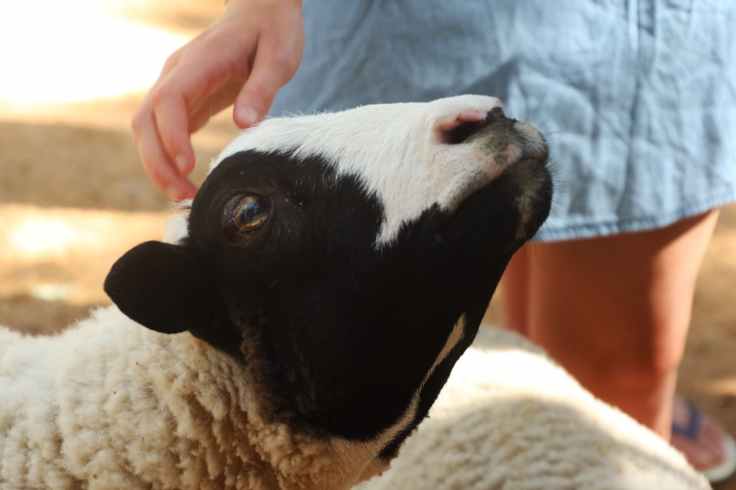
Even when my prayers seem like whining, bleating, plaintive “baa-ing”, I know my Shepherd hears. And He delights to hear from me. He delights in leading me through the wilderness and providing for my every need. And His promises sustain me when I don’t know what’s coming next, or I fear what I see on the horizon.
So I will pray today, and tomorrow, and every day, knowing that even my– especially my– “sheepish” prayers are not in vain.
I saw you at the store today. I saw your stressed-out look And your nervous glances. I nodded and said, “Hello.” I didn’t ask about your family– Your husband’s job search, Your child’s illness… I felt so bad for you.
But did I Pray?
She came into my shop yesterday. She was slurring her words a little As she tried to focus. She didn’t meet my eyes. I was polite to her. I felt guilty because I was a bit Relieved when she left. I wondered if she would be ok.
But did I Pray?
I worked into the night making pies For the church bake sale. Peach, cherry, pecan– Perfect crusts for each one. I gave my best effort.
But did I Pray?
I got up and wrote my blog for the day. I spoke of prayer and the need to cry out, To share my heart in prayer. I quoted scripture, shared personal anecdotes And offered suggestions about how to Start and end the day–
But did I Pray?
Lord, forgive me for the times I’ve failed to come to You– In my pride, or in my need, In my confusion or awkwardness. In my sorrow, or in my joy. Help me to seek You FIRST So I don’t have to think back and ask
Our church has been presenting a series of sermons on being a BLESSing to our neighbors. BLESS is an acronym for Begin with Prayer; Listen with Care; Eat Together; Serve like Jesus; and Share Stories. We were challenged the first week to choose four close neighbors. We were to pray for them, and if we didn’t know them well, to reach out and make contact. This has been a true challenge for David and I, because we live in an apartment above our shop. Most of our neighbors are not residential, but commercial! Nevertheless, we decided on a couple of commercial “neighbors” and a couple of non-traditional “neighbors.” We started praying– praying for opportunities to get to know our neighbors a little better, and praying for their health, well-being, etc. We’re getting to know some of the workers at the two commercial locations, and getting to know our chosen “families” a little better. We’ve been more intentional about stopping to visit or chat, and making sure we listen and respond sincerely– this is not just a short-term “project” but an opportunity to build closer relationships. And we’ve been praying for opportunities to develop closer friendships.
So this week was the sermon I’ve been dreading– “Eat together.” You might wonder why this is so fearsome–doesn’t everyone like to eat? And I love meeting over a nice meal. I love to cook, as well. The problem? Our apartment is tiny and upstairs– NOT conducive to inviting people over for a warm, comfortable meal shared around a large table. We have two mismatched chairs around a small table in our tiny kitchen, and two more mismatched armchairs in the living room. No couches, no designated dining room, no space to “entertain” guests. I want to serve others. I want to grow friendships. But I’m not a hostess. Not in a cracker-box-sized apartment upstairs. I know this seems petty– I’ve known amazing hostesses who live in shacks and invite guests to sit on a dirt floor. I know. But I still struggle with the idea of entertaining others in my current circumstances.
I knew it was coming– we looked at all the examples in the Bible of good and even sacred things happening around the table and/or involving food– Passover Seders, Communion, the Wedding Feast of the Lamb (among others)… “But Lord,” I prayed, “I can’t invite the entire staff next door to my home for a meal. And some of the “residential” neighbors we are praying for are elderly and can’t manage the stairs to our apartment even if we had the room to host a meal. And it’s too expensive to invite some of the families or staff to a restaurant. How are we going to be able to bless others and “Eat” together?”
But God isn’t bound by conventional ideas– even when it comes to hospitality. At the end of the service, we were surprised by an announcement from our pastor– one of the families in our church owns a fruit farm. Last year, they had a bumper crop of apples, and they donated several bags of the apples to the church. There were enough apples for each family to take several bags to “BLESS” our neighbors! No meal to fix. No apologizing for the smallness and shabbiness of our living space. But a chance to share FOOD with my neighbors and bless them with wonderful apples! Thank you, God!
David and I wasted no time– we delivered most of the apples yesterday afternoon! And we had so many apples, we were able to bless more than just the four locations we had decided on earlier in the series. We were able to bless at least 13 different families/ businesses with at least one full bag of apples! We blessed families with small children, a retired couple; a single person on a fixed income; an extended family of four generations; we blessed people who go to another church; we blessed people who don’t attend church at all. We blessed the staffs at a couple of local businesses, and shared laughter (and concerns) with several friends, old and new.
Not everyone wanted the free apples. One family turned down our offer. Some people are suspicious of free gifts; some are too proud to accept food as a gift; some are simply not interested, or too busy. It is the same with the Good News. Some people do not want what we have to offer in Christ. Some are suspicious; some are too proud or even too ashamed to believe that God has Good News for them. Some are too caught up in their problems or their ambitions. We must not be discouraged, though. God has not given us such a precious gift without also giving us the opportunity share it with others. And we will see how God continues to work in mysterious ways. Some people were surprised and confused by the concept of “apples of blessing.” They wondered what we might ask for in return. We smiled and said there were no strings attached– we just wanted to share our blessing with them! Some people took more apples than we had planned to give them– that’s ok, too. Others wanted to bless us in return– we received over two dozen eggs in gratitude for a couple of bags of apples! Today, I’ll be delivering the last few bags to businesses that were closed yesterday (to share with their staff). I’m excited to share this gift–and I’m reminded of how good it is to share the free gift of the Gospel!
God didn’t change the circumstances of our apartment. I worried that I would be asked to host an elaborate meal, or that I would miss out on blessing others because of our circumstances. But in God’s economy, we can show hospitality, love, generosity, and compassion on the street. We can share food in a way that opens up opportunities to make memories, share stories, communicate prayer requests and concerns, serve others’ needs, and make new friends. There are dozens of ways we can open our hearts and our lives to our neighbors, serve them, and pray for them…
We kept one bag of apples– maybe someone in our neighborhood would like a pan of apple crisp! And now, David and I have a few extra eggs! Anyone interested?
This month, I want to encourage you to let people know you are praying for them. This seems like such a simple thing, and not necessarily a way to improve one’s prayer life. After all, didn’t Jesus teach us not to brag about our praying? Aren’t we supposed to pray in private, not calling attention to ourselves? (See Matthew 6:1-15)
There are four “do’s” and a couple of “don’t’s” when it comes to telling others about praying that I want to emphasize today. Not because I have a perfect formula, but these are things I have found true in my own experience, and I think they line up with Biblical principles:
DO:
When you hear a need, pray about it. Don’t put it off; don’t promise to pray at a more convenient time. Do it now. If that means stopping in the middle of a conversation and praying with someone who is pouring out their heart– do it (assuming that it is possible). Not only is this practicing obedience to the prompting of the Holy Spirit, but it is honoring the importance and value of the other person. (see Philippians 4:6; Romans 12:12; Ephesians 6:18; others…) Showing others that their needs are important and that God cares about their needs is NOT boasting or being hypocritical. Just remember to approach with humility. Don’t be offended if they refuse in the moment; don’t use the opportunity to pray “over them”– pray beside them; pray with them; pray for their needs, not your own virtue-signaling. If you are worried about your actions being misconstrued or offensive in some way, ask first. “May I pray for you right now?” “Would you mind if we just stopped and said a quick prayer about this situation?” They can always refuse to let you pray immediately, but at least they will know you sincerely want to bring their burden before God. Also, if there is practical help you can give in the moments following, don’t hold back. Maybe their need is beyond your ability, but if you can direct them to counseling, aid from a local church group or non-profit, or offer to follow-up, you should do what you honestly can. Don’t promise beyond your ability, but don’t just pray and walk away, either.
The same goes for on-line requests for prayer. Don’t just scroll past someone’s need. It takes three seconds or less to type, “Praying”, or “I’m praying for you.” Again, if there is practical help you can offer, this is an opportunity to do so. There is no need to go overboard– but letting others know that someone “out there” is praying can be an enormous encouragement.
Be specific. Generic prayers aren’t “bad,” but they are often hasty and leave something lacking. The same goes for practical help. One of the mistakes I often make is to say, “If there’s anything I can do, give me a call.” I mean it– I want to help, and don’t know just how. But this puts the burden of asking on the person you meant to help! If you don’t know what to do– say so– but give them something solid to go on. It may be a phone number or e-mail, or an idea of a service you are able to offer–“I have Wednesday afternoons off if you need someone to drive you/go with you to an appointment.” or “If you ever want to meet for coffee…” or “I know the church has a Benevolence fund for unexpected bills and expenses. I could contact someone or give you their contact information,” etc..
Follow through! If someone asks for prayer for an ongoing concern, make a point of checking in every so often. Call, send a note or text, stop them at church and let them know you are still thinking of them and praying for them. This can also be another opportunity to offer practical help, a hug, or other form of encouragement. Often a week or two can be time enough to reveal practical steps to meet some of the smaller needs related to a big crisis or situation.
DON’T:
Say you will pray and then forget to do it. I used to be bad about this on-line. It only takes three seconds to promise to pray or to type a message about prayer, but don’t say it/send it if you aren’t going to act on it. Either stop then and there to pray about it, or stop and write it down where you will see it later and act on it! Good intentions are NOT enough to bring real encouragement and change. And good intentions do not form a disciplined and growing pursuit of prayerful living. In fact, such lost opportunities can become a barrier to our prayer life AND our relationships with others.
Break confidences. If someone asks publicly for prayer, it is fine to respond publicly that you will pray or are praying. It is NOT fine to then share someone else’s burden with ten of your other neighbors or closest friends. It is not fine to repost someone else’s request without their permission. It is not fine to publicize others’ private burdens, confessions, or pain. You may want to ask others to join in prayer, but don’t share details and names. Even if you have permission to share a prayer request, it is not for you to pour out someone else’s feelings, relationships, or struggles. This is another area in which I’ve had to learn a lot. I tend to over-share my own struggles when asking for prayer, and I want others to be concerned, so they will pray also. But it is very easy to fall into gossip, oversharing, and speculation, which has no place in prayer– and no place in my relationships! Share only those specifics that are helpful– “S______ is battling cancer. She has an appointment with her oncologist this week and would like prayer.” It is tempting to give the time and date of the appointment– and S______ may be ok with you doing this so people can be praying “in the moment.” However, she may be concerned about too many people knowing when she will or won’t be home, which might tempt a burglar. She may not want to receive a host of phone calls later that afternoon from people wanting “updates” or wanting to “cheer her up” when she is exhausted. Respect others’ privacy.
We are commanded to pray for one another (see Galatians 6:2; Colossians 4:2, etc.) And prayer is the most powerful tool we have to help those around us. Even though I recommend “practical” help along with prayer, I do not mean to say that prayer is impractical. Prayer IS practical and powerful. It should never be dismissed as “lesser than” other forms of help. But neither should it be used as an excuse not to meet needs in others ways as God gives us resources.
Making a habit of praying for others– really responding to needs immediately and faithfully in prayer– is a great way to experience its power. We will see God working through the prayers we offer– not just in the way He answers in the lives of others, but in the way He will change our hearts and minds about situations, relationships, and in growing Faith and confidence. It will train you to listen for needs, and to prepare to help. It will also train you to see needs in your own life, and make it easier to trust God with the needs in your life. You will find it easier to share your needs with others, and to accept help when you experience how much your efforts (even small ones) can encourage others. It may even encourage you to begin networking with others to meet needs and be proactive, instead of just reacting to needs after they are felt! If you are already strong in this area, be grateful for the way God is using you in the lives of others. If you are struggling in this area, I hope you will persevere. God is gracious in giving us opportunities to grow and serve!





























 Pursuing Prayer