Peace on Earth

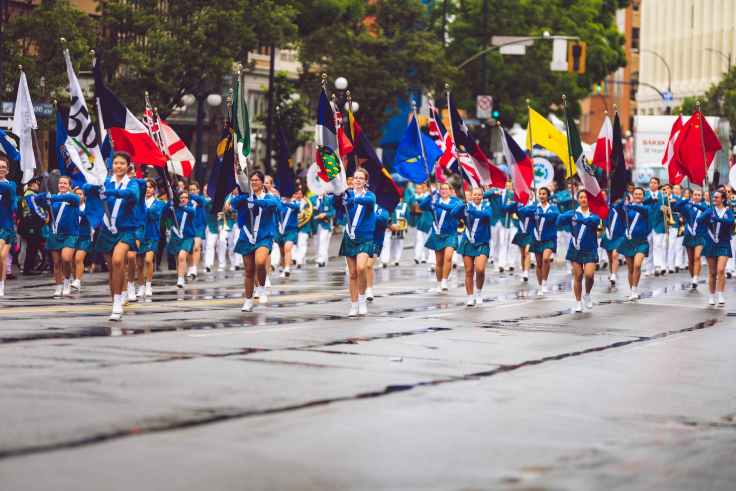
Christmas is a joyful season– for most people. And it is a giving season; a busy season; a bright and noisy season. But for most of us, it is NOT a peaceful season. Our small city had a lighted parade earlier this month It was festive and bright; there were a lot of happy people cheering on marching bands, floats, dancers, decorated fire engines and tractors, horse-drawn carriages, and other entries. People were eating, drinking hot cocoa, enjoying the entertainment, and even singing carols. The whole downtown was decorated with brilliant lights and banners and festive plants. But before the parade started, and after it ended, there were angry drivers trying to find (or leave) parking spots, bawling toddlers, rowdy people who had more to drink than just the cocoa, and several others who were just tired, and cold, and overstimulated.

While parades and festivities, parties and pageants have become part of the seasonal celebrations in many parts of the world, they are not what Christmas is really about. Jesus did not come to the world to bring “fun.” He did not come to bring toys or games, parties or feasts. He did not come to bring cheerful songs and fragrant holiday decorations, or hot cocoa and cookies. The angels who announced His arrival did not bring good tidings of candy canes, flying reindeer, or twinkle lights.

We sing about “Peace on Earth.” We talk about it, send greeting cards about it, and pray for it. But what do we MEAN when we talk about Peace on Earth, Good will to Men (Humankind)? For many, it is a wish or a prayer that wars would end, or that the petty differences between rival political factions or even rival churches would end. We speak of global peace or universal peace– peace between men (and women). And it is good that we should want such peace. But is that really the kind of peace Jesus brought with Him? He didn’t put an end to wars and disagreements during His ministry here. He didn’t “settle the score” for those who experienced oppression– the Roman Empire remained; the tax collectors still took more than their fair share; there was still slavery and abuse; greed and adultery and murder did not cease. And the world has been noisy, and messy, and angry and depressed in the two millennia since. And yet…

There IS peace on earth–it is the profound peace that comes with “Good will to Men.” God’s good will found its ultimate expression in the gift of the Savior. There may still be wars and pestilence, angry drivers, bad hair days, injustice, confusion, grief, and pain among people. But there is power to be at peace in the midst of it all– the power of a Peace that passes all understanding (Philippians 4:7); the power of Peace with God (Romans 5:1).

Jesus came to a world that knew only the rumor of such peace. Even King David– a “man after God’s own heart,” a man who wrote songs about peace and safety and joy in God’s presence–knew this kind of peace as something that had been promised. David could know the immediate peace of God’s forgiveness; he could know the blessings of obedience and the restoration of the joy of salvation (Psalm 51:12). But the everlasting Peace that has been accomplished by the Advent of the Christ– David, Moses, Abraham, and all the prophets had longed to know it; to experience it from within.

And THIS Peace we can experience– not just during the Advent and Christmas Season, but throughout our lives. Chaos, loneliness, grief, separation, injustice– it HAS BEEN defeated. It has no power to separate us from God’s Good Will or from His Loving embrace! The noise and anger and clutter and abuse is still real. We should not ignore it, and we certainly must not contribute to it or sanction it. But we no longer have to live without hope; we no longer have to fret and live in constant fear or defeat.

There is no parade tonight as I write this– there are still lights and occasional noises downtown– a door closing, a dog barking, a car passing. But there is Peace within– no matter how loud or bright, how festive or even forlorn things seem.
Victory!

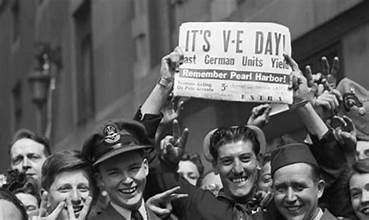
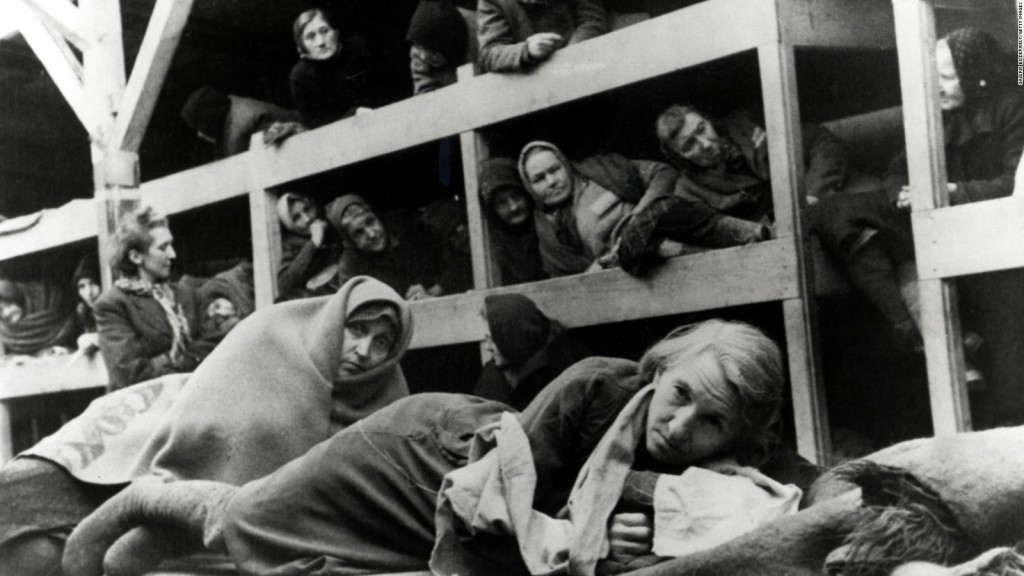
Today is May 8th. Historically, this is known as V-E Day, or Victory in Europe Day. On this day, in 1945, the German forces surrendered, ending World War 2 in Europe. Parades and parties broke out in several cities. People celebrated the end of war and the promise of peace. But the war was NOT over– not for everyone. War continued to rage in the Pacific for several months. Prisoners in concentration camps were still being liberated, many of whom had lost their homes and families. And the devastation across Europe and North Africa would take decades to clean up. Millions were still facing food rationing and homelessness; there were unexploded bombs and land mines, craters and ruins–all was not suddenly peaceful and prosperous.

The events of V-E Day happened years before I was born. But my parents and grandparents remembered it well. And as someone who loves history, I look back on events of the past and ask, “What can I learn from this day?”

Today, I want to look at what “victory” looks like. Not the thrilling victory of winning a race, or the victory of one army over another in a past century, but true “victory”–an end to all war and struggle and pain and uncertainty. What will that look like?!

In my life, I have experienced small victories, and victories that seem large in the moment. Graduation ceremonies, job promotions, signing the papers on a new car or house, saying “yes!” when David proposed, and later celebrating our marriage with friends and relatives at our reception…These were all moments of celebration and victory. But like the victory of V-E Day, there was still work to do, challenges to face, and even difficulties and set-backs that clouded each victory. Even my greatest Victory– coming to faith and knowing my name is written in the Lamb’s Book of Life– is in the “here and now.” I still face trials and temptations in this life, even though I can claim victory over Sin and Death through the work of Jesus Christ. But true “Victory” is in the “not yet.”

It can be tempting, when celebrating our earthly victories, to get caught up in the momentary feelings of success and happiness. But what happens on May 9? What happens after the parade? What happens when we face the next challenge? I find myself too often disappointed with the fleeting nature of my victories in life. And in the disappointment, I lose not only the joy of the victory, but the strength of the promise of victories yet to come!

There is a day coming– one that will make V-E Day pale in comparison! Some day, the forces of Evil will be utterly crushed. It will be total surrender. No occupying forces, no rationing or homelessness, and no more death or destruction for those who have trusted in Christ. Just sweet Victory. In a moment; in the blink of an eye, God will say, “ENOUGH!” The war will end. The suffering will end. The waiting will end. The dead will rise and the living will be changed.

I can only imagine what that day will truly be like. But I can live with the certainty of a coming day of “Victory.” I can know the hope and the joy of each small victory today, as it reminds me that there is much more to come!

Thank you, Jesus, for each small victory today. Thank you for the ultimate Victory that I find in You!

May Day Mishaps

Today is the first of May– May Day. May Day has a long history, with pagan origins tied to the celebration of late spring or early summer. In many European nations, there would be dancing around a May Pole, or May bush, floral garlands, and floral bouquets offered at various shrines, including to the Virgin Mary. In some communities, girls vied to be crowned the “May Queen,” while stories were told of fairies. May Day was popular in the United States for many years around the turn of the 20th century– with parades, flower baskets, and more. It is less popular in modern times, and many of the floral parades and festive outings take place around Memorial Day, instead.

When I was a child in elementary school, we made paper “flowers” and a small paper coronet with a loop handle for May Day. I remember making daffodils, hyacinths, and tulips out of construction paper and other craft materials, and making the coronet “baskets” out of decorated paper cones. We glued or stapled the pieces together to take home. Then, we were encouraged to loop the handle over the door knob at the front door of our house when we got home, knock, and run and hide around the corner. Presumably, our mothers or babysitters would see the gift of flowers and wonder who could have left them there. It was a fun game to play, and a way to celebrate the season of wonderful spring flowers.

Unfortunately, when we did this in kindergarten, my flowers got trampled on the bus. It was a rainy day, and my flowers fell in the aisle, where a boy stepped on them with muddy sneakers. They were ruined. I cried and cried, and another boy on the bus gave me the flowers he had made. It was a thoughtful gesture– one I’ve never forgotten– but I remained desolate. I told my mother the whole sordid story, and she told me that, in her day, they had picked wildflowers, such as violets and even clovers, and tied them with a string to leave on someone’s porch. Then she took me outside, and we made a small bunch of violets with a couple of “Dutchman’s Breeches.” I didn’t get to surprise her, but we had such fun looking for wildflowers together.

I loved this game so much, I decided to go a step further the next year. We made paper “bouquets” at school, just like the previous year. Mine stayed clean and dry, and I hung it on the doorknob and mom pretended to be surprised. But later, I took one of our juice glasses from the cupboard, and picked a nice bunch of my mom’s live daffodils and hyacinths, a couple of her irises, and a tulip. I tried to arrange them in the juice glass, but it was too short and small to hold all the flowers I had picked. I left it on the porch, near the door, and knocked and hid, waiting to see my mom’s delight at her “surprise” bouquet. But instead of delight, I heard her wail– “Oh, no! My flowers!” The glass had tipped over, the flowers lay limply all over the porch, and the glass had rolled onto the ground. I thought I had made a wonderful surprise. Instead, I had made a mess. I had picked almost all of Mom’s best daffodils, and all of her pink hyacinths. I had trampled some of her other irises to get to the one I wanted. She only had a few tulips, and I had picked the only red one.

My intentions were good, but my execution was poor. And the result was disappointing and hurtful to us both. Mom didn’t realize I was right around the corner hearing her dismay, and I didn’t realize my “gift” would fall so flat.

It’s been over 50 years since my “May Day Mishap,” but there are some lessons I have never forgotten:

  • Picked flowers die! Mom wasn’t angry with me for wanting to pick flowers, but she knew that picked flowers would wilt and die. In later years, Mom loved receiving hanging flower baskets, and planters with live flowers. And we had many memories of planting live annuals in the front yard or at graves near Memorial Day– flowers that might take root and spread joy throughout the summer months. In the same way, there are so many “showy” projects that vie for our attention– projects that may seem urgent or offer quick rewards like status or money. We are tempted to “pick” projects that will make us look good or feel good in the moment. But the really important projects are those that have lasting impact, even if they don’t “show” as well. We are wise to invest in “little” things that have lasting impact over “big” but fleeting activities and investments.
  • When giving gifts, it really is the thought that counts! My mom was just as delighted by the “second-hand” flowers I got from my classmate as she was by the the ones I made the next year. Not because his were “better” than mine, but because they demonstrated that I had a good friend at school with a kind heart. My “mishap” gift came, in part, because I wanted to give a “better” gift, not because I wanted to delight my mom, but I wanted to impress her. My mom was a saver– she saved all my old school papers, old valentines, birthday cards, and more. And she saved letters from her friends and family– over eighty years of them! Not because the cards and letters themselves were so wonderful, but because each one came with good wishes. She had an entire farmhouse of good wishes and thoughtful memories when she passed away in 2023.
  • Relationships are more important and more valuable than resources. I loved looking for wildflowers with my Mom that year of kindergarten. It’s one of my favorite memories of May Day. And I still remember the kindness of my friend, Ken, whose heart has since led him to the mission field on more than one occasion. No May Day flowers will last over fifty years, but friendships and relationships can and do!
  • Forgiveness is sweeter than flowers. I was so astonished to think that my error in judgment had caused my mother pain– and yet, when she found me, she hugged me tight and gently offered both forgiveness and correction. She demonstrated exactly the way our Father loves us. So often, I want to come to God with a bouquet of praise, or a basket of good works, leave it before His Throne and run away and hide. But God isn’t impressed by my flowers or my grand gestures. He wants to spend time with ME. Every year, he sends fields of wild flowers; in every season of life He sends friends, helpers, and other blessings. And, more than anything, He wants to share all of it with me. Not because I deserve it, but because He is so full of love and forgiveness. He wants to remind me to “come home” to His gracious arms. He is not waiting to scold me, punish me, or make me feel small. He wants to hug me, and with patience and gentleness, He will offer His Love, and correction. No matter what “May Day Mishaps” I may have.

This May Day, I am encouraged by God’s faithfulness, His forgiveness, and the power of His love. I hope you are, too!

Surprise!

Have you ever been the “victim” of a surprise party?  Maybe you sensed that something was “up”, but you were still shocked and elated to see old friends or family all wanting to wish you well on (or near) your birthday, anniversary, wedding, retirement, or even “just because”.  Even if you “catch on” or if someone “spoils” the surprise, it can be a wonderful celebration.  (Or, on occasion, a disaster.)

pexels-photo-764340.jpeg

Have you ever been on the planning side of a surprise party?  Several years ago, we threw a surprise birthday/retirement party for my father.  It required several months of planning.  We invited cousins from out of town, co-workers, neighbors, and old friends.  We gathered old pictures and mementos to display, ordered cake and balloons, and tried to keep the excitement under wraps, lest my father guess our intentions.  All the details fell together, except we couldn’t figure out how to get him to the party without guessing.  Dad was a genius at “sussing out” secrets and surprises, and also at setting them up.  We wanted to turn the tables and give him the best surprise of his life.

Then, less than a week before the party, my aunt (my mom’s sister) died in a car accident.  The funeral was arranged for the same day as Dad’s celebration.  We suddenly had to wrestle with a decision– to cancel or to forge ahead.  With so many coming from out of town, we decided to stick with the original plan.  It would be difficult– my aunt’s funeral was scheduled earlier in the day, and there would be about an hour to drive from one event to the other.  Dad was certainly surprised–already dressed in his best suit, he drove from a funeral in one town to a party in his honor 20 miles away.  From flowers and tears to laughter and cake…it was a day unlike any other.  The first several minutes were surreal and jarring.  But it was also cathartic.  As difficult as the day was, we honored both my father and my aunt.  Being surrounded by family and friends, some of whom joined us for both events, became a healing and encouraging experience.
It was not the surprise we expected–certainly not the surprise we had planned.

chocolate cupcake with white and red toppings

Several years later, (in fact, after my father had passed away) we planned another surprise party– this time for my mother.  Mom had, of course, been part of the planning (as well as the trauma) of the first event.  As with the first party, we invited family from out of town, ordered cake and balloons, gathered photos and memorabilia, and wondered how to get her to the event without suspicion.  All went as planned, and we had a wonderful time.  Mom was delightfully surprised, and even more so for having been through the experience of the prior party.

What does any of this have to do with prayer?
Well…we prayed for both parties.  We prayed that all would go well, that Dad and Mom in their turn would be surprised, that guests would arrive safely, and that the parties would both please and honor the recipient. God answered both prayers. His ways are not our ways– but He is eternally good. He gave us strength for each day in its turn, in the midst of surprises– pleasant, painful, and both together!

But, far more, the two parties offer an illustration of God’s grace in the area of knowledge and foreknowledge.  “If I had only known…” is a common phrase, and one that we could readily apply to the Dad’s party.  But if we had known the end from the beginning, would we have changed our plans?  When we say that we want to know the future, we’re generally asking to know a specific outcome of a specific event– without considering the greater consequences and impact of that outcome.  When we pray, we generally pray for a specific outcome, again without knowing the full consequences.  What seems like a disastrous outcome to us may be God’s way of preparing us for an unexpected blessing.  God doesn’t send bad gifts– disasters come (and God allows them in His sovereignty)–but He doesn’t send disaster and pain to mock us or ruin our lives.  Instead, in the midst of tragedy, He gives us unexpected strength, comfort, and sometimes, even joy.

pexels-photo-145378.jpeg

If we had known that Dad’s party would be shadowed; that my aunt would die so suddenly, we might have given in to despair and bitterness.  And though the party brought unexpected comfort, it did nothing to erase the overall grief of my aunt’s passing.  But we learned so many things that day.  We were reminded that our time with Dad was precious– that life itself is precious– in a solemn and powerful way.  We were able to receive comfort from unexpected sources.  We would not have shared our tragedy in such a public way with those who did not even know my aunt.  But circumstances forced us to do so, and in the process, we were able to continue to honor her in the celebration.

If we had known all that would happen at Dad’s party, and not seen it through, we might never have risked planning a party for Mom.  If we knew in advance all the joys and tragedies we would face, we would never learn how to trust God for the next step in life.  Even more, we would live in constant dread of looming tragedies and negate all the joy of discovery and wonder.  We might not be driven to take risks if we already knew their outcome, and we might not learn from our mistakes if we already knew their consequences…and because our lives are so short, we might only see the short-term consequences, and never see the ultimate outcome.

abstract art astronomy background

God is above and beyond time– He is the creator of all things, including time.  He has decreed for us a beginning and an end to life on earth, and He has decreed that we should life our lives with a certain amount of suspense– of not knowing what the future holds.  It holds both triumph and tragedy– trial and temptation.  Life is filled with surprises– catastrophes, ecstatic joy, and “a-ha” moments–as well as peacefully uneventful moments to reflect and enjoy.

As we pray today, we can be thankful that God’s knowledge is perfect, and that His power is sufficient to hold us in the midst of shock, lift us in the midst of tragedy, and surprise us with joy along the way.  And we can ask Him to grant us the wisdom to trust Him fully when we don’t see the end from the beginning– or from the middle–of the storm.

The Value of a Life

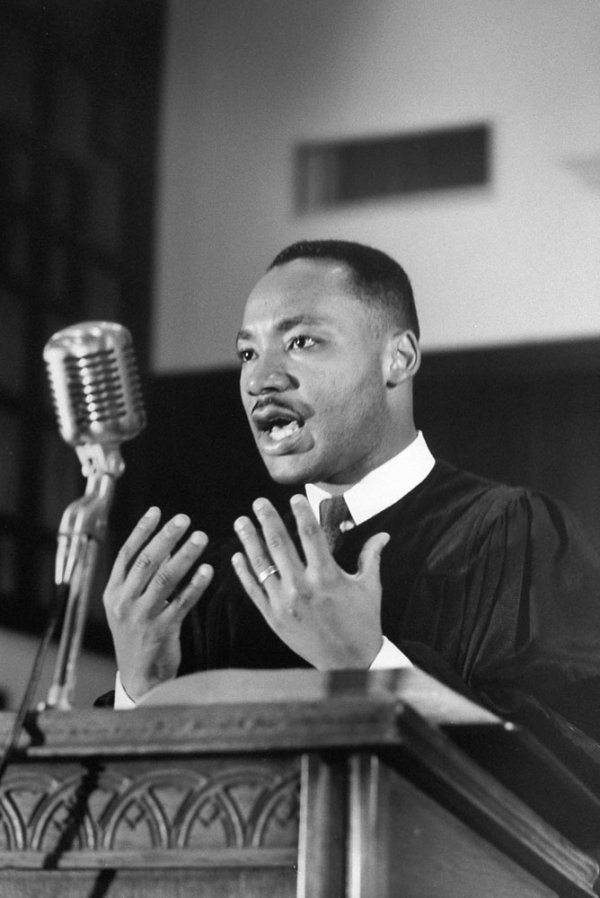
Today in America, we celebrate the life of Dr. Martin Luther King, Jr. Dr. King was a minister, a brilliant writer and student of theology, a leader in the Civil Rights movement of the late 1950s and early 1960s, a noted speaker, and man who arguably made a difference in the world. Dr. King was murdered in 1968, at the age of only 39, leaving a family and a nation devastated by his loss.

Next Monday, we will observe the 51st anniversary of the Supreme Court decision Roe v Wade, in which nine judges effectively legalized abortion in the U.S. for over half a century. Even though this decision has been overturned, many states, using the precedent of Roe v Wade, have changed their state laws to allow for abortion. In many states, it is now legal to abort a child right up to the moment of birth!

What is the value of a single life? Who gets to decide that they have the right to take another person’s life– whether by assassination, capital punishment, abortion, murder, or euthanasia?

It is a question that our society has struggled with for centuries. Who can give life? Who can take life? Who can determine the conditions of another person’s existence? And, for those who live, what is the “value” of their life–to their family, to their neighborhood, to their nation, or to history? Who gets to set the standard of what constitutes a “worthwhile” life or the “quality” of life for someone else? For themselves?

I’ve been reading through the book of Genesis this month, and, according to the Bible, this subject is as old as human life on earth. Cain decided that Abel’s life was expendable, so he killed him– the first murder. The people of Sodom and Gomorrah felt they had the right to enslave and rape anyone they wanted to. Joseph’s brothers plotted to kill him, before selling him into slavery, instead.

The Bible doesn’t hide this history, nor does it sugar-coat the actions of those featured in its pages. But, the Bible offers us a clear picture of WHO gives life, and WHO has the authority to decide what life is worth. God alone has this authority. It is God alone who can create and sustain life. Mankind has the choice– to protect life or destroy it; to treat life with respect or with disdain; to honor the Giver of Life, or to rebel against Him.

All the atrocities of the Old Testament lead to the ultimate decision on the value of a single life. Jesus lived a simple, ordinary human life. He lived with compassion, with purpose, and with humility. And He was willing to GIVE His life to atone for all the murders, all the abortions, all the slavery, all the injustices in history, so that WE could enjoy abundant, eternal life with Him. By looking to this singular life, and trusting in the power of His death and resurrection, we can choose to honor all life. We can make a difference. We can live with purpose and joy.

Dr. King’s legacy is one of honoring life, and pointing out the evils of those who seek to devalue the lives of others based on the color of their skin. Abortion’s legacy is one of destroying life, and promoting those who devalue the rights of the helpless.

The choice is still before us. How will we determine the value of a single life in the coming week? How will be add value to life on earth? How will we live for more than just the moment?

It Came Without Ribbons…

In the Dr. Seuss classic, “How the Grinch Stole Christmas!,” the bitter and devious Grinch tries to “steal” Christmas from the village of Whoville. He steals all the things the Whos of the village seem to need in order to celebrate a holiday he hates. He hates their gift exchanges, their feasting, their singing, and their general happiness, all of which serve to remind him of his own loneliness and gloom.

With mounting glee, the Grinch proceeds to pile up his hoard of goodies– presents, decorations, food, anything that could serve to make the holiday cheery and bright. He loads up all his stolen loot and takes it to the top of a mountain, where he plans to dump it. But first, he stops to savor the shock and pain he expects to hear as the Whos discover that their holiday has been ruined. He waits in the cold of a clear dawn to hear wailing and lamenting, but the sound he hears instead is singing…the Whos have come together to sing a hymn of gratitude and peace. There is no lamenting; there is no distress. Instead there is a peaceful acceptance that the new day has brought joy and goodwill that has nothing to do with all the trappings of celebration.

He hadn’t stopped Christmas from coming. It came!
Somehow or other it came just the same.
And the Grinch, with his Grinch-feet ice cold in the snow,
Stood puzzling and puzzling, how could it be so?
It came without ribbons. It came without tags.
It came without packages, boxes or bags.
And he puzzled and puzzled ’till his puzzler was sore.
Then the Grinch thought of something he hadn’t before.
What if Christmas, he thought, doesn’t come from a store.
What if Christmas, perhaps, means a little bit more.

How the Grinch Stole Christmas!–Dr. Seuss
Photo by Susanne Jutzeler on Pexels.com

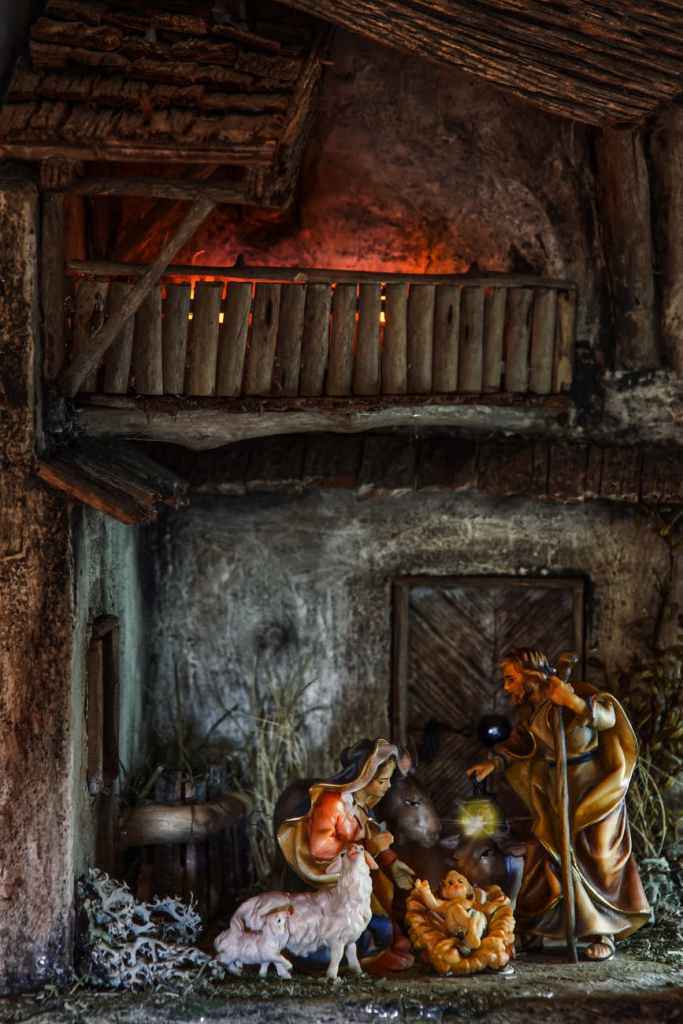
The first Christmas came without any of the festive trappings we’ve added over the years. There were no groups of cheery carolers; no jingle bells and tinsel; no greeting cards or candy canes. Jesus came in the dead of night, in the midst of chaos and terror, as people were groaning under the oppression of an invading empire, being forced to travel long distances to be counted and taxed by their oppressors. There were no Christmas parties, no brightly decorated trees, no stockings filled with treats, no cookies and cocoa on a cold night. The gifts would come later– and they would be followed by death threats and exile! But Jesus came! He came just the same!

Photo by Jeswin Thomas on Pexels.com

This year, Christmas will come– with or without ribbons or tags. Christmas will come to those who are homeless, and those who are lonely in palaces and mansions. Christmas will come in spite of efforts to erase the holiday from our culture. It will come just like the dawn of each new day– quiet in its wonder and glorious in its simplicity. Christmas doesn’t come wrapped in shiny paper or announced with blaring horns and neon lights. Christmas comes just as Christ came so many years ago–wrapped in rags, laid in a straw bed on a cold, dark night; announced to simple people going about their business, signaled by a single star ignored by most, wondered at by others. Christmas will seep into the hearts and eyes of those with child-like faith and willing to sing when things are darkest.

God chooses to come in simplicity– He creeps like the dawning day; He sighs like a gentle breeze; He comes as a harmless infant, or a wandering teacher and healer. And when our Christmas Day comes without ribbons and boxes or feasting and lights– it will come just the same. Christ will enter darkened hotel rooms and alleys, He will sit beside hospital beds and in makeshift refugee shelters. He will sneak into homes where Christians huddle in secret, and He will knock gently on the doors of the lonely and the lost. Because Christmas DOESN’T come from a store. It doesn’t come from our bounty and our glittering decorations. It comes from the heart– the heart of God, who SO loved the world, that He came! And He will come this year, just the same!

Photo by Josh Willink on Pexels.com

Blog at WordPress.com.

Up ↑