The Weary World Rejoices…

We live in a weary world– weary of war, weary of chaos, weary of worry, and weary of sin and its consequences. From the time the alarm rings to the time we finally lay down our weary heads, we are bombarded by stress, misunderstandings, distractions, disappointments, questions, harsh words, harsh images, demands, doubts– I’m tired just listing them…

Even so, we are surrounded by promises (mostly false) of peace and rest, satisfaction and success. “Buy this!” “Try that!” “New!” “Improved!” The voices call out, offering temporary bliss, or temporary escape from the weariness all around. “Jingle Bells!” “Happy Holidays!” “Tidings of Comfort and Joy!” It is tempting to let Christmas become just like all the other worldly distractions–shiny, loud, stressful and fleeting, full of promise, but leaving us empty and cold in the end.

But Christmas IS different, because it doesn’t celebrate what the world has to offer. The celebration includes lights and bells, songs and gifts, food and friends and family– but at its heart, Christmas celebrates something “out of this world!” Jesus came to a weary world long ago, and no matter how weary the world was, or is, or will be, Jesus brought all the hope and healing of Heaven in the small package of a tiny infant child in a crowded town in a conquered land.

On that Holy Night, God crashed the party– He did more than watch from a distance, more than speak from the skies above or send angel messengers–He arrived, actively participating in the struggle, the bone-weariness, the hunger and thirst and chill and stress of living among His fallen and fractured creation.

And the weary world rejoices–can you hear it? Above the bustling noise of people shouting, and car horns blaring, and advertising slogans, and piped-in Christmas songs…Can you feel it–beyond the comfort of a warm blanket and hot cocoa, beyond the hugs of friends or the smiles of strangers or gifts from loved ones? Can you see it–beyond the glare of city lights, undimmed by the darkness of hatred and greed?

The lights and songs will fade away, but the Love, Joy, and Peace of God that came to the world that first Christmas is for all time!

“Fall on your knees!
Oh, hear the angel voices,
‘O Night Divine. O Night, when Christ was born.
O Holy Night!'”

Full Disclosure

I like to know things–I like to solve puzzles, figure out mysteries, learn trivial facts.  I want answers.  So when I go before God in prayer, I often ask questions.  Why is this person suffering?  When will their suffering end, and how?  Where were you in this disaster (as though God had stepped out for a minute and wasn’t aware of what happened)?

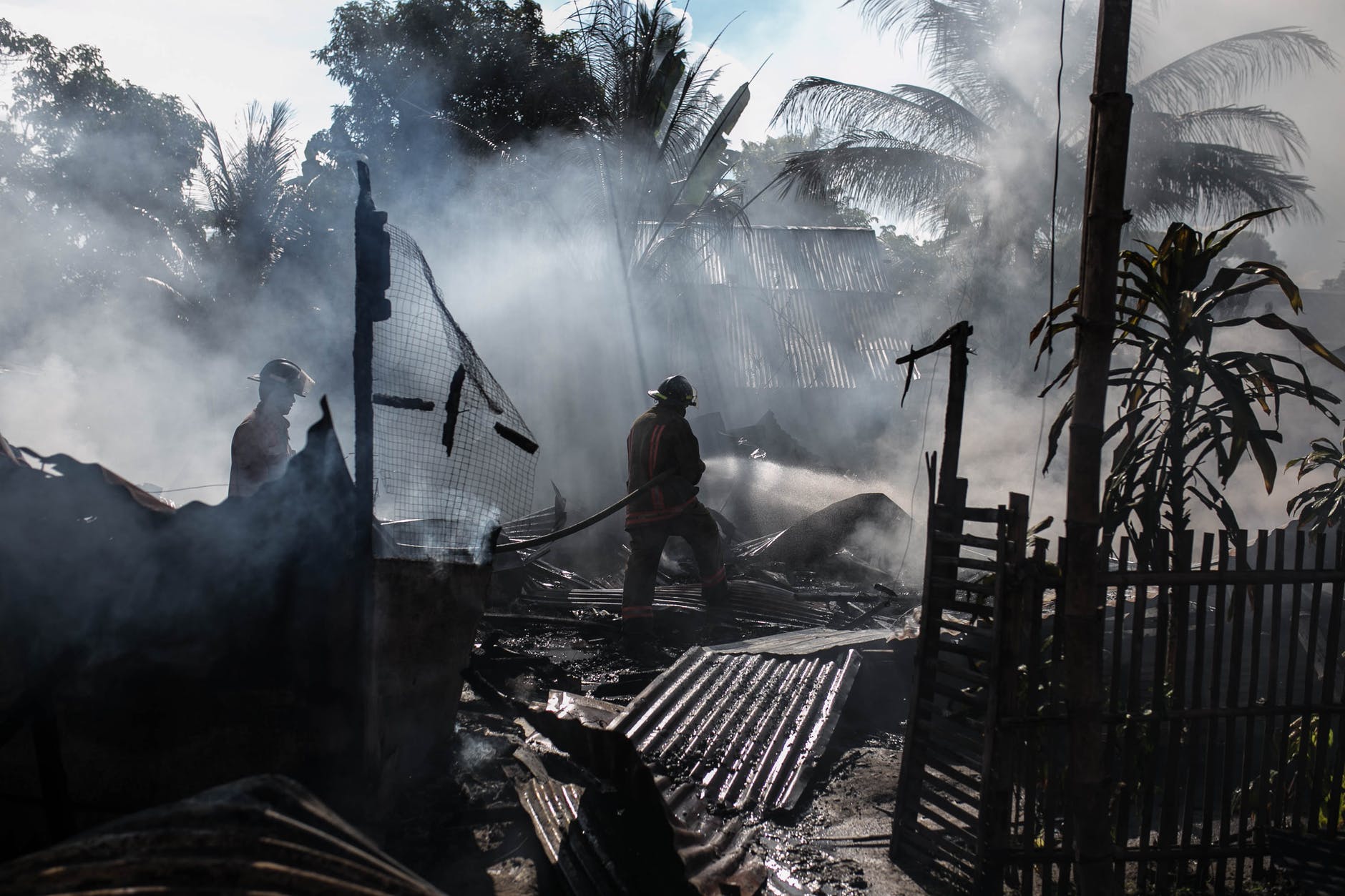
silhouette of fireman holding hose

God stays silent.

I can grow frustrated in the silence or I can learn to trust.  That doesn’t mean that I no longer want answers; just that I am willing to wait on God’s sovereign timing.  It also means that I am need to more about God’s nature–God doesn’t keep secrets or withhold knowledge because He wants to torment me, or frustrate me, or play some cosmic mind game (though some people accuse Him of doing just that).  God withholds full disclosure of His plans, His reasoning, and His nature out of love and compassion.  Suppose I could see into the future, even give out warnings, but had no power to stop disaster from coming.  Not only would I be haunted by the disaster itself, but by the full knowledge of its coming.  Suppose I could see a miracle in advance; know when and how it would unfold.  There would still be joy, but it would be muted by the foreknowledge– of course there would be a happy ending; of course there would be a miracle– I saw it all from afar off.

photo of person holding ball

The Apostle Paul touches on this in 1 Corinthians, chapter 13.  This is commonly known as the “Love Chapter”, and the first half is frequently quoted at weddings and church sermons.  But the end of the chapter is a wonderful message of hope and faith, ending with Paul’s triumphant statement about all three:

1 Corinthians 13:8-13 English Standard Version (ESV)

Love never ends. As for prophecies, they will pass away; as for tongues, they will cease; as for knowledge, it will pass away. For we know in part and we prophesy in part, 10 but when the perfect comes, the partial will pass away. 11 When I was a child, I spoke like a child, I thought like a child, I reasoned like a child. When I became a man, I gave up childish ways. 12 For now we see in a mirror dimly, but then face to face. Now I know in part; then I shall know fully, even as I have been fully known.

13 So now faith, hope, and love abide, these three; but the greatest of these is love.

monochrome photography of a man looking in front of mirror

God loves us with a perfect love.  Because of that, I can trust Him, and have hope in the midst of my questioning.  So when I pray with questions, I can know that God has “filed them away”– He is fully aware of my situation, questions and all, and He is fully faithful to answer them all in His perfect wisdom and timing.  Someday, I will know– not only all that I don’t know now, but why I had to wait.

God will provide full disclosure. with compassion, love, and wisdom that only He can give.

“Peace Be With You”

John 20:19-21 New International Version (NIV)

19 On the evening of that first day of the week, when the disciples were together, with the doors locked for fear of the Jewish leaders, Jesus came and stood among them and said, “Peace be with you!” 20 After he said this, he showed them his hands and side. The disciples were overjoyed when they saw the Lord.

21 Again Jesus said, “Peace be with you! As the Father has sent me, I am sending you.”

Have you ever noticed that God likes to use repetition to get our attention?  In the book of Joshua, chapter 1, God says to Joshua “Be strong and courageous” (v.6)– but then he says it again, and again in the next few verses.  In Genesis, God sends Pharaoh two dreams, which Joseph interprets.  Joseph points out that the two dreams are the same, and that God has used them to grab Pharaoh’s attention.

pexels-photo-618955.jpeg

The Apostle John took great notice of Jesus’ use of repetition.  In the final chapters of his Gospel, he points out two instances where Jesus repeats questions and phrases to his disciples.  Three times he asks Peter, “Do you love me (more than these)?”  And three times, he gives him the charge to “feed my sheep/lambs”.  Earlier, to all of the disciples, Jesus greets them with the phrase “Peace be with you.”  Three times over two separate appearances, Jesus uses the same words.  To this day, these words are used as a greeting in many churches around the world.

pexels-photo-1018478.jpeg

Often, this phrase is used as a blessing or a benediction–almost as a prayer FOR peace.  Certainly, when Jesus used it to greet his disciples, they were in dire need of peace.  They were holed up in an upper room, hiding from the Romans and Jewish leaders, in fear for their lives.  The words may be interpreted as “Peace be given unto you”  or “Peace come to you.”

photo of a hippie woman

But I think there is another meaning; a slightly different way to interpret this phrase.  I think Jesus is announcing that peace actually resides WITH them, and will soon be within them (through the Holy Spirit).  There may be chaos in the streets and all around us, but God’s Peace should go with us wherever we travel, wherever we are.

When we pray, we can do so in peace and confidence that God will hear our prayer, grant us the grace sufficient for our every need, and keep that which we have committed to him (our souls, our dreams, our hopes, and our burdens) safe.

high angle view of lying down on grass

Our culture is flooded with false assurance, and substitutes for the “Peace which passes all understanding” (Philippians 4:7).  In fact, a popular cultural phenomenon– the Star Wars saga– offers a similar phrase, used as a benediction by the Jedi adherents:  “May the Force be with you.”  The Force referred to is a nebulous thing–energy that exists all around and can be tapped into, controlled, and used for good or evil, healing or power.  The idea in Star Wars seems to be that there are two sides to “the Force”; presumably the person using “the Force” in a benediction is referring to its better nature, as the “dark side” of the Force brings violence, destruction, greed, and hatred.

antique art beautiful blur

God’s peace is a perfect peace.  And it is one that should always be with us, even as it is poured out on us.  Jesus adds: “As the Father has sent me, I am sending you.”  We are not just praying for peace to enter our lives and stay with us.  We are to be the bringers of peace, the ambassadors of peace, and the beacons of peace in a dark and chaotic world.


The apostle Paul includes peace in his analogy of “the armor of God” in Ephesians 6, where he describes having our feet “fitted with the readiness that comes from the gospel of peace.  We need to walk in peace, march in peace, and stand firm in peace!  Peace isn’t like a sword or shield that we take up or lay down.  Peace needs to be part of our wardrobe– literally “with” us everywhere we go.

Let’s get moving! Let’s pray for peace! Let’s spread the peace!

The “Fake” Good News

I keep hearing about, and seeing reports of “Fake” News.  Even the term “Fake” News is somewhat misleading–is it news?  Is it False News?  Is it “fake” because it never happened, or because it has been exaggerated or taken out of context?  Or because it doesn’t say what I want it to say?  How do I know what is “real” news anymore?

The biggest problem with “Fake” news is that it “feels” real, true, and important.  In reality, it may be none of those things.  Yet there if often a kernel of fact, or a dusting of truth that makes it hard to disprove or dispel.  And, if it had already been accepted as legitimate news by thousands, it’s even harder to stop it from being spread.

But the more insidious problem with “fake” news is the time wasted trying to sort truth from fiction, and plain fact from exaggeration and distortion.  If my friend sends me an article, or a video, or a photo, I may accept it as true on the strength of my friendship.  But what if they’re just passing it on from another source?  What if I see it from a recognized news source?  Do I dare question it?  And if so, where do I turn to verify it?  There are several fact-checking websites, but even they have biases that cause them to weigh facts differently in various situations.  Whatever assumptions we used to hold about “neutral” reporting have been proved wrong.  We are being conditioned to trust none of what we hear and less than half of what we see!

pexels-photo-256868.jpeg

What about the “Good” News that Christians carry into the world?  Is it like the “Fake” news we see on TV or read about on our tablets?  And if someone challenges our faith in God’s word, how can we prove that the Gospel is not “Fake”, and that our Faith is not just more hype with smoke and mirrors?  If we are pursuing prayer, shouldn’t we be confident that our prayers are not in vain and that our faith is sound?

The claim of “Fake” news makes an assumption that there is such a thing as “True” news.  Similarly, saying the Gospel is “Fake” assumes that there is an alternate truth.  But the real burden of proof is on those who want to push for the alternative.  The truths of the Bible have been time-tested, and shown to be real.  The challenges I hear most often are to the exceptions, not the rule.  I don’t hear anyone saying that “Thou shalt not steal” is a “fake” morality.  Instead, I hear that, “Christianity is fake because I know Christians who cheat and steal.”  I don’t hear people claim that “it is not morally wrong to kill.”  Instead I hear them justify exceptions.  “I’m not promoting abortion as a good thing.  I don’t think it’s right to kill another human being, but this is just a fetus, and anyway, I’m just protecting a woman’s right to her own body.”  “I don’t think it’s ethical to force someone to stay alive if they are in pain and they want to die.”  “You can’t go around just killing anybody, but I think it would be better for everyone else if ___________________ (insert the name of a group– Down’s Syndrome children, Jews, Sunnis, Hutu/Tutsi) didn’t exist.”  “I don’t believe the morals found in the Bible are wrong.  I just don’t think you need to believe the rest of it to “be moral.”

People point to single passages, single verses, even single words to “prove” that the Bible is racist, sexist,  intolerant, and promotes violence.  The Bible includes many examples of people NOT following God’s laws, and yes, the results are grisly.  And there are difficult passages when God calls for a wicked city to be destroyed completely.  Critics are not wrong to point out that the Bible is not about perfect people behaving perfectly.  And the same Loving God who frees the slaves from Egypt is the God who destroys Jericho, and Sodom and Gomorrah.  Taken out of context, these few examples may seem to cast doubt on the authority of God’s word.  Yet the same critics who pound away at the same few examples in the Bible discount hundreds of instances of  historical events that highlight human sacrifice, genocide, mass infanticide, slavery, torture, and all sorts of other evil that occurred without the Bible’s influence.  Moreover, I hear a lot about claims against “Christians” who fought in the Crusades or owned slaves–I hear a lot less about Christians who worked to end slavery and the slave trade, or Christians who founded universities, charitable institutions, or brought revivals that sparked decades of social progress throughout countries and continents.

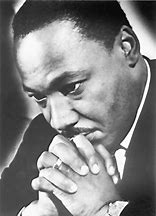
pexels-photo-305530.jpeg mlkjr

I don’t hear many people claim that there was no such person as Abraham, or King David, or Solomon, or Nebuchadnezzar, or Pontius Pilate or Caesar Augustus.  But they want to deny the historical reality of Adam and Eve, Jesus of Nazareth, and the Apostle Paul, who are found in the same Bible.  Why?  Because if Adam and Eve are real, there must be a creation and a creator.  If Jesus really lived and said the things that are attributed to him, we must deal with the claim that he was Messiah.  If the Apostle Paul really lived and wrote his letters to the churches of Asia Minor, we must deal with his claim that he encountered the risen Christ and his life was dramatically and eternally changed.

However, there is a “Fake” gospel– Good news that doesn’t match the Biblical account–a “Fake” Christ that only said or did or “would do” what we want him to say or do; a Christ that isn’t holy or righteous, but just loves us because it’s the “zen” thing to do; a Christ who is without power to save or to sanctify; a Christ who is without mercy and loves only those who look the part or say the right things.  How do you spot a “Fake” Christ and a “Fake” Gospel?  Get to know the real ones of the Bible.  You’ll soon be able to spot an “imposter.”

“Fake” News will always fail the test of time and the challenges of real evidence.  Good News will transcend the test of time and the challenges of faulty evidence.

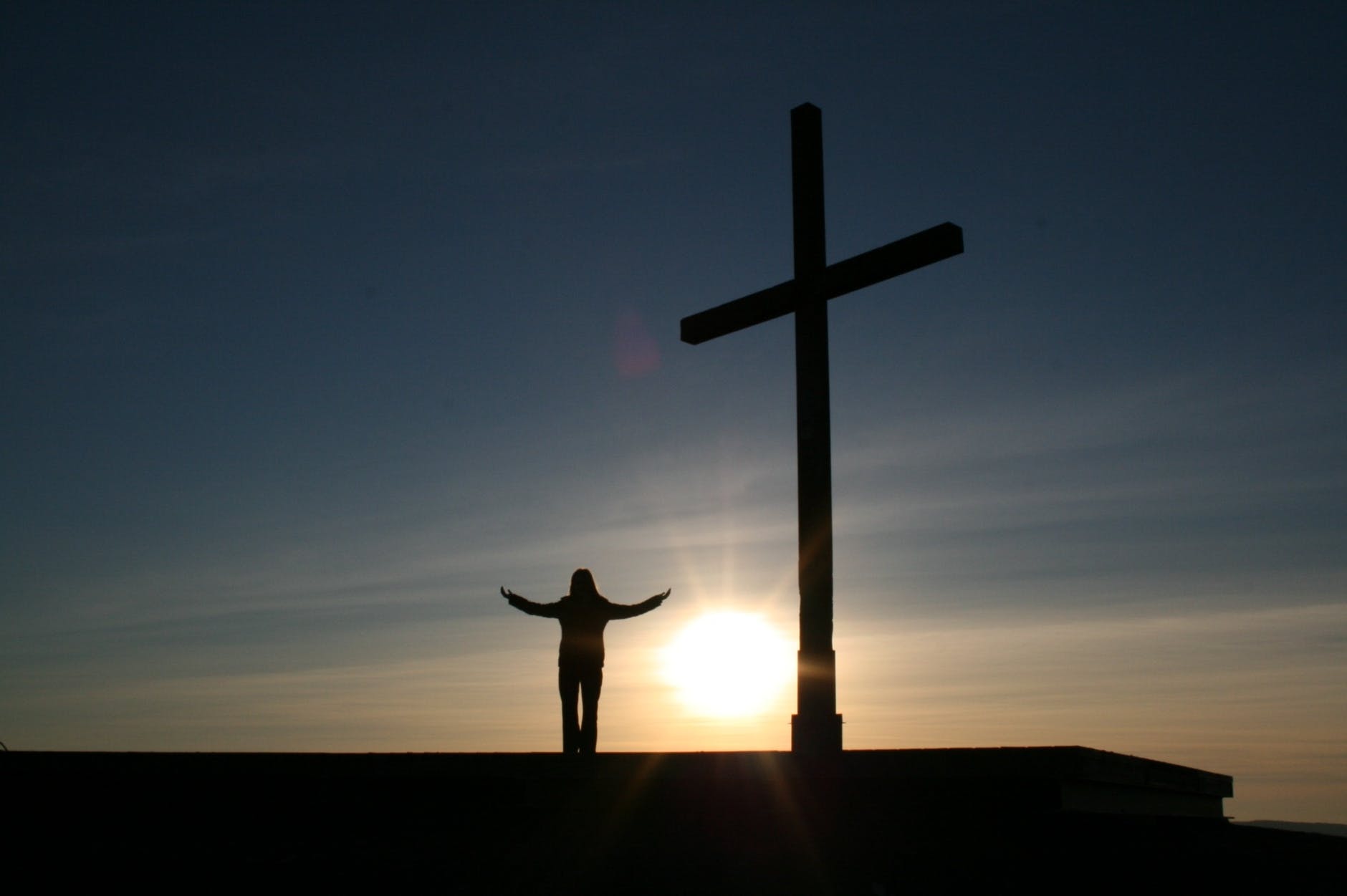
person-clinic-cross-religion-54333.jpeg

Christ Has Died, Christ Is Risen, Christ Will Come Again!  THAT’s the Good News!


Walk This Way

There is an old comedy/vaudeville gag, where a character enters a stately home, or an office, or arrives at an  important event.  They are greeted by a “straight man” character, who tells them to “walk this way”.  The “straight man” then turns and begins walking in a manner that uses exaggerated mannerisms.  The comedic character doesn’t just follow in the general direction of the other character– s/he imitates the exaggerated mannerisms as well.

walkthisway.gif

In the last of three prayers from the song, “Day by Day” (see this past Monday and Wednesday), I want to explore how to “follow Thee more nearly.”

I have this quibble with the song lyrics– I know that “nearly” rhymes with “clearly” and “dearly”, but it is not grammatically correct, as it implies that I almost, not quite, but nearly want to follow Jesus, instead of saying that I want to follow Him more closely, or become a better reflection of His character.  That said, I sometimes think that I fall into the comedic trap of thinking that “walk this way” merely means following Christ with exaggerated mannerisms– I follow “more nearly” when I should be following more closely.

man wearing black leather jacket riding cruiser motorcycle on road

Years ago, a good friend of mine suggested that I read a book called “God On a Harley” (Review and summary here)  It is a fable, and an interesting read.  I don’t recommend it for theological content (the Christ it presents is more of a New-Age life coach, not a Messiah), but I’m glad I read it for two reasons:  It challenged my conventional view of Jesus, and it challenged the way I thought about discipleship.  At the time I was reading the book, I was also considering making some big changes in my life– changing careers, moving away from my home town, and trusting God to be “sufficient” in my singleness and lack of guaranteed income.

photo of a woman passing through the alley

When we talk or think about Jesus’ time on Earth, we generally focus on His birth, His miracles, His death, and His resurrection.  We don’t usually think of His everyday life…where He ate or slept or how He lived.  If He were to walk among us today, He wouldn’t appear like the paintings we see– flowing long blond hair (which has always been inaccurate), white robe and sandals.  He might wear a T-shirt and jeans, ride the bus or subway train, and hang out at Starbucks or the corner convenience store.  Jesus didn’t live in a “holy huddle.”  And, though He famously walked on water, He mostly walked the streets.  He lived and walked and ate and spent His days among ordinary people–in fact, it was His willingness to eat with and talk to the marginalized, the forgotten, the ostracized people of Him time, that got Him in trouble with the religious leaders and those in power.

I don’t think Jesus in our time would be a tattooed, beer swilling, biker– but I’m convinced that He would be found sharing a story or a pizza with one; and with the kinds of people many of His “followers” would shun.  The Jesus I want to follow “more nearly” is Holy, but He is not “Holier-than-thou.”  I can’t follow Jesus more nearly if I’m following an image that only exists in a picture or my self-righteous imagination.   In my youth, I had a picture of what “following Christ” looked like– but it was more about following expectations and selfish desires– successful career, marriage, giving to the “right” charities, becoming a pillar of the community.  There is nothing wrong with any of those things, but if God calls me to serve in humble (even humiliating) ways, doing thankless tasks, and spending time, not helping the needy at my convenience, but truly serving– pouring out my time and my heart until only His strength keeps me going–I have learned the joy and honor that transcends anything I once imagined.

bike biker drive driver

I’m not a biker, but I love the image of Jesus on a motorcycle, asking me to come along for a ride.  If I want to follow Him “more nearly,” I couldn’t come up with a better metaphor.  If Jesus came and asked me to ride off with Him on a Harley, several things would happen that relate to discipleship:

  • First, I have to commit.  You can’t “sort of” ride along — you either get on the bike or you stay behind. You might know all about the motor, you might know how to ride, you might know the traffic laws, you might even watch a video of someone riding, but you won’t experience the horsepower under you, the wind in your face, the road slipping away behind you.  The same is true of the Christian life.  You can know about God; own a Bible– even memorize it; you can sing God’s praises, all without experiencing a relationship with Him.  But you’ll never know the full power of His grace and acceptance until you commit.
  • Part of that commitment is to be willing to go when and where He’s going…you can’t go on the ride and stay at home.  You can’t go two hours after He does.  And that brings me to–
  • Trust!  You won’t get on the bike if you don’t trust His ability to drive and His wisdom in knowing how and where to go.  Once you’re on the bike, hanging on from behind, you can’t see all of the road ahead.  You can’t steer or hit the brakes.  In my own experience, I ended up leaving teaching after seven years with no “safety net.”  I had no job waiting in the wings, no money saved up, and no “plan” other than to take whatever honest work I could find and follow God’s leading.  I learned by experience that I can trust God’s ways to be better than mine; better than my expectations!
  • Riding together takes teamwork.  Just because God is doing the driving and steering doesn’t mean that I just sit back and watch the scenery (though I can do a lot of that, too).  If I’m not paying attention at curves, intersections, stops, turns, etc., I can throw everything off-balance.
  • Riding together, with my arms wrapped around Him is the closest I can “follow” Jesus.  It’s not about what I know, or what I can “do” for God– it’s choosing to be in a deepening relationship with Him.  As I live with Him, listen to Him, and trust Him, the knowing and doing will come naturally.

I want to follow with abandon– not just to walk several steps behind, or wander in His general direction, or watch what He’s doing from a distance.  I want to hang on and share the adventure.  That’s the way I want to “walk” with Him.  That’s my prayer, “Day by Day.”

Summer and Winter, and Springtime and Harvest

Great is Thy faithfulness, O God, my Father;
There is no shadow of turning with Thee.
Thou changest not; thy compassions, they fail not–
As Thou hast been, Thou forever wilt be.

Summer and winter, and springtime and harvest,
Sun, moon, and stars in their courses above:
Join with all nature in manifold witness
To Thy great faithfulness, mercy, and love.

Great is Thy faithfulness. Great is Thy faithfulness;
Morning by morning, new mercies I see.
All I have needed, Thy hand hath provided:
Great is Thy faithfulness, LORD unto me.

According to the calendar, it is spring in Michigan right now. But we’ve experienced nearly all four seasons in the past two weeks! Some days were mild and sunny, others were rainy, windy, chilly, and a couple of days were even blustery with snow and sleet! Flowers have started popping up, birds have been chirping, even as the snow flies! My hall tree is covered in jackets, winter coats, hats, scarves, and caps. A few days, I’ve been in short shirt sleeves and sunglasses; the next days, I’ve needed a coat, hat, and gloves!

But even in days of chaotic weather, God is faithful! Even when I can’t decide what to wear, God is with me. If it should suddenly snow in June (and that HAS happened in Michigan before), God will not abandon me. Just as each day brings its own weather, each day brings God’s blessings.

Some days those blessings may include sunshine and bird song. Other days may include a much-needed hug from a friend, or a shoulder to cry on. Some days will bring both joy and sorrow, with God in the center of each. Each raindrop, each chattering squirrel, each beam of sunlight– all testify to God’s enduring presence. Each bud on the tree, each new tadpole, each wildflower in the forest, remind me that God is faithful to bring new life out of even the dead of winter.

Spring is a wonderful time to reflect on the goodness of God, and His wisdom in creating seasons– wet, dry, cold, hot, restful, chaotic– God is master of all the seasons, and all the days of our lives. And that is a bright thought, no matter what the weather brings today!


Peace on Earth

Christmas is a joyful season– for most people. And it is a giving season; a busy season; a bright and noisy season. But for most of us, it is NOT a peaceful season. Our small city had a lighted parade earlier this month It was festive and bright; there were a lot of happy people cheering on marching bands, floats, dancers, decorated fire engines and tractors, horse-drawn carriages, and other entries. People were eating, drinking hot cocoa, enjoying the entertainment, and even singing carols. The whole downtown was decorated with brilliant lights and banners and festive plants. But before the parade started, and after it ended, there were angry drivers trying to find (or leave) parking spots, bawling toddlers, rowdy people who had more to drink than just the cocoa, and several others who were just tired, and cold, and overstimulated.

While parades and festivities, parties and pageants have become part of the seasonal celebrations in many parts of the world, they are not what Christmas is really about. Jesus did not come to the world to bring “fun.” He did not come to bring toys or games, parties or feasts. He did not come to bring cheerful songs and fragrant holiday decorations, or hot cocoa and cookies. The angels who announced His arrival did not bring good tidings of candy canes, flying reindeer, or twinkle lights.

We sing about “Peace on Earth.” We talk about it, send greeting cards about it, and pray for it. But what do we MEAN when we talk about Peace on Earth, Good will to Men (Humankind)? For many, it is a wish or a prayer that wars would end, or that the petty differences between rival political factions or even rival churches would end. We speak of global peace or universal peace– peace between men (and women). And it is good that we should want such peace. But is that really the kind of peace Jesus brought with Him? He didn’t put an end to wars and disagreements during His ministry here. He didn’t “settle the score” for those who experienced oppression– the Roman Empire remained; the tax collectors still took more than their fair share; there was still slavery and abuse; greed and adultery and murder did not cease. And the world has been noisy, and messy, and angry and depressed in the two millennia since. And yet…

There IS peace on earth–it is the profound peace that comes with “Good will to Men.” God’s good will found its ultimate expression in the gift of the Savior. There may still be wars and pestilence, angry drivers, bad hair days, injustice, confusion, grief, and pain among people. But there is power to be at peace in the midst of it all– the power of a Peace that passes all understanding (Philippians 4:7); the power of Peace with God (Romans 5:1).

Jesus came to a world that knew only the rumor of such peace. Even King David– a “man after God’s own heart,” a man who wrote songs about peace and safety and joy in God’s presence–knew this kind of peace as something that had been promised. David could know the immediate peace of God’s forgiveness; he could know the blessings of obedience and the restoration of the joy of salvation (Psalm 51:12). But the everlasting Peace that has been accomplished by the Advent of the Christ– David, Moses, Abraham, and all the prophets had longed to know it; to experience it from within.

And THIS Peace we can experience– not just during the Advent and Christmas Season, but throughout our lives. Chaos, loneliness, grief, separation, injustice– it HAS BEEN defeated. It has no power to separate us from God’s Good Will or from His Loving embrace! The noise and anger and clutter and abuse is still real. We should not ignore it, and we certainly must not contribute to it or sanction it. But we no longer have to live without hope; we no longer have to fret and live in constant fear or defeat.

There is no parade tonight as I write this– there are still lights and occasional noises downtown– a door closing, a dog barking, a car passing. But there is Peace within– no matter how loud or bright, how festive or even forlorn things seem.

Praying in the Dark

(This post is an updated version of one that first appeared three years ago, during the COVID pandemic. I have updated a few of the references to reflect the change. There is still a lot of darkness and confusion in the world, but some of the sources have changed a bit.)

The past few days have been a dark place for me. I don’t mean that something horrible has happened, or that my life has been upended. But things seem dim and indistinct. Some things I took for granted turn out to be less than sure. Events have been chaotic and tinged with evil and sadness. The present economy seems far from certain, and rumors swirl around the upcoming elections. Many places around the world are at war, and there is violence, unrest, crime, and uncertainty nearly everywhere. Even traditionally “safe” institutions like the family and the Church are under constant attack. It is difficult to know who or what to trust– everything seems shadowed and indistinct.

I read a novel a while ago, set in the early days of World War II in London. Because of the threat of air raids from Germany, the people were required to “black out” their windows at night, and drive with no headlights. People who had driven or walked around the streets of London with confidence just weeks before were being injured or even killed because they could no longer trust the once familiar streets. Craters and rubble from bombing raids, or hastily built ditches and barricades; hidden dangers filled neighborhoods. And people could not count on streetlights, headlights, or lights in windows to guide them safely home. At the same time, thousands of people, fearing that the Germans would use deadly gas, were carrying around gas masks (just in case!), and leaving them on buses or at pubs or train stations, because they were unused to the extra responsibility. Suddenly, the gas mask they were depending on was lost, and all the extra preparation turned out to be useless, anyway.

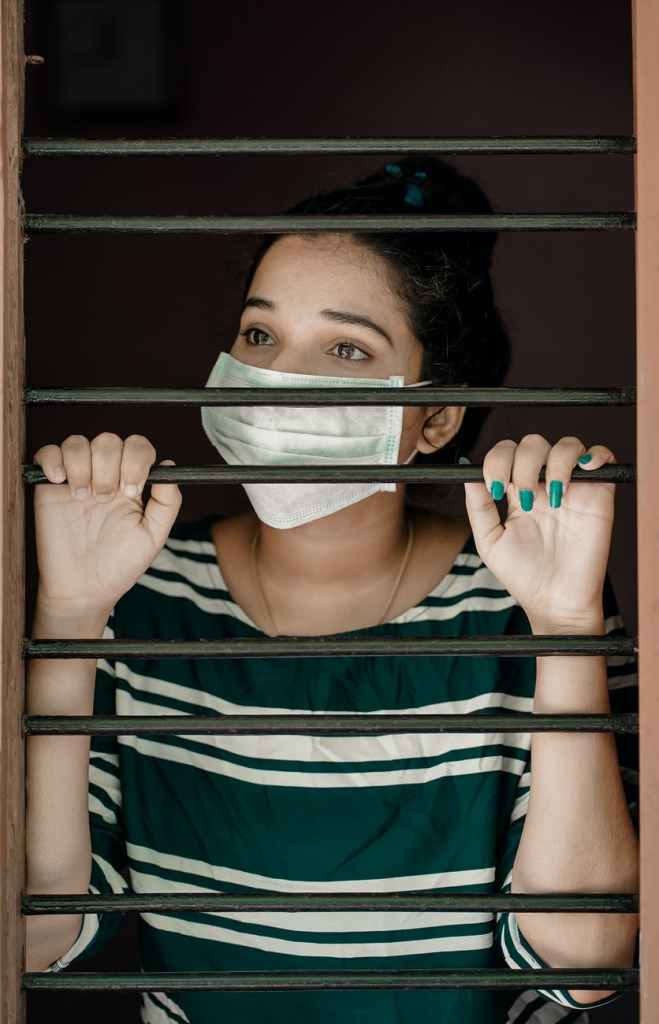
It reminds me how often I would see people just a couple of years ago, getting ready to enter a store, only to return to their car for their required mask. Many people wore them “the wrong way:” others wore them for months longer than necessary. Still others wore the same mask for several days but failed to wash their hands. Some people stayed in their homes for weeks, even when they could have spent some time getting fresh air at a park or one their porch or stoop. Others took great risks going to stores where other customers were sick. And many workers had no choice but to report to work, knowing they would be exposed to COVID. Many people refused to get the vaccines once they became available, while others were demanding that everyone had to get the vaccine or be charged with a crime. No one was sure if they were “safe”– even with masks, vaccines, and other protocols. It was a very dark time.

Hard times and difficult situations can cause us to shift our focus and have to learn new routines–even new vocabulary! At certain times, life almost seems “normal.” At others, we seem to be tossed by every new wave that comes along. It can be easy to lose one’s way in the fog and darkness of chaos and changing times.

The Psalmist and King, David, had words of wisdom for times like these: “Thy word is a lamp unto my feet, and a light unto my path.” (Psalm 119: 105 KJV)

Even when things seem dark and it feels like I’ve lost my way, God is right beside me. If I have no other “light” to see by, God’s word will be enough to guide me on. When I pray– even in the dark–God sees me clearly, and knows the way ahead.

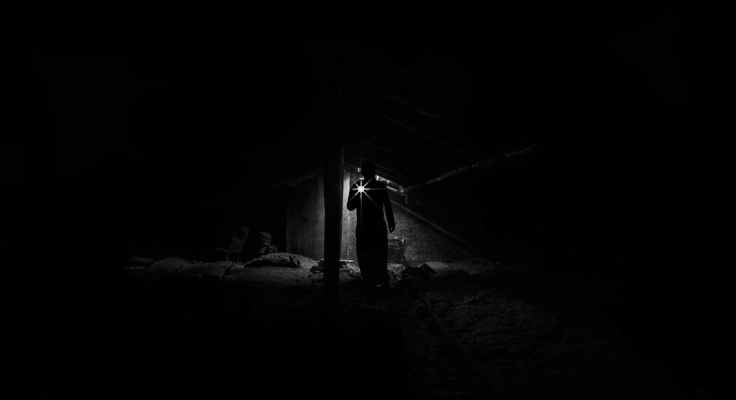
Photo by Pat Whelen on Pexels.com

And I needed to be reminded of that again this week.

“Bathed” in Prayer

We were reviewing last week’s VBS at our church–sharing stories, “crunching” numbers, evaluating the various elements that made up each day… One of the phrases that came out of our various talks and meetings was that Bible School week had been “bathed in prayer.” What does that actually mean?

For me, it represents how prayer surrounded us– much like bath water.

  • It covered every part of our efforts– we prayed for the children who were registered– and those who came unexpectedly as guests. We prayed for the families of the children–those from our church, those from neighboring churches, and those who are unchurched. We prayed for all the volunteers– teens, adults, those who where there each day of VBS, and those who helped before and after with decorations, building, providing supplies and funding, advertising, etc. We prayed for each team– teaching, drama, singing, videography, sound and lights, registration, group leaders, science and crafts, snacks, sports and games, record-keeping, security, and more! We prayed weeks before VBS, and we are still praying that the seeds planted last week will grow and produce a harvest!
  • It flowed freely. We had organized prayer meetings, and spontaneous outbursts of prayer. We prayed in the “opportune moment” and in the planned schedule. Prayer was a consistent part of each day, but came in random bursts, as well. It came from staff, from volunteers, from children and retirees. Everyone can’t work at VBS– but everyone can pray!
  • It “cleansed” our efforts. It is easy to get side-tracked with the chaos and fol-de-rol of an event like Bible School. It is easy to lose focus and let stress, frustration, and even bitterness worm their way into our efforts. On the very first day, our registration and check-in system crashed– and this could have been a disaster. But we had prayed before; we prayed during our confusion, and we praised God that, system or no, HE knew who was there, where they should go, and how we should respond to THEM. We are in the middle of a construction project in our children’s wing– we had to plan around fewer classrooms available, and less indoor space. On the hottest week of the summer (so far) we had to hope that the weather would cooperate for our games. God provided cloud cover on at least two of the mornings, and overnight showers– we did not have to deal with heavy rains or the worst heat of the day on any of our days! And (at least partly) because we had prayed in advance, we were grateful instead of stressful about our circumstances, marveling at God’s provision.
  • Praying brings peace– like the clean and relaxed feeling you have after a good soak in the bath! And I hope that peace was reflected in the way we welcomed each child each day– in the way we listened, and in the way we spoke; in the way we encouraged, and in the way we taught; in the way we interacted with the children, and with the other volunteers.

We tend to “bathe” our “big concerns” in prayer. But what about our “little things?” What if we spent as much time praying about our next doctor appointment? Our next church service? Our next family outing?

We NEED prayer! Our efforts, without prayer, humility, and submission to the Spirit of the Lord, will be fruitless. With prayer, our lives, efforts, and plans will be clean, and bring Glory to God!

Just a thought– but if we bathed more things in prayer, we might just receive more “showers of blessing!”

These Three Remain.. Hope

I have to start this by saying I don’t always feel particularly hopeful as I look around and hear all that is happening. There are a lot of reasons to be discouraged, even depressed. Upheaval, suffering, injustice, disasters, anger, death, and evil surround us at nearly every turn. I can say that my Faith sustains me, and it does, but I still feel beaten down and exhausted by all the chaos and hurt and anger and misunderstanding.

Faith sustains us in times of trouble, but our hearts can still feel heavy. Faith tells us that God is in control, but we can feel powerless in the midst of suffering. What keeps us motivated to look for the best on even the worst of days? What allows us to have joy even as we grieve and strain and suffer? Faith is our anchor, but what renews our strength, and keeps us looking beyond the storm?

In 1 Corinthians 13, the Apostle Paul talks about things that are temporary– possessions, knowledge, gifts, prophecies– and three things that remain: Faith, Hope, and Love. Last time, I wrote about Faith. But Hope is a more difficult and more nebulous concept. The writer of Hebrews defines Faith for us– “the substance of things hoped for; the evidence of things not seen” (Hebrews 11:1). But there is no substance or evidence for Hope. Hope is not a physical anchor; it is not a realization. Neither is it a mere wish, or dream; at best, it is an expectation. Yet Paul says it “remains,” even when other things pass away.

How is this possible– that a Christian should Hope after all else has been lost, abandoned, or destroyed? Isn’t Faith more solid, more important, than Hope? Aren’t knowledge, obedience, and perseverance more important and more tangible? Isn’t hope wispy, fleeting, and conditional? Lately, it sure seems so. I say that I hope we all get through these tough times; that we will come through all this stronger, wiser, more compassionate, more just, more prepared, etc., but what am I really hanging on to? Where is my Hope?

My Hope DOES have substance and a sure foundation–in the life, death, and resurrection of Jesus Christ, and in the sure promises of my Heavenly Father! I may have wispy dreams and half-formed wishes of what I would like to see in my life or in the world around me tomorrow, or next year. I may have dreams and visions of what Peace and Justice and Health look like– and I may never see them materialize in my lifetime. I may have to adjust my vision within the temporary world of possessions, and gifts, prophecies and human systems of government and society. But I can remember the life of Christ; in spite of His circumstances, He remained true to His purpose. In His death, He remained compassionate, humble, and loving toward those who hated Him. In His resurrection, He brought eternal Hope to all who choose to trust Him. I can Hope because He fulfilled God’s promises. He WAS Hope. He gave Hope, and He demonstrated Hope. And He pointed to the Hope of His return and our eternal destiny!


I can be inspired by the dreams and hopes of other Christians throughout the years, even if their dreams have not been realized. I can be inspired by the prophecies of others, even if they don’t match my visions. And I CAN see beyond the darkness of the moment (or the year) to see that people (even I) can change; situations can change; circumstances can change; rhetoric and tone can change for the better. Painful valleys and unexpected upheaval may not be what I would want, but sometimes, it serves to clear out the “sinking sand” where dream houses would otherwise be built.

And Hope is necessary to Prayer– Faith tells us that God hears, even when we can’t see Him or hear His answer. Hope tells us that God cares. He is not aloof in hearing our prayers. He doesn’t answer us out of some worn sense of duty or obligation. He doesn’t just give us His law or even His forgiveness– He gives us restoration and Hope and abundant life! Hope for change in our own lives; hope for progress and healing in our world; hope for victory over sin and evil. Most of all, hope for eternity. God is just and merciful, but He is also gracious and loving beyond all measure. I can cry out when all other hope is gone– His Hope Remains! His Hope is a Solid Rock. His Hope comes with an eternal guarantee.

Blog at WordPress.com.

Up ↑