These Three Remain.. Hope

I have to start this by saying I don’t always feel particularly hopeful as I look around and hear all that is happening. There are a lot of reasons to be discouraged, even depressed. Upheaval, suffering, injustice, disasters, anger, death, and evil surround us at nearly every turn. I can say that my Faith sustains me, and it does, but I still feel beaten down and exhausted by all the chaos and hurt and anger and misunderstanding.

Faith sustains us in times of trouble, but our hearts can still feel heavy. Faith tells us that God is in control, but we can feel powerless in the midst of suffering. What keeps us motivated to look for the best on even the worst of days? What allows us to have joy even as we grieve and strain and suffer? Faith is our anchor, but what renews our strength, and keeps us looking beyond the storm?

In 1 Corinthians 13, the Apostle Paul talks about things that are temporary– possessions, knowledge, gifts, prophecies– and three things that remain: Faith, Hope, and Love. Last time, I wrote about Faith. But Hope is a more difficult and more nebulous concept. The writer of Hebrews defines Faith for us– “the substance of things hoped for; the evidence of things not seen” (Hebrews 11:1). But there is no substance or evidence for Hope. Hope is not a physical anchor; it is not a realization. Neither is it a mere wish, or dream; at best, it is an expectation. Yet Paul says it “remains,” even when other things pass away.

How is this possible– that a Christian should Hope after all else has been lost, abandoned, or destroyed? Isn’t Faith more solid, more important, than Hope? Aren’t knowledge, obedience, and perseverance more important and more tangible? Isn’t hope wispy, fleeting, and conditional? Lately, it sure seems so. I say that I hope we all get through these tough times; that we will come through all this stronger, wiser, more compassionate, more just, more prepared, etc., but what am I really hanging on to? Where is my Hope?

My Hope DOES have substance and a sure foundation–in the life, death, and resurrection of Jesus Christ, and in the sure promises of my Heavenly Father! I may have wispy dreams and half-formed wishes of what I would like to see in my life or in the world around me tomorrow, or next year. I may have dreams and visions of what Peace and Justice and Health look like– and I may never see them materialize in my lifetime. I may have to adjust my vision within the temporary world of possessions, and gifts, prophecies and human systems of government and society. But I can remember the life of Christ; in spite of His circumstances, He remained true to His purpose. In His death, He remained compassionate, humble, and loving toward those who hated Him. In His resurrection, He brought eternal Hope to all who choose to trust Him. I can Hope because He fulfilled God’s promises. He WAS Hope. He gave Hope, and He demonstrated Hope. And He pointed to the Hope of His return and our eternal destiny!


I can be inspired by the dreams and hopes of other Christians throughout the years, even if their dreams have not been realized. I can be inspired by the prophecies of others, even if they don’t match my visions. And I CAN see beyond the darkness of the moment (or the year) to see that people (even I) can change; situations can change; circumstances can change; rhetoric and tone can change for the better. Painful valleys and unexpected upheaval may not be what I would want, but sometimes, it serves to clear out the “sinking sand” where dream houses would otherwise be built.

And Hope is necessary to Prayer– Faith tells us that God hears, even when we can’t see Him or hear His answer. Hope tells us that God cares. He is not aloof in hearing our prayers. He doesn’t answer us out of some worn sense of duty or obligation. He doesn’t just give us His law or even His forgiveness– He gives us restoration and Hope and abundant life! Hope for change in our own lives; hope for progress and healing in our world; hope for victory over sin and evil. Most of all, hope for eternity. God is just and merciful, but He is also gracious and loving beyond all measure. I can cry out when all other hope is gone– His Hope Remains! His Hope is a Solid Rock. His Hope comes with an eternal guarantee.

God Is Not Dead, Nor Doth He Sleep..

It was almost 160 years ago, during the darkest days of America’s Civil War, that Henry Wadsworth Longfellow wrote a poem “Christmas Bells” that would become the Christmas Hymn, “I Heard the Bells on Christmas Day.” His son had been badly wounded in battle; his wife had died just a few years earlier, and the nation was in ruins and chaos. No one knew how much longer the war would continue or what the final outcome would be; Longfellow did not know if his son would live, or if he would be paralyzed for life. As he listened to the bells of Christmas ringing from church towers, he poured out all his doubts and fears in verse. Yet he concluded, “The Wrong shall fail, the Right prevail, with peace on earth, good-will to men.”

Christmas is not just a celebration of “comfort and joy” that comes from tinsel and lights, cozy fires, or gifts under brightly lit trees. Christmas is about Hope in times of darkness. It is about promises kept; prophesies fulfilled, victory assured, even when it looks as though the Enemy has the upper hand.

It is horribly tempting in troubled times to wonder and question God’s ways– does He hear? Does He see? Is He asleep? Does He exist? How can a “good” God allow such suffering and pain? And like Longfellow, we listen to our circumstances, and they seem to drown out the message of Christmas– “For Hate is strong, and mocks the song of peace on earth, good-will to men.” The cannons of yesteryear may have been replaced with 24-hour news cycles or Facebook news feeds, with protests and terrorist attacks; war and political corruption; social tensions and economic turmoil, but the noise is still the same. There is hatred, deceit, destruction, and doubt in our world–it was present during the Civil War; it was present during the Roman occupation at the time of Christ’s birth. But that birth brought a singular hope– one that has become so familiar, and so casual as to be almost forgotten amidst the immediate urgent noises of the day.

Photo by Perchek Industrie on Pexels.com

The trappings of Christmas sometimes hide the very Glory of Christ’s Advent. God CAME. He LIVED AMONG US. He was humble. He felt the cold and heat of long days and nights; his feet got dirty from walking. He laughed and cried. And, He DIED. He felt agony and shame and fear as he gasped for breath, naked and bloody and facing sneers and anger from the crowd. But God IS NOT DEAD–He conquered death; He rose again victorious. And He did it so that our suffering is not in vain– our suffering is not the end of our story.

GOD IS NOT DEAD. Hope is not in vain. Nor does He sleep–even in the silence of our lonely nights, even in the noisy chaos of life in 2023–God has not stepped off His throne; He has not turned His back on mankind. “The Wrong shall fail–” though it may seem strong and strut arrogantly through the streets, shouting and threatening–God is the final authority. Nothing is hidden from Him. He sees every injustice, every secret sin; He hears every lie, every twisted truth, every deceit. And He has no favorites– there is no excuse, no “religious” exemption– ALL have sinned, and all will be held to account.

EXCEPT– because of that one birth and death and resurrection–the debt is already paid. “The Right (shall) prevail with peace on earth, good-will to men.” For those who listen beyond the noise of battle, the bells of Christmas ring “more loud and deep” with the hope and joy and strength that overcome our pain and struggle. Longfellow found that truth– and I’m so glad he shared it. I hope his words will continue to remind us to listen through this season for the true message of Christmas.

Photo by Pixabay on Pexels.com

When Nebuchadnezzar is Your Boss

Have you ever worked with a “difficult” boss or co-worker? Even a job you love can become a source of tension and even torture. Maybe they are lazy. Maybe they are unreasonable and demanding. Maybe they are incompetent. Maybe they are corrupt. Maybe they just “push all your buttons.” Whatever it is, it leaves you frustrated, stressed, and questioning your future.

Photo by Mikhail Nilov on Pexels.com

I’ve worked for several bosses through the years, and most of them were wonderful. But there were a couple…I can still remember uncomfortable confrontations and unresolved issues even years later. And I know several others workers who suffered under those same managers– many of them left to take other jobs because the situation took so long to resolve. A bad boss can really hurt a company or office. They can destroy morale, decrease efficiency, and make it difficult for anyone to know what the goals and expectations are– this week!

Photo by Andrea Piacquadio on Pexels.com

One of the difficult things about working under a “bad” boss, is that, often, what makes them a “bad” boss also makes them look “successful”– at least in the short term. They manage to turn in impressive “numbers”– it looks like production is up and waste is down; it looks like everything is in order to outsiders. Those who leave are often workers who have been with the company a long time– new hires come in at a much smaller salary, and with “fresh” ideas– at least initially. If there is an overriding goal, they will pursue it with fanatical focus, making them look committed, determined, and competent. If workers can see underlying problems, other people only see what looks like focused efficiency and “sour grapes” from harassed staff members.

Photo by August de Richelieu on Pexels.com

When I worked for “bad” bosses, they seemed to last about five years, before their cruelty, arrogance, or incompetence forced them to leave. They went on to “new” positions, where they followed the same patterns.

Photo by Victor on Pexels.com

In the Bible, there was a young man (just a teen when we first meet him) named Daniel. Daniel had grown up in a noble family in the capital city of Jerusalem. But Jerusalem was besieged and fell into the hands of a tyrannical ruler named Nebuchadnezzar. Daniel was captured, exiled, and taken into Nebuchadnezzar’s service. On the surface, this may have appeared to be a “plum” position; he got to live in the palace, and he served as an advisor. He had food, clothing, advanced education, and many “creature comforts” available to him that were lost to many of the other exiles who were forced into manual labor.

But Daniel’s position was far more precarious than it appeared. Nebuchadnezzar wanted men of intelligence, culture, and breeding– and he wanted them to be clean, healthy, and confident–but he also demanded results, and often, he demanded the impossible! Field hands might have brutal masters who would beat them for minor offenses, but Nebuchadnezzar didn’t inflict punishment– he simply “eliminated” anyone who didn’t produce the desired results!

In the history books, Nebuchadnezzar looks like a successful ruler– his armies had conquered every region they attacked. And by sending the people into exile– bringing the best and brightest to Babylon, and scattering the rest–Nebuchadnezzar kept the conquered regions from rebellion and revolt. He appointed satraps and governors to help manage the empire, and it looked like nothing could stop him from conquering the world! But Daniel wasn’t reading a history book. He was living and working under one of the harshest and cruelest rulers of his time!

The book of Daniel gives us at least three examples of Daniel and his friends being put in life-and-death situations involving some of Nebuchadnezzar’s more impossible demands. And in each case, God gives miraculous rescue to Daniel and his friends as they bravely serve this unwelcome “boss.”

When we study Daniel, we tend to focus on the miracles– the fiery furnace, the writing on the wall, the lion’s den, and the answers to impossible dreams. But God didn’t just send miracles, and He didn’t rescue them from having to serve in Nebuchadnezzar’s court (or in the courts of some of the equally bad rulers who followed!)

God’s purpose in our life may involve serving with or under people who abuse their authority, or who don’t “deserve” to be leaders. But His purpose also involves teaching us to serve, as Daniel and his friends did, with integrity, dignity, and consistency. It wasn’t easy for Daniel– he was the target of jealous plots, megalomaniacal panics, and culture wars. God didn’t rescue Daniel from his situation– Daniel remained in exile, likely for the rest of his life–but God rescued Daniel from being consumed or changed by his situation. And Nebuchadnezzar wasn’t a “mistake” that God made. He was God’s chosen tool to punish Israel for its unfaithfulness, and His chosen tool to show His sovereignty OVER even the great Babylonian Empire!

Daniel was known as a man of prayer– that’s how he ended up in the lion’s den (years later under another ruler)! Praying won’t keep us from experiencing “bad” bosses, or from facing difficult situations. But prayer can help us to persevere, to endure, and to be a shining example of God’s faithfulness.

I would love to say that I behaved like Daniel when I was in a “bad” boss situation. I didn’t. I endured, but I was impatient and vocal in my displeasure. I complained, I worked grudgingly, and I even changed jobs to get away from the situations. I don’t mean to suggest that it is always God’s will that we stay in a bad situation– I was lucky to be able to change jobs, and grateful for the opportunity to continue to do good work elsewhere. But in times when we are being tested and cannot change jobs, or have to endure chaos and upheaval for a long season–we need to be willing to be like Daniel, who was faithful, loyal, patient, and trustworthy. Daniel “kept his head” because he kept his heart turned toward the source of his real success– not the King of Babylon, but the King of Kings!

Photo by Pavel Danilyuk on Pexels.com

I don’t know what situation you may be facing today– what injustices, or upheavals you are enduring. But I pray that God would give you the strength and wisdom to be a Daniel. Look past the Nebuchadnezzar in your world, and serve the King!

Untie? or Unite!

Photo by Pixabay on Pexels.com

I once saw a cartoon involving a person holding a sign that read, “Bad spellers of the world: UNTIE!” Part of what makes the joke funny (at least to a pun-lover like me) is that all the correct letters are there–just two letters are transposed–but the meanings are completely different. And, of course, the bad speller misspelled the most important word. Instead of asking for unity, the sign invites potential destruction and chaos!

There is a serious side to this cartoon, however. Just like the sign-bearer, we often carry a message that is vastly different from what we mean to project– it may look similar or close to what we intend; it may even go unnoticed at first–but eventually, it will make us look foolish and actually call more attention to our faults and failures.

As Christians, we often pray for unity– we talk about it, we long for it, and we call out for it. But what are we DOING to promote unity and love within the Church? I recently ended my subscription to an on-line forum with articles about Christian Living. I wanted to support discussion, encouragement, and even constructive criticism among the Christian community. But more and more, I found the articles and discussions were not constructive; they were divisive, sarcastic, boastful, and condescending to other believers based on how they worshiped– the kind of songs they sang, or the lighting and seating in their sanctuary, whether they wore suits and dresses or ripped jeans and flip flops, whether they collected offerings or had a diverse worship team. There was no effort to listen or present Biblical principals that might help congregations find a balanced way to discuss differences in worship styles. There was no invitation for consensus or inclusion; no discussion of doctrinal principles or lasting truths that must be upheld. It was a forum for bickering, snide commentary, complaints, and virtue-signaling from self-righteous people taking pot-shots at other self-righteous people. I’m ashamed to admit that I did not unsubscribe earlier–I sent in my own snide comments, my own self-justifying judgments of others.

Photo by Gratisography on Pexels.com

One of the pitfalls of social media is that it gives us the illusion of unity–we “like” posts, or others “like” what we have written or shared. We create convenient “echo chambers” filled with the kind of words and ideas that we find familiar or comfortable. This gives us a sense of well-being–even superiority–but it doesn’t promote true understanding with others. In fact, it may intimidate others into keeping silent about their own feelings or beliefs, while quietly resenting ours.
The Fruit of the Spirit (Galatians 5:22-23) includes Love, Joy, Peace, Patience, Kindness, Goodness, Faithfulness, Gentleness, and Self-Control– it doesn’t include cleverness, arrogance, criticism, complacency, or divisiveness!

Photo by Pressmaster on Pexels.com

Ephesians 4:1-6

As a prisoner for the Lord, then, I urge you to live a life worthy of the calling you have received. Be completely humble and gentle; be patient, bearing with one another in love. Make every effort to keep the unity of the Spirit through the bond of peace. There is one body and one Spirit, just as you were called to one hope when you were called; one Lord, one faith, one baptism; one God and Father of all, who is over all and through all and in all.

https://www.biblegateway.com/passage/?search=Ephesians+4&version=NIV
Photo by Kampus Production on Pexels.com

It is not difficult to let our thoughts and emotions lead us to react badly– to untie, rather than unite. Here are several handy questions to ask BEFORE we grab up our “misspelled” sign and march around spreading dis-unity and chaos:

  • If Jesus were listening to me or reading my posts– and He IS!–would He agree? Would He “like” or “share” this? Would I send it to Him? Would I say this to His face?
  • Have I really thought about what this says to my family? My friends? My neighbors? My enemies? My Pastor? My co-workers? Strangers? Will it bring people together? Or will it force people to take sides? (There are times when we all need to be challenged to take sides on important issues, but is this one of them?)
  • There are some great posters in elementary schools that use the acronym to evaluate social media, but it works equally well for gossip, news articles, or any information or opinion that we wish to pass along– THINK–T: is it True? Have you checked the facts, dates, assertions, etc., to see if they are valid? H–is it Helpful? Is this good information? Am I helping people find a solution to a problem, or offering encouragement? I–is it Inspiring/Important? Am I wasting time passing on information or opinion just because I find it clever or entertaining? Or will this information inspire and build people up?Are lives in jeopardy if I don’t pass this information along or if I don’t comment? N–is it Necessary? Does this information or opinion need to be shared? With everyone? By me? Now? Finally, K–is it Kind? Even if it is “true” and “helpful”, etc., it can be abrasive, hurtful, or condescending in tone. Being “right” can still be “wrong” when it comes to unity and encouragement.
Photo by rawpixel.com on Pexels.com

Lord, help me to speak and act in ways that bring unity. Help me reflect the Grace and Peace that comes from You. Let my words and deeds produce Spiritual Fruit that lasts. May I seek to build up others, not tear them down or “untie” relationships that You want to flourish.

Good Christians of the world– UNITE!

Blessed Are the Meek

I’ve been looking at the Beatitudes lately, and how they relate to prayer. Today I am focusing on “Blessed are the meek, for they shall inherit the earth.” (Matthew 5:5) Does this verse suggest that we should be meek or timid about prayer? Is God offended when we plead with Him or pour out our frustrations about pain or injustice? Doesn’t this contradict the writer of Hebrews, who says that we should “boldly approach the throne of grace” (Hebrews 4:16)?

Photo by Pavel Danilyuk on Pexels.com

God invites us to have a relationship with Him. Good relationships cannot survive in an atmosphere of fear. But they must involve respect. There is a tendency in the Church today to look at prayer as a casual conversation with God, where God is our “pal,” someone we hang out with and chat with like a best friend. But even our close relationship with God as “Father” demands the same kind of respect we should give to an earthly father or an elder. God is not “one of the gang,” or “the man upstairs.” He is God Almighty, and Lord of All Creation.

Like any Good Father, God wants to hear from us– all that is on our minds and hearts. But we must remember who God is– and who we are. We are His children, not His “crew.” In The Lord’s Prayer, Jesus began by addressing His Father, and establishing His place– “Our Father, which art in Heaven, Hallowed be Thy Name.” (Matthew 6:9 or Luke 11:2) The meek person comes before God gladly, with awe and gratitude, eager to honor Him before all else.

Photo by sergio omassi on Pexels.com

And the second part of the Beatitude is also key in how we pray. “Blessed are the meek, for they shall inherit the earth.” Many times, we focus on the inheritance itself– “the earth.” But what about the act of inheriting? The meek will not conquer the earth. The meek will not purchase the earth. The meek will not gain the earth, or win it, or demand it. Instead, the meek wait patiently for their inheritance. How would our prayers change if we took this to heart? God will give us all that we require– in His time, in His wisdom, for His purpose, and with His delight! The whole earth belongs to God– and He desires to share it with us! There is never a reason NOT to be meek, humble, grateful, or reverent before our Father. There is never a reason to be demanding, rude, dismissive, or grumbling when we pray.

Photo by cottonbro on Pexels.com

This can be a very freeing realization. No matter how chaotic, frightening, or painful our situation, God IS in control. Wars rage, disease stalks, famine strikes, yet God has promised to give us access to all of His riches, including a peace that passes understanding and unspeakable joy! They are a guaranteed inheritance from our great Father– His lavish Grace and everlasting Love poured out on us.

Photo by Tima Miroshnichenko on Pexels.com

The Long and Winding Road

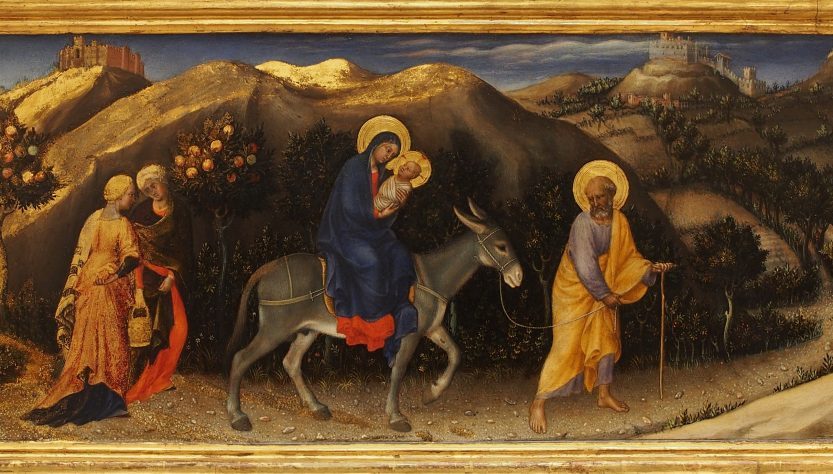
Joseph and Mary traveled dark and dangerous roads to reach Bethlehem before the birth of the Baby Jesus. The wise men made a long journey to see the newborn king. The entire nation of Israel spent more than 40 years wandering in the wilderness. Abraham, Jacob, Jonah, the Apostle Paul…there are many tales in the Bible of long journeys to unknown destinations and unknown outcomes.

Photo by rawpixel.com on Pexels.com

Traveling can be exciting and adventurous, but it can also be filled with detours, setbacks, and hardships. Traveling means being away from our comfort zone, our “safe” place– even if our “safe” place isn’t really safe. Travel often means going into the unknown, especially if we travel alone or travel against our own will. Where does this road lead? Who will I meet along the way? Where will I stay at night? Will I get lost? Will I get delayed? What if I get sick or hurt or attacked? Will I find my way back home? Can I feel safe in a new home, among unknown people and circumstances?

Photo by Andrea Piacquadio on Pexels.com

Jesus was born “away from home.” The first people to greet him were not grandparents or giddy relatives or neighbors, but shepherds– unnamed in scripture, unknown to his parents. In fact, the Bible doesn’t say much about Jesus being close to an extended family– his own small family always seemed to be on the move! Later, Joseph was told to take Mary and the child to Egypt; another long and unexpected journey, another long and winding road.

As an adult, Jesus was also “on the road” for much of his ministry. Long dusty roads leading to Galilee, or Jerusalem, Jericho, or Bethany.

Photo by Kamaji Ogino on Pexels.com

At times, it can seem like our “roads” in life are long, winding, dusty paths leading to strange new places– lonely, rambling trails or busy superhighways taking us where we don’t always want to go. But we don’t need to fear traveling– even if we have to walk through the “valley of the shadow of death,” God is always with us. Just as He was with Mary and Joseph on the long road to Bethlehem, where there was no room for them in the inn. Just as He was with Jesus on the lonely path in the Garden of Gethsemane. Just as He was with Jonah in the belly of the big fish!

As we await the Advent of the Christ Child this year, it is likely that most of us have been on a long and winding road. Though many of us have been prevented from physical travel to foreign lands, we’ve traveled on an emotionally and even spiritually exhausting road in 2020. Chaos, corruption, COVID, elections, “executive orders”, economic collapse, lock-downs, lawlessness, and loneliness–we seem to have traveled a lot of miles, and most of them have been perilous and unfamiliar. But God has a plan, and a destination. The journey may not make sense right now; it is not the journey we would have planned; not the journey we would have chosen. But let us follow it to Bethlehem– to the Manger– to the Cross– and finally, HOME!

The Empty Tomb


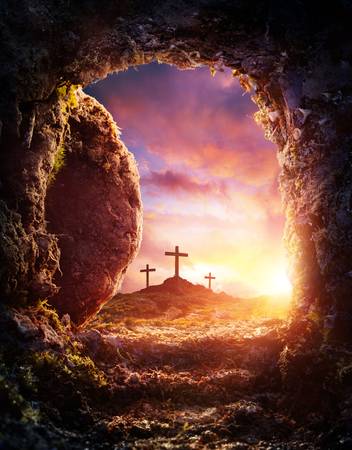
We are living in dark days– days of death counts, and dire predictions; of fear and grief and chaos. Masks, social distancing, angry outbursts, collapsing economies, job loss, political unrest, disease, plague–we are in the grip of a global pandemic. “Bring out your dead.” It’s a phrase from hundreds of years ago, and the horrors of other plagues and other disasters. Tombs, graveyards, skulls and visions of death abound. And yet, as Christians, we celebrate an empty tomb…

Photo by Matthias Zomer on Pexels.com

It’s been over a month since many Christians celebrated Easter (and almost a month for Orthodox Christians). How soon many of us forget the power of the resurrection. Our world is gripped with fear and anger. But we should be gripped with hope and healing. We celebrate an empty tomb– a testament to the victory of life over death, and hope over chaos!

Photo by Felix Mittermeier on Pexels.com

Even when we use the symbol of the cross, it is not about Christ’s death, but his ultimate victory that we celebrate. Jesus himself even referred to the cross in these terms in John 3:

“Just as Moses lifted up the snake in the wilderness, so the Son of Man must be lifted up, that everyone who believes may have eternal life in him.”

John 3:14-15 NIV via http://www.Biblegateway.com

Jesus is speaking with Nicodemus, a Pharisee and religious teacher. He is referring to an historic incident in the wilderness, when the Israelites had rebelled (once again), and the Lord sent venomous snakes among them. Nicodemus would have known about this incident, but Jesus presented it as more than just history– it was a foreshadowing of God’s perfect plan of salvation! https://www.biblegateway.com/passage/?search=Numbers+21%3A4-9&version=NIV God had Moses make a bronze snake to be lifted up on a pole. When the people looked up and saw the bronze snake, they could live. In just such a way, when Jesus was “lifted up” on the cross, he didn’t just die. He battled death to bring life to anyone who “looks up” and believes.

That ancient symbol of a snake on a pole is used by physicians to represent healing. The ancient symbol of Christ on the cross is used to represent redemption and eternal life. Combined with the reality of an empty tomb, we can celebrate life in the midst of any circumstances.

These are difficult days–even with the hope of eternal life, we still have to face the sadness and grief of death, the confusion and hardship of economic chaos, and the uncertainty of what tomorrow will look like– socially, politically, economically, and physically. But we need only “look up” and beyond our circumstances to be reminded that this is not the whole story. There is an empty tomb– ours! There is victory–ours! Won for us by the perfect plan of God, and the perfect obedience of Jesus Christ.

Photo by 3Motional Studio on Pexels.com

Look up– and Live!

Troubled Waters

I love reading the 23rd Psalm (among many others). I love the picture of the Lord as my shepherd– the green pastures, the still waters, the anointing oil, dwelling in the house of the Lord forever. It is comforting. But there is also the part about walking in the valley of the shadow of death, fearing no evil, and sitting in the presence of my enemies–I tend to gloss over those parts.

The truth is, much of our life is spent somewhere in between. We journey through hills and valleys, in sunshine and shadow, and there are times of green pastures and still waters, but sometimes we are in a dry season or wading through troubled waters. We face stress, chaos, unexpected obstacles, and swirling doubts.

Photo by Alexander Dummer on Pexels.com

Jesus was no stranger to troubled waters. In His life on earth, He faced stormy seas– at least once in the bottom of a wave-tossed boat, and again when He walked on water to reach His disciples late at night. (Matthew 14:22-33; Mark 4:35-41, etc.) In each case, Jesus could have stilled the waters sooner, or forbidden the winds and waves to cause any trouble. This is often what we pray for– for God to keep us away from the shadow of death, from the stormy seas, from the trials and hardships we wish to avoid.

Photo by Muhammad Dompil on Pexels.com

Often, God answers those prayers by keeping us from trouble and hardship. Sometimes, He sends friends, counselors, and sweet reminders from His word to build a bridge over rapids or whirlpools or provide light and song on our journey. Other times, He answers our prayers by staying with us through even the darkest and loneliest of valleys, through the raging storms, the unanswered questions, and the waves of doubt. Sometimes we can look back and see how and why God chose to take us by the narrow winding path or through the churning waves. But even when He is silent, He is still there– reaching out to lift us when we fall, or carry us when we can’t go on.

Photo by Sebastian Voortman on Pexels.com

Lord, help me to follow you, even when the way seems dark or the storms rage. Help me to look up from the troubled waters and see you–ready to swim alongside, or lift me up and bring me to safety. Help me to help build bridges and throw life-lines when needed. And help me to remember that you have promised seasons of still waters and green pastures, as well. Whatever comes this day, may I listen for the voice of the Good Shepherd and Savior. In Jesus’ name, Amen.

Prayers in the Pendulum

I’m late in posting an entry today– it’s been a day of swinging in the pendulum.  Not in a personal sense, but in praying for friends and family.

We all have “pendulum” days (or weeks, or even hours)– times where we are carried, pushed, swung, or banged about by life’s circumstances.  Moments where time stands still– sometimes in astonishing joy, and sometimes in soul–stomping grief.  Then comes the rush of being pulled by forces beyond our control– up, and down, across, and through the arc.  I’ve been hearing from friends all day, sharing those moments, and asking for prayer.  In the space of an hour, I’ve prayed for those who have just lost loved ones– a mother, a sister, a son– and those who are celebrating– an engagement, a birthday, a new home.  I’ve prayed for those whose lives are in the balance– in ICUs and in the womb.  Cancer, anniversaries, new puppies, pneumonia, a new job, a vacation, a car accident…

When we pray for others, we share those joys and heartaches– together, we swing through the arc of tragedy and triumph, even if we don’t all feel the full impact.  We become like the balls on the pendulum swing; absorbing and sharing laughter and tears not fully our own. But by doing so, we provide both energy and equilibrium.  Shared joys are multiplied; shared pain becomes bearable.  Prayer breaks through the isolation or the intensity of the moment, and keeps us grounded, or keeps us from shattering.   It reminds us that even in these defining and refining moments, life is not static.  And the momentum pulses through us in our connectedness.

Yet prayer goes one step further– it brings triumph and tragedy to the God who is above, beyond, around, and amidst the circumstances, the chaos, and the emotional highs and lows.  Our voices, raised together in laughter or grief, exasperation or anticipation, ascend to the one who came and lived and laughed and cried among us– to Jesus, whose arms are fully extended to embrace us wherever we are on the pendulum.

pexels-photo-227390.jpeg

Making Waves

Yesterday, students across the nation walked out of class to protest the school shooting that took place a month ago in Florida.  Many have hailed this as the beginning of a new movement; others have decried it as a stunt.  I’m not here to debate the merits of this particular action or even what it may or may not represent.  What I do want to look at is how and why groups are using various methods to “make waves” in our world.

What does it mean to “make waves?”  According to the online urbandictionary.com, it means:  to cause a disturbance, or to create a situation where chaos or controversy will surface

The underlying assumption is that there is a deceptively calm surface that requires a disturbance– that chaos or controversy are already present, and bringing them to the surface is necessary to prevent more tragic results.

If you live near a large lake or the ocean, you may have watched waves in action.  Waves can be powerful, and even tragic, in their own right.  Storm surge waves and tidal waves have been known to decimate coastal areas; even normal wave action can erode shorelines and pull unwary swimmers under the surface.  But waves also serve good purposes– they polish the stones and wash up treasures onto the beaches.  They prevent stagnation.  They help move small creatures that dwell in the sand and shallow waters.

One thing about waves that sometimes passes unnoticed– waves may change in size or power, but they are constant– rolling in and out unvaried in their rhythm from day to day and year to year.  In this sense, no one “makes” waves, except the creator, who started that rhythm and set the boundaries for the lakes and seas.  Instead, we attempt to create bigger, more powerful waves, or make waves where none were before– puddles, or swimming pools, perhaps.  At some point in our lives, we WILL make waves– but what kind, and to what purpose?

waves

My point is not that we shouldn’t try to be agents of needed change in our world– but we should examine the positive and negative consequences of our wave-making.  Are we pushing something to the surface that needs to be seen or discovered?  Are we pulling something under the surface to drown it out?  Are we eroding a foundation, or carving out a new coastline?  Also, are we being consistent in our wave-making?  Are we hoping for a single tidal wave of chaos, or a constant churning action that brings lasting change.

Of course, since this blog is about prayer, I would suggest that prayers are also like waves– each one breaking in its turn, but constantly rolling, churning, and moving forward, bringing things, both large and small, to the shore.  Prayers have a constant rhythm and a subtle roar that masks their full impact.  Prayers, like rolling waters,  intermingle, push each other forward, dance, and rise, and fall with the winds and storms of life, and roll back to rise up again.
Not all prayers are like waves– not all waves are like prayer.  but  shouldn’t we want to make waves in tune with God’s purposes?  Waves answer to God– he can both calm them, and stir them into wild fury; walk on them, or hold them back.

I pray that our prayers and our actions would be consistent with God’s rhythm; that we would embrace changes and actions that bring him honor.

Blog at WordPress.com.

Up ↑