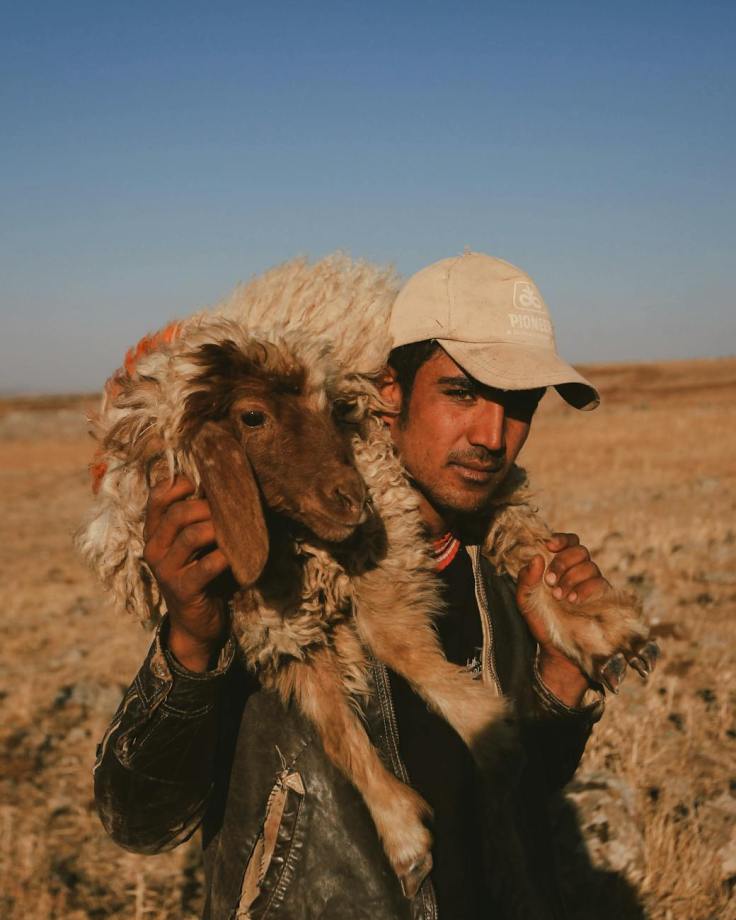
Be Not Afraid

Have you ever anticipated something so wonderful, that, when the time came, you were almost afraid of it? Afraid that the anticipation would exceed the wonder of the actual event? Afraid that the wonder would be eclipsed by some unforeseen tragedy? Afraid that your dreams were too big? That you could never deserve such happiness or blessing?

 That night there were shepherds staying in the fields nearby, guarding their flocks of sheep.  Suddenly, an angel of the Lord appeared among them, and the radiance of the Lord’s glory surrounded them. They were terrified– but the angel reassured them. “Don’t be afraid!” he said. “I bring you good news that will bring great joy to all people. The Savior—yes, the Messiah, the Lord—has been born today in Bethlehem, the city of David!  And you will recognize him by this sign: You will find a baby wrapped snugly in strips of cloth, lying in a manger.” Suddenly, the angel was joined by a vast host of others—the armies of heaven—praising God and saying
 “Glory to God in highest heaven,
    and peace on earth to those with whom God is pleased.”
When the angels had returned to heaven, the shepherds said to each other, “Let’s go to Bethlehem! Let’s see this thing that has happened, which the Lord has told us about.” 
They hurried to the village and found Mary and Joseph. And there was the baby, lying in the manger. After seeing him, the shepherds told everyone what had happened and what the angel had said to them about this child. All who heard the shepherds’ story were astonished, but Mary kept all these things in her heart and thought about them often. The shepherds went back to their flocks, glorifying and praising God for all they had heard and seen. It was just as the angel had told them.” Luke 2:8-20 NLT (Emphasis added)

The shepherds on that first Christmas were terrified– their ordinary night had been shattered by the appearance of an angel of the LORD. And that was only the beginning! The angel announced the birth of Messiah– Christ, the LORD– in the nearby village of Bethlehem. And then an angelic host– a vast army– of angelic beings chose to worship in the skies that, just moments before, had been dark, still, and lonely.
“Fear not!” “Be not afraid!” Through the terror and overwhelming glorious radiance came a calm voice. “I bring good tidings of great joy!” “..shall be to ALL people…” “PEACE on earth!” “Christ is Born!”

The fulfillment of centuries of longing was finally here. The central hope of the entire nation of Israel had arrived. And the angel left no doubt that the shepherds were welcome, even commanded, to GO and see this miracle with their own eyes. The Biblical account says that they did go– but it also says they stopped to discuss it first. They talked it over and decided to face the mixture of thrilling joy and weak-kneed trembling. Could it really be?! The Messiah! Here and now! But…a babe? Wrapped, not in robes of glory, but in swaddling cloths? And…lying in a manger? Surrounded by sheep and donkeys? What if this was a cosmic hoax? What if there was a mistake? Would they be disappointed? Ashamed? Turned away because of their lowly status?

“Be Not Afraid!” The shepherds talked it over. How could they NOT go and see? What if the news was true?! And in going, they became the first ordinary witnesses of the most extraordinary birth in history! They came. They saw. They believed! And they worshipped.

And then, they shared their experience with others. They went back. They probably shared the news first with the sheep, rehearsing how they would spread the fantastic tale to those who still lay sleeping. But they may also have shouted it in the streets, waking up all the neighbors with the joyous news. The Bible doesn’t give us details. But it does tell us that they went back with joy and gladness. And conviction–“It was just as the angel had told them.” Nowhere in the Bible story did they show any more fear. They had no doubt. The wonder of Christ’s birth was everything they had been told to expect, and more!

This Christmas, we look back at the shepherds, and we try to recapture the wonder of that Holy Night, and the visit of the angels, and the discovery of a tiny Savior in a manger. And we will have the opportunity to celebrate, just as the shepherds did.

What will be our response to His coming? Will we spend this season glorifying a praising God? Will we “astonish” our neighbors as we tell about the Savior’s birth, and His subsequent death and resurrection? Will we heed the angel’s calming tones to “Be Not Afraid” as we encounter the Messiah? As we go “back to (our) flocks” and fields and daily life?

I pray that we will “consider well” this Christmas how “our good God” gave us His “beloved Son”– born in a humble manger, willing to die a humiliating death He did not deserve so that we could be free from the curse of Sin and Death. And may we pray for the courage and conviction to live out and speak out the Joy and Glory of His coming!

O Little Town of Bethlehem

O Little Town of Bethlehem


1. O little town of Bethlehem, 
how still we see thee lie; 
above thy deep and dreamless sleep 
the silent stars go by. 
Yet in thy dark streets shineth 
the everlasting light; 
the hopes and fears of all the years 
are met in thee tonight. 

2. For Christ is born of Mary, 
and gathered all above, 
while mortals sleep, the angels keep 
their watch of wondering love. 
O morning stars together, 
proclaim the holy birth, 
and praises sing to God the king, 
and peace to all on earth! 

3. How silently, how silently, 
the wondrous gift is given; 
so God imparts to human hearts 
the blessings of his heaven. 
No ear may hear his coming, 
but in this world of sin, 
where meek souls will receive him, still 
the dear Christ enters in. 

4. O holy Child of Bethlehem, 
descend to us, we pray; 
cast out our sin, and enter in, 
be born in us today. 
We hear the Christmas angels 
the great glad tidings tell; 
o come to us, abide with us, 
our Lord Emmanuel! 

Words by Phillips Brooks


Micah 5:2 English Standard Version (ESV)
2 But you, O Bethlehem Ephrathah,
    who are too little to be among the clans of Judah,
from you shall come forth for me
    one who is to be ruler in Israel,
whose coming forth is from of old,
    from ancient days.

God’s ways are not our ways.
I grew up in a tiny village in Michigan, and when we used to sing “O Little Town of Bethlehem,” I always imagined a similarly tiny town, draped in silence in the dead of night, sleeping right through the most glorious and stunning event in history.  It wasn’t difficult to imagine the same thing happening in my sleepy village– Christ could have come to any of a dozen sway-backed sheds or garages around town without fanfare as hundreds of strangers crammed into local houses and public buildings, eager to be done with a bizarre census that led them back to where their ancestors once lived.  There is nothing special about my hometown to anyone but those of us who grew up there.

Bethlehem was just such a small town.  Prophecy that a king would arise from such a backwater village was mostly ignored.  Four hundred years had passed since the last mention of Bethlehem by God or any of His prophets.  No one expected a miracle there, just as no one would expect a miracle in our little town today.

We expect big things to happen in big cities– bustling, surging, modern, energy-filled cities.  This is where grand events are held– political rallies, sold-out concerts, championship sporting events, groundbreaking new developments in business and medicine, coronations and ceremonies.  But God often works in the quiet spaces and unexpected places of our world and in our lives.  He comes softly and silently into the dark corners and forgotten nooks filling them with His glory.

And He gives us the privilege of sharing in this miracle– wherever we are, whoever we are, whatever our circumstances.  Christ did not spend most of His life on earth in the halls of power or the centers of commerce.  He didn’t “tour” the university circuit giving lectures, or fill great auditoriums while His image was splashed across a Jumbo-tron.  He walked humbly from small village to small town, spreading truth and love and drawing people to Himself, that they might believe and find true life.  He modeled how we can extend His grace– starting with those in our own small towns or neighborhoods–with simple acts and earnest prayers like the ones in this song:
“Cast out our sin, and enter in, be born in us today.”
“Oh, come to us, abide with us, our Lord Emmanuel.”

How Must I Pray for My Enemies?

We are commanded to pray for our enemies. This is not an easy command to understand, let alone follow. Should I pray for the destruction of my enemies? Or should I pray for their success? Surely, God doesn’t want me to pray that they will continue in evil or succeed in corruption and destruction. So where is the balance? What does God want from me?

I wish I had a simple answer, but I don’t. The Bible, however, gives us several examples and guidelines. There are things we should pray for, and things that we need to give over to God.

DO pray for the following:

  • Pray for the protection of your enemies– protection from their own folly, protection from the temptations and wiles of the enemy, etc.
  • Pray for them to choose repentance and accept God’s salvation through Jesus Christ.
  • Pray for their physical, emotional, and spiritual needs. Is your enemy hungry? Suffering from grief or loneliness? Do they have cancer? Are they blind to God’s Grace because they have followed false teachers or doctrines? Pray for their health in all areas and be willing to offer practical help when possible.
  • Pray for their families.
  • Forgive them–pray for the strength to forgive and to let go of any bitterness or resentment against them for past wrongs or current actions.
  • Pray that God will bring peaceful resolution–and be willing to do whatever you can within God’s will to help bring that about.
  • Pray that God will bring Justice–not personal revenge for you. Pray that God will, in His way and His timing, uphold what is righteous and wholly just.

DO NOT pray for:

  • Their destruction. If they are not following Christ, they are already on the road to destruction! Praying for their death, or physical harm is not Biblical. This does NOT mean that we cannot pray that their deception should be exposed, or their power over others for evil should not be stripped away. Remember, our “enemy” is not the person or persons involved, but the EVIL they represent. If you are tempted to pray for someone’s death or wishing them to get cancer or cheering on those who would hurt them, YOU are just as guilty of grieving the Holy Spirit as they are!
  • Their triumph. “Praying for your enemy” is not the same as cheering them on. Forgiving them is not the same as praying that they get a “free pass” on past behavior.
  • God to “make” them change. God desires that we choose to follow Him. Pray instead that God will bring opportunities for others to want to seek Him, and to choose repentance.
  • Them to apologize, grovel, or be humiliated so that you can feel better. God MAY cause any of those things to happen, but we should not demand our own importance over God’s Grace.

Along with these guidelines, we should remember that we must treat everyone with respect and love. But that doesn’t mean that we compromise on the truth. Many of “our” enemies are really in rebellion against God and His Word. We can continue to love and respect their humanity and their need for compassion without condoning their behavior or accepting as valid their false narratives.

David spares Saul’s life in the cave (1 Samuel 24)

King David often prayed about his enemies. And some of his prayers may seem like the ones on the DO NOT list above. David often prayed that his enemies would be vanquished; that their names would be blotted out, or that they would fall victim to their own traps. But David also refused to harm his arch-enemy King Saul. Though God had promised that the kingdom would be taken from Saul and given to him, David refused to kill one who had been anointed as king of Israel (see 1 Samuel chapters 24 and 26). David killed many men in battle, and he committed murder in ordering the death of Uriah, but he showed kindness to Saul’s family, rather than punishing them (2 Samuel 9). God punished David for murder, but He blessed David for showing compassion to his enemies.

Jesus prayed for His disciples– that they would grow in Love and Grace. He instructed them to pray for those who have hurt them (Matthew 5:43-48). He never prayed for the destruction of the Pharisees or the Roman oppressors who caused so much suffering in Judea. Instead, he healed the son of the Roman official (see John 4:46-54) who asked for help. Even when the mob came to arrest Jesus in the garden before His crucifixion, He healed the ear of the soldier, after Peter cut it off trying to defend Him. And on the Cross, Jesus prayed that the father would “forgive them, for they know not what they do” (Luke 23:34)

Stephen, as he was being stoned, prayed for the forgiveness of his killers. Saul, who became the Apostle Paul, would have heard this prayer as he stood guarding the coats of the assassins. Throughout the epistles, we are reminded to pray for our enemies, AND to do our best to live in peace with them. (Romans 12:18; 1 Timothy 2:1-3; see also 2 Peter 3:9)

It is very tempting to want God to step in and do what we want– bring instant justice and punishment to those who harm us. But that is NOT God’s will. It IS His will that we should trust HIM to bring about true justice and to bring others to repentance. Including our “enemies.”

Push and Pull and Prayer

Many years ago, I watched the movie, Dr. Doolittle. (This was the old version with Rex Harrison, long before Eddie Murphy or Robert Downey Jr. starred in the more recent remakes.) I can still remember the wonder of seeing a “Pushmi Pullyu– a quirky, mythical-type creature that looked like a conjoined llama. It had two heads and two sets of front legs pointing in opposite directions. If one half of the creature wanted to run forward, the other half would have to try to run backward. It was large, awkward, timid, but rather useless for working, herding, etc.

Then, last week, as I was entering the ladies’ rest room at church, I was astonished to find it opening with only the lightest of touches. Just as I tried to push open the door, someone on the other side was pulling it open on her end. Both of us commented on how easily the door swung open as I pushed and she pulled at the same time. We didn’t plan it– we couldn’t see the other person helping us along– but the result was worthy of remark.

There are many things in life that have a push and pull element, including prayer. When we push and pull in opposite directions, awkwardness, complications, and chaos can be the result. How many times have I prayed very specifically for a desired result, only to find that MY will, MY timing, and MY wisdom is NOT the same as God’s?! God still hears– and answers– my prayers. But my expectations and desires cause me to be frustrated and even ungrateful for God’s response. Instead of seeing His protection and provision, I see only delay or denial. I’m trying to push God in one direction as He pulls me in another!

How much easier when I pray for God’s will to be done “on earth as it is in Heaven!” (Matthew 6:10) When I truly push in God’s direction, doors open and peace wraps around me like a comfortable blanket. I may not “see” God’s actions on the other side of the door, but I can sense His presence in a remarkable way!

The same is true when asking for prayer from others. Sometimes, we refuse to ask for help or prayer– maybe we’re too proud; maybe we are too ashamed to admit our weakness or need; maybe we just isolate or withdraw. At other times, we may ask for help (or offer help) that is contrary to what we (or others) really need. I remember one friend from college who would consistently ask for advice, only to come up with dozens of excuses why she couldn’t (or wouldn’t) follow any of it! And I’ve been there, too!

Praying with and for others is a great privilege and responsibility. It is not enough to simply listen to a quick request or make an offhand promise to “pray about it” later. It is important to listen carefully, show compassion, and pray according to Scripture and God’s will. Showing compassion may involve asking questions, getting some background about the circumstances, offering practical help, or stopping to pray WITH the person NOW as well as praying later.

Thankfully, prayer is not meant to be like a Pushmi-Pullyu. God designed prayer to be much more than a means of asking for help. And His power is designed to help us become “more than conquerors” (Romans 8:37). In fact, the Apostle Paul reminds us that God is “able to do exceedingly, abundantly, above all that we ask or think, according to the power that works in us” (Ephesians 3:20)

“Seeing” Answered Prayer

God always hears our prayers. He always has an answer. But it isn’t always the answer we expect. Sometimes, God answers, “No,” or “Not yet.” Sometimes, He answers in ways that seem confusing and mysterious, and even ironic.

I remember as a young teen praying for a woman in the community who had lymphoma. In treating her condition, the doctors, trying a new experimental treatment, did permanent damage to certain muscles, leading to a progressively debilitating condition. She died a slow and painful death, unrelated to her original condition. Where was God? How could He listen to our prayers and give such a cold, cruel answer?

But God sees a bigger picture than we do. This precious woman had incredible faith and grit. She had spent years working diligently to help others and teach God’s Word. She continued her work, even in the midst of her health struggles almost to the end of her life. What might have caused some people to turn their backs on God made her more dependent on His Grace. She faced her pain and weakness with grit, strength, and hope in God’s eternal healing. God’s answer wasn’t to rescue her from the suffering, but to be present in it with her. And her example lives on to this day.

Some people would read about this and be dismissive. What a cop-out! What a delusion! But there is much more to her story than her own condition or even her response. One of the men in our church really struggled with God’s seeming indifference. He wrestled with his own faith for many months while watching her get weaker and weaker. But through his struggle, he grew in his conviction that God was present in every situation. He was inspired to do short-term mission work, partly as a result of this growth. Knowing that God would be with him, he threw himself into loving people from a different culture–different climate, different language, different work ethic– and helped build churches and other facilities for those in need. Many people were helped, inspired, and encouraged because of his dependence on God– a dependence enhanced by facing his own questions and doubts.

Family members and community members, watching her struggles, were inspired to pick up where she left off– working and teaching and reaching out to others with zeal and joy–following her marvelous example. Today, some of her family members are leaders in their churches, raising the next generations of witnesses to God’s mercy and power. Doctors, having failed in her treatment, learned from it– a difficult lesson for all, but a lesson, nonetheless. Her joyful attitude (before and during her struggles) inspired me to direct the Vacation Bible School program at our church for a few years, and to teach Sunday School when I moved to a new location. And those are just a few of the ways I have “seen” God’s answers to our prayers. God did not give our friend the physical healing we wanted. But her struggles– and her response of faith and perseverance–inspired a ripple effect far beyond her own pain and disappointment. And she has received the ultimate healing! Her pain, intense and unjust as it was, was only temporary. Her life, her legacy, her joy– they all live on!

How often do we look at a situation and think we know what is “best?” How often do we feel that God’s answers are “wrong?” Wrong timing, wrong outcome, full of hardship or pain– how can this be God’s “perfect” will for us? There was nothing about this woman’s situation that was comfortable; no reason to see a good outcome for her or her immediate family. She died. She experienced pain, with no earthly justice. Her suffering was undeserved and unmitigated. She refused to sue the hospital or the doctors– she wanted them to be able to continue to learn from her experience so they could help others NOT to suffer in the future. But her life was shortened and made grueling in the process, and she received no payout, no financial compensation, no symbolic reparation for her sacrifice. We received no “miraculous” answer to our prayers. It seemed at the time that the more we prayed for healing, the worse her condition became. We continued to pray anyway, knowing that God DID hear us, and God’s ways were not our ways– they are always better. Even when His ways seem like silence.

This all happened several decades ago, and many of the “answers” from our urgent prayers are still hidden from our eyes. Many of our questions remain unanswered. But God’s will is still active, even in these tragic circumstances. Someday in Heaven, it may be revealed to us exactly how God used this woman’s life and struggles to bring about blessings to hundreds of other people– causing them to grow strong through her weakness, drawing them to His healing and wisdom in a world of pain and confusion.

I have lost many friends to cancer. I pray for each one, and the outcomes are never exactly the same. Some go into remission, only to have the cancer return three or four years later. Others get amazing healing– surgeons are astonished and perplexed by the rapid or miraculous disappearance of cancer cells. Some go into fast decline and die almost immediately after their diagnoses. And each situation impacts people in different ways, showing God’s power and presence for those who are willing to look for them. Prayer isn’t a magic formula for immediate and total healing. Prayer is lifting up a situation that is beyond our control or understanding and trusting that God has a perfect plan beyond what we can see or understand. Cancer cannot take God by surprise. Death cannot outwit or overpower God. We live in a world where Evil can overwhelm us; our bodies can betray us; our future can be lost in the fog of uncertainty and suffering. But God is present– not only IN our suffering, but ABOVE and BEYOND our suffering.

We don’t pray for our friends and loved ones to suffer. We want them to be healed, to be free of pain and grief; to be at ease and blessed with abundance. This is normal; it is good. God wants to bless us. It doesn’t bring Him joy to watch us suffer. But He also wants us to see the blessing of His presence, His wisdom, and His power. Sometimes, we can’t see that as we look around. Sometimes, we need to look up! Even from a hospital bed (see John, chapter 9). Even from the flames of suffering (see Daniel, chapter 3). Or from the belly of a whale (see Jonah, chapter 2). And we will find that God is there.

What a Wonderful World

Years ago, Louis Armstrong recorded a song, called “What a Wonderful World.”  Video and lyrics here.  It’s a pleasant song, pointing out all the wonderful things to see and hear in the world around us…people sharing greetings, day and night, rainbows, children…but it is also a wistful song.  Armstrong sings it as an observer, more than a participant.  He sees all the wonder of the world around him, and he sees hope for the future.  The flowers and rainbows are there for all to see; but the greetings are not for him; the children are not his and will surpass him in knowledge and opportunity.

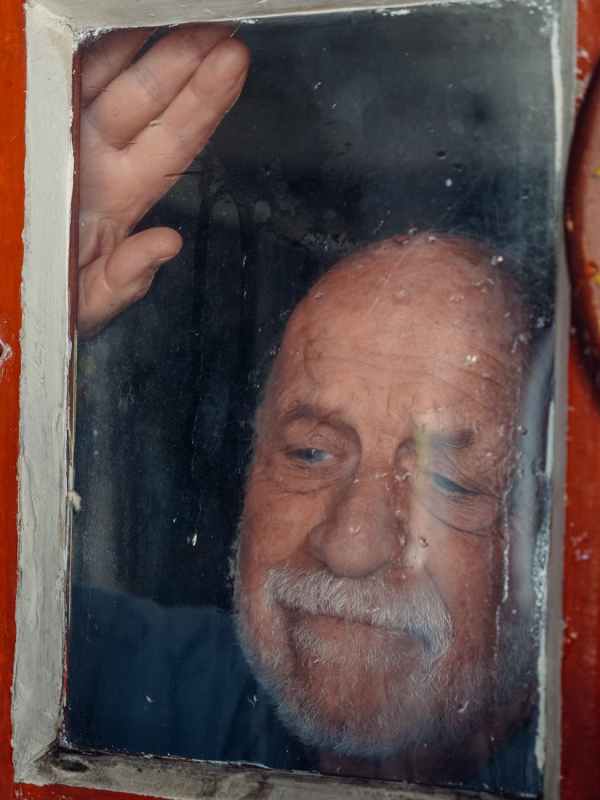
man beside window wearing black jacket

I could name a dozen other songs or poems with similarly ambivalent messages; songs about smiling, hiding one’s tears, hoping for tomorrow and happy days returning.  Such songs acknowledge that our world is filled with wonder, beauty, and joy; they also acknowledge that sprinkled amid the wonder there is heartache and disappointment.

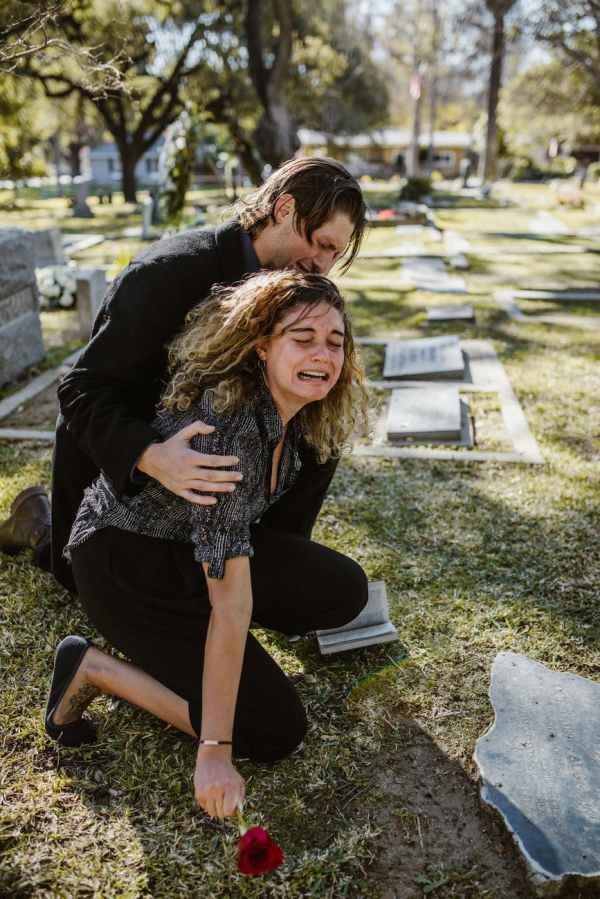
city man person people

It is tempting in times of hardship to focus on the negative and miss the wonder that still exists around us.  It can also be tempting to resent the joy others experience as they soak in the wonder that seems to taunt us.

Some people ask, “How can you believe in God when you see all the pain and suffering and evil in the world?”  And others answer, almost flippantly, “How can you doubt God when you see all the beauty and grandeur in the world?”  To someone who is in pain, this is the kind of answer that rubs salt in open wounds.  It’s not that the answer lacks logic or merit, but it is devoid of compassion.

The truth is, that even in the midst of extreme suffering, we DO live in a wonderful world.  The sun still shines, there are still rainbows, and happy children, and, most of all, HOPE.

The Bible speaks of hope as one of the “remaining” virtues– Faith, Hope, and Charity (or Love).  We hear this, and study it, and recite it, but do we really appreciate it for the wonder it is?  Hope may fade in the midst of chaos, but it is not easily suppressed or smothered.  Hope gives us strength when we are struggling; it gives us a reason to look up from the ashes and see the sun.  Hope gives us the motivation to work and build after a disaster; to risk new adventures; to plan for a future.

adult bridal bride brunette

Our world needs hope–we need encouragement to reach out; to build and rebuild our communities; to look forward with vision, and set goals to reach that vision.  And we need hope to turn our eyes to the source of that hope– for we do not hope in vain!

big wooden cross on green grass field under the white clouds

Our Hope as Christians is based on God’s eternal faithfulness. God has given us promises– promises that He will keep, just as He has kept all His promises in the past! Our hope is solid. Our Joy is not dependent on what “may” happen in the future. Even in our fallen world, God is wooing us with wonder, beauty, joy, and HOPE.  It IS a wonderful world! But it pales in comparison with what is to come. What we will find in the redeemed world is beyond our wildest imagination.

“For this light momentary affliction is preparing for us an eternal weight of glory beyond all comparison, as we look not to the things that are seen but to the things that are unseen. For the things that are seen are transient, but the things that are unseen are eternal.” 2 Corinthians 4:17-18 (ESV)

Too Proud to Pray About It

I had a small habit.
Not a horrible addiction,
Or a life-threatening compulsion.
Just a little thing.
No need to pray about it…

I had a toothache.
Just a small one.
I made a dental appointment.
No need to pray about it…

My boss was giving me a hard time–
She “had it out for me.”
She was wrong, of course.
Everyone else said so.
No need to pray about it…

Finances were tight last month.
We were just a few dollars short.
No big deal.
Some bills were paid a little late.
No need to pray about it…

My son is having a hard time at school.
There’s a bully in his class.
I spoke to the teacher.
I gave him advice.
I told him all about the bullies I had faced.
Bullies I had dealt with and overcome.
No need to pray about it…

“Pray without ceasing.” (1 Thessalonians 5:17)
“Cast all your anxiety on him because he cares for you.” (1 Peter 5:7)
 “Do not be anxious about anything, but in every situation, by prayer and petition, with thanksgiving, present your requests to God.” (Philippians 4:6)
“Look to the Lord and His strength: seek His face always.” (1 Chronicles 16:11)
“May my prayer be set before you like incense; may the lifting up of my hands be like the evening sacrifice.” (Psalm 141:2)

God is not so far away
That He does not know my every need.
The “small” things I keep from Him
Keep me from seeing
Just how close He really is…

“For though the Lord is high, he regards the lowly,
    but the haughty he knows from afar.” (Psalm 138:6)

“Praying” Favorites

There is a very dangerous mindset that many Christians fall into– that somehow, God has “favorites” among His children. That He listens to and answers prayer for certain people “better” or more often than others. As someone who has pursued a lifestyle of prayer for more than fifty years, I can categorically state that this is false. Time after time, the Bible teaches us that God does NOT play favorites. He listens to each of us and loves each of us with a boundless and eternal Love!

Yet, I often hear people say, “Please pray for me. You are a prayer warrior. God will listen to you.” Is this wrong? Is it wrong to ask others to pray for us?

Of course not. And it is good to find other Christians who are devoted to praying for others. We ARE “prayer warriors!” But that doesn’t mean that God listens to any of us more than anyone else, or that some prayers are somehow better or more powerful than others.

There are three aspects of this mindset that I think are particularly dangerous:

First– we can feel that our prayers are not important; that they are not “good enough.” Satan loves to have us wallow in our inadequacies and focus on our faults and shortcomings. Maybe I have trouble finding the “right” words when I pray. Maybe I don’t feel comfortable praying aloud in a group. And I hear someone else who sounds eloquent and polished. While that may impress or intimidate me, it cannot make a difference to God! NONE of us is “good enough” to impress God! He loves to hear from each unique and precious child! If we believe that God somehow has “favorites” in prayer, we will believe that He has favorites in other areas, too. That our gifts aren’t as “holy” as someone else’s, or that our faith depends on us working harder or doing “more.” And this is idolatry–saying that God’s grace is not sufficient for Him to accept us and bless us without some extra effort on our part.

Secondly– we can feel that prayer is for “other” people. If there are special people whose prayer lives are strong, then we can let them do the “heavy lifting” of praying, while we concentrate on giving or preaching, etc.. We SHOULD develop the particular gifts that God has given us– that is true– but prayer, just like spending time in worship, studying God’s word, practicing fellowship, and showing grace, is something everyone should be practicing. The Apostle Paul compared the Christian life to being an athlete or a soldier. We are ALL in training and part of a team. Prayer is not specialized training– it is basic and fundamental to the Christian Walk.

Finally–“Prayer Warriors” are fellow workers, not specialized saints. Some people practice prayer because they have more time to do so. Many of those who are considered “prayer warriors” are widows or widowers, retired, or even bedridden. Many of us are prayer warriors for a season. When we believe that God has “favorites” in prayer, we may elevate them beyond what we should. Once again, Satan loves to have us compare ourselves with others, rather than focus on how we can each serve God.

There are some Bible verses that speak to this, and many of them, taken out of context, can reinforce the wrong mindset. For example: James 5:16 says that the “fervent effectual prayer of a righteous man availeth much.” But the context is that of people praying for one another, not a single man doing the praying. It says more about passionate and persistent prayer than any identity as a prayer warrior among other “lesser” pray-ers.

First John 5:14 says, “This is the confidence we have in approaching God: that if we ask anything according to his will, he hears us.” That applies to any of us!

“The Lord is near to all who call on him,
to all who call on him in truth.” Psalm 145:18

“Call to me and I will answer you and tell you great and unsearchable things you do not know.” Jeremiah 33:3

“Let us then approach God’s throne of grace with confidence, so that we may receive mercy and find grace to help us in our time of need.” Hebrews 4:16

“But when you ask, you must believe and not doubt, because the one who doubts is like a wave of the sea, blown and tossed by the wind.” James 1:6

“If you believe, you will receive whatever you ask for in prayer.” Matthew 21:22

There are only two things that the Bible says about “better” or more effective prayers. We must pray in FAITH, and in OBEDIENCE, (or praying within the will of God). NOTHING else is required for God to listen and respond. We are all “prayer warriors.” Prayer is part of our warfare against the enemy. And while it is wonderful to come together and know that others are praying for you, it is also important to remember that God has no favorites. His Grace, Power, Protection, and Love are equally available to anyone who asks in faith! There may be millions of pray-ers, but only one Sovereign, All-Powerful, Majestic and Loving God!

The Weight of Prayer

Have you ever carried a burden that just got heavier each minute? Some pressing need, or a load of guilt and shame, or an unresolved issue that has been hanging over you for years with no relief. Sometimes, prayer is very heavy. It is a sacrifice, and a burden to keep praying for an unsaved loved one, or to fully confess the shame you have carried for years. Your needs (or the needs of loved ones) can push down on your spirit and make it difficult to even want to pray. Pain, grief, or persecution can cause you to shrivel up inside and even though you want to pray, you just can’t seem to find the words.

But oh! The relief of carrying our burdens to the throne of Grace! God may not give us immediate relief from the burdens of pain and suffering, but He will come alongside and shoulder a God-sized portion of our load. He has promised this. Jesus Himself said, “Come to me, all you who are weary and burdened, and I will give you rest. Take my yoke upon you and learn from me, for I am gentle and humble in heart, and you will find rest for your souls.  For my yoke is easy and my burden is light.” (Matthew 11:28-30 NIV)

Not only will God come alongside us as a result of prayer, His Spirit will help us in our weakness and inability to express our deepest emotions. “Likewise the Spirit helps us in our weakness. For we do not know what to pray for as we ought, but the Spirit himself intercedes for us with groanings too deep for words. And he who searches hearts knows what is the mind of the Spirit, because the Spirit intercedes for the saints according to the will of God.” (Romans 8: 26-7 ESV)

I have found this to be true through experience. And I have also found great relief when I can share my burdens with other Christians and know that they are praying for me and for my loved ones. One of the greatest burdens we can bear is that of isolation and hopelessness. Finding a trusted group of fellow believers can ease the pain of bearing such burdens alone. Often, Christian friends can offer limited practical help for immediate needs or provide counseling and wisdom in our next steps. Two words of warning– no group of friends, even Christian friends, can substitute for God. Friendship should not substitute for prayer and Godly wisdom. And true friends will always point you to God rather than trying to fix everything in their own power and time frame. A true friend will not only share the “weight” of your burden, but also the “wait” for God’s answer! Secondly, “sharing” is not the same as rehearsing the same guilty secrets over and over for attention, shock value, or entertainment. It is not gossiping about the same horrible boss or nosy neighbor you can’t seem to forgive or lamenting over all the things you might have done differently as a parent (or spouse or co-worker) last week.

Prayer is deep. It is heavy. And it is powerful. But it can also be freeing, removing the burden of worry, shame, guilt, and isolation. We may enter prayer with groaning and exit with praise! God inhabits our prayers! He is with us in the groaning and in the struggle. He sends us friends and “angels unaware.” And He remains with us in victorious celebration. He provides comfort, strength, and peace as we lay our burdens down. He provides companionship, help, and hope as He shares the weight of whatever we bring to Him.

Don’t “wait” to share your burdens. Let God do the heavy lifting!

Words Are Not Enough

When tragedy happens, words are not enough to bring justice, resolution, and immediate peace to the situation. “I’m so sorry,” or “I’m here for you,” or “I’m praying for you…” In themselves, the words have no power to change circumstances. Words cannot bring back a lost loved one or undo a fire or earthquake or violent attack.

Yet, when we say that we are sorry, or that we are “here,” or that we are praying, we are offering more than just the words we speak. We are offering to share someone’s grief; to help in practical ways that can ease even some of the suffering; to call attention to God’s presence in every situation, no matter how dire.

Prayers are more than just the words we speak. In Romans 8:26, the Apostle Paul says, “We do not know what we ought to pray for, but the Spirit himself intercedes for us through wordless groans.” Prayer often involves our entire being– body, soul, mind, and spirit–as we bow our heads or lift our hands, sweat, groan, go through a range of emotions from grief to praise, and try to express our heart cry in muddled words.

But prayer is not about US. It is not about our words or our emotions or even our desires. Prayer is about staying connected to God. In ourselves, we will always be insufficient. We may be able to take actions that will help others (or ourselves) achieve some measure of relief or understanding when things go terribly wrong. But we cannot bring complete justice; we cannot reverse what has already happened; we cannot guarantee outcomes. In prayer, we give outcomes and justice to the Only One who can bring true healing, justice, and peace out of our tragedies. We give up on the idea that our own thoughts and actions can overcome all the things that are beyond our control. And we lift up our questions, our fears, and our deepest hurts, with whatever measure of Faith we have, to the one we trust to make all things right. And we relinquish the idea that God MUST give us what we desire in the moment to believe that He gives us what is best according to His eternal plan.

Prayer isn’t simple. It isn’t a “cop-out.” It is a sacrifice. God may never answer our desire for an explanation, or for revenge in this life, or for a re-instatement of all that we think we deserve. But prayer connects us to the Sovereign Heart of God. Prayer doesn’t change our circumstances. It changes the way we respond to them. It changes the way we see ourselves and our own limited power. It changes the way we see others– even those who would harm (or have harmed) us.


Words are not enough– but Prayer taps into the all-sufficiency of God. That is more than enough. And the more we pursue and practice Prayer, the more we will understand its power and sufficiency.

Blog at WordPress.com.

Up ↑