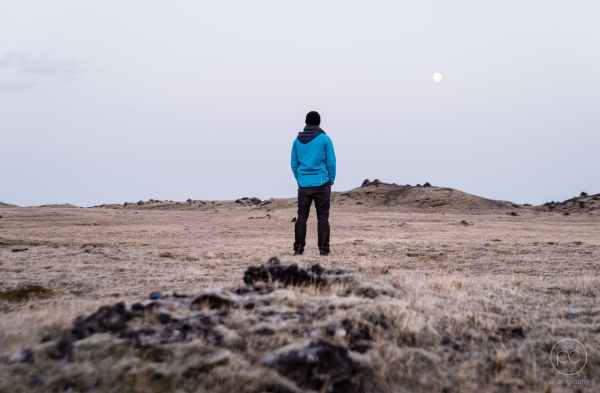
Wealth in the Wilderness

In Exodus, chapter 16, the people of God are wandering in the wilderness of Sin (literally and figuratively!). They begin to grumble and complain about food, contrasting their current situation with their life in Egypt. Whenever I have read this passage in the past, I have assumed that the Israelites lacked food– that they were starving in the desert–and that their grumbling had some merit. After all, they are in a desert. Their complaints about water make sense. Surely, their complaints about food have the same ring of desperation.

Photo by Yogendra Singh on Pexels.com

But a few chapters earlier, and a few chapters later, we get a better picture of the true situation of these wandering bands of Israelites. As they left Egypt, they demanded from Pharaoh that they be allowed to take their flocks and herds! This would suggest that they had sheep, cows, and goats with them–meat and milk in some quantity. They may have had other animals as well– chickens, pet dogs or cats, oxen or horses. The need for water was greater– not only water for the people, but for their animals– but the complaint about meat seems to have had nothing to do with actual need. If anything, their complaint might have been about grazing land for their animals– but they never bring this complaint before the Lord. Either there was enough grass, even in the wilderness, or they had brought grain to feed their flocks. And there was grain for bread–just a few short chapters later, God gives directions for the sacrifices– sacrifices that are to involve rams, bulls, and three different types of bread, cakes, and wafers made with wheat flour!

Photo by Mariana Kurnyk on Pexels.com

The Israelites have provisions. They have taken enough food for the journey up to that point, and more. They complain, not that they ARE starving, but that they believe they will starve. God answers their complaint by sending quail– enough that they got sick of it– and bread from heaven (manna). The manna continues to fall without fail every day (except the sabbaths) for 40 years, throughout all their moving; in every location and season, on rocky mountainsides and dusty plains.

Photo by Sravan Chandran on Pexels.com

God’s amazing and miraculous provision should have produced thanksgiving and worship. Instead, the people got sick of the quail, and continued with their complaining and grumbling for an entire generation as they wandered around the wilderness.

Photo by Ken Ozuna on Pexels.com

How many times do we complain about “needs” that are not needs at all? I find myself worrying about bills getting paid, or the car making “odd” noises, or an aching shoulder. I find myself thinking back to days when I had more money or free time, and far fewer aches and pains. It is tempting to ask God for a return of “the good old days.” But God’s plan for the Israelites didn’t involve pots of meat that came with chains attached. God’s plan for my life doesn’t involve my immediate comfort, but my eternal character. And even in times when I feel like I’m wandering in the wilderness, God never leaves me. I have been poor, but I have not starved. I have been sick, but not left to die alone. I have been lost, but never abandoned.

Photo by Pixabay on Pexels.com

There is wealth in the wilderness–the riches of God are available to those who will trust Him. Like manna, God will provide what only He can, and enough to see us through each day. He doesn’t promise that we will have “pots of meat” or easy circumstances. Instead, if we open our eyes, we will see miracles of grace, showing us how much God loves us and cares for us.

Photo by Irina Kostenich on Pexels.com

God’s people complained a lot, but rarely did they celebrate God’s provision or offer thanks. May we learn from their story, and praise the God who sends quail and manna to the very ones who doubt His mercy and love!

Leftovers

As I type this, I am eating leftovers. I made a big pot of beef stew the other night, and we’re making another meal out of what was left. Some things, like beef stew, often taste just as good (or even better) warmed up again. And it’s very convenient not to have to make a new meal from scratch. We like leftovers, and I am very thankful that we are able to have an abundance of good food. But today’s leftovers started me thinking…

Photo by SenuScape on Pexels.com

Did you know the Bible has something to say about leftovers? I’ve been reading in Exodus and Leviticus lately, and as God was giving instructions for the Passover Seder, the gathering of Manna in the desert, and the priestly sacrifices, He spoke about leftovers. During the Passover, all the meat was to be eaten on the night of the Passover Seder. Any meat left over was to be thrown away. Several families could share a Passover meal, in order to avoid waste, but the meat was to be eaten in one meal. Similarly, Manna was to be gathered and eaten for a single day (except over the Sabbath). No leftovers! The priests were allowed to eat leftover meat for a single day after the sacrifice, but no more than that.

Photo by SHVETS production on Pexels.com

So often, the “rules” of the Old Testament seem strange to us– arbitrary and even harsh. But in context, they paint a picture of God that we would do well to study. So what do the rules about “leftovers” teach us about God and our relationship to Him?

  • First, God knows what we need. We may often plan too much or too little, or use more or fewer of our resources, but God knows exactly what is necessary. And if we are listening to and trusting God, we can be sure that His plans and resources are sufficient!
  • Secondly, God PROVIDES what we need. Our tendency to store extra food and other resources “just in case” may be motivated by a sincere desire to help our neighbors in times of trouble– there’s nothing wrong with that– but often we are motivated by fear or pride, instead. We fear not having enough, instead of trusting God to provide. Or we pride ourselves on our ability to provide, rather than acknowledging that our resources and abilities all come from God.
  • God’s ways are NOT our ways. God sent the entire nation of Israel into the wilderness. They had all their animals with them– but no place to plant, grow, or harvest wheat or other grain. God could have ordered them to slaughter their animals for meat, or sent them with huge stores of harvested grain, or led them through areas with gardens and orchards. But instead, He sent Manna and quail for them to eat. He provided in ways that they could NOT.
  • God’s mercies (and provisions) are “new every morning.” (Lamentations 3:22-23) God doesn’t give us the “leftovers” of His abundance. He lavishes us with Love and Grace. Every day!
  • God isn’t impressed with my “leftovers.” My leftover offering; my leftover time spent in prayer or Bible Study; my leftover interactions with others, my leftover discipline.
Photo by Foss Valentine on Pexels.com

And that brings me around to prayer and giving. Do I give God my “leftover” praise and thanks? My “leftover” confession (after I’ve pouted and argued and justified by actions to myself)? Do I lift up “leftover” requests–those things I think I’m “supposed to” pray about, but not those I judge unworthy of MY time or attention? After all, would I want God’s “leftover,” absent-minded help? Would I want His half-hearted blessing? Do I give “leftovers” to my family, friends, and neighbors? Or mere scraps to those in need?

The other day, I was on Facebook, and one of my friends requested prayer. It was something I felt was a trifling situation, and I scrolled past her post. But then I realized that I was scrolling past an opportunity to join God in what He would do for my friend. It might not have felt like a big deal for me, and certainly it wasn’t beyond God’s ability to work in that situation. Why did I hesitate? Did I feel I had the right to judge either my friend’s motives or her situation? Did I think I could lift up a “leftover” prayer– “God, help _________. Amen.” I stopped, scrolled back and took a moment to lovingly lift her up, and pray that God would intervene in her situation and forgive me for presuming to judge.

Leftovers are not “bad” or “wrong” in and of themselves. They are blessings. But we should not live on “leftovers”– especially when it comes to our relationships with God and others! Like God, let our mercies be “new every morning,” and let us share gladly from the abundance God has given, not grudgingly or half-heartedly.

Photo by Andrea Piacquadio on Pexels.com

The Chimp and the Typewriter

I’m really not sure at all how this post relates to prayer, but it is a subject that’s been stewing in my brain for awhile, so I thought I would “write out” my thoughts.

I have long been disgusted with a certain argument used by those who discount Creation (by a supreme God with intelligent design and purpose as put forth in Scripture). Their claim of a universe that is the result of a series of random accidents is compared to a chimpanzee with a typewriter. Supposedly, given enough time, there is a possibility that the chimp could “randomly” type a masterpiece– a Shakespearean play or the text of the New Testament.. It is a very tiny probability, but, the argument goes, enough of a probability to suggest that the universe came about in a similarly unexpectedly random way. The proponents of this argument always seem to leave their chimp typing away, convinced that their argument is unassailable– that they can drop the mic, walk off stage to the thunderous applause of their peers, and sit smugly back while creationists pick up their jaw from the floor and stammer in defeat. (To further explore how this analogy works, see https://www.npr.org/sections/13.7/2013/12/10/249726951/the-infinite-monkey-theorem-comes-to-life)

I’m flabbergasted that this argument still gets any credence. It is laughable in its illogical assumptions and disregard for the complexity and wonder of Creation. AND it refutes its own basic assumption– that of randomness. Let me break it down:

Photo by lil artsy on Pexels.com
  • First their example is NOT random at all. And, once true randomness is introduced, the idiocy of the argument is obvious. What if we replace the chimpanzee with any other random animal? A hedgehog. A butterfly. A hippopotamus. A fish. What is the probability of any of THEM typing a masterpiece? None. The theory hangs on the mathematical principle of probability theory, but probability rests, not on random unknowns, but on specific factors and specified outcomes, i.e. an agent (such as a chimpanzee) with the ability to use a specific type of tool (such as a keyboard) to produce a certain outcome (such as a specific phrase or work of literature).
  • The same thing applies if we replace the typewriter. Oh, modern arguments have replaced the typewriter with a computer keyboard– in fact computer models have even been tasked with trying to figure up the most likely probability percentage of this “random” event. But what if we take away the keyboard filled with letters, and give the chimp a crayon of a ball point pen. What chance then of the simian “creating” a work of fiction or a sacred book? As soon as it becomes apparent that the “probability” of such random factors producing a specific outcome is not just tiny, but non-existent, the analogy becomes ludicrous.
  • Finally, we don’t have random literature. Generally, we have “Hamlet.” But barring that, we have “random” works by Shakespeare, or Milton, or the King James Bible. The chimpanzee doesn’t have an Arabic keyboard. It never seems to type out classic works in Chinese literature (though it “could” in theory, I suppose). What we have is a very specific example of a single creative act that “might” statistically be “produced” (see the discussion on this below) given an infinite amount of time. And it is a visual image that our brains are tricked into thinking of as a “possible” outcome of random chance.
  • But it is not just the absence of true randomness, but the absence of reality that distresses me. The proponents of this argument not only want us to assume that the chimpanzee CAN type out a masterpiece, but that it WILL type out a masterpiece. On what theoretical plane is it logical to assume that the average (or even above-average) chimpanzee will spend any length of time pounding away at a keyboard to produce literature? To what purpose? Why should it? Or that the typewriter will never “jam” or run out of ribbon; or that a word processor will never experience a “glitch” or lose power, or have enough memory to store all the “failed” attempts. Will “auto correct” kick in? At what point does reality suggest that this “random” event is not only not probable, but not logical? As one wit suggested, “A million chimps at a million typewriters will never write Hamlet, but they will break the typewriters and fling their poop.”(I found this on the internet– I have no attribution for the “quote” as it was simply included with an image of a chimp at the typewriter.)
  • And how long will this take? You can’t realistically have a single, immortal chimpanzee in this scenario. You need infinite generations of chimps (supplied with typewriters) with nothing better to do than prove an illogical “random” theory. How many humans will it take to “witness” this process? How do they determine that the outcome has been reached successfully? And they all–chimps, machinery, witnesses– have to work toward this single goal; NOT of their own free will (and not “randomly”), but enslaved to a very human need to suggest what can only be theorized.
  • This brings me to another failing of the argument. One of the reasons we still use the word “theory” when speaking of Evolution or the “Big Bang” is that they can be theorized, but never demonstrated. No one can demonstrate how a universe can be formed out of nothing, because the universe and all its materials are already here. The most one could ever do is “re-create” or “simulate” what happened “In the beginning.” Similarly, the theoretical chimpanzee (or aardvark, or whatever) will never “create” Hamlet or the book of Matthew, or Paradise Lost. At most, it might create a reproduction–by “accident” rather than earnest intent–of an already existing masterpiece. This is not Creation. It is not even imitation, in the way that “West Side Story” re-creates “Romeo and Juliet” or a new translation of St. Matthew “modernizes” the King James Version of the same gospel. If a chimpanzee successfully photocopies a page of Shakespeare, we would never suggest that it was a literary “creation.”
  • And this brings me to my last baffling observation– that the Creation of the Universe would be compared to the creation of a single artistic product, and that Art and Literature would be dismissed as mere random “occurrences,” the likes of which any monkey could produce.
Photo by Pixabay on Pexels.com

The Apostle Paul warned of this kind of futile thinking in his letter to the Romans:

18 The wrath of God is being revealed from heaven against all the godlessness and wickedness of people, who suppress the truth by their wickedness, 19 since what may be known about God is plain to them, because God has made it plain to them. 20 For since the creation of the world God’s invisible qualities—his eternal power and divine nature—have been clearly seen, being understood from what has been made, so that people are without excuse.21 For although they knew God, they neither glorified him as God nor gave thanks to him, but their thinking became futile and their foolish hearts were darkened. 22 Although they claimed to be wise, they became fools 23 and exchanged the glory of the immortal God for images made to look like a mortal human being and birds and animals and reptiles.24 Therefore God gave them over in the sinful desires of their hearts to sexual impurity for the degrading of their bodies with one another. 25 They exchanged the truth about God for a lie, and worshiped and served created things rather than the Creator—who is forever praised. Amen.

Romans 1:18-25 (NIV)

The world is filled with awesome and majestic reminders of God’s Power, His Character, His Faithfulness, His Wonder, and His Glory. God created the chimpanzee– and the kangaroo, the pineapple, the ostrich, the Milky Way, and YOU! And He created individuals with the creative capacity to invent typewriters, write sonnets, paint murals, and compose sonatas. He is a God of infinite variety, and amazing consistency. Many of those who study the origins of life on Earth– really study it, rather than trying to “figure it out,” have concluded that the factors necessary to “create” and sustain life– and more amazingly, to sustain the life we see around us in its beauty, power, and complexity–require such exquisite precision and timing that the “probability” of life on Earth (and the probability of “Earth” itself) without a supreme and purposeful Creator is beyond human calculation– and even beyond computer calculation!

Photo by Pixabay on Pexels.com

So I guess this does bring me back to prayer– We don’t pray to a theoretical “god,” but the God of Creation, and Wonder, and Majesty! Let’s remember to Praise Him today!

Lord of All

Lord of the Universe
Lord of the Laundry
Lord of my Future
Lord of my Pocket Change

Photo by Miguel u00c1. Padriu00f1u00e1n on Pexels.com

Father
Almighty
Sovereign
King

You are bigger, greater, wiser, more powerful and Holier than any
Person
Thing
Spirit
Force
Within or without.

Photo by Yunus Tuu011f on Pexels.com

You are Light
And Life.
Wisdom and
Healing.

You are Trustworthy
True
Righteous
Glorious and
Worthy of Praise.

Nothing escapes Your notice.
Nothing surprises You.
Nothing frustrates or puzzles You
Nothing is too difficult or too messy or too broken
For You to LOVE
To Change
To Cherish

Photo by Gustavo Gutierrez on Pexels.com

You Redeem
Renew
Save and
Reconcile
Make all things New

You ARE!

Photo by Efigie lima Marcos on Pexels.com

And that is More than Enough for anything that can happen today!

Let Your Light Shine

I live in an area not too far from Lake Michigan. All along the shores of this Great Lake are lighthouses. Some are small; some are tall; some are old and some use the latest technology Some are red; some are white; some are striped. Most are designed to warn ships of rocks, but others warn of shoals and hidden sand bars, as well.

Big Sable Point Lighthouse, Ludington

We think of lighthouses shining their light in the darkness, but lighthouses also shine in the daytime, through cloudy days, foggy mornings, and stormy afternoons. Most lighthouses also have fog horns, to warn ships when even the light won’t penetrate a thick fog.

This past week, a faithful lady at our church reminded us of a favorite song from childhood– “This Little Light of Mine.” We are called to be like Jesus, the “light of the world.” But what does it mean to “let our light shine”? And what does it mean to “hide it under a bushel?” (See Matthew 5:14-16)

Fresnel lens at Ponce Inlet Lighthouse, Daytona Beach, FL. Invented by French physicist Augustin-Jean Fresnel, the lens is much thinner than a conventional lens, which allows for a large aperture and short focal length at a lower weight.

Lighthouses use special lenses, called Fresnel lenses, to magnify the effect of refracted and reflected light. The resulting beam of light is stronger and can be seen for miles. Our own “little light”– our weak and imperfect faith; our limited talents and resources; our clumsy attempts– would not be enough to “save” anyone. But God magnifies our efforts as we reflect HIS radiance; His Love and Mercy. And many will be saved as we allow God to shine through us.

St. Joseph Lighthouse at sunset

Lighthouses are consistent– they don’t “turn the light off” when the weather is perfect, waiting only until someone spots a ship in danger. They don’t “dim” the light, or add extra strobe lights for the holidays or special occasions. Each lighthouse sends a consistent signal–steady and sure. But each lighthouse is unique– both in its outward appearance, and in it’s light pattern. This helps sailors tell them apart, and provides further help in navigation. As Christians, our light should also be consistent and unique. God created us with unique talents and opportunities–and we can “shine” the light of Christ in such a consistent and unique way as to help others “navigate” the trials of life. I am so thankful for the many faithful and uniquely gifted Christians who have inspired and guided me throughout my journey–and I want to be that kind of light for others!

Lighthouses are solid. They are normally built close to the shore, but not on the sandy beaches– rather on a rocky outcropping or a solid concrete and steel-reinforced foundation. As Christians, we have a solid foundation in Christ. We need to “shine our light” from that foundation– living out the Gospel of Christ– His life, death, resurrection, and imminent return. Building a bonfire on the beach may produce light, but it won’t stand out in a storm. Building our lives on any other foundation or religious “fad” may produce outward “success,” but it will not withstand storms.

Finally, and this may sound ridiculously obvious, but Lighthouses shine with purpose. They don’t twinkle or glitter; they don’t scream from the shore– “Look at ME! Look at ME!” They don’t shoot off fireworks to captivate onlookers from the shore. But they shine. They send a consistent warning, and provide consistent security to those who need it– and those who are seeking it! “This little light” may not be a blazing comet on the horizon, but without its steady pattern, there is darkness, confusion, and danger for those at sea (on lake in our case!) “No one lights a lamp and puts it in a place where it will be hidden, or under a bowl. Instead they put it on its stand, so that those who come in may see the light.” (Luke 11:33 NIV) We are commanded to shine– to Love others, to reach out with light, and hope, and yes, even a warning. To hide that light is to deny our purpose. To shine only for our own glory is to miss our purpose.

Holland (Michigan) Lighthouse

Father, help me to be a light in the darkness today. Help me to shine with Your Love, Your Mercy, and Your Goodness. Help me to be consistent, and to shine in the strength of Your Righteousness and Grace. Help me to use the unique gifts and opportunities You provide to show Your Character and Love to others.

When Nebuchadnezzar is Your Boss

Have you ever worked with a “difficult” boss or co-worker? Even a job you love can become a source of tension and even torture. Maybe they are lazy. Maybe they are unreasonable and demanding. Maybe they are incompetent. Maybe they are corrupt. Maybe they just “push all your buttons.” Whatever it is, it leaves you frustrated, stressed, and questioning your future.

Photo by Mikhail Nilov on Pexels.com

I’ve worked for several bosses through the years, and most of them were wonderful. But there were a couple…I can still remember uncomfortable confrontations and unresolved issues even years later. And I know several others workers who suffered under those same managers– many of them left to take other jobs because the situation took so long to resolve. A bad boss can really hurt a company or office. They can destroy morale, decrease efficiency, and make it difficult for anyone to know what the goals and expectations are– this week!

Photo by Andrea Piacquadio on Pexels.com

One of the difficult things about working under a “bad” boss, is that, often, what makes them a “bad” boss also makes them look “successful”– at least in the short term. They manage to turn in impressive “numbers”– it looks like production is up and waste is down; it looks like everything is in order to outsiders. Those who leave are often workers who have been with the company a long time– new hires come in at a much smaller salary, and with “fresh” ideas– at least initially. If there is an overriding goal, they will pursue it with fanatical focus, making them look committed, determined, and competent. If workers can see underlying problems, other people only see what looks like focused efficiency and “sour grapes” from harassed staff members.

Photo by August de Richelieu on Pexels.com

When I worked for “bad” bosses, they seemed to last about five years, before their cruelty, arrogance, or incompetence forced them to leave. They went on to “new” positions, where they followed the same patterns.

Photo by Victor on Pexels.com

In the Bible, there was a young man (just a teen when we first meet him) named Daniel. Daniel had grown up in a noble family in the capital city of Jerusalem. But Jerusalem was besieged and fell into the hands of a tyrannical ruler named Nebuchadnezzar. Daniel was captured, exiled, and taken into Nebuchadnezzar’s service. On the surface, this may have appeared to be a “plum” position; he got to live in the palace, and he served as an advisor. He had food, clothing, advanced education, and many “creature comforts” available to him that were lost to many of the other exiles who were forced into manual labor.

But Daniel’s position was far more precarious than it appeared. Nebuchadnezzar wanted men of intelligence, culture, and breeding– and he wanted them to be clean, healthy, and confident–but he also demanded results, and often, he demanded the impossible! Field hands might have brutal masters who would beat them for minor offenses, but Nebuchadnezzar didn’t inflict punishment– he simply “eliminated” anyone who didn’t produce the desired results!

In the history books, Nebuchadnezzar looks like a successful ruler– his armies had conquered every region they attacked. And by sending the people into exile– bringing the best and brightest to Babylon, and scattering the rest–Nebuchadnezzar kept the conquered regions from rebellion and revolt. He appointed satraps and governors to help manage the empire, and it looked like nothing could stop him from conquering the world! But Daniel wasn’t reading a history book. He was living and working under one of the harshest and cruelest rulers of his time!

The book of Daniel gives us at least three examples of Daniel and his friends being put in life-and-death situations involving some of Nebuchadnezzar’s more impossible demands. And in each case, God gives miraculous rescue to Daniel and his friends as they bravely serve this unwelcome “boss.”

When we study Daniel, we tend to focus on the miracles– the fiery furnace, the writing on the wall, the lion’s den, and the answers to impossible dreams. But God didn’t just send miracles, and He didn’t rescue them from having to serve in Nebuchadnezzar’s court (or in the courts of some of the equally bad rulers who followed!)

God’s purpose in our life may involve serving with or under people who abuse their authority, or who don’t “deserve” to be leaders. But His purpose also involves teaching us to serve, as Daniel and his friends did, with integrity, dignity, and consistency. It wasn’t easy for Daniel– he was the target of jealous plots, megalomaniacal panics, and culture wars. God didn’t rescue Daniel from his situation– Daniel remained in exile, likely for the rest of his life–but God rescued Daniel from being consumed or changed by his situation. And Nebuchadnezzar wasn’t a “mistake” that God made. He was God’s chosen tool to punish Israel for its unfaithfulness, and His chosen tool to show His sovereignty OVER even the great Babylonian Empire!

Daniel was known as a man of prayer– that’s how he ended up in the lion’s den (years later under another ruler)! Praying won’t keep us from experiencing “bad” bosses, or from facing difficult situations. But prayer can help us to persevere, to endure, and to be a shining example of God’s faithfulness.

I would love to say that I behaved like Daniel when I was in a “bad” boss situation. I didn’t. I endured, but I was impatient and vocal in my displeasure. I complained, I worked grudgingly, and I even changed jobs to get away from the situations. I don’t mean to suggest that it is always God’s will that we stay in a bad situation– I was lucky to be able to change jobs, and grateful for the opportunity to continue to do good work elsewhere. But in times when we are being tested and cannot change jobs, or have to endure chaos and upheaval for a long season–we need to be willing to be like Daniel, who was faithful, loyal, patient, and trustworthy. Daniel “kept his head” because he kept his heart turned toward the source of his real success– not the King of Babylon, but the King of Kings!

Photo by Pavel Danilyuk on Pexels.com

I don’t know what situation you may be facing today– what injustices, or upheavals you are enduring. But I pray that God would give you the strength and wisdom to be a Daniel. Look past the Nebuchadnezzar in your world, and serve the King!

The ACTS of Prayer

It’s another new year, and many of us are resolved to pray– pray more, pray better, pray longer, etc. That’s a good resolution, but without a plan, it can fizzle out as the year goes on. It’s not that we stop praying altogether; it’s just that we end up praying the same old way or about the same old things, and our pursuit of prayer becomes another routine.

This year, I want to present several “How-to’s” of prayer– at least one every month– to keep things fresh. Today is ACTS. ACTS is an acronym that stands for Adoration, Confession, Thanksgiving, and Supplication. I learned this method way back in college, and our Wednesday morning prayer team at church still uses it each week.

Photo by Luis Quintero on Pexels.com

Start by coming to God in worship and ADORATION:
List some of the Names of God–Father, Creator, El Shaddai, LORD, King of Kings, etc., OR
List the attributes of God–Merciful, Mighty, Humble, Everlasting…
Pray one of the Psalms…
Sing or recite the words of a worship hymn or praise chorus…
Think of creative ways to spend some time expressing God’s Worth and Majesty.

This may be difficult the first time; it may feel awkward at other times. Don’t be discouraged. God inhabits the praise of His People, whenever, wherever, and however we make the effort!

Photo by Karolina Grabowska on Pexels.com

Second, spend some time in CONFESSION:
Ask God to examine your heart to see if there is any wickedness that has gone unacknowledged..(Psalm 139:23-24)
Confess specific sins as you think of them…
Confess your need for God’s forgiveness and His Guidance..
Resolve to take action– either action to seek forgiveness from those you have wronged, or action to change course in the future, or action to let go of past resentment..

Sometimes, you may need to stop and take the action NOW before you continue in prayer. Sometimes, you may need to let go of your own lingering guilt and shame over past actions for which you have already confessed. Remember, God removes our Sin as far as the East is from the West, (Psalm 103:12) and He will remember it no more– so we must trust in His forgiveness and move forward; not stay stuck in the past!

Photo by Tima Miroshnichenko on Pexels.com

Next, THANK God–for His provision, and for His Mercy:
Thank God for His daily provision of life, health, strength, and unfailing Love!
Thank Him for the people in your life– those who encourage as well as those who challenge you!
Thank God for His Mercies that are new every morning (Lamentations 2:22-23)
Thank Him for His forgiveness and cleansing (1 John 1:9)
Thank Him for His eternal presence (Hebrews 13:5; Deuteronomy 31:6)

Don’t confuse this with step one–ADORATION is about Who God IS. Thanksgiving is about What God has Done for YOU. It is easy to recite a verse about what God has done for others– take time to make it personal, especially in light of whatever you have just confessed!

Photo by Luis Quintero on Pexels.com

Last, bring your petitions and requests in SUPPLICATION to the Father:
Bring your heart-cry for lost friends and relatives…
Ask for God to work in situations that have you frustrated..
Plead for Justice and Righteousness to be done in the world around you..

Pray for leaders, elected officials, and church leaders..(1 Timothy 2:1-4)
Ask for the strength to resist temptation, stand firm, and run the race that is set before you.. (1 Corinthians 10:13, 1 Corinthians 16:13, 1 Corinthians 9:24, more..)

It isn’t that this is the least important step, but it works better when it follows the other three steps. NOW you are in the right frame of mind to present requests. They can be seen in their proper perspective. Instead of a giant wish list of things you hope God might do for you, you can present requests that you KNOW God already knows about, cares about, and for which He already has a plan! You can come in confidence, knowing that you have peace with God because He has forgiven your sins and restored your relationship as His son or daughter– nothing stands in the way! And you have just rehearsed (and said Thank You!) for all the ways God has been faithfully working in your life!

Does this sound like a lot of time and energy? It is. But it doesn’t have to be for every prayer you pray. This is for special time set aside for deep prayer. OR, you can break it up throughout the day: Wake up with praise and adoration (it will make an immediate difference!), spend some time at the end of the work day confessing (when it’s still fresh!), and end the day with thanksgiving and supplication (what a way to find peaceful rest– give all your cares over to God who has done so much for you (1 Peter 5:7)!

However you choose to do it– consider trying the ACTS method this week. Do it during your quiet time, or try it with a group. Develop a habit of coming to prayer in this order.

Keep watching this space for more ideas to stimulate your prayer life. Let’s pursue prayer together in 2023!

Looking Beyond..

Have you ever tried to read through the Bible in a year? There are many programs that can help you do it–even Bibles divided into daily readings. Some are organized in segments–a short passage from the Old Testament; one from the New; a Psalm, and two or three verses from Proverbs. Mine is organized in bits from Genesis to Revelations– a few chapters or a short book each day, with every seventh day set aside for reflection.

Photo by Luis Quintero on Pexels.com

It’s curious– the Bible is organized naturally in rough chronological order. In January, as we look ahead to a new year, we are challenged to look back and read about how the world began; in December, we read about the “end” of the world as we know it. But of course, Revelations isn’t about “the End.” It is about the new beginning– a New Heaven and a New Earth.

Photo by Bich Tran on Pexels.com

As this year closes, and we naturally look ahead to next year, Revelations challenges us– not just to look ahead, but to look beyond! We can’t see the future, even if we try to prepare for it, or even control it. We can’t know for certain even what will happen in the next days and weeks of next year. But God has given us a glimpse of what will be– in His time. If this year has left us complacent, we must look beyond that complacency to see God’s righteous judgment. If this year has us frustrated about injustice, we must look beyond to see God’s coming endless reign of Peace. If thoughts of next year leave us confused or worried, we must look beyond to see how God’s plan is from everlasting, and that He is Sovereign over time and circumstance.

On January 1st, many of us will “start over” reading the Bible, with the opening of Genesis 1– “In the Beginning, God created the heavens and the earth..”, reminding us again that God has been in control all along. The story is the same–Creation, the Fall, the Promise, the Incarnation, the Crucifixion and Resurrection, and the coming Return of Christ– just as God is the same, yesterday, today, and forever (Hebrews 13:8).

We can look ahead– and hope that 2023 will bring goodness, adventures, triumphs, etc.. But we can look beyond, with a certain and sure hope that God has the future in His Mighty, Holy Hands!

Photo by Sunshine Caro on Pexels.com

Lord, Thank you for this past year. Thank you for giving us new opportunities in the coming year, whatever circumstances may bring. Thank you for your wisdom and sovereignty in all things– that we can have complete confidence in You! Help us to enter 2023 with that confidence, and honor You in the days ahead, and throughout eternity. Amen.

Looking Back

Photo by cottonbro studio on Pexels.com

Another year is nearing an end, and it is common to look back and take stock of what the year has brought to, taken from, or challenged us with…

It can also be a time of regret– things not done, opportunities not taken, mistakes not corrected, hopes and dreams unrealized.

I keep two journals– a daily planner, filled with goals I hope to accomplish and plans I hope to fulfill; and my prayer journal, filled with requests, praises, answers to prayer, and names of people and places I wish to lift up in prayer. I spent some time the other day remembering and reflecting on this past year.

Photo by Guy Kawasaki on Pexels.com

As I stop to pray over the next/last few days of 2022, I want to remember two things in particular: God knew everything that would happen this year. And God was “there” for everything that happened; not just aware of what was going on, but as close as our own breath–loving, caring, and providing strength and comfort in every moment. He shared our tears and our laughter, and sent us mercies in the form of friends, neighbors, and even strangers– “angels unaware.”

God knew that on January fifth, my mother would fall and break her leg, starting her on a sixth month odyssey of hospitalization, rehabilitation, assisted living, and finally, moving into a new living arrangement near my sister’s house. He knew that my mother-in-law would fall the very next day, breaking her leg and requiring a similar journey through hospitalization, and two nursing homes, before finally being able to return to her home before Christmas.

Photo by Andrea Piacquadio on Pexels.com

God knew that I would be diagnosed with diabetes, and that David would face a challenging wound in his leg this year. Our lives and routines have been altered in ways we could never have predicted.

God knew that our extended family would face divorce, death, illness, job changes, and more. He knew that members of our church family would face cancer, heart disease, and death; just as many others would experience healing, weddings, and new birth.God knew what would happen worldwide– the death of a Queen, the changing of world leaders, war, famine, earthquakes and blizzards and hurricanes.

And God was there for every moment, joyous or terrifying; heart-breaking and uplifting moments, personal triumphs and worldwide tragedies. Miracles and losses, devastating news from the doctor, and joyous answers to prayer.

Looking back can be painful. Dwelling in the past–even on good memories, can be unproductive. But looking back to see how God has provided in our need, given us strength for life’s challenges, and brought unexpected opportunities gives us cause to sing praises and cause to hope for the coming year.

Photo by cottonbro on Pexels.com

Thank you God! Thank you for bringing us through another year– hopefully wiser and closer to You. Thank you for the opportunities you’ve given, and those you will bring into our lives in the year to come. Prepare us to be patient, hopeful, strong, and kind in the time to come. And help us to share this hope and strength, kindness and endurance to those around us, by pointing them to You. Amen!

…And the Word WAS God!

Photo by Daniel Maforte on Pexels.com

In the beginning was the Word, and the Word was with God, and the Word was God. 2 He was with God in the beginning. 3 Through him all things were made; without him nothing was made that has been made. 4 In him was life, and that life was the light of all mankind. 5 The light shines in the darkness, and the darkness has not overcome it…14 The Word became flesh and made his dwelling among us. We have seen his glory, the glory of the one and only Son, who came from the Father, full of grace and truth.

John 1:1-5; 14

Emmanuel– God WITH us. The Baby Jesus in the manger is the same Jesus on the Cross; the same Jesus who was involved in the Creation of the universe.

We love seeing the Baby Jesus in the manger. We like the idea of Jesus, the good teacher and friend. We even bow our heads to honor the Jesus of the cross. We pray to Jesus, acknowledging that He is the God-Man who came to save us from Sin. But sometimes, we get so comfortable seeing Jesus lying peacefully in the manger or serenely enduring the pain of the Cross, that we ignore His absolute Holiness and Power.

Jesus was fully human– he ate, slept, cried, felt cold, and felt pain. But He is also God– fully Divine; fully Sovereign. He doesn’t force us to worship Him– not now, anyway. Someday, though, every knee will bow, and every tongue compelled to confess that Jesus is the Ultimate Authority in Heaven and on Earth (Philippians 2:10-11). Larger than life; more permanent than history; eternally Sovereign.

Photo by Tima Miroshnichenko on Pexels.com

We pray to a God who is so awesome and glorious that no person can see His face and live. And yet, we pray to a God who so loved mankind that He came and walked among us, lived among us, and died among us. We look at Baby Jesus in the manger– we see the face of God. And when we look at our neighbors and friends, we look at those made in the image of God– we see those beloved of God; those Jesus came to save.

Photo by Henlynn on Pexels.com

This is not new theology. This is basic Christianity. But sometimes, in the bustle of the “Season, ” we forget the wonder and the miracle that is the very reason for it all. God is NOT distant. He is not looking for reasons to reject or condemn us. He reaches out to us EXACTLY like a baby reaches out– seeking to be held close. He is as close as the person sitting next to you at the dinner table, or sharing a seat on the bus. GOD! Not a theology; not a list of do’s and don’t’s. Not an esoteric idea. A Presence; a living Christmas Present! An eternal Gift of Love! One with arms and legs; a twinkling eye and infectious smile.

In this season of Advent and Christmas, may we let the Glory of God fill us with awe and wonder. And may we let the Love of God fill us with hope and joy. May our prayers be like the sweet singing of the Angels on that Holy Night so long ago. “Glory to God in the Highest! And, on earth, Peace among those with whom He is pleased.” (Luke 2:14).

Blog at WordPress.com.

Up ↑