Last Monday, I went into the doctor’s office to get the results of my latest blood test. It had been a while since my last check up, and my doctor told me that I have developed Type 2 Diabetes. This requires that I make some changes to my diet and lifestyle– more veggies, more exercise, less pasta and fewer desserts– and pay close attention to my blood sugar levels. Every day, I have to prick my finger and get at least one drop of blood on a test strip, and feed that into a glucose meter. It takes just about a minute, and just one drop of blood, but it has to happen every day.
Millions of people around the world deal with diabetes, and I am so grateful that we caught it, and that it can be managed with these few changes. But I was surprised at how much I resented the daily “prick.” It is not painless, but it is not difficult, either. Still, I resisted, even when my husband offered marvelous support and help. I know this is part of what it will take to keep me healthy, but oh how I miss the freedom I took for granted just days ago!
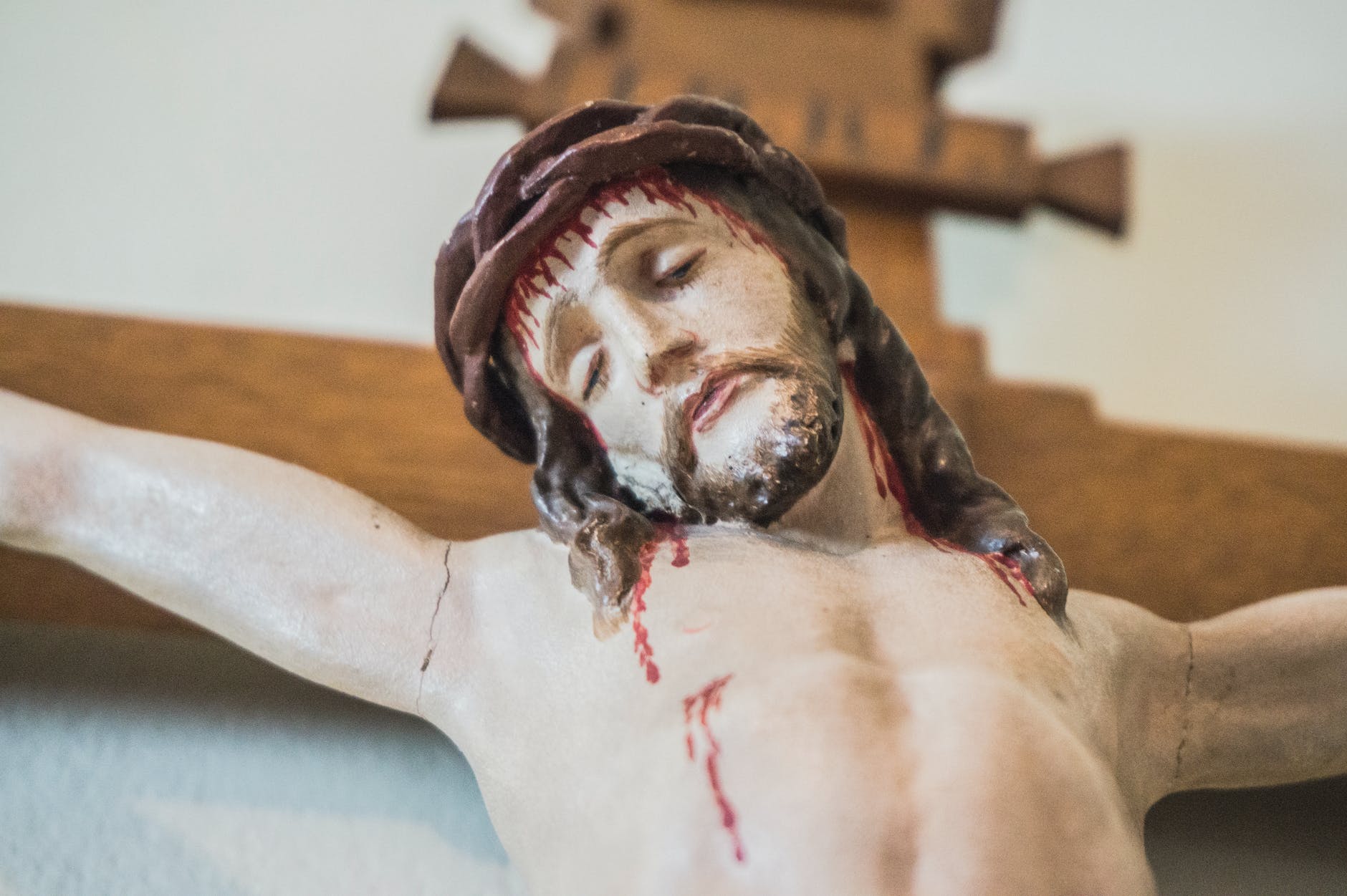
It got me thinking of the ritual sacrifices that were set up for the nation of Israel. Every day, animals were not just “pricked,” but slaughtered–their blood poured out and their flesh burned–to represent the atonement necessary for sin. Hebrews 9:22 says that “without the shedding of blood, there is no remission.” There is no way to be made right with God without the shedding of blood. And the blood of rams and lambs, while it represents the atonement we seek, is inadequate to cleanse our souls of the stain of sin. Our own blood is tainted with sin in exactly the way my blood is tainted with glucose. My blood is not only imperfect, it is unpredictable, and even poisonous, if left untreated. And even with the “shedding of blood” every day to check my glucose levels, there is no “remission”; the only way to treat my condition is to have a change– a permanent and drastic change– in my lifestyle. For Sin, there is only the shedding of perfect blood applied to my condition that can make me whole.
Though I have to shed blood every day to check on my blood sugar, I don’t have to shed blood every day for my Sin condition. But I do have to accept that Christ paid–in His perfect Blood– for my soul. He only had to do it once, but because of His sacrifice, I can be renewed every day– empowered to live the kind of life He wants me to live; empowered to grow and make healthy decisions, and righteous choices; empowered to live free of the guilt and poison of being enslaved to Sin.
With healthy choices and medication, I will be able to manage my blood sugar levels as I grow older. And I will never have to feel a “prick” or shed a drop of blood in eternity– there will be no death, and no disease! And all because of the Lamb who was willing to shed His blood for me– and for you! Not just a drop, not just another drop each day, but a once-for-all, extravagant, living sacrifice.
I’ve already posted recently about Ash Wednesday (see the post from Feb. 15), so it may seem strange on a day of fasting and ashes to be writing about food. And manna doesn’t seem to have much of a connection to prayer– bear with me…
Manna was, quite literally, “daily bread.” God sent manna each day for the children of Israel as they wandered and camped in the wilderness on their journey to the Promised Land. It appeared overnight, much like dew, and evaporated in the heat of the day. Yet the small “grains” could be gathered and made into nourishment for the thousands of Israelites who had no other source of bread. Manna and the bread made from it were only good for a day (except on Friday, when twice as much would fall so no work needed to be done on the Sabbath). God provides for our needs daily– we don’t have to worry and fret. Jesus returned to this theme often, including the Sermon on the Mount and The Lord’s Prayer.
Manna was uniquely suited for the Israelites in their situation. Manna did not require time to grow, harvest, or prepare. It did not require storage space, as it was collected and used up daily. It did not require yeast, salt, or sugar to be added to it–God designed it to be simple, sufficient, sustaining, and even sweet!
Manna was provided even after the Israelites complained and accused Moses (and God!) of leading them into the wilderness to die. God will not withhold punishment (see what happened in Numbers 11 when the Israelites complained about the manna!), but He will provide for our needs out of His love for us, not as a condition of our righteous behavior. All the people had access to manna, even those who complained or were defiant. If someone went hungry, it was not because God refused to provide– but because they chose not to avail themselves of His gift, or because they refused to accept the nature of the gift.
Manna was consistent. God didn’t send manna one week and raisins the next; God is faithful and unchanging–the manna wasn’t just a nutritional provision, it was a reflection of God’s nature! God gives good gifts; it is our selfish nature that often takes His goodness for granted, and asks for what we do not need.
Once the Israelites reached the Promised Land, the manna stopped. God’s gifts meet our needs– in His way, and in His time. God does not give gifts blindly or absent-mindedly. God knew exactly how much manna to send each day, and exactly when the manna would no longer be needed. He was watching closely the whole time– every step of the journey.
So today, whether or not you are fasting, you can rejoice in the knowledge that God has seen every step of YOUR journey. He will provide for our every need, including the need for forgiveness, courage, physical nourishment, and spiritual growth. All we need to do is look for it, gather it, and use it!
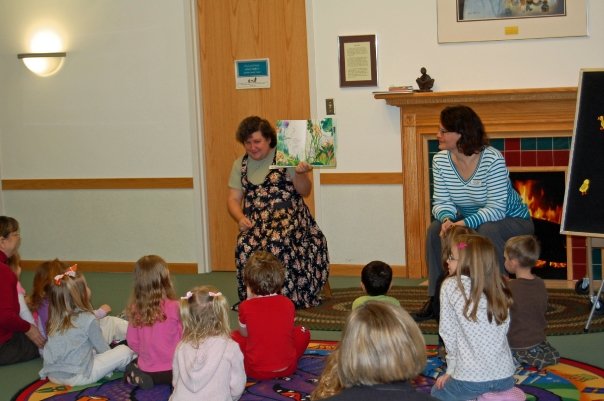
I used to work in a public library. I was the Youth Services Librarian, which meant that most of my time was spent working on building up the collection of children’s books, planning and presenting programming and story times, and going into schools to do book talks and promote library offerings. But I also spent time at the reference desks– both in the Children’s Area and the Adult Services area– and some of my time was spent finding answers to a wide range of questions:
Does the library have books or articles about Okapis (for a 4th grade report)?
Do you carry tax forms for my out-of-state business?
What are the school colors for _______ college (a small community college in Nebraska)?
Do you have a picture of the Egyptian queen Hatshepsut?
What is the title of a children’s book that featured muskrats making chicken soup?
My great-aunt left me a set of dishes and I want to know if they’re worth anything.
Some questions were easy to answer. Some required a little research within the library’s resources. Some were next to impossible and required hours of searching databases, or calling on expert help. Searching a database can be tricky. You need to find solid key words and search terms. For instance, our computer catalog did not recognize the the search term “cooking” or “cookbook.” You had to use the term “cookery” to get the best results. You could also use “cook***” to force the algorithm to look at all words that contained the letters c-o-o-k and any other letters that followed, such as cooks, cookies, cookery, etc. (Many library databases have since been updated, so searches will automatically redirect or refine common terms like this.)
Databases and search engines are amazing things, but they have limitations. They will only search for what you type in, and they will only search in the way they are programmed to do so. Computers (currently) “think” laterally–they do not make leaps of imagination, nor do they second-guess what you might have meant to ask but didn’t. If I want to know about pemmican, but I misspell it, the search engine may not find what I’m looking for.
That’s where algorithms come in. If I misspell pemmican by leaving out the second “m”, the algorithm will look for words close to what I typed, based on thousands of other inquiries. It may ask if I meant to search for pelican, instead. Or it may ask if I want pemmican. But if my spelling is really bad, or if the word I type in is actually another word, the search engine may miss my real inquiry altogether, and send me on a fruitless search. If I’m searching for a children’s book with muskrats and chicken soup, and the search engine doesn’t find both terms in a description, the algorithm will usually stick with the first term, and give me a list of children’s books with muskrats. Hopefully one of them also includes chicken soup… If I type the key words in reverse, I will get a list of children’s books with chicken soup…hopefully one of them includes muskrat characters! And algorithms can be skewed by advertisers or other interest groups that pay to have their information appear more often or first whenever certain search terms are entered.
When people request prayer, they are usually focused on what they perceive as their greatest need. They are searching for an answer; a solution to a specific problem or situation. “Pray for complete healing.” “Pray that my son/daughter will…” “Pray that I get this job.” And it is tempting to pray very specifically. This is not wrong. But sometimes, it limits how we see prayer and how we look at God’s answers. The opposite is also true. Sometimes, we pray so broadly, that we may not see God’s answer for what it is. Sometimes, we pray, hoping to change some sort of algorithm and get to the “top of the list” or get the “right” answer. This is not what prayer is about…we know this, but sometimes, our wants blind us to what we are actually asking (or asking others to ask for).
So what are some of the key words we can use in our prayer requests and prayers? Jesus gives us a fantastic blueprint in The Lord’s Prayer (Matthew 6:9-13):
“Our Father”–remembering to whom we are praying is vital. We are not praying to a distant, absent-minded, shadowy figure; He is our Father. He knows what is necessary, and what is best.
“Who art in Heaven”–God is Omnipotent. There is nothing we can ask or imagine that is too big, too difficult, or too much to ask. That doesn’t mean that God will give us whatever we want, whenever we want it, but it does mean that God is not limited by the same things that limit us!
“Hallowed by Thy Name.”–God is not our “genie in a bottle.” He doesn’t work for us, or at our command. God is sovereign; He commands the Universe. And even though He makes Himself known and wants a relationship with us, He is not like anyone else–He ALONE is GOD. When His answers seem “wrong,” or don’t make sense, it isn’t because He didn’t hear us, or because He doesn’t love us, but His ways are not our ways (Isaiah 55:8-9).
“Thy Kingdom come, Thy will be done on Earth as it is in Heaven”–There are a lot of “good” things that are NOT part of God’s best will for us. There are a lot of difficult and painful things that God can use for our good. He wants to hear the cry of our heart–“I want to be healed.” But He also wants to hear our willingness to accept that healing may not be immediate or easy.
“Give us this day our daily bread”– It is not “wrong” to pray for things in the future, or to pray for “big” or complex things, but our dependence on Him is shown best when we acknowledge our everyday basic needs are met by Him.
“And forgive us our debts as we forgive our debtors, And lead us not into temptation, but deliver us from evil”–Don’t be fooled. God will not ignore our hidden resentments, hatred, disdain, rebellion, and unforgiveness. Our requests can be sidelined by holding on to grudges and harboring secret doubts about God’s essential fairness, as well as hanging on to sinful habits.
God doesn’t need algorithms or special prayer “search terms”. We can come to Him with our requests, and He knows precisely what we want and what we need. But we will learn more about ourselves and about who God truly is when we refine our hearts and our prayer life.
My senior year of high school, I was voted “Most Likely to Succeed.” I’m not sure what that meant to most of my classmates, but it was both an honor and a burden to carry. While I was honored by my classmates’ faith in my ability to become some sort of “success,” I was also daunted by the mantle I felt I had to bear. Would I become famous? Wealthy? Important in public affairs or business? My immediate and modest goal was to become a teacher. But I had visions of becoming a well-known author. I also dreamed of becoming a wife and mother; of having a loving, happy family, and a nice home.
God’s plans are not our plans. God has placed many opportunities in my path– opportunities to serve myself and “get ahead,” and opportunities to serve others. I can say from experience that serving others brings more satisfaction in the long run, but it doesn’t feel like “success” as defined by most of our society. I’ve never achieved what most would consider “success.”
Some days, I feel wistful and even a bit resentful about some of life’s circumstances– children I was never able to have, or jobs I might have pursued with more ambition. But then, I think of all I might have missed– friendships, victories over certain struggles, lessons learned. My life isn’t finished– God may yet give me the opportunity to do “great things.” But already, He has given me the privilege of doing small things for Him over the course of many years. And it is more than enough.
One of the greatest measures of true success is to look at the life of Christ. After all, His life, death, and resurrection changed the entire course of history! Time is measured by His arrival on this planet– everything happened either before or after His birth. Billions of people have called themselves “Christians” after Him, and lived their lives in His service. But what did He actually accomplish in human terms? He was not a ruler or political powerhouse. He never owned a house, let alone villas and mansions. He never wrote a book (even though thousands of books have been written about Him). He didn’t invent anything, or found a corporation, or make a monumental scientific discovery. He never led an army. He healed several people, but He didn’t cure cancer or wipe out leprosy, or put an end to blindness. He didn’t rid the world of poverty, hatred, greed, or injustice. At the time of His death, He owned only the clothes on His back– and they were taken from Him! His friends deserted Him as hundreds shouted for Him to be crucified. He was nailed to a cross between two nameless malefactors, and died. He was placed in a borrowed grave. People who had expected great things of this Messiah ended up turning on Him and thinking Him a failure and a blasphemer.
Jesus did not pursue worldly success. He told parables. He dined with sinners and saints alike. He laughed. He cried. He prayed. Jesus served others, and yet He challenged authorities. He drew crowds, and performed miracles, but He died alone. Jesus did not come to show us how to “get ahead.” He came to show us how to live more abundantly, not more successfully. (See John 10:10)
So if there is any encouragement in Christ, any comfort from love, any participation in the Spirit, any affection and sympathy, 2 complete my joy by being of the same mind, having the same love, being in full accord and of one mind. 3 Do nothing from selfish ambition or conceit, but in humility count others more significant than yourselves. 4 Let each of you look not only to his own interests, but also to the interests of others. 5 Have this mind among yourselves, which is yours in Christ Jesus,6 who, though he was in the form of God, did not count equality with God a thing to be grasped,7 but emptied himself, by taking the form of a servant, being born in the likeness of men. 8 And being found in human form, he humbled himself by becoming obedient to the point of death, even death on a cross. 9 Therefore God has highly exalted him and bestowed on him the name that is above every name, 10 so that at the name of Jesus every knee should bow, in heaven and on earth and under the earth, 11 and every tongue confess that Jesus Christ is Lord, to the glory of God the Father.
God can use our worldly success, if we achieve any. But He delights in our humble prayers, our small acts of service, and our obedience. Jesus lived a humble life. He could have done anything He wanted, fulfilled the loftiest of ambitions, and crowned Himself King of the universe. But His success came from the unlikeliest of lives, and the most humiliating death. He lived the perfect and abundant life He offers us.
I don’t live a perfectly humble life. I chafe at my own weakness, sometimes. Yet it is when I stop chasing “success” and perfection that I find it –in Christ.
My prayer today is that someone reading this will be encouraged. If life feels like a series of missed opportunities to find success and fulfillment; if you feel like your life has let you down, and that God cannot use you for some great purpose– take heart! He loves to pour His love and holiness into broken vessels and exalt those who are humble and weary and “not enough.”
I have never been to Bahrain. I know very little about Bahrain. All I know is that it is a small country in the Middle East, located on a series of islands in the Persian Gulf. But I prayed for Bahrain the other day. It’s on my prayer calendar/journal. Every day of the year, I have a nation, city, or geographic region (desert, ocean, continent) to pray for. It’s somewhat random, and personal–many of the “cities” are really local small towns or places close to my heart–and it doesn’t make my prayers virtuous or important. My prayers can’t “save” the world, or any corner of it, from natural disaster or political corruption, disease, or any other malady common to our fallen world. So why do it?
First, because God loves and cares about the whole world. It’s easy for me to focus on my surrounding community; my state; my country. I know the people and language and culture here. But there is nothing exclusive about God’s love. Throughout the Bible, it is clear that our God is a global God. Sure, God “chose” Abraham and the nation of Israel to display His Holiness. But He also raised up other nations and leaders– Pharaoh, Nebuchadnezzar, the Queen of Sheba, Caesar Augustus–and sent prophetic warnings to Babylon, Edom, Assyria, Egypt, and many other nations who neither knew Him nor worshipped Him. I don’t know enough to know how many of the people of Bahrain are Christians, Muslims, Atheists, or any other religion. I don’t know how many of them are suffering from depression, domestic abuse, or disease. But I know that God knows– and cares. Even though I am praying “blind,” I am making an effort to “see” God’s heart for others.
Second, as I pray for various nations, I become more interested in them. I learn more about them. I recognize them when they are mentioned in the news, or when I hear about people who live or visit there. Again, this doesn’t make me a better person, or my prayers better than anyone else’s–but it helps me be a more informed (and hopefully more compassionate) person than I was yesterday or last year.
Praying for others reminds me of two important truths: I am very small in the scheme of things– one of more than 8 billion people on the planet! I cannot know them all; I cannot care for them all or influence them, or change their situations. But God can! I serve a God who not only knows all 8 billion individuals; He knows their thoughts, their pasts and their futures–He even knows the number of hairs on each head! The second truth that arises from that is that, small as I am, I am known by God. He cares about ME, just as He cares about each person that breathes. HE can change the small circumstances of my life, and the lives of those I know and love; AND He can raise up kingdoms and break down empires!
Pursuing prayer is about following God. Part of that is learning discipline. God isn’t “grading” me on whether or not I pray for Bahrain, or Belarus, or Boston, or the tiny local town of Baroda. He isn’t going to turn His back on me if I don’t pray for any of these places. And He won’t love me more if I do. But I will get better insight into His character as I learn to pray faithfully, consistently, and compassionately for others– wherever they are.
Today, I am choosing to be thankful for snow. I don’t really like driving in it, or shoveling it, but there are some wonderful things about snow. God made it– in fact, the Bible says He has storehouses full of it (Job 38:22)! So what are some of the wonders of snow?
Snow acts as a natural insulator of soil, roots, and underground bulbs and plants. When temperatures plummet, the snow acts as a blanket, protecting all that lies below ground.
Snow– especially new-fallen, clean snow, reflects light and brightens the landscape. With less natural sunlight, this is very important, not just for plants, but for people. Physical and mental health is enhanced when we get adequate amounts of light. Visibility is also enhanced– even at night!– when there is a snowy ground-cover.
Snow is a better way to add moisture to the air and ground in winter–when winter rainfall freezes, it is much heavier and more dangerous than snowfall.
Snow can be fun! Skiing, sledding, making snowmen, and snow forts– it’s not just fun for children.
Snow can be good for business! Ski resorts, plowing services, parks with cross-country ski trails, and many others depend on snow.
Snow accumulates– especially in mountainous regions– and refreshes rivers and lakes as it melts in the spring. Running water from snowmelts feed brooks and streams, and replenishes underground springs and wells as it seeps in. In this way, God gently wakes up mountainside forests and glens, turning them from white (or gray) to vibrant green.
Snow is beautiful! (Especially if I don’t have to drive in it or shovel it.) It glistens on the bare tree branches and settles in mounds on the fields. It sparkles in the moonlight and glories in the sunrise. It delights us as it dances on the air, swirling and hovering and settling on our eyelashes or fingertips, only to melt away like a dream. We hear often about the marvel of snowflakes– each one is completely unique in its design and makeup. We may even take it for granted– especially after a particularly large snowstorm! But God chooses to lavishly pour out His creativity and love into each tiny flake that falls to the ground and melts with a mere breath. How much more does He pour out His love on each one of us!
God uses snow as a metaphor for His forgiveness. See Psalm 51:7, Isaiah 1:18. “Snow” white is considered pure, radiant, and refreshing. In just such a way, God can take our failures and mistakes, and replace them with His righteousness, making us pure, radiant, and able to be refreshed and to offer refreshment to others!
The same applies to praying for someone. I know many people who ask for prayer almost daily –often for the same “little” problems or complaints. The selfish, human part of me sometimes wants to judge what is “worthy” of my prayer, and what is not. But this is not for me to judge. Other people are too proud to ask for prayer. That does not make them better or stronger people, or less “needy” of my prayers. I need to be willing to pray for everyone as I have the opportunity: that includes when they request my prayers (over and over) or when they refuse to share their needs at all. Someone who is struggling with ongoing issues needs my compassion and wisdom, not my judgment. Someone who resents my prayers needs my compassion and wisdom, too. We are to pray without ceasing, not just when we think it is “worth” doing. (see 1 Thessalonians 5:17)
There is a caveat here. My prayer life should not be determined by others’ expectations. I should gladly pray for the person who asks; however, I should NOT let someone else determine how or what I should pray. In other words, if someone is asking me to pray for “healing,” I will gladly lift up their situation and leave it in God’s hands. I will ask God to heal that person according to His will and in His timing. If they are asking me to pray for total instant healing, I will still pray, but I won’t demand of God what is not His will to do. If they are asking me to pray that they win the lottery because they gambled away their rent money, or avoid prosecution for a crime they committed, I will not pray for things that so clearly contradict God’s will. If someone else is telling me not to pray for them, I will not promise NOT to pray at all, but I will not insist that they listen in; nor will I pray that God “fix” them as I would like. I will pray for their safety, healing, well-being, etc.– again, according to God’s will and timing. Some people are afraid that I will pray for them to be saved against their will. Some people think that because I pursue prayer as a lifestyle, that I have an “in” with God– that He will do what I ask, when I ask, because it is me asking. That is not how God, or prayer, operates. I have seen God do miracles, but I have also asked Him for healing that never came in this lifetime, or for things that turned out very differently than I expected. And I have prayed for the salvation of others, but I don’t have the power or authority to change their will or pierce their conscience– that is the work of the Holy Spirit.
Sometimes, it is difficult to keep praying for the same stubborn person, or the same unresolved situation. When God doesn’t answer us how or when we expect, it can seem as though He isn’t listening, doesn’t care, or even taunts us with silence and frustration. It can be tempting to give up– to think that our prayers are “not working.” But, once again, that is not how God, or prayer, “work.” Often, while we are staring at the situation that doesn’t seem to change, we miss seeing the changes happening in other areas of our life, or the obstacles that are being cleared from our path going forward. This is true of prayers we lift up for others, as it is for ourselves. We continue praying anyway. Sometimes, prayer changes our outlook– sometimes prayer even ends up changing how we pray! Prayer isn’t about getting what we want; it’s about getting closer to the heart of God!
So, if we are willing, we can keep praying–seventy-seven days in a row! Even 490 days! Not because God is counting the days or keeping score of our faithfulness, but because we know that God is faithful in ways we cannot see with out limited vision, or know with our limited understanding.
God always finishes what He starts. He always completes His tasks, fulfills His promises, and wraps up the loose ends.
As I look back over the past year, I see many tasks that I wish were “finished.” I would like to know that my days of washing dishes, sweeping floors, folding laundry, returning phone messages, etc., were done! Of course, that would mean that my daily life was also finished here on earth! Some tasks here just don’t “end.” I also see many tasks which should be completed, but aren’t–projects started and abandoned, tasks on pause until I can get the right supplies, or tasks left behind because something unexpected and more urgent came along.
God is faithful in all things. So it is possible for Jesus to say, “It is finished,” as He breathed His last on the cross– even though we still experience life in a fallen world. His word is trustworthy and true, so we know that the work is/will be accomplished and completed. But God is also faithful in the daily tasks that He does– sunrises, seasons, Mercies that are “new every morning.” He does not abandon the work of forgiving, redeeming, sustaining, or transforming lives.
We are NOT God, but we should strive to finish what we start. Part of that is recognizing our human limitations. We may not finish everything we dream of doing today. But we can work to finish each task, and take each step in faith and dependence on the One who does all things well. And we can purpose to run our race with courage and confidence, knowing that God will give us what we need to keep moving ahead.
“Father, today I pray that You would help me to finish those tasks that are necessary– both the daily tasks, and the long-term projects You have for me to do. Help me to be diligent in the things I can do, and to trust You in the things I cannot do on my own. As I look forward to another year, help me to learn from Your example, and to seek Your wisdom each day, from start to “finish!”
Yesterday was Thanksgiving across the U.S. Many families enjoyed a large dinner, surrounded by family or friends. Traditionally, this dinner might include turkey (or ham or both!), vegetables and fruits (potatoes, sweet potatoes, green beans, baked beans, corn, squash or some kind of greens, cranberries or cranberry sauce, apples or fruit salad), dressing, stuffing, rolls, and/or bread, and some dessert, such as pumpkin pie, pumpkin roll, apple pie, or cake. It’s a holiday which focuses heavily on food and eating.
Because of this, it is also a holiday that carries the risk of food poisoning. Turkey and other meats, if not cooked properly or long enough, can make people sick. So can leftovers that are left out too long or not stored properly after the big meal.
But there is another kind of poison that can ruin Thanksgiving. It may not make us immediately physically ill, but it is not less dangerous. It is the poison of ingratitude. Like salmonella or other types of bacteria, ingratitude can be invisible. It can hide, waiting to attack without warning, causing everything to have a bitter aftertaste. It may cause violent reactions, such as rage, or lie dormant, causing depression, apathy, or a general dissatisfaction. And just like food poisoning ruining a holiday built around food, ingratitude is a natural problem to have during a time set aside for thankfulness.
One of the most insidious forms of this holiday poison comes through comparisons–we gather to be near family we love, only to compare ourselves with them. Which one is happier? Wealthier? More popular? More intelligent? Better looking? Is the host’s house nicer than mine (or is my house “good enough”)? Did I work harder? Did my contribution to the meal taste “better”(or was it passed by– again)? Why am I still sitting at “the kids’ table?” The list is endless of the petty grievances that we allow to overwhelm our intentions to be thankful and live in peace. Someone says something to “push our buttons,” or they seem to ignore us completely.
Another form of holiday poison spreads from person to person–complaining, venting, sounding off, moralizing, criticizing, blaming…what began as a thankful, joyful gathering becomes a snake pit of biting, poisonous talk. And we react. We take the bait, become defensive, get sucked into that political discussion we vowed to avoid, or we revisit old wounds we thought we had put behind us.
But unlike food poisoning, bitterness and ingratitude are choices. We can’t always choose our circumstances, nor can we choose what others say or do. But we DO choose our reactions and our attitudes. I can blame someone else’s anger or selfishness for my bitterness, but they didn’t MAKE me succumb to their poison. I can compare myself to others and feel arrogant or inept, but no one forces me to live someone else’s life or measure up to their circumstances.
God has given each of us life and breath, and a purpose. Some of His gifts to us are universal and exactly the same for each person. He has given us each 24 hours in each day; He gives sunshine and rain, day and night, and air to breathe. But some of his gifts are unique to each individual. Our response should be to open our unique gifts, so we can enjoy them and use them, NOT waste time coveting someone else’s gift when we have neglected even to open our own.
I wish I could say that “holiday poison” was easy to avoid– it’s not. It is human nature to grumble and whine and wish for what we do not have. But it IS possible to get healing. It starts with humble confession. We DO wish for what we do not have–and the more we deny and try to bury our failings, the more susceptible we are to the poison they can bring. If we confess our feelings of inadequacy, our desire to have “more” or “better” in life, we can turn to God freely and let Him give us a better perspective. Suddenly, we “see” blessings where we used to see burdens, we can see hope where once there was only grief, and we see opportunities where we only saw obstacles before.
Transformed Humble Able to do “all things” through Christ No longer slaves to Sin Known by our Love for each other Fruitful Upheld in the power of His Love







































 Pursuing Prayer