We live in a wonderfully diverse world, filled with unique individuals. One thing that defines us to our families, neighbors, and friends, is our name. Names can be tricky–some are difficult to pronounce, or spell. Some names are shortened or changed to form “nicknames.” Others are changed by circumstances, like adoption or marriage. Some names are common to several people, or shared as “namesakes” of others, or shared between generations, calling for additions, like “Jr.,” or “the elder” or “the fourth.” Some people reject the name they were given at birth, preferring to use an alias, or going through a legal process to change it. Some names have become symbolic, or stereotyped, famous, or infamous, or iconic.
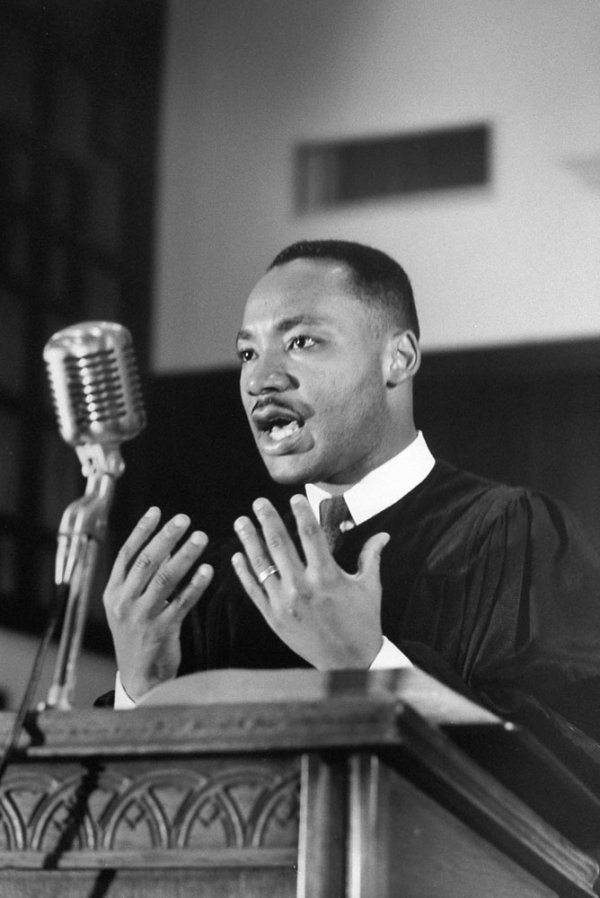
Civil Rights activist Rev. Dr. Martin Luther King Jr. gesturing during sermon at Ebenezer Baptist Church. (Photo by Donald Uhrbrock//Time Life Pictures/Getty Images)
Even though many of us may share a common first name, or surname, (or even both), our name still represents who we are–it becomes a symbolic representation of all that makes us unique– our personality, our history, and our character. And it’s not just people who carry names. We name rivers and mountains, cities, houses, farms, cars, products, pets, works of art…the list goes on. It is deep in the human soul to name things. This is a God-given desire. All the way back in the second chapter of Genesis, God brought all the beasts of the air and land to Adam, to see what name he would give them. Adam and Eve chose the names for their sons– names with very personal meanings. Names are important and carry power; they should never be taken lightly.
God recognizes each one of us by name. The prophets Isaiah and Jeremiah both refer to God calling them before they were even born! Before the great judge Samuel even knew how to recognize God’s voice, God called him by name. God often changes names– Abram to Abraham, Jacob to Israel, Saul of Tarsus to Paul, the disciple Simon to Peter (or Cephas). One reason God changes names is to show His power to transform people and give them, not just a new name, but a renewed nature and spirit.
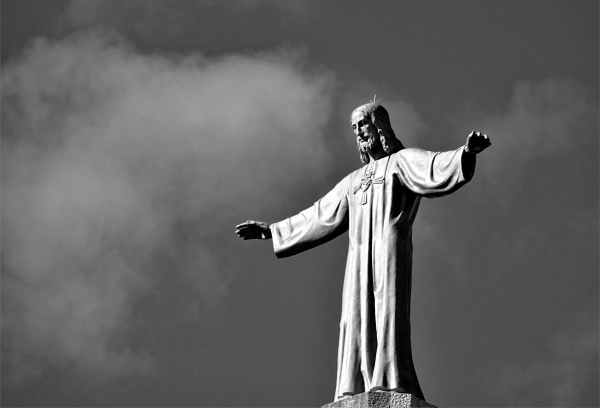
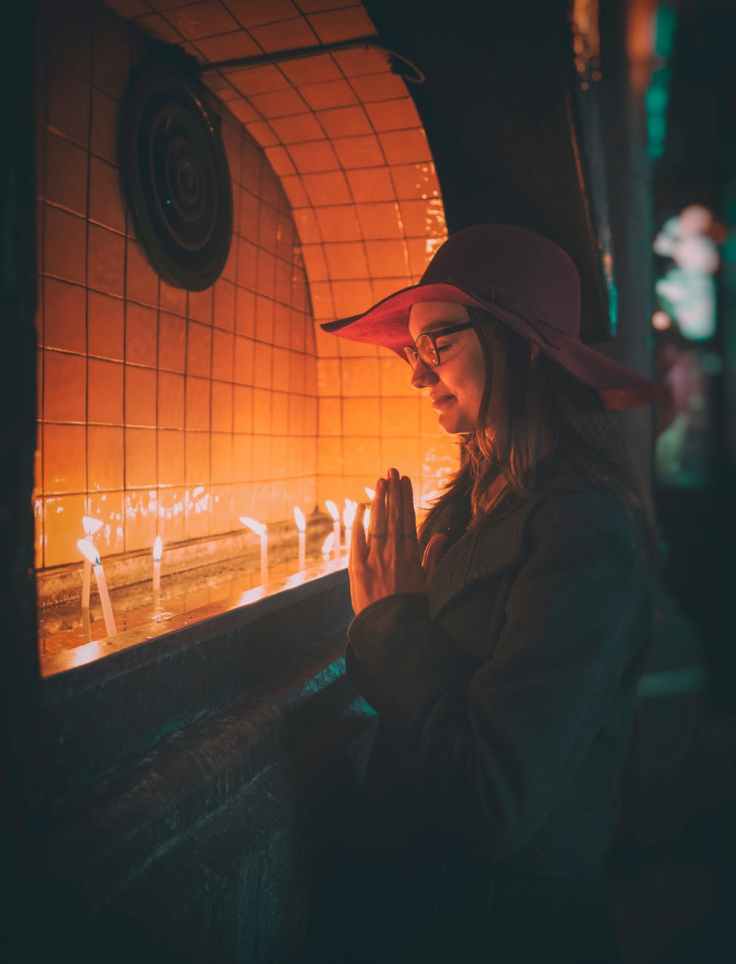
And when we talk to God, whose very name is sacred, He allows us to call on Him through the Name He gave to Himself/His Son– Jesus. There are many boys and men who carry this name, but when we pray in the name of Jesus, we are referring to the one and only Begotten Son of God the Father; the Jesus of the Trinity; Jesus the Virgin-born Messiah. HIS name is above all other names. There is power in every ordinary name, but THIS name carries eternal, sovereign, immeasurable power. It encompasses His holiness, His compassion, His wisdom, His goodness, His faithfulness, and His Love. There is no other name by which we are saved; no other name by which we can be made new. It is not a name to be taken lightly or in vain. It is a name to be honored, cherished, and exalted. JESUS. The name above all names!
Does it ever feel like you spend your days “putting out fires?” Taking care of little problems before they become bigger problems? Never getting a chance to rest or relax before the next crisis hits? Trying to put out a fire that keeps getting out of hand?
Fires can become very dangerous very quickly. Experts advise that we shouldn’t try to stay and fight a fire for which we are not equipped–it puts you and others at far greater risk. There is a simple phrase that can help people survive and escape a house or building fire: Stop. Drop. And Roll. A similar phrase can be helpful in facing the spiritual and emotional “fires” we face: Stop. Drop. And Pray!
Stop! Often when we face trials, our first reaction is to rush in and try to “save” things– ourselves, our loved ones, our possessions, our pride…the list goes on. This is a natural reaction, but not always the wisest course. In the initial panic, we are likely to make poor judgments, and miss warning signs. With the best of intentions, we can make situations worse: maybe we don’t have the skills, the equipment, the authority, or the knowledge to offer salvation or safety. That doesn’t mean that we must walk away from danger, or fail to offer help when we are able to do so. But it means that we must remember that Salvation and Wisdom come from God.
Drop. Fire is an obvious danger, but smoke is a silent killer. We can see fire; we can feel the heat of it. But the smoke can immobilize us long before the flames reach us. Spiritually, we may be able to see obvious sins in others, but ignore the smoke of compromise and apathy in the air all around us. Smoke rises– just like pride, and arrogance, and denial. We need to be “on our knees” –lowly and humble– if we want to keep from getting choked and suffocated.
Pray! Pray with a heart to listen for good advice and obey. Sometimes, we need to stay still and wait; sometimes we need to flee! Sometimes we need to get involved; sometimes we need to walk away. We don’t need to know the next seven or eight steps, however. We need to do the next right thing– even if it seems insignificant in the face of the threat. What we can see is not always where the danger is greatest, nor where the help is most available.
Finally– Don’t wait until you are in danger to practice these steps or prepare for what may lie ahead. There is a popular but unbiblical phrase: “God helps those who help themselves.” But this is NOT what God says! God says that He will help those who humble themselves (Luke 14:11; James 4:10); those who seek Him (Psalm24:6; Amos 5:4); and those who believe (Mark 9:23; John 20:29).
It is very discouraging to listen to the news lately…pandemics, riots, economic collapse, lock-downs and social distancing mandates…some days it seems like it can’t get any worse. And yet, if someone were to report that things will soon get better, would we believe it? Even if a prophet of God came to reassure us, would we greet her/his news with joy, or would we react with cynical disbelief?
Such was the case hundreds of years ago in Samaria. The capital city of Israel was under siege by the Syrian King, Ben-Hadad. https://www.biblegateway.com/passage/?search=2+Kings+6%3A24-7%3A20&version=ESV The entire city was trapped; surrounded by thousands of soldier, they were terrified, diseased, and starving. It was far worse than most of us have ever experienced. The siege had gotten so bad that the people had resorted to cannibalism–things could not get any worse. The king, desperate and helpless, sent for Elisha. And the prophet had unbelievably good news– in less than twenty-four hours, the fate of Samaria would be completely reversed. There would be food, freedom, and joy throughout the city– plenty for everyone!
Hope! Joy! Salvation! But how could this be? The king’s messenger scoffed–“Impossible! Even if God opened up the heavens, this could not happen.” So Elisha has bad news for the messenger– he will see this prophecy fulfilled, but will not be able to enjoy it.
And it all happens just as Elisha predicted…in the middle of the night, the Syrian army panics and flees. Prompted by the Lord, they believe they hear a mighty host coming to ambush them in their tents. In their flight, they leave everything behind– food, weapons, clothing, medicine–vast resources, and enough to supply the entire city!
Alerted to this miracle by four lepers who brave the enemy camp only to find it deserted, the king and his messenger are still skeptical. But when the report is confirmed, the citizens rush out to plunder the Syrian goods, trampling over and killing the messenger in their haste.
When times are tough, it is easy to hold on to a limp and lifeless form of faith– we keep praying and reciting platitudes; we tell ourselves to be patient and bear up under pressure. And we should not lose heart or compromise the truth for a temporary sense of ease. But our faith has to be prepared to see God do “exceedingly, abundantly, above all that we ask or think, according to the power that works in us..” (Ephesians 3:20 NKJV) Because just when things couldn’t get any worse, they may just be about to get better than we can imagine!
Lord, may I seek your face with confidence and joy– not because of the circumstances I face, but because of my faith in Your great might and power, and in Your grace and wisdom to turn even the worst night into a glorious and victorious dawn!
Do you ever feel invisible? One of the common complaints among depressed people is that they feel as if no one sees them. “No one would notice if I just disappeared..” “No one really notices me…I just fade into the background.” “I always get passed over; pushed aside; ignored…” “Everyone just seems to look right through me. It’s like I don’t even exist.”
Hundreds of years ago, Hagar, the slave girl of Abraham’s wife, Sarah, believed herself to be abandoned and alone. She had been used by her mistress as a pawn in a scheme to give Abraham a son. Hagar was able to do what Sarah could not (get pregnant by Abraham), and she let it go to her head. But she was still a slave. When Sarah complained to her husband, Abraham reminded her that she still had power over Hagar. Sarah used that power to mistreat Hagar, causing her to run away into the wilderness. But God was watching. The “angel of the Lord” not only saw Hagar– he found her beside a spring and called out to her by name. He asked why she was in the wilderness, and then gave her a promise– that her descendants would become too numerous to count! In response, she gave God a name– El-Roi– “the god who sees me.”
The Bible is filled with stories of people–sometimes warriors and kings, but often ordinary, even lowly, people: slaves, younger siblings, nameless servants–who are seen and chosen by God for His Glory, to play a special role in history. God sees them all; He knows them all by name (even if their names are not recorded in the Bible!) He knows each person’s strengths and weaknesses; He knows everyone who will cross their path, how their story began, and how their story will end.
We can take great comfort in knowing that God sees us. There is nothing hidden from Him– when we are slighted or mistreated; when we are the ones wronging others…He knows our thoughts and emotions. He knows our strengths and weaknesses (better than we know ourselves!) He understands– even when we don’t–what’s happening in and around us. God sees us exactly as we are– and He already knows all that we can become! Hagar could see that she was a pawn. She could see herself giving Abraham a child when Sarah had not. But God didn’t see her as “just” a slave girl or “just” a pregnant woman. He saw her her as a young woman in distress; as a woman with unique hopes and dreams, aches and disappointments; and as the ancestress of millions upon millions of people– unique people, each one loved and seen and known intimately by their creator. He saw her as someone worthy of being found and called and reassured. And even though God sent her back into a difficult situation, He kept His eyes on her, and came to her rescue again years later.
On days when you feel invisible, or forgotten– when it seems that no one would notice your absence– remember Hagar’s experience with El-Roi– “The God who Sees.”
There is a saying–“If life gives you lemons, make lemonade!” In other words, if your life circumstances are “sour,” you should look for ways to make your circumstances into something sweeter.
Often, it seems like God gives us lemons–even when we pray and do what we know is “right,” it seems like our circumstances get no better. In fact, sometimes, they get annoyingly, frustratingly worse. But God does not abandon us; He doesn’t sit back and laugh at our frustration, or leave us to flounder in chaos with no hope. Sometimes, our circumstances are opportunities for God to make lemonade.
When God rescued Israel from slavery in Egypt, He did not lead them directly to the Promised Land. Instead, He led them through the wilderness and to the shores of the Red Sea. There, they were trapped by the Egyptian army, complete with horses and chariots and trained warriors. But God’s plans were bigger than the armies of Egypt, and bigger than the sea. God made a path of escape through the sea, and used the very same sea to drown the enemy!
What a miracle! But it wasn’t long before the people began complaining about “lemons” from God–the complained about the food, the journey, the scenery, and their leader, Moses. Even when God did many more miracles– bread from Heaven, meat from the sky, water from the rock, divine intervention in battles– the Israelites were still complaining about all the “lemons” in their life, and longing to go back to Egypt and slavery!
There are seasons in life when it seems like God is giving us lemons–a job loss, an unexpected illness, a wayward daughter, a house fire, civil unrest… Struggles and pain will come into our lives; we should not pretend otherwise, or seek to deny them when they come. And God does not expect us to “make lemonade” all on our own. But He may allow us to be squeezed a bit; He may send the lemons today, and sugar next Monday. He may not give us a fancy carafe and cute little teacups. But He will give us all we need to make lemonade if we are prepared for the task. And usually, He will give us more than enough to set up a lemonade stand and serve others!
Several years ago (2005), I had the opportunity to visit a settlement of Haitian refugees in the Dominican Republic. Multiple mission groups had banded together to provide basic needs– shelter, basic medical services, toilets and showers, etc. Service teams from Canada and the U.S. had come in to build two-room houses and set up a small clinic and school. Donations had come in– clothing, bedding, toothbrushes… Thousands of Haitians had been displaced after a bad hurricane season and massive flooding, and this refugee camp was home to nearly 150 families. Even with the donations, there were shortages– there was running water, but it wasn’t potable. There was rice, but few vegetables and very little meat. Aspirin and antibiotics were rationed, and most of the children were thin, and sad, half-clothed in rags and bare-foot.
In the midst of all this, there was a miraculous donation– of flip-flops! Literally thousands of pairs of flip-flops–brand new overruns: different sizes, but all the same colors and style–more than enough for every person to have a pair. God had given the people of this settlement a LOT of lemons. Shoes were well and good, but the people needed water… The shoes were distributed– there were even a few left over. But about a week later, it was observed that most of the people were still walking around bare-footed. What had happened to the donated flip-flops? Were the people ungrateful? Were they too proud to use the new shoes? Too fearful?
Not at all! These amazing people trusted that God could help them turn lemons into lemonade. They loaded the flip-flops into large bags, carried them (bare-footed) on their backs into town (the nearest town was nearly 10 miles away, but it was on the coast and attracted many tourists), pooled what little money they had to rent a booth at the beach, and SOLD the flip-flops. The money they made from the sale of the flip-flops purchased five-gallon jugs of drinking water. The jugs were carried back from town and shared among the members of this growing community. As they continued to sell the donated flip-flops, they purchased other small items– packets of laundry detergent, fly swatters, plastic dishes and cups–and established a small colmado (local store) within their own community. When I was able to visit again a couple of years later, the refugee camp was a thriving community– many of the houses had been painted, and had gardens and picket fences, on which clothes were drying in the sun. And while some children were still running in bare feet, many others had shoes. Some of the shoes were ragged and some were mismatched, but the children were happy and healthy. In the middle of the community, there was a beautiful church. Inside, there was a woman sweeping and singing songs of praise.
I share this story because it both encourages me and shames me. In this season of “lemons”– COVID-19 and violent unrest in my country– I have a choice. I can complain like the children of Israel. I can pray for God to take away the lemons; I can beg for Him to send me lemonade. Or I can look around for opportunities to use what He has provided– graciously provided– and sing His praises as I make lemonade.
God, grant me the eyes to see your provision amid whatever challenges I face today. THANK YOU for the lemons you have given me today, and, when I am squeezed, help me to become a sweet and refreshing reminder to others of YOUR Grace and Joy.
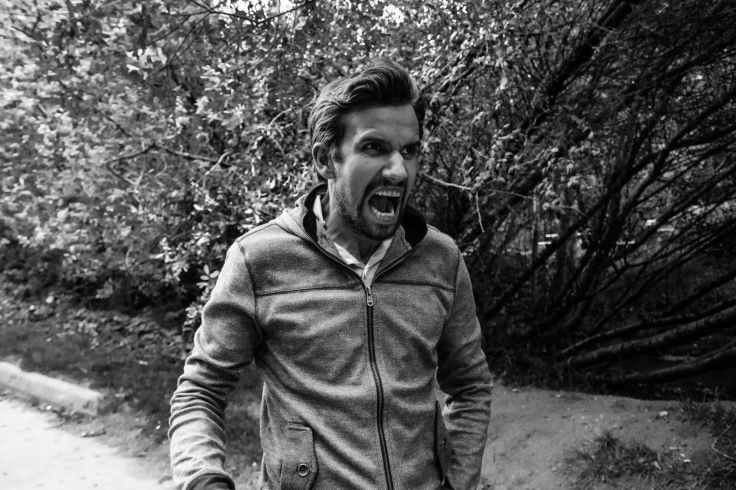
There are a lot of angry people out there. They have ample reason to be angry. The world is filled with darkness, injustice, pain, sickness, violence, oppression..the list goes on. Such things should make us angry. Such things are wrong. They are destructive. They are evil.
But anger, even justified, cannot heal. It begets more anger, and yet more evil in the name of vengeance. Anger alerts us to evil, but it cannot be allowed to fester and corrode all that is good.
God created us with emotions, like anger, but He desires us to bring them under His discipline to become instruments of good. All the way back in Genesis, God cautioned Cain in his anger https://www.biblegateway.com/passage/?search=Genesis+4%3A1-16&version=NIV God did not condemn Cain for his anger, but he warned him not to be mastered by it. Cain did not listen, and in his anger, he committed the first murder. God’s wrath against Cain was swift and terrible– God cursed the ground, so it would not produce for Cain; He drove Cain to wander in the barren wilderness. Even so, God put a mark of protection on Cain, and promised His own vengeance on anyone who would try to kill him. God’s mercy overwhelmed simple retribution. God had the power (and the right) to strike Cain dead. He chose to let Cain live with the dark consequences of his anger.
God understands that we will get angry– He gets angry, too! But God sees beyond anger, beyond the immediate pain and rage that we feel when confronted with evil. God’s ways are eternal and Holy and right.
If we turn to God in our anger– if we cry out to Him and wait for His wisdom, He can turn even our anger and bitterness into something far better– resolve. We can resolve to bring good out of tragedy; we can resolve to work, and sweat, and pray, and stand firm in the midst of the storm. If anger is like fire– swift and destructive, then resolve is like a mountain–enduring and offering shelter, protection, and a fixed reference. Fire can scorch the mountain. But it cannot move it or destroy it.
We are living in uncertain and evil times. Let us acknowledge it; even be angered by it. But then, let us bring our anger, our pain, our confusion– and our hope–to God. As God warned Cain, if we do not do what is right, sin will be crouching at our door, desiring to have us; to destroy us and drive us away from God’s presence. If we deny our anger, if we push it down and pretend that it has no power to touch us, we are playing with fire. But if we bring it to God, acknowledging the struggle, crying out in our pain, God can turn our anger into resolve– steadfast through fire and storm and wind and time. Solidly committed to what is good and right and truly just.
Anger, violence, vengeance–all promise easy justice and powerful change. But once the fire of emotion and action has passed, we are left with ashes and death. But on the mountain of resolve, even the ashes become mixed with the good soil underneath to produce new life and growth. The good endures. The good resolves to endure. Goodness is eternal. Let us seek the good, and seek that God would, beyond our anger, grant us resolve.
But then, he does three important things: He recounts what he knows of God’s character, he waits, and he hopes.
Sometimes, when I cry out to God, I expect God to reveal Himself to me with an immediate and positive answer. And, occasionally, God does answer prayer with a dramatic and instant result. But most of the time, God answers first with silence. Not because He is cruel or uninterested or too busy to acknowledge my cry. He gives me time to reflect– on His nature, and the nature of my need. And He gives me time to find peace and trust in the middle of the storm.
I spent much of yesterday crying out– I am frustrated with the uncertainty surrounding COVID-19. I am angry at the misinformation and conflicting reports; I don’t know what to believe about staying put or venturing out–is it allowed? Is it safe if I wear a mask? Can I go to the park or beach? When can I re-open my shop? Can I make the payments until it can be re-opened? When can I safely see my family and friends again? Will it be safe to hug them? And I am frustrated with the way I see people treating each other– yelling, screaming, eager to condemn everyone else’s behavior while justifying their own. And I find myself saying and doing the same thing from the relative safety of my computer screen– after all, I can’t yell at anyone to their face if I can’t leave the house, right? But I can let my 300 closest friends know how heartless and selfish they are if they don’t see things my way! They’re KILLING people! They’re betraying family members! They’re living in fear! They have no compassion! And I cannot make them do what I think is right!
But when I stop the crying and carrying on, and justifying, and finger-pointing; when I stop to remember who God is, and who I am, I remember that God IS attentive. And not just to my frustration, but to everyone’s needs– the person who is living in terror; the person who is suffering pain, grief, agony, and loss; the person who is defiant and uncaring and angry. God is attentive, but He is also overflowing with mercy. If He kept records– if He only looked upon mankind to find evidence of our guilt or to pour out shame and punishment– who could stand? Who would have the authority to tell God how He should direct the universe? Who could say that they were more capable of dispensing life and death, health and sickness, mercy and justice? Would I? It is no little thing to cry out to the God of the universe. And yet, God listens attentively to our every cry. Especially when we cry out to Him for mercy, for wisdom, for peace, and for healing. His answer may not look like what we expect, but He never fails to listen in Love.
And as I contemplate God’s power, wisdom, compassion, grace, and authority, I can wait. And that doesn’t mean that I sit in a lotus position and stop seeing the pain and chaos and death. Or that I count to ten and hold my breath. Or that I set a timer and think happy thoughts for 20 minutes. No. I wait like a watchman– like a sentry waiting for whatever may happen– alert and ready to do my duty. And I wait like a watchman for the dawn– for the light of day to see clearly; for the end of my watch, when there will be rest.
This season is difficult, but it will end. It will give way to a new dawn– with new challenges! But just as the Psalmist tells Israel, I know I can put my hope in the Lord, for “with the Lord is unfailing love and with him is full redemption (v. 7). If I cry out, knowing that God is willing to listen and able to save, but I don’t stand firm in hope, I can still be swept away by the winds of doubt and the current of angst.
Psalm 23:6– And I will dwell in the house of the Lord, forever.
Forever is a concept we acknowledge, but we don’t fully understand. We talk about difficult circumstances, like the current pandemic, lasting “forever.” But they won’t. Such circumstances may last longer than we would like; they may be more difficult than anticipate; they may bring more pain and grief than we think we can bear, but they will pass. Even if they last throughout our lifetime, they will not continue indefinitely.
But God IS forever– He is eternal. And He has created US to be eternal– to live with Him (or apart from Him) FOREVER! Our experience does not prepare us fully for this reality– we only know an existence that is limited by time and space. But deep within, we have an awareness that there is MORE– more than our brief time here; more than the difficulty and disappointment we experience. God has planted this awareness in each of us; this desire to know what comes “after” death; what “forever” really means.
And that should give us abundant hope and comfort in times like these. What we face today is temporary. This is the “valley of the shadow of death.” We cannot see what is directly in front of us. It continues to bring anxiety and pain, and even death. But, death is not the end. It is only a shadow hiding the light of Eternity. And “Forever” cannot terrify us; it cannot hold terror for those who belong to the one who holds forever in His hands!
Someday, we will not need calendars. We will not need to worry about next week, or our 5-year plan, or deadlines. We will have unlimited opportunities, unlimited possibilities, unlimited life with the source of all good things!
“Surely you can’t be serious, doctor.” “I’m very serious. And stop calling me Shirley.”
Classic comedy makes use of the English word, surely, but the word has a very serious and powerful meaning. It means that whatever follows is for sure, certain, true, positive, undeniable, and guaranteed. In Psalm 23, David, the shepherd-king, is building to a triumphant conclusion. “Surely, goodness and mercy shall follow me all the days of my life…” This is not wishful thinking or a faint hope. It is certain and expected that he will see goodness and mercy for the rest of his days. Are you living in that mind-set? Do you expect to see goodness and mercy every day? Do I?
And David is very particular about his words. Goodness and Mercy WILL follow Him, because He is constantly surrounded by his Good Shepherd, who embodies goodness and mercy. David did not say that health, wealth, comfort, popularity, power, or worldly success would follow him. He did not say that happiness, confidence, self-esteem, or even peace of mind would be his constant companions. But goodness and mercy will never be absent if we are in the presence of God. Because they are part of God’s character, they cannot be absent where He is present.
More than that, the word for “follow” here means that goodness and mercy are not just “tagging along” like an annoying younger sibling, or following at a polite distance. They are chasing after, in pursuit, even stalking us! God will chase after us, track us down, and surround us with His goodness! He will lavish His mercy on us– no matter how far we try to run and hide from it.
I’ve spent the past few days revisiting one of my favorite movies, The Princess Bride. The movie is based on a “fractured” fairy tale, written by William Goldman. In it, a spoiled young farm girl falls in love with a lowly farm hand. When he leaves to make his fortune, the girl promises to wait for his return. When word comes back that he has been killed, she swears that she will never love again, and becomes a pawn of a wicked prince.
** SPOILER ALERT**
Of course, her true love, Westley, has not been killed, and when he finally finds Buttercup, she has agreed to marry the wicked prince, who has had her kidnapped and plans to kill her. “Why didn’t you wait for me?, ” Westley asks. “Well..you were dead,” replies Buttercup. “Death cannot stop true love. All it can do is delay it a while, ” says the intrepid Westley, to which Buttercup replies, “I will never doubt again.”
In true fairy-tale fashion, Westley and Buttercup must face many obstacles, including all the dangers of the “fire swamp,”capture, torture, a fake marriage ceremony, and Westley being “mostly dead”– again– before they can have their happy ending. But in the end, “true love” wins over all trials and obstacles, and Westley and Buttercup “live happily ever after.”
We live in a post-modern age, where people tend to sneer at notions like fairy tales, true love, and “happily ever after.” We are more likely to echo the words of the bitter Dread Pirate Roberts, who tells Princess Buttercup that “life is pain, highness, and anyone who tells you differently is selling something.” Ironically, the Dread Pirate Roberts is really Westley in disguise. His life is filled with painful trials, and “inconceivable” obstacles, but he perseveres, and his “happily ever after” makes all that came before fade from memory. Because, in the end, death CANNOT stop true love. It may take a few miracles, and lots of patience, forgiveness, and faith, but true love “bears all things, believes all things, hopes all things, endures all things” (1 Corinthians 13:7 ESV)
God’s love is true– it is sure and enduring. God’s presence goes with us even into the valley of the shadow of death–even if the shadows and darkness block our sight; even if death seems sure to win. His rod and staff are not tools of torture and dread, but reminders that He is there to guide us, even if we cannot see His face in the gloom.
Life is filled with pain–and Westley was right; anyone who tells you differently is selling you something. God doesn’t promise that our path will always be on smooth ground in sunny pastures. We may face separation from loved ones, flame spurts and quicksand, betrayal by friends, battles with giants, wicked rulers, even rodents of unusual size. But in each of these situations, we have God’s very presence to comfort us and help us endure to the end. And the “happily ever after?” It is eternal and glorious like nothing we have ever known or even imagined.
Fairy tales are not real– but God’s word is. The very reason such tales and myths and legends endure is because they echo what we know to be true– Truth, and Love, and Justice, and Honor, and Hope, and Faith–they are eternally enduring and strong. We recognize the truth that “Death cannot stop true love– all it can do is delay it for a while.” https://www.biblegateway.com/passage/?search=Romans+8%3A31-39&version=ESV