I don’t like paying bills. Utility bills, insurance premiums, credit cards, and taxes– property tax, income tax, even sales tax. Every month, the bills come, and the checks go. And if we don’t pay the bills on time, there is an extra fee and interest charges. Bills and fees and payment schedules are not unusual or unexpected in this world. And we pay (if and when we can) because we are honest and upright citizens. It is a duty, but not a pleasure.
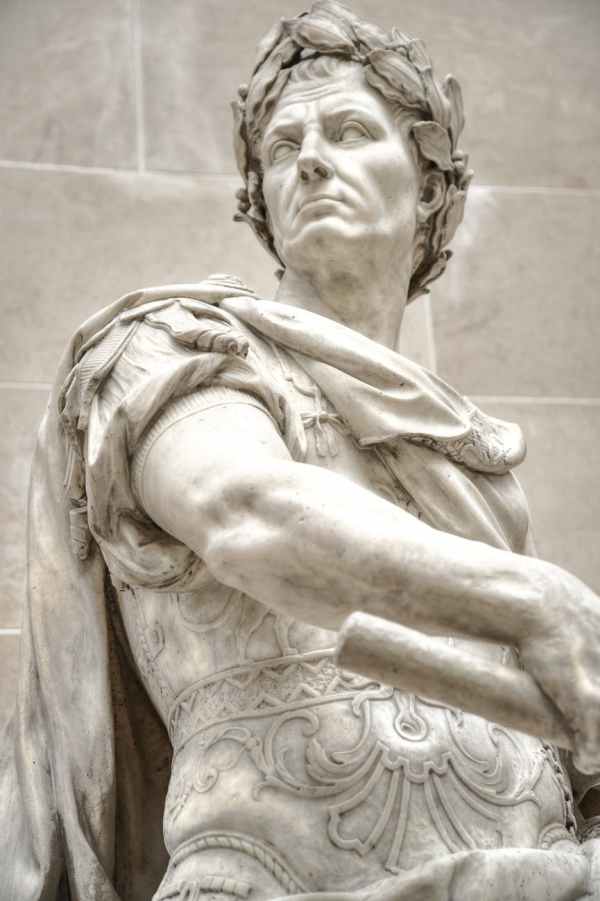
Even Jesus had to pay taxes. He was asked about it– even challenged over it. The Pharisees wanted to trap Jesus into taking a stance and offending many of His followers or running afoul of the Roman government. They asked, “Is it right to pay taxes to Caesar, or not?” (Matthew 22:17)(https://biblia.com/bible/esv/matthew/22/15-22) Of course, if Jesus said it was right to pay taxes, He would anger those who were fighting to be free of Roman oppression. Paying taxes to Caesar, in effect, legitimized Roman occupation and subjugation of the Jews. Much of the tax money was used to extend Rome’s control over the Jews, and to pay the soldiers and officials who made life miserable for Jesus’ followers on a daily basis. And it was common knowledge that many tax collectors were corrupt and cheated the people to line their own pockets, as well. The Romans worshiped countless gods and goddesses, but had no respect for the God of Israel. It was humiliating, and burdensome, and unjust to pay taxes. And yet, if Jesus said it was NOT right to pay taxes, He would be inciting open rebellion against the Roman occupation. He and His followers were be arrested and killed.
But Jesus did not fall into the Pharisees’ trap. He asked to see a common coin. He asked whose face and likeness were on the coin. “Caesar’s.” And then Jesus said, “Give to Caesar what is Caesar’s and to God what is God’s.”
I was reminded as I opened bills and wrote checks this past week, that I do NOT receive a bill from God. I owe God everything– my life, my next breath, my health, my hope of eternal life. Yet He never sends me a bill, or an overdue statement. He charges no interest, or late fees, even when I let distractions keep me from giving Him the praise and honor that is due to Him. Even when I choose to go through my day without sharing my heart’s longings with Him.
I may not like paying bills, but I do it. I “render unto Caesar,” even as I complain about taxes and interest fees. But do I “render unto God what is God’s?” And when I do, is my attitude the same as it is when paying bills? God forbid!
God never cheats; He never asks for something He doesn’t deserve. And He has given me far more than I could ever ask or imagine, through the power that is at work IN ME! God doesn’t give loans– He gives gifts of eternal value.
What can I render unto God today? Surely I can give Him praise, and share His grace and goodness with others…it isn’t impossible. It isn’t beyond my duty. It isn’t isn’t even “taxing!”
My late uncle came to know Christ– really know Christ– later in his life. He and my aunt spent their final years doing advanced Bible studies by correspondence course– hour after hour studying Hebrew and Greek, filling out paperwork, sending it in, and waiting for the next lesson (this was before the explosion of online classes and internet shortcuts).
When Uncle Fred was diagnosed with ALS (Lou Gehrig’s disease), and he knew his time on earth was drawing to a close, he planned his funeral service, and it was incredible– uplifting, encouraging, hopeful! This from a man who, earlier in life, had had anger issues, numerous issues with money, and serious doubts about God. One of his favorite scripture passages came from Proverbs, and it surprised me a bit. It wasn’t about promise or hope or power or expectation. Instead, it was about discipline and correction and balance.
Proverbs 30:7-9New International Version (NIV)
“Two things I ask of you, Lord; do not refuse me before I die: 8 Keep falsehood and lies far from me; give me neither poverty nor riches, but give me only my daily bread. 9 Otherwise, I may have too much and disown you and say, ‘Who is the Lord?’ Or I may become poor and steal, and so dishonor the name of my God.
The first request is one we might expect– keep me from lies and falsehood. Not just the lies of others, but keep ME from lying. After all, this is in keeping with the ninth commandment. And we need God’s help to keep away from all sins, including self-deception!
The second phrase is a little harder to swallow– “Give me neither poverty nor riches”– OK, I don’t want to be poor, and it’s probably not good for me to be super wealthy. I’ll just be a comfortable middle-class sort of person.
It’s the last phrase that catches us– “But give me ONLY my daily bread.” Excuse me? I don’t know about some of you who may be reading this, but I don’t want ONLY my daily bread. What about all those verses that say we can ask for ANYTHING in Jesus’ name and he will do it!? What about being prepared in and out of season–what about savings accounts and retirement plans and having extra to give to those in need? What about a cozy lake cottage or a really nice vacation? Don’t I deserve to treat myself? Haven’t I earned a few creature comforts? I give to charity, and I volunteer at church. I don’t need to be rich, but “only my daily bread” sounds a bit like poverty…
The next verse gives the reason, and also the test. “Otherwise, I may have too much and disown you and say, ‘Who is the Lord?’ Or I may become poor and steal, and so dishonor the name of my God.” It’s tempting at this point to brush off the warning. After all, I haven’t disowned God, have I? I still go to church and write about prayer. What more does God want of me…Who is God to ask more of me? Who is the Lord to tell me what I can’t have…We don’t start out denying or disowning God, but we begin to question his ways, and our own obedience. Similarly, we don’t think we are stealing or dishonoring God’s name, but how many of us have tried to “beat the system” to get ahead instead of turning to God or the church for help? Tax breaks that are questionable, lying (see verse 8a again…) about our income to qualify for federal programs or grants, “borrowing” from family or friends with little or no plan for how to repay them… I wish I could say I didn’t know anyone who had ever bragged to me about they had “cheated” just a little, or that I had a perfect track record in this area.
This passage is filled with wisdom, but it is not wisdom we teach in many of our churches today. Yet it is exactly what God teaches by example and what he expects of us. Did not Jesus pray for God to “Give us this day our Daily Bread?” He didn’t ask God to pour out the storehouses of Heaven so we could add a pool in the back yard, or afford a new car, or get that extra pair of shoes or the latest new gadget. Yet he prayed with the complete confidence that God would not withhold any of his needs or cause him to live in shame or starvation.
It’s not as though God has commanded us to live as paupers and beggars– look at the way he provided for the Israelites in the wilderness. He provided, quite literally, their daily bread/manna. Just enough for each day, with a double portion for the Sabbath. Just enough– just a sufficient amount. No one had to worry about losing their food supply to theft, packing it up to travel, using it up before the expiration date, or comparing one brand to another to check for gluten or preservatives or recall notices.
No one had to worry about whether their shoes were the right color to match their favorite outfit, or if they had enough gas in the tank for their next move. God provided all their needs when they absolutely COULD NOT. And he provided more than just their basic needs– they had herds and flocks; he provided water and grazing for them, too. He had caused the Egyptians to give them gold and jewels as they left Egypt, so they would have enough (and far more than enough) to make all the tools and objects for the tabernacle, and still have a medium of exchange when they reached their new homes in the Promised Land.
But God did not encourage His people to seek after riches–even for His sake. When David wanted to build an elaborate temple, God sent word that, while David’s intention was good, He (God) did not need a Temple; nor did He want David to build one. And David listened and humbly thanked God for the blessings he already had, and the opportunities God had provided for him. Solomon DID build the temple, but he allowed the riches flooding into his kingdom (among other things) to turn his heart away from God. He built an elaborate Temple, but then he spent even more time and money to build his own palace and throne! He collected horses from Egypt and many foreign wives (expressly forbidden for the kings of Israel– see Deuteronomy 17:14-17). And he fell into cynicism and idol worship.
Our current culture (at least in the U.S. and in much of the rest of the world) tends to be consumed by…consumption. Having the newest and latest and best of everything. Seeing to our own comfort and self-esteem and satisfaction– often at the expense of our devotion to Christ and our service to others.
There’s nothing wrong with nice things– helpful tools, comforts, pleasures– God doesn’t want us to be miserable or full of a false humility that throws away opportunities and rewards. But he needs us to see that not every “good” thing is the “best” thing for us. We CAN be too rich, too thin, too smart, too proud…you get the idea. Too much of a good thing can blind us to the BEST thing!
Why do we pray to, sing praises to, and trust in the fortress of “the God of Jacob” (Psalm 46; Psalm 75, etc.)? Isn’t Jacob the one who cheated his brother and tricked his father to steal an inheritance? Wasn’t he a liar, and a thief?
Last time, https://wordpress.com/read/feeds/78948359/posts/2322587905, I wrote about Jacob as the “other son”, the one in the shadows. But Jacob wasn’t content to stay in the shadows. He waited and schemed, and used his brother’s and father’s character traits against them and to his own advantage. Jacob was crafty, and sly, and devious. These are not characteristics designed to build trust or inspire admiration. They are, however, characteristics many of us secretly admire. Jacob tricked his way to the top! He didn’t exactly “steal” his brother’s inheritance– he tricked his brother into giving it away! No bloodshed or fighting…Jacob simply used his brother’s weakness and vanity to get what he wanted. Some might say that Esau didn’t deserve to keep an inheritance he was willing to barter away for a measly bowl of stew. (https://biblia.com/bible/nlt/Ge25.27-34) Even the Bible says that Esau despised his birthright!
Later, Jacob steals his brother’s blessing, too. This time, he lies and deceives his dying father in the process. This Bible story is curious, and much has been written about whether Jacob and his mother set out to deceive Isaac, and why. Was Rebekah trying to cheat her own son, Esau, out of his blessing, and lie to her husband in the process? Why would Jacob want to steal a blessing from his brother when he already had “taken” the birthright?
The Bible doesn’t always give us easy answers and complete explanations. What it does, however, is give us glimpses into the lives of real people and their very real encounters with God. Jacob’s family was a divided family. Isaac was prepared to give everything to Esau when he died. There is no evidence that he was prepared to give Jacob any kind of blessing– it had all been reserved for Esau. Whether this was in retaliation for Jacob’s earlier “trick”, we are not told. Whether Jacob and Rebecca intended for Jacob to appease his father with meat and get “a blessing” , and things got out of hand, or whether they intended that Esau should be cut out of both blessing and birthright, we don’t know. What we see is that Isaac meant to bless only Esau. When the “real” Esau showed up too late, there was nothing left for Isaac to give as a blessing. There was no plan for a secondary blessing– for either son. (Ironically, because Jacob was sent away, Isaac had a “going away” blessing for him that was also denied to Esau.. (see Genesis 28:1!)
Jacob’s days of cheating and using deception were to leave a lasting impact on his life. He was sent far away from his family, fearing his brother’s anger. He missed years of being with his mother and father; of having their advice, or letting them spend time with their grandchildren. Jacob ended up finding, in his Uncle Laban, a bigger cheat and liar than he had ever dreamed of being; a man whose craftiness cheated Jacob out of years of labor and saddled him with family problems for the rest of his life. Jacob’s heart was broken by the deception his own sons would perpetrate on him when they sold their brother, Joseph, into slavery. Cleverness, deceit, and crafty schemes may offer a temporary ticket to victory, power, and “the good life.” But such schemes have consequences that cause lasting pain and punishment.
But that’s not the end of the story. We see Jacob rise above his own earlier mistakes. Jacob never loses his cleverness or his desire to succeed, but he learns how to “cheat the cheater”– he becomes so successful and hard working that Laban can’t fault Jacob for having larger flocks and becoming rich. Jacob could rightfully show that he had not stolen any of his uncle’s flocks, and he made Laban rich, too. Jacob’s cleverness was not the problem– it was how he had used it; with lies and deception against his father and brother. Later in life, he uses the same cleverness to appease his brother, provide for his family, and establish his own growing dynasty.
And, at the end of his life, Jacob had blessings for each of his sons. Even though he had “favorites”, he made sure each son knew that he was loved and blessed by both his earthly and heavenly father. God also confirmed this by giving each “son” an inheritance among the burgeoning nation of Israel when they returned to the land of promise after their time in Egypt.
What caused this change? Some might say that Jacob “learned his lesson” (and he did!) at the hands of his uncle and with the passage of time. Some might say he matured with the responsibilities of fatherhood and his career. But the Bible gives us one other important factor– Jacob encountered God. Jacob even wrestled with God. But God cannot be cheated. God cannot be outwitted or tricked. God cannot be grabbed by the heel and tripped up by any scheme of man. Yet God blesses even the cheater. God loves even the liar. God chooses even the thief. God’s love and grace are greater by far than any birthright or blessing we can “grab” for ourselves. God doesn’t bless us because we are clever, and certainly not because we lie or cheat. But he gives us intelligence, cleverness, and, if we ask for it, the wisdom to know how to use our gifts in ways that please him and help others.











 Pursuing Prayer