Christmas Wish Lists

When I was a child, we used to write letters to “Santa” with a list of what we wanted to find under the Christmas Tree that year. Sometimes this was a school project– practice in letter-writing etiquette, etc.– and sometimes, it was done spontaneously after poring through the Sears “Wish Book” Christmas catalog, or after watching Saturday morning cartoons with their endless ads for toys, dolls, bikes, and sugary cereals.

As adults, we often do something similar, drafting a Christmas “wish list” in our prayers and Advent dreams. Our adult lists may be as shallow as those of childhood–a new dishwasher, or a shiny piece of jewelry; a new “toy” boat for Dad, etc. Sometimes, they sound more virtuous– world peace, a healthy economy, a cure for cancer…

Photo by Ivan Samkov on Pexels.com

It isn’t “wrong” to have wishes at any time of year. And we should hope for better things in the world around us. But we can get caught up in the idea of Christmas being all about wishes and desires at the expense of the real GIFT of Christmas– Christ Himself! In fact, we can become numb to the fact that Jesus wasn’t just “another” Christmas gift among our “wish list” items.

Photo by Irina Iriser on Pexels.com

9 The true light that gives light to everyone was coming into the world. 10 He was in the world, and though the world was made through him, the world did not recognize him. 11 He came to that which was his own, but his own did not receive him. 12 Yet to all who did receive him, to those who believed in his name, he gave the right to become children of God— 13 children born not of natural descent, nor of human decision or a husband’s will, but born of God.14 The Word became flesh and made his dwelling among us. We have seen his glory, the glory of the one and only Son, who came from the Father, full of grace and truth.

John 1: 9-14 (NIV)

Christ didn’t come that first Christmas in response to any person’s wish list. In fact, the Bible says that when Jesus came into the very world He created, He was rejected, ignored, even despised by those who should have recognized and welcomed Him. He didn’t come wrapped in shiny paper and waiting for us to enjoy Him. He came wrapped in rags, forced to go into exile under threat of death, and honored only by humble shepherds and strangers from foreign lands. No one sought Him out on their own. Even the shepherds and wise men were led by angels and a guiding star.

This year, instead of concentrating on wish lists and our desires (even noble ones!), let’s reflect on God’s wish list– that we would turn from sin and rebellion, and be reconciled to Him; that we would make His gift our greatest desire!

Photo by Pavel Danilyuk on Pexels.com

Be Sure Your Sin Will Find You Out

Photo by Monstera on Pexels.com

When I was a child, my Mom used scripture to teach and correct me. One of her favorites was found in Numbers 32:23b “..you may be sure your sin will find you out.” This was a warning not to try to hide or excuse bad behavior. I could lie about cleaning my room, but sooner or later, Mom would find out. I could pretend to eat my peas at dinner, but sooner or later, my pile of uneaten veggies would show up as evidence. And I could be nice to my little sister around company, but that wouldn’t fool those who knew us well, or convince my sister that I wasn’t going to be bossy after they left. Most importantly, God would know what I did– and I would know that God knew!

Sin is more than just a simple action, or an accident. Sin is an infection–a poison. And it leaves traces, and scars, and has consequences– not just in actions or consequences, but in the shaping of our minds, attitudes, and character. Sin– concealed, denied, ignored, or excused–breeds and grows; it poisons our thoughts and emotions. Instead of reacting openly and honestly, we become defensive, secretive, paranoid, and apprehensive.

Photo by Meruyert Gonullu on Pexels.com

Praying involves communicating openly and honestly with God. Sin will get in the way of that communication. Not on God’s part– He is unchanging. But on our part– we will not be fully open with God. We will be suspicious of His goodness, and doubtful of His mercy. We will try to hide our guilt and our true motives. As early as the Garden of Eden, this is the pattern. Adam and Eve tried to hide from God after they had eaten the forbidden fruit. “Where are you?” asked God (Genesis 3:9). Certainly He knew where they were, and why they were hiding. But Adam replied, “…I was afraid because I was naked; so I hid.” (Genesis 3:10) When God asked Cain about his brother, Cain tried to cover-up the murder with distractions. “I don’t know. Am I my brother’s keeper?”(Genesis 4:9) God never asked Cain whether or not he was responsible for his brother. But God already knew that Cain had killed Abel; Cain’s attempts to redirect the conversation did nothing to hide his guilt– it merely confirmed that Sin had wormed its way into his thoughts and attitudes. Cain never asked for forgiveness. He never confessed to the murder of his brother. Instead, he received the punishment for his sin– banishment and isolation. Later, Cain’s descendants even bragged about their family history of murder and exile! (Genesis 4:23-24)

Photo by NEOSiAM 2021 on Pexels.com

Of all the people we might try to impress, God cannot be fooled by our false righteousness. He cannot be impressed or distracted by arguments or justifications. And He can’t ignore how Sin is poisoning us, and leading us toward death– both physical and spiritual death. Even “little” “secret” sins will infect our relationships– with God and with others– and cause us to grow emotionally and spiritually numb. Unfortunately, the poison of Sin can cause us to withdraw further from the very source of healing. We attempt to bargain with God; to justify or excuse our actions in our own eyes, asking Him to ignore our condition. We may even be defiant, knowing we deserve punishment, but doubting God’s willingness or ability to bring about justice. We march boldly in the opposite direction, doubling down on our bitterness, anger, or shame.

Photo by Karolina Grabowska on Pexels.com

We need to seek God’s mercy and grace through confession and repentance. God is faithful to forgive and eager to restore to us the joy of His salvation (Psalm 51:11) He will do what all our mind-games and excuse-making cannot do–He will remove our sins from us as far as the east is from the west (Psalm 103:12). And once the poison of Sin is drawn off, we can see and hear, think and act with a clear conscience, free of guilt and shame; free of secrets and excuses. We may still face the earthly consequences of our actions– punishment for things we’ve stolen or lives we’ve hurt, broken relationships or changed circumstances–but the eternal consequences of death and separation from God have been erased by the Blood of Christ and removed forever.

Photo by Akshar Dave on Pexels.com

And that will lead us to prayers of worship and thanksgiving, freely and joyfully raised!

For more discussion on this principle, see https://www.gotquestions.org/be-sure-your-sin-will-find-you-out.html

When We All Get To Heaven…

Last week, I attended the funeral of my mom’s cousin. It was a joyful funeral–not only was it a celebration of a life well-lived, and an acknowledgement of God’s grace, but it was a reunion of sorts. Not only were there cousins I hadn’t seen in awhile, but I met people I hadn’t known before, but we were connected through my cousin and through the legacy of a tiny country church and the faithful witness of those who have been blessed there.

Photo by Suzy Hazelwood on Pexels.com

Friends and family spoke of my cousin’s generosity, his quiet and steadfast character, his diligence, and his love for Jesus Christ. We sang together, prayed together, and remembered. And some of the stories shared involved a small country church, once pastored by my cousin’s in-laws, and the site of many confessions of faith, prayer meetings, weddings, funerals, evangelistic services, pot-luck fellowships, Bible Schools, Easter services, Christmas programs, and weekly worship services. It was the church where I was introduced to the gospel. It was the church where I met my husband. It still stands, attended by faithful friends. It has, over the years, sent missionaries to Zambia, Nicaragua, Guatemala, Mexico, and the Philippines. It has supported local rescue missions, and local families in need. It is a tiny country church; I can remember when it had hard wooden pews, no fans or air conditioning in the summer, a damp and leaky basement with the occasional toad or salamander on the stairs, and no indoor bathroom.

Bethel Church

After the funeral, Mom and I went to the fellowship meal at another local church. It was beautiful, with a small cafe, a large sanctuary, two sets of bathrooms, a fellowship hall, and all the modern conveniences– located in an old strip mall. A far cry from the church of my youth, but filled with caring and gracious people who were there to provide food and comfort for the family. I don’t know how many local or foreign missions are served by the congregation there, but I suspect it would look similar to the list above.

Photo by Josh Sorenson on Pexels.com

As we found a seat for the meal, we were joined by a woman I had never met. As we made introductions, we realized two things– we were distantly related, and we had both attended Bethel Church as young children (though separated by a couple of decades). We both had fond memories of that small country church, and the wonderful people there.

Photo by SHVETS production on Pexels.com

Over the next few days, I thought about all the amazing people I have known–family members like my cousin, and this distant cousin I was able to meet; the various families who came and went over the years at Bethel Church and other churches I have attended; missionaries and evangelists, pastors, teachers, and their families; the people I have met through mission trips and conferences–and how many more amazing people I have NEVER met, but whose lives are intertwined because we belong to God’s family.

Photo by Maria Orlova on Pexels.com

Someday, we will all be in the same place at the same time–HOME– with our Loving Father! When we all get to Heaven, what a day of rejoicing that will be! Until then, we are scattered by distance and circumstance. We worship in different ways, different languages, in different types of buildings, in small house churches, cathedrals, arenas, and strip malls. We have different outreach opportunities, different social challenges, different budgets, and different worship styles. But we are connected:

Photo by Binti Malu on Pexels.com

4 There is one body and one Spirit—just as you were called to the one hope that belongs to your call— 5 one Lord, one faith, one baptism, 6 one God and Father of all, who is over all and through all and in all.

Ephesians 4:4-6 ESV

Heaven will be incredibly diverse; and uniquely cohesive– brought together by a Love that transcends differences, disparity, and even death. And we will meet those whose lives paralleled ours, even if we never met on earth. We will meet those whose faithfulness brought about the little country church where I grew up, and those who planted churches in malls, and jungles, caves, hills, forests, and “underground.” All our amazingly diverse stories will be woven into one eternal “Hallelujah” as we praise the author of them all.

Funerals can be anguished events. But I was blessed last week to remember God’s incredible faithfulness. One of the verses quoted during the service was Psalm 116:15–“Precious in the sight of the Lord is the death of His saints.” Earlier in the same Psalm, the writer has this to say, “I love the Lord, because He has heard my voice and my supplications.  Because He has inclined His ear to me, therefore I will call upon Him as long as I live.” I have seen and experienced God’s faithfulness– through the lives of other saints, through the work of His church, and as He has personally “inclined His ear to me.” May I be faithful to all upon Him for as long as I live. As my cousin was blessed and blessed others, may we hold true to our “One faith” as we await that day when we all get to Heaven!

Am I a “Picky” Pray-er?

When I was a child, I was something of a picky eater. I didn’t like peas, or beets, or spinach , I wasn’t fond of lumpy mashed potatoes, and I didn’t like peanut butter sandwiches, or mustard on my hamburger. Of course, my parents were not sympathetic– I had to at least try some of my vegetables or potatoes, and, like it or not, I often found a peanut butter sandwich in my school lunch bag. I didn’t have to add mustard to a hamburger at home, but if it came on my burger at the drive-in, I either had to eat it with mustard, try to scrape it off, or go without! I didn’t have to be enthusiastic about dinner, but I was taught to be grateful for it.

Now that I am an adult, I still am not fond of peas, though I have learned to like beets and spinach. I don’t eat mashed potatoes very often, lumpy or otherwise. I eat the occasional peanut butter sandwich, and I actually love mustard on my hamburgers. I have learned to like foods that I didn’t like as a child, and learned that certain foods (even peas) are good for me, whether I like them or not.

Photo by Shohei Ohara on Pexels.com

I also learned to pray as a child–we had grace at meals, family prayer time, corporate prayer at church, and bedtime prayers. I learned that sometimes prayer is spontaneous and filled with praise; other times, prayer is dragged out of pain, or anger, pride, or shame. Prayer isn’t always “palatable.” But, like eating, it is necessary and good.

Just as I needed to learn not to be a picky eater, I have to practice prayer in all its aspects. God doesn’t just want the sweet prayers of praise that I am eager to sing out. He doesn’t just want the earnest requests I set before Him. He wants the rotten, stringy, overripe confession that I’ve been hanging on to. He wants the tormented “Why?” when things are falling apart. He wants me to chew on the unanswered requests and unfulfilled longings, and swallow the pride that insists on having its own way. He wants to savor those prayers when I can’t even find the words, but I come to Him anyway, hungry for answers, but even more thirsty for His presence.

Photo by sergio omassi on Pexels.com

Prayer isn’t always easy. It isn’t always “satisfying” in its daily practice. But it gives life and nourishment for the soul.

So I ask myself today: What am I praying about? What do I need to bring to God in prayer? What have I held back? What have I stopped praying for (and why)? Who has been on my heart or mind, but not in my prayers? What have I been trying to do in my own way that I haven’t shared with God in prayer? What does God know about me that I haven’t acknowledged? What praise or thanks have I withheld today? What worries have I borrowed from tomorrow?

What prayer practice do I need to try, or try again? It may take some stretching, but in the end, it’ll be better than peas!

Thou Anointest My Head With Oil

When I was just over a year old, I became very ill. Several doctors were consulted, but no one seemed to know what was wrong. I was losing weight, growing weaker, lost the strength to walk (something I had just started doing), and losing the will to thrive. I cried and moaned throughout the day, and had trouble falling asleep normally– demanding constant attention and comforting, but not showing any signs of fever or infection.

Photo by Sam K on Pexels.com

Our minister at church anointed my head with oil for healing. Everyone prayed fervently. Mom and Dad took turns staying with me at the hospital, trying to calm my fears and hope that I would get better. Finally, one of the doctors (a third- or fourth-opinion at that point) suggested that I might have a protein deficiency–that my body was not processing proteins correctly, as I had just started eating meat and more complex dairy. He suggested a course of booster shots that lasted well into my fifth year; it was one part nightmare, and three parts miracle– daily, then weekly, monthly, and quarterly trips to get the dozens of booster shots, but I lived, grew, and was able to live a normal life. My childhood was filled with nightmares and many sleepless nights, even after my health began to improve. But I learned to love meat and dairy, trust the doctor and nurses who administered the dreaded shots, and embrace life.

Photo by Pixabay on Pexels.com

I tell this story in relation to Psalm 23:5, not to make a plug for anointing as a miracle “cure” or magical ritual. I realize that healing comes in God’s time and will, and that not everyone who prays for (or anoints for) healing receives it in this life. But I DO believe in the power of prayer, and I do believe in the act of anointing. It is not the oil, or the ritual involved that brings about powerful healing, however. It is a representation of God’s power to heal– and it brings with it an awareness of His presence and sovereignty.

Photo by Jonas Ferlin on Pexels.com

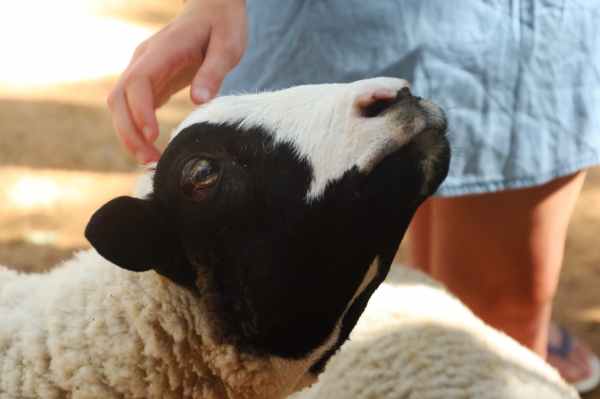
When David talks of anointing, he speaks from multiple layers of experience. As a shepherd, David would pour oil over the heads of his sheep. This served two purposes– it would keep insects from burrowing in and around the eyes, nose, ears, and necks of the sheep, where they could do untold damage, and where sheep could not dislodge them; and it would help them as they grazed among briers and rocks where they might get snagged, cut, or scraped. Oil brought protection and healing.

Photo by julie aagaard on Pexels.com

But David was also a King. He had been anointed by Samuel to be the next King of Israel as a young man. Even though he had to wait through years of danger, war, and exile, he had been chosen and set aside by God. God had seen him through and raised him to prominence, and He had signaled all that through anointing.

Photo by Mike Bird on Pexels.com

God is our Good Shepherd. He anoints our heads with oil– for protection, for healing, for service, and for ordination. Our Shepherd cares deeply for our physical and spiritual needs. And He appoints us to His service–He has a purpose and a position for each of us in His kingdom.

In days of confusion and suffering, we can forget to look for the Shepherd’s presence and His provision. We may lose strength, and even the will to thrive. But God can and will strengthen us with “spiritual protein” in His word and through fellowship. He will provide us with “booster shots” of blessings– friends who pray for us and with us; scripture that inspires and convicts; hymns and songs that remind us of His amazing grace and love; moments of prayer and meditation that carry us through the day. God will provide the daily anointing we need– and when we turn our face toward His, we will see eyes of love and feel His gentle hands of grace as He gives us all we need.

For more on Biblical anointing– it uses, meanings, and symbolism, check out these resources:

https://www.biblestudytools.com/bible-study/topical-studies/why-is-anointing-oil-important-in-the-bible.html

https://www.christianity.com/wiki/christian-terms/anointed-definition-anointing-oils.html

https://equipherlife.com/2011/06/23/the-shepherds-oil/

Blog at WordPress.com.

Up ↑