Now I Lay Me Down to Sleep..

Now I lay me down to sleep;
I pray the Lord my soul to keep.
If I should die before I wake,
I pray the Lord my soul to take.

I learned this prayer as a child. It seemed very grim, and pessimistic. As a child, I spent very little time (as little as possible) thinking of my own mortality, or the state of my soul after a day of playing with dolls or running around outside. I was blessed with a safe and easy childhood. Of course, I had days of sickness, a bout of chicken pox, the loss of a pet, news of neighbors who had died in war, fallen to cancer, or been killed in accidents–moments that caused me to reflect a bit more. But I didn’t want to think about serious things. I wanted peace and happiness.

As a younger adult, I came to the conclusion that prayers like this were old-fashioned, and designed to scare vulnerable children into a false faith based on fear and gloom. Shouldn’t children learn about the Love of Jesus and the Mercy of the Father, instead of worrying about death and eternal doom of their soul? Prayers like this would be “bad” for young children; traumatic and disturbing. Better to teach them prayers that were sweet and light, and full of only the goodness of God.

Lately, however, I remember things a bit differently. Yes, there is gloom and doom in this old children’s prayer, but there is also comfort, Love, and Mercy. As a child, I could “lay me down” to sleep in peace, knowing that God would, indeed, keep my soul from harm. I didn’t expect to die, but when I woke up dreaming of monsters, or suddenly became aware of mortality, I didn’t have to stay fearful. God is bigger than any monster; bigger then Death. I could not trust anyone better, mightier, or more capable than the Lord to keep my soul, or to “take” it safely to its final destination. I learned about the Goodness of God, but I also learned about stark realities– the persecuted Church, war, famine, injustice–things that God wants me to confront, and endure, and lift to Him in prayer. And for every “gloomy” reality, there are stories of victory and joy, faith and resilience, love and grace– because God is standing by, ready to rescue and reassure and redeem.

Bedtime prayers are a great comfort to me now. And they are also important prayers in my Christian Walk. It is at bedtime that I can reflect on God’s goodness throughout the day. I can be thankful for all the blessings God has given me, and for all the ways He has guided me and protected me– often without my knowledge and in spite of myself! Instead of worrying, tossing and turning, trying to “figure out” tomorrow, I can lift my burdens to God, knowing that I won’t face anything tomorrow alone! I can reflect on all the times I thought I couldn’t make it, but God made a way! And I can confidently rest in the hope that nothing can separate me from God’s loving care. Not yesterday’s guilt, nor today’s failures, nor tomorrow’s unknown (or imagined) trials– not even death!

I am old enough now that mortality plays a bigger role in my thoughts. I have lost my parents, my grandparents, aunts and uncles, classmates, co-workers, neighbors, and friends. I’ve experienced both great joy and great sorrow. But I need not be afraid of disease, dilemmas, or death. I need not worry about the state of my soul. I may have griefs, aches and pains, and worries about tomorrow. But I can “lay me down” in peace and patience, knowing I have a Good, Good Father whose love has surrounded me for over half a century. I can “Hush” all my fears, and sleep like a baby, knowing my God is always standing right by my side.

“Praying” Hide and Seek With God

A strange image popped into my head the other day while praying with our Wednesday morning prayer group from church. I was trying to express the amazing paradox that we are being pursued by a God who is omnipresent, while seeking the same omnipresent God. And the image God gave me was one of playing a game– “Peek-a-boo” or “Hide and Seek.” Of course, prayer is not just a game– it is nothing less than communicating with the Sovereign Lord of the Universe! But God delights in our prayers, and He delights in delighting us as we learn and experience new aspects of His Character.

I love to play “Peek-a-Boo” with babies and toddlers. They love the idea of being “discovered” and “finding” someone. There is a moment of supreme joy in finally seeing oneself in the eyes of the beholder– that moment of recognition and reaction to being the focus of someone’s attention–the joy of intimate connection, “I SEE YOU!” But the game only brings joy if both of us are present and interacting. It brings no joy to a baby to see me staring off into space, or glued to my cell phone. The baby might be intrigued, or even comforted by my nearness, but there is a deeper thrill when she knows that my eyes will shine as they are revealed– looking directly at her! And I get great joy from seeing the baby’s delight.

The same is true of “Hide and Seek.” Yes, the idea is to hide from sight–for awhile. But what fun is it to hide and never be found? What fun to search for someone who has gone away and has no desire to be discovered again? The joy of the game is in that moment of discovery and being discovered– even though we know the other person is somewhere close by, there is that moment of re-connection that brings a jolt of delight. AHA!! I have found you! AHA! You searched for me and found me!

Photo by Nicola Barts on Pexels.com

This is the great tragedy of Sin. Sin causes us to want to hide and NOT be found. (See Genesis 3:8-10). We live in shame and fear, dreading the thought of God finding the “real” us, the secrets we carry, and the ugliness of our hearts. We are frightened by the thought that God is omnipresent– that He sees us; that He sees THROUGH us! We do not want to “Face” God’s justice, and see disappointment and anger in His face. Instead, we want to run away, to cover our eyes, if He will not cover His.

Conversely, this is the great joy of being a Christian. We don’t hide from God’s presence; instead, we turn to Him in delight and recognition. We pray to BE found and to be seen! Finding God, and being found BY Him, involves no fear, no condemnation (Romans 8:1), and no shame. God sees us– all our secrets and shame– through the blood of Christ’s redemption. We are “Born” again– like babies, we can revel in the connection with Our Loving Father. Like a child waiting for the “boo” in Peek-a-Boo, we anticipate the day when we will see Him face-to-face in all His Glory; in the meantime, each glimpse of His Grace, each revelation of His Faithfulness, builds our Hope and our Joy, excites our anticipation, and makes our Heart yearn for the future.
God is omnipresent. His spirit is all around us all the time. As Christians, His Spirit is indwelling– He is not just all around us, but He lives and works IN us and THROUGH us! And yet, God delights in those moments when we turn away from the world around us to focus on just Him. In the same way, even though God is everywhere, He seeks after us and pursues us with a passion and devotion that knows no limits– “Here I am!” “I SEE YOU!” “You are the one who makes my eyes shine!” “I LOVE YOU!”

Today, as you turn away from the world to focus on the Lover of Your Soul, may you find that incredible delight in recognizing His Presence for what it is– Divine, Eternal, Limitless, and Loving.

A Prayer For Fathers

Photo by Pixabay on Pexels.com

We are approaching Father’s Day. It is a day of celebration for many people, but it can also be a day of sadness for others. This year will be a milestone for our family, as my father passed away 25 years ago; and yet–we are preparing to celebrate the birth of my grand-nephew’s first child. This will make him a father, my nephew will become a grandfather, and my brother will become a great-grandfather! My husband is a father and grandfather, and so are three of his brothers. We also have brothers, brothers-in-law, nephews and cousins who are great dads. So we really have a lot to celebrate!

Fatherhood– the kind we celebrate– is more than just contributing genetic material to a new life, or claiming a child on an income tax statement, or showing up once in awhile for major events. Fatherhood involves sacrifice. It requires wisdom and patience. It involves ongoing commitments, and the tough love that says, “No” because it’s the right thing, rather than the easy thing to say. Fatherhood requires a man to be a teacher, provider, protector, defender, coach, and disciplinarian. It also requires humility, and grace, encouragement and sometimes tears. In addition, fatherhood requires prayer. No father is perfect, and no father can do all that he needs to in his own power. Fathers need our support and encouragement, our grace, and our prayers.

Photo by Kaysha on Pexels.com

It is tempting to label our fathers. I have known “good” fathers. And I have known fathers who have abandoned or even abused their responsibilities, causing trauma, anguish, and hurt to their families, lasting for generations. My own father wasn’t perfect, but he was a “good” father. He was a man of humor and integrity, faithful, honest, loving and humble; a man of faith, and a man of honor. My father-in-law was the same. They left wonderful legacies of wisdom, hard work, and quiet strength. But I know of other fathers who have ruined the lives of their children (as well as their own lives) through fear, selfishness, addictions, abuse, anger, greed, and pride. Father’s Day can cause regret, envy, and bitterness in the hearts of many fathers and children alike. Many people would like to forget about their fathers on Father’s Day. Some don’t even know how to celebrate– they’ve never seen or heard from their father; some don’t even know his name!

Photo by Ketut Subiyanto on Pexels.com

But Father’s Day is not only for “good” fathers. It is a time to honor those who have been faithful, but it is also a time to reach out to those who need help. Good fathers are needed! And “bad” fathers need to be called out– not indulged or ignored, but held, guided, rehabilitated, or even incarcerated, for the good of their children. Hurting boys often grow up to be hurtful fathers. Hurting girls often end up in hurtful relationships. Hurtful fathers often struggle with their own baggage of hurt and disappointment from past generations, without knowing how to change. Fathers need more than a “day”, a cook-out, or another tie. They need a mission and a purpose; they need respect and forgiveness; they need encouragement and accountability.

My prayer today is that this Father’s Day can be a day of honor AND of healing for fathers and their children. I pray that struggling fathers will be encouraged and strengthened; that hard-working, faithful fathers will see the rewards of their efforts and find hope to keep going; that absent and apathetic fathers will wake up to the challenge and the gift of fatherhood; that broken fathers will find help and healing for themselves AND for their families; that hurting sons and daughters will find the grace to move beyond the pain of unmet expectations and abuse to become better men and women.

Photo by Anna Shvets on Pexels.com

All that I pray for is made possible because we have a Heavenly Father– a perfect, loving, eternally wise Father– who loves us through our struggles and our pain. He knows our every need, sees our every tear, and hears our every prayer. He is ready to be our coach, our provider, our healer, our disciplinarian, and our protector. No matter our experiences or how we feel about our earthly fathers, or about being a father, we can trust Him to be all that we need. Our Heavenly Father will never abandon us, reject us, abuse us, or despise us. He will comfort, encourage, uplift, and guide us– now and forever. All we need to do is pray and accept Him for all that He is!

Be Careful What You Pray For…

When I was a young woman, I prayed for patience. Several well-meaning friends and family tried to tell me that this was a mistake. “Be careful what you pray for,” they said. It was their belief that, if I prayed for patience, God would send situations into my life that would force me to be patient. God doesn’t “give” patience, they warned–He merely teaches us to be patient.

Photo by Anna Shvets on Pexels.com

I wanted more patience, in preparation for marriage and children; I wanted to be a patient wife and mother. But I was unprepared for this reaction of others. DON’T ask God for something good? Isn’t patience (long-suffering) one of the attributes listed as the “Fruit of the Spirit?”(Galatians 5:23-24) Why should I hesitate, or fear to ask God for something that will help me serve Him better?

Looking back, I suppose some of those same friends and family might say, “I told you so!” I’m sure they wanted a happy and easy future for me– one that didn’t include some of the challenges that I have had to face. And in their eyes, I was “tempting fate” to draw attention to my lack of patience. On the surface, it probably looks like that’s exactly what happened. I never had any children; I didn’t marry until I was in my mid-40s, and I have learned patience in many areas through many challenges.

Photo by Liza Summer on Pexels.com

But that’s just one perspective. What if I hadn’t prayed that prayer? Would God have let me drift through life without “needing” more patience? Would I have “avoided” the years of loneliness and lack of children? Would I have married and had a family and lived happily ever after without having to learn patience? Would my life have been totally different? Or would my circumstances have been the same, except that I never would have learned patience–never sought to become more patient during the same trials and challenges? What kind of life might I have had WITHOUT patience?

Photo by Liza Summer on Pexels.com

During the years that I was single, I worked full-time in youth-oriented jobs– teaching and serving in the youth department at a library. I learned patience by disciplining teenagers, cleaning up after toddlers, answering the same questions twenty times a day, and dealing with obstinate parents! I suffered with my students when one of their classmates died; and when it happened again the next year. I agonized with my student who chose to keep her baby after those close to her wanted her to have an abortion. And I rejoiced with her when she brought her son to visit me a year later. I suffered the frustration of parents whose children were rebellious, or had learning issues, or had been diagnosed with autism or ADHD. But I also endured the long nights when I had no little ones to tuck in or talk to (and learned to be thankful for the nights I didn’t have to deal with fever and sickness, or arguing–again– about the rules of the house!) But in the course of my work, I connected with hundreds of children and teens. They were never “mine” to hold or scold or say, “I love you”, but they touched my life, and I hope that I touched theirs as well. I didn’t choose my career path knowing that I would never become a “mom.” But I needed (and learned) patience in the process. I learned patience in the years I spent single–and I learned to appreciate my husband in ways I wouldn’t have as a young woman.

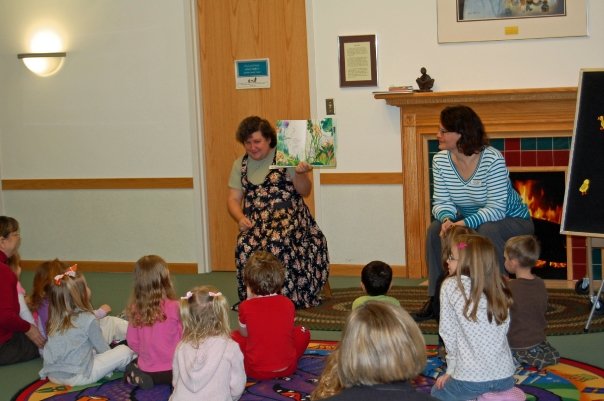
Story hour at the library c. 2009.

There IS some truth to the phrase, “Be careful what you pray for.” When we pray, we should pray for things that align with His will– like wisdom, patience, courage, or peace. We should not pray for things that contradict His will– instant popularity, wealth without work, or relationships or circumstances that dishonor Him. We should also be prepared for God to answer in the way He deems best–which may not look or feel like what we desired. It was His best for me not to marry young or have children of my own. He has since blessed me with a wonderful husband and step-children and grandchildren. But He might have chosen not to. And I would still thank Him for the life I have led. It’s been fantastic. I’ve met amazing people, had amazing opportunities, and traveled to wonderful places. I don’t feel like God ever “punished” me for asking for patience– instead, I feel that He has more than answered my prayer. That doesn’t mean that I have learned to be perfectly patient in every situation (just ask my husband!) But God is eternally good and faithful to give us what is in our best interest– if we ask, AND if we trust His answer more than our expectation. (see Hebrews 11:6; John 17; 1 Peter 5:7)

Photo by Tima Miroshnichenko on Pexels.com

Don’t be too afraid or too proud to ask God for any good thing. God will not only give you what you need, He will be with you every step of the way as you learn and grow, and develop into the person He wants you to be!

When Nothing Else Could Help…

Earlier this week, my mother celebrated her 88th birthday. Mom has survived more than most people can imagine. She was born in 1933, during the worst years of the Great Depression. She survived hunger and poverty, near-homelessness, and insecurity in her earliest years, despite my grandparents’ best efforts to provide for their family. She survived the upheaval of World War 2, when her father left to serve in the Navy and her mother worked long hours in a factory. She and her sister had to take on most of the housework.

Photo by Mikhail Nilov on Pexels.com

As a teenager, mom fell madly in love with a young man who convinced her to drop out of high school and become his wife. Her romantic dream quickly turned into a nightmare of abuse, heartbreak, fear, and starvation. Though he loved her, her husband could not control his own inner torments. He drank heavily and was very controlling. He insulted her, isolated her from family and friends, forbad her from going to church, and he sometimes punched her. By the age of 19, she was anemic, weighed less than 100 pounds, and had just miscarried twins– partly because she had been denied access to pre-natal care; partly because she had been beaten and malnourished. But she survived, and went on to have a healthy pregnancy, mostly because her husband was drafted and sent to Korea.

Photo by Victoria Borodinova on Pexels.com

Mom survived divorce, something to which she had always been opposed, for the sake of her son. She survived the threats against herself and her young boy. She survived all the court dates and new responsibilities. She survived working 10-hours days, six days a week, at a butcher shop, cutting, grinding, and packing up meat, so she could provide for her young son.

Mom remarried at age 30. Shortly before her marriage, she had found a better job; one with better pay and shorter hours. Shortly after her marriage, on her way home from work, she was involved in a horrible accident. She had a head injury, broken ribs, and a broken collarbone. She began suffering from headaches. She suffered another miscarriage. But she survived, and went on to have me and my sister, both healthy deliveries. She had stopped working to be home with us, but she was involved in multiply volunteer opportunities through church and in the community. But her headaches were debilitating, and with them came depression.

Photo by Karolina Grabowska on Pexels.com

Mom survived many dark days of pain and doubt. Though she was socially active, it took a great deal of energy and will to force herself to get out and keep going. Her doctor gave her medication for depression, and, thankfully, he carefully monitored what she took and whether it was effective. The headaches did not diminish, and mom treated them with massive doses of Anacin and other pain relievers.

Photo by cottonbro on Pexels.com

In her 50s, mom developed more health problems. She developed arthritis. She had a hysterectomy, and had to have her gall bladder removed. In her 60s, mom had cataract surgery. Then she had to watch as her husband’s health deteriorated, and she lost him just after their 35th anniversary. She survived, and had to adjust to widowhood. In her 70s, she had more surgeries– she lost part of her thyroid, and nearly died. She had surgery to “undo” some of the damage from her earlier hysterectomy. She was diagnosed with bone density issues, which caused a curvature in her spine. In her 80s, she developed a heart condition. She had to undergo heart surgery and have a pacemaker. She could have died, but she didn’t. She developed a series of infections from one of her earlier surgeries, and had to use a cane to walk because of the bone density and spine curvature. She was diagnosed with macular degeneration, meaning that she is slowly going blind.

Photo by Vidal Balielo Jr. on Pexels.com

Last fall, during the height of the COVID crisis, Mom fell and broke her hip. She was in a hospital where there were COVID cases, and she was transported to a rehab facility that had 4 COVID cases. By the time she left to come home, she was one of only 4 who had NOT developed COVID at that facility! She continues to go to outpatient rehab twice a week, and now has to use a walker, instead of just a cane, to provide balance and stability when she walks. She no longer drives, and has trouble reading, due to the macular degeneration. But she survives.

I say all of this, not because my mom is tougher, or luckier than other folks; not because she is more worthy of life than those who have not survived such struggles, and not because her life is more tragic than anyone else’s. I say this because my mother is a woman of prayer.

Last week, for Mother’s Day, we took my mom to her local church. She no longer drives, and she rarely gets out because of her health issues. But she wanted to be in church that Sunday. The very first hymn they sang that day was “Love Lifted Me.” And I cried. That was the song she had used, fifty years ago, to rock me to sleep as a child. Sometimes, she would sing it out. Sometimes she would just hum the tune as she rocked me. She was often crying as she sang– exhausted, depressed, worried, or haunted–but those words imprinted themselves in my young mind:
Love lifted me.
Love lifted me.
When nothing else could help–
Love lifted me.

My mother wasn’t just singing those words, she was praying.

Mom has lived out those words. Crying out to “the Master of the Sea,” Mom has been lifted up time and again. She has been a prayer warrior, knowing that her prayers rise to the One who loves her best of all; the One who holds her destiny and her redemption in His hands. No matter her circumstances, she can sing, knowing that love will continue to lift her, and carry her through.

Praying in Heartbreak

Yesterday was Mother’s Day. And it was a good day. It started out cold and wet, but I got to spend time with my mother, my mother-in-law, several other family members, and some dear friends from childhood. It was a happy day, and it ended with sunshine breaking through the late afternoon clouds, birds singing, and a full heart of memories and gratitude.

Photo by Pixabay on Pexels.com

But Mother’s Day wasn’t always like that for me. For many years, it was one of the worst days of my year. No matter the weather or the company, there was always a shadow of barrenness and emptiness. Yes, I was grateful for my mother; for my grandmothers and aunts and other relatives; for my friends and their adorable children. But I felt shut out– I was not a mother. I would never be a mother. I was always on the outside looking in.

Photo by Andrea Piacquadio on Pexels.com

My circumstances are slightly different now, but I am still not a “natural” mother. No one calls me “mama” or even “grandma.” But Mother’s Day isn’t meant to be a day of sorrow and emptiness, and after years of prayer and letting go of expectations, God is showing me how to enjoy and embrace the circumstances in which He has placed me.

Photo by Design Killer on Pexels.com

I am not alone in this struggle– far from it. For the past few weeks, I have heard from heartbroken people who dread Mother’s Day. Those who have lost their mothers face the reminder of their grief and loss. It is particularly hard on those who were unable to spend precious days with a dying mother due to COVID restrictions, or lost their mother to COVID. Some mothers are reminded of the wrenching loss of a child– still birth, drug overdoses, suicide, auto accidents, childhood cancer– gut-churning emptiness where once there was a promise of joyful life, grandchildren, shared memories, and so much more. Other mothers (and their children) face the pain of separation and severed relationships. Many, like me, face the reminder that they are NOT a mother– not a “real” mother–even if their circumstances or careers are filled with children “not their own.” And some people face multiple circumstances that cause grief, bitterness, alienation, anger, and despair.

Photo by Ken Ozuna on Pexels.com
Photo by rawpixel.com on Pexels.com

These feelings of sadness and loss are natural, but they do not have to weigh us down or control how we face each day. God wants to share these burdens; He wants to carry the weight of our brokenness and free us to experience joy and peace– even in the midst of our pain! And on those days when our circumstances threaten to overwhelm us, God is never more than a prayer away. He doesn’t make our grief disappear; He doesn’t erase our memories. But He can redeem them with a changed perspective and new hope.

Mother’s Day, Father’s Day, Valentine’s Day, birthdays, anniversaries, etc.– each can bring bitterness and heartbreak, as well as joy. We do well to pay attention to those around us who dread such holidays, and offer the comfort, hope, and encouragement of a listening ear, a loving heart, and, most of all, a loving God who longs for us to pray in and through our heartbreak.

Praying For My Children From Another Mother

(Dedicated to all those who are step-mothers, adoptive mothers, foster mothers, or in other ways entrusted with children not of their womb.)

I did not give birth to them, Father. They are not the children of my womb; they are still the children of my heart.

Photo by Ketut Subiyanto on Pexels.com

And I know you love them more than I do. That they are YOUR children first, last, and foremost.

God, Thank You for giving me the privilege of letting me be part of their lives; for allowing me to share their hopes and dreams, their failures and their struggles; their smiles and their tears. Thank you for their unique interests and personalities. Thank you for their laughter, and their questions. Thank you for their hugs, and their pouts, and more questions…

Photo by cottonbro on Pexels.com

Father, help me to see them with your eyes– not through the lens of my own hopes or expectations; or my inadequacies and fears–help me to see who they are, and who you created them to be. Help me to help them to see how special they are in your eyes.

Help me to honor these children by not dishonoring the mother who gave them birth. May I never cause her children to despise her–or themselves– because of what I say about her. But help me to protect these precious children from anyone–anyone– who would hurt, abuse, exploit, or endanger them. May our home be a safe place to learn love and forgiveness and healing in a world of broken families.

Photo by Migs Reyes on Pexels.com

Help me to honor my husband as the leader in our home. Help me to model how to be a true “help-mate” and partner– not a nag; nor a dishrag–a strong, compassionate, supportive, and respectful team player.

Help me to foster good relationships among all the children of this household– to love them each differently, and yet the same. To be fair to each individual, giving them guidance and “space” according to their needs. To do and say all in my power to help each child feel secure in our love and secure in their “place” as part of this family.

Help me to forgive and ask forgiveness freely– through outbursts, baggage, fears, and tantrums– theirs and mine!

Most of all, help me to introduce each one to Your all-encompassing love, Your wisdom, and Your eternal care. May they see you in the things I say and do; in the way we love and forgive as a family; in the way we seek the best together.

Photo by Pixabay on Pexels.com

In the name of Jesus, whose earthly father was entrusted with a similar gift,

Amen

Hannah and Eli

The story in the Bible about Hannah is about prayer; it is also about depression, anguish, misunderstanding, marriage, rivalry, infertility, trust, and obedience.

Yesterday, I talked a bit about the priest, Eli, and his wicked sons. It is that same Eli who becomes a surrogate parent for Hannah’s precious, promised son, Samuel.

Think about that. In all my years reading through this story, it never occurred to me that Hannah had already known about Eli’s sons and their wickedness. Hannah knew that Eli was not the best role model for her small son. She knew that she was sending her child into an environment that included corruption, injustice, and perversion. This child she had promised to “give back” to God would grow up in a family more dysfunctional and dangerous than if he had stayed with Hannah, Elkanah, and even Peninnah and his half-siblings.

Photo by JJ Jordan on Pexels.com

The Bible does not give us all the details of either family, (https://www.biblegateway.com/passage/?search=1+Samuel+2%3A11-26&version=ESV ) but there is evidence that Elkanah was a good provider, an honest and worthy man, and a good father. Eli, on the other hand, was told of his sons’ wickedness, and, other than giving one mild rebuke, he turns a blind eye to their practices and grows fat and lazy in his service. There is no mention of a mother or motherly influence at all in Samuel’s new “foster” family. Why would Hannah surrender her maternal rights (and why would Elkanah agree to forfeit his paternal rights) to send Samuel into this hornet’s nest?

Perhaps the answer can be found just before the account of Eli’s wicked sons. At the end of Hannah’s Song (which we will examine in more detail later), we have a profound statement of faith:

1 Samuel 2:9-10 English Standard Version (ESV)
“He will guard the feet of his faithful ones,
    but the wicked shall be cut off in darkness,
    for not by might shall a man prevail.
10 The adversaries of the Lord shall be broken to pieces;
    against them he will thunder in heaven.
The Lord will judge the ends of the earth;
    he will give strength to his king
    and exalt the horn of his anointed.”

http://www.biblegateway.com

Hannah was not giving Samuel to Eli to raise; she was giving Samuel to God to raise and guide and protect.

I am writing this today, not to encourage parents to absolve themselves of responsibility for training and caring for their own family, but to encourage those parents who may not be in a position to guide and protect their children. Some of us have children, grandchildren, siblings, or other young and vulnerable family members living away from our care or influence. Some are living in dysfunctional and even dangerous environments. God KNOWS. He SEES. He HEARS. We do not know, nor do we understand, why God allows innocent people to suffer. We do not know what fears or concerns Hannah and Elkanah may have had about Samuel’s upbringing. We do not know what Samuel endured under Eli’s care, or what he saw or heard in the presence of Eli’s sons. As a child, he may have been spared some of the worst of their behavior.

Photo by Pixabay on Pexels.com

We do know two things, however. Hannah and Elkanah may or may not have had reason to trust Eli. He did allow them to visit each year, and he seems to have been fond of young Samuel; certainly the Bible stories I used to read in Sunday School made Eli seem like a kindly uncle. But the reality was that Samuel’s life was not in Eli’s hands–it was in God’s! Hannah and Elkanah trusted God to guide their son, even as they relished every moment they were able to spend with him. They certainly prayed for his safety and growth in wisdom as he served in the Tabernacle of the Almighty.

Secondly, we know that God can bring good out of even bad circumstances. Eli was weak and indulgent with his sons; he was warned and did nothing. He sat down on the job and faced judgment without repentance. When Samuel was grown, this pattern could have been repeated. Samuel’s own sons began taking bribes and perverting justice. Samuel was still serving faithfully, even as an old man, but his sons were not following his good example. However, when the people came to Samuel with reports of his sons’ activities and asked him to step aside and appoint a king, Samuel sought the Lord. God reassured him, and Samuel was faithful to appoint and advise Israel’s first king, Saul. God was faithful to guide Samuel’s footsteps, and to bring justice against the wicked sons of Eli.

Photo by omar alnahi on Pexels.com

Eli’s flawed examples of fatherhood and leadership still served as models for Samuel. Even as a child, he showed wisdom, respect, and love for his “foster father” and mentor. Hannah and Elkanah never wavered in their trust that God could and would guide their son and provide for him. Their faith wasn’t based on the knowledge that Samuel would one day become the chief priest and anoint both Saul and his successor, David. They only knew that God could be trusted.

That is not a promise that every child in a bad environment will be “safe” and rise above their circumstances to become famous or powerful. But it is reason to keep hope and faith when we feel powerless. None of Hannah and Elkanah’s (or Peninnah’s) other children are mentioned in the Biblical narrative. They may have been honest, upright citizens, successful in business or esteemed in their hometown of Ramah. Samuel’s story is not a parable–there is no “moral” about “giving a child back” to God and being able to expect success and fame and blessing. There is, however, a lesson here about recognizing that every child is a gift– not a reward, not a burden–our children belong to God. We should do our best to guide them, nurture them, protect them, and above all, to love them. But their destiny– including tragic circumstances and glorious opportunities–is not ours to control.

Next time, we explore another important relationship– that of Hannah and her Son.

Fruitful Families

Yesterday was my Grandmother’s birthday.  She passed away over 20 years ago, but I still cherish the memories I have of my time with her.  She was a woman of quiet dignity, gentle wisdom, and deep love for her family and neighbors.

Gramgrad

While I was still in my late teens and early twenties, my Gram started getting me interested in genealogy.  She had amazing stories that had been passed down through several generations, but she was unsure how many of them were “true” and how many had devolved into legend and half-truth.  Her stories became the first framework I used to research our family’s roots.  Over thirty years later, I have books and charts and databases filled with names, dates, stories, photos, mysteries, dead ends, twists and turns, surprises and more.  I have traced my own family, my husband’s family, related families, possible connections to famous people in history, and mapped out many of the locations where our families lived over the centuries.

architecture bridge clouds countryside
Photo by Pixabay on Pexels.com

God created and instituted families, and I’m so grateful for mine.  In spite of the many tragedies and skeletons I’ve found along the way, one thing is clear.  God’s design for families is good and leads to hope, security, and fruitfulness.

All families are unique, but the design for families– the traditional family model–has been pretty consistent throughout the centuries and even across cultures.  It may not always be the “nuclear” family of a mother and father and two or three children in a single household.  Sometimes it is made up of multiple generations or nuclear groups sharing a house or living communally, and there have always been blended families, or single-parent households, but there is a consistent expectation of being able to trace one’s mother’s family line and father’s family line through at least two or three generations– knowing their names, where they were born, and when they lived and died.

As technology is advancing to make this kind of genealogical research even easier, society is pulling away from the traditional family model and making it harder and harder to find one’s “roots.”  Children live with a series of adults– “aunties” and “dads” who bear no biological relationship and no lifelong commitment to them.  Children whose fathers are nameless, faceless DNA donors, or whose parents left them to chase a career, or be with a new lover or a consuming addiction.  Grown children rebel and leave their families behind to mix and mingle with other free-floating adults, never desiring to continue a legacy of family ties.  Many people look upon this as “progress”– changing the definition of family…ironically, they use the term “relative” when talking about values and definitions, even as they redefine what it means to be a “relative.”

alone blond child cute
Photo by Pixabay on Pexels.com

God doesn’t love us less if we don’t come from a traditional family– certainly, He is the God of the orphan, the fatherless, and the widow.

Psalm 68: 4-6: (NIV, courtesy of biblegateway.com)

 Sing to God, sing in praise of his name,
    extol him who rides on the clouds
    rejoice before him—his name is the Lord.
 A father to the fatherless, a defender of widows,
    is God in his holy dwelling.
 God sets the lonely in families,
    he leads out the prisoners with singing;
    but the rebellious live in a sun-scorched land.

God wants us in families– He wants us to grow and be fruitful.  “The apple doesn’t fall far from the tree,” is a phrase often used about family members being alike in their thinking or actions or habits.  And so it is with families who grow and live together.  We may “fall” away from our birth families, and move miles away, but we will produce a new tree with the same fruit– fruit that nourishes communities and societies and new families.

red apples
Photo by Elizabeth Tr. Armstrong on Pexels.com

However, when we lose the pattern of families as God set them up, we lose a lot of other good things:

  • A sense of belonging–sure we all belong to the entire human race, and we shouldn’t become exclusive and tribal at the expense of our neighbors and others, but there is a point at which we want to know where we “fit” in the scheme of things.
  • Support and encouragement–I love my family; and I even like most of them!  But I recognize a bond that cannot be broken lightly, and it keeps pulling us together in good times and bad.  We are there for baby showers, funerals, weddings, house-warmings, graduations, and reunions.  As our family has grown, we can’t always be at every event, but I will never be without anyone.  There is a horrible epidemic of people who ARE living and dying alone– no family to visit or be visited; no family to talk to, or argue with, or share memories.  This breaks my heart, and it breaks the heart of the God who made us to be “relational.”
  • History and legacy–My life has a purpose and fits into a plan.  I am uniquely “ME”, yet I am also a daughter, sister, wife, step-mom, grandma, aunt, and cousin (and second-cousin once-removed, etc.).   I didn’t just appear out of thin air, and I won’t disappear without leaving a trace.  The choices I make don’t just impact my life.  This is important regardless of my history–I am the one who can change a bad legacy into a great heritage, or ruin a heritage and leave a legacy of pain for those I leave behind.

superdad

  • Role models–Having roles within a family prepares us for having roles at work and in our communities– we learn to speak out, and to listen; we learn to ask for and offer help; we learn to respect others and earn the respect of those around us.  We don’t learn these lessons perfectly, because there are no perfect families.  But families provide a structure and pattern for teaching life lessons that is time-tested and approved.  Busy parents are aided by grandparents, uncles, and older siblings and cousins in modeling good behavior, correcting bad behavior, and answering questions ranging from “the birds and the bees” to how to braid hair or tie a necktie.  When that structure is missing, young people fall through the cracks in ways both small and crucial.
  • Seeing how God’s love works through the ages.  God doesn’t just love in spurts and impulses.  God’s love is eternal, and meant to be shared from generation to generation and spread from family to family.


I pray today that, just as my grandmother encouraged my love of family, that I will leave a legacy of love and faith for others in my life– those who are family by blood, and those who have become the family of my heart.  And I hope that others will pray for our families to stay true and strong and fruitful, too.

man standing beside his wife teaching their child how to ride bicycle
Photo by Agung Pandit Wiguna on Pexels.com

Blog at WordPress.com.

Up ↑