Prayer and Marriage

As a young girl, I prayed about being married. Most of my prayers were pretty shallow– more about the wedding than the marriage. I dreamed of dresses and decorations, flowers and a shadowy “prince charming” type of groom, whisking me off into the sunset and living happily, dreamily ever after.

The years went by…MANY years! I prayed and dreamed through my twenties; I prayed and hoped through my thirties; and I prayed with less hope and more desperation in my early forties! But my prayers changed as I saw marriages around me. I saw many marriages that were solid, even through tough times. And I saw many “fairy tale” marriages crumble. I saw a lot of heartbreak, anger, and tears, as people who had once vowed to love one another “’til death us do part” fought over furniture and who got the kids over minor holiday weekends. I heard from frustrated wives who felt like they had made a huge mistake, marrying the “man of their dreams.” Some of them compounded the mistake by looking around for a replacement “Mr. Right.”

Instead of praying about a wedding, I began praying about marriage. Instead of praying for “Mr. Right,” I started praying that God would help me become “Mrs. Right.” And I prayed that God would show me what I should do for others during the time that I was single, as well as what I could do for him in a marriage relationship.
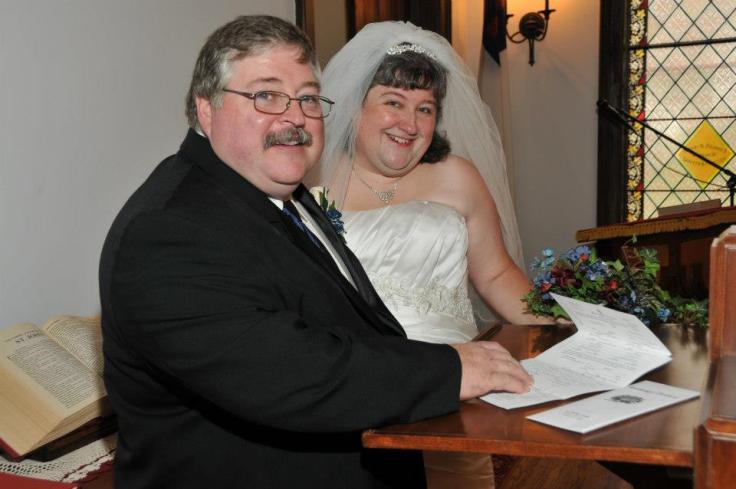
Thirteen years ago, I married my husband, David. He isn’t “Prince Charming,” though he can be charming and noble at times. He is, as I am, a flawed human being. David was married before, and he carries the hurt of betrayal and loss of trust from the past. I carry the hurt of being rejected and passed over for so many years. Marriage doesn’t make the past disappear. Marriage is not a “cure” for such hurts.

But marriage is more. God instituted marriage from the beginning for a man and woman to come together in a mysteriously intimate relationship that models what God’s love is like. (See Genesis 2:24; Matthew 19:5; Ephesians 5:31 and others.) David and I don’t exist to “complete” each other. We don’t cease to be our own individual selves. And yet, we are not the same as we were before our marriage. We are more than the sum of our parts– we are ourselves, yet we are one– the Fairs. He is David Fair, and I am Lila Fair, but WE are THE Fairs. And spiritually, we are also one WITH Christ– as individuals and as a couple. We walk forward as One. We make decisions together. We share hopes and dreams, as well as struggles and disappointments. We fight sometimes– not against each other, but against differences or misunderstandings that could weaken US as a couple and weaken our relationship with Christ.

I don’t pray any less often or less fervently now that I am married, but I pray daily about my marriage. I thank God that He was with me through all the “single” years. I thank God that He continues to work in our marriage– that David and I know more about love and faith, hope and fulfillment than we did 13 years ago! I pray that David and I will grow together for many years to come. I pray that we will impact our family as we live out what a Godly marriage is supposed to be. I pray that our marriage will inspire young men and women who are looking (as I once was) to see what a solid marriage involves– that the way we talk to each other, and behave, and work, and live will give hope to future couples, and glory to God.

Marriage and prayer go hand in hand. Prayer cannot guarantee that marriage will be easy–or even than it will survive. Marriage takes two people praying and walking in the same direction! But marriage–and life– without prayer will never be all that God intends it to be.

Make Every Effort…

3His divine power has given us everything we need for a godly life through our knowledge of him who called us by his own glory and goodness. Through these he has given us his very great and precious promises, so that through them you may participate in the divine nature, having escaped the corruption in the world caused by evil desires. For this very reason, make every effort to add to your faith goodness; and to goodness, knowledge; and to knowledge, self-control; and to self-control, perseverance; and to perseverance, godliness; and to godliness, mutual affection; and to mutual affection, love. For if you possess these qualities in increasing measure, they will keep you from being ineffective and unproductive in your knowledge of our Lord Jesus Christ. But whoever does not have them is nearsighted and blind, forgetting that they have been cleansed from their past sins.
2 Peter 1:3-9

man beside window wearing black jacket

There are a great number of Christians who face discouragement and frustration in their daily life.  Sometimes, this is because they are busy looking at their circumstances and feeling overwhelmed by them.  But sometimes, there is a general discontent; a malaise of lukewarm commitment and lackluster results that can cause once fruitful Christians to wander away from the faith and even disparage their former churches.  “I wasn’t being ‘fed'”… “It just wasn’t working for me”…”I got tired of the persecution (not genuine persecution, but the feeling of being left out or unappreciated) “…”the church just isn’t relevant anymore.”  These are a few of the excuses I have heard from people who were once joyful and eager to share their faith.  I don’t doubt that they experienced Salvation– but they are missing out on sanctification— they have done little to build on the solid rock.  They blame the church, their pastor, other Christians, even God for their lack of spiritual growth.

Yet, in this passage, the Apostle Peter tells us that Christ has given us EVERYTHING we need to live a godly life– not the church, not other Christians, not the experience we get from a worship service– all we need has been given to us through Christ; his death and resurrection; his promises and his example of holy living.

But, like any gift, it must be used to be effective.  A lamp may look good sitting on a table, but if it isn’t plugged in and turned on (or filled with oil and lit), it does little more than gather dust.  Similarly, if I don’t maintain tools or appliances, I can’t expect them to continue to be useful– they will get corroded, filthy, worn, and broken.

Peter urges us to USE the gifts we have been given.  This is not a call to base our salvation on works, or to make a checklist of “good things” to make us a “better” person.  Rather, it is a blue print of building on the gifts we have to become more productive, more secure, more established in our Christian walk– to become the mature people God means for us to be. When we don’t follow this blueprint, Peter warns, something awful happens.  We become nearsighted–we narrow our focus on our own experience and our own resources, rather than utilizing the wonderful gifts God has made available to us.

  • Faith–it starts here.  If we don’t trust in God’s provision, His mercy, and His power, we won’t build on the right foundation.
  • Goodness–Such a deceptively simple word, but it is packed with power.  Post-modernists like to sneer at the idea of goodness.  It seems dull, meek, bland, and insufficient.  At the same time, we want to assure ourselves (and everyone else) that we are, in our own daily life, good…good enough to earn respect, better than someone else down the street, “good” just because…we are not “bad”.  It is difficult to concede that, left to our own devices, we will not achieve goodness automatically– it takes effort to deny our own desires and whims to do the right thing, the just thing, the “good” thing.
  • Knowledge–Sure, I “know” what the Bible says…right?  I already “know” what Jesus would do– that’s why I wear the WWJD bracelet– to remind me of what I already know…How many Christians actually make a daily effort to learn more about Christ?  How many blindly stumble along, confident that what little we know is more than enough?
  • Self Control– Not going around pointing out everyone else’s fault, but working to keep our own anger, bitterness, selfishness, envy, etc., in check.  Actually making the effort and not adopting a false humility that says, “I know I still struggle with ________, but God’s not finished with me yet!”
  • Perseverance–Staying the course, even when it doesn’t “feel” good, or effective.  Trusting that God IS still at work, instead of just using that as an excuse for not making a genuine effort to improve our relationship with Him.  How many of us have missed out on blessings and miracles because we simply threw in the towel one day early, or didn’t climb that last step.
  • Godliness, Mutual Affection, Love–I’ve put these three together, not because they are the same, or because there is nothing to say about each one, but because I think this is where many Christians want to be, without going through the previous steps.  We want to think that we are not only Godly, but God-like in our habits, words, thoughts, etc.  We want to think that because we have a close-knit group of friends at church (our Holy Huddle) that we have mastered Mutual Affection.  And we think that if we love at least the idea of people who are different from us, people who are oppressed or hurting, that we are not “hateful”–we deserve a crown of glory.
arrogant

Unfortunately, I have fallen into the trap of wanting the results and the benefits of Christ’s gifts without making “every effort” they deserve.  Saying “hello” to neighbors on the street or defending “morality” on FB is not the same as taking up my cross.  And it’s not that there’s anything wrong with being friendly or standing up for what’s right– it’s a start.  But like the lamp that isn’t turned on, I’m not sending out light– I’m not fulfilling the whole of my purpose.  And until I make “every effort”, not just the ones that look good or feel good, or seem easiest or most important, I can’t shine in the darkness around me.

 So today, I pray for the wisdom, the humility, and the courage to start, in Faith, to build on what God has already given me, through His Divine Power(!), to grow into a more God-filled, Christ-centered life.

Who Do You Say That I Am?

During Jesus’ ministry on earth, there were many discussions about who he was, who he said he was, and who others said he was.  The Bible is full of the names of God, of Jesus, and of the Holy Spirit– there are descriptive names, prophetic names, genealogical references, allegorical names, sacred names…but one of the pivotal questions Jesus asked of his followers was this: “Who do YOU say that I am”? (Luke 9:18-27; Matt. 16: 13-18)

We can ask ourselves why Jesus might pose this question to the disciples– was it some Socratic technique, or a trick question?  The disciples had heard several theories, descriptions, and names tossed about.  Was Jesus trying to determine how effectively he had presented himself to the Jewish people– and to his closest followers?   I don’t think so.  If that were his motivation, he could have asked, “Who to you THINK I am?”, or “Who WOULD you say that I am?”  Instead, he asked “Who DO YOU SAY  that I am?”

This is still a very relevant question today, and not just as a matter of recognizing him as Messiah.  Even when Peter gave an answer, Jesus did not say, “Good job, Peter.  You nailed it in one!  That’s the right answer, and your prize is that you will become “The Rock” on which I build my church.”  That’s how some people might read it, but that’s not the true story– Peter gave a correct answer, an inspired answer, but it was not a definitive answer.  Peter recognized who Jesus was supposed to be, but he had not experienced, and did not know, the fullness of who Jesus was.  Peter would later go on to deny this same Jesus, and say that he did not even know him at all!  Only after Jesus’ resurrection and ascension did Peter fully recognize and live out the answer he gave earlier.  His last years were spent demonstrating  in words and deeds that he had truly encountered “the Christ, the Son of the Living God!”

How does this relate to a pursuit of prayer in our own time?  What we say about Jesus involves more than just a pat answer.  To say, “He is the Christ, the Son of the Living God” is a correct answer, but what does that really mean to us?  What does it mean as we live as a witness before others?  Is he Christ and Savior, and Messiah to me? When I say he is the “Son of God,” is that just another of his many names to me, or do I understand all the richness of that title?  When I review the many names of God, do they resonate with personal meaning?  Do I pray to the “God who Sees,” to the “God who Provides,” the “God of my Salvation,” the “Almighty”, and the “God who Hears?”  Or am I praying to a “God I studied and know a lot about,”  a “God I heard about at Church,” or a “God I hope will hear me?”  If I pray “in Jesus’ name,” is that just an affectation?  Is it just a formality, or does that name, that person, inhabit my prayers and my life?  Am I praying in the name of the “Lion of Judah,” “Emmanuel”, “the Risen Lamb,” or just “a great teacher who talked a lot about love?”

pexels-photo-217114.jpeg

These are not questions meant to trigger doubt about my salvation, but questions designed to challenge my commitment and my faithfulness.  I bear the name of Christ–what I think I say about him; what I think I believe about him; what I think others see of him in me– it matters.  It is of supreme importance.  I need to be sure that I’m not taking for granted that what I know about my savior is the same as Knowing Him, and that what I think I’m saying about him is clear, consistent, and true.

What do my prayers say about Jesus?  What do my actions say about him?  What does my life say about him?  Hopefully, like Peter, the end of my story will bring honor and bear truthful witness to the Great “I AM” of scripture, the God of MY salvation, and the God who has heard me, loved me, corrected me, redeemed me, sanctified me, and welcomed me home to be with Him eternally!

Are You Ready?

Someone asked me yesterday if I was “ready for Christmas.” They wanted to know if I had prepared for the holiday– had I bought and wrapped presents for the family, sent out Christmas cards, decorated the house, baked cookies, etc.? I had to admit that I was not ready in that sense. I don’t generally do much in the way of decorating, and I’ve cut back on the cookie baking, too. I don’t have all the presents purchased or wrapped.

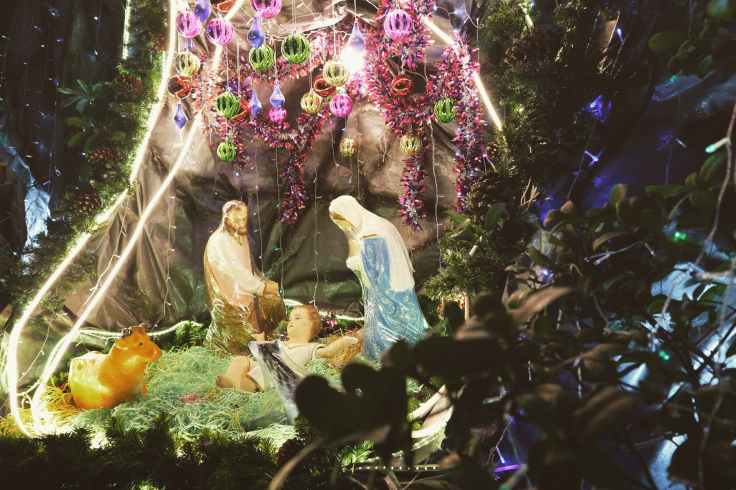
But I AM ready for Christmas– I’m ready to celebrate the coming of Jesus to Earth; His life, death, and resurrection; the new life and hope that resulted from God’s boundless love. I’m ready to sing carols and light candles and rejoice! I’m ready to be awestruck again by the ancient story of shepherds and angels and wise men from the East; of the little town of Bethlehem and the manger stall and a bright star; of a newborn child; the Lord of all Creation wrapped in rags; the Word of God willingly limited to unintelligible cooing and soft cries, to nakedness and infant human weakness.

Being “ready for Christmas” means different things to different people. To many, it means surviving the stress of shopping, going to rounds of holiday parties, and trying to remember that it is supposed to be a season of “peace on Earth.” For others, it means watching the celebration from the outside looking in; facing loneliness, grief, regret, and envying or resenting those who have found joy when all they see is darkness. For some of us, it means reflecting on the amazing transformation we experience because of the coming of this single baby. We remember that there was a time when there was no Christmas– only a dim hope that God would someday send a Savior. Once the prophets could only speak of what had been promised, but not yet seen– could only remind people to “get ready” for something they had never known.

The world was waiting for the Messiah’s coming, yet it was unprepared for His actual arrival.

But the story of Jesus Christ didn’t end with Christmas. It didn’t even end at Easter, with the glorious resurrection. We await the triumphant return of the risen Christ. He is Coming! He will return in an instant…no long period of Advent; no countdown calendars or lists of things to get ready; no angels or stars to announce His arrival; no Christmas pageant or Easter sunrise service–just a trumpet blast and an explosion of Glory. He will not arrive as a helpless babe, or a suffering servant, but as a conquering King. There will be no carols about little towns and sleeping cattle; no time to “let every heart prepare Him room.”

Today, we prepare to celebrate Messiah’s coming. We spend time and money and energy getting “ready” to recreate the Advent of Jesus Christ. How much time have we spent getting ready for His return? I pray that this Christmas season will mean more than just a happy celebration of one event– even one as joyful as the Birth of Christ. Let us prepare our hearts to live out the joy of His Salvation, and prepare to receive our King in triumph.

Prayer and Freedom

Tomorrow, we will celebrate Independence Day, in America. Much will be made of the freedoms we enjoy here. Many are freedoms we take for granted; others are freedoms that have been twisted or abused by our citizens, residents, and visitors.

I am very grateful for the freedoms of America. As a citizen of the U.S., I enjoy Freedom of Speech and Assembly; Freedom of Religious practice; the Right to Bear Arms; the Right to a Jury Trial with representation; the Right to Vote and participate in the democratic process; the freedom to move freely and do business across state lines, and so much more that I take for granted. But I want to be very careful to keep a proper perspective on civil and national freedoms, and citizenship in the United States. My citizenship here comes with many opportunities and freedoms, but it is not perfect. It is also not eternal– my perfect and eternal citizenship is in Heaven.

The founders of the United States, in their Declaration of Independence, listed three “unalienable” rights– “Life, Liberty, and the Pursuit of Happiness.” But they were clear about where those rights come from; not from a government, or a king, but from The Creator. Only God can give “unalienable” rights and freedoms. Governments can topple; Kings can be deposed; Laws and Constitutions can be overturned. The rights and freedoms we will celebrate this week were written on parchment, not stone. Even now, many forces are at work to “redefine” our freedoms; to alter the Constitution and the Bill of Rights– people say they are outdated, or too restrictive (or not restrictive enough!). Many want the government to have more power to define, create, and alter the rights granted in the original Constitution.

When I pray, I don’t pray to a government–even one founded on solid principles and good intentions. As much as I love my country, and support the principles of its founders, I recognize that any government can be corrupted. I may not always enjoy the freedoms I currently cherish. But even a corrupt government cannot take away my freedom in Christ to call on My Creator. I cherish the freedom I have to attend worship service, and to pray with my husband in public, or meet with other believers to share prayer requests openly. But even if those freedoms were curtailed by a corrupt government, I could still commune with God– there is no prison, or dark corner, or hospital bed, or place of exile where God cannot meet with me, hear my heart, and answer my requests.

And it is THIS freedom that I fear I take for granted most of all– that I can freely and confidently approach the very Throne of the Almighty, Sovereign God, and expect to be heard and even welcomed. I don’t have to apply for permission from a priest or the angels to pray. I don’t have to bribe someone to allow me to speak to God. I don’t have to fear that my very act of prayer will cause God to cut me off from His blessings or His presence. The Ruler of the Universe, who has the authority over not only my life and death, but my eternal existence, wants me to seek Him and talk to Him. The one who has the authority to force my obedience wants me to choose to listen to Him and follow Him.

This incredible Freedom is available to every person, regardless of their nationality. As an American, I have the freedom to speak and write, and otherwise tell about and show others about this much greater Freedom. Am I using my civil freedom to point others to eternal Freedom? Am I using this incredible Freedom to seek God’s wisdom and grace to follow Him?

His Delight!

The sacrifice of the wicked
is an abomination to the Lord,
but the prayer of the upright
is his delight.

Proverbs 15:8

I believe that God listens to prayer. I believe that God answers prayer. But do I really live in the certainty that God DELIGHTS in my prayers?

I think it is important to know that God doesn’t just listen to our prayers out of duty or because He is hoping to hear a particular phrase or request or “type” of prayer. God DELIGHTS in hearing from US! God is thrilled to hear our prayers– whether they are prayers of praise or prayers of agonizing distress, God WANTS to hear from us.

Some may look at the verse above and say, “God may delight in the prayers of perfect people, or people who are righteous, but I am a sinner. He won’t delight in my prayers. I’m not even sure He will listen to my prayers.”

But that’s not what the verse says. It doesn’t say that God only delights in the prayers of people who are perfect, because, let’s face it, NONE of us is perfect. And who is truly righteous, apart from God Himself? No, God delights in the prayers of the “upright.” So what does that mean in relation to you and me?

God looks at the heart. He sees beyond actions and circumstances. So when we pray, God knows our motives and our deepest thoughts. And if they are “upright”– focused on who God really is, who we really are, and how we relate to Him and how He relates to us–our prayers are a delight to Him. He isn’t asking for perfect people or perfect prayers. He’s asking for us to be transparently honest and humbly desirous when we come before Him. We don’t even have to be perfect in our theology or our faith. If we have the desire to be near to God, God is delighted to listen and respond!

That’s why He despises the sacrifices of the wicked. Their actions may look honest and humble, but their hearts are NOT. They may say all the “right” phrases to impress other people; they may do all the “right” actions to look devout. But God sees their pride, their refusal to give up secret sins, or to confess their true needs. They may want “something” from God– an answer, a blessing, a miracle– but on their terms. They don’t want a relationship, they just want a result.

And when God looks at us, what does He see? I can’t count the times I come to God as a complete “mess.” I’m falling apart, exhausted, at the end of my rope. But God sees ME. He looks beyond my appearance, my emotions, my limitations, my past. He sees my heart. He hears my need. And He hears the hope and trust that I can pour out my heart and He will listen in love, mercy, and compassion.

So does that make me “upright?” Maybe not in human understanding. If I look in the mirror, I may still see a messed-up failure. But God sees the finished product– what He can do for me, in me, and through me as I place my trust in him! By faith in the finished work of Christ, I am redeemed, and so, I am “upright.” God sees in me what I can’t see in myself– His Spirit at work; my future with Him; the full extent of His love.

This is how Jesus saw His disciples. When He looked at Peter, He didn’t just see Peter’s impulsiveness, his impending denials and abandonment. He saw Cephas, “The Rock”– He saw what Peter could become. What He looked at John “the Beloved” disciple, He didn’t see John’s youth or ambition, He saw a child of God who would suffer and stand firm in His faith. When He saw Judas, He didn’t just see one who would betray Him. In fact, at the Last Supper, Jesus shared bread and wine with Judas, and washed Judas’ feet! Jesus took delight in spending time with Judas! It was Judas who threw that all away to his own doom.

And the same is true for us. God sees the whole package. The “upright” are those who look up, and seek God with their whole being. If you come to God– if you seek Him and desire to find HIM and know HIM–God delights in you because He delights to shower you with love, compassion, discipline, wisdom, and blessings– in spite of your circumstances and limitations; in spite of the pain you may be feeling in the moment. God wants a relationship with you, not a “result” of outward perfection, or abject obedience. He wants an honest, joyful, even sometimes difficult and painful relationship. With YOU!

God delights to hear from us– our praises, our desperation, our hopes and dreams, and our deepest fears. God delights in His children. He delights in our prayers!

Let All Mortal Flesh Keep Silence

Christmas is a time of joy and light. But the time of Advent is often a time of somber reflection. We remember a time we have never known– a time before the coming of Christ the Messiah– a time before the mysteries of Heaven were revealed and before the victory of Salvation was accomplished. Advent reminds us of the spiritual darkness that existed before God, in human form, in humble obedience, and in sacrificial love, became the Light of the World, and the Hope of All Nations.

Before the bells rang, and the angels sang; before the kings brought gold and the shepherds ran to tell the news; before there were Christmas Carols, Christmas decorations, or Christmas pageants– there was solemn silence, fear, dread, and waiting. God had been silent. The prophets had been silent. The world had grown hard and cold.

Jesus stepped out of the unfathomable glory of the Highest Heaven– surrounded by armies of angels all worshiping Him and ready to do His bidding. In an instant, He became a helpless fetus inside a helpless young woman, a subject of the Roman Empire, and at the mercy of her culture. Her fiance could have repudiated her; her parents could have disowned her; her community could have had her stoned to death, along with her unborn child. No one, even those who were anticipating the arrival of a Christ, was expecting this tiny baby growing inside the womb to change the course of history.

He was born in obscurity, in ignominious squalor. He was the Lord of All Creation, wrapped in rags and laid in a feeding trough in an overcrowded city at tax time. There were no bells or carolers, no glittering trees or festivals of lights, no sounds of joy and celebration– not in that manger in Bethlehem. Instead, there were strangers pushing and shoving, shouting, and snoring in the inns and houses and streets, being watched by soldiers and pickpockets alike, as they made their way through narrow, unfamiliar streets and tried to lock out the worry and danger and dread. There may have been silence in the fields and valleys outside of town, but not near the stable where Jesus was born. No. The “silence” we sing about during Advent is the silence inside our own hearts– a call to “be still,” and know that this baby we celebrate is God Incarnate. He is the One to whom every knee will one day bow, and every tongue confess that He is LORD.

In the stillness and silence of Advent, in the darkness lit only by candles and faint hope, we being to understand the contrast. We re-imagine what came before the joy and hope and eternal clouds of witnesses shouting, “Holy, Holy, Holy!” We remember the days and years before the angels sang, and the star danced across the night sky– before the shocking crucifixion and the glorious resurrection of this still unborn Savior.

Let us spend these days of Advent preparing our hearts for the true wonder of Christmas. It doesn’t come in the wrapped packages under a festive tree, or in the feasting with friends or family. It doesn’t come with sirens and parades, or speakers at the mall blaring out favorite tunes. It doesn’t come in the majesty of a Cathedral ringing with the voices of a choir and organ. It comes when the silence and darkness of our sin and dread are pierced with the overwhelming glory of God With Us– Emmanuel is coming! But for now, for these moments, Let All Mortal Flesh Keep Silence.

What If HE’D Never Been Born?

One of my favorite Christmas movies has always been “It’s a Wonderful Life.” The movie tells the story of a man who finds himself desperate, sad, frustrated, angry, and suicidal on Christmas Eve –sounds like a real winner, huh? But before he gets to that point, Heaven is preparing an angel to come to his rescue. Through the eyes of the angel, the viewer “gets to know” George Bailey– his family, his friends, his struggles and his joys–and gets to see his life in perspective. The angel, Clarence, decides to give George an unusual gift– the chance to see what the world would be like, not just if he were to commit suicide, but what it would be like if he, George Bailey, had never existed. George is astounded and horrified to see the effects of his absence, and he learns to value his life, his family, and his friends as never before.

The dramatic effect of one person’s life cannot be overstated, but this is especially true of the life of Christ! Can we dare to imagine what life would be like today if Jesus had never been born?

Of course, the most obvious and tragic consequence is that there would be no Salvation by Grace. For a more complete discussion on this, there are several other essays and even books, including “What if Jesus Had Never Been Born” by D. James Kennedy and Jerry Newcombe. (Full disclosure: I have not read this book– I just found out about it as I was writing this, but I trust it is a good resource.) And all speculation on this subject is just that– the Bible is clear that it was always God’s plan for Jesus to come, to live, to die, and to defeat death, just as He did, just when He did. Any alternative vision is not from God, but from our own imaginations. But what other “ripples” do we take for granted in our world, that would not have happened (or would have happened very differently) if Jesus had never been born, or had not completed the work of His life, death, and resurrection?

  • There would be no Christmas. Not just the Christian celebration of Christmas, but much of what we call “secular” Christmas. While some cultures might have a local festival for winter solstice, there would be no worldwide celebration such as we know.
  • There would be no “Santa Claus,” no “St. Nick,” no “Father Christmas,” no “Papa Noel”, etc. The model for our modern Santa Claus, St. Nicholas, wouldn’t have been a Christian Bishop in Asia Minor, because there would have been no Christians there, or anywhere else.
  • No Christmas Cartoons– no story about Rudoph the Red-Nosed Reindeer; no singing elves and jolly Mrs. Santa Claus; no Heat Miser and Snow Miser (if you know some of the other Rankin-Bass productions..) Hours of childhood memories erased.

  • No other Christmas stories and movies– no Scrooge and Marley; no MIracle on 34th Street; no “Yes, Virginia, There is a Santa Claus”; no “Santa Clause” (and its successors) no “Christmas Story” or “Christmas Vacation”; not even Hans Gruber falling from the Nakatomi Tower. Millions of DVDs, books, VHS tapes, local theater productions– never existed.
  • We can kiss Frosty the Snowman goodbye, as well. Without the magical snowfall of Christmas, the story never takes shape– literally.
  • No Christmas Carols or Christmas music. I know of at least three local radio stations that are playing Christmas music exclusively right now. They started the day after Thanksgiving, and they will continue through the end of the month. Thousands of Christmas songs– from favorites like “O, Come All Ye Faithful,” and “O, Holy Night,” to annual disasters, like “Last Christmas,” and “Santa, Baby”– all wiped out.
  • No Christmas cards. Millions of cards are sent out each year, connecting family and friends around the world. Except there wouldn’t be any if Christ had never been born.
  • No Christmas Lights.
  • No Christmas shopping. (And while that may seem like a good thing for my personal budget, have you ever looked at what the Christmas season means for most Western economies?) No Christmas wrapping; no Christmas ornaments; no Christmas sweaters or socks; no Christmas candy or cookies…
  • No Salvation Army bell ringers at the stores– no Salvation Army; no reason to ring bells…
  • No Christian charities– not just the Salvation Army, but every other charity that was founded on Christian principles, or for Christian outreach…no downtown rescue missions, no soup kitchens, no international Christian efforts to rescue hurting children or provide relief for families. I by no means want to suggest that ONLY Christians are charitable, or that NO charities would exist without Christ. Charities are a mainstay of most religions, and always have been. The distinction I would make is that more Christian charities have been developed and have thrived in the last 2,000 years, than charities started by other religious and secular organizations, and there is evidence that they do more efficient and more broad-based work than their counterparts. https://www.christianpost.com/news/christian-charities-more-reliable-than-others-according-to-forbes.html
  • No Christian colleges or universities– Are you a fan of Notre Dame Football? Sorry. Notre Dame doesn’t exist. Neither do Harvard, Yale, Princeton, Cambridge, Oxford, Saint Andrews, Georgetown, and several other colleges and universities throughout Europe, North America, and elsewhere. Even universities that are completely secular today were once founded on the idea that education was a Christian virtue. This doesn’t mean that there would be no places of higher learning– there would just be far fewer than we know today.
  • No “Christian” books– and this includes books that introduce Christian concepts, allegories, and allusions. No “Pilgrim’s Progress,” no “Jane Eyre.” no “Lord of the Rings…”
  • No Churches– no cathedrals, no picturesque country chapels, no strip mall fellowships, no megachurches…
  • None of the Christian Memes; Promises; favorite verses… no Beatitudes; no Fruit of the Spirit; no “Golden Rule,” no Romans 8:28 or John 3:16 or Philippians 4:13…
  • No Twenty-First Century! Our calendar is literally based in part on the assumed birth of Christ. And while there are other calendars– Chinese, Aztec, Hebrew, etc., that are numbered differently, most of the world uses the Roman/Julian/Gregorian Calendar, which splits time into B. C. or B.C.E. — literally “Before Christ” or “Before the Christian Era”, and A.D. (Anno Domini– year of our Lord!) or C.E. “Christian Era.”

It paints a pretty bleak picture. Our world, as we know it, would be vastly different if Christ had never been born. That is not to say that the innovations, inventions, or achievements of the past centuries might NOT have happened at all– but they would have happened without the same purpose and effect. Many of the events of the past two millennia were inspired by, undertaken by, and driven by the message of the Christ– His birth, death, resurrection, and promised return! We hear about some of the negative things of the Church– wars and excesses, scandals and failures. But what about the successes– the transformation of violent cultures and conflicts into peaceful resolution, the drive to end slavery, cure illnesses, eradicate hunger–so many of the blessings we enjoy here on earth are the result of work done by those who long to love their neighbors as themselves and to see God’s will done “on earth as it is in Heaven!” The Joy and Generosity of the Christmas season cannot be separated from its central cause. The Wonder, the sense of the Miraculous and Holy, the sense that there is something “More” beyond a crisp winter morning or a day off work or a genial meal with friends–it all MEANS something. It doesn’t just come from nowhere, or a human desire to be kinder this one day each year. The character of George Bailey exemplifies an ordinary life that has meaning and purpose. His sense of purpose has gotten lost in the crush of bills, obligations, disappointments, and injustices. His prayer is one of quiet desperation; he is completely unaware that it is part of a vast chorus of prayers. But God hears it– and God sends Clarence!

There is a reason that George is visited by an Angel on Christmas Eve. Clarence may not be suave and sophisticated; he may not have intellectual arguments that can help George comprehend all of life’s wonder and purpose. But just like the angels at the first Christmas, Clarence comes from Heaven. He is God’s chosen messenger. He brings Heaven’s perspective and truth into a dark world, showing George what IS and HAS BEEN and what CAN BE– all because George was born– because CHRIST was born! It IS a WONDERFUL Life– not because of our circumstances, but because God’s Greatest Gift redefines our circumstances and transforms our perspective!

4-7 But when the time arrived that was set by God the Father, God sent his Son, born among us of a woman, born under the conditions of the law so that he might redeem those of us who have been kidnapped by the law. Thus we have been set free to experience our rightful heritage. You can tell for sure that you are now fully adopted as his own children because God sent the Spirit of his Son into our lives crying out, “Papa! Father!” Doesn’t that privilege of intimate conversation with God make it plain that you are not a slave, but a child? And if you are a child, you’re also an heir, with complete access to the inheritance.

Galatians 4:4-7 (The Message)

George emerges from his nightmare experience to find he is, in fact, “the richest man in town.” Oh, that we would wake up this Christmas morning fully aware of the rich heritage that is ours– because WE were born. Because HE was born! Because we can be BORN AGAIN!

Promises to Keep

The month of June is “Anniversary Month” in much of my family. My parents and one set of grandparents were all married on June 1st. My brother and sister both celebrate anniversaries next week, as does my one of my brothers-in-law. Marriage is in trouble in our society– many marriages are ending in divorce, while others are choosing to wait longer before making a commitment or choosing not to marry at all.

Photo by Lombe K on Pexels.com

We tend to celebrate marriage as being all about feelings of love, but marriage is really about making and keeping promises. Two people stand before witnesses and take sacred oaths to be faithful, to love, honor, and cherish (and yipes! sometimes even to obey) one another for the rest of their lives. And most people who take such oaths do so with honest intent. Why, then, does it seem to be failing so often?

Photo by Asad Photo Maldives on Pexels.com

One of the reasons has to do with expectations. We expect the same giddy feelings of delight we have during courtship to carry us dreamily into the future. And we expect that the way we act during courtship will be the norm– the “happily ever after” fairy-tale life of story books and romance novels. We expect that we will always be the same as we are now: young, carefree, beautiful/handsome, and eager to please and be pleased by the boy/girl of our dreams… This is unrealistic. And even when we say we know better, we hang on to unrealistic expectations for our relationships, just as we do for other situations and circumstances. Even our “soulmates” can disappoint us, fail to understand us, suffer failures and setbacks, battle depression or addiction, lose their youth and good health, and even question their feelings for us.

Another related issue is that we usually take vows when we are young and our future looks bright. Circumstances can change; plans can fail. War, disease, financial ruin, the loss or miscarriage of a child or children, forced changes in living arrangements or work schedules– all can put enormous stress on a marriage.

But not all marriages crumble under the weight of unusual or unexpected circumstances. Some seem to erode slowly, even under “good” circumstances. Why?

One reason I’ve seen as I look around is a seeming inability to make and keep small promises. We make big, broad promises at a wedding– “for better or worse, richer or poorer, in sickness and in health..” “’til death us do part…” But we don’t promise to forgive him when he leaves the toilet seat up for the fifth time this week, or wait for her while she tries on every one of the six outfits she can’t decide on for the upcoming class reunion. We don’t promise to compromise on which family we will visit for Christmas each year, or what color we will have in the dining room. We think of marriage as a series of negotiations (which it IS), but ones in which one of us “wins” and the other “loses.” And if we consider that we are the “loser” in enough negotiations, we feel entitled to “break” our little promises.

Photo by Kindel Media on Pexels.com

Almost two years ago, my husband suffered an injury at work. He “punctured” his leg–the injury wasn’t huge, but it was deep, and on the back side of the leg, where he couldn’t see it. He knew it hurt, but thought it would heal up. Instead, it became infected. We had to go to the local wound clinic for several months, but between visits, I had to change the dressings, wash the wound, apply the various antibiotics and salves, redress the wound, etc.. David was still working full time, so the dressings would sometimes get sweaty and dirty on top of everything else. I promised to be faithful “in sickness and in health”– and that included washing out the pus-filled wound and caring for the pus-soaked dressings; it included wrapping his leg every other night for weeks. We went through hundreds of yards of gauze and anti-stick dressings, tubes of several different antibiotic salves, special compression socks, etc. Hundreds of dollars and hours later, his leg is slowly getting back to “normal.” During this same period, I was diagnosed with type 2 Diabetes. David has had to be patient with me as I learn to eat (and cook) differently. He has had to help me with glucose testing, dealing with low-sugar episodes, and put up with mood swings (even more than normal!).

And our health odyssey could be much worse– what about those who have to deal with cancer or dementia? But I think sometimes we minimize the commitment needed for the smaller, chronic conditions. The stress may be smaller, but it piles up, just the same. Our promises need to hold in the daily crises– big and small. And our promises need to hold when there is no crisis– and no adventure, either. Many marriages fall victim to “smooth sailing.” Things settle into a routine, and promises that were made to sustain the marriage in the face of “richer or poorer” fall apart in the settled comfort of middle class complacency. Vows take for “better or worse” fall apart in the “blah” and boredom of “good enough.”

Marriage is designed to be a picture of our relationship with Christ. As Christians, we are the “bride” of Christ! But we may need to review our vows and our commitment. Christ is eternally faithful; are we? In our flesh and our frail humanity, we cannot remain faithful on our own. But where are we? Have we lost our first love? Are we committed to Christ even in the midst of chronic illness or small setbacks? Are we flirting with the world because we have become “bored” with our Christian Walk? Has our joy been eroded by our failure to share our little stresses and secret sins with the Lover of our Soul?

Often, when we take a moment to remember our wedding day, we are reminded of the commitments we made, and the joy we felt on that special day. It can be bittersweet, if we have let circumstances or feelings pull us away from the one we love (or if they have moved away from their commitment). But it can be a wake-up call, as well, reminding us that promises made and promises kept are what leads to long-term joy and security. It can be helpful to take a few moments (or more) every once in awhile to remember when we came to Christ, and be reminded of the commitment we made– and the promises He has kept!

Read Jeremiah 31 for more about God’s “marriage” covenant with Israel

https://www.openbible.info/topics/the_bride_of_christ

Use the link above to read more about marriage in the context of Christ and the Church

When I Can’t Do “All Things…”

10-14 I’m glad in God, far happier than you would ever guess—happy that you’re again showing such strong concern for me. Not that you ever quit praying and thinking about me. You just had no chance to show it. Actually, I don’t have a sense of needing anything personally. I’ve learned by now to be quite content whatever my circumstances. I’m just as happy with little as with much, with much as with little. I’ve found the recipe for being happy whether full or hungry, hands full or hands empty. Whatever I have, wherever I am, I can make it through anything in the One who makes me who I am. I don’t mean that your help didn’t mean a lot to me—it did. It was a beautiful thing that you came alongside me in my troubles.

Philippians 4:10-14 (The Message)

I know many Christians who quote Philippians 4:13–generally in the King James or New King James versions: “I can do all things through Christ, who strengthens (strengtheneth) me.” It is a powerful verse, but taken out of context, it can become twisted and lead to unrealistic expectations. In context, Paul is not talking about achievement, but about endurance. “I can endure all things…” or “I can cope with all circumstances…” is a better understanding, which is why I chose to quote from The Message, instead of another translation. Many times, however, we co-opt this familiar verse to fill our calendar with busy plans for our own achievements, trusting in God to give us the strength to multi-task our way past exhaustion. We end up frustrated, disappointed, and even questioning our faith.

God never meant for any of us to do “all things..” In fact, He wants us to trust Him to direct our paths– even when He directs us away from achievement and into rest or even need. Paul was a doer. He loved to be on the road, preaching and teaching, building up churches, and making new converts. But the letter to the Philippian believers was written from a jail cell. Paul could not be there to minister to them, but they had ministered to him, instead! Paul was thanking his friends for the help they gave him, not because he was abandoned or starving, but because their gifts reminded him of their care for him, and of God’s care for all of us. God had given Paul a season of rest from the road– imposed rest, but rest that gave him time to reflect on God’s goodness in solitude.

When we set ourselves up to “do all things,” it usually means “all the things I think I can or ought to do,” or “all the things I am asked or expected to do as a volunteer or a friend or neighbor or parent…” God is more concerned with our “being” than our “doing.” He wants us to be seeking after righteousness, not self-righteousness. He wants us to be growing in our love for others– even if we can’t “do it all.” He wants us to follow Him, not impress Him!

Photo by Karolina Grabowska on Pexels.com

I’m in a season of “can’t” right now. It’s not that I can’t do anything, but I can’t do “all things.” That’s not a result of my lacking faith or having a wrong view of God– God CAN do anything and “everything.” But I can’t. And God’s plan isn’t to empower me to be autonomous, self-sustaining, or self-righteous. I NEED others! And I NEED Him! What I CAN do, is trust in His timing and His resources to be sufficient for my daily needs. I can get “enough” done today, with God’s wisdom and strength. I can do “enough” to overcome anxiety or depression– with the help that God provides. That may mean allowing someone else to do simple tasks that I can’t do today. It may mean accepting medical help. It may mean changing my schedule or my expectations for today. But I can endure all the setbacks, and the moments of grief or weakness that keep me from “doing” what I had planned. I can weather it all in the power of Christ. And so can you! If you are finding yourself in a season of “can’t,” don’t skim over Philippians 4– study it. Claim it! Christ’s power isn’t for those who “can.” It’s for those who ask!

Photo by Luis Quintero on Pexels.com

It’s a great thing to have a “can-do” attitude. But sometimes, we need a season of “can’t do” in order to step back and see what we “can BE” in the power of Christ!

Blog at WordPress.com.

Up ↑