Praying for Peace

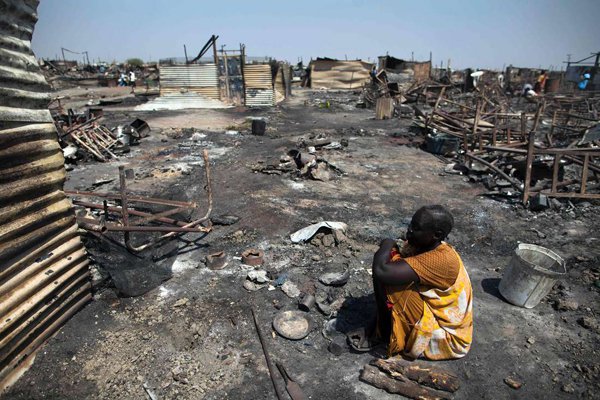
A few years ago, I was introduced to a man from South Sudan, who had come to the U.S. for a missions conference.  Earlier in the evening, he had shared a report on conditions in his region– all the horrible details you dread hearing–displaced families, homeless refugees, orphaned children, shortages of food, clothing, shelter, blankets, and medicine, constant fear of being attacked by one side or another in the ongoing conflict.  Throughout his report, he emphasized the sovereignty of God, and his hope that he and his team could continue to help those most in need.  As I got a chance to speak directly to “Robert” *, I told him that I would pray for peace to come to his region.  I was shocked when he stopped me.  “Please don’t pray for peace,” he told me.  “Pray instead that God would give us the resources and the strength to be faithful and to keep helping.”
south sudan

Then he explained.  It wasn’t that he didn’t want peace to come, but he wanted me to pray for whatever God willed for his region.  The Kingdom of God, not earthly peace, was his highest priority and his greatest urgency.  Because of the circumstances of war, people were desperate.  Their world had been turned upside-down, and they were in great need.  But war had also opened up opportunities– not only opportunities to help those in need, but opportunities to show the Love of Christ as it had never been known to the people there.  The people who were coming to refugee camps were meeting, sometimes for the very first time, people from other villages, other cultures, and other faiths– people they had considered enemies.  Suddenly, they were seeing these enemies as fellow sufferers, fellow human beings with the same injuries and losses, needs and longings as themselves.  They were also “seeing through” some of the lies they had believed about “the others” in their midst.  Their circumstances were desperate, but their biggest need was for hope and help.  Help was coming from around the world– United Nations’ agencies, The Red Cross, Doctors Without Borders, and several Christian relief and medical organizations.  These groups had been kept out during peacetime and even in the early stages of fighting.  Not only were they able to help with immediate relief; they were able to provide medical care for victims of AIDS, and childhood diseases, care that had long been denied.  Along with practical help, though, these groups were providing hope– hope to rebuild, hope in the midst of despair and chaos, hope of eternal life and a relationship with God.

“Robert” was not saying that he didn’t long for peace, or that peace would be a bad thing for the people of South Sudan.  Of course not.  But the greatest need was not for an immediate end to fighting– it was for the kind of peace that only God can bring.  As far as I know “Robert” is still working with refugees and displaced families in South Sudan.  The work is difficult and often heartbreaking.  Resources are stretched, and chaos still haunts the land.  But progress is coming– slowly, but surely.  Lives are being changed, reclaimed, and renewed.   And I pray that he and his team are being strengthened and encouraged even as their circumstances continue to be desperate.

pexels-photo-752473.jpeg

I share this story because I am still learning that Prayer isn’t about what I want or think is best; it isn’t about getting my way, or asking for the easy “fix” or the happy ending.  It’s about seeking God’s will, His way, His answer, His timing, and His grace.  Suffering, whether we are experiencing it or hearing about it, reminds us that we live in a fallen and dying world.  We long for peace.  We long for healing.   We long for rest and comfort and happiness.  But in this world, there will be trouble and injustice, death and disease, pain, suffering, betrayal, and unanswered questions.  We don’t understand God’s timing, his plan in allowing innocent people to suffer the cruelties of war or poverty.  And if we are living in peace and comfort, it makes us feel guilty and even fearful– why them and not us?  When might we face unexpected hardship?  So we ask God to remove all the discomforts, the struggles, the pain.  It is not wrong to want healing and peace and all the other good things– we should seek justice and mercy and peace and joy.  But we also need to recognize that God may choose to bless us in unexpected ways through our hardships and agonies.  And he may be calling some of us to take action– to be His hands and feet– to reach out with the resources he has given us to help others.  He doesn’t love those others less; he doesn’t love us more– he loves to see us love each other in His name!

God’s ways are not my ways; his timing isn’t the same as mine– it is better.  It is perfect. In the end, there will be peace in South Sudan.  There will be Peace on Earth. There will be healing and justice, and peace and joy.  There will be answers for all the questions, and happy endings.   But in the meantime, may God give all of us the strength and resources to help those in need, the faith and discipline to keep going in the midst of chaos, and the wisdom to make peace and spread love wherever and whenever we can.


*Because “Robert” is a Christian worker in an area of intense persecution, his true identity is being protected.  Please pray for all those who are risking their lives and livelihoods to live, work, and worship as Christians throughout the world.  And be thankful if you live in an area where you risk little or nothing to proclaim the name of Jesus Christ.

Prayer In the Digital Age

Wilt thou love God, as He thee? then digest,
My soul, this wholesome meditation,
How God the Spirit, by angels waited on
In Heaven, doth make His Temple in thy breast.
The Father, having begot a Son most blest,
And still begetting (for he ne’er begun),
Hath deigned to choose thee, by adoption,
Coheir to His glory and sabbath’s endless rest;
As a robbed man which by search doth find
His stol’n stuff sold must lose or buy again,
The Son of glory came down, and was slain,
Us whom He had made, and Satan stol’n, to unbind.
‘Twas much that man was made like God before,
But that God should be made like man, much more.
John Donne, Holy Sonnets 1633, No. 11


In the Garden

1 I come to the garden alone,
While the dew is still on the roses;
And the voice I hear, falling on my ear,
The Son of God discloses.

Refrain:
And He walks with me, and He talks with me,
And He tells me I am His own,
And the joy we share as we tarry there,
None other has ever known.

2 He speaks, and the sound of His voice
Is so sweet the birds hush their singing;
And the melody that He gave to me
Within my heart is ringing. [Refrain]

3 I’d stay in the garden with Him
Tho’ the night around me be falling;
But He bids me go; thro’ the voice of woe,
His voice to me is calling. [Refrain]

Baptist Hymnal, 1991


Sanctus Real– Pray (You Tube)


Times have changed– God has not.

God does not have a Facebook or Twitter account; he’s not in Pinterest or Instagram.  He doesn’t post selfies or have a blog.  But he is the same God that Adam and Eve walked with in the Garden of Eden; the same God who spoke to Moses as a man speaks to his friend.  He is the same God who listened to the impassioned Psalms of King David, and the lamentations of Jeremiah.  He is the same God who has inspired awe and fear in the hearts of apostles, poets, philosophers, songwriters, and evangelists over the centuries.

When we come before God, it is tempting to see him through the lens of our own times– we want him to be one of our “peeps”, accessible, someone who will answer a text or voice mail, “like” our post or “follow” us as we babble about our hours and days and show pictures of what we had for dinner or what we looked like heading out to the concert. We want him to be about US, instead of us laying down our lives for HIM.

Media– especially social media, can help or hinder our prayer life.  We can access all kinds of helpful tools to focus our prayers, link up with prayer partners and groups, listen to inspiring music or peaceful slide shows for meditation…  But more often than not, media becomes a distraction or even a substitution for real, serious, personal communication with God.

God is not our virtual friend; he’s not one of our “peeps” or “the man upstairs.”  He is the Sovereign Ruler of the Universe– every galaxy created at his command; every particle obedient to his whim.  And he has given us the privilege to come before him as his adopted and beloved children to lay our hearts before him and receive his wisdom, forgiveness, strength, and joy.  “Liking” your friends’ posts with Bible verses, sending a thumbs up or an emoji when someone puts up a picture of Jesus on their wall–if that’s the sum total of what you call worship, God has another name for it– Idolatry.

That may seem really harsh, but Idolatry is ANYTHING that we are worshiping in place of God himself.  There’s a reason we don’t have statues of God the Father in temples and churches, synagogues, and chapels around the world.  God warned us thousands of years ago about the dangers of creating substitutes.  Even things that are meant to remind us of him can become substitutes for worship.  That doesn’t mean that the crucifix necklace or the picture of Jesus knocking at the door are automatically evil– but when we stop reaching out to the real God, and focus on a false image, no matter how lovely or touching, we can fall into idolatry.  And the distractions of the digital age have been shown to create isolation and depression, and become impediments among our human relationships..  We don’t have meaningful meditation or intimate conversations online with people at the other end– what makes us think that wireless devices will bring us closer to God?

That doesn’t mean that we shouldn’t use technology to enhance our worship–just don’t make it an entertaining substitute for the real thing.  You wouldn’t (or at least I hope you don’t) text and catch up on Twitter while having a face-to-face and heart-to-heart talk with your spouse or child..give God the honor, the time, and the respect he deserves.  You don’t have to live like a stone age hunter to get some alone time with God, but it is a great idea to set aside some time to unplug from media and the noise of this world, and plug into the wonder of meeting with God in the Garden.pexels-photo-130154.jpeg

Presumptuous Prayer

The Christian life is often one of paradox–We are “in” the world, but not “of” the world; we “die to the flesh”, even as we continue to breathe and walk and eat in our fleshly bodies.  Prayer is part of that paradox– we dare to present ourselves before the throne of Almighty God, yet we are told to call him “Our Father”, and to come boldly.  We call on one who is unseen, unknowable, and sovereign, and we’re told to ask for anything in Jesus’ name, and it will be done.

This can lead to problems, as we try to resolve the paradox– sometimes we dare too much; other times, we ask too little.  I want to take a peek at how this works, especially as I have a problem with the latter.

Why do I feel it is a presumption to ask God for help?  Why do I ask God to do the least that I might expect from Him, when He offers miracles for the asking?  Why do I wait to bring my requests to God, hoping that I can solve them myself and not “bother” him?  Do I not trust him?  Do I not trust him enough?  Why do I get discouraged when my prayers are not answered “my way?”  Immediately!  When hardship comes, why do I assume that it is an accident–a miscarriage of justice–and call out to God as though he is unaware of my dilemma?

sunrays

I think we come to prayer with a few faulty assumptions about God:

  • we believe that God doesn’t know– that he is unaware of our needs or our circumstances, , our sense of urgency, or the depth of our despair; that he will be embarrassed by our lack of obedience or the simplicity of our request
  • we believe that God doesn’t care– we fear that God will be distant, disapproving, or even disdainful; unwilling to help us until we “clean up our act.”  Or we believe that he delights in testing us, watching us struggle, withholding help until we are properly humbled and abject in our obedience.  Perhaps we believe that “God helps those who help themselves,” and therefore, he is waiting for us to work ourselves to the limit before we bother him with our troubles.  We believe that “if God really cared” he would give us what we want, when we want it, and how we want it
  • we believe that God is unable– that we have messed up so badly, even God can’t fix our mistakes; that what we are asking is stretching God to do what is beyond his plan or purpose; that our request is too broad in its scope for God to attend to it
  • we believe that God isn’t really GOD–we have doubts about his existence, his reality, his presence, and his power over all our circumstances

We also come with assumptions about ourselves:

  • we believe that we are unworthy of God’s love, care, time, power, concern, or attention
  • we believe that we are worthy–worthy of special treatment and privileges denied to others because of who we are or what we’ve done; worthy of a life devoid of pain, stress, hardship, or struggle
  • we believe that we know better than God how to meet our needs; we believe that we have all the answers, and God’s job is to do our bidding
  • we believe that coming to God in prayer is a sign of weakness, laziness, or neediness that brands us as “less” than others who live life on “their terms”
  • we believe that our wants and needs are not important; that our dreams and desires must be squashed in order to serve God

If we assume any (or all) of these things, our prayers will swing wildly from wimpy hand-wringing and grudging worship to impatient demands and selfish complaints.

God knows– he sees everything; he knows your very thoughts before you think them!  God cares– he loves each of us with an eternal, limitless love– a perfect love that casts out fear and bids us to draw near to him, but doesn’t spoil us, indulge our selfishness, or set us up for failure.
God is able–just because we don’t see the answer we want in our current situation doesn’t mean that answer isn’t on its way.  Look back at the ways God has been faithful in the past–Can’t He Do It!

We are unworthy–in our own power–but we are also cherished by God, who makes us worthy through faith in the finished work of Jesus Christ.  Our privilege of coming to and communing with Almighty God is not a presumption in itself– it is a gift given by him in the moment that the veil was torn from top to bottom in the temple– the very moment Christ fulfilled the law, the barriers were removed, and God made it possible to come into his very presence.
We know only in part, and we see only in part– God sees the whole; the end from the beginning.  He knows what is best, not only for us, but for all of creation.
When we come to God, it is a sign of submission– not weakness.  It is a sign that we recognize God’s right to be God, and our privilege to live and work and commune with him, instead of acting and living in rebellion against him.
Because he knows our every thought, and he loves us completely, he cares about our every need.  When we trust in him– in his goodness, his faithfulness, his timing, and his sovereignty, he doesn’t promise us a life without hardship; but he does promise peace that passes all understanding as we go through those hardships.

pexels-photo-156151.jpeg

In the end, our faulty assumptions come from making ourselves too big– taking pride in our own worthiness, strength, and intelligence; or exaggerating our faults, mistakes, and unmet expectations– and making God too small to meet our needs or understand our hearts.

God wants us to presume on his Goodness and Might– not on our own wisdom and worthiness.


Positioning for Prayer

Bow, kneel, stand; hands folded, hands raised, hands clasped–there are many positions we assume when praying.  And different types of prayer seem to have different positions.  We tend to say grace seated or standing behind our chair at the table.  Some families hold hands; others bow their heads and fold their hands.  Some corporate prayers call for kneeling; others are said standing.  Some people bow, some kneel on the floor with arms outstretched; some curl up in their favorite easy chair; some face east or toward a certain focal point; some touch or hold an object, like a rosary or a Bible, or the wall or surface of a sacred place.  Some pray with eyes closed; others with eyes raised toward Heaven.

Does any of this posturing and positioning really matter?  Does God have a preference?  A requirement?  Does He get offended if I stand, or keep my eyes open or neglect to hold my hands a certain way?

gracelady

The answer is not as easy as one might think–The Bible has many specific accounts of prayer, as well as many commands and guidelines.  Hebrew priests stood with hands raised to pronounce blessing and to seek God’s favor.  King David’s psalms are poetic prayers.  They don’t often describe a position of standing or kneeling, but many of them imply a position of lying down, pacing, clapping, shouting, climbing, etc.  Jesus often prayed alone, and spoke of praying privately– in corners and closets away from prying eyes and listening ears.  On the night of the Last Supper and in the Garden of Gethsemane, the Bible describes Jesus as praying while “looking toward Heaven” (John 17:1), and later, “he fell with his face to the ground and prayed.” (Matthew 26: 39)

All this indicates that positions matter in relation to the function or the nature of the prayer.  And that’s where I want to focus my thoughts today.

God isn’t displeased if I stand to pray, rather than kneel–unless I am standing in pride and arrogance.  He is pleased if I kneel in humble and contrite spirit, but not if I kneel out of false humility or to impress others with my self-righteous posturing.  If I bow my head at the table out of habit, and forget who I am supposed to be talking to, or “pretend” to kneel instead of leaving the comfort of my chair– then I may need to take a new position; a new attitude of prayer.

kneelprayer

God isn’t impressed with our physical position in prayer– but I believe he wants our whole self, our undivided attention and our physical and emotional expression and attitude.  Sometimes, the physical position comes as a natural extension of our grief, our joy, our reverence, and our stillness before His throne.  Other times, our physical position brings us out of our pride, our busyness, and prepares our heart attitude.

I have had moments–even days– when I was not naturally motivated to quiet my spirit, bow my head or my heart, and kneel before my Maker.  But in kneeling, and bowing my head, and closing my eyes, I was positioning more than just my body.  I was coming in obedience to the one– the only one– who can transform my mind, renew my spirit, and soothe my restless heart.  Other times, I could not kneel for the joy and exuberance of the moment.  Standing on tiptoe, hands raised, head raised, and heart raised, I sang out to my Father in gratitude and awe.

So the answer to the question– Does our position in prayer matter?– would seem to be, “no.”  What matters is our attitude. God is not impressed or fooled by an outward show–he is concerned with our heart’s desire to be close to him. There is, however, one position that is pivotal in the pursuit of prayer.  That is the position of Faith.  In Hebrews, we are told that “without Faith, it is impossible to please God, for whoever comes to him must believe that he exists, and that he rewards those who earnestly seek him..”(Hebrews 11:6)  Jesus spoke of faith that can move mountains, even if it is the size of a mustard seed.  Whether kneeling or standing, grieving or rejoicing, our prayers must be accompanied by faith– faith that God exists; that he is loving and gracious and all-powerful to save; faith that our “position” in him is one of reconciliation and renewed life through his grace and the finished work of Jesus Christ; faith that he will hear our prayers and answer according to his will; faith that his will is altogether good and perfect– even when we don’t understand it in the here and now.

One final thought–though the Bible does not specifically require that we kneel to pray as we pursue a relationship with him, it does declare that one day, “at the name of Jesus, every knee should bow, in heaven and on earth, and under the earth, and every tongue confess that Jesus Christ is Lord…” (Philippians 10-11a).  I can practice kneeling in this life, knowing that it won’t go to waste!

Prayer Brings Peace

“When peace, like a river, attendeth my soul;
When sorrows, like sea-billows roll–
Whatever my lot, Thou hast taught me to say,
‘It is well–it is well– with my soul.'”

As I write this, all is not well with my life.  I have bills looming, a car that keeps breaking down, a leaky roof, and I’m fighting to stay healthy.  I worry about unhappy customers at work, my husband as he travels and faces danger on the job, about our aging and widowed mothers, and our kids and grandkids.  All is not well with our nation– we have anger, division, violence, and strife; a breakdown of families, moral decay, and corruption.  All is not well with our world–nations are at war, we are destroying our environment, and all the progress that was supposed to make our lives easier seems to have made life more complicated and frantic, instead.

But all is well with my soul–not because of anything I have done or anything I do– peace and assurance are mine solely through the grace of God, which he gives in abundance.

Prayer does not bring peace automatically, nor does its haphazard and occasional practice guarantee instant or lasting peace.  Meditation, solitude, and other prayer-like exercises may bring a temporary calm, a respite, and a relief.  Closing our eyes and laying our burdens at his feet can bring the same feeling.  But prayer is more than just an exercise in making us feel better.  It isn’t meant to take us away from our circumstances, or to hand them off to God while we waltz away from our burdens.  Jesus said in Matthew 11:28-30, “Come to me, all who labor and are heavy laden, and I will give you rest. Take my yoke upon you, and learn from me, for I am gentle and lowly in heart, and you will find rest for your souls. For my yoke is easy, and my burden is light.”  Coming to God in prayer doesn’t make burdens disappear.  But it does mean that we no longer carry them alone, and that gives us rest for our souls.  God is not in the business of making our lives easy, carefree, and comfortable.  But he promises that as we share our lives with him, trusting that his ways are good and righteous, he will not only come alongside and share our burden, he will teach us and give us rest.

This is why the pursuit of prayer is so important.  The discipline of daily and personal prayer teaches us how and where to find peace that lasts– peace that “passes all understanding” (Philippians 4:6-7).  Like the cool, refreshing water of a river soothes and gives life, so God’s grace flows into our lives as we walk and talk with him every day.

What? A Privilege?!

“What a Friend we have in Jesus,  all our sins and griefs to bear!  What a privilege to carry everything to God in Prayer!”

The word “privilege” has taken a beating lately.  A privilege used to be considered a good thing.  Merriam-Webster defines it as, “a right or immunity granted as a particular benefit, advantage, or favor.”  A privilege is granted–given as the prerogative of someone in power or authority– to someone else.  It may be given as a reward, or granted for a limited time and under certain conditions.  But a true privilege is a gift–you can’t make your own privilege, and you cannot own or control a privilege– the terms are set by the giver, not the receiver.

In the past generation, the word “privilege” has become charged with political and societal connotations.  Those connotations, and the issues surrounding them, are worthy of discussion and could fill volumes, but I want to talk about a privilege that should be free of undertones and dubious meanings.

Prayer is a pursuit, and a practice.  It is personal, practical, and powerful.  But it is also a privilege.  Often one that we take for granted.

In pursuing prayer, we are not just developing a personal routine or discipline.  We are not just approaching a powerful supernatural entity.  We are fallen creation entering the presence of a Holy Creator; we are rebels entering the throne room of the King of Kings.

We have the right to approach God; to talk to, converse with, ask favors of, plead with, confess to, and expect answers from the One who creates galaxies with a single spoken word, and designs every unique flake of snow.  This same God grants us the right to draw breath, to experience both beauty and wonder, to question and to create.

Prayer in ancient times was almost universally accompanied by sacrifices, and surrounded with ritual– incense, bowing and prostrating oneself, covering or uncovering the head–in recognition of the horrible chasm, the great separation between God and mankind.  Many traditions still use ritual for prayer, and there is nothing wrong in this reminder of God’s Holiness and Sovereignty.  Yet God talks of prayer in intimate terms.  He didn’t impose ritual and sacrifice for his benefit, but for ours.  Several times throughout the Bible, he makes clear that he does not require the blood of bulls and goats–what he wants most is a humble and pure heart.  At the moment Jesus died, the great veil in the Temple was ripped in half from top to bottom–the most holy place laid open to all who might come into God’s presence.  Christ’s death and resurrection were not just means of saving us from Hell, but the means of bringing restoration of the intimacy God designed from the beginning.  God– Almighty, Omnipotent, and completely Holy–wants to give us the privilege to enter his presence and pour out our thoughts, feelings, burdens, and triumphs; to share intimacy with HIM.  We are not just objects of his care (or his wrath), not just creatures in whom he has a certain fond but distant interest.  We are recipients of lavish love and priceless privileges– forgiveness, power over sin, power to become more Christlike, restoration and renewal, and yes,  the pursuit of  prayer.

Talk is Cheap– Part II

In my last post, I talked about cheap talk and cheap grace.  Today, I want to turn the tables a bit, and talk about the value of talk– specifically prayer and words of encouragement.

Our society has become very fond of visuals– charts, graphs, comparisons, checklists, measurements, etc.  We want to see documentation of goals met, incremental achievements, mastery levels, and verified accomplishments.

Prayer doesn’t fit that mold.  God doesn’t send us a “receipt” for prayer requests received or answered.  There is no contest for the number or quality of prayers listed up to heaven.  There is no “success” strategy that guarantees speedier responses or “better” miracles.

I’m writing and thinking about prayer, but I can’t claim to be an expert or proficient, or better able to teach about prayer than anyone else.  Still, I think I can speak from experience to the value of pursuing a life of prayer and honest reflection before God.  Like most other worthy pursuits, prayer is learned and refined through practice.  The more I pray, the more I understand what it is, how it works, and why it is important.

“I shouldn’t just be praying about this, I should be DOING something…”  In times of stress, disaster, or crisis, it is tempting to believe that visual, measurable action is what counts.  Prayer is for those who cannot or will not take action..it is plan B.  But this view cheapens prayer.  Prayer should be our first response.  Pray for wisdom and guidance before taking action, and you may avoid making frantic and ineffective decisions.  Sometimes, our wisest action is to watch God do what we could not imagine; sometimes it is to support and encourage others, instead of pushing through, stepping on toes, or getting in the way.  Prayer can teach us more about trusting God; it can give us peace and confidence to act more effectively, and it can open our eyes to the opportunities in the midst of crisis.  That doesn’t mean that prayer should become a substitute for action when we have the means and opportunity and motivation to act.  But there are times when I think we act out of a sense of false pride or impatience, rather than a prompting of the heart, mind, or spirit.

We are commanded to pray– even to pray continually, constantly– without ceasing.  While this (of course) doesn’t mean that our every waking moment should be consumed with prayer to the exclusion of anything else, it means that God values our words, praises, songs, groans, tears, joyful whoops, and other communications with him.  This raises a question that I have struggled with in the past.  If God is omnipotent, he doesn’t NEED my prayer to bring change, or healing, or success, or protection, or anything else.  Yet he wants me to pray– he tells me that if I pray in faith I can ask anything in his Name and he will give it to me.  This seems like a paradox, but I believe that God’s command is not about Him.  In this case, it is about us.  He wants to include us in the work he is doing; in the change and healing he brings (or even withholds).  Why– because he is a generous God!  He gives us the privilege of being part of the goodness he sends.  He wants us to share the power of speaking goodness, peace, forgiveness, and blessing.  As we share our hearts and lives with him, he wants to include us in his work.  Not all my prayers fall into this category, but what an encouragement to value prayer– especially prayers lifting up our needs to a loving God.

Talk is cheap, action is precious, but prayer is priceless…May I remember the difference!

Prayer and Social Media

There are several positive and proactive aspects of prayer I want to explore in this journey, but I don’t want to deny or ignore some of the bad habits and false ideas that sometimes come with prayer.

One of the reasons I am writing this blog (see Prayer is a Pursuit) is to answer some of the critics and detractors of prayer.  Many of these critics are responding to what they see of and about prayer on FB or Twitter, on blogs like this, or on spiritually-minded websites.  If all I knew of prayer came from reading dashed-off posts and prayer memes accompanied by soothing photos, I would have a false and shallow idea of prayer, and one that invites criticism.

The Bible describes, and the Church practices, many different kinds of prayer.  Prayer can be intensely personal and private.  It can be communal or corporate in nature.  There are prayer partners, prayer groups, prayer chains, and congregational prayers.  But prayer is not primarily or ideally a social activity, and its essence is not suited to be broadcast or posted.

Social media can be a very helpful tool TOWARD prayer– requests, needs, and answered prayer can be shared; prayer can be urged and encouraged; prayer can be discussed (as in this post); prayers can be made public as examples.  And people can be greatly encouraged by the knowledge that their needs are being lifted up by family, friends, even strangers across town, across the country, and even around the world.

But prayer on social media also presents real problems, and I’ve gotten caught up in some, so I’m sharing some of what I have learned.  These areas have been stumbling blocks for me– that does not mean that they are “bad” practices in general, or that my questions or criticisms will apply to others.  But if someone else struggles with these thoughts or issues, I hope my journey might help.

  • Social media tends to promote the “tyranny of the urgent”– posts pop up screaming for attention NOW.  I feel pressure to respond immediately with something encouraging.  To say that I am “praying” or “I will keep you in my prayers” is encouraging–but is it true?  A couple of years ago, I realized that, in my desire to comfort and uplift, I had started stretching the truth.  I meant to pray for the person/situation/need…sometimes I sent a hasty and half-hearted thought heavenward before scrolling on.  But I wasn’t really opening my heart to God OR to the person in the post.  As one critic put it– I was making myself feel better.  My words may have given momentary comfort or encouragement, but they were basically empty and hollow.  I made a vow going forward to do one of three things:
    • If I can, I will stop what I am doing and take the time to really pray about the situation BEFORE I respond, comment, share, etc.
    • If I can’t take the time right now, but I have my prayer journal handy, note the concern on today’s page (or tomorrow’s) to make sure I include it in my daily devotional time, so I can pray thoughtfully and whole-heartedly.  Sometimes I will comment after the note is written, or after the prayer has been said.
    • If I can’t stop, add it to my prayer journal, or make a note– I don’t comment or respond.  The other person may not know the difference, but I will.  I don’t want to give a false impression.
  • Social media thrives on drama, algorithms, and visibility.  Recently, I received two similar prayer requests within a day of each other.  Two friends shared about two different men in life-threatening situations needing prayer.  One of my friends’ posts went viral, with people setting up fundraisers for the family, a website, and daily updates.  The other post simply said, “Please share.”  It got a few responses, and one update to say that the man had died of his injuries.  These men were both precious in the sight of God.  They were both badly injured in the line of duty, and both had families who loved them and were in crisis. They were both equally in need, but not equally visible.  I prayed for both, but I wondered at the difference in visibility, and how it might be changing our prayer focus.  I am tempted, as I spend time on social media, to be concerned about those things that are most visible.  But who is hurting in my neighborhood, among my friends, among those people I interact with daily– their needs invisible to me because I’m only focused on what I see online?
  • Social media is both social and self-oriented.  How many people “like” or “follow” me?  How big is the circle of people I can reach?  What impression do others have of me?  But prayer is not about me.  I have a bad habit (shared by many others–especially Americans, I think) of wanting to be seen as independent and self-sufficient.  I want to be the one offering support–the “prayer” and not the “pray-ee”.  But if I’m going to put myself “out there” in either capacity, social media tempts me to measure and compare myself with others.  I am tempted not to ask for prayer for little ordinary things, tempted to exaggerate some pains and downplay others, and tempted to respond to others in ways that make me look “good.”  That’s just human nature, but it’s also sin, especially when selfish concerns and petty thoughts crowd out the natural compassion I should have for others and the honesty I should have about my own weaknesses and strengths.
  • Social media is a “glass house.”  What you post in haste, in jest, or for your “besties” is out there for everyone to see– and judge.  We are told not to judge, lest we be judged (from Matthew 7:1).  There are several groups who love to quote the first part of that verse, but it’s the second part that relates equally to social media.  If I post beautiful words about prayer and encouragement for my Christian friends, and hateful rhetoric about my political foes, I had better be willing to own up to having a double standard.  The same goes for the random offensive, suggestive jokes, the rants about my noisy neighbor and my unsaved relatives.  Sitting in front of a silent screen tempts us to “let rip” with sarcasm, frustration, self-righteous indignation, and self-congratulation.  All of us have probably posted things we later regretted because we think better of our words, or because someone “took them wrong” .  I want to become better at prayer, better at communicating about it, defending it from attack, and promoting it.  But that comes with a responsibility to learn, be honest about my failures, and open about the struggles I face.

I hope to do just that as I journey forward– on- and off-line!

Persistent Prayer

BethelchurchI grew up attending a tiny country church numbering only a few families.  Church was not just a place to visit for coffee and a sermon on Sunday morning.  There were no large screens, no light shows, no bands, no padded theater seats.  What we didn’t have in the way of amenities, we made up for with fellowship– pot lucks,  church-wide outings, bake sales to raise money for missionaries, and community-wide Christmas caroling every December.  We didn’t have a big budget or slick publications.  There was no website or gym; no trendy decor in the entryway, or sound system.  But there was prayer– lots of it!  Prayer to open Sunday School; prayer to open the service; prayer at the end of Sunday service; and Wednesday Evening Prayer Meeting.  This was, for the children, an evening of games, singing, stories, and socializing with our friends, all in the church basement (painted cinder block walls, industrial fluorescent lights hanging down from beams to light up folding tables and metal folding chairs on the bare cement floor, which was sometimes home to spiders, toads and even the occasional salamander).  But upstairs, it was all business.  An hour of adults in the community coming together to pour their hearts out to God.

As I became a teen, I “graduated” to the upstairs–to a young teen it seemed an interminably long and slow process of sharing requests, sharing praises, and taking turns mumbling and rambling and regurgitating all that had come before, this time with eyes closed, and some of the old-timers on their knees instead sitting in the un-padded and creaky wooden pews.  Sometimes, there would be two or three hymns or a short devotional to round out the hour-long service.

I know there are churches that still have mid-week (usually Wednesday night) services, and some of them are devoted to corporate prayer  (my current church has one, in fact).  But most of these services have died out– due, I suspect, to the view I described above.  Very few of us are devoted to getting out one night every week to spend an hour kneeling on a hard floor “sharing” needs with others, only to repeat them to God.  But I think somewhere we missed the point, and the value, of these gatherings.  In going to Prayer Meeting, I got to hear the hearts of three generations of people across our community– farmers, construction workers, teachers, retired grandfathers, teens like me, pastors, recovering alcoholics, homemakers, business men and women–people with wildly different struggles, triumphs, and needs, and in different stages of their Christian walk.  I heard the exuberance of new converts, and the steady faith of aging saints; the struggles of the brokenhearted widower, and the needs of new parents.

Perhaps the most valuable lesson from Prayer Meeting was about persistent prayer.  Week after week we reported answered prayers, but other requests seemed to linger.  Some who desired healing never found it (in this life).  Some relationships were never restored.  Some faced the same struggles with anger, or job loss, or loneliness over a period of months.  Was our prayer ineffective, or our faith deficient?  Did God not hear?  Didn’t he care?

I believe God heard every word; every groan, every sigh.  I believe he ached with every burden we brought before his throne.  I believe he was (and is) in the midst of every gathering.  And I believe that prayer is often like those conversations we have with our oldest and dearest friends about those same persistent problems.  God has the power to deliver us without the struggle, without the wait.  We don’t know why he allows some struggles to play out over years while others end in timely triumph.  But I believe that for every situation that challenges our faith and endurance, he is there for every tear, every question, every ‘SMH’ moment, every stumbling step forward.  And when we come together to share the burden with our neighbors, family, friends in fervent prayer– God is present, not just as the Father on his throne, but as the Son who cried out on his knees in the Garden of Gethsemane, and the Spirit who interprets our groaning when words are not enough.

I say a lot of quick prayers; sometimes urgent, and often simplistic and even easy prayers.  I am slowly rediscovering the value of persistent  and corporate prayer.


Prayer is a Pursuit

“Stop sending your thoughts and prayers– they are useless.  Get up off your knees and take action, instead.”
I was stunned.  People had been reacting on Facebook to a recent tragedy by posting their concerns.  Most of them were heartfelt messages sending “thoughts and prayers” to the victims and their families.   But they were followed by a backlash of  anger and frustration so visceral that I felt sucker-punched.  Worst was an entire article that suggested that praying was a futile distraction– an admission of helplessness that actually contributed to inaction, injustice, false hope, and secretly condoned violence and victimization as part of “God’s will.”
As I reeled from what I felt was a sharp and hateful article, I stopped to wonder where that kind of anger and bitterness was coming from.  Some of it was obviously a reaction to the tragedy itself– a violent attack resulting in a senseless loss of life.  Such events leave us feeling shocked, confused, and helpless– How could this happen?  Why?  And, often, our questions are directed at God– “Where were you?” “Why did you let this happen?”  “Don’t you care?” We may question God’s goodness, his justice, and his very existence.  Our prayers may even seem futile– unheard and unanswered.
So why did the article and its suggestions shock and hurt me so deeply?  Was it a lurking conviction that the author had a valid point?  Am I wasting my time when I pray for those who are grieving and suffering pain and loss?  Am I wasting my time praying to a God who seems distant in times of crisis?

Which brought me back to the basics–in this case, what IS prayer?

This blog is an attempt to pursue the many interconnected answers to that question.  At its heart, I believe (as do most people of a spiritual bent, regardless of their particular religious tenets) that prayer is an attempt to talk to, to communicate with, God.  But what I believe about prayer is dependent on what I believe about God.  Does he exist?  Really exist?  What (if anything) does he expect of me?  Blind and slavish fealty?  Absolute, if grudging, obedience?  Idle/Idol worship?  A comfortable, acquaintance, a  mutual admiration?  A deep and eternal inseparable relationship?
Our prayers will be shaped by our answers to those and other questions– if I believe that God only wants me to recite a canned response every once in awhile, that’s what I will give.  If I believe that God wants me in perpetual groveling…you get the idea.

So what do I believe about God and how to communicate with him?  First, I believe that Prayer is a pursuit– it is my earnest desire to seek out the God who made me in his image– unique and precious in his sight.  I believe he WANTS to hear from me, and he WANTS to answer with revelation of his nature, his character, his heart.  Second, I believe that prayer is positive, because God is good.  Prayer is not an obligation, though it should be a discipline.  Prayer is not merely a ritual, though there are many forms it may take, from formal recitations to wordless groans.  Prayer moves us toward God, and toward others around us.  It is not static; it is not a vague wish or empty hope.
Third, I believe that prayer is powerful–much more than most of us recognize.  Far from being futile and inactive, I find that prayer leads to dramatic changes.  I have seen miraculous transformations–in myself, in others, even in the wider world–as a result of prayer.  The fact that God doesn’t always give us instant and dramatic answers doesn’t negate those times when he does provide the miracle.  And it doesn’t mean that our prayers were unheard, or unanswered.  Finally, it doesn’t make God complicit with the evil things that happen– God doesn’t give us cancer or send a flood to punish us for something we did or didn’t do, and he doesn’t keep us in pain or allow us to struggle without reason or remedy.

So, I am starting a quest to share my pursuit– things I have learned, am learning, and hope to or need to learn about this amazing gift called prayer.

Blog at WordPress.com.

Up ↑