The Bible is full of names. Some we know well– Adam, Eve, Abraham and Sarah, Joseph, David, Moses, Mary and Joseph, Jesus, John, Peter, Paul, Mary Magdalene. Others are less familiar–Nimrod, Eli, Darius, Deborah, Ezekiel, Jezebel. Some are just unbelievable– Keren-Happuch, Maher-shalal-hash-baz, Basemath, Abishag, Shammuah, Pallu…you get the idea.
But sometimes, the Bible seems to get carried away with names. Take the lists of genealogies and “begats” found in Genesis, Matthew, and Luke. Endless names of fathers and sons, tribes, and descents. They can be boring to read; even mind-numbing. But there is also important information included in these lists, if you just take the time to look closely. https://christinprophecy.org/articles/those-boring-begats/
Similarly, in places like Exodus and Leviticus, 1 Samuel, 1 Chronicles, Ezra, and Nehemiah, and elsewhere, there are extensive lists of those who were leaders of clans and families, workers who helped build (or rebuild) the temple and walls of Jerusalem, those who served in the tabernacle, and those who were among the heroes of King David’s army. In the New Testament, there are lists of people in Paul’s letters– greetings, rebukes, side-notes and requests meant for various people who are never mentioned again. Why include what amounts to a post-script in Holy Scripture?
It turns out that many of these names give us valuable clues about development of the nation of Israel– how the tribes settled and spread out; how they interacted with each other and with the surrounding nations. The names in Ezra and Nehemiah help us connect the returning exiles with their ancestors (and confirm the extent of the destruction of entire clans and families in the fall of Jerusalem). The names in the New Testament show a picture of the early Church– how it spread, who joined the early believers, and where they came from.
What does all this mean to us hundreds of years later? It show us:
God’s plans are detailed and inclusive–The Biblical writers did not have to include so many names– they could simply have condensed the story to say that Abraham had hundreds of descendants; that the tabernacle was built; that many people returned to Jerusalem to rebuild the temple and walls, and that the early Church grew rapidly. But God wanted names included (even the strange ones) so generations of readers would see the scope and detail of God’s unfolding plan. These were real people– individuals–cherished by God and worth including in the Biblical narrative.
The Bible is more than a series of mythical adventures or allegories. Many of the names (of people and places) in the Bible have been confirmed in historical and archaeological records– even those that were thought to be “wrong.”
God’s plans are universal. The Bible lists include names from various nations and cultures– Jewish names, Egyptian, Ethiopian, and Babylonian, Roman and Greek names, the names of tribes and clans that spread throughout the Earth. God knew them all. God watches over us all.
Each of us has an important role to play in the ongoing story of God’s grace. Our names may not all end up in the pages of Scripture, but our names can be in the Lamb’s Book of Life. God knows the name of every person who has ever existed! He doesn’t call us by the name of our younger sister, or get confused by our nickname or birth/adopted name– He knows us intimately like no one else ever will!
Names are important. None is more important than the Name that is above all Names– Jesus. Messiah, Christ, Savior, Immanuel. His is the Name that saves. Let’s call on Him today!
God’s ways are not our ways. God often turns our expectations on their heads– choosing Abraham and Sarah to become parents at an advanced age; choosing Moses, reluctant, disgraced, and hot-tempered, to shepherd close to a million refugees across the wilderness; choosing David, young and poorly armed to defeat the mighty giant, Goliath; choosing to send His Messiah as an infant, the son of a teenage girl stranded miles from home in a cattle shed…
Not only that, but God chooses to include cryptic and seemingly random details in many of the stories we read in the Bible. When Abraham and Sarah received news that they would become parents, Sarah laughed. Such a small detail, but God called attention to it, even giving the name Isaac (Laughter) to this promised son. When God called Moses, He didn’t just include the details of the burning bush and the miraculous signs, He chose to include Moses’s excuses and objections, and a curious command to Moses to remove his shoes.
Recently, I found a short discussion about the “five smooth stones” David used to defeat Goliath. https://www.biblegateway.com/passage/?search=1+Samuel+17%3A26-50&version=MSG Some teachers spend time talking about the number of stones– why five? Did David doubt God’s power and provision? Can we attach significance or apply principles to each stone? But someone commented (I’m sorry, I lost the reference, or I would attach a link) on the fact that the stones were smooth–I’d never really noticed that detail before. David chose five smooth stones from the brook, not five heavy rocks, not sharp-edged stones of flint, not round balls made of iron– five smooth stones. The smooth stones in the brook may seem like a strange choice to us if we are not used to using a sling, but to David, such stones meant greater accuracy and speed. Five such stones would have been about a handful– easy to carry, load, and fire in rapid succession, if necessary.
I would like to suggest that there are some principles here that apply to both prayer and Christian living, especially involving how we can pray for and interact with the “giants” and “enemies” in our lives:
First, understand the reality of the “Giant”—Goliath was huge; bigger than any single warrior in Israel. But he wasn’t bigger than God. Goliath was also hampered by his heavy armor, his size, and his arrogance. David was offered armor and weapons similar to Goliath’s, but David’s greatest weapon was his understanding that Goliath was no match for the God of Angel Armies! We often make the mistake of magnifying our enemies. We see their size, their shining armor, and heavy weaponry. We forget that God is the maker of smooth stones!
Second, actions really do speak louder than words. Goliath inspired fear; he taunted the army of Israel. Yet he never landed a blow against David. Goliath scoffed, bullied, and talked a good game, but David paired his words with action. Goliath demanded that David (or any other warrior) “Come down to me..” He had a javelin and a spear, but he never used either one. I find it interesting that many “enemies” of the Church behave the same way. They want to challenge the followers of Christ in debates; they publish books and articles filled with arrogant words, accusations, and complex arguments. It is tempting to respond in kind– to get into a war of words; to match their arrogance with our self-righteous assertions. What if we fought their words with action, instead of spending so much of our time answering and defending ourselves against empty arguments and accusations. We will not “win” any culture wars; we will not “win” the hearts and minds of the next generation; we will not “defend” morality by using bigger, better, or more persuasive words, or by having better armor and sharper weapons than our enemies. We need smooth stones from the brook–small acts of kindness and humility and grace that defy all the logic and brute force of those who trust in their own understanding.
Third, accuracy is better than power. Goliath had one spear–and it was impressive–” His spear shaft was like a weaver’s rod, and its iron point weighed six hundred shekels.” (verse 7). Still, Goliath had a javelin, a sword, and several pounds of armor. David had no armor, one shepherd’s staff, and his sling and five smooth stones. But he only used one stone! It was accurate and true; it was sufficient, and it won the battle! Sin likes to flaunt it’s power–shiny armor, impressive weapons.. But if we are “true”–if we hold fast to the truth and follow the words and example of Jesus Christ–if we are faithful in our everyday walk with Christ, it is sufficient. There is an amazing climax in the movie, Star Wars (episode 4, A New Hope), where the young Luke Skywalker is sent with a group of fighters on a seemingly impossible task– destroy the “indestructible” Death Star! There is only one weakness–one small target. Luke’s small fighter plane is old and outdated; he and his fellow soldiers are under attack, and the pressure is on. But Luke’s accurate shot leads to victory. It is a modern retelling of the story of David and Goliath (with several space-age gadgets and extra plot twists). How many of our interactions with others get “sidetracked” by anger, envy, bitterness, and pride, to the point that we no longer reflect Christ accurately? How often do we consistently pray to stay “true” to God’s word, rather than praying for more powerful opportunities or platforms?
Fourth, know your strengths and weaknesses (and those of your enemy). David knew that his strength was, first and foremost, in God. And David’s passion for God’s honor gave him focus and commitment beyond all that was found among the skilled soldiers of either side. He knew that fancy weapons and armor could not improve his skill with the sling, and that his skill had been tested in battle before. But David also knew better than to aim the stone at Goliaths’s breastplate, shield, or greaves. Goliath’s weakness was in his head! His first weakness was in thinking that his power was enough to defy the God of Israel’s army. But he also left his head unprotected from attack. Some scholars have even suggested that Goliath may have had very poor eyesight– that he was a fierce warrior in hand-to-hand combat, but literally could not see the stone coming at his forehead. Perhaps all his blustering and taunting was, in part, to distract from his very real vulnerability. I am reminded that this is also true of many of the “giants” we face. Their weakness is in their head and in their vision–they trust in their own understanding and in human arguments, or in their “vision” of who God is, or “isn’t”, or “should be”. They rely on what they can comprehend and control. They wave their swords and rattle their shields; they have gleaming armor and they “talk a good game”. They have locked away their hearts and bodies, often hiding painful scars and deep hurts. Goliath was a giant–but he wasn’t a god. He was once a little boy (or maybe never a “little” boy, but a young boy..). David was a young man (probably in his mid-to-late teens), who was a simple shepherd. How do we see ourselves? How do we see others around us? Do we know our weaknesses? Do we see the vulnerability in those who would threaten us?
Last, God’s “weapons” are not like those of the world. Five smooth stones do not look like weapons. In fact, five smooth stones from the brook may have looked charming and harmless and even comforting in David’s hand. Four of those stones may have gone back into the brook, to be polished some more by the current, or carried out to the sea. Christ’s followers have armor and weapons, but they are spiritual in nature. We are to put on the “whole armor of God” (https://www.biblegateway.com/passage/?search=Ephesians+6%3A11-18&version=ESV, including the “sword of the Spirit”, which is the word of God. Truth, Righteousness, Peace, Good News, Faith, Salvation– This is how we prepare for battle! And we are to pray at all times! Imagine dropping the weapons of sarcasm and self-righteous posturing, and picking up a smooth stone of grace! God calls us to use unconventional “weapons”– not to kill or destroy those around us, but to demolish lies, tear down walls of hatred, and defend the helpless. Has God placed you in a situation where you need to pick up “five smooth stones” today?
I don’t think it’s any accident that God placed Adam and Eve in a garden, or that Jesus used so many farming metaphors in his teachings. There are a lot of Biblical lessons to be learned in gardening and farming–lessons about living, about relationships, and, of course, about prayer.
Start by preparing the soil. No good crop comes from randomly throwing seeds up in the air and leaving them untended. We cannot expect our lives to produce peace, love, patience, and joy if our hearts are hard, unbroken, and unable to accept God’s mercy, wisdom, conviction, and discipline. We cannot expect friendships or family ties to grow without time, effort, and vulnerability. And prayer requires faith and a sincere desire to meet with God–to listen, learn, and draw near. https://www.biblegateway.com/passage/?search=Hosea+10%3A12&version=ESV See also https://www.biblestudytools.com/bible-stories/parable-of-the-sower.html
Plant seeds! It seems almost too basic to list, but how many of us (and I count myself) have a tendency to hold on to our faith, to the wonderful promises of God, to the grace He has given, to the love we should be sharing with others? How many opportunities do we lose because of fear, busyness, or self-interest over the interests of others? Today will soon be yesterday– it will never return to give us another, better chance to make a difference. Small steps taken are better than grand plans that never come to fruition! ” Whatever you do, work at it with all your heart, as working for the Lord, not for human masters.” Colossians 3:23 Pray boldly, pray deliberately, pray consistently.
Seek (and give) nourishment. Just as seeds and plants need light and water, we need to take in the nourishment of scripture, meditation, prayer, and fellowship. We need to spend time with the one who is “the light of the world”, and “the living water”. Even so, we will experience seasons of drought and shadow. We need fellowship with others who can keep us in touch with the true source of light and life– and we need to be there for others in their time of need.
Expect a harvest–but expect some surprises, too! God’s ways are not our ways (https://bible.knowing-jesus.com/topics/God~s-Ways-Beyond-Human-Understanding) God often chooses to answer our prayers or alter our circumstances in ways that defy or exceed our expectations. God never answers our prayers only to gratify us in the moment– His plans are mysterious and eternal. They are also righteous and perfect and just.
I wanted to take a break from writing about Biblical characters and their prayers to revisit an important aspect of our prayer journey. Prayer can be formal, informal, structured, rote, spiritualized, meditative…it can be done silently, in tongues, standing, kneeling, or prostrated. It can be public or private. But it should continue throughout our days and years– it should be a natural and vital part of every day, permeating every event and activity.
That doesn’t mean, of course, that we stop everything we’re doing and spend our lives in constant bowed-head, closed-eye prayer or reciting psalms and hymns instead of working, driving, eating, sleeping, and interacting with other people. But it does mean having a “prayer attitude”– an awareness that God is everywhere with us and closer than our next breath, ready to communicate with us– a readiness to share our every thought, and listen for God’s gentle whispered response.
I was reminded of this in a strange way just today, when my cell phone started ringing while I was working at church. Cell phones are everywhere these days, and that can be a great thing, or a curse. For many of us, the cell phone is within arm’s length 24 hours a day. Anyone with our number can contact us at any time. Likewise, we can whip out the phone to call, text, take photos, or check email any time during the day or night.
Today, when my cell phone rang, I ignored the call. I was busy with something I considered far more important. In fact, I was disappointed in myself for leaving the ringer “on,” instead of putting the phone on “vibrate” or “mute” mode. But I had to make a choice– leave what I was doing to answer the phone, ignore the call altogether, let the caller leave a message for me to deal with later, or answer the phone and try to do two tasks at once. I don’t like being interrupted by my cell phone, but I carry it with me, because I don’t want to be without the ability to call for help or to get an important message.
We don’t think of carrying our cell phones as an impossible burden. Each day we make choices to use this tool (for better or worse) to keep in touch with family, friends, clients, business contacts, and much more. Sometimes, we resent the way it intrudes on our life and other times, we let it get in the way of our life! In fact, we could (and some of us remember when we had to) get along without cell phones (and internet, and other technologies), but most of us choose to carry our phones wherever we plan to go. Why then, do we not choose to “carry” an attitude of prayer the same way?
God wants to be closer than our cell phone– there with us as we go through our days– ready for us to call on him, or “vibrating” to get our attention when He has a word for us. We don’t always have to be staring at our phone to have it handy. Just having it with us can make us feel more secure and confident as we face an uncertain situation. Similarly, having an attitude of “prayerfulness” will make us more aware of His presence as we face uncertain circumstances.
But we have to make sure that we don’t “mute” the Holy Spirit’s guidance in our lives, or let our prayer life get “drained” by busyness or lack of connection to power sources, like the Bible and Christian fellowship. Nor should we take the power of prayer for granted, grabbing it and stuffing it in our pocket or purse out of habit, without understanding that it is an amazing treasure and a lifeline.
Prayer is so much better than any cell phone, of course. God is never too “busy” to answer our call. There is no need for “cell towers” to get good reception. There are no monthly fees, connection fees, telemarketing schemes, “robo” calls or “phishing” scams. Prayer can’t get a cracked case or get “out of range”, or become obsolete after several years! And God wants us to carry on with our other tasks as we carry Him with us! We can lift up another person even as we are speaking with them or getting a text message from them. We can raise a prayer of thanksgiving even as we get the test results we were hoping for (or ask for strength when the results are what we feared). We can ask for forgiveness even as we become aware of our sin. We can ask for extra grace even as we are dealing with that difficult customer, or patient, or student.. God is always on the other end, waiting to listen and be part of the ongoing conversation of our lives!
The phrase comes from Tennyson in Idylls of the King, but it is reminiscent of phrases given to Joshua as he prepared to lead the Israelites across the Jordan and into the promised land.
Joshua 1:2-3 (NKJV) 2 “Moses My servant is dead. Now therefore, arise, go over this Jordan, you and all this people, to the land which I am giving to them—the children of Israel. 3 Every place that the sole of your foot will tread upon I have given you, as I said to Moses.
God tells him several times to “Be strong and courageous..” (Joshua 1:6), “Be strong and very courageous.” (Joshua 1:7), “…be strong and courageous. Do not be terrified; do not be discouraged, for the Lord your God will be with you wherever you go.” (Joshua 1:9)
When I think of being strong and courageous, I don’t usually think of ducklings! I think of hero bodybuilders or armored knights of old…people who are prepared to crush and conquer and face an army. Yet God repeats the phrase to Joshua, including at last the command to “not be terrified; do not be discouraged..”, which indicates that Joshua was close to terror and despair, rather than filled with hope and adrenaline.
And little wonder. Joshua had to be experiencing a slight sense of Déjà vu. About forty years earlier, he had been part of the group of spies sent to scout out the promised land…spies who had come back terrified and discouraged. The entire nation was ready to rebel against Moses and even God. Now, forty years later, Joshua was to try again– this time as Moses’ replacement, a new leader for a new generation already prone to complain and rebel.
Some days I feel a little like Joshua– facing walled cities, giants, and feeling totally inadequate to the task. Some days it even feels like a struggle to “arise”, let alone going forth to conquer.
And then God reminds me…”Every place that the sole of your foot will tread upon I have given you, as I said to Moses.” It’s not that God is literally leading me into the promised land as I go to the grocery store or face a difficult customer at work or walk around the neighborhood. But, figuratively, He is helping me win battles against temptation, discouragement, anger, and bitterness. He IS with me wherever I go, and He wants me to trust HIS strength and wisdom to triumph. I become “more than a conquerer” (Romans 8:37) when I stop trying to fight in my own strenth and rely on His. My strength may be minimal, my motivation questionable, and my wisdom lacking, but I can waddle confidently into battle, knowing that the victory is certain!
This is also true for my pursuit of prayer– My prayers are often flighty, inadequate, sporadic, and even grudging. I keep a prayer journal, and that can help with motivation, discipline, and even praise, but it doesn’t guarantee that I will draw perfectly near to God or follow Him with total faithfulness. The more I rely on MY efforts, the more I am fighting to replace God’s strength and wisdom with my own. God doesn’t want me on the sidelines, or sleeping in– He wants me in the game. But the outcome doesn’t depend on my ability or my performance (or my lack of feathers!)
A few months ago, I went to the theater to see the movie “Paul, the Apostle of Christ.” It was an excellent movie, not the least because I found so much of it relevant to what is happening in the world today. The movie was centered around Paul’s time in prison in Rome; the upheaval and persecution facing the early church, and the looming certainty that Paul would be martyred and his words and leadership sorely missed. The church in Rome was facing division– some were militantly opposed to the corruption in Rome under Nero, and wanted to form a rebellion. Others wanted to flee Rome in hope of supporting outlying churches, starting new churches, or just finding a safer haven. Still others were losing hope and wanted to give up or hide.
The movie also covered (in a series of flashbacks) scenes of Paul’s earlier life. I don’t want to spoil the movie for anyone who hasn’t seen it, but this part of Paul’s life is covered in the Bible, so I will stick to the facts presented there, rather than the drama from the screen…
Saul of Tarsus was both a Jew and a Roman citizen by birth. He had studied God’s word intensely his whole life, and became a Pharisee. He had studied under some of the greatest scholars of his age–in today’s world, he would have been one of the greatest legal minds of our time– a superstar in the arena of law, philosophy, and logic. Of all the people in Jerusalem and throughout the Jewish world, Paul KNEW right from wrong. He KNEW the words of God, the laws of God, the traditions of God’s people. The result of all that knowledge was an obsession with wiping out those people (Jews, especially, but also Gentiles) who followed Jesus of Nazareth and “The Way.” Saul was a man filled with righteous anger, and a zeal to have everyone conform to what was “right.” He was a man of power and influence– a man to be feared and respected. In his letters, we can still see some of that intensity and the way he has of arguing both sides to their logical ends. But something happened to Saul..something that changed his entire future, including his name.
Paul, the Apostle of Christ, was still a Jew and a Roman citizen. He was the same man who had studied vigorously and knew the laws of Moses and God’s words through the centuries written by prophets and historians and psalmists. But the Paul we see in scripture, while still bearing the intensity of his youth, is a man of gratitude and peace. Here is a man who works steadily with his hands for honest but meager wages compared to what he might have made as a Pharisee. He is a man who boldly faces down even Peter and James in Jerusalem, but who nevertheless takes orders from a council made up of former fishermen and tradesmen. Paul undergoes flogging, arrests, prison, cold, hardship, physical pain, poverty, and disgrace with the kind of stoic acceptance, and even joy, that makes him a great hero of the early church. Never once does he return to the anger that drove him to persecute others who did not agree with him. Instead, he is willing to be the victim of persecution at the hands of those he used to serve.
I was scrolling through Facebook the other night, and I chanced upon posts from two women I know. Both are about the same age, both mothers of five children, and both are practicing Christians. The first woman was posting about two recent difficulties faced by her family, and how God had been faithful and gracious in spite of a huge loss and a tense situation that could have turned into another tragedy. She spoke of God’s answers to prayer, and how their family was reminded of God’s goodness as people came alongside at just the right moment, and the loss was not as great as it might have been. I was inspired and encouraged by the way she saw God’s love, and gave credit to all who had helped them.
The second woman spoke in vicious tones about how she would not associate with certain Christians who hold political and social views she sees as hateful. She cursed fellow followers of Christ for being “anti-Jesus,” and condemned several of her early teachers and pastors. I read her remarks with great sadness, because I remember her as a younger woman, eagerly memorizing scripture and being a loving and encouraging example to others. I also read her remarks with pain, because I think she includes me in the “hateful” group based solely on the type of church I attend.
It is not my place to say that one woman is a “better” Christian than the other– on another day, their FB posts might cause me to think very differently. And God sees more than just what we post on FB or say in passing conversation–He knows our every thought and motive. So I want to be careful–these women, though similar in some superficial ways, lead very different lives and have very different experiences of following God. But I saw in their posts two ways of “seeing” Christ.
When Saul of Tarsus, in his anger and zeal, traveled toward Damascus intending to kill people he may have never met, he was already a crusader for Jehovah– ready to mete out justice against anyone who didn’t meet his standards. He KNEW all about God. He knew what it took to be righteous.
But when he actually encountered Christ– he was knocked off his horse, blinded and overwhelmed by a vision. And when Christ spoke to him, “Saul, Saul, why do you persecute me?” (Acts 9:4), Saul didn’t recognize the voice of the very God he so proudly served. Saul remained blinded for three days, but his vision was never the same again.
As Paul, he became a man of prayer– his letters are filled with prayers for the well-being and spiritual growth of those he misses and longs to see. They overflow with doxologies and prayers of worship for the Savior he loves and serves with gladness. He can’t stop talking about God’s goodness– to him, to Israel throughout the centuries, and to the Gentiles who now have access to the throne of Grace. He still has harsh things to say to some of the followers who “don’t get it.” To those who want to compromise with sin or go back to legalism. But he pleads with them; he doesn’t throw stones.
It can be very frustrating in today’s world and in our society to see Christians who have very different ideas about worship styles, ways of interacting with others, even ways of living out the words of Christ. Sometimes, it seems that fellow Christians are blind to the needs of the poor, or the sins of their friends, or the hypocrisy in their lifestyle. I think scripture gives us a clear directive:
Why do you see the speck that is in your brother’s eye, but do not notice the log that is in your own eye? Or how can you say to your brother, ‘Let me take the speck out of your eye,’ when there is the log in your own eye? Hypocrite! First get rid of the log in your own eye; then you will see well enough to deal with the speck in your friend’s eye.
Matthew 7:3-5 (English Standard Version)
We should not rush to condemnation, name-calling, and finger-pointing. Instead, we should do a “vision” test and see if we are looking and acting in love or in self-righteous hypocrisy.
God doesn’t want us to be blinded by the light of our own knowledge and self-righteousness. Instead, He wants us to walk in the light of His Word–His Word made flesh! May we live in the light of Paul’s example of prayer, loving correction, and running the good race.
Mother’s Day is coming, and I wanted to say a few words about the mothers in my life and their legacy of prayer. My Mom is a prayer warrior. I blog about prayer, and I pursue a better prayer life, but my Mom is a seasoned soldier, and the daughter of another mighty woman of prayer. Most of what I know about prayer, I learned through the examples of my Mom and Gram, but I have also been blessed by the godly examples of my mother-in-law, sister and sisters-in-law, aunts, cousins, and many more.
From my Mother, I learned to pray from the depths of my heart. I have seen and heard her pray through pain, grief, and despair– not just her own, but more often that of someone else. I have caught her holding back sobs over relatives and neighbors who don’t know or aren’t following Christ. I’ve seen her pause in silent prayer over the plight of a person who is facing a lost job, or chemotherapy, or a migraine. She very seldom offers to pray aloud,”in the moment”, but she prays fervently, nonetheless.
From my Grandmother, I learned to be patient and consistent in prayer. Gram was quiet and unassuming, but she had an unshakable faith. She prayed for years over situations that looked hopeless; often for people who or situations which never changed. I asked her once how she kept from getting angry and frustrated. She looked me straight in the eye and said, “We can’t change somebody else, and we can’t make them do what’s right. That’s not our job. Our job is to love each other, pray for each another, and let God deal with the rest.” She died never seeing answers to some of what she prayed for, but that didn’t stop others from taking up the banner, and it never stopped her from earnestly and joyfully “taking it to the Lord in Prayer.” She never gave up, never lost hope, and never stopped showing compassion.
There have been many other prayer warriors in my life– women (and men) of great faith who sought the Lord, and whose lives and words have had an unimaginable impact. My family, members of my church family, classmates and friends from school or college, neighbors through the years…some of them have held my hand and prayed with me face-to-face; others have prayed on their knees in private; some have prayed for special needs and circumstances; others have prayed at the Holy Spirit’s prompting, never knowing why, but bowing in obedience.
Praying mothers are a treasure. If you have one, or had one, don’t underestimate the value of her example. And don’t just say, “Thank you”…Pay it forward. Pray for family, neighbors and friends. Pray early, pray often, pray without ceasing. We all need more praying mothers, fathers, cousins, neighbors, co-workers, etc. If you did not have a praying mother, you have a golden opportunity to become that good example to someone else. You also have the opportunity to adopt a prayer partner– a surrogate praying mother–to pray with you and for you.
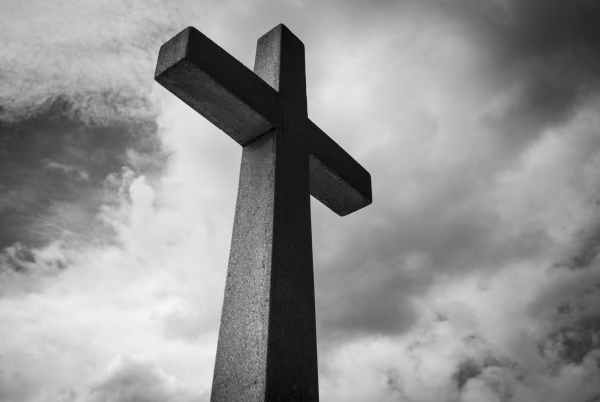
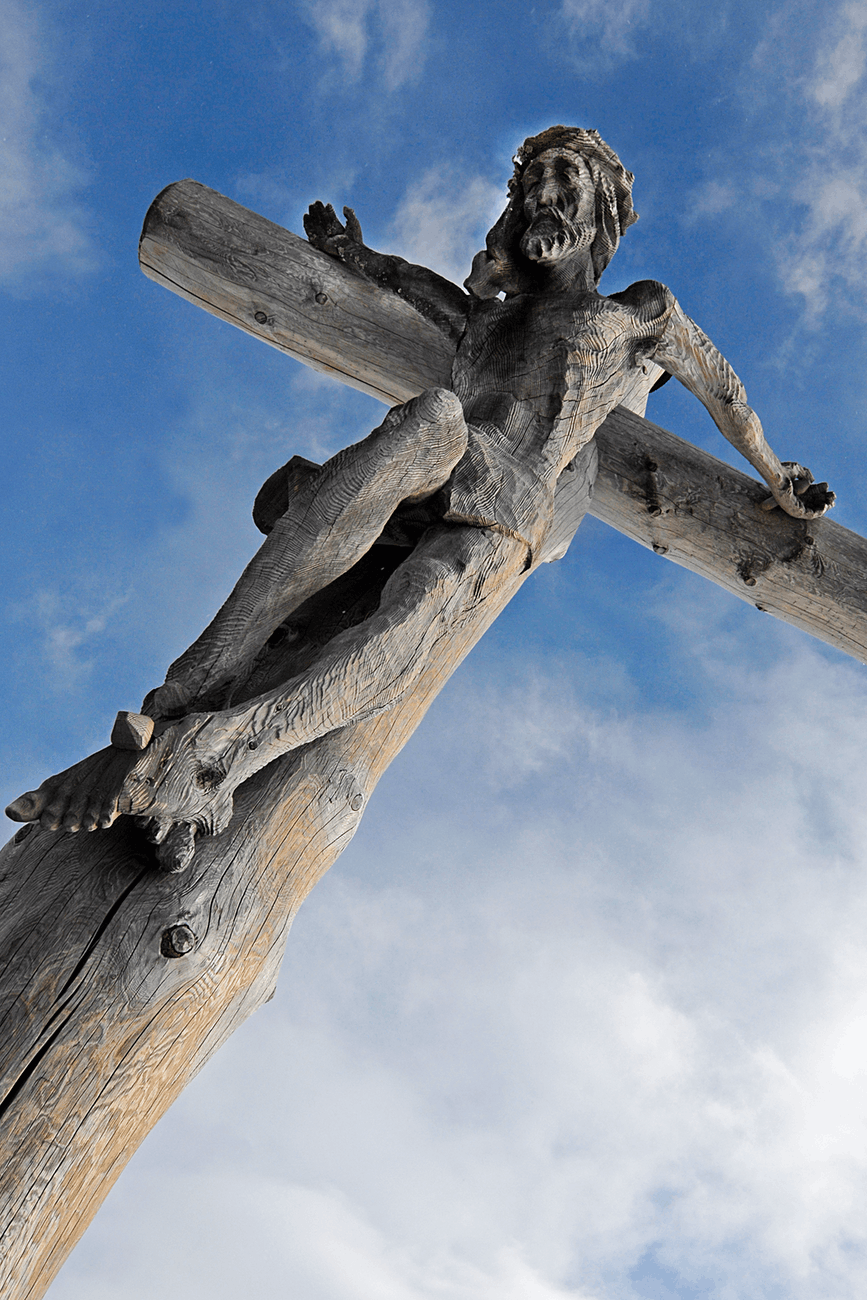
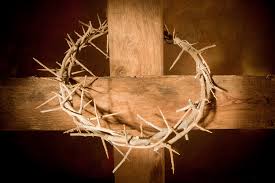
The most common symbol of the Christian religion is the cross. And, while many statues and necklaces and artistic renderings include a dying Christ figure , the kind you most often see is the empty cross. On this day between the crucifixion and the resurrection, I want to consider the significance of the empty cross.
First, the empty cross reminds us that Christ lived. In spite of those who continue to challenge the historical evidence, there was a man named Jesus of Nazareth. He lived in a particular time and place, and he was tried and sentenced to death by crucifixion. His existence caused the modern Western Calendar to be split into two distinctive parts based on the estimated year of his birth, and his life, death, and resurrection gave rise to a movement that has never been stamped out, equaled, or eclipsed.
Second, it reminds us that Christ died. He was fully human in his capacity to feel pain, rejection, betrayal, hunger, thirst, and grief. Yet he also experienced joy, companionship, hope, love, compassion, laughter, and growth. He didn’t just grow old or fade into obscurity. He didn’t leave his life’s work unfinished, he didn’t compromise or change his message; he didn’t give up or start over with a different “crew.” Though he never staged a coup, or built up an arsenal, or rose to a seat of power or influence, this homeless, itinerant, soft-spoken rabbi was seen as enough of a threat to the leaders of his time that he was framed, tried and convicted, and sentenced to death.
The empty cross also reminds us how he died. Modern crosses often look imposing and even triumphant, as they tower over a mega church parking lot, or hang on a chain of elegant silver, or stand in rows of chiseled rock in a military cemetery. “O death, where is your sting? O grave, where is your victory?” (I Cor. 15:55) But the torture before and during the crucifixion were brutal– bones were not broken, but they were pulled out of joint and then forced to bear the full weight of a bloody, swollen and bruised body of ripped muscles and exposed flesh. Heat caused the salty sweat mixed with blood to drip into his eyes, his open wounds, and around his nose and mouth, but he was unable to wipe any of it away. Flies gathered; he couldn’t keep them from buzzing or biting. Each breath was a torturous push and pull of the arms and body upon the nails holding him at an unnatural angle against a wooden bar that rubbed against his already raw back. And all of this was public; entertainment for the masses of hecklers, and those who were rejoicing in his humiliation and failure. There was nothing pretty or majestic about the cross on that day.
The empty cross reminds us that Jesus was buried and put under Roman guard. His emaciated, bloody, barely recognizable remains were wrapped up and prepared with spices. Guards, whose lives depended on this body remaining in the tomb and undisturbed, were posted, and a huge boulder rolled into place to block entry to and exit from the tomb. Jesus didn’t spontaneously climb down off the cross, or waltz out of an air-conditioned cave.
Finally, the empty cross reminds us that Jesus was the Christ–death could not stop him; the grave could not hold him. His victory was complete. He didn’t claw his way out of that tomb; he didn’t sneak out in the dead of night; he didn’t hobble into hiding for several weeks because he was only “mostly dead” of his torturous injuries. He arose, victorious, recognizable to those who knew him best; healed and full of power.
There are hundreds of reasons why we “cherish the Old Rugged Cross.” And, though the cross stands empty, our reasons are not. Hallelujah! Tomorrow, hundreds of millions of Christians will be celebrating the empty tomb. But for today, I want to celebrate the empty cross.
Good Friday is a stumbling block for many people who would be Christians. Some get angered at the mere mention of “Good” Friday. They see nothing good in it, and no reason to celebrate. They mock Christian celebrations and practices throughout Holy Week. They ask, “What could be good about being arrested, beaten, tried in an unfair court, mocked, and condemned to death?” “What could be good about celebrating someone’s final meal, and following the gruesome details of his humiliating crucifixion?” “Why remember someone being tortured by his enemies and abandoned and even betrayed by his friends?” I know someone who uses the crucifixion of Jesus as “proof” that God is neither omnipotent, nor holy.
Yet the Bible chooses to focus time, detailed description, and several varying viewpoints to make this the pivotal event (along with the resurrection) of history. The Crucifixion does not come as a sudden and inexplicable episode in Jesus’ ministry. He predicts it; not just once, and not just in one account–he doesn’t hint vaguely at some “future trouble,” or potential danger–he gives a detailed description of what will happen to him:
Mark 10:33-34New American Standard Bible (NASB)
33 saying, “Behold, we are going up to Jerusalem, and the Son of Man will be [a]delivered to the chief priests and the scribes; and they will condemn Him to death and will [b]hand Him over to the Gentiles.34 They will mock Him and spit on Him, and scourge Him and kill Him, and three days later He will rise again.”
Luke 24:6-7New American Standard Bible (NASB)
6 He is not here, but He has [a]risen. Remember how He spoke to you while He was still in Galilee,7 saying that the Son of Man must be delivered into the hands of sinful men, and be crucified, and the third day rise again.”
Why do we need Good Friday? Why, my acquaintance posits, does a loving God make salvation contingent upon the death of himself in human form? Is it that God is incapable, or unwilling to offer “unconditional” grace? After all, does he not offer “unconditional” love? Why must salvation be achieved only by the unjust death of a perfect being? Why must reconciliation and new life be forged in suffering and death?
These are not unreasonable questions, but I think they miss the broader picture. Before the cross, before the scourging and the betrayal, let’s look at the life of Christ. Jesus, the second person of the Trinity, the author of creation, could have stepped out of Heaven at any moment, and arrived in all his glory, surrounded by angels, to walk in pomp and dignity through the world he created. He could have swept the entire Roman Empire off the face of the planet, healed every disease with a whisper, and lived in the Temple in Jerusalem as the Ruler he is. Instead, he came as a helpless child, born to a teenage mom and her fiance during a grueling tax season. He grew up in relative obscurity, never attended college, and is lost to history until he begins his second career as an itinerant rabbi at age 30. He never held political office, never owned a home of his own, never wrote a book, or produced a piece of art work, never led an army into battle, never married or had children, never became wealthy, never did anything to make himself famous by worldly standards. He was not crucified because he posed an actual threat to the Roman occupation of Jerusalem, but because he was accused of blasphemy by not denying claims that he was the promised Messiah of Israel. His only “claim to fame” was that he was a dynamic teacher and had performed miraculous healings. By almost every worldly standard, his life was a failure and a lesson in wasted potential.
His death is in keeping with his humble life. It strikes us as a failure– humiliating, unjust, anti-climactic. A life of servitude, poverty, being misunderstood, and making all the “wrong” friends and enemies. Why would God live such a ridiculous and unfulfilling life? Except he didn’t– it wasn’t a failure; his life and death stand as examples of how to live at peace, and how to change the world! Hundreds of people flocked to hear him teach; hundreds more to see him heal the sick and raise the dead. But he never charged a single coin, never demanded accolades or even thanks.
This is the paradox of the Gospels. God’s ways are not our ways. His humiliating death on the cross was necessary for the ultimate triumph of the resurrection, but it was more than that– it was a vindication of justice over injustice and service over selfishness. Good doesn’t always triumph over evil in a power play. God has the power to obliterate every one of his enemies, but more often than not, he causes them to fall by their own arrogance and blind ambition. The Chief Priests, the Roman Soldiers, the agony and torture of death– they were no match for God’s love.
Good Friday showed us that God can ALWAYS make even our most difficult circumstances, even the worst situations, into something VICTORIOUS. Jesus still had to suffer and die, because we will still have to face betrayal, hatred, injustice, unanswered questions, and even taste death. An Easter without Good Friday is a happy ending without the story. Only an omnipotent God could have given us the triumph; only a loving God would have walked the Via Dolorosa to fight in the trenches with us.
I’m late in posting an entry today– it’s been a day of swinging in the pendulum. Not in a personal sense, but in praying for friends and family.
We all have “pendulum” days (or weeks, or even hours)– times where we are carried, pushed, swung, or banged about by life’s circumstances. Moments where time stands still– sometimes in astonishing joy, and sometimes in soul–stomping grief. Then comes the rush of being pulled by forces beyond our control– up, and down, across, and through the arc. I’ve been hearing from friends all day, sharing those moments, and asking for prayer. In the space of an hour, I’ve prayed for those who have just lost loved ones– a mother, a sister, a son– and those who are celebrating– an engagement, a birthday, a new home. I’ve prayed for those whose lives are in the balance– in ICUs and in the womb. Cancer, anniversaries, new puppies, pneumonia, a new job, a vacation, a car accident…
When we pray for others, we share those joys and heartaches– together, we swing through the arc of tragedy and triumph, even if we don’t all feel the full impact. We become like the balls on the pendulum swing; absorbing and sharing laughter and tears not fully our own. But by doing so, we provide both energy and equilibrium. Shared joys are multiplied; shared pain becomes bearable. Prayer breaks through the isolation or the intensity of the moment, and keeps us grounded, or keeps us from shattering. It reminds us that even in these defining and refining moments, life is not static. And the momentum pulses through us in our connectedness.
Yet prayer goes one step further– it brings triumph and tragedy to the God who is above, beyond, around, and amidst the circumstances, the chaos, and the emotional highs and lows. Our voices, raised together in laughter or grief, exasperation or anticipation, ascend to the one who came and lived and laughed and cried among us– to Jesus, whose arms are fully extended to embrace us wherever we are on the pendulum.