Walk This Way

There is an old comedy/vaudeville gag, where a character enters a stately home, or an office, or arrives at an  important event.  They are greeted by a “straight man” character, who tells them to “walk this way”.  The “straight man” then turns and begins walking in a manner that uses exaggerated mannerisms.  The comedic character doesn’t just follow in the general direction of the other character– s/he imitates the exaggerated mannerisms as well.

walkthisway.gif

In the last of three prayers from the song, “Day by Day” (see this past Monday and Wednesday), I want to explore how to “follow Thee more nearly.”

I have this quibble with the song lyrics– I know that “nearly” rhymes with “clearly” and “dearly”, but it is not grammatically correct, as it implies that I almost, not quite, but nearly want to follow Jesus, instead of saying that I want to follow Him more closely, or become a better reflection of His character.  That said, I sometimes think that I fall into the comedic trap of thinking that “walk this way” merely means following Christ with exaggerated mannerisms– I follow “more nearly” when I should be following more closely.

man wearing black leather jacket riding cruiser motorcycle on road

Years ago, a good friend of mine suggested that I read a book called “God On a Harley” (Review and summary here)  It is a fable, and an interesting read.  I don’t recommend it for theological content (the Christ it presents is more of a New-Age life coach, not a Messiah), but I’m glad I read it for two reasons:  It challenged my conventional view of Jesus, and it challenged the way I thought about discipleship.  At the time I was reading the book, I was also considering making some big changes in my life– changing careers, moving away from my home town, and trusting God to be “sufficient” in my singleness and lack of guaranteed income.

photo of a woman passing through the alley

When we talk or think about Jesus’ time on Earth, we generally focus on His birth, His miracles, His death, and His resurrection.  We don’t usually think of His everyday life…where He ate or slept or how He lived.  If He were to walk among us today, He wouldn’t appear like the paintings we see– flowing long blond hair (which has always been inaccurate), white robe and sandals.  He might wear a T-shirt and jeans, ride the bus or subway train, and hang out at Starbucks or the corner convenience store.  Jesus didn’t live in a “holy huddle.”  And, though He famously walked on water, He mostly walked the streets.  He lived and walked and ate and spent His days among ordinary people–in fact, it was His willingness to eat with and talk to the marginalized, the forgotten, the ostracized people of Him time, that got Him in trouble with the religious leaders and those in power.

I don’t think Jesus in our time would be a tattooed, beer swilling, biker– but I’m convinced that He would be found sharing a story or a pizza with one; and with the kinds of people many of His “followers” would shun.  The Jesus I want to follow “more nearly” is Holy, but He is not “Holier-than-thou.”  I can’t follow Jesus more nearly if I’m following an image that only exists in a picture or my self-righteous imagination.   In my youth, I had a picture of what “following Christ” looked like– but it was more about following expectations and selfish desires– successful career, marriage, giving to the “right” charities, becoming a pillar of the community.  There is nothing wrong with any of those things, but if God calls me to serve in humble (even humiliating) ways, doing thankless tasks, and spending time, not helping the needy at my convenience, but truly serving– pouring out my time and my heart until only His strength keeps me going–I have learned the joy and honor that transcends anything I once imagined.

bike biker drive driver

I’m not a biker, but I love the image of Jesus on a motorcycle, asking me to come along for a ride.  If I want to follow Him “more nearly,” I couldn’t come up with a better metaphor.  If Jesus came and asked me to ride off with Him on a Harley, several things would happen that relate to discipleship:

  • First, I have to commit.  You can’t “sort of” ride along — you either get on the bike or you stay behind. You might know all about the motor, you might know how to ride, you might know the traffic laws, you might even watch a video of someone riding, but you won’t experience the horsepower under you, the wind in your face, the road slipping away behind you.  The same is true of the Christian life.  You can know about God; own a Bible– even memorize it; you can sing God’s praises, all without experiencing a relationship with Him.  But you’ll never know the full power of His grace and acceptance until you commit.
  • Part of that commitment is to be willing to go when and where He’s going…you can’t go on the ride and stay at home.  You can’t go two hours after He does.  And that brings me to–
  • Trust!  You won’t get on the bike if you don’t trust His ability to drive and His wisdom in knowing how and where to go.  Once you’re on the bike, hanging on from behind, you can’t see all of the road ahead.  You can’t steer or hit the brakes.  In my own experience, I ended up leaving teaching after seven years with no “safety net.”  I had no job waiting in the wings, no money saved up, and no “plan” other than to take whatever honest work I could find and follow God’s leading.  I learned by experience that I can trust God’s ways to be better than mine; better than my expectations!
  • Riding together takes teamwork.  Just because God is doing the driving and steering doesn’t mean that I just sit back and watch the scenery (though I can do a lot of that, too).  If I’m not paying attention at curves, intersections, stops, turns, etc., I can throw everything off-balance.
  • Riding together, with my arms wrapped around Him is the closest I can “follow” Jesus.  It’s not about what I know, or what I can “do” for God– it’s choosing to be in a deepening relationship with Him.  As I live with Him, listen to Him, and trust Him, the knowing and doing will come naturally.

I want to follow with abandon– not just to walk several steps behind, or wander in His general direction, or watch what He’s doing from a distance.  I want to hang on and share the adventure.  That’s the way I want to “walk” with Him.  That’s my prayer, “Day by Day.”

Praying For the Ashes

“Playing for the Ashes” may not be a familiar term to many. It refers to a Cricket Rivalry between England and Australia, dating back over 125 years. The term “the Ashes” was first used by a sports writer lamenting the loss of a Cricket match. The team from Australia had defeated the English team on its home soil, and the writer wrote a tongue-in-cheek “obituary.” Over the years, the two teams now play for a trophy shaped like an urn, which supposedly contains ashes of something related to the famous game. The rivalry is real, and the teams give their all to win each match “for the ashes.” But the trophy itself is little more than a joke. The phrase has come to mean playing all out for something that is already (figuratively) dead or worthless.

“Playing for the Ashes” is also the title of a mystery novel, in which a cricket player is murdered. I am not a Cricket fan, but I am a fan of mysteries, and in reading the book, I learned a little bit about a sport I have never followed. But the book builds on rivalry and the theme of investing one’s energy and dreams for “Ashes.” The main characters of the book have wasted their money, energy, and life force in the pursuit of power, revenge, fame, and status, only to find themselves losing everything they ever worked for. The book is very well written, and it made me think. But it also left me sad and somewhat empty at the end.

I began thinking about how various life pursuits might compared to playing for the ashes. I write about pursuing prayer, but what is my goal and aim? Am I pursuing prayer with the right goals? I may answer that it is part of my pursuit of living like Christ; that I want to grow closer to God; that I want to grow in my walk with Christ…any number of “Spiritual” answers. But is that always true?

How often do I spend my time playing for, and even PRAYING for “the ashes?” How many times do I try to “fix” things first, and only pray as a last resort? How many prayers are spent asking for things I “want” to happen, instead of seeking God’s will first? What dreams am I holding on to when I pray– unwilling to lay them on the altar? Am I praying in line with God’s will, or do I feel like prayer is a rivalry (either with God or with my circumstances)? Prayer IS a pursuit, but it is not a game or a rivalry. The “prize” of prayer is not getting the answers I want, or getting God’s “approval” of my desires. The “prize” is eternal, abundant life from– and with– the Father! It is not getting God “on my side”, but growing closer to the heart of God!

God wants to hear our requests and our desires– but He also wants to hear our desire to follow Him above all. We should be running for the true prize, not playing (or praying) for the ashes!

Exceedingly, Abundantly, Above…

“Now unto him that is able to do exceeding abundantly above all that we ask or think, according to the power that worketh in us,”

Ephesians 3:20 (KJV)

What do I expect as I pray? What is the outcome that I hope for? Most of the time, it looks like one of the following:

  • I expect to praise and worship God; I hope that He will hear my heart of gratitude and worship, and that He will be pleased with my words and actions
  • I expect Him to act on or through a particular circumstance, such as providing healing or guidance to someone in need
  • I expect to hear from Him, or to gain wisdom or guidance for myself
  • I expect that He will honor His promise to forgive my sins when I confess them
  • I expect to grow closer to God as I speak to Him and wait to hear from Him

But Paul reminds us in the book of Ephesians that God is able, through the power of Christ at work in us (emphasis added), to do much more than anything we can imagine or ask! What does that mean in my pursuit of prayer?

Well, it means more than I can explain in any blog entry, but let me attempt to imagine a few outcomes that go beyond my normal expectations:

  • Prayer is a matter of choice. It is also a matter of obedience and acknowledgement. No matter how short, or faltering, or disorganized it may be, each prayer proclaims that God is GOD–worthy of praise, able to save and forgive, supremely authoritative over my life and the lives of others, and ever present to listen to every voice that calls out to Him. And it proclaims this both to the physical world (if we’re praying aloud or with others) and to an unseen and metaphysical world inhabited by spiritual beings who also owe God their worship and obedience.
  • Prayer is a partnership. In some mysterious way, God allows us to participate in His ongoing work– whether it is bringing healing, joining the chorus of angels in songs of praise, praying for God’s hand to move in global and historical affairs, or developing our personal relationship with Him–God chooses to let us “have a voice” in what He does. God is still in charge. Our prayers will not cause Him to go against His own will. But as we pray, we grow to understand God’s heart. We begin to want what He wants, and to ask for His will because it is what we want most. As we see and hear about miracles, we can know that we are “part of the team.”
  • Prayer changes things–often in ways we cannot ever see or measure. Someone may pray for years to see a relative or neighbor come to Christ– seemingly without success. What they may NOT see is how their testimony, though spurned by the object of their prayers, has brought others to Christ over the years. And each one of THOSE people has the potential to witness to others– including the one who rejected the original efforts! A prayer for healing that seems to go unanswered may inspire someone to commit their life to researching a disease of find a cure so that thousands of others may be spared the suffering you prayed to alleviate. Praying for peace or justice may not have immediate effect. But we cannot know or imagine the cumulative effect of such prayers in bringing lasting peace or more perfect justice to our children or future generations.
  • Prayer changes people– especially us! If I am praying for someone, my thoughts and actions will follow. I will take a more active interest in those for whom I pray. I will (or should!) reach out with practical efforts and partner with others who share my concerns. I will give, share, encourage, work, and advocate– not just pray and move on unchanged.
  • Prayer has substance. We imagine prayer to be ethereal and mental or spiritual. But the Apostle John, writing in Revelation 8:3-4, describes the prayers of the believers (saints) as incense. Our prayers have a pleasing odor, and they rise like smoke into the presence of God. There is nothing empty or “fake” about prayers lifted to Almighty God. Our prayer is not just an exercise in wishful thinking or the power of group-think or “positive vibes.”

We serve an amazing, limitless, all-powerful, all-wise God! Our prayers may seem like just words–humble, inadequate, or even unintelligible– but in God’s hands, they are mighty tools, bringing Him glory in ways we can’t even begin to explain or imagine!

Father, Forgive Me!
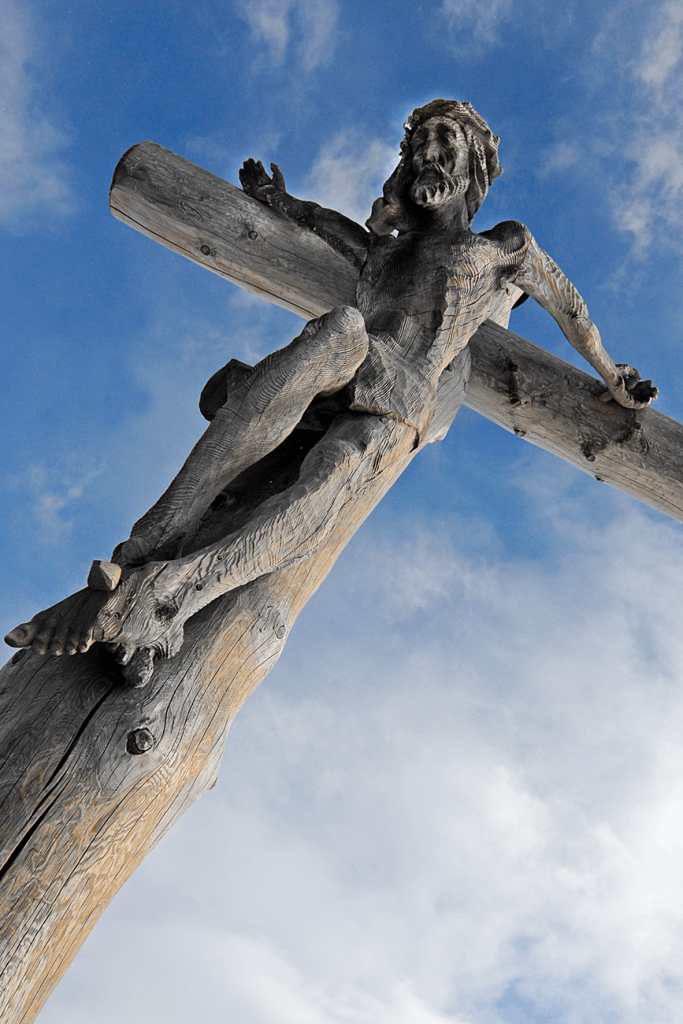
We don’t like to talk about (or write about!) prayers of confession and repentance. And yet, the Bible is full of such prayers. In fact, even the Lord’s Prayer contains the phrase “forgive us..” Even if we pray eloquent prayers of praise and petition, our prayers will be lacking without first evaluating our relationship with Christ and seeking His forgiveness and continued cleansing.

I know there are those who will challenge this statement– after all, once we have “accepted Christ,” aren’t we considered to have His righteousness? Haven’t we BEEN forgiven? If we must keep asking for forgiveness, does that mean that Christ’s death and resurrection are not sufficient to “save” us?

I do not mean to suggest anything of the sort. We ARE forgiven– past, present, and future– our names entered in the Lamb’s Book of Life. God isn’t holding on to a grudge over every future fib, flub, or fall. And nor should we. Confession in the prayer of a Christian shouldn’t be wallowing in guilt and shame, or confessing the same sins over and over, doubting that Christ’s finished work isn’t actually finished. But just as in all close friendships, we sometimes ask, “Are we ok?”, to clear the air and maintain closeness, it is appropriate to “fess up” with God– to clear the air– precisely so that shame and guilt DO NOT build up or slowly seep into our relationship.

God will not withhold His promised salvation from us if we are trusting in Him. We are justified, and our advocate, Jesus Christ, mediates for us constantly, just as the Holy Spirit indwells us to be able to overcome temptation and do what we cannot do on our own. But WE are still living in our fallen world and fallen bodies. We will find it difficult to trust; we will find it tempting to judge others; we will doubt our own decisions– did we really do “right”? And while God is eternally faithful– we are not; nor have we reached perfection in all our daily actions and thoughts. We are “okay” with God– but confession reminds us of that!

In the story of the prodigal son (Luke 15:11-32), the son rehearses a speech of confession. And even as he begins saying his rehearsed words, His father interrupts with complete reassurance of his love. How much more does God delight in reassuring us of His eternal, unfailing love!?

Two thoughts I’d like to add here:

One– It can be very easy for us to fall into confession as a works-based ritual. Confession adds nothing to Christ’s finished work on the Cross. We are saved by God’s Grace– period. Ten thousand prayers of confession will not make us “more” saved.

Two– It can be just as easy to avoid self-evaluation and discipline as we grow “comfortable” with our Christian Walk. Confession is not about “right” and “wrong” as much as it is about humility. The Apostle Paul says, “And I am sure that God who began the good work within you will keep right on helping you grow in his grace until his task within you is finally finished on that day when Jesus Christ returns.” (Philippians 1:6 The Living Bible)

We don’t need to be hampered by guilt, fear, or shame– but we should want to keep our relationship with God pure above all other relationships. And that means being willing to submit to God’s will and God’s discipline on a daily basis. Confession is not an admission of God’s failure to save us; nor of our commitment to follow Him. Rather, it is an admission of how important that relationship is, and how much we need to keep our commitment fresh, pure, and vibrant. God HAS forgiven us; He will continue to forgive– freely, and fully!– as we follow Him.

Fervor and Faithfulness

Do you pray fervently? Do you pray faithfully? I confess that sometimes I go through periods of fervent prayer, but it doesn’t always last. And, while my goal is to pray faithfully, I sometimes struggle with daily prayer seeming bland.

Thankfully, God does not demand constant fervor and faithfulness (though He does provide His Spirit to help us with both!) God wants us to come before Him exactly as we are; He KNOWS exactly what we are feeling, and He wants us to experience His presence THROUGH both the peaks and valleys. Experience has taught me that faithfulness in prayer can often lead to renewed fervor. Fervor and ardency can be influenced by our emotions. I pray most fervently when I feel needy, or when I am swept up in joy, or when I am surrounded by others who are riding a particular emotion. But I pray most faithfully when I choose to step out in spite of my emotions or circumstances.

Recently, I was reading in 2 Chronicles about “Good King Asa” of Judah. If you read chronologically through the Bible, you meet King Asa in 1 Kings (briefly in chapter 15), and again in 2 Chronicles (chapters 14-16) Both times, he is classified as a “good” king in Judah, one who “did what was right in the eyes of the Lord.” He reigned for 41 years, and was a champion of reform. He was a fervent and devoted king throughout most of his reign, and was mourned upon his death. But sadly, King Asa ended his reign in rebellion against the God he had so staunchly served for most of his life.

God had blessed Asa with astonishing military victories and years of peace and prosperity. But after 36 years of faithful and fervent service, Asa seems to have turned his back on his faith. Another army threatened to invade Judah, and Asa, instead of turning to God as before, brokered a treaty with another local king for protection. He sent silver and gold from “the treasuries of the House of the Lord” to King Ben-Hadad of Aram for help in repelling the army of King Baasha of Israel (the northern kingdom of the Jews). He bribed Ben-Hadad to break his treaty with Israel, and together, they sacked the fortifications and caused Baasha to back off.

In spite of King Asa’s victory, the Lord sent a prophet to rebuke him. King Asa, who had sought the Lord throughout more than three decades of devoted service, became so angry that he had the prophet thrown in jail. He then began oppressing his own people! Three years later, Asa developed a severe disease in his feet. But instead of calling on God, he consulted only his own court physicians. He suffered for two more years before finally dying. This “Good” King, famous for his passionate pursuit of reform and devotion to God, ended his life embittered, angry, diseased, and despotic.

God still chose to use King Asa for good– Asa’s reforms were a key ingredient in keeping Judah from suffering the fate of neighboring Israel. Asa’s reign was marked by years of peace and prosperity. Many of the faithful Jews living in Israel moved to Judah, where Asa’s reforms meant that could worship freely and fully. In fact, there was such a revival that people took extreme vows to follow God whole-heartedly. What a shame that the leader who inspired such devotion would himself fall victim to greed, pride, and bitterness, and fail to truly experience the blessings he had helped bring about!

I pursue fervent prayer. I want to serve God whole-heartedly, and I want all the joy and peace of a close relationship with Him. But I also want to serve God faithfully, even when I don’t feel the passion I had last week or last month. Because I know that God is both Eternally Fervent and Eternally Faithful!

If you are going through a season where the feelings just aren’t as “strong” as they have been in the past; if you are tempted to coast on the strength of past victories; if you are wondering why your prayer life is flagging, or lacking in the zeal you once had– DON’T GIVE UP! Don’t let your story end up like Asa’s.

We are called to FINISH the race. And yes, we want to race to “win the prize” (1 Corinthians 9:24). But remember that our strength comes from God, not our own desires.

Therefore, since we are surrounded by so great a cloud of witnesses, let us also lay aside every weight, and sin which clings so closely, and let us run with endurance the race that is set before us, looking to Jesus, the founder and perfecter of our faith, who for the joy that was set before him endured the cross, despising the shame, and is seated at the right hand of the throne of God. (Hebrews 12:1-2 ESV)

We don’t have to make a choice between fervor and faithfulness, but let’s not pursue one without the other. Let’s be fervent in the sprinting, and faithful in the long stretches. Let’s finish the race well!

His Delight!

The sacrifice of the wicked
is an abomination to the Lord,
but the prayer of the upright
is his delight.

Proverbs 15:8

I believe that God listens to prayer. I believe that God answers prayer. But do I really live in the certainty that God DELIGHTS in my prayers?

I think it is important to know that God doesn’t just listen to our prayers out of duty or because He is hoping to hear a particular phrase or request or “type” of prayer. God DELIGHTS in hearing from US! God is thrilled to hear our prayers– whether they are prayers of praise or prayers of agonizing distress, God WANTS to hear from us.

Some may look at the verse above and say, “God may delight in the prayers of perfect people, or people who are righteous, but I am a sinner. He won’t delight in my prayers. I’m not even sure He will listen to my prayers.”

But that’s not what the verse says. It doesn’t say that God only delights in the prayers of people who are perfect, because, let’s face it, NONE of us is perfect. And who is truly righteous, apart from God Himself? No, God delights in the prayers of the “upright.” So what does that mean in relation to you and me?

God looks at the heart. He sees beyond actions and circumstances. So when we pray, God knows our motives and our deepest thoughts. And if they are “upright”– focused on who God really is, who we really are, and how we relate to Him and how He relates to us–our prayers are a delight to Him. He isn’t asking for perfect people or perfect prayers. He’s asking for us to be transparently honest and humbly desirous when we come before Him. We don’t even have to be perfect in our theology or our faith. If we have the desire to be near to God, God is delighted to listen and respond!

That’s why He despises the sacrifices of the wicked. Their actions may look honest and humble, but their hearts are NOT. They may say all the “right” phrases to impress other people; they may do all the “right” actions to look devout. But God sees their pride, their refusal to give up secret sins, or to confess their true needs. They may want “something” from God– an answer, a blessing, a miracle– but on their terms. They don’t want a relationship, they just want a result.

And when God looks at us, what does He see? I can’t count the times I come to God as a complete “mess.” I’m falling apart, exhausted, at the end of my rope. But God sees ME. He looks beyond my appearance, my emotions, my limitations, my past. He sees my heart. He hears my need. And He hears the hope and trust that I can pour out my heart and He will listen in love, mercy, and compassion.

So does that make me “upright?” Maybe not in human understanding. If I look in the mirror, I may still see a messed-up failure. But God sees the finished product– what He can do for me, in me, and through me as I place my trust in him! By faith in the finished work of Christ, I am redeemed, and so, I am “upright.” God sees in me what I can’t see in myself– His Spirit at work; my future with Him; the full extent of His love.

This is how Jesus saw His disciples. When He looked at Peter, He didn’t just see Peter’s impulsiveness, his impending denials and abandonment. He saw Cephas, “The Rock”– He saw what Peter could become. What He looked at John “the Beloved” disciple, He didn’t see John’s youth or ambition, He saw a child of God who would suffer and stand firm in His faith. When He saw Judas, He didn’t just see one who would betray Him. In fact, at the Last Supper, Jesus shared bread and wine with Judas, and washed Judas’ feet! Jesus took delight in spending time with Judas! It was Judas who threw that all away to his own doom.

And the same is true for us. God sees the whole package. The “upright” are those who look up, and seek God with their whole being. If you come to God– if you seek Him and desire to find HIM and know HIM–God delights in you because He delights to shower you with love, compassion, discipline, wisdom, and blessings– in spite of your circumstances and limitations; in spite of the pain you may be feeling in the moment. God wants a relationship with you, not a “result” of outward perfection, or abject obedience. He wants an honest, joyful, even sometimes difficult and painful relationship. With YOU!

God delights to hear from us– our praises, our desperation, our hopes and dreams, and our deepest fears. God delights in His children. He delights in our prayers!

Why Confess?

One of the prayer models I like to use often is based on the acronym ACTS. ACTS stands for Adoration, Confession, Thanksgiving, and Supplication. I like this model because it is well-rounded. It works like this:


ADORATION–I love to begin prayer by remembering and acknowledging God’s worth, His supremacy, His Holiness, and His majesty. It sharpens my focus on the WHO of prayer, rather than the WHAT of my worries or doubts. And it puts everything in the proper perspective. Sometimes, I come to God by praying a Hymn, or praying a Psalm, or remembering the many names of God.

CONFESSION–Confession is important in prayer, and since I want to concentrate on it, I’ll come back to this element below.

THANKSGIVING– Thanksgiving returns me to remembering what God has already done– for me, for others, throughout history, and just yesterday in my life. Instead of prayer being all about my needs, wants, or concerns, prayer should be an honest conversation with God. And that must include gratitude, because God is truly GOOD! If you ever doubt that, think about the first five minutes of your morning. If you awoke, you are alive (thank you, God!). If you heard your alarm, opened your eyes and saw anything, if you were lying on a bed, in a shelter with a roof, if you were able to sleep through the night without the terrors of war, slavery, starvation, torture, or chronic agonizing pain, you have much for which to be grateful. If you were able to get out of bed on your own, able to eat breakfast, get dressed, and you have a job to go to or a purpose to fulfill in this day, you are among the blessed. To withhold praise and thanksgiving is to miss one of the privileges of life.

Photo by Tima Miroshnichenko on Pexels.com

SUPPLICATION–Yes, we bring requests to God. And He already knows what we need, what we desire, and what He has planned for us. So supplication is not about making God aware of our needs. But it is another act of acknowledging that God hears and responds to us. Because that’s the kind of God He IS! And because we have spent time Adoring, Confessing (to), and Thanking God, we know that we can present our requests without fear or doubt.

Most of us are fine with Adoring, Thanking, and Saying our requests, but Confession can be tricky– especially in our culture. What are the elements of Confession that trip us up? Mostly, I think, it’s a misunderstanding of what confession is (within the element of prayer) and what it is NOT.

Confession is defined as admitting to guilt, or to a crime or sin or wrongful act. But, even more basically, confession is an admission that we are not the ultimate authority over our lives or the lives of others. As such, we must confess before we can accept God’s atonement for our Sin. If we do not confess our need for God, we cannot accept, understand, or appreciate the depth and nature of His sacrificial Love for us. So when we pray, we must confess, not only God’s Glory in the heavens and the Earth, but His Sovereignty in our lives; His authority over our emotions, our thoughts, and our actions. King David gave us many great examples of confession in his Psalms– and they can be terrific models to use in our own prayers. (See Psalm 6, Psalm 32, Psalm 38, Psalm 51, and others.)

Confession in prayer is not primarily a list of our petty missteps– though we should be willing and able to name them, rather than denying what we’ve said and done–but a daily admission of God’s right to determine how we conduct our thoughts, our habits, our priorities, and our relationships, and acknowledging that God is Merciful, Gracious and Loving– beyond all our failures, mistakes, and even past rebellion. Confession shouldn’t focus so much on what we’ve done, as on how God is able to free us from guilt and shame, and how we intend to move on away from the past. We confess that our ways are not Holy, and in doing so, we underscore that God’s ways ARE Holy, perfect, wise, and good. God already knows our thoughts and actions, but WE need to be reminded of our goal– to run the good race (see Hebrews 12:1, and 1 Timothy 6:12) to follow Christ; to become more like God each day!

Confession is primary to the Christian Life– we confess that ONLY by the work of Jesus (the cross and resurrection) can we be reconciled to God. We cannot pray openly to God if we don’t believe–and confess– that this is true. God is not fooled by sweet talk or glib arguments. We cannot believe that Jesus’ atoning death and resurrection saved us if we don’t believe that it was necessary and good for Him to do so. And besides, confession is good for the soul!

“If we confess our sins, he is faithful and just to forgive us our sins and to cleanse us from all unrighteousness.”

1 John 1:9 (KJV)

Confession has a negative reputation in many Christian circles, and it is misunderstood in others. Just listing our sins or admitting we did something wrong doesn’t have any value without the positive confession that Jesus is “the way, the truth, and the life.” (see John 14:6) In fact, a better definition of Christian confession is this– agreeing with God about who I am (a sinner/imperfect/unable to attain Holiness on my own), and who HE is (perfect/Holy/Sovereign/the One who Loves me absolutely)

When we pray today, I hope we will confess– positively, profoundly, willingly, and whole-heartedly. I hope we will humbly and honestly confess any actions or habits that are interfering with our Christian walk. And I hope we will joyfully confess that Jesus is LORD; that we are trusting in Him to guide us, intercede for us, and give us the power to live more abundantly in this life, and throughout eternity. What a great way to pray!

How Much Is That Doggie In the Window?

How much is that doggie in the window?
The one with the “waggly” tail…
How much is that doggie in the window?
I do hope that doggie’s for sale!

Two songs about puppies–how could that possibly relate to a life of pursuing prayer? Well, I’m going out on a limb, but let me try to connect the dots.

“If anyone comes to me and does not hate his own father and mother and wife and children and brothers and sisters, yes, and even his own life, he cannot be my disciple. Whoever does not bear his own cross and come after me cannot be my disciple. For which of you, desiring to build a tower, does not first sit down and count the cost, whether he has enough to complete it? Otherwise, when he has laid a foundation and is not able to finish, all who see it begin to mock him, saying, ‘This man began to build and was not able to finish.’ Or what king, going out to encounter another king in war, will not sit down first and deliberate whether he is able with ten thousand to meet him who comes against him with twenty thousand? And if not, while the other is yet a great way off, he sends a delegation and asks for terms of peace. So therefore, any one of you who does not renounce all that he has cannot be my disciple”

Luke 14:26-33

33 But seek first his kingdom and his righteousness, and all these things will be given to you as well. 34 Therefore do not worry about tomorrow, for tomorrow will worry about itself. Each day has enough trouble of its own.

Matthew 6:33-34 (NIV)

22 But be doers of the word, and not hearers only, deceiving yourselves. 23 For if anyone is a hearer of the word and not a doer, he is like a man observing his natural face in a mirror; 24 for he observes himself, goes away, and immediately forgets what kind of man he was. 25 But he who looks into the perfect law of liberty and continues in it, and is not a forgetful hearer but a doer of the work, this one will be blessed in what he does.

James 1:22-25 (NKJV)

Children love puppies. Most children have expressed desires similar to the ones in both of the songs above. They wish and dream and beg for a pet to love; a furry “best buddy” to play with and befriend. There is a longing deep in our hearts for someone to understand; someone who is always ready to greet us with unconditional love and companionship. And sometimes, we have a tendency to take this desire–this wish– and see in our relationship with Christ its fulfillment. Christ is the our “forever” friend; someone we can talk to; someone who will share our burdens, and walk along with us “most everywhere.” This is not “wrong.” But Jesus warned His listeners that becoming a disciple would involve more than just dreams, wishes, and good feelings.

Following Christ comes with a cost– we cannot just wish for God’s presence when it is convenient and jolly, and escape or turn our backs when our Christian Walk involves sacrifice or hardship. Jesus is not just our Friend; He is our Lord! We need to be ready to let go of anything that would hinder our relationship with Him; we need to be willing to risk and even lose things we love in the pursuit of the One we Love Best. After all, Jesus gave up everything– including His Life– to make our relationship and reconciliation possible.

Jesus challenged His followers to “count the cost” of their discipleship. It’s more than just wanting a “fuzzy feeling” of belonging and listening to the Wisdom of God. It’s committing to a life of growth, work, and submission to His Will and His Purposes. A child may want a puppy, but may not be mature or responsible enough to care for it. We may want a relationship with Christ, but we need to measure our willingness to do His Will and make changes and sacrifices. And when we count the cost, we also need to assess the value of what we are gaining! We may “lose” the life we dream about, filled with warm puppies and cloudless days. But we will gain eternal life in the Presence of the one who created the clouds and puppies, as well as the one who fashioned our very soul. Christ gave up His life so that we could experience a more abundant life. Not an easier or dreamier life, but a life with purpose and victory.

The Christian Walk is far more than just “dreams and wishes.” It is more than just asking about the initial price– because that is far beyond what we could ever pay! Redemption and Eternal Life are beyond any price. But they are also free! The cost of our Salvation has already been paid. The cost of our sanctification– our growth and maturity– is what we need to consider as we walk forward.

And the joy we will experience on this journey is greater than the joy of having a puppy–greater than the fulfillment of all our dreams and wishes–it is nothing less than the Glory of Eternity in the Presence of the One who truly loves us perfectly and unconditionally! That is worth the pursuit. That is worth EVERYTHING.

Faith, Faithfulness, and Moving Forward

Now faith is confidence in what we hope for and assurance about what we do not see. This is what the ancients were commended for.By faith we understand that the universe was formed at God’s command, so that what is seen was not made out of what was visible… And without faith it is impossible to please God, because anyone who comes to him must believe that he exists and that he rewards those who earnestly seek him.

Hebrews 11:1-3; 6 (NIV) taken from http://www.biblegateway.com

Faith is essential to prayer. Not only is it essential that we know the truth, we must depend on it. Those who lift up general prayers to some unknown “force” in the universe have no real hope that their prayers will be heard, instead of bouncing around among the planets in silent expectation. We pray to a God who sees, hears, loves, and works among us. And He will answer our prayers– in His way, in His time, and to our ultimate benefit.

That does’t mean that we must blindly believe everything we hear about God, or that we must agree exactly with everyone else who claims to believe. None of us has ever seen God face-to-face, nor can we claim perfect knowledge. But there are certain truths that do not change– God is GOD; creator, ruler, unchanging and Holy. God is who He says He is, not who someone speculates or imagines Him to be. God is mysterious, but He is “Knowable”–we see His character in the natural world, and we can see His reflection in the people around us who are all created in His image. Most of all, we have the testimony of Jesus Christ and of all who have followed Him and been transformed by Him. To all who earnestly seek Him, He has given us His Word, and His Spirit to guide us. And God is Good. Even though nature (and human nature) has been tainted and twisted by sin, God remains true to His own goodness. Even in the hard times, when God seems distant–especially when He seems distant–faith looks beyond our present circumstances, and the taunts of our enemies, to remind us of God’s providence, His Power, and His promises. Our present trials and calamities are not beyond His ability or His willingness to turn to good purpose, and they do not compare to the promises God has given.

Faith is essential to prayer, but so is faithfulness. Prayer is part of a growing relationship with our Maker. And like any relationship, it must be maintained. God is eternally faithful, but we are not–not in our own power or in our own will. And our faith, without faithfulness (in prayer, in devotion, in our everyday thoughts and actions) will wither and die. The same thirst we have for prayer in the valleys of life should be present when we reach the mountaintops. The same need we have to cry out for help should be the need we feel to cry out in praise. This will not happen without discipline, developed by daily seeking His face.

As we approach a new year, we can make many plans and resolutions– let one of them be to strive for faithfulness, especially in our pursuit of prayer. We know it is the right thing to do. And our faithfulness is not just for us. It blesses the heart of the One who was faithful even unto death. And it shines as an example to those around us– inspiring some to faith, and others to renewed faithfulness.

Finally, let’s also resolve to move forward a step each day, remembering that
“The steadfast love of the Lord never ceases;
    his mercies never come to an end;
23 they are new every morning;
    great is your faithfulness. (Lamentations 3:22-23 ESV)

God’s mercies are new every morning. And our resolve should be renewed every morning. It is God’s faithfulness that allows us to work toward greater faithfulness. We will not keep our resolutions in our own power, nor will we keep them by remaining stuck in our past failures.

Let’s embrace the coming new year as an opportunity to stretch our faith muscles, grow in faithfulness, and move forward in mercy!

Now I Lay Me Down to Sleep..

Now I lay me down to sleep;
I pray the Lord my soul to keep.
If I should die before I wake,
I pray the Lord my soul to take.

I learned this prayer as a child. It seemed very grim, and pessimistic. As a child, I spent very little time (as little as possible) thinking of my own mortality, or the state of my soul after a day of playing with dolls or running around outside. I was blessed with a safe and easy childhood. Of course, I had days of sickness, a bout of chicken pox, the loss of a pet, news of neighbors who had died in war, fallen to cancer, or been killed in accidents–moments that caused me to reflect a bit more. But I didn’t want to think about serious things. I wanted peace and happiness.

As a younger adult, I came to the conclusion that prayers like this were old-fashioned, and designed to scare vulnerable children into a false faith based on fear and gloom. Shouldn’t children learn about the Love of Jesus and the Mercy of the Father, instead of worrying about death and eternal doom of their soul? Prayers like this would be “bad” for young children; traumatic and disturbing. Better to teach them prayers that were sweet and light, and full of only the goodness of God.

Lately, however, I remember things a bit differently. Yes, there is gloom and doom in this old children’s prayer, but there is also comfort, Love, and Mercy. As a child, I could “lay me down” to sleep in peace, knowing that God would, indeed, keep my soul from harm. I didn’t expect to die, but when I woke up dreaming of monsters, or suddenly became aware of mortality, I didn’t have to stay fearful. God is bigger than any monster; bigger then Death. I could not trust anyone better, mightier, or more capable than the Lord to keep my soul, or to “take” it safely to its final destination. I learned about the Goodness of God, but I also learned about stark realities– the persecuted Church, war, famine, injustice–things that God wants me to confront, and endure, and lift to Him in prayer. And for every “gloomy” reality, there are stories of victory and joy, faith and resilience, love and grace– because God is standing by, ready to rescue and reassure and redeem.

Bedtime prayers are a great comfort to me now. And they are also important prayers in my Christian Walk. It is at bedtime that I can reflect on God’s goodness throughout the day. I can be thankful for all the blessings God has given me, and for all the ways He has guided me and protected me– often without my knowledge and in spite of myself! Instead of worrying, tossing and turning, trying to “figure out” tomorrow, I can lift my burdens to God, knowing that I won’t face anything tomorrow alone! I can reflect on all the times I thought I couldn’t make it, but God made a way! And I can confidently rest in the hope that nothing can separate me from God’s loving care. Not yesterday’s guilt, nor today’s failures, nor tomorrow’s unknown (or imagined) trials– not even death!

I am old enough now that mortality plays a bigger role in my thoughts. I have lost my parents, my grandparents, aunts and uncles, classmates, co-workers, neighbors, and friends. I’ve experienced both great joy and great sorrow. But I need not be afraid of disease, dilemmas, or death. I need not worry about the state of my soul. I may have griefs, aches and pains, and worries about tomorrow. But I can “lay me down” in peace and patience, knowing I have a Good, Good Father whose love has surrounded me for over half a century. I can “Hush” all my fears, and sleep like a baby, knowing my God is always standing right by my side.

Blog at WordPress.com.

Up ↑