Why Have You Forsaken Me?

(Please note: This is a post from a couple of years ago, which has been updated and revised…)

Have you ever doubted? Wondered, “Where is God?” Maybe even wondered if He exists at all? And then someone came along and made you feel wicked and small for having such a thought…”How could you!?”

Photo by Paul Theodor Oja on Pexels.com

I know there are people who believe that faith is not really faith if you can have moments of doubt– that true faith never wavers, stumbles, or has tough questions. I don’t think this is Biblical, nor do I think this reflects God’s relationship with us. The Bible is full of “faithful” people who had moments of doubt.

Photo by Oladimeji Ajegbile on Pexels.com

Abraham, when told that he would become the father of many nations, believed, and it was counted as righteousness (Genesis 15:6, Hebrews 11:11, Romans 4:3, etc.) Abraham’s faith was so solid, that he was willing to sacrifice his son, Isaac, the son of God’s Promise! Yet Abraham and Sarah acted outside of absolute faith when they brought in Hagar and tried to start a family on their own. God still blessed Hagar and Ishmael, but they were not part of the fulfillment of God’s plan. And over four thousand years of bad blood between the descendants of Isaac and Ishmael are a sad reminder that Abraham did not trust God absolutely and completely.

Photo by Pixabay on Pexels.com

King David was a “man after God’s own heart.” Yet David wrote often about his feelings of being abandoned or forsaken by God. (See Psalm 10, Psalm 13, and Psalm 22 among others.) Elijah, within hours of a great victory over hundreds of angry priests of Baal, after a miraculous demonstration of God’s power and faithfulness, hid in despair and asked to die, sure that God had abandoned him to his enemies (1 Kings 19).

Photo by Alem Su00e1nchez on Pexels.com

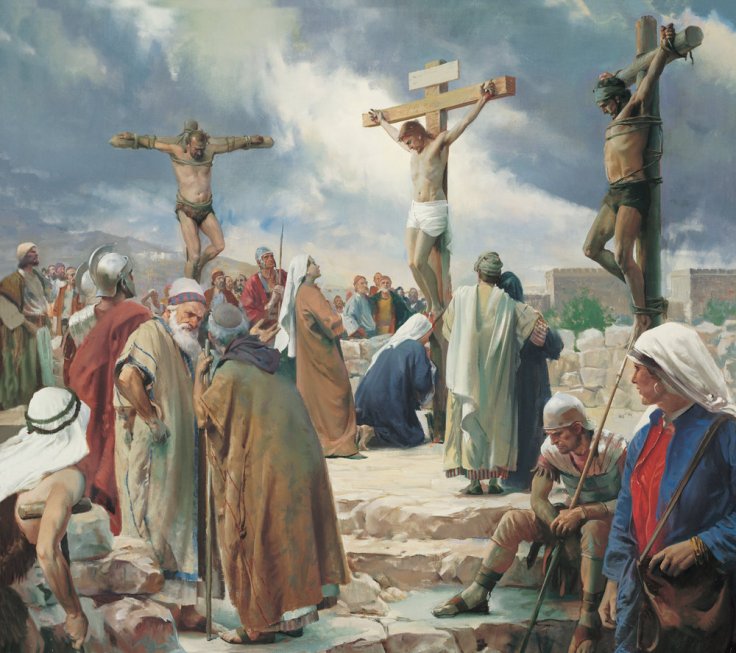
Most telling is the statement from Jesus Himself on the cross. “My God, My God, why have you forsaken me?” (Matthew 27:45-46; Mark 15:33-34) Although He was quoting one of King David’s psalms (22:1), the words still ask a very harsh question. Did Jesus Himself doubt God’s presence or His boundless love? (I don’t think so, but it is this kind of statement that often invites condemnation from those who cannot allow for any momentary doubt of any kind.)

I don’t believe any of these moments in the Bible are accidental. I believe God wants us to know that His presence and His faithfulness do not depend on the absolute strength of our faith. I believe it is one of the reasons that Jesus spoke of faith “as small as a mustard seed” (Matthew 17:20). It is not the size or the strength of our faith that determines what God can or will do. It is the size and strength of our faith that causes US to understand what God is doing and to participate more fully with Him. And taking our momentary doubts and questions to God shows a different kind of faith– one that is strong enough to BE tested and triumph. God rewards those who SEEK Him. If we never need to seek, or ask, or knock (See Matthew 7:7), could it be that we are not trusting in Him, but in our own wisdom?

Photo by Wildan Zainul Faki on Pexels.com

Take heart! Have faith! But don’t be afraid to go through valleys of doubt, or wrestle with difficult questions. And if someone else is struggling–be willing to listen to their doubts and questions, rather than just dismissing them. God does…

Consistent, Fervent Prayer

What does it look like (or feel like) to pursue consistent, fervent prayer? Is it an endless repetition of the same words? Is it mindless pleading, mixed with angst and flowing tears? Is it rehearsing the same requests over and over in an attempt to “get the right words” that will cause God to act?

No. Jesus addressed this very issue in His Sermon on the Mount, and just before He gave us a wonderful example of how we can pray:

And when you pray, do not keep on babbling like pagans, for they think they will be heard because of their many words. Do not be like them, for your Father knows what you need before you ask him.

Matthew 6:7-8 (NIV)
Photo by Tima Miroshnichenko on Pexels.com

If God already knows our needs, why SHOULD we practice consistent, fervent prayer in the first place? Because God desires to hear our heart cry. When something touches our heart– even though God already feels our sadness, pain, and fear–God wants to SHARE it in personal and intimate detail. What He does not want is for us to use prayer to try to manipulate a particular outcome, or to push our own desires and agenda ahead of His wisdom and sovereign will.

Instead, we should meet with God as our Father, knowing that He knows us, cares for us, and cares about the things that concern us. Consistent, fervent prayer is simply sharing our concerns with a loving God honestly over time.

Photo by cottonbro on Pexels.com
  • Whining and “babbling” shows that we don’t trust God’s wisdom. It’s like a toddler, who keeps saying, “Please….pretty please…pretty please with sugar on top…” “But I want it…I REALLY need it… REALLY…”
  • Saying nothing is no better. It is closing our hearts away from the one who loves us unconditionally. Sometimes, we try to over-spiritualize, saying that because God already knows our needs, we need not mention them again.
  • We need to find a middle ground. We need to be humble enough to say that we need God’s help and His wisdom, and huble enough to accept that His ways and timing are not the same as ours.

So what DOES it look like? Probably a little different for each person, but I think there are some guidelines:

Photo by Ian Panelo on Pexels.com
  • Consistent prayer means that we pray every day, throughout the day. About everything! Not just obsessively about our worries or needs, but about our joys and sorrows, as well as our questions, wonders, adoration, praise and confessions. Much like speaking with our best friends–the best ones are willing to listen to the same story about our cat even if we’ve told it twice before. They will cry with us next week as we share our continuing frustration with a rebellious teen or our parent’s journey with dementia. The difference is that God has a purpose and a plan in sharing our grief and our weakness beyond anything we can imagine. He is the “God of all Comfort” (2 Corinthians 1:3-5) as well as a God of healing.
  • Fervent prayer isn’t just anguished prayer or dramatic, emotional prayer. It is intensely humble and full of faith. The Apostle James gives an excellent example in chapter 5 of his epistle: 17 Elijah was a human being, even as we are. He prayed earnestly that it would not rain, and it did not rain on the land for three and a half years. 18 Again he prayed, and the heavens gave rain, and the earth produced its crops. (James 5:17-18 NIV) When Elijah faced the pagan prophets of Baal and Asherah, he prayed fervently, but he left the drama to the others. Elijah chided the prophets of Baal, because they prayed with raving, shouting, dancing, and cutting themselves in an effort to get Baal to hear them. Elijah’s prayer, while simple, was answered immediately and with dramatic effect. This wasn’t just a show of God’s awesome power through His chosen prophet. It was also a clear sign that Elijah was in constant communication with the One True God. He didn’t have to “get God’s attention.” He knew God was right there with Him. (See 1 Kings 18 for the whole story.)
  • Consistent, fervent prayer is part of a journey, not a destination. The same Elijah who was able to call down fire from Heaven, ran and hid in a cave and prayed to die! God wants us to pursue prayer the same way we pursue righteousness– knowing that God is the source of our wisdom and strength. He wants our anguished prayers as well as our prayers prayed in absolute trust– He wants them all!
  • I find it helpful in my personal prayer to have a journal. In it, I keep a list of people and places, concerns and requests. Each day of the week, I have a focus point for my prayers, and a list of specific people to lift up, plus a place for immediate and ongoing concerns. This does the following for me:
    • It allows me to put concerns into perspective. On Mondays, I concentrate on family and friends. That doesn’t mean that I don’t pray for my family on other days, but Mondays are focused on family and friends. On Wednesday, I concentrate on praying for my community. On Thursdays, I pray for global issues. This doesn’t preclude urgent requests or needs, but it keeps me from obsessing about some concerns at the expense of others. And it reminds me that God is the God of my family, AND my community, AND those suffering from a recent earthquake or famine.
    • A Prayer Journal gives me a place to write out my requests. Sometimes, seeing it in writing reminds me that God already knows– my concerns are written on His heart! No need to use the same words over and over again–but God may want to hear how MY heart has changed since I wrote the request. Maybe I have new information that changes my outlook. Maybe I can see how God is already working in the situation…which brings up another advantage of journaling:
    • I have a space in my prayer journal for answered prayer. Sometimes, I’m praying for someone from my church with a health issue. I can come back and write out God’s response– maybe He provided miraculous healing; maybe He took them “home.” Maybe He is causing them to travel a long road — giving them opportunities to bear witness to His faithfulness in every situation. Perhaps He is causing their family or caregivers to see Him in a new way!
    • Finally, a Prayer Journal helps me to be more consistent. I can turn to it every day for prompts and reminders of God’s love and faithfulness. God IS Fervent and Consistent– He is Faithful, and His Love is limitless. And He is the one who can teach me to be the same!
Photo by RODNAE Productions on Pexels.com

Cautious or Courageous?

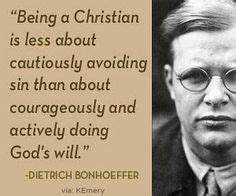
Being a Christian is less about cautiously avoiding sin than about courageously and actively doing God’s will.

Dietrich Bonhoeffer

Dietrich Bonhoeffer was a German pastor and writer who ended up sacrificing his life as he protested the Nazi regime in his homeland. Many of the things he wrote are uncomfortable for modern Christians to read. Sometimes, we want to coast along, joyfully celebrating our own Salvation, and ignoring the evil around us. After all, the ultimate victory is already won in Christ, isn’t it?

I write a lot about the power of prayer. And I stand behind what I write. But a life of prayer and Bible Study that doesn’t result in actively living out and spreading the Gospel is a life of lukewarm and selective obedience. This is not to say that we should skitter around trying to earn our Salvation with random acts and self-righteous crusades. But we must have the courage to “come out of the closet” as Christians in a dark and unfriendly world.

Photo by Pavel Danilyuk on Pexels.com

What does this look like? Does it mean wearing a badge or getting in people’s faces with “the Truth.” Perhaps. But mostly, it means every day living out the kind of love and truth that Jesus demonstrated. Jesus didn’t march in protests, hand out pamphlets with convicting messages, or start arguments to humiliate atheists in front of crowds. But He didn’t back down in the face of arguments and tough questions asked by His opponents. He ate with sinners– but He didn’t wink at their sin, or send them away reassured that they were “good enough” to please God. He went where God sent, spoke God’s Truth, and DID God’s work.

Jesus wasn’t a writer; He wasn’t a professor of Theology, or an elected official. The Pharisees were constantly frustrated with His lack of “credentials.” But their frustration came because Jesus spoke with the kind of authority they could never achieve– Jesus was authentic. He spoke, not from cold and lofty intelligence, but from wisdom and love. And Jesus didn’t just speak. He served. He listened. He lived out all that He spoke. He “courageously and actively” DID the will of the Father.

Jesus prayed and studied scripture. Jesus spent time alone communing with the Father. He spent time in rest. He spent time being social with His family and friends. But in every activity, He wove in the Truth of God’s word. And crowds followed Him. They wanted to listen, even as He spoke uncomfortable truths. And some of them came to love Him. Others came to hate Him, and even kill him.

We can’t be true followers of Christ and not risk being mocked, and hated. We WILL be misunderstood, laughed at, persecuted, ignored, and inconvenienced. We should not invite this with obnoxious or arrogant behavior. But we must not shrink away from it when it comes at us, or try to avoid it by being silent in the face of evil and injustice.

One of the recent charges leveled against Christians is that we meet evil with “thoughts and prayers” but little action. We must be wise and careful with such charges. Often, the taunt is thrown at us in an effort to get us to take a specific, ungodly “action” INSTEAD of praying. But we must honestly examine ourselves and ask what Godly actions SHOULD I be taking to make a difference? What actions should I be denouncing as ungodly, even if they are popular and seem to be “right?” And what must I do to defend the power of prayer in the face of ridicule?

Photo by Mikhail Nilov on Pexels.com

One of the other charges leveled against Christians is that we are “intolerant.” Again, we need to be wise and careful in answering this charge. Are we quick to judge others, while giving ourselves a “pat on the back” for merely avoiding a particular sin or sinful lifestyle? What is if about our life and work that makes others see us as “intolerant?” Are we exclusive and prejudiced in our interactions? Or are we humble in presenting the truth of God’s word? Do we speak from a need to defend our own actions or from a desire to help others? Are others offended by our words and actions, or by the truth of God as it convicts them?

Photo by Ketut Subiyanto on Pexels.com

I pray today that I would be courageous and active in LIVING the Christian life, and not merely writing about it.

Let Your Light Shine

I live in an area not too far from Lake Michigan. All along the shores of this Great Lake are lighthouses. Some are small; some are tall; some are old and some use the latest technology Some are red; some are white; some are striped. Most are designed to warn ships of rocks, but others warn of shoals and hidden sand bars, as well.

Big Sable Point Lighthouse, Ludington

We think of lighthouses shining their light in the darkness, but lighthouses also shine in the daytime, through cloudy days, foggy mornings, and stormy afternoons. Most lighthouses also have fog horns, to warn ships when even the light won’t penetrate a thick fog.

This past week, a faithful lady at our church reminded us of a favorite song from childhood– “This Little Light of Mine.” We are called to be like Jesus, the “light of the world.” But what does it mean to “let our light shine”? And what does it mean to “hide it under a bushel?” (See Matthew 5:14-16)

Fresnel lens at Ponce Inlet Lighthouse, Daytona Beach, FL. Invented by French physicist Augustin-Jean Fresnel, the lens is much thinner than a conventional lens, which allows for a large aperture and short focal length at a lower weight.

Lighthouses use special lenses, called Fresnel lenses, to magnify the effect of refracted and reflected light. The resulting beam of light is stronger and can be seen for miles. Our own “little light”– our weak and imperfect faith; our limited talents and resources; our clumsy attempts– would not be enough to “save” anyone. But God magnifies our efforts as we reflect HIS radiance; His Love and Mercy. And many will be saved as we allow God to shine through us.

St. Joseph Lighthouse at sunset

Lighthouses are consistent– they don’t “turn the light off” when the weather is perfect, waiting only until someone spots a ship in danger. They don’t “dim” the light, or add extra strobe lights for the holidays or special occasions. Each lighthouse sends a consistent signal–steady and sure. But each lighthouse is unique– both in its outward appearance, and in it’s light pattern. This helps sailors tell them apart, and provides further help in navigation. As Christians, our light should also be consistent and unique. God created us with unique talents and opportunities–and we can “shine” the light of Christ in such a consistent and unique way as to help others “navigate” the trials of life. I am so thankful for the many faithful and uniquely gifted Christians who have inspired and guided me throughout my journey–and I want to be that kind of light for others!

Lighthouses are solid. They are normally built close to the shore, but not on the sandy beaches– rather on a rocky outcropping or a solid concrete and steel-reinforced foundation. As Christians, we have a solid foundation in Christ. We need to “shine our light” from that foundation– living out the Gospel of Christ– His life, death, resurrection, and imminent return. Building a bonfire on the beach may produce light, but it won’t stand out in a storm. Building our lives on any other foundation or religious “fad” may produce outward “success,” but it will not withstand storms.

Finally, and this may sound ridiculously obvious, but Lighthouses shine with purpose. They don’t twinkle or glitter; they don’t scream from the shore– “Look at ME! Look at ME!” They don’t shoot off fireworks to captivate onlookers from the shore. But they shine. They send a consistent warning, and provide consistent security to those who need it– and those who are seeking it! “This little light” may not be a blazing comet on the horizon, but without its steady pattern, there is darkness, confusion, and danger for those at sea (on lake in our case!) “No one lights a lamp and puts it in a place where it will be hidden, or under a bowl. Instead they put it on its stand, so that those who come in may see the light.” (Luke 11:33 NIV) We are commanded to shine– to Love others, to reach out with light, and hope, and yes, even a warning. To hide that light is to deny our purpose. To shine only for our own glory is to miss our purpose.

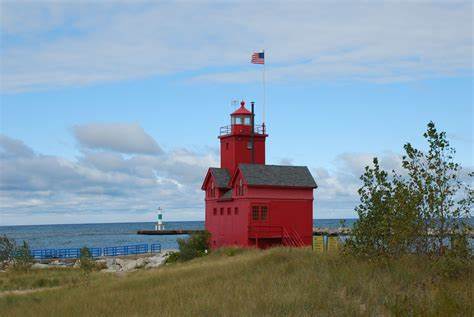
Holland (Michigan) Lighthouse

Father, help me to be a light in the darkness today. Help me to shine with Your Love, Your Mercy, and Your Goodness. Help me to be consistent, and to shine in the strength of Your Righteousness and Grace. Help me to use the unique gifts and opportunities You provide to show Your Character and Love to others.

Fruitcake?

Poor Fruitcake– the butt of dozens of Christmas jokes. Someone once said that there were 20 Fruitcakes produced in France in 1541– and they are all still in circulation today! I know a few people who like fruitcake, but most people just make fun of it. Technically, it IS a cake, but it is mostly made up of fruit and nuts soaked in rum or brandy or candied for preservation. Fruitcakes can be mailed, shipped, and saved for months without rotting, but the fruits never taste fresh, and much of their flavor is overwhelmed by the sugars used to preserve them. Fruitcake is heavy, and sweet. It is full of things that are “good for you,” but the end result is not very healthful.

Photo by Brett Jordan on Pexels.com

I was reading the other day in Galatians, and a couple of days later in Philippians– two passages that speak of Christians producing fruit. Our lives are to be characterized by virtues and acts of service that bring health and healing, joy and peace to those around us. And these virtues are the products of our Faith in Action– of The Holy Spirit working in and through us.

22 But when the Holy Spirit controls our lives he will produce this kind of fruit in us: love, joy, peace, patience, kindness, goodness, faithfulness,  23 gentleness and self-control; and here there is no conflict with Jewish laws.

Galatians 5:22-23 (Living Bible–emphasis added)

 So this is my prayer: that your love will flourish and that you will not only love much but well. Learn to love appropriately. You need to use your head and test your feelings so that your love is sincere and intelligent, not sentimental gush. Live a lover’s life, circumspect and exemplary, a life Jesus will be proud of: bountiful in fruits from the soul, making Jesus Christ attractive to all, getting everyone involved in the glory and praise of God.

Phillipians 1:9-11 (The Message–emphasis added)
Photo by Jane Doan on Pexels.com

“Fruit of the Spirit” is not something we can manufacture ourselves. Only God’s Spirit at work IN us can produce such fruit. And, while it is Fruit that will last, it doesn’t need to be dried or candied or soaked for preservation. Unlike the fruit in Fruitcake, the Fruit of the Spirit is eternally fresh and bursting with life and flavor. There is nothing wrong or evil about Holiday Fruitcake. But it cannot compare with fresh fruit for wholesomeness and healthfulness.

Photo by Polina Tankilevitch on Pexels.com

Sometimes, we try to manufacture our own “Fruit of the Spirit.” And this can be far worse than a harmless but calorie-laden Holiday Fruitcake. Even those who are opposed to Christ can manufacture a certain amount of Joy, or Patience, or Self-Control. Anyone can appear Gentle or Kind when they choose. But, separated from the source of life and growth, we cannot produce fresh fruit. Our Joy may be soaked in Rum. Our Patience may dry up. Our Kindness may be candy-sweet, but hiding malicious or selfish motives. Or we may surround our fruit with worldly “wisdom,” disguising and transforming it with cake and nuts.

Photo by Tobias Bju00f8rkli on Pexels.com

This holiday season, let’s not become dried out or artificially sweetened in our acts of service and Love. Let’s be producers of Godly Fruit– Love that reaches out to the Lost, the lonely, and the “unlovable” with true love and not just sentimentality; Joy that bubbles up from a thankful heart and a transformed mind; Peace that transcends our current trials and circumstances; Patience that endures hardship without losing hope; Kindness that wraps itself around the unworthy and never tires; Goodness that knows no conceit and seeks no credit; Faithfulness that inspires and produces hope in a faithless world; Gentleness that smooths over troubled waters without being overcome; and a rock-solid Self-Control and steadiness that produces trust– not in our own power or wisdom, but in the One who produces it in our lives. We should be humble and grateful, teachable, and ready to forgive, encourage, and pray for others.

Photo by solod_sha on Pexels.com

Don’t be a Fruitcake this Christmas– be a Fruit Basket instead!

Content, But Not Complacent

3 If anyone advocates a different doctrine and does not agree with sound words, those of our Lord Jesus Christ, and with the doctrine conforming to godliness, 4 he is conceited and understands nothing; but he has a morbid interest in controversial questions and disputes about words, out of which arise envy, strife, abusive language, evil suspicions, 5 and constant friction between men of depraved mind and deprived of the truth, who suppose that godliness is a means of gain. 6 But godliness actually is a means of great gain when accompanied by contentment. 7 For we have brought nothing into the world, so we cannot take anything out of it either. 8 If we have food and covering, with these we shall be content. 9 But those who want to get rich fall into temptation and a snare and many foolish and harmful desires which plunge men into ruin and destruction. 10 For the love of money is a root of all sorts of evil, and some by longing for it have wandered away from the faith and pierced themselves with many griefs.11 But flee from these things, you man of God, and pursue righteousness, godliness, faith, love, perseverance and gentleness. 12 Fight the good fight of faith; take hold of the eternal life to which you were called, and you made the good confession in the presence of many witnesses. 

1 Timothy 6:3-12 (NASB)
Photo by Mikhail Nilov on Pexels.com

“Godliness with contentment is great gain.” (1 Timothy 6:6) We are entering a season of Thanksgiving and Christmas, and it can be a wonderful time to count one’s blessings and give praise with a humble and thankful heart. But it can also be a season of discontent, envy, overspending, and even depression. Many people are restless. They want “more”– more stuff, more respect, more power, more popularity, better health, a bigger house, trendier clothes…the list can be endless. Advertisers work hard to stir up this kind of discontent in the hope that people will buy their products. Politicians stir up discontent and fear to get more votes. Even religious leaders can stir up discontent in the hope of gaining influence, respect, and money.

Photo by Karolina Grabowska on Pexels.com

God will not stir up discontent in our hearts. Instead, He wants us to learn to be content and grateful for the blessings we already have, and to trust Him for the things we both need and desire. He will see to it that we get what we need to live a Godly life, even if it seems meager compared to others who boast of their circumstances. Those who trust in their wealth or power will find it is never “enough.” Discontent breeds more discontent– envy gives rise to anger and bitterness. Greed gives way to dishonesty and violence. It is the enemy of Godliness and Humility. It is the enemy of the Christian Walk.

Photo by Ketut Subiyanto on Pexels.com

But there is another danger to the Christian. We should desire to develop a spirit of contentment, but we must be careful not to let contentment become complacency. The Apostle Paul does not stop in his message to Timothy, but reminds him to both “flee” the temptation of greed and discontent, and “pursue righteousness, godliness, faith, love, perseverance and gentleness.” Contentment is not an excuse for complacency. We are to “fight the good fight of Faith.” We are to be content with what we have, but not complacent about where we stand or how we live.

Discontent says– “I don’t have enough. I need more! (Even if I must take it by force or manipulation)”. Complacency says–” I have everything I need. I am an island of self-sufficiency. I don’t need anything (including God!) Both attitudes are conceited and fail to acknowledge God’s provision and His Sovereignty. The discontented, greedy person will be at war with God’s laws. The complacent person may not be fighting against God’s laws, but s/he will ignore God’s will, and refuse to stand up for justice or mercy. The complacent person is complicit in evil, even when they are not the ones doing it. The complacent Christian is ungrateful, and has only half-hearted praise for the Author of the blessings they enjoy.

There are many “Christians” in both categories. Many who claim to follow Christ, but are really following what they think will bring them power, wealth, health, or popularity. Many are being lulled into complacency by their blessings and comfortable circumstances. Both groups have lost their focus. God is to be the center of our lives– not our own comfort or our own pursuit of it.

Photo by Ian Panelo on Pexels.com

This season, may we be content, humble, and willing to give God the Thanks, Praise, and Worship He deserves. And may we not become complacent about doing good, standing firm in the Faith, and helping others.

Greater Love Hath No Man…

One hundred four years ago today, on the 11th hour of the 11th day of the 11th month or 1918, the warring nations of Europe and the World fell silent as an Armistice was signed ending the “Great War” (later known as World War I). The War had been devastating in its scope and violence. Millions of people lost their lives; millions more were wounded and permanently scarred by the fighting. Entire cities had been leveled; farms and villages had been ravaged, and economies would take decades to recover.

“The War to End All Wars” did not. It was a failure in almost every regard. Bitterness built up in the decades between 1918 and 1938, spilling into another devastating war. All the noble efforts to promote peace and unity broke down. All those lives sacrificed in the hope of bringing lasting peace were lost, seemingly in vain. And for the soldier who survived, there was continued hardship, struggle, and often, life-long pain and suffering.

Photo by Sharefaith on Pexels.com

Today, we honor those who have risked their lives to serve their county/countries. Soldiers, medics, chaplains, and innocent civilians who risk their lives do so for a reason. Often, we lose sight of the reasons after so many years, but the primary reason for most soldiers is the protection of loved ones back home and fellow soldiers in the fight. Many of us live lives of comfort and safety, little knowing the dangers of war, famine, and extreme hardship. But soldiers know a life of privation, courage in the face of fear, and the searing loss of violent death. And most of them know this life as a voluntary sacrifice. They willingly lay down their lives, both figuratively and sometimes literally, to save, protect, and improve the lives of others. It is fitting and right to honor such commitment and sacrifice.

Photo by Pixabay on Pexels.com

Jesus, when speaking to His disciples at the Last Supper, said,  â€œThis is my commandment, that you love one another as I have loved you. Greater love has no one than this, that someone lay down his life for his friends. You are my friends if you do what I command you.” (John 15:12-14 ESV) After all these years, many of us look at these verses as a moral principle, but not as a commandment. Jesus did not say, “I would really like it if you would love each other sacrificially,” or “I would prefer if you treated each other the way I treated you.” He gave it as a command that we love as Jesus loved.

So that begs the question, “How did Jesus love His disciples?” Ultimately, He DID lay down His life, paying for their sins (and ours) through His death on the cross. There has never been a greater sacrifice, not on the battlefield, not in public service, nowhere in Heaven or on Earth. But Jesus also gave us several examples of “sacrifice” in His life with the disciples. He served. He forgave. He loved. He nurtured and taught. He listened.

It used to be popular to compare Christians to soldiers– to promote service, sacrifice, and discipline in the Christian walk. This has largely fallen out of fashion, as society has diminished the role of the soldier, and the respect it used to give them. But the Apostle Paul used the comparison often, even listing the Christian’s “armor” in Ephesians 6:10-18. We should put on the belt of Truth, the breastplate of Righteousness, the shoes of the Gospel of Peace, the shield of Faith, the helmet of Salvation, and the Sword of the Spirit, which is the Word of God. Of course, we are not commanded to kill, main, or promote warfare and destruction. But we ARE called to be prepared to die for– and LIVE for– the cause of Christ. We are to train, prepare, and stand firm in the Faith. More that that, we are commanded to serve– even sacrificially– our brothers and sisters; we are to be willing to lay down our lives for others.

Today, as we reflect on the sacrifices made in the past, let us renew our commitment to love like Jesus, to serve like soldiers, and to stand firm in our commitment to the One who paid the ultimate sacrifice for us. And, especially in a world that does not know peace, let us pray for those who are touched by war, famine, hardship, violence, and loss. Let us work to bring peace, forgiveness, and practical help to those around us who suffer.

The Greatest of These…

5-9 So don’t lose a minute in building on what you’ve been given, complementing your basic faith with good character, spiritual understanding, alert discipline, passionate patience, reverent wonder, warm friendliness, and generous love, each dimension fitting into and developing the others. With these qualities active and growing in your lives, no grass will grow under your feet, no day will pass without its reward as you mature in your experience of our Master Jesus. Without these qualities you can’t see what’s right before you, oblivious that your old sinful life has been wiped off the books.

2 Peter 1:5-9 (The Message)
Photo by Pixabay on Pexels.com

4 Love is patient, love is kind. It does not envy, it does not boast, it is not proud. 5 It does not dishonor others, it is not self-seeking, it is not easily angered, it keeps no record of wrongs. 6 Love does not delight in evil but rejoices with the truth. 7 It always protects, always trusts, always hopes, always perseveres…
13 And now these three remain: faith, hope and love. But the greatest of these is love.

1 Corinthians 13:4-8;13 (NIV)
Photo by Pixabay on Pexels.com

In 2 Peter, the Apostle gives us a list of character traits that we should develop as believers in and followers of Christ. The last two seem similar, but there is a reason both are there, and both at the end. As we follow in Christ’s footsteps, we should develop traits that mark growth in our relationship with God– faith, patience, hope, etc. But we should also show growth in our relationships with other people. We should interact with others as God interacts with us– we should show compassion, forgiveness, concern, generosity, and selfless Love for others. “Brotherly kindness” is what we should be ready to show to everyone– neighbors, strangers, and even enemies, included. “Generous Love” is not just a feeling of deep affection or even good will. The Love we should develop is selfless and giving beyond what we can offer in our own hearts. It is the culmination of all the other characteristics we are developing as we seek to become more Christlike.

Photo by Inna Lesyk on Pexels.com

“We love Him, because He first Loved us.” 1 John 4:19– It is Christ’s example of Love, coming from Himself (Father, Son, and Spirit) that teaches us what Love really is, and causes us to be able to love in truth and fullness. Christ came to serve–He did not live for His own whims and gratifications. He gave audaciously, loved lavishly, forgave freely, and lived humbly. The Apostle Paul underlines what Peter says in his letter to the Corinthians, chapter 13. We should learn to have faith and hope, but in the end, Love is the greatest characteristic we can develop.

Photo by Pixabay on Pexels.com

My one-time choir director once asked us to do this exercise: Write out 1 Corinthians 13: 4-8. Now substitute the word “Jesus” for each instance of the word, “Love.” Because God is Love (1 John 4:8) this is a valid substitution. “Jesus is patient. Jesus is kind. He does not envy,” etc… Think about how Jesus demonstrated what Love is as He interacted with His disciples– including Peter’s denial and Judas’s betrayal– and with those in the crowds. This is our model, and our assignment– this is how we should Love. Now comes the real test…substitute Your name to see how closely your life and actions resemble those of Our Savior. Can you say that your are patient and kind? That you don’t hold grudges or become easily angered? That you always hope? Always persevere? Of course, there will be instances when we don’t live up to Christ’s example– but are we becoming more Christlike? Are we growing in Love? Type this passage out three times– in its original text, with Jesus’s name, and with your name. Print it out and hang it somewhere where you will be reminded, convicted, and encouraged to live out Christ’s Love. If someone else reads it, they should be challenged, as well.

Photo by Luis Quintero on Pexels.com

Bringing this Bible Study back around to prayer– are we praying through these characteristics? Do we come with faith, obedience, understanding and discipline, patience, wonder, compassion and love? Do we expect God to do OUR will, or are we eager to see His will be done? Do we believe that God rewards those who earnestly seek Him (Hebrews 11:6)? Do we rejoice in the truth, and always hope, even in the moments of pain and injustice? Our prayer life will follow our growth in all these areas. I pray that we are all growing more like Christ each day. Let today be the next step in that growth– turn from yesterday, let God take care of tomorrow, and grow in this moment.

Brotherly Kindness

5-9 So don’t lose a minute in building on what you’ve been given, complementing your basic faith with good character, spiritual understanding, alert discipline, passionate patience, reverent wonder, warm friendliness, and generous love, each dimension fitting into and developing the others. With these qualities active and growing in your lives, no grass will grow under your feet, no day will pass without its reward as you mature in your experience of our Master Jesus. Without these qualities you can’t see what’s right before you, oblivious that your old sinful life has been wiped off the books.

2 Peter 1:5-9 (The Message)
Photo by Daka on Pexels.com

I’ve been taking some time to contemplate the encouragement given by the Apostle Peter in this passage. Today, I’m looking at the phrase “warm friendliness.” It is also translated as brotherly affection, or brotherly kindness. If we want to pursue Godliness (of which the pursuit of prayer is an essential part) we must look at these characteristics, and put them into practice. Last time, I looked at reverent wonder, which would seem like the acme of such a list…after all, what could be better or more important in following Christ than to live in constant awe of God’s Holiness, Majesty, and Power? Peter answers this question with the last two characteristics– brotherly kindness/warm(th)/friendliness, and generous/selfless love.

Photo by RODNAE Productions on Pexels.com

We cannot claim to follow Christ and fail to follow His example in our interactions with others. Jesus Christ was a friend of the friendless. He radiated kindness and integrity and brotherhood– even to those who despised Him. Kindness and friendship, on the surface, don’t seem to be characteristics that require faith, spiritual understanding, or deep reverence. We can be kind to animals, we can have a lot of friends, and not be a Christian– or even be particularly spiritual. But this passage is talking about a different level of warmth and friendship. It doesn’t just happen because we like interact with someone who is likable, or worthy of warmth and friendship. It comes because we have had an encounter with the author of warmth and friendship– and Love. Jesus drew others to himself by His gentle warmth, His generous spirit, His genuine good will and compassion. Those who disliked Him were often upset at His treatment of the lowly, the marginalized, the “others.” Didn’t Jesus realize how sinful or despicable they were? Didn’t He care that they had leprosy, or that they were “unclean?” But that was the point…Jesus DID know. He knew them better and more intimately than anyone. And He wanted them to know that they were loved; they were worth dying for! Not because they were “clean” or “righteous;” simply because they were created in His image and the objects of His eternal passionate love.

Once we have matured and developed the fundamental characteristics of faith and patience, understanding and reverence, it should become more natural for us to radiate kindness, gentleness, warmth, loyalty, integrity, and friendship toward others. That is not to say that we become people-pleasers, or compromise our Spiritual Understanding and Faith. Instead, it means that we speak the truth in love; that we forgive easily; that we are eager to show compassion, strength, wisdom, and encouragement–especially where they may be in short supply.

Photo by Liza Summer on Pexels.com

This world needs more warm friendship and brotherly kindness– more positive encouragement and less cold criticism; more open arms and fewer closed fists; more hope and less despair; more earnest help, and fewer patronizing handouts; more honest conversations, and fewer dismissive “easy answers.”

We know the source of the greatest warmth, friendship, help, and hope in the universe! Let’s not “lose a minute” in making it part of our day, today! Pray for your neighbors, your co-workers, your families, your enemies, and all those who need a friend. Reach out to someone with hope and affection–be the arms and hands (and feet and smile) of God to someone today. It’s the next logical expression of the awe and reverence we owe to our Creator and Savior– to embrace those He Loves so dearly!

Holy, Majestic, Awesome God!

5-9 So don’t lose a minute in building on what you’ve been given, complementing your basic faith with good character, spiritual understanding, alert discipline, passionate patience, reverent wonder, warm friendliness, and generous love, each dimension fitting into and developing the others. With these qualities active and growing in your lives, no grass will grow under your feet, no day will pass without its reward as you mature in your experience of our Master Jesus. Without these qualities you can’t see what’s right before you, oblivious that your old sinful life has been wiped off the books.

2 Peter 1:5-9 (The Message) (emphasis added)
Photo by cottonbro on Pexels.com

I think one of the hallmarks of a Christian is not knowledge about God, but personal experience of God. And one of the signs of such experience is a reverent wonder– an overwhelming AWE– of God. Of who He is and how He works, what He has done, and what He has promised to do. As we grow in faith, good character, understanding, discipline, and patience, we are ready to absorb the absolute WONDER of this majestic, mighty, amazing God we serve. We revel in our own personal experience of Salvation, but we also begin to see the magnitude of God’s Grace, His Power, His Wisdom and His Holiness.

Photo by Min An on Pexels.com

Many of the ancient prophets tried to describe their encounters with God’s presence. Daniel and the Apostle John were paralyzed and prostrate when visited by angels. Paul was blinded by the light. Moses’ face had to be covered after being in God’s presence. because his face was so radiant. Isaiah was struck dumb. The list goes on… We may not experience the presence of angels or receive prophecies like they did, but we can experience a sense of ecstasy in contemplating our marvelous Lord and Savior.

One prophet who had such an experience was Habakkuk. Habakkuk lived in perilous and evil times. His nation was in rebellion toward God’s law, and its citizens, from the leaders and priests to the farmers and townspeople, were paying lip-service to God while prostrating themselves to foreign gods and foreign countries. The leaders lived in splendor, while many of their own people starved, or were sold into slavery. Habakkuk, in frustration, prayed to God, pleading for relief from evil, and judgment for the righteous. He had faith, was of good character, understood the law, had developed discipline, and had a passionate patience– but his patience was mixed with frustration. “How long must I wait to see justice and reform?” “How long will my people keep seeking help from wicked foreigners?” “When will we be free of oppression?”

Photo by Wallace Chuck on Pexels.com

Habakkuk was not just whining. He had a heart for his own people, and wanted to see what God would do. God’s answer was not what Habakkuk was expecting. God promised justice and redemption– but only after invasion, more oppression, and exile! God was sending a vast and merciless army to crush not only His own people, but all the wicked nations in whom they had placed their trust. God was going to “pull the rug out” from under the entire region. But then, He would punish the invaders, wiping out their power and restoring His people to their own land.

What was Habakkuk’s reaction to such news? At first, he was stunned; then confused. But in a very short time, his horror turned to worship. He resolved to stand at his watch; to station himself on the ramparts to see God at work. And as he waited, his perspective changed. God DID see the injustice and wickedness; the violence, lies, and betrayal. God had a plan– a plan so much grander and glorious in scope– a plan that had been in place from long before Habakkuk was born; long before his complaint. It was a plan that would not leave wickedness unpunished, but would bring justice in its proper time, and allow for redemption, restoration and renewal.

Photo by Frank Cone on Pexels.com

Habakkuk’s prayer (chapter 3) is a marvel of praise and worship:
“His glory covered the heavens, and his praise filled the earth. His splendor was like the sunrise; rays flashed from his hand where his power was hidden…” (v. 3b-4)
“You split the earth with rivers; the mountains saw you and writhed. Torrents of water swept by; the deep roared and lifted its waves on high. Sun and moon stood still in the heavens at the glint of your flying arrows, at the lightning of your flashing spear… (v.9b-11)
“I heard and my heart pounded; my lips quivered at the sound; decay crept into my bones, and my legs trembled. Yet I will wait patiently for the day of calamity to come on the nation invading us. Though the fig tree does not bud, and there are no grapes on the vines; though the olive crop fails, and the fields produce no food; though there are no sheep in the pen and no cattle in the stalls, yet I will rejoice in the Lord. I will be joyful in God my Savior. The Sovereign Lord is my strength; he makes my feet like the feet of a deer; he enables me to go on the heights.” (v. 16-19a NIV)

Photo by Orlando Vera on Pexels.com

How often does my heart pound and my lips quiver as I contemplate our Awesome God? How often am I joyful in God my Savior– especially in the midst of expected hardship and continuing evil around me? How often do I limit my sight to what is immediately before my eyes, instead of looking up at the one who holds every moment of the past and future; who controls the vastness of millions of galaxies, yet also sees each individual hair on 7 billions human heads, knows every grain of sand in the desert, and every drop of water in all the oceans; who tracks every molecule in the universe, but knows me by name?!

Photo by Snapwire on Pexels.com

May today be a day filled with reverent wonder, as we consider the Holy, Majestic, and Awesome God who has the power to redeem, inspire, and strengthen us for whatever lies ahead.

Blog at WordPress.com.

Up ↑