Epiphany!

I’m late writing this post today. The new year is unfolding faster than I had planned, and I come to this day unprepared.

But that’s kind of the idea behind Epiphany. We focus so much on preparation during the Advent and Christmas season that the season which follows can be lost in the shuffle of “getting back to normal.” Even at the historical birth of Christ, there was a real focus on everyone “getting back to normal” after the hustle and bustle of the census and the travel-weariness it generated. Very few people were focused on “Christmas” because Jesus was still considered one small child in a land of thousands of others. There were no Christmas traditions, no trees to un-decorate, no gift wrapping to put away for next year, no leftover cookies to finish eating. And then, twelve days after the glorious events of Christmas Eve and Christmas Day we celebrate Epiphany.

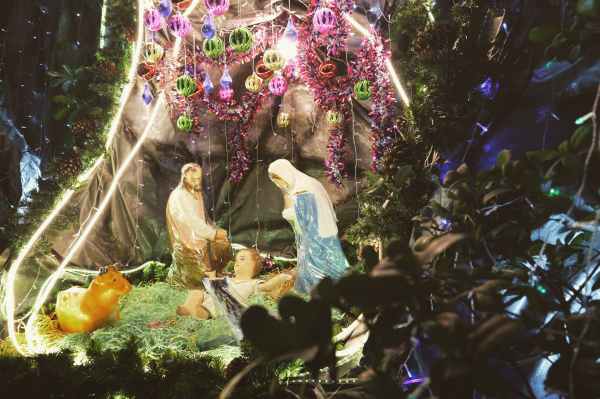
Also known as Kings’ Day, or Twelfth Night, this is the date we celebrate the arrival of the Magi (Kings or Wise Men) who traveled to Bethlehem to see the newborn King of the Jews. They did not arrive at the same time as the shepherds, and the account in Matthew has them visiting Mary, Joseph, and the Baby in a house. We must assume that Joseph found better accommodations for his family as the rush of census-taking waned, and yet he wanted somewhere safe to stay while the baby was still so small. The Magi came unannounced, unexpected, and “late” in the story.

The word “Epiphany” means a revelation or manifestation of something supernatural. The shepherds had gone through an epiphany when the angels appeared to them in the fields and told them to go to the manger on Christmas Eve. But the Magi, who had been following the star for months, finally had their Epiphany upon seeing the young child several days or even weeks after His birth. We don’t know that it was actually on the twelfth day after Jesus’ birth, but at some point, the Magi arrived at their destination and saw God in the Flesh! And their lives would never “get back to normal!” And their visit was a revelation to Mary and Joseph as well. The Kings brought expensive gifts of Gold, Frankincense, and Myrrh. They also brought the revelation they had received about the threat of Herod and the need to leave Bethlehem. If Mary and Joseph thought the worst was over, they were shocked into action by the warning of the Magi.

And yet, we celebrate this moment in time, this further revelation that a tiny baby was going to change everything. This knowledge that the Wise Men of Old held, and we can hold today– an encounter with Jesus is a revelation of the supernatural–this baby is GOD in the FLESH, GOD with US, GOD living AMONG us, GOD dying FOR us, GOD who will RETURN to REIGN over us. Nothing will ever be “normal” after such an encounter!

And I hope that can be said for all who read this– that we have encountered the Messiah; the Holy Son of God and Son of Man–and we have been forever changed! There is no end to the season of wonder and delight; there is no need for bright lights and tinsel-topped greenery, and no need to put away the joyful trappings of what His arrival really means.

Epiphany should “sneak up” on us– any day, anywhere–it should amaze us and surprise us with Holy wonder as we encounter the reality of “Emmanuel–God with Us!” And it should cause us to respond with prayers. Not only joyful prayers and prayers of thanksgiving, but prayers in our weariness, prayers in our anticipation of days to come and trials to face. Just like the Wise Men, we may have a long and even difficult journey in 2025. But at the end of it we will encounter God– not as a sweet baby in the manger but as our Lord, as well as our constant companion, our champion, and our heart’s desire!


The Right Time

But when the right time finally came, God sent his own Son. He came as the son of a human mother and lived under the Jewish Law, to redeem those who were under the Law, so that we might become God’s children

Galatians 4:4-5 (Good News Translation– emphasis added)

At just the right time Christ died for ungodly people. He died for us when we had no power of our own.

Romans 5:6 (New International Reader’s Version–emphasis added)

Do you ever wonder at God’s timing throughout the Bible? Why did He take the Israelites up to the edge of the Red Sea and THEN send the entire Egyptian army after them? Why did He allow Haman to trick the king into signing an edict that would wipe out the Jews and THEN send Esther to try to save them? Why did Jesus wait until Lazarus was dead to visit His sick friend? Or God’s timing in our own lives? Why didn’t He make it possible to get the job I wanted when I first applied, instead of nearly a year later? Why is life so stressful all at once? Why does God seem to give me wisdom AFTER I’ve messed up? And yet, God’s timing is perfect. Not that it seems that way–in fact, it often seems like God is not paying attention to timing at all.

Even in Christ’s birth, it seems like the timing couldn’t have been worse–Joseph and Mary forced to travel far from home, only to find that there was no room anywhere for them to rest. And then– THEN–the labor pains began! It was cold, dark, filthy, lonely, and frightening. And not just that evening: the Romans ruled a significant portion of the world with an iron fist. Jews were not forbidden from worshipping God, but they were heavily taxed, regulated, and watched over by their invaders. This newest census was just another part of the bureaucracy and endless government red tape. It seems like it would be the worst timing ever for Emmanuel to appear.

And yet, Scripture says it was “just the right time” for Christ to come. So what can we discover about this “right time?”

  • God had been silent for 400 years before this– almost exactly the same amount of time the Israelites had been in captivity in Egypt before God sent Moses to lead them out. Coincidence? I’m not so sure…God uses patterns to illustrate concepts. Just as the Israelites had been slaves to the Egyptians, so all of us were slaves to Sin and Death. “And just as Moses lifted up the serpent in the wilderness, so must the Son of Man be lifted up” John 3:14 (New American Standard Bible)
  • The prophets made hundreds of statements about where and how Emmanuel would be born– some seemed completely contradictory; yet they were all fulfilled exactly. Again, this wasn’t a coincidence– God orchestrated events over centuries until it was “the right time” for them to all come to pass. Only God could have coordinated it all–the census, the genealogy of Jesus, Joseph’s hometown, Mary’s contractions coming THAT night in THAT cattle shed, instead of on the road somewhere, or in a private room where the shepherds couldn’t visit…
  • The Jewish people had been in exile off and on throughout the centuries; under Rome, even though they were conquered, most of the Jews who had returned to their homeland were still living there, much as they had centuries before. That wasn’t the case four or five hundred years before– it isn’t even the case today– more Jewish people live outside of Israel than in it!
  • Rome had established its rule over most of the Western World– and with it, they had established a system of roads, common currency, and a complex legal system. All of this played vital roles in the advent of the Savior– from His birth, through His ministry, and even in His trial, death, and the spreading of the Gospel. Before them, the Greeks had established cities and trading centers that would form the basis of the first missionary trips of the Apostle Paul. And they had created a “common” language in which this Good News was first written and spread. Just a few hundred years earlier, the spread of Christianity through letters and traveling ministers would have been much slower, less efficient, and more dangerous. Just a few hundred years later, the Roman Empire would be in shambles; travel would require going through regions separated by differing languages and governments.
  • To me, one of the most fascinating things to imagine is what it might be like if Christ had not come until our own time. First, there would be no Christianity, and none of the work of Christians over the centuries would have been done. But even if we imagine that all of history had unfolded and the present was much as it is, Christ’s birth would not have happened in the same way. Bethlehem would not be under the rule of Rome. In fact, Israel might not even exist; as it is, it exists in hot contention between the Jews, the Palestinians, and their close neighbors in the Middle East. There would be no census, and no need for Joseph and Mary to travel– and certainly not by donkey! There might be “no room at the inn,” but Joseph and Mary would be sent to a homeless shelter, filled with other hapless travelers. The shepherds, seeing angels, might still be filled with fright– mistaking them for missiles! Even so, it would only take minutes for a team of journalists to arrive with cameras, microphones, and commentary! The message of the angels would be dubbed “false” information or “fake news”, as would most of the prophecies about His arrival. “Fact checkers” would “kill” the story, and Mary, Joseph, and all the shepherds and wise men would be “cancelled” or receive threats.

Or not–I can only speculate. But I can say with confidence that God’s timing, even when it seems odd or “wrong” by our limited perspective, is perfect and worthy of our praise. All that seems “odd” or “wrong” about Christ’s coming when, where, or how He did, is just our limited perspective, and our tendency to doubt whatever we don’t understand.

Emmanuel came! He came at “just the right time” to fulfill all the promises and complete His ministry on Earth. Everything happened just as God designed it. And over two thousand years later, we still “Rejoice!” We sing songs, celebrate, and worship. We breathe in Hope, we give gifts, and we cherish the story of Christmas in hundreds of different ways.

This same God has a plan for us today. Throughout our lives, He sends blessings, allows struggles, and patiently stands by, offering help and hope to each of us. There is not a single detail of our lives that escapes His notice or is beyond His capacity or willingness to restore, transform, redeem, or renew.

Emmanuel– God WITH us–at “just the right time!”

Promises, Promises…

God keeps His promises.  Not just small promises, not just some of them, or some of the time.  God Keeps His Promises!  Every single one.  Every single time.

In this world of failed promises, assumed promises, “campaign” promises, and broken promises, it is almost impossible to believe.  Surely there must be some promise that God has not fulfilled– some promise that he has taken back or “modified” somehow…

photo of wireless microphones on top of the table

Isn’t there?  There are people who claim to have examples– proof that God cannot be trusted.  They list tragedies that God allowed to happen, or dreams that did not come to fruition.  They list times they could not feel God’s presence, or understand His ways; times He seemed silent or harsh.  Didn’t God promise His unfailing presence?  Didn’t He promise peace and love and joy?

adult beautiful casual cute

Good questions–just what DID God promise?  To whom did He promise it?  When?  Were there some promises that were conditional, and, if so, what are the conditions?

  • God’s presence–Jesus said, “And behold, I am with you always, to the end of the age.” (Matthew 28:20 ESV)  There are numerous other passages where God says to Israel, or to one of Israel’s leaders, “I will never leave you or forsake you.”  The writer of Hebrews echoes this in chapter 13 of his letter as he seeks to encourage early Christians.  This is a solid promise, and one that we can trust.  But we won’t always “feel” God’s presence.  That’s one of the reasons for the promise– to give us an anchor for our faith when our feelings are confused.  God will be with us even (and often especially) when we feel alone, frightened, overwhelmed by our circumstances.  What makes the thought of Hell so frightening is that it falls outside of this promise– at the “end of the age”, there will be a time and place where God’s presence cannot be felt– God will not be there, nor will the essence of God be available.  No love, no peace, no light, no life, no joy, no hope.  Even those who utterly reject God in this life still have access to hopes and dreams, love and goodness, because God is still present in His creation.
  • God’s promises to Israel–God made hundreds of specific promises to the nation of Israel.  Some were made for specific circumstances and times.  Some were made to be eternal and never broken, canceled, revoked, or transferred.  Many promises (including those given through prophecies) were given to specific nations, including Israel/Judah/Judea as it existed at that time.  Others were given to a restored Israel– one that has not yet been completely restored.  Other promises were made to those who are the spiritual heirs of Abraham, Isaac, and Jacob– regardless of their genetic heritage.  It is very easy to co-opt a promise that isn’t really ours to claim in the context of when or how it was given.
close up photo of pharaoh figurine
  • “Circumstantial” or “Personal” promises– God fulfilled certain promises to individuals throughout the Bible.  These are recorded to remind us of God’s faithfulness and His power to bring about miracles.  They are not meant to act as personal promises to us because We want the blessings that God gave to someone else in other circumstances.
silhouette of fireman holding hose
  • “Difficult” promises– Not all God’s promises are ones we want to remember!  God has promised that we will suffer.  He promises that people will hate us, abandon us,  or persecute us on account of our faith.   Death and judgement are stark realities– God has promised that we will face both– and that we can face both without fear!  Jesus himself foretold of natural disasters, war, poverty, disease, injustice, hunger and other difficult circumstances that will continue until His return.
blonde haired girl wearing pink sweater
  • “Victorious” promises– God has promised future restoration and renewal– eternal life, a new Heaven, and a new earth.  But He hasn’t promised easy victory.  He promises Justification, not “just a vacation” by Faith.  When we face struggles, it is not God breaking His promises.  And it is not always because we aren’t praying enough or don’t have enough faith.  Sometimes, God sends us into the thick of the battle for reasons we don’t understand.  He doesn’t give us the victory we think we deserve or the victory we dream of.  But we can trust that the victory already belongs to Him.

Prayer is more than just a wish or a vague hope– it is trusting my life, my future, my fears, and my heart to the one who can be counted on to listen and to respond.  Always!

What If HE’D Never Been Born?

One of my favorite Christmas movies has always been “It’s a Wonderful Life.” The movie tells the story of a man who finds himself desperate, sad, frustrated, angry, and suicidal on Christmas Eve –sounds like a real winner, huh? But before he gets to that point, Heaven is preparing an angel to come to his rescue. Through the eyes of the angel, the viewer “gets to know” George Bailey– his family, his friends, his struggles and his joys–and gets to see his life in perspective. The angel, Clarence, decides to give George an unusual gift– the chance to see what the world would be like, not just if he were to commit suicide, but what it would be like if he, George Bailey, had never existed. George is astounded and horrified to see the effects of his absence, and he learns to value his life, his family, and his friends as never before.

The dramatic effect of one person’s life cannot be overstated, but this is especially true of the life of Christ! Can we dare to imagine what life would be like today if Jesus had never been born?

Of course, the most obvious and tragic consequence is that there would be no Salvation by Grace. For a more complete discussion on this, there are several other essays and even books, including “What if Jesus Had Never Been Born” by D. James Kennedy and Jerry Newcombe. (Full disclosure: I have not read this book– I just found out about it as I was writing this, but I trust it is a good resource.) And all speculation on this subject is just that– the Bible is clear that it was always God’s plan for Jesus to come, to live, to die, and to defeat death, just as He did, just when He did. Any alternative vision is not from God, but from our own imaginations. But what other “ripples” do we take for granted in our world, that would not have happened (or would have happened very differently) if Jesus had never been born, or had not completed the work of His life, death, and resurrection?

  • There would be no Christmas. Not just the Christian celebration of Christmas, but much of what we call “secular” Christmas. While some cultures might have a local festival for winter solstice, there would be no worldwide celebration such as we know.
  • There would be no “Santa Claus,” no “St. Nick,” no “Father Christmas,” no “Papa Noel”, etc. The model for our modern Santa Claus, St. Nicholas, wouldn’t have been a Christian Bishop in Asia Minor, because there would have been no Christians there, or anywhere else.
  • No Christmas Cartoons– no story about Rudoph the Red-Nosed Reindeer; no singing elves and jolly Mrs. Santa Claus; no Heat Miser and Snow Miser (if you know some of the other Rankin-Bass productions..) Hours of childhood memories erased.
  • No other Christmas stories and movies– no Scrooge and Marley; no MIracle on 34th Street; no “Yes, Virginia, There is a Santa Claus”; no “Santa Clause” (and its successors) no “Christmas Story” or “Christmas Vacation”; not even Hans Gruber falling from the Nakatomi Tower. Millions of DVDs, books, VHS tapes, local theater productions– never existed.
  • We can kiss Frosty the Snowman goodbye, as well. Without the magical snowfall of Christmas, the story never takes shape– literally.
  • No Christmas Carols or Christmas music. I know of at least three local radio stations that are playing Christmas music exclusively right now. They started the day after Thanksgiving, and they will continue through the end of the month. Thousands of Christmas songs– from favorites like “O, Come All Ye Faithful,” and “O, Holy Night,” to annual disasters, like “Last Christmas,” and “Santa, Baby”– all wiped out.
  • No Christmas cards. Millions of cards are sent out each year, connecting family and friends around the world. Except there wouldn’t be any if Christ had never been born.
  • No Christmas Lights.
  • No Christmas shopping. (And while that may seem like a good thing for my personal budget, have you ever looked at what the Christmas season means for most Western economies?) No Christmas wrapping; no Christmas ornaments; no Christmas sweaters or socks; no Christmas candy or cookies…
  • No Salvation Army bell ringers at the stores– no Salvation Army; no reason to ring bells…
  • No Christian charities– not just the Salvation Army, but every other charity that was founded on Christian principles, or for Christian outreach…no downtown rescue missions, no soup kitchens, no international Christian efforts to rescue hurting children or provide relief for families. I by no means want to suggest that ONLY Christians are charitable, or that NO charities would exist without Christ. Charities are a mainstay of most religions, and always have been. The distinction I would make is that more Christian charities have been developed and have thrived in the last 2,000 years, than charities started by other religious and secular organizations, and there is evidence that they do more efficient and more broad-based work than their counterparts. https://www.christianpost.com/news/christian-charities-more-reliable-than-others-according-to-forbes.html
  • No Christian colleges or universities– Are you a fan of Notre Dame Football? Sorry. Notre Dame doesn’t exist. Neither do Harvard, Yale, Princeton, Cambridge, Oxford, Saint Andrews, Georgetown, and several other colleges and universities throughout Europe, North America, and elsewhere. Even universities that are completely secular today were once founded on the idea that education was a Christian virtue. This doesn’t mean that there would be no places of higher learning– there would just be far fewer than we know today.
  • No “Christian” books– and this includes books that introduce Christian concepts, allegories, and allusions. No “Pilgrim’s Progress,” no “Jane Eyre.” no “Lord of the Rings…”
  • No Churches– no cathedrals, no picturesque country chapels, no strip mall fellowships, no megachurches…
  • None of the Christian Memes; Promises; favorite verses… no Beatitudes; no Fruit of the Spirit; no “Golden Rule,” no Romans 8:28 or John 3:16 or Philippians 4:13…
  • No Twenty-First Century! Our calendar is literally based in part on the assumed birth of Christ. And while there are other calendars– Chinese, Aztec, Hebrew, etc., that are numbered differently, most of the world uses the Roman/Julian/Gregorian Calendar, which splits time into B. C. or B.C.E. — literally “Before Christ” or “Before the Christian Era”, and A.D. (Anno Domini– year of our Lord!) or C.E. “Christian Era.”

It paints a pretty bleak picture. Our world, as we know it, would be vastly different if Christ had never been born. That is not to say that the innovations, inventions, or achievements of the past centuries might NOT have happened at all– but they would have happened without the same purpose and effect. Many of the events of the past two millennia were inspired by, undertaken by, and driven by the message of the Christ– His birth, death, resurrection, and promised return! We hear about some of the negative things of the Church– wars and excesses, scandals and failures. But what about the successes– the transformation of violent cultures and conflicts into peaceful resolution, the drive to end slavery, cure illnesses, eradicate hunger–so many of the blessings we enjoy here on earth are the result of work done by those who long to love their neighbors as themselves and to see God’s will done “on earth as it is in Heaven!” The Joy and Generosity of the Christmas season cannot be separated from its central cause. The Wonder, the sense of the Miraculous and Holy, the sense that there is something “More” beyond a crisp winter morning or a day off work or a genial meal with friends–it all MEANS something. It doesn’t just come from nowhere, or a human desire to be kinder this one day each year. The character of George Bailey exemplifies an ordinary life that has meaning and purpose. His sense of purpose has gotten lost in the crush of bills, obligations, disappointments, and injustices. His prayer is one of quiet desperation; he is completely unaware that it is part of a vast chorus of prayers. But God hears it– and God sends Clarence!

There is a reason that George is visited by an Angel on Christmas Eve. Clarence may not be suave and sophisticated; he may not have intellectual arguments that can help George comprehend all of life’s wonder and purpose. But just like the angels at the first Christmas, Clarence comes from Heaven. He is God’s chosen messenger. He brings Heaven’s perspective and truth into a dark world, showing George what IS and HAS BEEN and what CAN BE– all because George was born– because CHRIST was born! It IS a WONDERFUL Life– not because of our circumstances, but because God’s Greatest Gift redefines our circumstances and transforms our perspective!

4-7 But when the time arrived that was set by God the Father, God sent his Son, born among us of a woman, born under the conditions of the law so that he might redeem those of us who have been kidnapped by the law. Thus we have been set free to experience our rightful heritage. You can tell for sure that you are now fully adopted as his own children because God sent the Spirit of his Son into our lives crying out, “Papa! Father!” Doesn’t that privilege of intimate conversation with God make it plain that you are not a slave, but a child? And if you are a child, you’re also an heir, with complete access to the inheritance.

Galatians 4:4-7 (The Message)

George emerges from his nightmare experience to find he is, in fact, “the richest man in town.” Oh, that we would wake up this Christmas morning fully aware of the rich heritage that is ours– because WE were born. Because HE was born! Because we can be BORN AGAIN!

10,000!

A few years ago, singer and songwriter Matt Redman came out with a worship tune that has become a favorite for many. It’s called “10,000 Reasons.” But, while the song is recent, the idea and sentiment is not. In fact, it reminds me of at least two older hymns I remember from my childhood.

There is nothing particularly “magical” or spiritually significant about the number 10,000–it appears several times throughout the Bible, and usually signifies a large number or amount–it’s a number big enough to be impressive; it is difficult for most of us to imagine having 10,000 cattle on a farm, or 10,000 trees in an orchard, or 10,000 children to feed and clothe and house! It would be difficult to remember 10,000 names or 10,000 different passwords, or phone numbers– we can write them down or store them, but to remember them all on our own? Nearly impossible. And try to sit down and write out the titles of 10,000 books or movies of songs–or 10,000 people you have met in your lifetime. It might take days (unless you cheat and use a database), and even then, you probably would end up listing items that wouldn’t “count”– people you had not actually met or titles that were unfamiliar to you.

Photo by Mike Chai on Pexels.com

We live in a world of huge numbers– millions and billions and trillions– numbers so huge that they don’t really seem “real.” The Bible doesn’t use a lot of these numbers; instead, God uses pictures and metaphors, like “stars in the sky” or “grains of sand on the seashore:” objects beyond counting and beyond comprehension. Yet there are large numbers in the Bible– specific numbers of warriors, priests, and people in the nation of Israel at various times in their history; large amounts of money owed or gifts given; large distances…and God is a God of them all. God knows the exact number of hairs on each head (sometimes many thousands, and sometimes just a handful!); He knows the number of grains of sand on each beach on every seashore and lake shore, and the amount of water in each lake and pond and sea. He knows the name and size and position of every star and every planet and all their satellites.

Photo by Miro Alt on Pexels.com

If we were to list all the many reasons that God is great, and good; kind and loving; powerful and majestic and holy– if we found one new reason every day, it would take more than 27 years to find 10,000 reasons! And we would only be getting started!

But here’s the catch: we will never find 10,000 reasons if we never begin to search for them. God will still be the “fairest of 10,000;” He will still be majestic and faithful; sovereign and glorious– but we can miss it all, and waste our life on 10,000 trivialities, or 10,000 complaints, or 100,000 lesser things.

God doesn’t publish a list of 10,000 (or 100,000 or a million) reasons to worship Him– but He gives us the opportunity to discover new reasons each and every day. And He invites us– all of us– to come and discover “10,000 charms” in the loving embrace of His Son! We are never more than a prayer away from another reason to sing His praises!

Hi-Fi or Wi-Fi?

(Please note:  This is an updated post from a few years ago.  Please enjoy.)

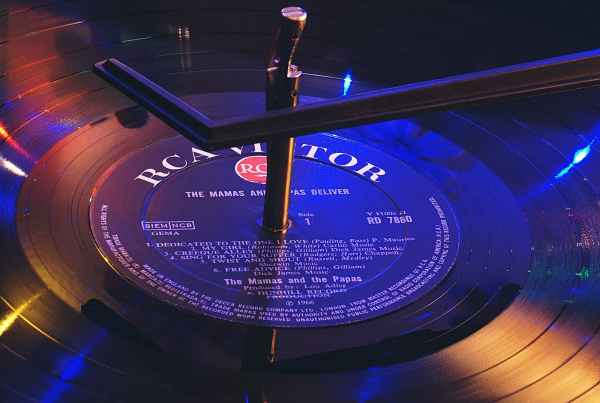
I know by writing this, I’m dating myself a bit, but when I was younger (MUCH younger!) we used to listen to a Hi-Fi stereo system.  It was a piece of furniture, made of wood, complete with legs and fabric-covered speakers, and it had an enormous hinged cover that had to be locked into the “open” position or it would slam shut as your head and upper body was “inside” trying to adjust the settings!  It had a turn-table for records, an AM/FM radio, and even storage for albums and other gear.  It stood proudly, if awkwardly, in the living room or family room, off to the side of the other large piece of entertainment furniture, the giant television set, complete with rabbit-ear antenna.  Hi-Fi stood for “High Fidelity”, reassuring us that the sounds issuing from this box were as close as we could get to “being there” for concerts, broadcasts, and other recordings.  Our model was “old school”– there was no remote control, no way to record in any other medium (no tape deck or USB port), no “pause” or “mute” function– all the knobs and buttons and “arms” had to be operated by hand.

person holding vinyl player in shallow focus photography
Photo by Ivan Boban on Pexels.com

Today, we have “Wi-Fi”– a word that looks and sounds very much like the earlier “Hi-Fi.”  Many people think that Wi-Fi probably stands for “Wireless Fidelity.”  I looked it up– the “Wi-” does stand for wireless, meaning that information is transferred via radio waves, eliminating the need for a wire or cable connection.  But the “Fi” part does NOT stand for fidelity (or anything else, exactly).  It is simply a brand name for a particular wireless protocol See more about the definition of Wi-Fi here.   Still, wireless communications, including cell phone service and internet, has radically changed our world, making it possible to connect with virtually anyone, anywhere, any time.  It is a marvelous innovation with potential for great good.  In our world and culture of global communications, we rely on Wi-Fi or wireless connections every day.  We use them for information, entertainment, business, and social networking.  I rely on it for this blog.

person using black android smartphone
Photo by rawpixel.com on Pexels.com

When it comes to prayer, it’s important to recognize the important difference between Hi-Fi  and Wi-Fi .  Both are important, but they are not the same.

Photo by Tima Miroshnichenko on Pexels.com

High Fidelity Prayer (as I see it) is consistent, daily prayer.  Faithfully coming before God and seeking His face.  Some may use a rote prayer for grace, or bedtime prayers, matins, or other standardized prayers.  Others may set aside a daily time to pray–15 minutes in the morning, or an hour after breakfast, or even 10 minutes before bedtime.  Some people set an alarm to pray at a certain time each day.  Many even make a habit to pray with a group once or twice a week.  To some, this type of prayer may seem passe, outmoded, old fashioned–after all, if God already knows our every thought, why does it matter if we pray every day or meet with the same group?  It matters because fidelity matters– faithfulness, even in the “small” things, matters to God.

Photo by Tima Miroshnichenko on Pexels.com

High Fidelity Prayer may seem awkwardly placed in the middle of our “living room”–forcing us to take time; to make and keep a commitment; to face questions or ridicule–it may seem clunky and wooden at first, even scratchy and hard to tune.  And it depends on being “plugged in” to our power source! Hi-Fi prayer is meditative, deliberate, and worship-focused. We should be careful, however, of making Hi-Fi prayer a relic. Many Hi-Fi stereos from “my day” are now collecting dust, or being used to hold plants or books! Hi-Fi prayer must be practiced– even in an age of Wi-Fi lifestyles– if it is to do us any good.

Wi-Fi Prayer is not the opposite of Hi-Fi Prayer.  It is not “wrong”, or illegitimate.  In fact, it is great to know that we can talk to God anywhere, any time, for any reason.  Wi-Fi Prayer (again, as I see it) is spontaneous prayer that is poured out to God “in the moment”.  It can happen as you are driving or walking down the street (just don’t close your eyes!)  It can happen alone or with a group.  It can happen in response to something you overhear on a bus or a train, or read in an e-mail, or hear on the news.  It is not a substitute for Hi-Fi Prayer, but it is certainly a healthy addition to it.

photo of a woman using her smartphone
Photo by bruce mars on Pexels.com

But Wi-Fi Prayer, just like Wi-Fi communication, can be taken for granted.  Wi-Fi prayers can become “small” and “hand-held”– things we bring before God because it seems like the thing to do.  We tend to put little thought, and even less grammar, into our wireless messages; we sometimes put little thought, and even less doctrine, into our Wi-Fi prayers, relying on common phrases that sound religious, but lose meaning.  “Jesus just be with _____________ during this time”, “put a hedge of protection around ________________”, “I’m just claiming your promises, Lord.”  There is nothing “wrong” with any of these statements, but what do we really mean?  Isn’t Jesus always with us?  Why is protection always a “hedge”?  Which promises are you claiming?  Again, there is nothing wrong with any of these phrases, and we know that the Holy Spirit can understand even our deepest utterances and wordless groaning.  But just like auto-correct can mess up the simplest message, so our auto-pilot praying can mimic real communication with our Lord and Creator.  There are entire comedy routines built around this kind of praying– but it creates an uncomfortably convicting kind of laughter.  We should not be shamed out of Wi-Fi prayer, but we should also be careful not to let our prayer lives become a joke.  Thankfully, God listens to our hearts and not just our words!

Hi-Fi or Wi-Fi, prayer is a sure connection to a faithful God.

Photo by Kevin Malik on Pexels.com

On a final note, whether we have to turn down the knob or hit mute, there is another important “sound” principle of prayer– LISTEN!  There have been some voices mocking this element of prayer, claiming that those who claim to “hear” from God are hallucinating or just plain crazy.  God rarely ever speaks aloud and directly to an individual–even Jesus, while He claimed that He only did what His Father “told” Him to do– never claimed to hear the audible voice of God telling Him what to do or where to go next.  There are only a few recorded instances of anyone else “hearing” the voice of God directly throughout history.  But there are countless instances of people discerning the “voice” of God, and the leading of the Holy Spirit throughout the ages.  How?  Often through changes in circumstances, other trusted voices, new insights into scripture, or the “still small voice” of their own conscience giving confirmation.  One caveat about “listening” for the voice of God– it will NEVER lead you to contradict God’s own word or act in contradiction to His character.

We have a Hi-Fi, Wi-Fi kind of God–let’s keep in tune, log in, and listen!

We Like Us

Photo by Askar Abayev on Pexels.com

I’ve been very blessed with a large extended family–in-laws, cousins, step-cousins, half-cousins, aunts and uncles, nieces and nephews, second cousins–well over 600! (and counting). I’ve spent a lot of time recently attending family events, and each one has been happy, encouraging, and invigorating. I know that is not always the case in families. Some families argue; some won’t even speak to each other. And there is not perfect harmony, even in the best of human families. We’ve had divorces and divides, too; but mostly, as my one cousin is fond of saying, “We like us.” We like belonging to a family, but even more, we like belonging to our family. As our family grows, it is becoming more diverse, and we like that, too. Many years ago, most of our family members were farmers from a small area in southwestern Michigan. Now, our family includes truck drivers, mechanics, teachers, architects, coaches, doctors, office managers, car salesmen, nurses, dispatchers, accountants, chefs, shopkeepers, ministers, photographers, cosmetologists, pet groomers, medical transcriptionists, cinematographers, artists, dancers, contractors, factory workers, and yes, some farmers, too. We have family members with varying skin tones and ethnic backgrounds, and differing physical and mental abilities. And we LIKE “us.”

Photo by RODNAE Productions on Pexels.com

Jesus likened the Kingdom of Heaven to a family– it is made up of many members, but we are all brothers and sisters “in Christ.” And, like a family, we are supposed to like “us.” More than that, we are supposed to LOVE one another! We are to be there for each other, in good times and bad; in mourning and in rejoicing. “For better, for worse, richer or poorer, in sickness and in health..” It shouldn’t matter if our brothers and sisters live close by or halfway around the world; whether they belong to our local congregation of “that other church across town.” And it SHOULD matter when we see some of our family members being persecuted or facing hardship while others live in comfortable apathy.

Photo by Denniz Futalan on Pexels.com

But Jesus went even further. We are to love those who are not “US.” We are to show love and mercy to those who don’t “belong.” We are to reach out to those who dislike, despise, and even persecute us. The way we treat each other as “family” and the way we treat those “outside” will either attract or repel others, and it will show whether or not we have learned to love as Jesus did.

Photo by Keira Burton on Pexels.com

God “Likes” us. He wants to share life with us –any of us who will respond to His call. And God LOVES us. He treats us with the same compassion and love, regardless of who we are or what we’ve done, or how we’ve responded (or failed to respond) to His outreach.

Photo by kelvin octa on Pexels.com

Clearly, there are those who do not like us; who do not wish us well. And God does not call us to be victims, dupes, and doormats for abusive relatives or strangers. We are to Love– but wisely, and with the strength of God. Liking someone does not obligate us to betray our conscience, or enable abusive and immoral behavior in others. Loving someone may mean setting boundaries where they are needed. But it also may involve tearing down false walls of fear and “inconvenience” that we’ve been using to excuse action.

Photo by Karolina Grabowska on Pexels.com

Who can we reach out to this week, extending the kind of welcome and acceptance we give our family? How can we begin seeing more of “us” in the people we meet, and less of “them?” And, if there are family members (either our birth families, or our church families) with whom we have a broken relationship, are there ways we can make a move to try to mend fences? How can we set wise boundaries, while tearing down false ones? One sure way is to begin praying– pray for those we meet, whether or not we consider them “family.” Pray for those who have hurt us– and those we have hurt. Pray for those who seem different and hard to understand or accept. Pray for God to bless them, encourage them, meet their needs– Pray that God will give us wisdom, opportunities, and strength to reach out.

“I Never Knew You”

21 “Not everyone who says to me, ‘Lord, Lord,’ will enter the kingdom of heaven, but only the one who does the will of my Father who is in heaven. 22 Many will say to me on that day, ‘Lord, Lord, did we not prophesy in your name and in your name drive out demons and in your name perform many miracles?’ 23 Then I will tell them plainly, ‘I never knew you. Away from me, you evildoers!’ Matthew 7:21-23 (NIV)

Photo by Raphael Brasileiro on Pexels.com

In my life I have met “important”people– people with money, or power, or fame, (or all three!) And I have met “forgotten” people, “ordinary” people, “special” people, flamboyant people, even repugnant people.

I know hundreds of people’s names; recognize their faces; carry memories of laughter created, or goals accomplished, or griefs shared. As I get older, I sometimes meet up with people I should remember or know, but I can’t place their name, or their face has changed out of recognition since we last met. And of course, the same thing sometimes happens in reverse– I expect to be recognized, but the other person has no memory of me. It can be distressing; this feeling of not remembering or not being acknowledged.

Photo by omar alnahi on Pexels.com

I know many families who have journeyed through Alzheimer’s or other forms of dementia. Loving someone who no longer remembers looking into your eyes, no longer reacts to the tone of your voice, no longer knows your intimate secrets…who searches your face and sees only a stranger. Hoping for even a glimmer of recognition; a moment of memory–it’s heart-breaking and harrowing and exhausting.

Photo by burak kostak on Pexels.com

But imagine hearing those words from your creator– “I never knew you.” In all your life, never having made time to create memories with the God who formed you in the womb, who counts the very hairs of your head; hearing HIM say, “I never knew you. I made you; I was as close as your next breath through every moment of your life. I heard every laugh; I saw every tear– yet I never KNEW you. You never let me in; you never reached out or looked in my direction. You pretended to others that you knew me. You ‘name-dropped.’ You told others that we were friends. That you spoke with me every day. I heard you. I wept. But I never knew you. And you never knew me. Oh, you learned about me. You knew enough to convince some others that you knew me. You even said elaborate prayers and quoted many of my words. You put on a good show. But you lived your life as though you never met me; as though I were no more than a myth or a shadow. And now, now that you see me for who I AM; now that your eternal life depends on it–you have to hear the most frightening words I will ever speak: ‘I never knew you.'”

Photo by Andrea Piacquadio on Pexels.com

10 I want to know Christ—yes, to know the power of his resurrection and participation in his sufferings, becoming like him in his death, 11 and so, somehow, attaining to the resurrection from the dead.
12 Not that I have already obtained all this, or have already arrived at my goal, but I press on to take hold of that for which Christ Jesus took hold of me.
Philippians 3:10-12

Of all the people I have met; of all the people I know– Lord Jesus, let me recognize Your voice above all. Let me cherish your presence in every moment of my life, and in every relationship. Grant me grace and wisdom to follow you and live in joyful obedience. And let me invite others into your presence. Let me know you and be known by you. Let me be eternally yours as you are mine.

Photo by Munmun Singh on Pexels.com

The “God of Jacob”– not “Jacob’s God”

For a blog about prayer, I’ve been spending a lot of time doing Bible study on the character of Jacob. But I think there is a huge connection. The stories in the Bible are powerful and important, not because of the human characters, but because, in them, we see how God interacts with a variety of His created people. And that can help us as we come to God in prayer.

Photo by Thorn Yang on Pexels.com

When we begin to understand that the “heroes” of the Bible are often ordinary people who encounter Almighty God, we see that little has changed in the course of history. God still chooses to bless and challenge ordinary people– for their own good, and as a witness to others.

Photo by Julian Jagtenberg on Pexels.com

In today’s world, we often reverse the importance of the characters in our own stories. Christians talk about “my God” or “our God”, as though God belongs to us or serves us. But the Bible doesn’t speak in those terms. God is not “Jacob’s God” or “Solomon’s God” or “Queen Esther’s God,” or even “Israel’s God.” Instead, He is the God of Abraham, Isaac, and Jacob– the God of Israel. He is pre-eminent. God exists, rules, creates, and acts on His own terms, not ours. And He exists, rules, and acts universally. No person, group, or nation can claim that God blesses them because of who they are or what they have done. Thus, there is no African God or Caucasian God or Chen Family God, or Jean’s God, or Muscovite God, etc. There is only One God– but He wants to be the intimate and personal God of every person on the African continent, and in Moscow, and everyone named Shirley, Clarence, Chen, Smith, Martinez, or Klein. He invites each of us into a personal relationship, but He remains Holy and Unchanging and Sovereign.

Photo by Nicholas Githiri on Pexels.com

The very same God who wrestled with Jacob wants to be your best friend. He also wants to be your King and Lord of your life. When we pray to “the God of Jacob”– we are not praying to “Jacob’s God”. We are praying to the very passionate lover of our soul. He just happens to be the same God who loved Jacob enough to take him through a series of adventures many centuries ago; the same God who promised never to leave him; the same God who blessed him and preserved him and made him the father of a great nation. Just think of what He’s waiting to do for and through you!

Blog at WordPress.com.

Up ↑