Declaration of Dependence

Today, America marks the 249th anniversary of the signing of the Declaration of Independence. In it, colonial leaders listed several reasons why they no longer held allegiance to the British Crown. Many of their reasons involved abuses by the King or by Parliament in relating to their colonial citizens. Taxation without representation; passing unjust laws; requiring people to quarter (feed and house) soldiers who often harmed and cheated them; refusing to hold the soldiers accountable for their offenses– even murder; refusing to allow the colonials to trade with other nations, etc. But there was something more.

We hold these truths to be self-evident, that all men are created equal, that they are endowed by their Creator with certain unalienable Rights, that among these are Life, Liberty and the pursuit of Happiness.–That to secure these rights, Governments are instituted among Men, deriving their just powers from the consent of the governed, –That whenever any Form of Government becomes destructive of these ends, it is the Right of the People to alter or to abolish it, and to institute new Government, laying its foundation on such principles and organizing its powers in such form, as to them shall seem most likely to effect their Safety and Happiness.

In drafting and ratifying these words, the founders of the United States did something unique. They did not just establish an independent government; they established a model for both independence and dependence IN government. Government is not independent of certain inalienable rights, nor of the Creator of those rights. Governments are not the highest authority in the land. Governments are instituted and derive their power, not by their own actions and decisions, but from the consent of the governed. Governments DEPEND on their ability and willingness to serve the people.

Of course, there are wicked and improper governments, and Britain’s rule in 1776 was not the worst example of tyranny or despotism the world had ever seen. The United States has not always lived up to the ideals and principles of the Declaration of Independence. Less than a century after the Declaration was adopted, the United States was engulfed in a war that tested its ideals. The nation was divided by the issue of slavery. Nearly half of the states still practiced slavery, meaning that hundreds of thousands of people were being treated far worse than the “rebellious” colonists of previous generations. Our nation as a whole was not delivering on its promised declaration that “all men are created equal” or that they were endowed by their creator with rights to “life, liberty and the pursuit of happiness”.
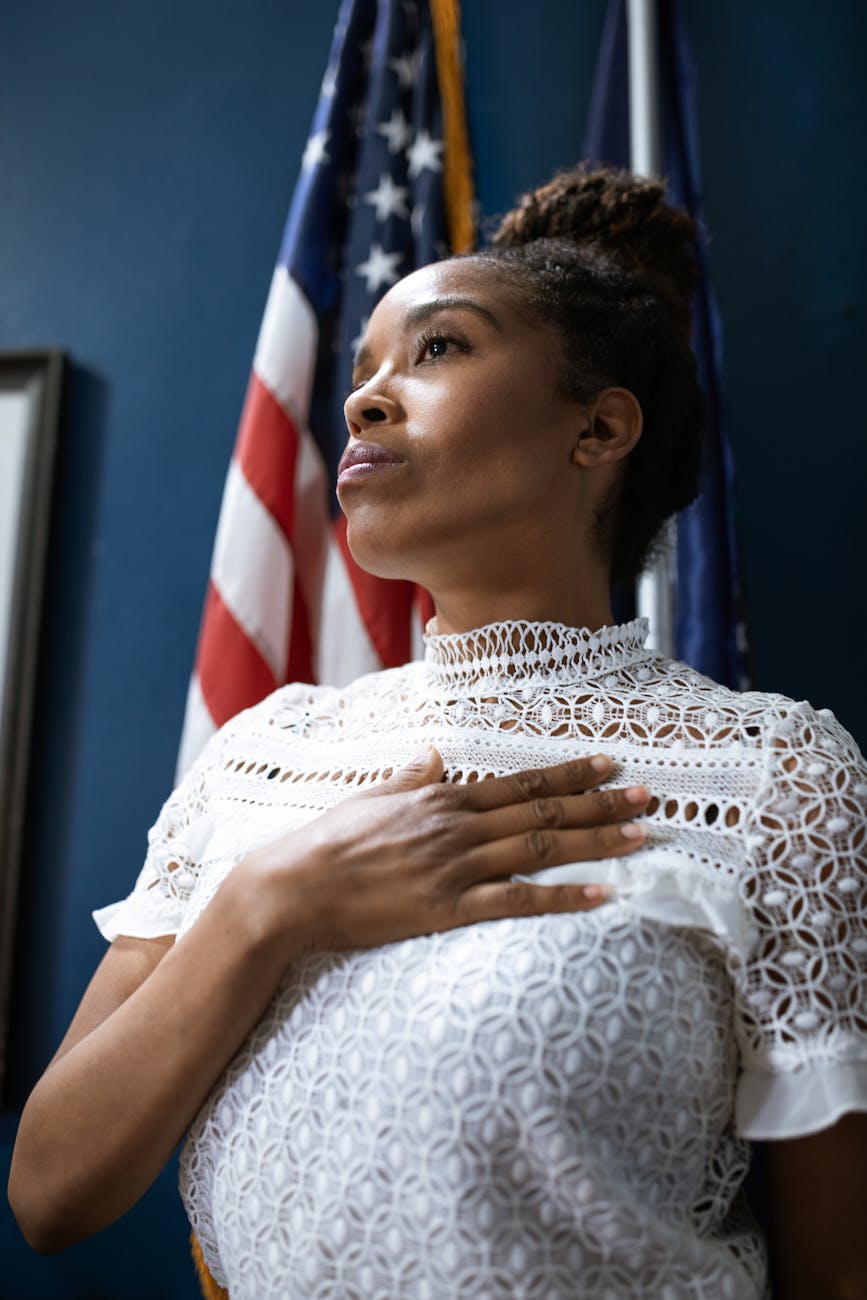
But when our nation has remembered its Dependence– our need for God and our need to care for the safety and opportunity for those under our jurisdiction–remarkable things have happened. The union was “saved.” Voting rights were not just extended but enshrined in our Constitution. Americans joined the fight in Europe and around the world on more than one occasion to secure rights for people who were being oppressed, tortured, and even exterminated. The “Promise of America” draws people from diverse nations and cultures and stands as a model for the rest of the world.

Sadly, today, many here in the United States want Independence from America. Our culture has devalued life, exchanged liberty for conformity, and traded the pursuit of happiness for indulgence and selfishness. We want to be independent of responsibility– to our families, to our neighbors, to our nation, and to God. We do not want a government that protects those rights that are endowed; instead, we want a government to give us assumed “rights” that are really permissions to defy God’s laws. We want to be free to redefine morality, escape the consequences of our own poor choices, and feel virtuous without pursuing virtue.

What will happen to our country if this trend continues? On the eve of celebrating our 250th year, we may be on the brink of falling apart. Issues like abortion, immigration, health care mandates, and transgenderism threaten to divide our country, just as slavery did over 150 years ago. Americans are divided on political, economic, religious, and cultural issues. We can’t seem to agree on what we mean by “rights, ” “freedom,” or “pursuit of happiness.” We can’t even seem to define what a “woman” is or decide how many genders to fight for. Everyone wants to speak out, but no one seems willing to listen– except to find another point of disagreement. We are no longer “united” states– we are warring factions in a series of culture wars.

But what happens when American Christians declare our Dependence on God and on His Word? Many around us have declared their independence from God’s laws–even to the point of denying His existence. Many people live in a self-imposed despotism; they are enthralled by a false “freedom” from morality, reverence, and even common sense. But Christians– wherever they live– are called to submit to the authority of Christ above all. We depend on Him– not on our customs, not on our history, not even on the words of the Declaration of Independence. And we are to lean on God, not on our own understanding or our superior morality or our ability to shout louder than the next person! Our Freedom comes through Christ alone!

True “freedom” comes from dependence, not independence. When we depend on Christ’s finished work on the Cross, we are free from the weight of Sin and the power of Death. When we depend on God’s wisdom, we find understanding. When we depend on God’s guidance and discipline, we gain freedom from guilt and shame. When we depend on God’s power to channel our emotions and energy, we find purpose and joy.

Today, I declare my utter dependence on God– on the Salvation He provided through Jesus Christ, and on the power of His Holy Spirit to lead me through this life. I am glad to be an American, but my ultimate citizenship is in Heaven. The “promise of America” is a good thing: the promise of Heaven is glorious and life-changing!

Proclaim Liberty to the Captives

“The Spirit of the Lord is upon me, because he has anointed me to proclaim good news to the poor. He has sent me to proclaim liberty to the captives and recovering of sight to the blind, to set at liberty those who are oppressed…”

Luke 4:18 (ESV)
Photo by Andrea Piacquadio on Pexels.com

Yesterday, we observed a holiday, relatively “new” on the national scale, of “Juneteenth.” Many people across the United States (and elsewhere) still don’t know the meaning behind this day. On the nineteenth of June, 1865, federal soldiers entered the city of Galveston, Texas, with news of the Emancipation Proclamation and the victory of the Union over the Confederate Army in the Civil War. The Emancipation Proclamation, in which President Abraham Lincoln declared freedom for all slaves throughout the Confederate States, had been signed on January 1, 1863. The war had been over for more than two months. President Lincoln had been assassinated in April. But news of the proclamation had never reached as far as Galveston; nor had news of the defeat of the Confederacy. Far from the ravages of the war, and far from the events of Washington or Richmond, the people of Galveston continued with life as it had been. For two-and-a-half years, people who had been declared free continued to live as slaves. News of their freedom came with shock and joy! Finally, those who were considered free in the eyes of the law KNEW they were free, indeed!

Photo by Yogendra Singh on Pexels.com

It would take more than 100 years for many of the injustices to be addressed that had grown up around slavery. Many of them are still being contested. But the celebration of the good news of Freedom continues, along with the hope that we will continue to build a better Union for All.

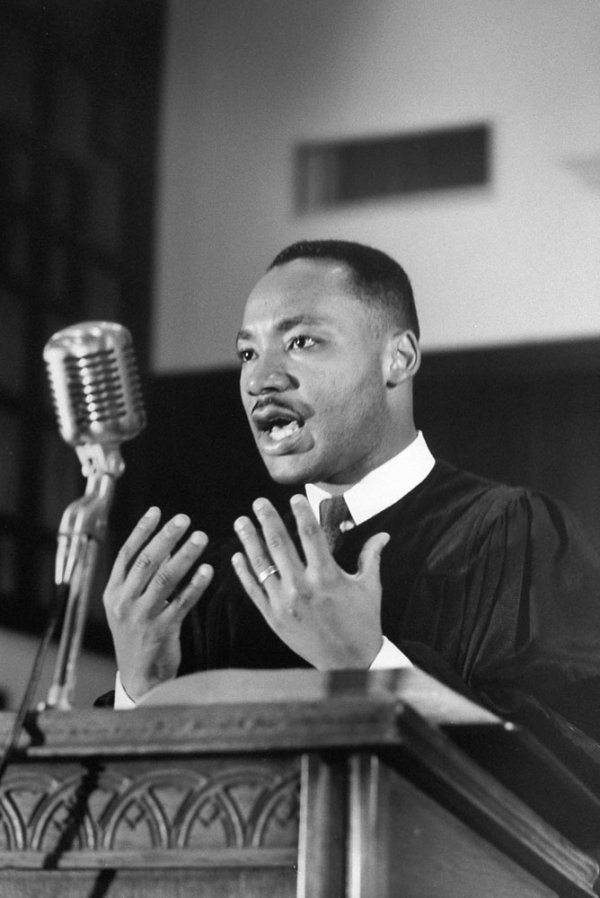
Civil Rights activist Rev. Dr. Martin Luther King Jr. gesturing during sermon at Ebenezer Baptist Church. (Photo by Donald Uhrbrock//Time Life Pictures/Getty Images)

Several centuries before the American Civil War, Jesus stood in the synagogue and read a prophetic passage from the book of Isaiah, in which He declared that He had been anointed to proclaim, among other things, “liberty for the captives.” He wasn’t talking about those who were in physical or institutionalized slavery, but for all of us who are slaves to sin. Unlike the slaves of Galveston, many of us are unaware of our captivity. But like them, we have been declared Free. What good news! Yet, we continue living in ignorance, both of our slavery, and of our potential freedom.

Photo by Engin Akyurt on Pexels.com

How many of us, even those of us who claim the Salvation of Christ, continue to live as though we are slaves? How many of those around us live as slaves without knowing they can be free? Today is a great day to proclaim the Good News– Jesus Saves! We can walk in Freedom and Newness of Life! Hallelujah! Carry the Good News to those who have not heard. Proclaim Freedom to the captives, and Liberty for those who are oppressed.

Photo by Designecologist on Pexels.com

Juneteenth is a time of celebration and exhilaration– for those who understand the gift of freedom. God offers us freedom–not from the trials or work of ordinary life– but freedom TO LIVE–abundantly, eternally, and fruitfully! In Christ, life has purpose, promise, hope, and joy. Death and sin and shame have been defeated– the war is over! Freedom is ours!

Photo by Victor Freitas on Pexels.com

I hope that today (and every day!)is a day of celebration for all of us who know the Freedom of Life in Christ.

I Heard the Bells on Christmas Day


I heard the bells on Christmas day
Their old familiar carols play;
In music sweet the tones repeat,
“There’s peace on earth, good will to men.”
I thought how, as the day had come,
The belfries of all Christendom
Had rolled along th’ unbroken song
Of peace on earth, good will to men.
And in despair I bowed my head:
“There is no peace on earth,” I said,
“For hate is strong, and mocks the song
Of peace on earth, good will to men.”
Then pealed the bells more loud and deep:
“God is not dead, nor does He sleep,
For Christ is here; His Spirit near
Brings peace on earth, good will to men.”
*When men repent and turn from sin
The Prince of Peace then enters in,
And grace imparts within their hearts
His peace on earth, good will to men.
O souls amid earth’s busy strife,
The Word of God is light and life;
Oh, hear His voice, make Him your choice,
Hail peace on earth, good will to men.
Then happy, singing on your way,
Your world will change from night to day;
Your heart will feel the message real,
Of peace on earth, good will to men.

Words by Henry Wadsworth Longfellow, with alterations and *additional text by Harlan D. Sorrell.

Some Christmas Carols are the joyous outpouring of Christmas cheer, filled with the laughter of wonder of the season.  Others are forged in pain and doubt that has been turned to the light of hope and renewal.  Such is the story behind this hymn. http://suvcw.org/mollus/art005.ht

Photo by Pixabay on Pexels.com

The famous American poet, H. W. Longfellow had lost his wife in a tragic fire just three years before he nearly lost his son in the horrors of the Civil War.  When his son was severely wounded in battle, Longfellow went to the military hospital, and, when he could, he transported his son home, knowing the journey would be painful and the outcome might not be a happy one.  (His son lived, but never recovered fully– see the article above.)
As he sat with his wounded son over the Christmas season, he could hear the bustle and chatter, and the bells ringing from the church steeples, announcing the good news of Christmas.  As his pain and bitterness churned, he wrote about it, and about how his heart was turned from bitterness to hope. (See the original poem here:   https://www.hymnsandcarolsofchristmas.com/Poetry/christmas_bells.htm

Photo of C. A. Longfellow

Christmas is a time of warmth and good cheer for many–the ringing of bells, the singing of merry tunes, the tinsel and glitter of decorations–but for others, it is a time of deep soul-searching.  “My life is a mess.  I have suffered greatly.  There is no Peace On Earth!”  Yet, the hope and promise of Christmas rings out greater than the darkness and the blast of gunfire, the angry outcries and the weeping of those in grief.

How can this be?

Christmas reminds us that our circumstances, though very real and very painful, are confined to this time and space.  They are temporary– not in the sense that we will forget our pain or loss– but that we can still experience hope and joy  and healing in their midst.  “The Wrong shall fail”–there will still be evil in the world, injustice, hunger, abuse, sickness–wrong will still exist, but it does not have the power to define us, to enslave us and take away our ability to do good.  “The Right, prevail”–God’s promise of Messiah (among several hundred other prophetic promises!) has been fulfilled.  God is Faithful.  God’s word endures.  God’s Justice Will Be Done, and there will be “Peace on Earth, Good Will to Men.”

Photo by Magda Ehlers on Pexels.com

Christmas also reminds us that it is just in those very small things– the tolling of bells, being able to hug your child,  to share memories of loved ones who are no longer here, being grateful for small gifts, giving a word of encouragement–that hope and joy are spread like ripples of water and echoes of sound.  Christ’s birth was humble, but it was heralded with the hosts of angels from the highest heavens. 

Photo by Oleg Magni on Pexels.com

My prayer today is that we would listen for the true message of Christmas, and that we would echo and repeat the message– even if it seems that we are being drowned out by sirens and protests, or silenced by those who are hurting and cannot hear the sweetness in the music of the season.

Blog at WordPress.com.

Up ↑