Prayer Requests

As someone who pursues prayer passionately, you might suspect that I hear a lot of prayer requests. And I do. And even so, it’s not enough. I always look for more! I admit to trolling on Facebook for prayer requests; following the church newsletter for prayer requests; and even asking friends if they have any requests when we chat. But what about prayer requests that aren’t exactly requests–

“Oh. It’s really nothing. I’m not worried about it or anything…”
“We’re just going through a rough patch. Nothing to be really concerned about…”
“It’s just something I have to deal with..”
“The doctor says it’s a chronic condition, so it’s just something I have to get used to…”
“I know so many other people who are hurting worse than we are…”

Sometimes, prayers are shortened or even missed because we are looking for prayer requests instead of prayer opportunities. Prayer is an opportunity to talk to God about anything that is on MY mind or in MY heart. Often, it comes in the wisp of a stray thought about someone else. Maybe I haven’t heard from them in weeks (or even years!), but suddenly, they are on my mind. Suddenly, I have an opportunity to pray for them. Do I know what is on their heart or mind? Probably not. But God knows! That schoolmate from fifth grade? Pray for them. So what if I only remember their first name– or their maiden name or their childhood nickname–God knows! That former co-worker who was having a rough time with her teenage son ten years ago? Ten years have passed! I know the son is now an adult. I don’t know if the relationship is better or worse now than it was a decade ago. I don’t even know for sure that the co-worker or her son are still alive. But God knows! My neighbor who seems to be doing fine, but I keep thinking about them, and I don’t know why– God knows! Each one is an opportunity to pray– nothing elaborate or specific– just to lovingly lift them up before God’s throne!

And what about the “actual” requests that I hear or see on-line? Sometimes, there are no details or specifics about “what” I am praying for. But it doesn’t matter. Because God already knows. Even more, He knows the end from the beginning, even if it isn’t exactly what is being requested. I can lift up in prayer situations about which I know very little– because God knows. And for those situations that seem dire or impossible– God knows those, too. And I can lift them up with confidence, even when I have no answers and the problems seem overwhelming.

This sounds easy, but it’s not. It forces me to step away from each request, each situation in which I might try to stake my own “claim.” Yes, I want my friend’s cancer to disappear, or my co-worker and her daughter to have a repaired and healthy relationship. But I don’t have the first clue how to make that happen. I don’t have any answers. I don’t know what GOD has planned in those situations. And while I know what sounds or feels good in the moment, I don’t know what is best in the grand scheme of things. But God knows! He doesn’t want me to solve each problem; He doesn’t need me to offer my “best” suggestion of how He should solve it. All He wants is for me to trust HIM to care for each need. In HIS way, in HIS time, and in the fulness of HIS love!

During Jesus’ ministry here on earth, He prayed many times, but His prayers rarely dwelt on details about specific situations. In fact, in teaching His disciples how to pray, He included the phrase, “THY kingdom come, THY Will be done in earth as it is in Heaven.” (Matthew 6:10) And that is a perfect phrase to exercise, whether I have a specific request, or a flash of memory, or a nagging worry about someone or something.

The same is true when it is my turn to request prayer. There are many times I find myself like the people I quoted above– trying to make light of a situation or avoid actually requesting prayer. It may sound humble and self-deprecating, but there is an element of arrogance in saying “I don’t need prayer for …”(whatever situation). We ALL need prayer. We ALL need to live in the assurance that we can “cast all our cares upon Him, for He cares for us” (1 Peter 5:7 paraphrased). And we need to acknowledge that we should share our cares with others as they share their cares with us. And that we need to allow for God to involve others in the way He cares for us. Asking for prayer is a way of allowing others to share our concerns– and share in our joy of receiving answers to prayer! Requesting others to pray for us is not a weakness. We are not being a burden on others when we allow them to pray for us.

That is not to say that I need to publish every problem and concern on Facebook or in the Church Newsletter! Nor should I try to dictate how or when or what others should pray for me. But it does mean that I must be open to sharing the very real struggles I have with trusted friends, especially if they ask how they can pray for me. Even the “chronic” ones; even the “silly” ones. Because I don’t know how God may use that opportunity in THEIR life; nor do I know how God may use their prayers to bless my life.

But GOD knows!

We Are Family…

The Bible is filled with images of family–long lists of “begats” and genealogies, parables about sons and fathers, brothers, weddings, brides and grooms…God is even described as our Father, with Christ as “the son.”

One of my hobbies is genealogy– tracing my family’s roots back through several generations and several different places. While the Bible warns that we should not get caught up in “endless” and vain genealogies that lead to false pride and foolish divisions (1 Tim. 1:4/Titus 3:9), there are many good reasons to pay attention to families, family histories, and family dynamics.

First, the family is God’s design– God instituted marriage, parenthood, and family units. It is God’s will and purpose that we should not live in isolation and self-absorption, but learn to depend on and be responsible to others. Families honor, protect, love, provide, comfort, teach, encourage, build and work together. Even in a broken world, filled with dysfunctional and chaotic family relationships, the purpose and design of “family” is still part of God’s good and perfect plan for living. Broken families and toxic relationships are not a failure of God’s plan– they are the result of Sin’s power to distort and corrupt the Good that only God can create. The great news is that God also has the power to restore and redeem individuals and families; offering “rebirth”, adoption, and an eternal “inheritance” within His family!

Second, families can teach us about the astounding and limitless love of God. There is something about the bonds of familial love that stretch us beyond our regular capacity to hope, to sacrifice, to share, to grieve, to endure, and to forgive. Who has seen a mother or father go hungry so their child can eat; or a sister or daughter donate her kidney or bone marrow to help heal a family member? Or a father carry his son who could not walk, or a wife who visits her aging husband when he no longer knows her face? How can we see such devotion and not be struck by how much greater, wider, deeper, and more eternal the Father’s love is for each of us?

Third, family (particularly the idea of genealogies and long family histories) teaches us the eternal nature of God. We live our lives as part of three or four generations– a span of 70 or 80 years for many of us–and we concentrate our efforts on “making our mark” for less than that entire span. But even the longest of our lives are so short in the span of God’s plan for His people. We have one lifespan to play an important role in the story of centuries. When we fail to understand that role, we can miss our sense of purpose in life. Sometimes, we overestimate our own importance or miss the significance of our own legacy. Even “important” people are forgotten, or have their legacies tarnished or rewritten in the pages of history. And those people who never made the history books are often the inspiration for actions and movements that span generations and change nations. When I study the history of my own family, I find lives that were cut short by war or disease– yet these lives shaped the lives (or were the lives) of my ancestors, and without them, I would not be who or how or where I am today. Maiden aunt, baby brother, empty seat at the table– every life touches others in ways that God alone truly comprehends. “Coincidental” meetings, “unplanned” children, migration patterns, epidemics– all loom large in a single generation, but they all become part of the fabric of each person’s “history.”

Lastly, genealogy reminds us that we are all one enormous family! There is so much talk on the news and online about all our differences– language, culture, skin tone, beliefs, skills, abilities, interests, even diets!– and it is important to note that God loves variety and created us each with unique and precious differences to reflect His infinite character. But sin twists our differences into conflicts; sin spreads lies about God’s character, and thus, about how we (or others) reflect, honor, understand, acknowledge, or obey our amazing creator. Differences may cause division in our broken world, but they do not cancel God’s mercy or limit the reach of His love for us all.


This lesson is being brought home to me in a secondary way as I see the time approaching for my 40th high school class reunion. Of course, we are not all directly related. And we are all the same general age, rather than being multi-generational. But it struck me that our class has been very much like a family– we grew up together; we learned to get along (most of the time), to share, to work together, to understand and appreciate our differences and our unique gifts–we send birthday greetings and share pictures, we laugh together, grieve together, share fond memories and special connections with one another. We pray for one another, argue with one another, encourage one another, and challenge one another. There are some who have distanced themselves–whether through physical distance or emotionally– from the rest of us. Some have even ended their earthly journeys. But that doesn’t make them any less a part of our class/our family. We are short and tall, thin and stout, hairy and bald, dark and light complected; we are single, married, divorced, and widowed– some with children still at home; some with no children at all. We are rich and poor, healthy and ill, walking around with scars and wounds and unresolved questions, arrogant assumptions, or chips on our shoulders. And we are optimists and mentors, healers and teachers, helpers and protectors. We are loud and quiet, social and task-oriented, driven and laid-back, dreamers and doers. And in my genealogy research, I have made genetic and marriage connections to about 1/3 of them! We really ARE family, and I can show how we are related! How small would this world seem if we looked at our brothers and sisters across the world, and realize that those connections are so much greater than the differences that divide us?

Photo by rawpixel.com on Pexels.com

I’m also in the process of writing a book about my family. I estimate that there are nearly 500 people who can claim the same ancestral “roots” from the same two people, who lived through some of the most amazing events of the twentieth century! Once again, we don’t all look , or act, or think alike– some are tall, some are tattooed, some are old, some are newborns, some argue about college football teams, or politics. Some of us speak other native languages or live very different lifestyles. But we love each other, encourage each other, and many of us share our prayers and concerns and joys and pains. My great-grandparents (and all their children) left a legacy of love and faith that continues to influence and inspire the fourth, fifth and sixth generation to follow!

When we pray for others, we are always praying for our family! Praying for our neighbors and classmates and co-workers– we are praying for family! Praying for our enemies, for strangers, for those who look and speak differently than us–We are praying for family! May God give us eyes to see and hearts to love our brothers and sisters, sons and daughters, cousins and even the “long lost family members” and lift them up in prayer to the One who loves us and wants to bring us all into His family!

The Urgency of Death

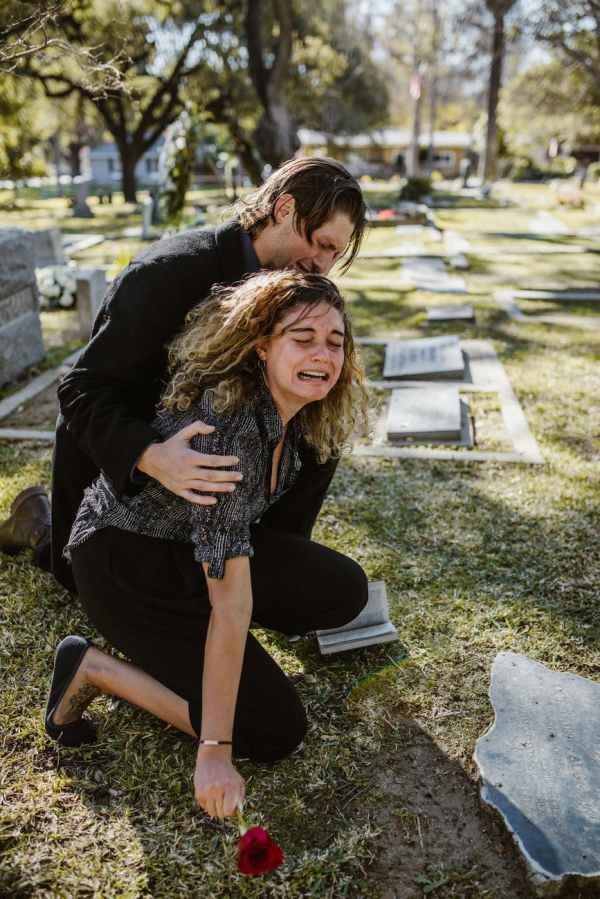
Just last week, one of my high school classmates died unexpectedly.  I’m getting to “that age” when more and more of my contemporaries are experiencing health issues– diabetes, heart problems, cancer, arthritis, even early-onset dementia– but this friend seemed to be in good health.  She had just been celebrating the birth of a grandson, and other milestones.  Death sometimes comes when (and to whom) we least expect it.  It is shocking, saddening, and frightening all at once.  

Photo by Andrea Piacquadio on Pexels.com

Death has an urgency that pushes other concerns away.  Death is final; permanent.  Death is powerful– we can’t cheat it, defeat it, or comprehend it.  Death frightens us, angers us, and mystifies us.  We begin to look at our own life and ask questions–Who am I?WHY am I?  What makes me “me”– individual and uniquely different from everyone else?  Is there a purpose to my being– to my being “me”, “here” and “now”?  How can I find and fulfill that purpose if it exists?  Do I have an eternal destiny after this life?  If so, how can I know what it might be?  Can I change that eternal destiny?

sunset ship boat sea
Photo by Pixabay on Pexels.com
Photo by Liza Summer on Pexels.com

Some people argue that our origins are accidental; our uniqueness is merely a random generation of genetic code; our purpose non-existent or self-determined; and our destiny no more than dust. They avoid talking about death–and the meaning of life. They want to “live in the moment,” but they don’t want to ask any questions of the past or future. And they mock anyone who does. Many of them hear me or read what I write and dismiss me as intellectually lazy, gullible, or crazy.  I’m all right with that, as long as they will be intellectually honest enough to admit to the questions; and open enough to acknowledge that there may be more than a quick denial as an answer.  Crazy– well crazy is as crazy does, I guess…I’ll let my actions answer that one.

Death is powerful and mysterious, but I believe that God is more powerful, and omniscient– he has already crushed the power of death, and invites us to view death from a different perspective.  When we take everything– including death– to the Lord in Prayer, he takes the weight of it, the fear of it, the pain of it off our shoulders and carries it to the cross.  HIS death overshadows even our own, in its power to overcome. The urgency of death is not that it is the end of all things.  The urgency of death is that it signals the end of our opportunity to recognize and live out the purpose of this short life.

art cathedral christ christian
Photo by Pixabay on Pexels.com

If that isn’t an urgent reason to pray for those you love, I don’t know of a better one…

It’s also an urgent reason to pray for those around you who are grieving the recent loss of a loved one.  And don’t just be someone who prays..be an answer to prayer– reach out with a card, a note or e-mail, or spend some time with them.  Let them know that a) their loved one is not forgotten, and b) neither are they!

Blog at WordPress.com.

Up ↑