But when you pray, go into your room and shut the door and pray to your Father who is in secret. And your Father who sees in secret will reward you. Matthew 6:6 (ESV)
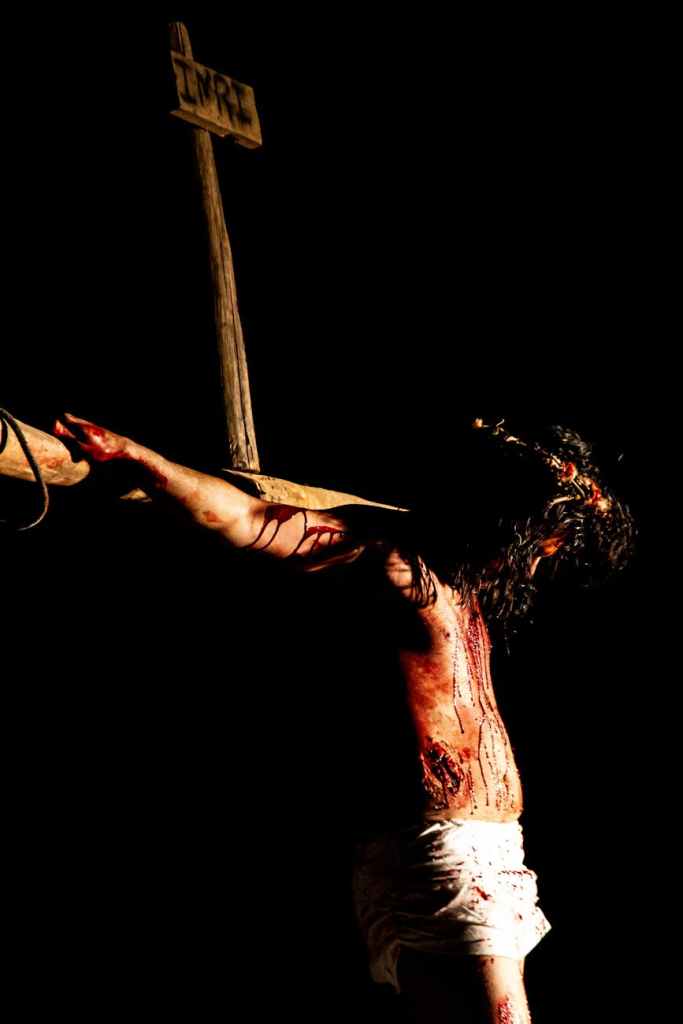
Prayer can sometimes seem like a cowardly action. It seems passive; it relies on faith and, often, patience. We connect courage to action– courageous people DO something; cowards sit on the sidelines or hide in their closets. Yet Jesus told His disciples to go into their rooms or closets, close the door, and pray in secret. Jesus himself often went out into the desert to pray alone. Jesus’s ministry was filled with passive moments. He spoke, or he walked along from town to town. He stopped to heal people by touching them or speaking to them. He rarely raised his voice or let his temper show. He allowed himself to be arrested, tried, sentenced, beaten, and crucified, without making a vigorous defense or protesting his horrific and unjust treatment. On the cross, his one impassioned outburst was a prayer to His Father–“My God, My God, why have you forsaken me?” (Mark 15:34)
We don’t think of Jesus as a coward. Yet, we often sneer at Christians who spend more time praying and less time “doing.” Being active is not a bad thing. Jesus commanded His disciples with many active words– “GO,” “teach,” “feed My sheep.” And there are busy people who are courageous in their own way. They go into dangerous places to preach the Gospel. They risk their health and safety to reach the lost with the Good News that Jesus Saves! They stand firm for the truth, and they defend it with vigor and passion. But Jesus also commanded His disciples to “Follow Me.” That means that we need to look at and model our lives after the ways that Jesus responded to various situations, and how He lived. The question we often ask is “what would Jesus do?” But the real question we should ask is “what did Jesus DO?”
Jesus prayed. He prayed for people; He prayed with people; and He prayed alone for hours and even days. And Jesus prayed courageous prayers. He didn’t pray “safe” prayers. Even His anguished prayer in the garden ended with courageous and humble resignation– “Father, if you are willing, remove this cup from me. Nevertheless, not my will, but yours, be done.” (Luke 22:42) Jesus also engaged lovingly and personally with the kinds of people that others ignored or wrote off or dismissed as broken, damaged, or irredeemable.
Just this week, a young Christian apologist and conservative speaker, Charlie Kirk, was assassinated. He was well-known and admired (or detested) for speaking up about family values, and Christian principles on American college campuses. He often faced hostile critics and smug detractors– atheists, anarchists, and those who called him a racist, a homophobe/transphobe, a bigot, and a “hater.” I never met Mr. Kirk. I watched some of the videos his group posted of him patiently and passionately arguing for marriage, faith, morality, hard work, ethical behavior, and national issues like immigration reform, tariffs, and foreign policy matters. I respected much of what he said, and some of how he said it. One of the things I most respected was his commitment to listening and asking questions, instead of merely attacking. But the most amazing thing about Mr. Kirk was his passionate and outspoken commitment to Jesus Christ. His faith was the center of everything he said, and in the way he interacted with supporters and detractors alike. He did not shy away from difficult questions, and he rarely resorted to easy answers, but he always pointed others to the example and the words of Jesus.
In the wake of his death, many people are asking, “What now?” Mr. Kirk was articulate, passionate, and willing to put himself in danger in order to defend the truth and his personal views. He trusted God to use him, and he was willing to pay a horrible price– being hated, threatened, and ultimately shot to death–to do what he saw as God’s work. He left behind a family (wife and two children), several close friends, and a host of people who followed him on social media and looked to him as a Godly example. Fellow Christians, while we may grieve his loss here, rejoice that he is Home with his Savior for eternity. But many people are wondering what will happen if no one steps forward to take his place and carry on his mission. While I believe that many young people will be inspired to speak out and engage in discussions, I don’t think most of us are meant to step into a spotlight. I think we NEED more people who will commit to going into their closets and pray. While Mr. Kirk put himself in the public arena, there have been hundreds and thousands of people praying for him. They continue to pray for his family, his outreach organization, “Turning Point”, and they even pray for those who instigated and committed this violence.
Prayer is NOT cowardly. Prayer warriors are needed to intercede, to call on Heaven’s Armies to continue in the age-old battle. We should be willing to have the difficult conversations when they arise. Some of us will be called to initiate such conversations openly and with fierce determination. And we should all be ready to “give a reason for the hope that is in you” (1 Peter 3:15) even when it is with “trembling and fear.” And we should always remember to be humble and show kindness, even to those who despise us. But some of us need to be lifting up those who are being attacked. Some of us need to pray more boldly, more often, and more confidently in light of the violence that has exploded in our world. We need to pray, not just for the Charlie Kirks of the world, but for the salvation of all the would-be assassins. We need to pray for the hearts and minds of those who want to argue and “cancel” all those who stand for God’s Word. And for all those who do not know the truth, who are confused, befuddled, or deceived.
We need those who can be courageous– whether in the public square or in a private room.
At least once each month this year, I want to post some practical tips on strengthening our pursuit of prayer. Today, I want to re-post an entry about making intimate space for prayer.
Prayer is a very personal pursuit. Yes, there is group prayer, and corporate prayer– and they are important and valid. But most of our prayer takes place alone; just pouring our heart out to the Father. There is no “rule” for where or how to pray, but Jesus did say that prayer should not be done for show. In fact, He advised that when we pray, we should go into our closets (or inner room, or away by ourselves) and lock the door! Why would He give such advice? I don’t have a full answer, but I can think of several advantages of “secret” prayer:
If you are alone and isolated, you are less likely to be interrupted. No phones, no text messages, e-mails, or drop-in visitors. Just you and God, intimate and focused.
A closet or inner room is not just free of interruptions, it is free of distractions– looking out of the window, hearing traffic noises, etc. So many times, we try to multi-task during prayer. Sometimes it is unintentional; other times, we feel guilty when we are not “doing” something. It’s not “wrong” to pray while we are cleaning, or driving (except don’t close your eyes!), or listening to music. But it is more likely that we will lose our focus. Even keeping a prayer list or journal can become a distraction– we’re more focused on “checking off” items on our list than communicating with our Loving Father.
A small , private, designated space can sometimes alter our perspective. God is Spirit– He can fill vast spaces, and His presence can go anywhere. But we are creatures of time and space; when I am in a small room, I feel my own smallness; it is easier to “be still” and to be humbled.
A closet is a room with purpose–it is where we keep things that we need, and store things we don’t want to lose. Praying in a designated “spot”– whether it is an actual closet or a corner of your bedroom, or a special chair or desk–can act as an anchor for our emotions and energy. “This is the spot where I pray” can set a mood and even become a cue to our bodies that it is time to meditate; to “be still and know” (see Psalm 46:10) that we are in God’s presence.
As Jesus noted, God knows what is done in secret. We have a human tendency to need affirmation and admiration. God will affirm, encourage, and even reward us for what we do– including what we pray– but it is tempting to seek human admiration, instead. This doesn’t just refer to the actual praying, but our need to announce our actions and prayers to the world. Once again, it isn’t “wrong” to let others know you are praying for them– in fact, it can be a great encouragement! But it IS wrong to make that our focus. Are you praying for the victims of a crisis or war– Great! Keep doing it! But be very careful about posting it on FB and announcing it to everyone in an effort to look “better” in their eyes. Are you praying for someone dealing with cancer or depression– Great! But are you doing more announcing than actual praying? Are you doing anything else to encourage and help the person in question?
6 “Be careful not to practice your righteousness in front of others to be seen by them. If you do, you will have no reward from your Father in heaven.2 “So when you give to the needy, do not announce it with trumpets, as the hypocrites do in the synagogues and on the streets, to be honored by others. Truly I tell you, they have received their reward in full. 3 But when you give to the needy, do not let your left hand know what your right hand is doing, 4 so that your giving may be in secret. Then your Father, who sees what is done in secret, will reward you. 5 “And when you pray, do not be like the hypocrites, for they love to pray standing in the synagogues and on the street corners to be seen by others. Truly I tell you, they have received their reward in full. 6 But when you pray, go into your room, close the door and pray to your Father, who is unseen. Then your Father, who sees what is done in secret, will reward you. 7 And when you pray, do not keep on babbling like pagans, for they think they will be heard because of their many words. 8 Do not be like them, for your Father knows what you need before you ask him.
Matthew 6:1-8 NIV (emphasis added)
This passage immediately preceded the example of “The Lord’s Prayer.” Jesus modeled for us, not just what words to pray, but how to think about prayer. For many of His followers, this was radical and new thinking. They were used to gathering for prayer. They were used to prayer being limited to rituals and practiced at festivals and worship services. The great patriarchs of the faith prayed as individuals, the priests prayed– long elaborate, and intimidating prayers. Jesus was removing the intimidation of history and tradition, and encouraging people to return to the kind of personal relationship that God intended for us from the beginning– the kind that would be possible with His own defeat of Sin and Death!
Even though I have this intimate access to the Father, and even though I write about it, I still need to be reminded of the importance of seeking God’s face and His approval above that of anyone or anything else. I hope you will also be encouraged to set some time aside today to spend in intimate communication with the One who loves you best!









 Pursuing Prayer