
Prayer in the Cyber Age

I attend a weekly prayer meeting at our church. A small group of us meets one morning a week to share prayer concerns, pray for our pastors and church workers, missionaries, community members in need, etc. It usually lasts just about an hour. On a “good day,” we have about seven people.

I grew up in a small rural area, and our little country church had a weekly Wednesday evening prayer service. On a “slow night,” we might have seven people. Sometimes, we had thirty or more (nearly half the church congregation)! They lasted about an hour and a half. When I was in college, we had groups that met once a week for prayer. It wasn’t always the same group, but it met at the same time, and, again, we sometimes had as many as thirty in attendance– for prayer. Often, we met in a dorm room, so it was cramped, and many of us were sitting or kneeling on the floor. Once, we had a fire drill, and my feet had “fallen asleep” and I had to be helped as we walked to the exit!

I don’t say this to disparage our current small group, but to point out some of the differences between life in the 1970s, 1980s and today. My current church has activities every Wednesday evening, and much larger attendance than the little country church ever attained. And prayer is still a small part of the Wednesday evening programming. Prayer is encouraged in small groups, individually, and we pray during service. But sustained time set aside for prayer– what the old hymn refers to as “Sweet Hour of Prayer”–in a group setting is becoming more of a rarity.

There are many reasons for it– some good, some not so good.

On the “good” side, it must be noted that corporate prayer today has expanded far beyond the traditional in-person prayer meeting. Prayer can be skyped, group-chatted, zoomed, and conference-called. Prayer can be “hosted” in one location, with satellite groups around the world praying in real time together. In such ways, thousands, and even millions of people can be joined in prayer. This is an amazing development!

And, along with such developments, prayer has become far more global, and far more immediate. I can receive a text or e-mail notifying me of a prayer request from nearly anywhere in the world, and know that I am joining with a host of other Christians when I stop and take a few moments to pray right then.
So what’s the “downside” of cyber prayer?

Speaking as one who has lived the experience of meeting with the same people at a dedicated time over many years specifically to pray, I have observed the following benefits:

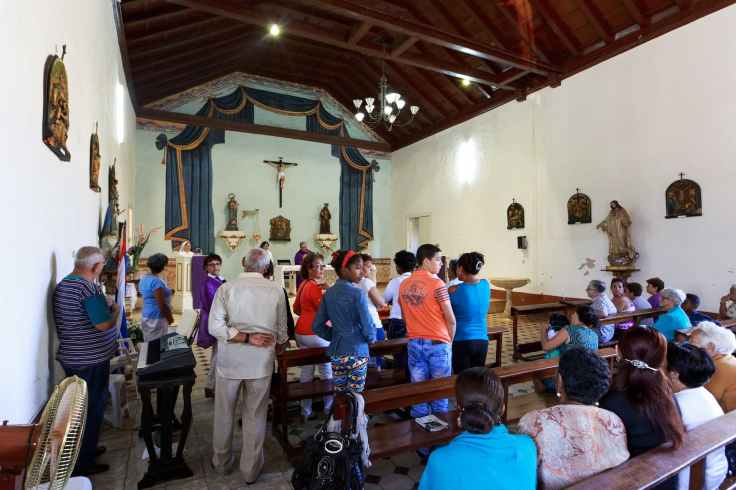
In-person prayer meetings offer a more intimate time of fellowship, compassion, and service. I’m not just seeing other people on a screen, reading a text message, or even filling an auditorium seat as part of a huge “movement”– I’m sitting in a circle, breathing the same air, hearing the same hum of the furnace or fluorescent lights, the sound of others breathing, sighing, or even crying quietly around me. Sometimes, I’m holding another person’s hand, or giving them a hug. I am not just among fellow believers, I’m with family. We get to know one another in a deeper way. I know their families, their personal struggles and victories. I learn the rhythm of their prayers, and the issues closest to their hearts– and they know mine! And that can be a scary thing at first– building the kind of trust that intimate fellowship demands. But it pays off a thousand-fold!

In-person prayer meetings are also focused in a different way. Cyber prayer usually focuses on a specific need– sometimes an immediate, or even temporary issue. In-person prayer focuses on the long term discipline of praying. I have prayed with groups over years for lost relatives or unresolved health issues. And while that may seem depressing to read about, in practice it teaches patience, and deepens faith. As a group, we see God’s answers develop according to HIS timing and HIS plan. Sometimes, we see issues resolved quickly; other times, we see how God strengthens us in our trials; and still other times we see God do surprising and miraculous things just as we’ve almost given up hope. And there are some answers we may never “see.” But, primarily, we are not praying for an outcome– we are praying as a pursuit of Christian living; developing a life of prayer, faith, and obedience. We spend much of our time in prayer lifting up requests, but we also spend much of our time in praise, worship, adoration, confession, and thanksgiving– because prayer is a holistic pursuit.

Which brings me to another benefit, one that may not seem obvious at first. Meeting consistently and weekly for prayer is a habit. It builds a character of faithfulness and true compassion like very little else I’ve encountered. God can “show up” wherever two or three are gathered (see Matthew 18:20), and because God is beyond time and space, He can be present in a church meeting room, in cyberspace, or in outer space! But we are temporal. We have to learn patience, hope, and faithfulness. We learn to be trustworthy of the feelings and confidences of others by sharing our hearts. We learn to serve by the practice of serving those around us over an extended period of time. We learn patience by waiting on the Lord, stopping our busy, deadline-driven, goal-oriented lifestyle to make time for the development of our faith.

Finally, in a post-COVID society, sustained, regular, corporate prayer is also sustained, regular, corporate fellowship. We live in an increasingly isolated society. With more people on the earth than ever before, we are more lonely, depressed, anxious, and self-absorbed than ever before. Even in Church! Many people attend service regularly, but still feel unconnected and uninvolved. And others get “involved” in every activity, often burning themselves out trying to “outdo” themselves (or others). Activities that promise fellowship can sometimes fall “flat” in the face of social expectations. We attend, hoping to “get something” out of an experience. We want to be entertained, challenged, encouraged, uplifted, etc. But often, our expectations are not met. We don’t feel included, or we feel overwhelmed. We imagine we are being compared to others (or we do the comparing!), and feel that we fall short. We don’t know enough, do enough, are not “enough.” And we give up. We give up on the church, on other Christians, on God.

Committing to attend a weekly prayer meeting pulls us “out of ourselves.” We learn to pray for the needs of others. We learn to share our own needs and allow others to pray for us. We learn to be transparent and authentic. We learn to forgive.

Prayer is amazing– in any form. Communicating with the God of the Universe is an unspeakably miraculous opportunity, made possible BY God, THROUGH God, for OUR benefit. Prayer in the cyber age is diverse, global, immediate, and effective. But let’s consider the blessing of old-fashioned Prayer Meetings, and not forsake the practice of meeting together (see Hebrews 10:25) , in person, with no other goal than to spend a sweet hour in prayer!


I Will Arise and Go To Jesus

Prayer is a pursuit. It is a lifestyle. It is a practice. But it is, sadly, a last resort for some people. And for others, it is a habit, but one among several others.

Photo by Andrea Piacquadio on Pexels.com

What happens when we substitute other habits for prayer? When we turn to other sources first for our comfort or answers?

I know something of this from a brief but bitter experience– as a medium.

Photo by Felipe Cardoso on Pexels.com

It started out as a bit of fun. I never planned to dabble in the occult. In fact, I was repulsed by Ouija boards and Tarot cards and Palmistry. But the mother of a friend of mine taught some of us a “party trick.” Using an ordinary deck of playing cards, she showed us how we could “tell fortunes.” And it wasn’t full of “spiritual” or “mystic” symbolism at all. It was like making up a story. Certain cards would “represent” certain things– face cards represented men or women; a certain number card might represent communications, another finances, and another travel. The other person did all the “work”– they cut the cards, picked one pile, cut again, chose another pile (until it was small enough to tell a story without too many elements); they even laid the cards out in a random pattern, face up. All I did was the initial shuffle, and the “fortune telling/storytelling” at the end.

I had almost forgotten about this “trick.” I hadn’t seen it done in years. But when I was in college, and we were bored one night, I told my friends, and they wanted to try it. I never took it seriously; I never depended on cards to shape my own future, and I never thought of it as being any kind of substitute for prayer or trust in God. But it was “fun” to see what stories I could make from the cards. “You will soon receive a phone call from an old friend. They will invite you to take a short trip/run some errands with them. It will be costly.” All the details very vague– no names or dates, no specific locations or consequences–and I didn’t advise anyone what to do. My friends got in on the act, suggesting possible “stories” from the cards and their arrangements. Most were silly and had a positive tone.

Photo by MART PRODUCTION on Pexels.com

But then, something changed. A friend of a friend stopped by as we were “telling fortunes.” I explained that it wasn’t “real,” and she seemed to understand. But she went and got some more “friends.” And one of her “friends” took it very seriously. He wanted to know what he “should do” about an upcoming event…could I tell him whether he should go or not? Could I help him find out if his girlfriend was “the right one?” I explained that I couldn’t tell him anything like that, and nor could the playing cards– all I did was make up stories for fun. He pushed for awhile, and I refused to do another “reading” for him. He was disappointed and confused. Why wouldn’t I tell him what he needed to know? Why didn’t I help him?” I was a little angry at his insistence and I made an excuse to ask everyone to leave for the night– I had to study for a test; it was getting late–I just wanted it to end.

Photo by Sinitta Leunen on Pexels.com

But after he left, I began to shudder. This young man wanted ME to tell him what to do about situations about which I knew nothing. He was willing to place his hope and his future in the turn of a few ordinary playing cards and MY made-up story. I had never met him, but he assumed that I had knowledge about his future and the wisdom to guide him through it. And all I had offered him was a parlor trick. I hadn’t talked to him about his worries or offered to pray for him, or even asked if I could pray. I have no idea what his spiritual condition was, but he was eager to find easy answers from a stranger. And what if I had “made up” more stories for him? What if he acted on them? What harm might have come from a “harmless” parlor trick?

Photo by Darlene Alderson on Pexels.com

I have never done the “fortune telling trick” since that night. But I often think about all the many “games” I see that offer to “tell” me about my past, or my inner self, or my future. How often have I been tempted to “play?” How often have I, even in “fun,” allowed a stranger or an algorithm to “reveal” secrets or predict outcomes? And how often have I failed to bring my thoughts, questions, worries, or attitudes to the One who knows everything? How often have I neglected to put my whole trust in Him?

I know people may say it is “harmless” to consult a Horoscope, or play games involving the future, but it is not wise. There are dozens of Biblical warnings against such activities. We are to seek God first and foremost, and trust His will for our lives.

I hope that today, we are eager to arise from whatever tasks or worries we may face, and find in Jesus all the “charms” that we can never find in anyone or anything else!

Commencement Exercises

We’re entering graduation season. I’m already seeing notices of friends and family members who are, or who have family members, graduating from colleges and universities. Others are graduating from local high schools in the coming weeks. It’s an exciting time, when we celebrate achievements, encourage future success, and show support.

Photo by RODNAE Productions on Pexels.com

We often call the graduation ceremony “commencement exercises.” Commencement means “beginning.” But so often, the celebrations seem to focus on the past. We look back on memories and accomplishments, we bid tearful farewells to friends who will go their separate ways, we console parents whose children will be “leaving the nest.”

Photo by Feedyourvision on Pexels.com

Graduation is supposed to be a time of looking forward. But it can be difficult to celebrate things that have not happened yet. We wish all the graduates well, but we cannot guarantee that the road ahead will be filled with success. In fact, we can almost guarantee that the road ahead will hold obstacles, failures, struggles, and suffering along the way! Sometimes, it may be easier to focus on what we already know and have experienced, than to dwell on the unknown. But—

We are also heading into a season that has traditionally been one of many weddings. My parents, one set of grandparents, my brother and sister and their spouses– all were married in the month of June. At weddings, we don’t focus on the past– we look forward and celebrate all the possibilities of the future. It truly IS a time of “commencement”– a beginning of a new family. We don’t console the parents on “losing” their child; instead we congratulate them on adding a new member to the family. We don’t focus on the past achievements (and certainly not the past relationships!) of the new couple– instead, we eagerly anticipate the new life they will forge together.

Photo by Fernanda Latronico on Pexels.com

In light of weddings, graduations, and commencements, it may seem odd that I would be thinking about funerals, but I see a connection. Funerals are not celebrations in the same sense as weddings and graduations. They are solemn times of mourning loss and the end of life. We honor the memory of our loved one– we cherish the memories and achievements and relationships that were in the past, but we don’t decorate with balloons and ribbons; we don’t sing and dance and make joyful noises; we don’t speak of the future…

Photo by Pavel Danilyuk on Pexels.com

This is appropriate and natural. But at some point, as Christians, we should think beyond the end of this life and celebrate the “commencement” of eternal life. This short chapter of life has ended, but our loved one has merely “graduated” to a new and better life. Of course we grieve– we will miss the relationship we have shared in this life; our loved-one’s presence; shared jokes and memories of the past, or in the present; the familiar voice and listening ear; words of wisdom just when we need them– but our grieving is tempered with hope and joy. Not only will we meet again, but we will share a new life and a new relationship. The present may seem bleak, but the future looks very bright, indeed!

Photo by Aaron Burden on Pexels.com

Whatever type of “commencement” exercises await us this season, I hope we will take joy and find peace in the knowledge that God is planning exciting new beginnings at every stage of our lives and in the lives of others. Commencement awaits!

Blog at WordPress.com.

Up ↑