I really need to go on that diet. I really should call my Aunt Kay. I need an hour of peace and quiet. And time to sit and pray.
But I’m scrolling through Facebook. I’m following the news. I just need another look; This meme has so many views..
I should greet that new couple at church. I should make them feel at home. But I need a cup of coffee first. And my hair should be re-combed.
My Bible waits by my chair– Unread these past four days. Later, I know it will still be there– Ready to catch my gaze
Tomorrow, or the next day. God will understand. I want to follow His Way, But this wasn’t what I planned.
I got caught up in a magazine I stopped to shoot the breeze– My house is needing to be cleaned Before I get on my knees.
I “had to,” “should have,” “had a mind” To spend time with God, and yet My day’s flown past, and now I find I’ve only time to fret.
“Not yet” was my sad refrain “Not yet” kept me on the go. “Not yet” robbed me once again Of time spent with One who loves me so.
And so my day was filled and rife With wasted time and small regrets. I missed the more abundant life Of trust grown from obedience.
The internet will still be there Tomorrow and the next day; But the trust built up in an hour of prayer Can never be taken away.
Today may be busy with “urgent” needs and countless distractions. But there will only be one “today” to meet with God– in prayer, Bible study, meditation, and worship. What is my priority today? Even if I can’t “find” an entire hour in my busy schedule, have I made a plan and a priority to meet with God? Am I searching for opportunities to serve Him and encourage others, or am I too busy searching for my own entertainment and fulfillment? What are the empty things in my life that I should be telling, “Not yet?”
15 When they had finished eating, Jesus said to Simon Peter, “Simon son of John, do you love me more than these?” “Yes, Lord,” he said, “you know that I love you.” Jesus said, “Feed my lambs.” 16 Again Jesus said, “Simon son of John, do you love me?” He answered, “Yes, Lord, you know that I love you.” Jesus said, “Take care of my sheep.” 17 The third time he said to him, “Simon son of John, do you love me?” Peter was hurt because Jesus asked him the third time, “Do you love me?” He said, “Lord, you know all things; you know that I love you.” Jesus said, “Feed my sheep. 18 Very truly I tell you, when you were younger you dressed yourself and went where you wanted; but when you are old you will stretch out your hands, and someone else will dress you and lead you where you do not want to go.” 19 Jesus said this to indicate the kind of death by which Peter would glorify God. Then he said to him, “Follow me!”
Today is Valentine’s Day, and many people will be saying, “I love you,” or asking, “Do you love me?” And many others will reply, “Yes, I love you,” or “I love you, too!” Cards and gifts may be exchanged; some couples will dine out or have romantic candlelit dinners at home. It is a day to celebrate love. There are thousands of poems and songs about love– ooey, gooey, gushy love; unrequited love; first love; true and lasting love; even “puppy” love.
But Valentine’s Day can also be a painful reminder– of lost love, betrayal, and loneliness. The story of Peter’s betrayal and reinstatement is not a “Valentine” story of romantic love, but it carries some lessons for today about love in general, and the Love of Christ in particular.
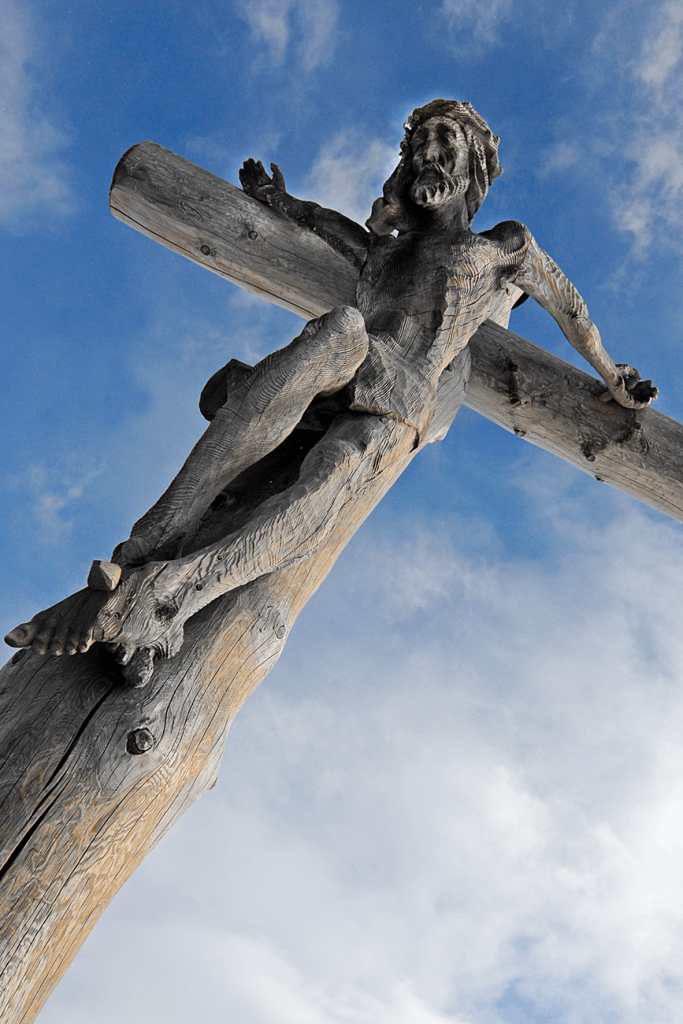
Love is a choice– freely given and freely accepted (apologies to Elvis Presley and others who have sung about not being able to help falling in love…) When Jesus first called Peter (and in the above passage as well) He simply asked Peter to “Follow me.” He made no demands, offered no bribes, used no intimidation. There is no long list of requirements or expectations; no bargaining; no “quid pro quo.” That said, Love is not a light-hearted or whimsical thing. Peter’s choice to love Christ, and to follow him cost him his life. Christ’s choice to love us led Him to humble Himself to death, even death on the cross (Philippians 2:8). Jesus could have escaped this fate several times over– He CHOSE to die for each of us!
Love is more than just a feeling. “Follow me” demands an action and a commitment. There are many today who “love” the idea of Jesus; they love the parables, or the gospel story; they are in love with “love.” But the idea that “Love” is all you need (apologies to the Beatles) misses the mark. Feelings change; feelings are transitory and often dependent on circumstances. Love chooses to follow– even when the going gets rough; even when it is not convenient, even when it involves sacrifice.
Loving someone involves taking the risk of being hurt, denied, or betrayed. There is no Biblical passage describing the amount of hurt Jesus must have felt when Peter denied Him three times, or when Judas betrayed Him. The Biblical account tells us that Jesus already knew and predicted these two events, but how agonizing–every bit as painful as the nails in His hands and feet! Jesus loved those who spit at Him, abandoned Him, condemned Him, and persecuted Him. And we also see Peter in this passage being hurt at Jesus’ questioning him a third time; Peter was shocked and hurt when Jesus predicted his denial, and when Jesus said to him, “Get behind me, Satan.”(Matthew 16:23) Love is never free from risk– especially the imperfect love we have as humans.
Love leads to restoration and forgiveness. Peter’s denial of Christ could have haunted him for the rest of his life. Had Jesus said nothing; done nothing to address this hurt, it would not have changed the fact that Peter was forgiven. But in publicly restoring Peter, Jesus made it clear that it was “all good” between them– Peter wasn’t just conditionally forgiven, he was completely restored!
Love is stronger than death! It is stronger than sin, or betrayal, denial, or hurt. Love is eternal and limitless, everlasting, and enduring. God IS Love and to know God is to know love. To speak to God and to hear His voice and read His Word is to converse with Love. Whether in the presence of saints on a mountaintop, in the midst of a raging storm, or on a quiet beach– Love is closer than our next breath, and more powerful than our deepest fear. Love never fails (1 Corinthians 13: 8)
How much is that doggie in the window? The one with the “waggly” tail… How much is that doggie in the window? I do hope that doggie’s for sale!
Two songs about puppies–how could that possibly relate to a life of pursuing prayer? Well, I’m going out on a limb, but let me try to connect the dots.
“If anyone comes to me and does not hate his own father and mother and wife and children and brothers and sisters, yes, and even his own life, he cannot be my disciple. Whoever does not bear his own cross and come after me cannot be my disciple. For which of you, desiring to build a tower, does not first sit down and count the cost, whether he has enough to complete it? Otherwise, when he has laid a foundation and is not able to finish, all who see it begin to mock him, saying, ‘This man began to build and was not able to finish.’ Or what king, going out to encounter another king in war, will not sit down first and deliberate whether he is able with ten thousand to meet him who comes against him with twenty thousand? And if not, while the other is yet a great way off, he sends a delegation and asks for terms of peace. So therefore, any one of you who does not renounce all that he has cannot be my disciple”
Luke 14:26-33
33 But seek first his kingdom and his righteousness, and all these things will be given to you as well. 34 Therefore do not worry about tomorrow, for tomorrow will worry about itself. Each day has enough trouble of its own.
Matthew 6:33-34 (NIV)
22 But be doers of the word, and not hearers only, deceiving yourselves. 23 For if anyone is a hearer of the word and not a doer, he is like a man observing his natural face in a mirror; 24 for he observes himself, goes away, and immediately forgets what kind of man he was. 25 But he who looks into the perfect law of liberty and continues in it, and is not a forgetful hearer but a doer of the work, this one will be blessed in what he does.
James 1:22-25 (NKJV)
Children love puppies. Most children have expressed desires similar to the ones in both of the songs above. They wish and dream and beg for a pet to love; a furry “best buddy” to play with and befriend. There is a longing deep in our hearts for someone to understand; someone who is always ready to greet us with unconditional love and companionship. And sometimes, we have a tendency to take this desire–this wish– and see in our relationship with Christ its fulfillment. Christ is the our “forever” friend; someone we can talk to; someone who will share our burdens, and walk along with us “most everywhere.” This is not “wrong.” But Jesus warned His listeners that becoming a disciple would involve more than just dreams, wishes, and good feelings.
Following Christ comes with a cost– we cannot just wish for God’s presence when it is convenient and jolly, and escape or turn our backs when our Christian Walk involves sacrifice or hardship. Jesus is not just our Friend; He is our Lord! We need to be ready to let go of anything that would hinder our relationship with Him; we need to be willing to risk and even lose things we love in the pursuit of the One we Love Best. After all, Jesus gave up everything– including His Life– to make our relationship and reconciliation possible.
Jesus challenged His followers to “count the cost” of their discipleship. It’s more than just wanting a “fuzzy feeling” of belonging and listening to the Wisdom of God. It’s committing to a life of growth, work, and submission to His Will and His Purposes. A child may want a puppy, but may not be mature or responsible enough to care for it. We may want a relationship with Christ, but we need to measure our willingness to do His Will and make changes and sacrifices. And when we count the cost, we also need to assess the value of what we are gaining! We may “lose” the life we dream about, filled with warm puppies and cloudless days. But we will gain eternal life in the Presence of the one who created the clouds and puppies, as well as the one who fashioned our very soul. Christ gave up His life so that we could experience a more abundant life. Not an easier or dreamier life, but a life with purpose and victory.
The Christian Walk is far more than just “dreams and wishes.” It is more than just asking about the initial price– because that is far beyond what we could ever pay! Redemption and Eternal Life are beyond any price. But they are also free! The cost of our Salvation has already been paid. The cost of our sanctification– our growth and maturity– is what we need to consider as we walk forward.
And the joy we will experience on this journey is greater than the joy of having a puppy–greater than the fulfillment of all our dreams and wishes–it is nothing less than the Glory of Eternity in the Presence of the One who truly loves us perfectly and unconditionally! That is worth the pursuit. That is worth EVERYTHING.
I had to fast overnight for some bloodwork I had done this morning. No food for 12 hours; no water for 8 hours before the blood draw. It shouldn’t seem like such a difficult thing, but at 9 or 10 p.m., I imagined I smelled food. My mouth watered– and then it felt dry. I felt woozy and weak. Surely I could have just a cracker or some orange juice, right? But no, I finished the fast and rejoiced to eat breakfast after the blood draw was complete. And simple scrambled eggs tasted sooo good! Oddly, I have often gone several hours without food and without all the imagined side effects I felt last night. The actions were the same, but the focus was on what I was doing, not what I was missing.
Fasting has become popular in recent years. I know several people who practice intermittent fasting for weight loss and other health benefits. Others fast for religious reasons (other than prayer); some people give up certain foods ritually, for Lent or other festivals. Some even fast in dangerous ways (anorexia, etc.) Fasting is usually about our relationship (sometimes an unhealthy relationship) with food.
Prayer, on the other hand, is all about our relationship with God. And when the Bible speaks of Prayer and Fasting, it is also about our relationship with God. The Bible gives many examples of fasting– even “extreme” fasting. Moses, King David, Jesus, and the Apostles all practiced it. Sometimes entire groups (churches), cities (Nineveh–see Jonah, chapter 3), and nations (Israel/Judah) fasted. The Bible also gives us many reasons to do fasting, including repentance of personal or national sin, deep personal struggles, and focusing on a single issue, such as the unsaved, the persecution of fellow Christians, seasons of famine, or ongoing injustices. But the Bible isn’t specific with guidelines and rules about fasting, because, like prayer, it is primarily a pursuit. It’s not about the extremes or the number of days, or the amount of food we “give up.” It is about the pure pursuit of God’s sufficiency. God is not impressed by whether we fast for one day or forty; He does not count the number of calories we might have consumed or the amount of weight we lost. He doesn’t measure the strength of our will power or our “success.” He isn’t impressed by posturing and virtue signaling. What He does ask is that we pray with complete focus and integrity, without the distractions that food, entertainment, and even sleep can sometimes become.
We can fast for hours or days– miss one meal or fifteen–and still “miss” the blessing of prayer, because we are focused on what we are doing (or not doing) instead of focusing on what God is doing. We can also “fast” in ways that have nothing to do with food– turn off the TV or phone, retreat from crowds and busyness, even “fast” from sleep! The point is not that WE are “better” for fasting, but that fasting is “better” for US!
Today, consider a small “fast”– replace a coffee break, snack, meal, hour of social media, or that extra 15 minutes of sleep with some time alone and wholly abandoned to God. Not only will we come away refreshed and not “missing” whatever we traded, but we will more fully enjoy those same activities or foods when they take their rightful priorities. Remember, prayer and fasting is not a contest or a ritual, it is a pursuit and an adventure! Enjoy it!
Some thoughts:
1) Fasting is as individualized as praying. There is no perfect “formula.” But there are several helpful suggestions. You can set a time limit (one day; 12 hours, etc. without food or a certain activity) or a food/activity limit (only one meal a day for seven days, only one television program per night for a week). You can plan days or weeks ahead to fast for a definite period, or you can decide spontaneously to start fasting until you feel led to stop. One caveat– Fasting is not a game. It IS a commitment, and shouldn’t be done without a real desire to get closer to God.
2) Having said that, fasting isn’t about your will power, or success/failure. Sometimes, circumstances will prevent you from completing a planned fast. Certain health issues or family situations may prevent you from fasting for a day or more. Sometimes you will fall short of the goal you set. Don’t let that stop you from trying again, or trying differently. God isn’t about perfection on your part– He IS about helping you grow stronger and more complete as you continue to walk with Him.
3) Fasting is personal. It isn’t about looking virtuous, posting about your struggles, or comparing yourself to others. (See Matthew 6:16-18) That doesn’t mean it can’t be done as a group. But group fasting should be about a single focus or topic, not about making everyone in the group conform to a preconceived expectation. There is great encouragement to be found in praying as a group, and some encouragement in fasting as a group, but remember, fasting is between you and God, not you and the group, or you and all your Facebook friends.
NOTE: At least once a month this year, I want to offer some practical suggestions on how we can better pursue a life of Prayer and living the Christian Life. I hope this post gives each reader something to consider.
The month of June is “Anniversary Month” in much of my family. My parents and one set of grandparents were all married on June 1st. My brother and sister both celebrate anniversaries next week, as does my one of my brothers-in-law. Marriage is in trouble in our society– many marriages are ending in divorce, while others are choosing to wait longer before making a commitment or choosing not to marry at all.
We tend to celebrate marriage as being all about feelings of love, but marriage is really about making and keeping promises. Two people stand before witnesses and take sacred oaths to be faithful, to love, honor, and cherish (and yipes! sometimes even to obey) one another for the rest of their lives. And most people who take such oaths do so with honest intent. Why, then, does it seem to be failing so often?
One of the reasons has to do with expectations. We expect the same giddy feelings of delight we have during courtship to carry us dreamily into the future. And we expect that the way we act during courtship will be the norm– the “happily ever after” fairy-tale life of story books and romance novels. We expect that we will always be the same as we are now: young, carefree, beautiful/handsome, and eager to please and be pleased by the boy/girl of our dreams… This is unrealistic. And even when we say we know better, we hang on to unrealistic expectations for our relationships, just as we do for other situations and circumstances. Even our “soulmates” can disappoint us, fail to understand us, suffer failures and setbacks, battle depression or addiction, lose their youth and good health, and even question their feelings for us.
Another related issue is that we usually take vows when we are young and our future looks bright. Circumstances can change; plans can fail. War, disease, financial ruin, the loss or miscarriage of a child or children, forced changes in living arrangements or work schedules– all can put enormous stress on a marriage.
But not all marriages crumble under the weight of unusual or unexpected circumstances. Some seem to erode slowly, even under “good” circumstances. Why?
One reason I’ve seen as I look around is a seeming inability to make and keep small promises. We make big, broad promises at a wedding– “for better or worse, richer or poorer, in sickness and in health..” “’til death us do part…” But we don’t promise to forgive him when he leaves the toilet seat up for the fifth time this week, or wait for her while she tries on every one of the six outfits she can’t decide on for the upcoming class reunion. We don’t promise to compromise on which family we will visit for Christmas each year, or what color we will have in the dining room. We think of marriage as a series of negotiations (which it IS), but ones in which one of us “wins” and the other “loses.” And if we consider that we are the “loser” in enough negotiations, we feel entitled to “break” our little promises.
Almost two years ago, my husband suffered an injury at work. He “punctured” his leg–the injury wasn’t huge, but it was deep, and on the back side of the leg, where he couldn’t see it. He knew it hurt, but thought it would heal up. Instead, it became infected. We had to go to the local wound clinic for several months, but between visits, I had to change the dressings, wash the wound, apply the various antibiotics and salves, redress the wound, etc.. David was still working full time, so the dressings would sometimes get sweaty and dirty on top of everything else. I promised to be faithful “in sickness and in health”– and that included washing out the pus-filled wound and caring for the pus-soaked dressings; it included wrapping his leg every other night for weeks. We went through hundreds of yards of gauze and anti-stick dressings, tubes of several different antibiotic salves, special compression socks, etc. Hundreds of dollars and hours later, his leg is slowly getting back to “normal.” During this same period, I was diagnosed with type 2 Diabetes. David has had to be patient with me as I learn to eat (and cook) differently. He has had to help me with glucose testing, dealing with low-sugar episodes, and put up with mood swings (even more than normal!).
And our health odyssey could be much worse– what about those who have to deal with cancer or dementia? But I think sometimes we minimize the commitment needed for the smaller, chronic conditions. The stress may be smaller, but it piles up, just the same. Our promises need to hold in the daily crises– big and small. And our promises need to hold when there is no crisis– and no adventure, either. Many marriages fall victim to “smooth sailing.” Things settle into a routine, and promises that were made to sustain the marriage in the face of “richer or poorer” fall apart in the settled comfort of middle class complacency. Vows take for “better or worse” fall apart in the “blah” and boredom of “good enough.”
Marriage is designed to be a picture of our relationship with Christ. As Christians, we are the “bride” of Christ! But we may need to review our vows and our commitment. Christ is eternally faithful; are we? In our flesh and our frail humanity, we cannot remain faithful on our own. But where are we? Have we lost our first love? Are we committed to Christ even in the midst of chronic illness or small setbacks? Are we flirting with the world because we have become “bored” with our Christian Walk? Has our joy been eroded by our failure to share our little stresses and secret sins with the Lover of our Soul?
Often, when we take a moment to remember our wedding day, we are reminded of the commitments we made, and the joy we felt on that special day. It can be bittersweet, if we have let circumstances or feelings pull us away from the one we love (or if they have moved away from their commitment). But it can be a wake-up call, as well, reminding us that promises made and promises kept are what leads to long-term joy and security. It can be helpful to take a few moments (or more) every once in awhile to remember when we came to Christ, and be reminded of the commitment we made– and the promises He has kept!
I missed this year’s Super Bowl. For anyone who is unfamiliar with this tradition, the Super Bowl is the name given (and trade-marked– that’s why this post’s title is the “Big Game”) to the national championship game for American Football each year. The tradition is as old as I am– 57 years–and each year, it gets nearly as much hype as the World Cup (Football in most of the rest of the world!)
Though I missed watching the game, I have some reflections to share about it:
While it is an important sporting event for anyone interested in American Football, it is not (for most of us) a life-changing, “Super” anything. I have not watched a Super Bowl game in many years, and my life is every bit as rich and full as it was in years when I did watch. The teams come and go, the players change, and the even the most exciting plays will be largely forgotten in the coming years (except for what gets re-played on “highlights”). It is a Big game. But it is not real life, and it is not THE Big event of anyone’s life– even the players will have other events (marriage, the birth of a child, the death of a parent, etc.) that will compete with the three hours spent one Sunday in February on a football field.
Football is divided into two halves (four quarters, to be exact). In between the two halves is a period known as “Half Time.” This is a curious ritual. The two teams get about a half hour to rest, reflect, strategize, and regroup before the second half of the game. Meanwhile, the fans get treated to an entertainment. In high school and college football, this is usually a chance for the marching band to show off. It has a military flavor, with drums, flags, formations, and cheerleaders all getting the crowd enthused for the “home team.” But there is no “Home” team for a Super Bowl. The teams play in a neutral location. So the “halftime” entertainment is like a condensed rock concert. The entertainment has nothing to do with the game at hand, and has no clear purpose.
The Super Bowl is televised, and corporations, public service groups, and other interests spend millions of dollars to buy advertising rites, and millions more dollars creating what they hope will be memorable ads to be shown during this window of high visibility. Tickets for the live event are expensive, but millions of people are watching on TV from their homes, or at sports bars or special “Super Bowl” parties.
Super Bowl Parties are a huge “thing.” Fans spend hundreds and even thousands of dollars on special food, decorations, venues, team-related clothing and other “gear.”
I am not a big football fan, so I don’t understand a lot of the hype. I don’t begrudge anyone the fun of watching and enjoying sporting events, but I wonder about some of the emphasis placed on this event. What would happen if:
People spent the same kind of energy, time, or money on strengthening their family, or building up their community, or spreading the gospel?..There are “Real life” events that are far more important and urgent than a football game– especially one in which we are mere spectators–that should cause us to clear our schedule, make preparations, and keep us riveted. How many people can recall cheering on a new bride and groom, or a high school graduate or a recovering addict or a new Christian with even a tenth of the excitement they give to a groups of players they’ve never met or spoken to, for a game that has no lasting impact on their own life, their family or community?
Only those people who were actual football fans attended the Super Bowl or Super Bowl Parties? How many people are spending money, time, and energy on something they don’t even really care about, because of the “shiny” extras on the periphery– the snacks, the Halftime Show, being the “first” to see the newest ads, being part of “the fun”, going along with the “in” crowd?”
Churches, schools, charities, etc., could garner similar commitment and excitement from their members and communities? What if we could generate the same kind of money and enthusiasm to fill food banks or send relief to those impacted by hurricanes or earthquakes? What if prayer meetings and tent revivals broke attendance records? What if graduation parties and anniversary parties were as elaborate as Super Bowl Parties?
Just some thoughts. As I said above, I missed the Super Bowl this year…I don’t know what I might have enjoyed, or what memories I might have had. I much prefer the memories I have of spending time with grandkids, or celebrating special birthdays with friends and family, or helping plan a graduation party for my niece and nephew, or sharing the joy of a baptism. To me, that is Super way to spend a day.
(Please note: This is an updated post from a few years ago. Please enjoy.)
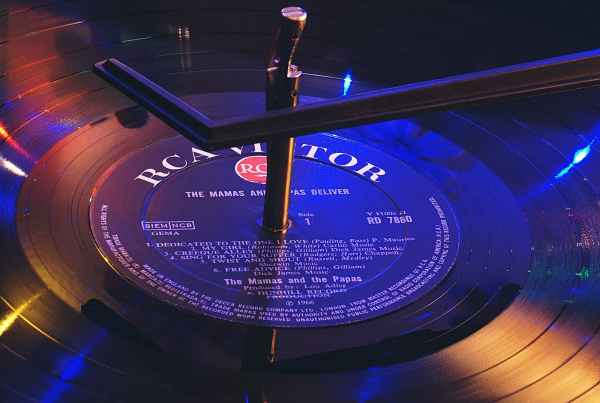
I know by writing this, I’m dating myself a bit, but when I was younger (MUCH younger!) we used to listen to a Hi-Fi stereo system. It was a piece of furniture, made of wood, complete with legs and fabric-covered speakers, and it had an enormous hinged cover that had to be locked into the “open” position or it would slam shut as your head and upper body was “inside” trying to adjust the settings! It had a turn-table for records, an AM/FM radio, and even storage for albums and other gear. It stood proudly, if awkwardly, in the living room or family room, off to the side of the other large piece of entertainment furniture, the giant television set, complete with rabbit-ear antenna. Hi-Fi stood for “High Fidelity”, reassuring us that the sounds issuing from this box were as close as we could get to “being there” for concerts, broadcasts, and other recordings. Our model was “old school”– there was no remote control, no way to record in any other medium (no tape deck or USB port), no “pause” or “mute” function– all the knobs and buttons and “arms” had to be operated by hand.
Today, we have “Wi-Fi”– a word that looks and sounds very much like the earlier “Hi-Fi.” Many people think that Wi-Fi probably stands for “Wireless Fidelity.” I looked it up– the “Wi-” does stand for wireless, meaning that information is transferred via radio waves, eliminating the need for a wire or cable connection. But the “Fi” part does NOT stand for fidelity (or anything else, exactly). It is simply a brand name for a particular wireless protocol See more about the definition of Wi-Fi here. Still, wireless communications, including cell phone service and internet, has radically changed our world, making it possible to connect with virtually anyone, anywhere, any time. It is a marvelous innovation with potential for great good. In our world and culture of global communications, we rely on Wi-Fi or wireless connections every day. We use them for information, entertainment, business, and social networking. I rely on it for this blog.
High Fidelity Prayer (as I see it) is consistent, daily prayer. Faithfully coming before God and seeking His face. Some may use a rote prayer for grace, or bedtime prayers, matins, or other standardized prayers. Others may set aside a daily time to pray–15 minutes in the morning, or an hour after breakfast, or even 10 minutes before bedtime. Some people set an alarm to pray at a certain time each day. Many even make a habit to pray with a group once or twice a week. To some, this type of prayer may seem passe, outmoded, old fashioned–after all, if God already knows our every thought, why does it matter if we pray every day or meet with the same group? It matters because fidelity matters– faithfulness, even in the “small” things, matters to God.
High Fidelity Prayer may seem awkwardly placed in the middle of our “living room”–forcing us to take time; to make and keep a commitment; to face questions or ridicule–it may seem clunky and wooden at first, even scratchy and hard to tune. And it depends on being “plugged in” to our power source! Hi-Fi prayer is meditative, deliberate, and worship-focused. We should be careful, however, of making Hi-Fi prayer a relic. Many Hi-Fi stereos from “my day” are now collecting dust, or being used to hold plants or books! Hi-Fi prayer must be practiced– even in an age of Wi-Fi lifestyles– if it is to do us any good.
Wi-Fi Prayer is not the opposite of Hi-Fi Prayer. It is not “wrong”, or illegitimate. In fact, it is great to know that we can talk to God anywhere, any time, for any reason. Wi-Fi Prayer (again, as I see it) is spontaneous prayer that is poured out to God “in the moment”. It can happen as you are driving or walking down the street (just don’t close your eyes!) It can happen alone or with a group. It can happen in response to something you overhear on a bus or a train, or read in an e-mail, or hear on the news. It is not a substitute for Hi-Fi Prayer, but it is certainly a healthy addition to it.
But Wi-Fi Prayer, just like Wi-Fi communication, can be taken for granted. Wi-Fi prayers can become “small” and “hand-held”– things we bring before God because it seems like the thing to do. We tend to put little thought, and even less grammar, into our wireless messages; we sometimes put little thought, and even less doctrine, into our Wi-Fi prayers, relying on common phrases that sound religious, but lose meaning. “Jesus just be with _____________ during this time”, “put a hedge of protection around ________________”, “I’m just claiming your promises, Lord.” There is nothing “wrong” with any of these statements, but what do we really mean? Isn’t Jesus always with us? Why is protection always a “hedge”? Which promises are you claiming? Again, there is nothing wrong with any of these phrases, and we know that the Holy Spirit can understand even our deepest utterances and wordless groaning. But just like auto-correct can mess up the simplest message, so our auto-pilot praying can mimic real communication with our Lord and Creator. There are entire comedy routines built around this kind of praying– but it creates an uncomfortably convicting kind of laughter. We should not be shamed out of Wi-Fi prayer, but we should also be careful not to let our prayer lives become a joke. Thankfully, God listens to our hearts and not just our words!
Hi-Fi or Wi-Fi, prayer is a sure connection to a faithful God.
On a final note, whether we have to turn down the knob or hit mute, there is another important “sound” principle of prayer– LISTEN! There have been some voices mocking this element of prayer, claiming that those who claim to “hear” from God are hallucinating or just plain crazy. God rarely ever speaks aloud and directly to an individual–even Jesus, while He claimed that He only did what His Father “told” Him to do– never claimed to hear the audible voice of God telling Him what to do or where to go next. There are only a few recorded instances of anyone else “hearing” the voice of God directly throughout history. But there are countless instances of people discerning the “voice” of God, and the leading of the Holy Spirit throughout the ages. How? Often through changes in circumstances, other trusted voices, new insights into scripture, or the “still small voice” of their own conscience giving confirmation. One caveat about “listening” for the voice of God– it will NEVER lead you to contradict God’s own word or act in contradiction to His character.
We have a Hi-Fi, Wi-Fi kind of God–let’s keep in tune, log in, and listen!
Tomorrow is Flag Day in the United States– a day in which we honor our nation’s flag and all for which it stands. It is an odd holiday in a sense; most countries have a national day of celebration, but not a whole day just to celebrate their flag. We already have an day to celebrate our Independence, and days to honor the sacrifices of soldiers or the dates of famous military victories in our history. Why should we spend a day honoring our flag. Isn’t that arrogant? Isn’t it taking nationalism a bit too far?
Flags and banners are important to us. They are a visual representation of an idea or a series of ideas–“America,” perhaps, but also, “Freedom,” “Loyalty,” “Sacrifice,” “Honor,” “Bravery,” etc. We have national flags, state flags, organizational flags, family crests, even sports team flags and mascots. Flags can be used to rally troupes and inspire citizens, signify commitment to a cause or nationality, show pride or loyalty, and represent ideals held by those in a group. Colors, shapes, stripes, animals or plants, stars, shields, letters or single words– all represent something important or noble to those who see them on a flag or banner. And there is no real point to having a flag if you are never going to display it or let it fly high for all to see.
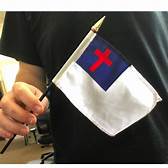
In the Song of Solomon (Song of Songs) the bride tells that her lover has brought her to a house of feasting, and that “his banner over me is love.” (Song of Solomon 2:4) The Song is an allegory that can be seen as Christ and His Church. Christ also has a banner–and it is Love–not the romantic love of the Song, but everlasting and limitless love! His Love rallies us, unites us, inspires us, and leads us. When we look for a symbol of who Christ is (and what the Church should be) we use a flag of white with a cross symbol in red on a blue (or sometimes purple) background for the corner. The white represents Christ’s purity, and the pure white robes that will be given to His saints. The blue/purple represents Christ’s majesty and authority. The red of the cross is a reminder of the blood He shed on Calvary’s cross.
Banners and flags are important. But we don’t need a flag or banner to represent Christ’s love– WE are to be His banner for the world. The world should be able to look at us and see a reflection of the limitless and unconditional Love of Christ in the way we speak and interact with others, and the way we live our lives.
Today (and tomorrow) when we happen to see a flag, let us remember that we are Christ’s ambassadors– we do more than just absorb God’s love– we are to reflect it, and be living symbols of God’s great love for the World. We should be visible testimonies that God’s love is all-important, and available to all! May that be more than just a prayer– may it be our earnest pursuit every day.
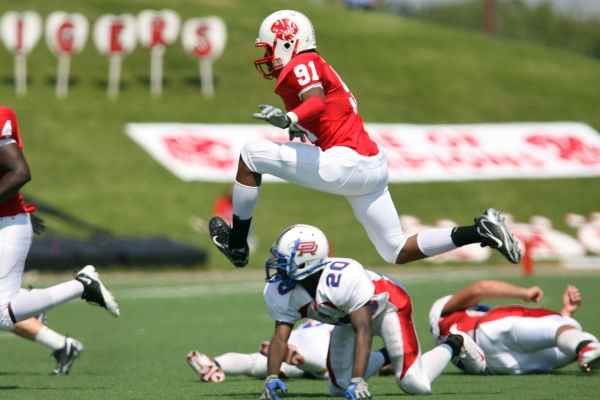
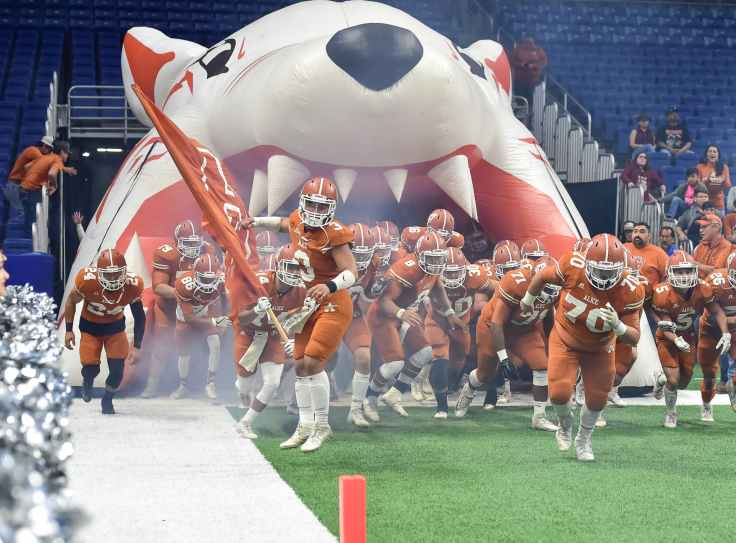
Last Friday, I attended a high school football game in my home town. It was homecoming, complete with floats and balloons, face paint, and screaming fans (myself included).
My hometown team is having a fantastic season so far– their record is 6 and 0, and they are winning by wide margins each week. I’m a little biased, not only since this is my home town, but because I have a nephew and a cousin on the team! They have already qualified for a spot in the playoffs for their division, and they have dreams of becoming state champions.
I hope they make it. I pray that they will play their best; that they will stay safe and healthy, too. I want them to win, and I think they have a good chance. But the season’s not over yet. They still have to play a couple of tough teams in the regular season, and they will face stiff competition in the playoffs.
As good as they have been so far, the teammates and coaches will still drill, train, and learn how to adjust the way they play based on whatever the next game throw at them. Next week’s team may be better at passing, or rushing. Their players may be bigger, or more agile, or more experienced than others. The weather conditions may play a bigger role next week.
All that to say that we all go through seasons– sometimes even “winning” seasons– and each one requires that we prepare, work, train, and persevere until the season is over. Some of us are facing a season of trials and losses–we’re waiting and hoping for the season to end. And it will. But the season’s not over yet. Stay in the game– keep praying, keep training, and keep believing that there will be a new season of hope. Some of us are in a season of victory! That’s great, but the season’s not over yet. Stay focused– keep training and preparing, and learning, knowing that there will come a season of trial. Some of us are watching others in their success–but the season’s not over yet. Stop comparing– reach out and connect. Show respect; show compassion.
This is true in all areas of life– there are seasons in our education, seasons in parenting and relationships, seasons in our careers and service, seasons in politics, economics, and even in our faith walk. And in every season, God is there. Like a proud parent or an ardent fan, He is cheering you on; like a great coach, He gives guidance and instruction; like a cherished teammate, He has your back. In all of this, God roots for all His children– not that some will “win” and others will “lose”, but that all will learn to play their very best and become “victors”.
No matter what kind of season we are in, or where we are in our season, we should remember a few things:
Life is both an individual and a team activity. None of us can “win” on our own, nor can we expect the team to “carry” us to victory without any effort on our part.
We can’t see the end from the beginning (or even the middle). But God can. And we can trust His guidance and His timing, even if we don’t see the whole picture.
God goes not see “winning” and “losing” in the same way the world judges it. What looks like “winning” to us may be superficial and false. What feels like losing may be building a Godly character that will overshadow the temporary struggles of this season.
Seasons come and go, but not everyone experiences them the same way or at the same time. In other words, don’t compare your winning swim season to someone else’s losing soccer season, or your dry summer to someone else’s monsoon season. Instead, focus on your own season and your own growth. Don’t close yourself off to others– you may have an opportunity to give or accept help, advice, training, and encouragement along the way–but don’t let others become more powerful (or less worthy of respect) than they really are.
At the end of the “season”, if we know Jesus Christ, we will share in the ultimate victory. The celebration that occurs over each person who comes to Christ makes any celebration here on earth seem dull and timid–no amount of parade floats, lights, fireworks, screaming fans, balloons, or other excitement can compare to the joy of welcoming a lost soul into the Kingdom of Heaven.































 Pursuing Prayer