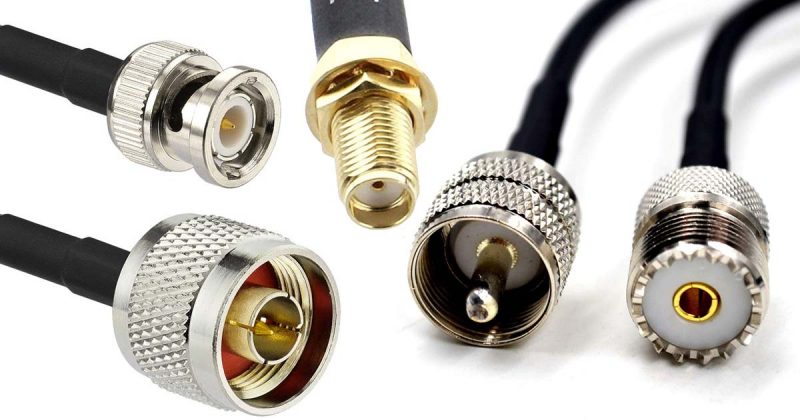
My husband and I own a shop. It is a dual shop: one part is a resale/collectibles/vintage and antiques shop, while the other part sells amateur radio equipment. We sell new and used radios, antennas, coaxial cable, power supplies, amplifiers, and other, smaller accessories, including connectors.
Connectors are small (usually only about an inch or two in length). But there are dozens of different types, connecting various sizes of cable and wire to various types of equipment. We have BNC connectors, SMA connectors, PL259 connectors, “male” to “female” connectors, and many more, with different sizes and styles in each type! I find it very confusing. It seems as though it would be much simpler if there was just one universal type of connector, that would work for all the radios and accessories.
I have a similar sense of confusion with other electronic connections– jacks and USB ports and charging ports–without the correct connection, many of our electronics just don’t work!
Human beings often have trouble with connections, as well. We speak different languages (even different dialects of the same language sometimes), have different interests and personalities, different life experiences– we just can’t seem to understand one another or connect to one another. We end up being confused, offended, hurt, angry, and isolated. Worse yet, our connections can break down– interests change, resentments build up, life experiences pull us in new directions, and sin corrupts relationships.
I’m so glad that God is the Universal Connector! No matter what I’m going through; no matter what I am thinking or feeling; no matter how I express myself, God understands me– even better than I understand myself! Others– even those closest to me– may misunderstand my words, my motives, or my emotions, but God knows exactly what I mean. And that connection is eternal. If I feel “disconnected” from God, there may be something wrong with my understanding, or I may choose not to listen to His wisdom. I may be “plugged into” something that distorts or distracts the message. But God never “tunes out” or loses the ability to hear my prayers or understand my thoughts.
Amazingly, God is connected in the same way to everyone! There is no need for Him to have hundreds of different connectors in order to get the message. He never needs a replacement part to enhance or clarify His understanding– no matter the language of the speaker, her/his life circumstances, or emotions. God understands the broken-hearted, the hurting, the overjoyed, the overwhelmed, and the confused among us. He lovingly listens to billionaires and bums alike. Drug addicts, rape victims, murderers, self-righteous snobs, “grammar police,” Pharisees, nose-pickers, thumb-suckers, braggarts, liars, thieves, model citizens, and PTSD patients– God “connects” with each one who seeks Him. God meets us where and how we are, because He knows and loves us without limits.
It can be frustrating to try to connect with some of our neighbors, co-workers, enemies, and even some of our family members. That’s one great reason to pray about our relationships– God can make connections even when and where we cannot. God can also build, strengthen, and redeem relationships that lack connection or have broken connections. Even those relationships that seem solid need help from the Universal Connector. Instead of trying to “make things fit” with someone else, or working harder to force an understanding, maybe today is a good day to stop saying more, and start praying more!
Have you ever had someone give you “the silent treatment?” Or have you ever been angry or disgusted and refused to talk to someone? It can be very frustrating. You may ask a simple question– even look the other person in the eye–only to face a wall of silence. Silence of this type can be oppressive. It is less an absence of sound than a presence of something heavy and dark.
God spoke through His prophets, messengers (angels), and sometimes, in visions throughout the days of the Old Testament. But then, He was silent. For four hundred years! There were no new messages, no prophetic visions– just a gloomy silence. There was still noise in the world– chaos, confusion, war, debates, chattering, gossip– but no word from God. He had spoken for thousands of years, and His laws and the words of the prophets still stood, promising a coming Messiah, a rescue and a redemption for the nation of Israel. But then, nothing.
Imagine how much more glorious it must have been when the angel hosts announced the Messiah’s birth to the shepherds! After such a long silence, they must have nearly exploded with the joyous news! The shepherds, already frightened by the sudden appearance, must have been held in thrall to hear voices from the heavenly realms– something that hadn’t been heard or even heard of for over a dozen generations!
And that’s how it often is–after a period of silence, the sound comes spilling out in a mad rush. Feelings, thoughts, announcements, all waiting to rush out in an explosion of sound and excitement. The silence is over! The heaviness is lifted. The dam has burst, and the words pour out in a great flood.
When Jesus– the Word of God– arrived, He spoke to many. He told parables and spoke words of healing and kindness and even warning. But at His trial, He refused to answer many of the questions that were posed. He dared to give “the silent treatment” to Pontius Pilate and the Pharisees. People who had refused to listen to Him during his ministry suddenly wanted answers. But He had already spoken and told them everything they needed to know.
Not so with His disciples. He spoke to them plainly and promised them a “counselor.” The Holy Spirit would speak, and would teach them how to speak. There would be no more “silent treatment” for those who knew the Spirit. No need for angelic messengers or prophetic visions (though God could still choose to use them as well)–God’s Spirit would dwell in the hearts and minds of His people.
Have you ever given God the “silent treatment?” How long have you held in resentment or doubt over something God did or didn’t do; a prayer He answered in a way that left you feeling hurt or confused? Is there a wall of silence on your part? It may not even be full silence. Is there some issue or topic you refuse to bring to prayer? Some secret desire you won’t discuss with Him? How does it weigh down the rest of your relationship?
I have found myself holding things back, keeping silent about things in my life. It stunts my growth and hinders my prayers. But when I finally break my silence, pouring out the full measure of my fears, confusion, and deepest desires, it is like a weight sliding away, and light breaking through the clouds. The joy and relief are overwhelming. (See Psalm 32 https://www.biblegateway.com/passage/?search=Psalm+32&version=ESV) What the psalmist says about sin can apply to doubt, anger, or confusion, as well. Unconfessed and unspoken, it will weigh upon us.
Don’t give God the “silent treatment.” He already knows all that you would keep back from Him. Silence doesn’t “treat” anything– real healing comes from open communication with the Great Physician. Don’t wait four hundred years– or even four hundred seconds! Let the words (and maybe the tears) flow…And don’t be surprised if your silence is replaced with singing!
Today would have been my paternal grandmother’s 118th birthday. I have many memories of my grandmother, and I wish more of them were pleasant.
I remember dreading time spent at Grandma’s house. She wasn’t a horrible woman, but she was not peaceful or kind or warm. Her house was small and dark, with cobwebs and dust bunnies in the corners and under furniture. There were very few toys, and most of them broken. Grandma always wanted my sister and I to be still and silent, and I always had the feeling that she dreaded our visits as much as we did. I had a cousin who loved it when we came over, because she was just a bit older and an only child. If the weather was nice, Grandma would send us all outside, and my cousin would dare us to climb trees, or jump over a pit or some other physical (usually dirty and dangerous, too) activity. When we came in, Grandma would frown and comment on how dirty and sweaty and noisy and un-ladylike we all were.
Growing up, I didn’t think of Grandma as someone who had ever been young, and noisy, or happy and excitable, or awkward and easily hurt. She seemed to have been perpetually old and cranky and bitter. In hindsight, I can see how circumstances– being the middle child of seven living on a farm; starting her married life living in with a bossy sister-in-law and verbally abusive father-in-law; losing her husband when he was only 50–had been allowed to shape her character in negative ways.
There are some pleasant memories, and I cherish them. Grandma was a good cook. She made wonderful chicken dinners, and a strange candy out of mashed potatoes and peanut butter. She always had cold tea on a hot day. I knew that she loved my dad, and that she could be proud of us, in her own way. I was sorry when she died. Sorry that I hadn’t made more of an effort to know her better. Sorry that she had chosen bitterness, and that I had chosen to stay distant from her.
I write all this, difficult as it is, to say that Grandma–both her good and bad qualities–lives on in my memory as someone I would not choose to be. I don’t want to grow old like her. I don’t want my family members to dread spending time with me while I live, and dig deep to remember something good about me when I’m gone, or justify my bitterness and negativity.
My grandmother claimed to be a woman of faith. And it is not my place to be her judge. But I saw very little evidence of faith in her daily life. I cannot remember ever hearing her pray. She did not attend church. She had a Bible, but I never saw her reading it. Her better qualities, and her walk with Christ were overshadowed by rancor, bitterness, anger, hurt, and pettiness. I do not want that to be my legacy. I want people to know, not just from my words, but in my actions and choices, that God’s love lives in me, brighter and stronger than memories of Grandma.
Shortly before her death, I ended up spending an afternoon with Grandma– just the two of us. She had moved into a small apartment in town, and somehow, it transpired that I had to be in town on Saturday morning for a school event, and no one could pick me up until that evening. We were forced to keep company. It began awkwardly, but as we talked, Grandma opened up about her childhood, her love of music, and more; she asked about my time at school and my love of history. It is the single most pleasant memory I have of her, and I wish there had been more afternoons like it; more afternoons to bond; more afternoons to cherish, rather than dread.
After her death, I learned a couple of things about my grandmother– things I wish I had known earlier. I found an old copy of her high school yearbook, which contained a story she had written. Grandma’s story was full of wonderful details and imaginative characters. She was a writer– and I never knew! I also found out that Grandma not only loved music, she was a singer– an alto, just like me. At some point in her life, she stopped writing, and she stopped singing. I hope that, even if I never saw it or heard it, that she never stopped praying. And I hope that when I’m gone, those who remember me will never have to wonder if I sang, or wrote, or prayed.
This past weekend, my husband and I participated in “Field Day.” It is an annual Amateur Radio contest, in which operators have 24 hours to make as many unique “contacts” as possible within the U.S. and Canada, using low power and simulating “field” conditions (many operators and clubs literally set up with tents in fields and use only solar or battery power for their radio equipment).
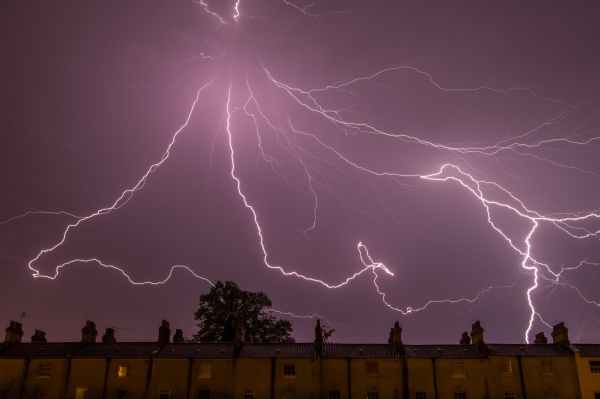
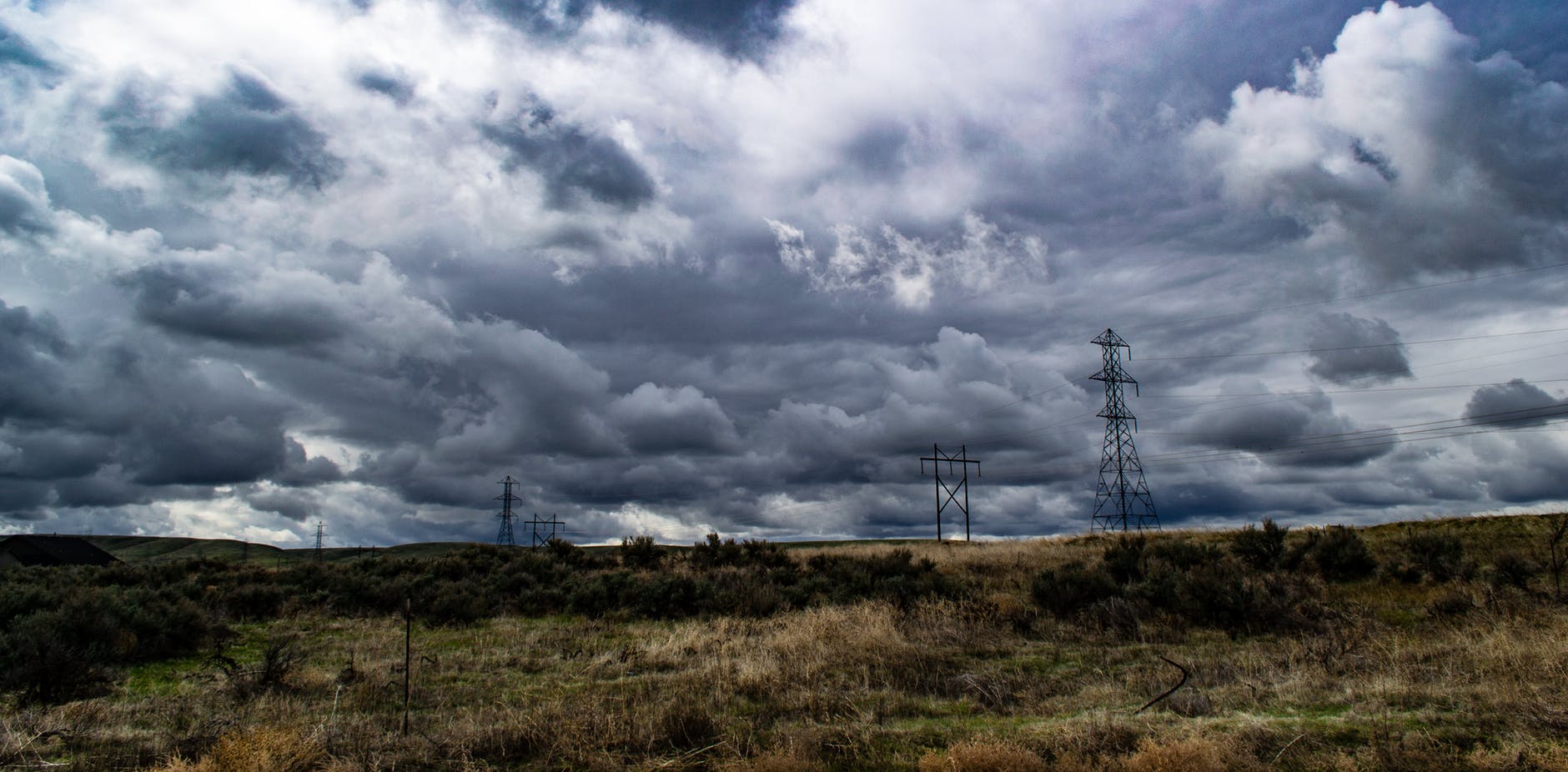
Field Day can be a lot of fun, but it can also be very frustrating. Depending on where and how you set up, the weather conditions, and other random factors, you may end up with very few contacts, and a lot of static! Radio static comes from three main sources– natural electromagnetic atmospheric noise, such as lightning, high winds, and solar pulses; radio frequency interference, when the radio equipment picks up pulses from nearby electrical devices, including TVs, other radios, or even power lines; and thermal noise coming from within the radio device itself.
We chose to set up for Field Day at our radio store, which is located in town, just beneath our apartment. We have several antennas set up on the roof, along with a solar panel and battery, which can power all of our radio equipment. So we met the basic requirements for Field Day, operating the radios on Solar and Solar Battery power, without extra amplifiers and power boosts. We set up two stations, and we were able to make contacts through voice transmission or by Morse Code. But we were not exposed to the weather and discomfort of a tent in the field– we had a refrigerator stocked with food, we had air conditioning and comfy chairs, and we were able to sneak upstairs for a nap in our own bed, if we felt tired.
Atmospheric conditions were not so good this year for Field Day– not in Michigan, at any rate. We had a series of extreme storm cells coming through, with torrential rains, thunder and lighting, and a tornado watch, which spanned the first six hours of the contest. We were lucky not to have a tornado touch down, but other areas were not as lucky…
Staying in town also provided some complications– we are surrounded by power lines, neighbors with electronic equipment, street traffic, including cars with loud stereo systems and radios, and our own electronic and radio devices– cell phones, air conditioners, computers, etc.
Finally, we had an ongoing issue with our two radios. If we were using certain frequencies, the two radios interfered with each other. As I was listening to one radio, my husband would try tuning his radio. Suddenly, the noise of his radio could be heard over the sound of other transmissions.
All of this made for a somewhat frustrating contest, but it reminded me of some important aspects of prayer:
Prayer can be “choked out” by atmospheric conditions. If we are not “tuned in” to God’s presence, the noise of other worries, interests, concerns, and even “good” things can cause static. Life struggles, changes in our routine, or the “high winds” of adversity can seem louder than the faithfulness and compassion of the One who never changes and never leaves us. This is one reason we are to make prayer more than a habit or routine– it is to be a lifestyle and a blessed and constant pursuit– regardless of our circumstances or feelings at a given moment.
Prayer can also be derailed by “frequency interference.” If we don’t spend time in deep prayer and meditation with God, listening to His Word, or making ourselves accountable to Him, we will be susceptible to interference from other voices, other philosophies, and other “static” influences. Jesus’ prayer life included many times of retreat and separation from the crowds and stress of His ministry; not because He didn’t love others, but because He loved and honored God more.
Finally, prayer can get lost in the “internal” static of our wayward hearts. The heat of anger, bitterness, selfishness, pride, greed, and lust can keep us from meaningful communication and communion with our Father. Often, we struggle with prayer, because we are hanging on to the “static” of our own desires and fears. King David wrote: “Search me, O God, and know my heart; test me and know my anxious thoughts. Point out anything in me that offends you, and lead me along the path of everlasting life.” (Psalm 139:23-24, New Living Translation, via bible.com)
Field Day is over for another year. We were somewhat disappointed in our performance, but, in the end, it is just a contest– an opportunity to learn and grow in our hobby. While we enjoy being amateur radio operators, and we feel it is an important and worthwhile hobby, it pales in comparison to growing in our Faith and our pursuit of praying and obeying Jesus Christ!
In the middle of our contest this year, we had a singular opportunity– to leave the contest for a few hours and visit a local church where my niece and two of my nephews were getting baptized. It would mean fewer contacts for the contest, at a time when the atmospheric conditions were the best they had been for several hours. After a dismal evening, we could have chosen to focus on our own pursuits. We didn’t have to witness the baptism to rejoice in it. They would have been no “less” baptized, and they had other family and friends there to see it. And going there didn’t make us “better” or more righteous people. But we chose to shut down our contesting activities, pick up my Mom, and join in the happiness of watching three precious young people publicly declare their choice to follow Jesus. And they were among others who made that decision– others whose joy and radiance also filled the church that day.
Field Day is about listening through the static, reaching out, and making contact with others. Yesterday, I was reminded that there is a much more important “Field Day.”
Do you not say, ‘There are still four months, and then comes the harvest’? Behold, I tell you, raise your eyes and observe the fields, that they are white for harvest.
What static is preventing us from making “contact” with those who need to hear the Good News? What static is preventing us from hearing God’s voice? What static is keeping us from seeing the “fields” ready for harvest?
I know many Christians who cite Philippians 4:13 as their favorite verse: “I can do all things through Christ who gives me strength.” And while this is a powerful verse, and holds great promise, I think it has been misused and taken out of context too often in recent years.
The Apostle Paul wrote this– from a prison cell as he awaited trial and a likely sentence of death! And this thought is a summary statement. It follows a list of circumstances in which Paul had experienced needs, and questions, and setbacks, and lack of provision.
In this season of “sheltering in place,” I have a new appreciation for Paul’s letter. I am not in jail, but there are many restrictions (temporary, but seemingly endless) on where I can go and what activities I can pursue in light of the COVID-19 pandemic. I cannot “do all things” in any normal sense. My family could not gather for Mother’s Day this year. We cannot have friends over for a meal, or take our grandchildren to the movies, or meet together for a traditional church service on Sundays. I cannot open my little shop to customers. I can’t go and get a haircut or hang out at the bakery or coffee shop.
And there are others who are struggling, not just with restrictions, but with increased expectations. They cannot “do all things” to help a dying patient, or stop the spread of infection in their nursing home or hospital ward. They cannot answer frenzied questions about timelines and protocols. They cannot work effectively from home and still be available to their children as both parent and surrogate teacher. Or, they cannot meet the needs of their students without face-to-face interaction.
But Paul is not talking about the mere completion of a worldly task, or achieving a personal goal. Paul isn’t suggesting that he (or anyone else) can do anything and everything he might want to do or that others might wish him to do. He has just finished talking about times of lack, of wants and needs and facing uncertainties. Paul did not (even with Christ’s help) skip lightly around Asia Minor, making friends and influencing people.
So what DID he do? What did he mean by “all things?”
Paul speaks often throughout his letter of “running a race.” Paul learned that in all circumstances, with whatever resources, whatever restrictions, and whatever obstacles, he could “run” his race. Under persecution or in times of great success; in times of plenty, or in times of hunger; in prison or on the road (or seas); in Jewish synagogues or Greek amphitheaters; alone or in crowds– Paul could worship God. He could proclaim the Gospel. He could spread the love and grace of Christ Jesus. If he couldn’t travel, he could still speak. If he couldn’t speak, he could write. If he couldn’t write, he could pray. He could do “all things” that were necessary to accomplish his one goal– to run the race; to finish strong; to live a life of purpose and worship.
May we do the same today, through Christ, who gives us strength. I may not be able to gather with friends, but I have the blessing of being able to call, or e-mail, or IM, or send encouragement. I can still write this blog. I can still pray– in fact I have more time to do so! I can do “all things” that will fulfill my purpose and bring honor to God. And so can you. What a privilege–no matter where we are or what our circumstances!
I wanted to take a break from writing about Biblical characters and their prayers to revisit an important aspect of our prayer journey. Prayer can be formal, informal, structured, rote, spiritualized, meditative…it can be done silently, in tongues, standing, kneeling, or prostrated. It can be public or private. But it should continue throughout our days and years– it should be a natural and vital part of every day, permeating every event and activity.
That doesn’t mean, of course, that we stop everything we’re doing and spend our lives in constant bowed-head, closed-eye prayer or reciting psalms and hymns instead of working, driving, eating, sleeping, and interacting with other people. But it does mean having a “prayer attitude”– an awareness that God is everywhere with us and closer than our next breath, ready to communicate with us– a readiness to share our every thought, and listen for God’s gentle whispered response.
I was reminded of this in a strange way just today, when my cell phone started ringing while I was working at church. Cell phones are everywhere these days, and that can be a great thing, or a curse. For many of us, the cell phone is within arm’s length 24 hours a day. Anyone with our number can contact us at any time. Likewise, we can whip out the phone to call, text, take photos, or check email any time during the day or night.
Today, when my cell phone rang, I ignored the call. I was busy with something I considered far more important. In fact, I was disappointed in myself for leaving the ringer “on,” instead of putting the phone on “vibrate” or “mute” mode. But I had to make a choice– leave what I was doing to answer the phone, ignore the call altogether, let the caller leave a message for me to deal with later, or answer the phone and try to do two tasks at once. I don’t like being interrupted by my cell phone, but I carry it with me, because I don’t want to be without the ability to call for help or to get an important message.
We don’t think of carrying our cell phones as an impossible burden. Each day we make choices to use this tool (for better or worse) to keep in touch with family, friends, clients, business contacts, and much more. Sometimes, we resent the way it intrudes on our life and other times, we let it get in the way of our life! In fact, we could (and some of us remember when we had to) get along without cell phones (and internet, and other technologies), but most of us choose to carry our phones wherever we plan to go. Why then, do we not choose to “carry” an attitude of prayer the same way?
God wants to be closer than our cell phone– there with us as we go through our days– ready for us to call on him, or “vibrating” to get our attention when He has a word for us. We don’t always have to be staring at our phone to have it handy. Just having it with us can make us feel more secure and confident as we face an uncertain situation. Similarly, having an attitude of “prayerfulness” will make us more aware of His presence as we face uncertain circumstances.
But we have to make sure that we don’t “mute” the Holy Spirit’s guidance in our lives, or let our prayer life get “drained” by busyness or lack of connection to power sources, like the Bible and Christian fellowship. Nor should we take the power of prayer for granted, grabbing it and stuffing it in our pocket or purse out of habit, without understanding that it is an amazing treasure and a lifeline.
Prayer is so much better than any cell phone, of course. God is never too “busy” to answer our call. There is no need for “cell towers” to get good reception. There are no monthly fees, connection fees, telemarketing schemes, “robo” calls or “phishing” scams. Prayer can’t get a cracked case or get “out of range”, or become obsolete after several years! And God wants us to carry on with our other tasks as we carry Him with us! We can lift up another person even as we are speaking with them or getting a text message from them. We can raise a prayer of thanksgiving even as we get the test results we were hoping for (or ask for strength when the results are what we feared). We can ask for forgiveness even as we become aware of our sin. We can ask for extra grace even as we are dealing with that difficult customer, or patient, or student.. God is always on the other end, waiting to listen and be part of the ongoing conversation of our lives!
My husband and I are licensed amateur radio operators. This weekend, we participated in an exercise/contest known as “Field Day.” Every year for Field Day, tens of thousands of radio operators across North America spend twenty-four hours trying to make as many radio “contacts” as they can, in conditions that mimic being “in the field” or off-grid. Many groups, clubs, and even individuals will set up in camp sites, open fields, county fairgrounds, barns, sheds, and other locations. Some will use their radios on generators, batteries, solar power, or the lowest power settings available. Some will have campfires and cookouts; others will order in pizza, but all of them will be seeking to make radio contact with people from all over the continent.
To make an official “contact,” certain key elements have to be exchanged. Every licensed amateur operator has a “call sign”– a unique identification code. There is also a “report”, telling how many radio stations are being used by the group, and what kind of conditions and power supplies are being utilized. Finally, there is a section code, telling where the station is located. Most codes are similar to the two-letter state codes used for mailing letters, GA for Georgia, CT for Connecticut, BC for British Columbia. All three elements must be sent, received, and understood by both operators to qualify for a “contact”. In other words, if I am listening, and I hear an operator in Texas give his call sign, his report code and his section code, it doesn’t count unless I know he has heard my information, and he knows I have his. Only if both parties have exchanged and verified all information can the contact be “logged” and counted.
Communicating via radio is an amazing experience, even in this age of cell phones, and Skpye, and social media utilizing satellites. Knowing that your voice is being carried by the thin air and transmitted to someone across miles using simple machines that use less power than a desk fan or a microwave oven is mind-blowing. But on Field Day, it is even more miraculous to listen as thousands of voices are carried simultaneously. The radio hums and crackles with the static of ten thousand tongues all trying to get their message out–“Here I am!” “Can you hear me?” “Did you get my message?” “Where are you?” “Who are you?” Letters and numbers and codes all mingle and form a messy barrage of sound. Voices, beeps, pops, whistles, and more assault your ears, before you can tune into just one understandable voice. There is a thrill in hearing that lone voice calling out their message..they could be anyone from any number of places. You get ready to respond, and then you hear it—static of a hundred other stations trying to get through. All those radio waves carrying the hopes and messages of a hundred or a thousand others just like you, wanting to make contact; wanting to be heard and understood.
Sometimes, miraculously, you get through on your first try– you send your call sign, and the other operator repeats it back, telling you it’s ok to send the rest of your message and receive his/hers. The two of you exchange the three elements, sign off, and you can tune to another frequency and try to make another contact. Most of the time, though, you spend several minutes calling out your ID, hoping to be acknowledged, only to listen as others get to make their contact, waiting your turn. Even more frustrating, as you wait, sometimes the atmospheric conditions change and the voices all fade out into a low buzz of static– the contact opportunity is lost. Conditions may change in another minute– or an hour– or not at all. I may hear from someone in Alaska, or Vermont, but I won’t be able to count them as a contact this year.
Field Day is exciting; sometimes frustrating, sometimes exhilarating. There is a thrill to making a contact and finding out that you’re talking to someone from Alberta, Canada, or South Florida, or Rhode Island, or the San Joaquin Valley in California. It’s exciting to make a contact, and realize it’s someone you know from a neighboring county! We have a logbook program on our computer that “shades in” the various sections as you key in a contact, so our map becomes colorful as the contest period continues, and we tense up to see if we can fill in most of the sections– can we “get” Hawaii? Nova Scotia? Wyoming? South New Jersey? Will the weather and atmospheric conditions cooperate? Sometimes a series of thunderstorms or solar flares can break through or distort the radio waves and make it impossible to stay tuned in long enough to send and receive even a short message. Sometimes, you can make clear contacts with certain regions and not with others, even ones close by– one year, we got zero contacts with a neighboring state, while getting several other regions hundreds of miles away!
While Field Day is exciting, and it serves as a great way to test and practice with radio equipment in case of a nationwide or region-wide emergency, it is still just an event–a single 24-hour period of making contacts with complete strangers (in most cases) for a couple of minutes.
Prayer is a thousand times more amazing than Field Day for a number of reasons. Think about it:
God is ALWAYS listening–twenty-four hours, seven days a week, every moment, every year of our lives.
God is ALWAYS tuned in to our cries– there is no distortion, no static. He hears millions of cries simultaneously and with perfect clarity.
We don’t need a “call sign” or identity code. God knows each voice intimately..He doesn’t have to ask us to speak louder or more distinctly. He doesn’t hear an “accent” or lisp, or rasp in our voice. He doesn’t have to ask us to repeat our request three or four times because He didn’t understand us the first time.
We don’t need a section code– God knows where we are better than any GPS system every invented. We can’t hide from Him, and He isn’t surprised to find out where we are, or where we came from. He already knows where we are and where we’re going!
Our messages can be as personal and as lengthy as we want. God doesn’t need to “hurry up” to get to the next person’s request, and He wants to hear all our thoughts and needs.
Prayer is not an event or a contest– it’s not a practice run–it is an actual conversation with our Loving Father!
You don’t need a license, or a radio, an antenna, or a microphone to contact God!
We can pray for others anywhere, anytime, for any reason, and God already knows the details– where they are, what their needs are, and what is best in the long run. Just as He already knows us intimately, He knows the needs of everyone we’ve ever met– and everyone we haven’t met yet! Some groups will have made upwards of 500 contacts over the course of Field Day– God can make millions in the same moment, and not miss a single one!
God doesn’t want to make contact with us to fill a quota for a contest; He doesn’t want to hear from us because it’s thrilling to hear from someone new. He wants to have a relationship with us– filled with love and trust and hope and joy. He doesn’t just want a Field Day with us– He wants Eternity!





































 Pursuing Prayer