Ask, Seek, Knock

God knows our innermost thoughts, wishes, and needs.  So why do we pray?  We’re not telling God something he doesn’t already know.  He asks us to seek him, though he is omnipresent.  He tells us to knock, and the door will be opened, yet he also says he stands and the door and knocks.  Is this another Bible mystery?  An oxymoronic enigma?

I don’t think so– I think it is a case of God laying out some ground rules of relationships– his with us, us with him, and even us with each other.  God is spirit, but he ask us to build dwelling places where he can meet with us– temples, tabernacles, churches.  He wants to abide, to live in relationship and companionship.  Ultimately, he offers to dwell in each of us.  But he has created each of us as a unique being. And just like a unique building, we have walls and windows and doors.  When we reach our eternal dwelling place, this will still be so.  We will be changed, purified, sanctified, and glorified, but our souls will not be subsumed or merged into a single temple or a single “soul.”   Heaven is not like Nirvana.  God is eternally God and we are eternally his creation.  Living in communion is not the same as merging or evolving into something not ourselves.  We remain uniquely individual, and as such, we need to learn to take initiative to open our doors and windows– to interact, to serve, and to honor each other.

pexels-photo-813870.jpeg

Have you ever been blindsided by someone who expected you to read their mind?  You know they are hurt and angry, but you find out later (sometimes much later!) that they wanted you to comment on their new hairstyle, or they expected you to ask them out for coffee.  Maybe you know the pain of being on the other end– wishing someone would notice your weight loss or ask about your day.  God wants us to learn to reach out, to ask, seek, and knock, instead of isolating ourselves behind locked doors.  We are to be active, not passive, about noticing others, sharing with and including others, and serving others.  But we are to do it in love and humility– with grace and mercy and love, not with bullhorns, fists, or combat boots.

God is the Almighty one– yet he stands at the door and knocks.  He could barge through our stubbornness and rebellion, and drag us kicking and screaming to the altar.  He could tear down the walls of isolation and storm crush our pretentious justifications and excuses.  But he stands, waiting for us to open the door, and seek his face.  The one who spoke the universe into being waits for us to begin the conversation!

Taste and See…

Candy canes, Christmas cookies, hot cocoa, fruitcakes, and families feasting…this season is filled with food and memories of food shared with those we love.

But there is no feasting in the Biblical tales of the Nativity. No cookies or pies, no roast lamb or goose, no hot cocoa or fruitcake. So is it wrong to celebrate Christ’s birth with tasty treats?

I don’t think so. (And not just because I enjoy tasty treats!) We speak about seeing Jesus as the Light of the World, and hearing the Word of God, and feeling the warmth of God’s Love…God speaks to us through our senses, and taste is no different. There is nothing inherently sacred about Christmas cookies. And even foods like pretzels and candy canes, which can be symbolic of prayer or the shepherd’s crook, or other religious symbols, are still ordinary. Yet they can also be ways to experience the season of Advent (or Easter or other holidays) in a sensory, spiritual way.

The Bible is not silent about food and feasting. In fact, King David said:

” Oh, taste and see that the Lord is good!
    Blessed is the man who takes refuge in him!
Oh, fear the Lord, you his saints,
    for those who fear him have no lack! “

(Psalm 34:8-9 ESV, via http://www.biblegatewaycom)

And Jesus would invite each of us to “taste and see” His goodness as we remember His death and resurrection:

23 For I received from the Lord what I also delivered to you, that the Lord Jesus on the night when he was betrayed took bread, 24 and when he had given thanks, he broke it, and said, “This is my body, which is for you. Do this in remembrance of me.” 25 In the same way also he took the cup, after supper, saying, “This cup is the new covenant in my blood. Do this, as often as you drink it, in remembrance of me.”

1 Corinthians 11:23-25 (ESV) via http://www.biblegateway.com

As we prepare to celebrate the Nativity of our Savior, may we engage all of our senses to recognize His goodness, and may we share the memory of all the good things He has given us– physical and spiritual. May we delight in the tasty treats, but let us also remember that Jesus is also the “Bread of Life,” and the “Living Water.”

Also, in this time of bounty and excess, remember that we are to “taste” and see God’s goodness, and to share it! Christmas gluttony does nothing to remind us of God’s goodness, and may prevent other “hungry souls” from being able to enjoy. And that doesn’t just apply to food. May we be eager to share– food, laughter, hugs, good news, compassion, and the truth. The sweet and the bitter…may we taste and recognize our health, strength, and life in the Goodness of our Great God.

Thank you, Jesus, for being our nourishment. Thank you for precious memories shared around tables–food and fellowship, laughter and love. Thank you for being God With Us in every “sense.”

“Fruit-ful” Prayers

Our church has been presenting a series of sermons on being a BLESSing to our neighbors. BLESS is an acronym for Begin with Prayer; Listen with Care; Eat Together; Serve like Jesus; and Share Stories. We were challenged the first week to choose four close neighbors. We were to pray for them, and if we didn’t know them well, to reach out and make contact. This has been a true challenge for David and I, because we live in an apartment above our shop. Most of our neighbors are not residential, but commercial! Nevertheless, we decided on a couple of commercial “neighbors” and a couple of non-traditional “neighbors.” We started praying– praying for opportunities to get to know our neighbors a little better, and praying for their health, well-being, etc. We’re getting to know some of the workers at the two commercial locations, and getting to know our chosen “families” a little better. We’ve been more intentional about stopping to visit or chat, and making sure we listen and respond sincerely– this is not just a short-term “project” but an opportunity to build closer relationships. And we’ve been praying for opportunities to develop closer friendships.

So this week was the sermon I’ve been dreading– “Eat together.” You might wonder why this is so fearsome–doesn’t everyone like to eat? And I love meeting over a nice meal. I love to cook, as well. The problem? Our apartment is tiny and upstairs– NOT conducive to inviting people over for a warm, comfortable meal shared around a large table. We have two mismatched chairs around a small table in our tiny kitchen, and two more mismatched armchairs in the living room. No couches, no designated dining room, no space to “entertain” guests. I want to serve others. I want to grow friendships. But I’m not a hostess. Not in a cracker-box-sized apartment upstairs. I know this seems petty– I’ve known amazing hostesses who live in shacks and invite guests to sit on a dirt floor. I know. But I still struggle with the idea of entertaining others in my current circumstances.

I knew it was coming– we looked at all the examples in the Bible of good and even sacred things happening around the table and/or involving food– Passover Seders, Communion, the Wedding Feast of the Lamb (among others)… “But Lord,” I prayed, “I can’t invite the entire staff next door to my home for a meal. And some of the “residential” neighbors we are praying for are elderly and can’t manage the stairs to our apartment even if we had the room to host a meal. And it’s too expensive to invite some of the families or staff to a restaurant. How are we going to be able to bless others and “Eat” together?”

But God isn’t bound by conventional ideas– even when it comes to hospitality. At the end of the service, we were surprised by an announcement from our pastor– one of the families in our church owns a fruit farm. Last year, they had a bumper crop of apples, and they donated several bags of the apples to the church. There were enough apples for each family to take several bags to “BLESS” our neighbors! No meal to fix. No apologizing for the smallness and shabbiness of our living space. But a chance to share FOOD with my neighbors and bless them with wonderful apples! Thank you, God!

David and I wasted no time– we delivered most of the apples yesterday afternoon! And we had so many apples, we were able to bless more than just the four locations we had decided on earlier in the series. We were able to bless at least 13 different families/ businesses with at least one full bag of apples! We blessed families with small children, a retired couple; a single person on a fixed income; an extended family of four generations; we blessed people who go to another church; we blessed people who don’t attend church at all. We blessed the staffs at a couple of local businesses, and shared laughter (and concerns) with several friends, old and new.

Not everyone wanted the free apples. One family turned down our offer. Some people are suspicious of free gifts; some are too proud to accept food as a gift; some are simply not interested, or too busy. It is the same with the Good News. Some people do not want what we have to offer in Christ. Some are suspicious; some are too proud or even too ashamed to believe that God has Good News for them. Some are too caught up in their problems or their ambitions. We must not be discouraged, though. God has not given us such a precious gift without also giving us the opportunity share it with others. And we will see how God continues to work in mysterious ways. Some people were surprised and confused by the concept of “apples of blessing.” They wondered what we might ask for in return. We smiled and said there were no strings attached– we just wanted to share our blessing with them! Some people took more apples than we had planned to give them– that’s ok, too. Others wanted to bless us in return– we received over two dozen eggs in gratitude for a couple of bags of apples! Today, I’ll be delivering the last few bags to businesses that were closed yesterday (to share with their staff). I’m excited to share this gift–and I’m reminded of how good it is to share the free gift of the Gospel!

God didn’t change the circumstances of our apartment. I worried that I would be asked to host an elaborate meal, or that I would miss out on blessing others because of our circumstances. But in God’s economy, we can show hospitality, love, generosity, and compassion on the street. We can share food in a way that opens up opportunities to make memories, share stories, communicate prayer requests and concerns, serve others’ needs, and make new friends. There are dozens of ways we can open our hearts and our lives to our neighbors, serve them, and pray for them…

We kept one bag of apples– maybe someone in our neighborhood would like a pan of apple crisp! And now, David and I have a few extra eggs! Anyone interested?

Remember..

I love flipping through old photo albums. I’m reminded of special times and special people. Sometimes, the memories make me a little sad, as I see familiar faces of those who have passed away, or times of struggle or stress. But most of the time, memories fill my heart with gladness and comfort, strength and resolve.

I’ve been reading through the Psalms lately, and many of them speak of remembering. When God’s people faced struggles, they were told to remember the great stories of the past– the plagues of Egypt, the parting of the Red Sea, the conquest of the Promised Land, and many other times when God gave miraculous provision, restoration, and victory. These songs were not just a matter of recapturing the “glory days” of old– they were part of God’s command to remember and pass along God’s deeds and His laws to each new generation.

In the Psalms, we are also encouraged to remember our own past actions– both righteous and rebellious– and God’s faithfulness in spite of our failures. We are to remember God’s correction and discipline; God’s forgiveness, and His Mercy– not just in our own lives, but over many generations and throughout the years.

God instituted festivals, and rites, and Holy Days of remembrance– special times set aside for remembrance and meditation, because it is important to Him that we never lose our focus. We can get so wrapped up in the present (or worrying about the future) that we forget God’s timeless and eternal nature.

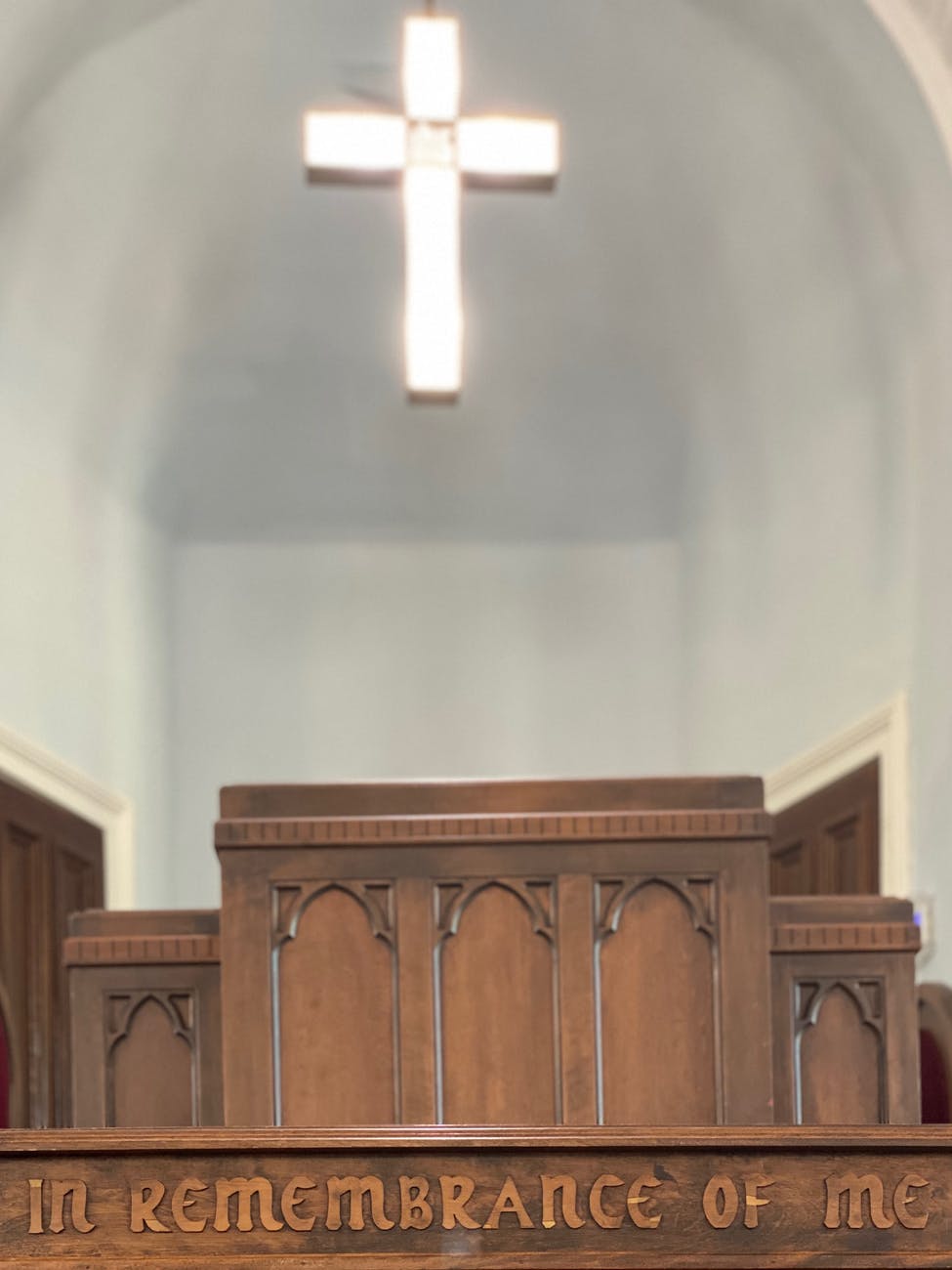
Even Jesus, before He went to Calvary, instituted a new rite of remembrance– Communion– in which He called His disciples to “do this in remembrance of me.”

Today, I want to pray a prayer of remembrance. I want to spend time in worship and gratitude for who God IS, but also for who He always HAS BEEN.
Thank you for your eternal faithfulness, and for your eternal plan of Salvation. Thank you for the ways you have provided in my life, in the lives of those who came before, and in the lives of generations of faithful saints. May I remember your Great Love and Power as I face uncertainties in the day ahead. May the remembrance of you lead me to trust you completely, follow you boldly, and share you with those I meet.

Where Are the Altars?

In the Biblical books of the prophets (Isaiah, Jeremiah, Ezekiel, etc.), there are many references to altars and sacrifices–both the ones built to honor Jehovah God, and those designed for idols.

Israel and Judah were guilty of building thousands of altars and shrines to false gods. Some of them were found even inside the Holy area of God’s own temple! As part of God’s judgment, He repeated that He would no longer accept the empty sacrifices of His people–He would no longer hear their prayers, unless they repented.

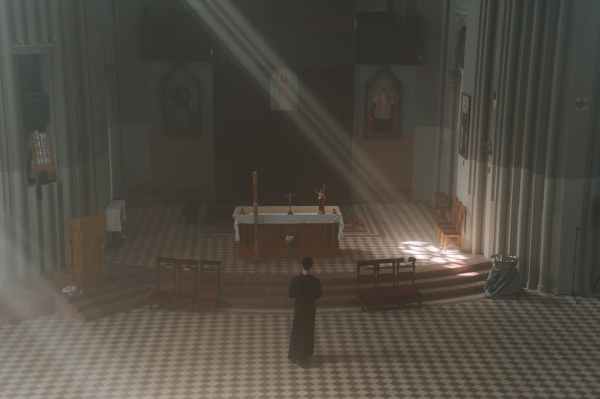
I read these words and wondered– Where are our altars today? When I was a child, many of the older churches had what we called an Altar. It was usually a raised platform, with a podium for the minister, and possibly a “host table” for communion. My childhood church also had a small table that held a large Bible. Sometimes, the platform would have a railing around the edge, with a couple of stairs on either side. And, while many churches “passed the plate” for offerings, some had a special plate on the railing of the altar, where people would march up and place their offerings for the week. There it would sit for the rest of the service–random dollar bills of random denominations in random states of being crumpled, folded, and worn, along with checks, and, sometimes even coins. All of them brought forward and placed on the altar.

In many churches, the altar was where congregants would come to receive communion. The most important church events happened “at the altar.” Weddings, baby dedications, Bible readings and sermons, even funerals– all happened at the altar.

And often, we would have an “altar call.” The pastor, or a guest evangelist would urge people from the congregation to meet at the altar– to repent, to receive forgiveness, to be renewed and refreshed as we offered ourselves to God. There we were– random denominations of people, in random stages of obedience or rebellion, all answering the call to follow Christ as Lord. Some stayed there for a few minutes, praying silently. Others might be there for an hour, crying out, trying to find the words to express pain, guilt, or gratitude and awe, that GOD would meet with US there! Sometimes, we would form small groups to pray and give encouragement; sometimes we would disperse, too moved to speak at all. The Altar was the focus of the service– the place where God met with us; where He received our worship and our offerings; where we were challenged and made ready for spiritual battle.

Today, many churches have stages, like any large theater or event center. There is no railing, but there are hundreds of spotlights and fog machines. There is no podium for the pastor–just a headset and maybe a small stand for notes. Sometimes, the pastor reads from a teleprompter. Often, he or she is joined by a full band or orchestra, and dozens of singers, actors, or other assistants. No one from the congregation approaches the stage– why would they get up from their comfortable reclining padded seat? No one even “needs” to bring a Bible– the sermon text is printed out on the giant screens hanging above the stage. Our worship is comfortable, and entertaining. Many of us don’t even go to a church building, anymore. We can livestream worship services, or watch from a satellite location. We don’t even have to change out of our pajamas! And we feel blessed, and filled with excitement to be part of something dynamic and spiritually uplifting.

But we have no altars. There is no place for someone to lay their offering before God; no place to meet with Him in repentance or revival. There is no place to remind us of sacrifice and atonement. Oh, to be sure, many churches have a large cross on display somewhere. Some even have the “host table” for communion– somewhere in the wings, just in case–but the concept of an “altar” has all but disappeared from churches in the West. It is an anachronism–something ancient and uncomfortably part of the distant mists of tradition.

I miss the altar. I believe God misses it, too.

This Do in Remembrance…

Today is Memorial Day in the United States–a day when we remember all those who have given their lives in service to their fellow countrymen and women. People decorate the gravestones of soldiers who were killed in action, they march in patriotic parades, and they hold memorial services, with military rites, prayers, and speeches.

Photo by Pixabay on Pexels.com

Not everyone celebrates in the same way. Some just use the day as an excuse to have a pre-summer cookout or swim-party. Some don’t commemorate the day at all. Some people use the day to honor veterans of the armed forces, or even those who risk their lives in emergency services– EMT’s, Firefighters, Police officers, and others. Others use the day to honor their ancestors, regardless of whether they served in the military.

My husband and I fall on this end of the spectrum. We like to pay tribute to those who came before us– to those who left everything behind to start a new life as “pioneers”; those who lived through wars and diseases and struggles; those who left a legacy to our grandparents and parents–a legacy we hope to pass on. But we don’t worship our ancestors; we don’t worship the soldiers who died. We honor them, we remember their sacrifice, but we recognize that they were human, just like us. They may have died in battle or as the result of battle, but they died, just as we will. Their sacrifices may have been heroic; their efforts may have preserved freedom for us, or brought freedom to those who were oppressed. And that is what we honor. That is what we remember.

Photo by Sharefaith on Pexels.com

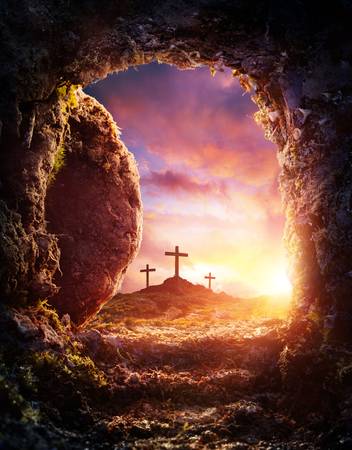
Jesus Christ was not a soldier. Yet He sacrificed His life for a purpose much greater than the honor of a nation, or the freedom of family and friends. His sacrifice opened a way for us to be reconciled with God– to be declared righteous and Holy, in spite of what we have done (or failed to do). Our best efforts may end in tragic death on a battlefield– or in a hospital bed fighting cancer or AIDS. But our best efforts end in death. His best efforts destroyed the power of Death, and offered hope to all the world.

Photo by Craig Adderley on Pexels.com

Memorial Day comes once a year in my country. Other nations have similar days. It is important to remember those who have come before– those who have made sacrifices, and paved the way for future generations to live free. But around the world, Christians have reason to celebrate every day– to remember the death AND resurrection of our Savior that gives us eternal freedom from the sting of Sin and Death.

Before His death, Jesus gave his disciples a rite– a ceremony– to remember His death, and what it would mean in light of His resurrection. We call it Communion or Eucharist– the “body” and “blood” of Christ–consumed and memorialized each time we take it. We don’t hold parades or play Taps or plant flowers. We don’t have pool parties and barbecues. But we reflect with solemnity and gratitude on the sacrifice that conquered the grave once and for all!

How Great Thou Art!

O Lord My God! When I in awesome wonder consider all the worlds Thy hands have made…Then sings my soul…” (emphasis added) When was the last time you spontaneously broke into the kind of wonder and praise that we find in this old familiar hymn? If it has been awhile, let today be the day that you joyously and loudly sing praise to our Awesome and Great God.

Photo by Ketut Subiyanto on Pexels.com

So often, I come to prayer focused on myself– my needs, my unworthiness, my circumstances. But prayer is the act of communicating with the One who is all-sufficient, all-worthy, all-powerful, and all-loving. As we pray, it will often happen that all the cares and concerns melt away in the wonder and insight that we are actually talking to GOD!

But there are times when we miss the great opportunity to fully open ourselves to the Glory and Majesty of Our Father. Yes, we communicate; Yes, He still hears us. But we fail to come away with the full blessing of having spoken WITH God. We speak TO Him; we even speak OF Him. But when we speak WITH God, we are in the presence of such majesty, that we are left beyond words! Our Soul Sings! Our Heart is overflowing! Our mind is overwhelmed with the concept!

Prayer is so much more than what we say; so much more than what we think. God is so much bigger, so much greater, so much MORE than anything we can describe, anything we can imagine! And THIS is who we approach when we pray.

Photo by Tookapic on Pexels.com

If you have the opportunity, spend some time in nature today. Look up at the sky– clouds, stars, and the endless canopy of space– and let the Majesty of God fill your senses as you make time for prayer. If you cannot get outdoors, find a picture or film or website to remind you of the grandeur of God’s wonderful creation. And then, sing out, shout out, pray and praise the Maker of the Universe, and the Lover you Your Soul! This same God of the beginning is the God who was, who IS and who is to come! The same miracles He has done in the past, He will do NOW and through all time.

There is NOTHING too big or too difficult for God. There is nothing too small or unimportant for Him to do, either. And what He does, He does with Joy and in Love! He rejoices over every one who comes to salvation. He rejoices over every one who comes to Him empty and tired and discouraged– and He rejoices to give them rest, and hope, and strength for the journey ahead. He offers Grace and Beauty from ashes. He offers Eternal Life and Everlasting Peace!

And if that doesn’t make your soul sing, I don’t know of anything else that can!

Photo by Andrea Piacquadio on Pexels.com

For more information about the hymn– its origins and meaning– check out this site: https://www.godtube.com/popular-hymns/how-great-thou-art/

An Empty Cup

Sometimes, I come to God full– full of joy, full of worry, full of praise, full of confession. But sometimes, I come to God feeling very empty. I am worn out, tired, depressed, inadequate, and lacking. My cup is very empty.

Photo by Madison Inouye on Pexels.com

The Bible is filled with images of cups and pouring out– have you ever noticed? “My cup runneth over” (Psalm 23:5) “Let this cup pass from me.” (Matthew 26:39) “Take this cup..” (Luke 22:19-20) “I am being poured out like a drink offering..” (Philippians 2:17) (and many others).

Photo by Linnea Herner on Pexels.com

My husband and I went out to lunch recently. The hostess took our drink orders while we looked at the menu. By the time we were ready to order our food, there were glasses of ice water, lemonade, and hot coffee already at our table. Our waitress came over often to check on our food and drink. Before I had finished my lemonade, there was another glass waiting! Before David had finished his coffee, there was more– fresh and piping hot! We came into the restaurant hungry and thirsty– we left refreshed and full. Imagine if our hostess had brought us cups with only a small amount of water or drink, and refused to give us more. We would be disappointed, even surprised. And often, the hostess would come around to a table to find that no one wanted or needed a refill. There was plenty of water to satisfy thirst, yet some people drank sparingly, or left their drink nearly untouched. We take for granted that there will be plenty to drink at the restaurant, yet we often come to God expecting only a little of His rich blessings.

Photo by sergio omassi on Pexels.com

When we come to God empty, He is always ready to fill our cup to overflowing. God’s blessings are abundant. He fills us to overflowing, so the blessings can be shared. Jesus said to the woman at the well, “Everyone who drinks this water will be thirsty again, but whoever drinks the water I give them will never thirst. Indeed, the water I give them will become in them a spring of water welling up to eternal life.” (John 4:13-14 NIV via biblegateway.com)

Photo by Tuu1ea5n Kiu1ec7t Jr. on Pexels.com

I feel guilty when I come to God feeling empty and needy. I don’t deserve a full cup of God’s blessing. But I must come willing to accept, not what I think I deserve, but what God is pleased to give. Even if I feel empty, I may be ignoring a cup filled with pride, shame, guilt, or self-dependence. God cannot fill a cup already full of such things. But God is pleased to fill to overflowing the cup that is ready to receive Him! And He is not just filling my cup to overflowing– He is filling my cup so that I have something to pour out to others!

Photo by Cameron Rainey on Pexels.com

Sometimes, my cup seems empty because I have been pouring myself out. I can do this in good ways or bad, for the right reasons or in self-abasing ways. But Jesus poured Himself out for others–figuratively and even literally, spilling His blood for our atonement. We are to share our lives and resources with others– to pour out of our abundance. Sometimes this leaves us feeling empty–temporarily. God does not mean for us to live in emptiness, but He also doesn’t mean for us to hoard His blessings. The more we pour out, the more there is to refill our cup!

Photo by NIKOLAY OSMACHKO on Pexels.com

But there is another blessing– the blessing of another empty cup. There is a cup of wrath that should be ours– a cup filled with bitterness, regret, punishment, and pain–a cup of eternal thirst for justice and salvation–one that Jesus willingly drank for us. The cup He extends is the cup of blessing and joy that was His from the foundation of the world; a cup we could never have tasted but for His sacrifice.

Before us are two cups– one that can be forever filled to overflowing, and one that can remain empty of the bitter dregs of sin.

Photo by Karolina Grabowska on Pexels.com

Thou Preparest a Table Before Me

Mighty God,
You could demand…
Anything.
You need nothing.
You are worthy of
Endless adoration.

Photo by Julian Jagtenberg on Pexels.com

Yet You prepare a table–
Lavish with blessings,
Personalized to the last detail–
For me.

Photo by Adhitya Rizky on Pexels.com

You, who could reserve all the
Wonders of nature for your own pleasure;
Cause the sun to rise, the birds to sing
For me.

Photo by Pixabay on Pexels.com

You lay the plates,
Polish the silver,
Serve out the banquet with
Flourishes, garnishes– All the best
For an unworthy beggar–for me.

Photo by sergio omassi on Pexels.com

You pour the wine,
Wash my feet,
Break the bread
(Even give your body and blood),

Photo by Pixabay on Pexels.com

All for me.

Merciful and gracious God,
Humble and victorious Savior,
Mysterious and mighty Spirit–
I am undone by Your invitation to
This eternal banquet.

Photo by Pixabay on Pexels.com

“Do This in Remembrance of ME”
Remember My Creation.
Remember My Life.
Remember My Humble service.
Remember My Death and Resurrection.
Remember My Victory.
Remember I am Coming Soon!

Hello, My Name Is…

Have you ever been to a conference for work, or a large meeting or convention, where you were required to wear a temporary name badge?  It might be a simple sticker with a space to write your name, or it might be a pre-printed card set inside a clear plastic pouch attached to a lanyard or a safety pin.  It may have a stripe or box in a bright color, and/or an introductory word or phrase, such as “Hello..” or “My name is…”
Perhaps you’ve had to wear a name tag for work on a daily basis, or you have to carry an ID tag pinned to your shirt, lapel, or around your neck or waist.

Photo by rawpixel.com on Pexels.com

Such tags serve a purpose; they are functional, if boring, and even if they are also annoying, they are temporary.  Some of them give a little more information, such as where you are from or what company, or plant, or building you represent.  Name tags make it easy to identify someone and put a name to a face.  But a name tag cannot reveal much beyond a person’s name.  Sometimes, a name tag doesn’t even meet that simple criterion.  I have a simple name, Lila, that is commonly misspelled and misspoken.  I have had people look right at my name tag and call me, “Lisa,” “Lily,” or “Leah.” Wearing my name on my shirt or hanging from my neck may (or may not) make me identifiable.  It does not make me knowable or known.

Photo by Edward Eyer on Pexels.com

When we come before the Throne of God, we need no name tag.  God not only knows our name, He knows us intimately– our thoughts, our attitude, our fears, our hopes, our weaknesses and strengths. He has numbered the hairs on our heads, and knows the words we will say before they reach our tongues.

Photo by Public Domain Pictures on Pexels.com

This knowledge might cause us apprehension– there can be no hiding from God–even if we can lie to ourselves about our actions, motivations, and feelings, we can’t lie to Him.  But this intimate knowledge should also ease our every fear– God knows all about us, and loves us unconditionally.

Prayer can be many things– joyful, contrite, needy– but it never needs to be small talk!

Blog at WordPress.com.

Up ↑