Everyone’s a Critic!

Social Media can be a wonderful thing– it connects us, and helps us share good news, prayer requests, events, photos, and more. It can help us make new friends, get re-acquainted with old friends, learn new skills, and be more informed.

Sadly, though, social media can also bring out the absolute worst in us. Social media is immediate– we see or hear something, react to it emotionally, and respond without taking time to think. But social media is not really social. It is social only in the “virtual” sense. And that creates problems. There is nothing like being anonymous behind a computer screen to turn us into the biggest bullies, critics, and self-indulgent know-it-alls. Worse, we find it easy to spread vicious gossip, misinformation, and negativity by pressing a single “share” button…we didn’t even say it!

Photo by rawpixel.com on Pexels.com

But we DID send it out. And others saw it, heard it, felt it– for better or worse. Even the “good” responses– followers, “likes”, smiling emojis, and such–can feel impersonal or even forced. But what about the comments that reveal contempt, anger, sarcasm, or hatred? Critical, biting, self-righteous, self-gratifying, smug comments and posts.

“Oh, but I would never do that…” Really? I have been guilty of passing along posts (or even creating posts) that drip with sarcasm, or gleefully correct people or groups I feel have said something “wrong”. I’ve even passed along Bible verses with smug captions.

“Well, everyone is a critic.”
“I’m only saying what is true.”
“Doesn’t the Bible tell us to warn others and speak out against sin?”

There are many “gifts” of the Holy Spirit–teaching, preaching, healing, even prophecy– but nowhere in the Bible does it say we are “gifted” to be critics, nags, or to speak out in contempt, anger, and malice. In fact, the Bible contains several warning against such behavior:

Judging Others
“Do not judge, or you too will be judged. For in the same way you judge others, you will be judged, and with the measure you use, it will be measured to you.
“Why do you look at the speck of sawdust in your brother’s eye and pay no attention to the plank in your own eye? How can you say to your brother, ‘Let me take the speck out of your eye,’ when all the time there is a plank in your own eye? You hypocrite, first take the plank out of your own eye, and then you will see clearly to remove the speck from your brother’s eye.

https://www.biblegateway.com/passage/?search=Matthew+7%3A1-5&version=NIV

Galatians 5:15
But if you bite and devour one another, take care that you are not consumed by one another.
Philippians 2:14-16
Do all things without grumbling or disputing; so that you will prove yourselves to be blameless and innocent, children of God above reproach in the midst of a crooked and perverse generation, among whom you appear as lights in the world, holding fast the word of life, so that in the day of Christ I will have reason to glory because I did not run in vain nor toil in vain.
James 4:11-12
Do not speak against one another, brethren He who speaks against a brother or judges his brother, speaks against the law and judges the law; but if you judge the law, you are not a doer of the law but a judge of it. There is only one Lawgiver and Judge, the One who is able to save and to destroy; but who are you who judge your neighbor?

https://bible.knowing-jesus.com/topics/Criticism,-Amongst-Believers

For more, visit: https://deeptruths.com/bible-topics/criticism.html

This does not mean that we are to stay quiet about evil, or excuse sin. But we are to do so in love, not with contempt for others, or pride in our own understanding.

Moreover, God, who has the right to be critical and pass His perfect, Holy judgment on us, is the very one who offers us Grace and Mercy, encouragement, and hope!

Therefore, there is now no condemnation for those who are in Christ Jesus, because through Christ Jesus the law of the Spirit who gives life has set you[a] free from the law of sin and death. For what the law was powerless to do because it was weakened by the flesh,[b] God did by sending his own Son in the likeness of sinful flesh to be a sin offering.[c]And so he condemned sin in the flesh, in order that the righteous requirement of the law might be fully met in us, who do not live according to the flesh but according to the Spirit. (Romans 8:1-4 NIV)
https://www.biblegateway.com/passage/?search=Romans+8&version=NIV

God is NOT our critic– He is our Savior, our advocate, our Father.

Lord, may I honor You by my words and deeds today–including my activity on Social Media! May I demonstrate Your love, encouragement, mercy, and goodness today.
Amen

Voice Mail

A couple of weeks ago, I was at a prayer meeting, and I set my phone to vibrate, so it wouldn’t ring and disturb everyone during prayer time. But I forgot to change the settings afterward. For three days, things were pretty quiet as my phone sat vibrating in my purse across the room, or plugged in to the charger overnight! I had several missed calls, and many voice mail messages waiting for me when I finally noticed what had happened. Some of the callers were trying to get in touch with me about my car’s extended warranty, but most were calls about personal or business matters that I should have responded to– if only I had heard the phone ring. This didn’t stop me from sending calls or text messages to other people; it just meant that I didn’t get their messages to me.

I think sometimes, we can do the same thing with other forms of communication, including prayer and Bible study. We send messages to God, but we live with our “ringers” off– unable to receive or respond to God’s messages to us. And, as we become aware of our neglect, we are afraid to check our “voice mail,” lest we find harsh or condemning messages from God. “Where have you been? Why aren’t you answering my calls? I’ve been trying to get in touch!”

Throughout the books of the prophets, God left such messages for His people. They “knew” His law, and His promises; yet they were deaf to His voice, and hard-hearted toward Him. Even as invaders were approaching, ready to destroy the Temple and carry the people away into exile, they ignored God’s call to return to Him and follow His ways. Instead, they prayed to worthless idols and made worthless treaties with neighboring nations– treaties they wouldn’t even keep. They listened to false prophets who only told them what they wanted to hear– that God would come to their rescue and ignore their “bad habits” and idolatry. Again and again, God sent prophets with messages of terror and destruction. And mixed into each was a message of hope and restoration–exile would come, but so would a Savior.

God still speaks through prophecies, though rarely. His greatest word was Jesus Himself, living out His Holy character, and dying to show us both the cost of Sin and the Glory of Grace! God’s “Voice Mail” message to us is Our Savior– not to save us from foreign invaders or earthly trials, but to save us from the power and slavery of Sin. His message is clear and consistent–“Follow Me!”

There are many other messages clogging our voice mail– from car warranties to frivolous memes; from distracting messages to false promises. It is important to check which messages are coming from God’s word, which messages are consistent with His Word, and which ones are contrary to His Word. God will never send a message that contradicts His Character– He will not whisper to us about “cheap grace” or set us up for failure. He WILL warn us of the consequences of Sin and offer us forgiveness whenever we repent.

Photo by Sunshine Caro on Pexels.com

Today, I need to check my “Voice Mail”. God is glad when I speak to Him, but He also wants me to listen and obey; to follow Him. There is a warning in God’s message– something far worse than a temporary exile is headed our way. But there is NO condemnation– only a plea to return to Him, and enjoy the Grace He wants to lavish on us. God’s message is far better than a car warranty– it is a message of Salvation and Eternal life; a continuing message of Hope and Restoration. If only I will listen and respond! Have you checked your voice mail lately?

Leaning– “Eutychus and Hot Dogs” Revisited

*Note: This is a revision of an older post– you can visit the original here: https://wordpress.com/post/pursuingprayer.blog/2156

I was reminded today of an old hymn; one that I heard as a child and did not understand at all. Have you ever heard a new song, and completely mis-heard the lyrics? As a young child, I often heard hymns sung that were familiar to the adults but “new” to me. This was one of them. I paid little attention to the first verse, but the chorus!?! I was convinced the congregation was singing, “Wienies (the word my grandparents sometimes used for hot dogs)! Wienies! Wienies on the everlasting arms…” It sounded like a righteous chorus of hot dog vendors at a baseball game. What could hot dogs possibly have to do with living for Christ? I giggled and snorted, and my grandmother, who was standing next to me, quietly leaned over and asked what I found so funny. When I explained it to her, she too began to giggle a little, and we shared a (quieter) giggle and smiles throughout the rest of the hymn. (Sacrilegious, I know, but it seemed very funny to a five-year-old.) Later, my grandmother lovingly explained the hymn–turning a “silly” song into a wonderful testament of God’s tender, loving care that touches me to this day.

There is another old hymn, known as “The Solid Rock” or “On Christ the Solid Rock I Stand. ” One of the lines of the hymn states, “I dare not trust the sweetest frame, but wholly lean on Jesus’ Name.” Jesus IS the solid rock, the everlasting arms, and the “frame” on which we can both stand and rest secure. He is also our anchor in any storm (see “My Anchor Holds” https://wordpress.com/post/pursuingprayer.blog/5828)

There is a curious story in the Bible about the Apostle Paul and a young man named Eutychus. https://www.gotquestions.org/Eutychus-in-the-Bible.html. The story is found in Acts 20:7-12 https://biblia.com/bible/esv/acts/20/7-12, and involves a young man listening to the Apostle Paul. As Paul talks on into the night, the young man, sitting in the third story window, falls asleep, falls out of the window, and plummets to his death. Luke, who authored the the gospel which bears his name and the book of Acts, was a doctor, and an eyewitness of this event. He clearly states that Eutychus died from his fall. But Paul runs outside and immediately brings Eutychus back to life, returning inside to finish his talk and eat with the crowd– who are amazed and relieved to find their friend alive and well. The Bible doesn’t say what they had to eat– certainly NOT hot dogs– nor does Luke spend time giving details of the aftermath of such a miracle. Paul simply picks up the limp form in his arms, lets everyone know that the young man is alive, and they all return upstairs and pick up where they left off: “breaking bread” and talking!

Luke’s story doesn’t say whether or not Eutychus was alone in the third story window, or leaning against a wide window frame or perched precariously before he fell into “a deep sleep.” I have always imagined him perched comfortably leaning against the side of a wide and open window frame, one leg drawn up and the other dangling as he listened to Paul speak. As the night wore on, he may have slouched a bit, or even turned to lean his whole back against the frame, pulling both legs up onto the wide ledge. I imagine there were others sitting close by. There may even have been others leaning against the window frames! But as they were engrossed in Paul’s message, and whatever questions were being asked and answered, Eutychus drifted into sleep and lost his balance. My mental picture may be completely wrong, but I don’t think of him hugging a narrow space and sitting tense or afraid and clinging to the window frame before sleep claimed him. I imagine that he felt safe and secure in his position, never expecting to fall to his death; never expecting to become famous for falling asleep during one of Paul’s sermons!

I don’t recommend to anyone that they trust themselves to a window frame, a third story balcony, a too-comfortable seat at the theater, or to hot dogs eaten in bleacher seats at the baseball game. God doesn’t call us to get comfortable! Even if we are listening, and trying to follow Jesus, we may still fall– literally, like Eutychus, or figuratively. We may misunderstand, or get confused or weary and lose our focus. We may put ourselves at risk by leaning on the wrong frame. I believe that the story of Eutychus has several lessons for us.

  • First, we should be on guard. Eutychus wasn’t doing anything especially risky or unusual at the time of his death. It would have been common for people to sit where they could see and hear a speaker– not unlike sitting in bleachers at a baseball game!–and most houses were constructed so that windows were open. We often do things that seem natural and even good, but we, too, can “fall asleep” in complacency, routine, tradition, and other things that can lead to a “fall.”
  • Second, we should be slow to condemn. Again, Eutychus wasn’t doing anything that “deserved” death. There was nothing overtly sinful about his situation, nor does the Biblical account suggest any reason to judge Eutychus: this was an accident that might have happened to anyone. There is something cold and un-Christlike that sometimes arises in modern Christian culture. Many of us are quick to see any misfortune as “proof” of something lacking in others. Lacking in Faith; lacking in commitment or obedience; lacking in knowledge; lacking in God’s favor. Such an attitude shows a lack of compassion and a lack of humility! Eutychus is one of US! His death would have been a tragedy– his resurrection was a source of joy. We don’t know WHY Eutychus fell– but we know that God intended for him to be saved. And isn’t that where our focus should always be?
  • Lastly, the story of Eutychus reminds us of Paul’s marvelous words to the Roman believers:

35 Who shall separate us from the love of Christ? Shall tribulation, or distress, or persecution, or famine, or nakedness, or danger, or sword? 36 As it is written, “For your sake we are being killed all the day long; we are regarded as sheep to be slaughtered.” 37 No, in all these things we are more than conquerors through him who loved us. 38 For I am sure that neither death nor life, nor angels nor rulers, nor things present nor things to come, nor powers, 39 nor height nor depth, nor anything else in all creation, will be able to separate us from the love of God in Christ Jesus our Lord.

Romans 8:35-39 ESV

God could have kept Eutychus from falling from that third story window, but I believe He meant for that story to come down through the ages. It is not just a miracle, and a testament to the power of God and given to the Apostle Paul. It is a great reminder that even when we are trying to listen and follow God, we can still end up trusting in the wrong things and “falling asleep”. But no matter how far we fall, or how broken or “dead” we may seem to be, God sees us, cares for us, and wants to give us new life! Nothing– not even death– can separate us from God’s loving care or His ability to give us restoration and renewed life! We can rest “safe and secure from all alarms” when we remain in (or return to) the reassuring, everlasting arms of our Savior.

Some days, I feel like Eutychus– lying broken and useless three stories below where I began. Other times, I feel like a confused hot dog vendor, calling out to God for “Wienies”, when I really need Wisdom and Grace. Still other times, I feel like one of the crowd– wondering why Eutychus fell, instead of wondering at God’s miraculous ways. But God is faithful to bring me back time after time, wrapping me in his amazing “Everlasting Arms”:

Debt Free!

7“Blessed are those

    whose transgressions are forgiven,

    whose sins are covered.

Blessed is the one

    whose sin the Lord will never count against them.”

Romans 4:7-8 (NIV) via biblegateway.com (See also Psalm 32:1-2)

Ask me about my most embarrassing moment, or my greatest failure..better yet, ask one of my friends or relatives! We tend to hang on to our past, especially our mistakes, our hurts, our missed opportunities, and our shortcomings. When I taught public speaking in a local high school, I heard horror stories about why “I can’t get in front of people and talk.” The fear of public speaking rates higher in some studies than the fear of Death! And often, the fear is based on an incident from early childhood of people laughing at a small, but very public mistake. Such moments haunt us.

Photo by Alex Green on Pexels.com

As we grow older, we let our regrets live large– those things we “would have, should have, could have” done, or the things we shouldn’t have said, but can never un-say. And even if we try to move on or forget the past, there always seems to be someone who cannot let go, cannot forgive, or cannot forgive. Lives have been stunted and ruined by the ghosts of “what happened” when…

Photo by Wildan Zainul Faki on Pexels.com

God is all-knowing. There is nothing we’ve ever done, said, or even thought, that He “missed,” ignored, or “lost track of.” God has total recall over all the centuries and eons of time– past, present, and even future! And yet, God offers to forgive ALL our sins, and to “remember them no more.” God will never bring up “that time when you disappointed me…” God will never look at you with condemnation over anything you have confessed and repented over. It’s not that God will never be able to recall what happened; but He will no longer “charge it to your account.” He has chosen to pay the consequences in His own Blood, so that you can be debt free.

Photo by Ric Rodrigues on Pexels.com

Imagine if you had no bills. If all your mortgages, utility payments, credit card debt, medical bills–everything that you were responsible to pay– all were stamped “Paid in full.” You never had to worry about interest payments, late fees, repossession, evening phone calls from bill collectors, credit scores, etc. What a weight off your shoulders! Imagine if you had no reason to fear getting in front of a room full of people to speak or sing or give a presentation– no fear that others would judge your every hesitation, or whether your tie was straight, or your hair was mussed, or you stumbled over a word or phrase or tripped on the steps leading up to the podium. Imagine being accepted and embraced by the very one who, by rights, should be your most severe critic.

Sometimes, when we see God as our critic, our judge, or our opponent, we’re not seeing God as He really is– we’re seeing a reflection of ourselves– harsh, judgmental, unwilling to forgive others; unwilling to forgive ourselves. The very first deception of the Enemy was to distort God’s image from Creator and Sustainer to Judge and Tyrant. Yet Satan is called “The Accuser,” not God. God’s Holy Spirit may convict us of Sin– causing us to see that we have done wrong– but His purpose is always to correct and restore us, not to haunt and condemn us. Even the “worst” sins are not beyond God’s ability or willingness to forgive. Jesus forgave His accusers, His betrayers, and His executioners from the Cross!

Photo by Alem Su00e1nchez on Pexels.com

Forgiveness is not easy. Sin is real; it has real and terrible consequences. Sin hurts, humiliates, victimizes, and traumatizes. And its effects do not simply vanish if we say, “I forgive.” But hanging on to the pain and anger keeps us from finding and experiencing the healing and wholeness that Jesus offers. Forgiveness does not mean that the sin, or the pain, never happened– God will not “forget” injustice just because we forgive the unjust. Forgiveness means that we no longer need to try to collect the debt from someone else– because God has already promised to pay it back with interest! And forgiving yourself doesn’t mean that your past actions didn’t happen or didn’t cause pain. In fact, whenever there are opportunities to atone for past actions, or ask forgiveness from those we have wronged, we should take them. But where such opportunities are impossible for us, even when we cannot see how such pain could be redeemed or relationships restored, God has promised that we can move beyond our past mistakes and live a new , blessed, and debt-free life.

Photo by Pixabay on Pexels.com

When we approach God in prayer, we come as we are– people with past mistakes, very human emotions, including doubt and fear, and unworthy to stand on our own before a perfect God. But it is God who invites us to come to Him– debt free and embraced by His limitless Grace!

Photo by Joseph Ruwa on Pexels.com

No Condemnation…

Therefore, there is now no condemnation for those who are in Christ Jesus, because through Christ Jesus the law of the Spirit who gives life has set you free from the law of sin and death.

Romans 8:1-2 (NIV)
Photo by Anete Lusina on Pexels.com

I looked in the mirror this morning.
There it was again, right in the middle of my forehead…
“Failure.”

The label peeled off. But some residue was left behind.
I could feel it.
Every time I knit my brow,
Every time I tried to smile,
Every time I tried to look up.

I cried out,
“God forgive me. I’m a failure.”
But I thought I had been forgiven before.
Why was I still wearing the label?
Why did it keep coming back?

I looked closer at the label I had thrown away.
“Made in USA.”
Not “Made in Heaven”
Labels are made on Earth.
By other people.
In my own mind.

This time, when I looked up, I couldn’t feel it.
But I saw the others–
Wearing labels, just like me.
“Failure”
“Hateful”
“Unwanted”
“Used”
“Unworthy”

And the labels were all made somewhere on Earth–
“USA”
“Pakistan”
“China”
“Zimbabwe”
“Honduras”

The labels were hard to ignore.
Someone had put them there for all to see.
But what if I could look beyond the labels
And just see the faces?
Look into the eyes of my sister,
And see the beauty God had intended to be there.

Photo by Rodolfo Quiru00f3s on Pexels.com

Father, Help me remember that there is NO Condemnation for those who belong to you. Condemnation comes from others. You are the righteous Judge, NOT the prosecutor. You have the authority to condemn– yet you offer Grace to anyone who will repent. Your only label is a banner of Love that says “Precious to the Lord.” Help me see Your label– whether in the mirror on on the street– whenever I look around.

The Sound of Silence

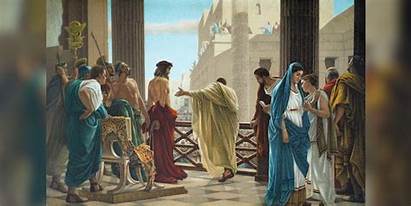
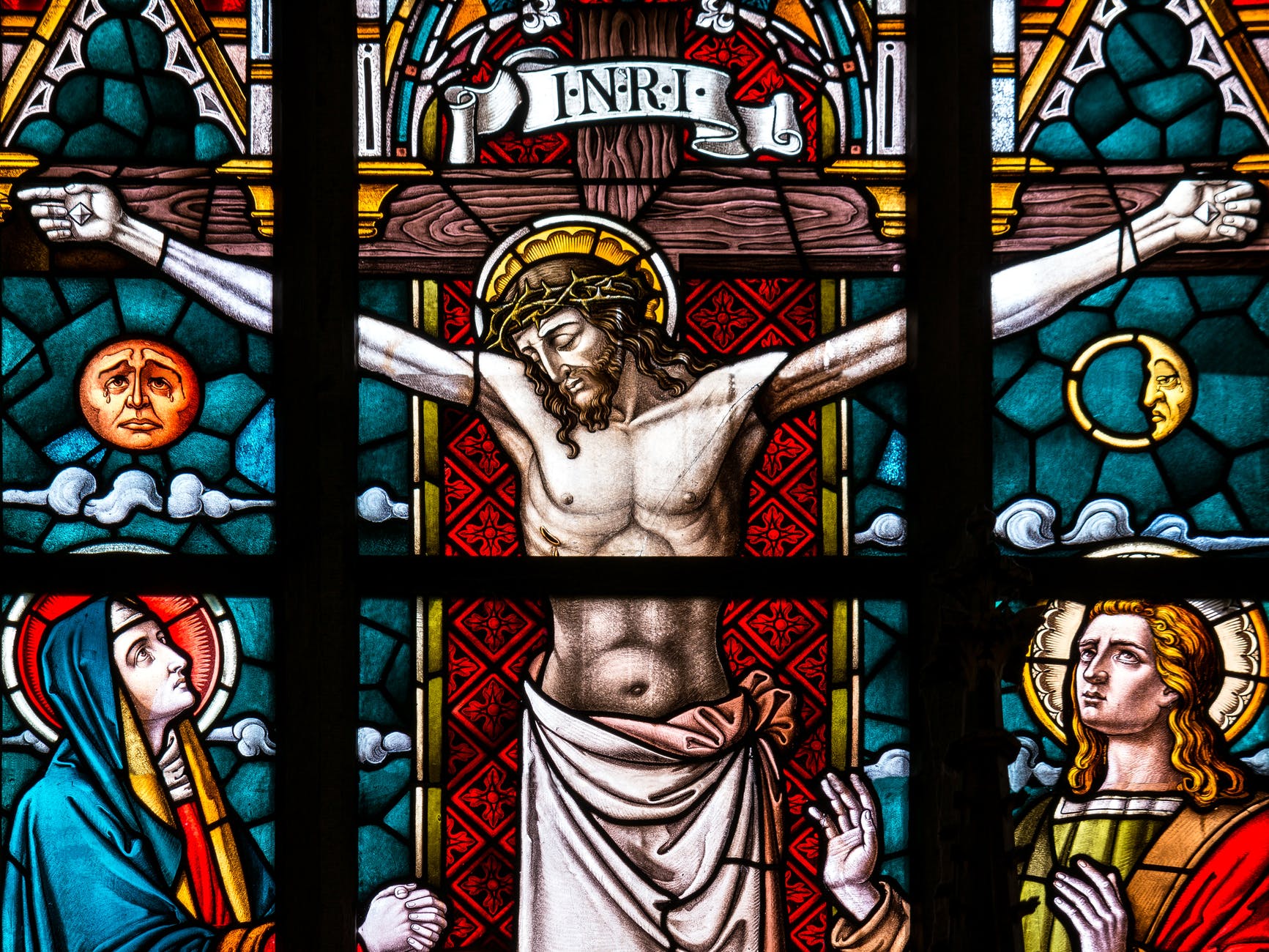
The events of Good Friday are well recorded in all four of the gospels, (see Matthew 27, Mark 15, Luke 23, and John 19 https://www.biblegateway.com/passage/?search=JOhn%2019&version=NIV ) but it is still difficult to imagine exactly what it must have been like that day. The first crow of the rooster came as Jesus was still on trial before the Sanhedrin, hours of questioning and betrayal that would continue as the sun rose and Jesus as passed on up the chain of power to Pontius Pilate for more questioning. The sun was still climbing as Jesus was beaten and paraded before the crowds. The swell of voices shouting for His execution would have echoed through the public square–“Crucify Him! Crucify Him!” “We have no king but Caesar!” The same taunting would continue as Jesus walked the long Via Dolorosa and came to Golgotha.

By nine that morning, Jesus, bloodied, whipped, exhausted, humiliated, betrayed, and struggling for every breath, was nailed to the cross. He was fully exposed to the bright morning sun, the heat, and all the stares of the angry mob who came to revel in His anguish. He was unable to wipe the blood or salty sweat that trickled from His brow and ran into His eyes; unable to swat away flies who buzzed around His face, elbows, or cheeks. He was unable to block out the noise–curses, curious questions, His Mother’s agonized cries, and, in the lull, the ordinary noises of a crowded city preparing for a celebration.

Photo by Pixabay on Pexels.com

As noon approached, there would be the aromas of roasted lamb, market fish, baking bread. The crowds were quieter now, some may have left to seek out lunch or relief from the heat. But the heat and the sun disappeared as darkness rolled in. The angry energy gave way to fear and dread. The earlier shouting was now a an ominous rumbling among the remaining spectators. It was quiet enough to hear Jesus address His Mother and His disciple, John, and answer the thief on the neighboring cross, promising to see him in Paradise. It was possible to hear Jesus cry out later, His voice raspy and broken, but clearly in anguish, “Eloi, Elioi, lama sabachthani!?”

Photo by Pixabay on Pexels.com

Perhaps it even got so quiet, as it sometimes does in darkness, that you could hear the three men on the crosses struggling to take each breath–their tortured muscled straining to lift their weight enough to get air past their parched lips and tongues–in and out, as distended muscles demanded more oxygen than their bodies could provide. Did the members of the crowd listen to their own heartbeats in those moments?

Photo by Francesco Paggiaro on Pexels.com

The unnatural darkness would have magnified the moment when Jesus, the Light of the World, breathed His last breath. And I imagine in the moment after that a silence so deafening, so complete, as the Word of God, the Creator of Life and Giver of Breath departed the Earth– as though all light and sound imploded at the loss. A split second only, but one so intensely silent that it must have taken the breath of every onlooker.

Photo by Engin Akyurt on Pexels.com

And then, the sound returned full-force– the Earth quaking, the skies crashing, Creation gasping, the Temple Veil ripping, and terrified people rediscovering their ability to cry out. Noise–piercing, and violent and sudden, bringing with it a return of the angry energy of before. But the energy is different now. Subdued. Nervous. Desperate. Empty…

Photo by Shawn on Pexels.com

All That Ever I Did…

I’ve always been intrigued by the story in John’s Gospel about the “woman at the well.” (John 4https://www.biblegateway.com/passage/?search=John%204&version=KJV). Jesus and his disciples are travelling through Samaria, and they decided to rest near Jacob’s well at the town of Sychar. The disciples travel into town for food, leaving Jesus alone at the well. A lone woman comes along, and Jesus asks her for a drink of water.

Photo by Tuu1ea5n Kiu1ec7t Jr. on Pexels.com

This would seem to be an ordinary encounter, but there are many clues that tell us a different story. The woman comments that Jews don’t ordinarily speak to or interact with Samaritans. But even more extraordinary, most Jewish men would not strike up a conversation with a lone Samaritan woman, unless he meant to insult her or proposition her. The very fact that she is coming to the well alone and near noon (the sixth hour) puts her at a distinct disadvantage– most of the women would come early in the day to draw water, where their numbers offered protection and support, and the heat of the day would not add to the burden of carrying the water back home.

Photo by Anastasia Egorova on Pexels.com

At first, this woman seems both suspicious and dismissive of Jesus. Why is he asking for a drink of water? Does he want more than just water? Does he mean her harm? He seems thirsty, not threatening– but is he safe? Then Jesus throws a curve ball– he claims to HAVE water that brings total satisfaction and life. Water far better than any of the water he has just asked for! The woman’s tone changes from suspicious to sarcastic. And then, Jesus drops the bombshell– “Go, call thy husband, and come hither.”

Photo by Samarth Singhai on Pexels.com

Aha! Here it comes… The woman admits that she has no husband. She has no protector, no status. NOW this Jewish man, this stranger, will take advantage. Or he will make improper advances. Or he will despise her even more. But instead, Jesus reveals her darker secret– she has had five husbands, and she is with another man who is not her husband. Maybe he is someone else’s husband. Maybe he refuses to marry her. Maybe he treats her badly– this man who lets her come to the well at midday with no protection and no helper. Maybe the five husbands all died; maybe she has been divorced or abandoned time after time. Jesus knows all this– yet he doesn’t call her names or look at her with disgust. He even commends her for telling the truth!

Photo by Felipe Cardoso on Pexels.com

I don’t know about you, but I’m not sure I would want to meet a stranger who know that much about me. I don’t want to be reminded of my failures, my bad choices, or my past sorrows or shame. Yet this was the heart of the woman’s testimony as she went back into town. “Come, see a man, which told me all things that ever I did: is not this the Christ?”

Photo by Marcelo Chagas on Pexels.com

For years, the profound nature of this encounter was lost on me. What is so exciting about someone who knows your dirty laundry and tells it back to you? There are magicians and illusionists, fortune-tellers, and charlatans galore who attempt to do such “readings.” How is it that this woman’s life could be transformed by such an unlikely and disturbing encounter? Why would she be so eager to share this encounter with all the men (or people) of her town– people who probably despised her?

Photo by Andrea Piacquadio on Pexels.com

Because an encounter with Jesus is an encounter with pure and holy compassion. Jesus KNEW the very worst about this woman. He could have shunned her or avoided her. He could have railed at her about her lifestyle or her past. He could have treated her shamefully. Others almost certainly had. But Jesus didn’t just see all the things she had done, or all the things that had happened in her life. He saw HER. He spoke TO her, not at her or through her, not down to her, but face-to-face, and eye-to-eye. Knowing all about her status, he came to HER for help–knowing that she had something of value to offer–not to “put her in her place,” or use her, or demand that she serve him. Jesus welcomes us into the safety of His compassion, so that no matter what we’ve done or what’s been done to us, He looks us in the eyes and wants to be part of our story– part of “all that ever” we WILL do! And THAT is life-changing!

Photo by Artem Beliaikin on Pexels.com

How many people will I encounter today who are outcast, beaten down, shunned, and mistreated? What kind of encounter will it be? Will I see “all that ever they did” and dismiss them as unworthy of my attention? Or will I see THEM–uniquely created by God for a purpose; loved beyond all that I can imagine? Can my friends and family, neighbors and strangers feel safe and loved knowing that I know everything about them? Is it “Safe” to meet me at the well? I pray that God’s love will spill out and overflow to others as I go through the day. May He do the same through you.

Sticks and Stones

Last time Any One Who Is Without Sin…, I looked at a few verses in the gospel of John (8: 1-11), and wrote on four insights. Today, I’d like to look at some practical implications.

Photo by Harrison Haines on Pexels.com
  • If I am “part of the crowd” following Jesus, how easily do I get distracted by the “Pharisees” and critics? How often do I wander off track, looking at fine points in the scriptures that fit a particular argument? How often do I get caught up in senseless debates, allowing myself to be offended or riled up? Over the past several weeks, I have seen arguments via FB , e-mail, or other social media sites where Christians are using Bible verses, Church traditions, the U.S. Constitution, and other teachings and documents to defend such things as wearing a face mask, defying executive orders, practicing (or not practicing) social distancing, and condemning family, friends, and neighbors for taking a different view. We live in a society that reacts– often instantly and with confidence in our own morality– instead of listening and contemplating. We like building strong arguments to defend…scripture? tradition? interpretation? Jesus did none of these things when confronted by this mob. He didn’t dismantle their argument with more argument– he simply got to the heart of the matter– how to deal with Sin.
  • How often do I come to Jesus “knowing” the answer before I ask the question? The Pharisees in the story were not really interested in Jesus’ thoughts or wisdom concerning the situation at hand. They assumed that Jesus would have to answer in only one of two ways, and that either way, he would look bad. I may not be trying to “trap” Jesus with my prayers, but often, I AM trying to seek his confirmation, rather than his wisdom and teaching. The Apostle Paul wrote to the Corinthians, “Knowledge puffs up, but love builds up. Anyone who claims to know something does not yet have the necessary knowledge; but anyone who loves God is known by him.” (1 Corinthians 8:1b-3 NRSV) Many times, I am busier “loving” how much I know than learning how much God loves!
Photo by Engin Akyurt on Pexels.com
  • For me, one of the most amazing new insights about this passage is that once Jesus introduces the phrase, “Any one who is without sin…” everyone leaves– everyone except the one who has been caught in the act of sinning, and the One who has always been without sin. Dealing with Sin is a very personal thing– both confronting our own sinfulness, and acknowledging God’s perfect righteousness. Everyone in the original crowd came to hear Jesus teach. And they were comfortable letting someone else be humiliated and condemned for her sin. But when their own unrighteousness was introduced into the situation–secret sins, unconfessed sins, pride, prejudice, and more–they melted away. How often do I slink away, unwilling or ungrateful to see Jesus show mercy to someone I find “unworthy,” knowing that I am equally undeserving, knowing that I am not “without sin?” Yet the sinful woman in question is the only one who receives the full light of Jesus’ love and mercy. Dozens of others, eager to hear Jesus’ teaching, missed the greatest lesson of all. In the very next verse, at the very next opportunity to speak, Jesus makes one of the most amazing statements in the Gospels, “12 Again Jesus spoke to them, saying, “I am the light of the world. Whoever follows me will not walk in darkness, but will have the light of life.”(John 8:12 ESV) It’s not just showing up to hear him speak; it’s not just knowing the law–it’s following him that leads to light and life.
  • Finally, Jesus grants mercy. He doesn’t split hairs about the Law of Moses. He doesn’t dismiss the reality of Sin or guilt. He doesn’t give the woman a long list of do’s and don’ts for the future or a proscribed plan of atonement. He doesn’t give her a blank check to keep sinning. The Bible doesn’t give us an epilogue to the story. We don’t hear whether or not the woman gave up her life of adultery– we assume that she did. But why? Would she have given it up because she had “dodged a bullet” with the mob? Part of the reason she was brought to Jesus in the first place was that Roman law overruled Jewish law. The mob was not likely to stone this woman– especially within the city limits. ( In fact, in the book of Acts, we have the story of Stephen, who was stoned by a mob. He was dragged out of town, after facing trial by the Sanhedrin, and stoned because of his testimony against their unbelief. ) Would the woman’s life have changed because her guilty secret had been exposed, even though she had not been condemned? Or is it more likely that her life changed because she had an encounter with the “One who is without sin,” and found in Him a love greater than condemnation? She hadn’t planned to follow Jesus. She may not have taken his teaching seriously if she had been just “one of the crowd.” She wasn’t singled out because of her beauty or righteousness or knowledge or status. But Jesus poured out on her the fullness of His love and mercy. How would/does such an encounter change my life? Yours?
Photo by Vlad Cheu021ban on Pexels.com

The Pharisees saw this woman as a pawn worthy of stoning; worthy of condemnation. They brought her, intending to throw “sticks and stones,” accusations, and painful, even fatal words. Jesus used words of healing and hope. May we do the same today– as we approach our neighbors and friends, and as we approach the Sinless one who died in our place.

Photo by Pixabay on Pexels.com

Any One Who Is Without Sin…

I was re-reading a familiar passage in the gospel of John recently, and I was struck by a truth I had missed before. In the first part of John 8, there is a story about a woman caught in adultery https://www.biblegateway.com/passage/?search=John+8%3A1-11&version=NIV I have read this story many times, and even heard sermons preached on this passage. What struck me this time wasn’t exactly new material, or a new reading, but a new understanding of a detail that was there all along.

The story begins with Jesus teaching a crowd of people in the temple courts in Jerusalem. His teaching is interrupted by a group of Pharisees and teachers of the law. They have a woman caught in the act of adultery, and they come to Jesus asking his opinion about stoning her. They obviously know the laws of Moses, because they cite them. But they cite only a certain portion of the law, and they want Jesus to weigh in (so they can use his own words to trap him).

Photo by Sharefaith on Pexels.com

Jesus turns the tables, and passively bends down to write letters in the sand. He says only, “If any one of you is without sin, let him be the first to throw a stone at her.” One by one, the accusers and the crowd– everyone except Jesus–melts away. Finally, Jesus asks who is left to condemn the woman. There is no one. Jesus refuses to condemn her, and sends her on her way, telling her to “Go, and sin no more.”

Photo by Engin Akyurt on Pexels.com

Four details I want to highlight in this story:

  • There was already a crowd around Jesus before the Pharisees and teachers arrived. They did not bring this woman to Jesus to get an honest answer to a question, or to bring about justice (for that, they should have brought both her AND the man involved!); they brought her to a very public spot to humiliate her and trap Jesus. She was a pawn in a political and religious game, and she was guilty of a crime that was punishable by death. She was accused and forced to stand before a crowd to be condemned without a trial. So often, I read this passage, and my focus is on Jesus and the woman and the Pharisees– I forget that there is a crowd of ordinary people being “played” by the Pharisees for their own purposes.
  • Jesus never answers the question at hand. According to the laws of Moses, the woman should be stoned. That is the point the Pharisees want Jesus to address. They have set him up. If he agrees with their interpretation of the laws of Moses, he should insist that the woman be stoned. But this will be in violation of the Roman laws, and will lead to Jesus being arrested by the Romans. But if Jesus upholds the Roman law, he will be turning his back on centuries of Jewish tradition dating back to Moses. The problem is that the Pharisees have resorted to some half-truths. The laws of Moses DO speak of stoning; they speak of adultery being punishable by death– for both the man and the woman involved. However, the Priests and leaders of Israel have not followed this practice. King David committed adultery with Uriah’s wife. Neither one was stoned or condemned to death. There are no records of other adulterous couples being stoned throughout Israel’s history. So it is rather disingenuous for the Pharisees to bring this case to Jesus and ask him to speak judgment where they will not. Jesus knows this is not about actual justice; it isn’t really about the law of Moses– because they are not following it themselves! By turning the tables back on them, Jesus exposes their hypocrisy and failure in front of the very crowds they are trying to impress with their clever plans.
  • One by one, the woman’s accusers melt away. But it’s not just them, it’s the crowd of ordinary people– the ones who were likely riled up by the Pharisees and teachers. Think about the mob mentality–a guilty woman, caught in the act and brought before a teacher with moral authority–there is nothing like scandal to get a crowd of anonymous bystanders worked up and ready for blood. Yet, Jesus’ gentle reminder that any of us could be found “guilty” of something and condemned to shame and punishment puts out the flame of anger and resentment, and causes the mob to evaporate. No one is left to accuse, to curse, to insult, to humiliate, or condemn.
  • Finally, it’s down to Jesus and the sinful woman. There IS one person there who is without sin– one person who has the right to throw stones, to judge, to punish. Yet he reaches out with compassion and mercy. He is still righteous– he doesn’t shrug off the woman’s sin. He doesn’t say, “Well, that’s no big deal. Let’s just pretend that never happened.” or “I think you’ve learned a valuable lesson here today, young lady.” He simply says, “Neither do I condemn you. Go now and leave your life of sin.”
Photo by Ivandrei Pretorius on Pexels.com

Next time, I want to address each of these details from a practical standpoint in light of modern circumstances, and what lessons I am taking from Jesus’ actions.

Three Words

Essential

We’ve been hearing a lot lately about people who are “essential.” In times of crisis, certain skills and services are necessary to preserve or protect life. In times of war, soldiers, medics, makers of tanks and arms, helmets, planes, boots, and armor become essential. In times of famine, farmers, and anyone with reserves of food or water become essential. In times like these, doctors, nurses, EMTs, and those who make or distribute medicines, PPE (personal protective equipment), ventilators, etc., are essential.

Photo by Anna Shvets on Pexels.com

Being “essential” may sound wonderful, but it comes with a heavy price. Doctors and nurses are stretched and stressed, working ridiculously long shifts and scrambling to find ways to arrest the progress of COVID-19 among their patients who test positive. Meanwhile, their neighbors are complaining about being told to stay home and do nothing because their skills, their businesses, and their contributions are considered “non-essential.” Grocers and the cashiers, restaurant owners, farmers, and truckers are risking their lives to keep people supplied with food, only to have people complain about prices and temporary shortages. And any one of their customers could be spreading the virus– not just to them, but to their other customers. Police officers, already putting their lives on the line, are now asked to interact with those who may be carrying and spreading this virus, as well as dealing with an angry and frustrated population chafing under orders to stay home and stay inactive. And those who are “essential” are also vulnerable– tired and frightened and inadequate to meet every need–they are not infallible or indefatigable.

Photo by Alexander Dummer on Pexels.com

There are really only a few things in life that are actually essential–breathing (which is one of the reasons COVID-19 is so scary, because it attacks the lungs), water, food, and basic shelter (protection from excessive heat or cold). And, while many around the world are facing more extreme shortages than others, most of the chafing and complaining has less to do with not having the essentials than with being (or not being) labeled “essential” with very little notice or guidance, and asked to bear the brunt of a crisis they cannot predict or control.

Redundant (non-essential)

For every person who is feeling the pressure of being “essential” in a time like this, there are others who have been labeled “non-essential”– redundant, expendable, “in the way.” “Stay home!” “Stay away!” “Don’t!” Don’t shake hands, or hug, or visit friends or loved ones (unless you can do so via phone or internet). Don’t touch– don’t touch door knobs or counters or surfaces– don’t even touch your own face!

Photo by Engin Akyurt on Pexels.com

The intent of these messages is a positive one–“help stop the spread of this virus”–but the message often gets lost in the tone of fear and panic that accompanies it. “If you don’t (go away, stay away, stop touching, stop asking questions, stop being in the way…) other people, especially ‘essential’ people, will get sick and die.” “If you could just go away, disappear, be quiet, etc., until this crisis dies down…” Feeding your family, keeping your business open, earning a living, using or developing your skills, offering your services or products– none of that is “essential” right now. You have nothing to offer in a time of crisis– you are expendable. Perhaps not forever, but just now– just for a few more days, weeks, months?…

Jesus offers us a shocking view of what is/who is “essential” or “redundant.” In his encounter with the “rich young ruler,” (see https://pursuingprayer.blog/2020/02/07/a-miss-is-as-good-as-a-mile/) Jesus listens as the young man seeks to justify himself. He has done everything he deems “essential” to inherit eternal life. But Jesus challenges him with one “essential”–sell what he has in order to serve the poor and “redundant.”

Jesus had frequent encounters with lepers– the most “redundant” and expendable people of his day. They were contagious, “unclean,” unwanted. And Jesus also encountered those with great power and prestige–priests and rulers, centurions and tax collectors. Many of them were also considered “unclean,” and unwanted! Those for whom Jesus had the sternest warnings were those who refused to accept, respect, or help those they preferred to judge.

Photo by Lukas on Pexels.com

Whosoever-

Jesus, the only One who actually has the right to judge, didn’t come to further the division of people into categories and labels. While he didn’t turn a blind eye to sinful activities, neither did he point fingers. And while he celebrated faith and service when he found it, he didn’t flatter or fawn over those whose service was more “essential” than others’. Instead, Jesus invited “whosoever” to believe in him (John 3:16), to follow him, and to become part of the Kingdom of God. (Revelation 22:17). Someday, He will judge us, and we will be separated. But the one “essential” will be whether or not we have chosen to depend on Him and trust Him for the wisdom and strength to do His will in service to “whosoever” we encounter.

Photo by Streetwindy on Pexels.com

There is no one so “essential” that God is required to accept her/him into the Kingdom. This may be a strange notion to some of us, who have fallen into thinking that we earn our salvation through good works or memorizing doctrinal statements. But NO person is essential in Heaven. And that’s not bad news or meant to condemn–it is simply a reminder that God’s standard is level and fair. We don’t have to strive and stress; we don’t have to have all the right answers, or do all the “right” things– in fact, we can’t.

And there is no one so “redundant” that God cannot accept him/her into the Kingdom. Again, this may be a strange notion, that we cannot “out-sin” God’s salvation. We can’t mess up, wash out, face-plant, or fail such that God cannot redeem, rescue, or revive us. God will never tell us to “stay away,” “wait,” “don’t get too close.” Instead he says, over and over again, “Come!”

Photo by Artem Beliaikin on Pexels.com

Whosoever is struggling with exhaustion, or impossible expectations, panic, fear, sickness, anger, depression, loneliness, hunger, rejection, injustice, confusion, or emptiness– let them come!

Blog at WordPress.com.

Up ↑