These Three Remain–Faith

(I will be working at our church’s Vacation Bible School all this week, so I am re-posting three entries from a couple of years ago on Faith, Hope, and Love. I will be back with new posts next week.)

If I speak in the tongues of men or of angels, but do not have love, I am only a resounding gong or a clanging cymbal. If I have the gift of prophecy and can fathom all mysteries and all knowledge, and if I have a faith that can move mountains, but do not have love, I am nothing. If I give all I possess to the poor and give over my body to hardship that I may boast, but do not have love, I gain nothing.Love is patient, love is kind. It does not envy, it does not boast, it is not proud. It does not dishonor others, it is not self-seeking, it is not easily angered, it keeps no record of wrongs. Love does not delight in evil but rejoices with the truth. It always protects, always trusts, always hopes, always perseveres.Love never fails. But where there are prophecies, they will cease; where there are tongues, they will be stilled; where there is knowledge, it will pass away. For we know in part and we prophesy in part, 10 but when completeness comes, what is in part disappears.  11 When I was a child, I talked like a child, I thought like a child, I reasoned like a child. When I became a man, I put the ways of childhood behind me. 12 For now we see only a reflection as in a mirror; then we shall see face to face. Now I know in part; then I shall know fully, even as I am fully known.13 And now these three remain: faith, hope and love. But the greatest of these is love.

1 Corinthians 13 (NIV) via http://www.biblegateway.com

I love reading God’s word. I spent much of my youth memorizing scripture, and much of my adulthood trying to recall what I learned then! One chapter I memorized was 1 Corinthians 13– commonly known as the “Love” chapter.

But near the end of the chapter, Paul talks about what remains, and what doesn’t–he says that prophecies and knowledge will pass away, and things that are incomplete will disappear. He lists three things that will remain. We often spend a lot of time on Love (and I will get there eventually), but I want to talk about all three, why they must remain, and why they are connected in prayer. I will begin today with Faith.

Faith, as we learn in Hebrews 11:1, is “the substance of things hoped for, the evidence of things not seen.” Faith is foundational. Faith gives us roots. Faith is an anchor. Faith keeps us grounded and strong. But Faith, as the above metaphors suggest, is deep and unseen. I can’t “show” you an anchor when it is in use. If I pull up a tree to see its roots, or tear down a building to show off its foundations, I will destroy the very thing I am trying to illustrate.

And Faith demonstrates itself best under testing. I have to admit, the last couple of years have been a difficult test of my Faith, and that of many others. Do I REALLY believe that God exists? That He cares? That He listens to prayer? That He answers? It is easy enough to say all that, but when everything around looks murky and uncertain, do my actions match my words? Do I live as though God is in control? Is His word still an anchor for me when it doesn’t seem to “work?” Do my prayers reflect confidence and praise in the midst of unrest, disease, and death? Are my prayers filled with Faith that God is who He says He is, and that He will do what He has promised? Or are my prayers timid and empty– wispy wishes, instead of honest heart-cries?

Where is my faith? Is it in myself? My words? The words of other people?My actions and deeds? In powerful groups? Governments? Money? Chance? Even Religion? Does my Faith rest in following the laws of the Bible? Does it rest in knowing the “right” picky points of theology? Or does it rest in the One who is unchanging, eternal, and all-powerful?

The world is screaming. The world is filled with fire, smoke, flashing lights and violent voices. Is God silent? Is He being drowned out or hidden by the chaos we’re walking through? Or am I listening to wrong voices, and focusing on smoke and fog?

I can’t show you the roots of my Faith in this moment. I can’t see them, and sometimes, I feel shaken. But, as Job declared, “I know my Redeemer lives” (Job 19:25a)! I will continue to declare that God DOES exist. He DOES care. He DOES listen. And He WILL answer. And I will continue to Hope and Love in light of this Faith. I will continue to seek patience, and kindness, humility, truth, justice, and perseverance as I reach out to others. And I must continue to develop Faith in the midst of difficult times. It is the anchor upon which Hope and Love rest.


Praying for Time

When I was a late teen, and into my early twenties, I loved English pop music, including the duo, Wham! Their music was bubbly, upbeat (mostly), and easy to sing along to. I listened along, sang along, watched their videos, and danced along. When the duo broke up, I was eager to follow the rise of singer/songwriter George Michael, whose first two solo albums I bought and listened to, as well. But the tone of his solo music was different. There were danceable, singable tunes, but they were darker and more cynical. And many of the songs were less about enjoying life and more about social commentary, confusion, and even despair. The songs were well-crafted, but they were haunting, rather than enjoyable or uplifting. They spoke of sadness, depression, and world-weariness.

One of the songs that has haunted me for years was from his second album, “Listen Without Prejudice.” In it, he talks about greed, poverty, apathy, and a loss of innocence. It’s called “Praying for Time,” but the tone of the song suggests that time has all but run out.

And yet…

One of the ideas that still shines through the words of the song is that prayer–specifically praying for time–may be the only hope that we can still cling to. And in a time of darkness and hopelessness, prayer can reach beyond “wounded skies” to a God whose Grace extends even to His children who have “slipped out the back door.”

There is something about the idea of time as a gift from God that stays in the soul, long after most hope is gone. I think it is why we are so driven by the concept of time and time “running out” as we hustle through our busy lives. I think it is why we spend time avoiding “down time” and “alone time” and the quiet time we should take to reflect, meditate, and yes, even time to pray. And I think, too, that it is why we recognize that wasted time is a sin– that there is a purpose in our time on Earth that transcends having “fun” or living for our own selfish aims. George Michael often used “spiritual” words and phrases for his songs– often with a cynical twist, pointing out some of the hypocrisy he saw around him (and occasionally, within himself).

These are the days of the open hand
They will not be the last
Look around now
These are the days of the beggars and the choosers

This is the year of the hungry man
Whose place is in the past
Hand in hand with ignorance
And legitimate excuses

The rich declare themselves poor
And most of us are not sure
If we have too much
But we’ll take our chances
‘Cause God’s stopped keeping score

I guess somewhere along the way
He must have let us all out to play
Turned his back and all God’s children
Crept out the back door

And it’s hard to love, there’s so much to hate
Hanging on to hope
When there is no hope to speak of
And the wounded skies above say it’s much, much too late
Well, maybe we should all be praying for time

These are the days of the empty hand
Oh, you hold on to what you can
And charity is a coat you wear twice a year

This is the year of the guilty man
Your television takes a stand
And you find that what was over there is over here

So you scream from behind your door
Say, “What’s mine is mine and not yours”
I may have too much but I’ll take my chances
‘Cause God’s stopped keeping score

And you cling to the things they sold you
Did you cover your eyes when they told you
That he can’t come back
‘Cause he has no children to come back for

It’s hard to love, there’s so much to hate
Hanging on to hope when there is no hope to speak of
And the wounded skies above say it’s much too late
So maybe we should all be praying for time

“Praying for Time” George Michael, Listen Without Prejudice, 1990 (lyrics taken from Lyrics.com)

In an interview, George Michael analyzes his own lyrics:

While he mentions “He” and “God,” it is clearly humanity he blames for the apathy and selfishness, greed and scandal, the “empty hand” and “wounded skies” mentioned in the song. And his repetition of “all God’s Children” and its counterpart, “no children to come back for,” is aimed at US– people who “slipped out the back door,” moving away from God and embracing our own wickedness. WE have entered this time of hopelessness and despair. WE have crafted it in our own ignorance, and then in our own pride and stubbornness. But we can still pray for time– time to repent, time to return, time to reach out to others with compassion and hope. What the song just barely misses is that prayer can open so much more than just time. Prayer can bring renewal, justice, redemption, and eternal hope! God hasn’t stopped “keeping score,” by any means. But He is holding back the wrath and judgment we all deserve, giving us time to seek Him! Most of all, we can pray, not with desperation, but with confidence– even in times of confusion and distress, because we have an Advocate, Jesus Christ, who hears all our prayers– desperate, confused, ashamed, angry, hopeful, offered with no more than a mustard seed’s faith.

George Michael, like all of us, lived in a fallen world. He was looking at the world, and seeing injustice, greed, apathy, corruption, violence, and the ravages of Sin. His own life was plagued with sorrow, tragedy, pain, injustice, drug addiction, betrayal, and the effects of Sin– both his own and others’. I don’t know if he ever found peace and hope in this life. I hope so. His gifted life ended early and tragically. But his song lives on with a warning, and a hint of promise, too.

We SHOULD all be praying for time– time to change. Time to repent, and seek God’s wisdom. Time to reach out to a darkened world with more than despair and dark analysis. To reach out with the Hope of Christ, who brings Redemption, Justice, and MERCY! We should be praying for time to meditate on the Goodness of God, as well as time to see the needs of others. We should be praying for wisdom to share our resources, and to multiply the good we can do– things that only God’s power can really accomplish. We should be praying for connection– restored relationships, and renewed fellowship with the Father. We should be praying for time to pray! Not just a desperate kind of prayer that this song suggests, but a lifelong pursuit of prayer that connects us to the Source of Hope, Joy, Peace, Power, and Love.

This year, while I don’t often listen to George Michael’s music anymore, I will be “praying for time.” And I will be investing more time in prayer! I hope you will join me in the time God has gifted us with this year!

For more analysis of the song and its relation to prayer see the following:

Now I Lay Me Down to Sleep..

Now I lay me down to sleep;
I pray the Lord my soul to keep.
If I should die before I wake,
I pray the Lord my soul to take.

I learned this prayer as a child. It seemed very grim, and pessimistic. As a child, I spent very little time (as little as possible) thinking of my own mortality, or the state of my soul after a day of playing with dolls or running around outside. I was blessed with a safe and easy childhood. Of course, I had days of sickness, a bout of chicken pox, the loss of a pet, news of neighbors who had died in war, fallen to cancer, or been killed in accidents–moments that caused me to reflect a bit more. But I didn’t want to think about serious things. I wanted peace and happiness.

As a younger adult, I came to the conclusion that prayers like this were old-fashioned, and designed to scare vulnerable children into a false faith based on fear and gloom. Shouldn’t children learn about the Love of Jesus and the Mercy of the Father, instead of worrying about death and eternal doom of their soul? Prayers like this would be “bad” for young children; traumatic and disturbing. Better to teach them prayers that were sweet and light, and full of only the goodness of God.

Lately, however, I remember things a bit differently. Yes, there is gloom and doom in this old children’s prayer, but there is also comfort, Love, and Mercy. As a child, I could “lay me down” to sleep in peace, knowing that God would, indeed, keep my soul from harm. I didn’t expect to die, but when I woke up dreaming of monsters, or suddenly became aware of mortality, I didn’t have to stay fearful. God is bigger than any monster; bigger then Death. I could not trust anyone better, mightier, or more capable than the Lord to keep my soul, or to “take” it safely to its final destination. I learned about the Goodness of God, but I also learned about stark realities– the persecuted Church, war, famine, injustice–things that God wants me to confront, and endure, and lift to Him in prayer. And for every “gloomy” reality, there are stories of victory and joy, faith and resilience, love and grace– because God is standing by, ready to rescue and reassure and redeem.

Bedtime prayers are a great comfort to me now. And they are also important prayers in my Christian Walk. It is at bedtime that I can reflect on God’s goodness throughout the day. I can be thankful for all the blessings God has given me, and for all the ways He has guided me and protected me– often without my knowledge and in spite of myself! Instead of worrying, tossing and turning, trying to “figure out” tomorrow, I can lift my burdens to God, knowing that I won’t face anything tomorrow alone! I can reflect on all the times I thought I couldn’t make it, but God made a way! And I can confidently rest in the hope that nothing can separate me from God’s loving care. Not yesterday’s guilt, nor today’s failures, nor tomorrow’s unknown (or imagined) trials– not even death!

I am old enough now that mortality plays a bigger role in my thoughts. I have lost my parents, my grandparents, aunts and uncles, classmates, co-workers, neighbors, and friends. I’ve experienced both great joy and great sorrow. But I need not be afraid of disease, dilemmas, or death. I need not worry about the state of my soul. I may have griefs, aches and pains, and worries about tomorrow. But I can “lay me down” in peace and patience, knowing I have a Good, Good Father whose love has surrounded me for over half a century. I can “Hush” all my fears, and sleep like a baby, knowing my God is always standing right by my side.

Miss Whitcomb

When I was in seventh grade, I had a teacher named Miss Whitcomb. She was notorious throughout the school system as the “toughest” teacher we would ever have. She was ruthless. She demanded absolute quiet, she did not grade “on a curve,” and she never smiled. She had an ongoing war with grape-flavored chewing gum and students who were three seconds late for class. She gave impossible assignments and offered little in the way of help, comfort, or guidance. She had a point system for behavior, and most students ended up earning detentions. Everyone dreaded her class. Many normally confident and competent students failed her class. They worried themselves into sleepless nights and second-guessing their own abilities.

I suffered through two years of Miss Whitcomb’s classes. I had her for American History, English, and introductory drafting class. She was exacting and frustrating. But I learned a lot. Her assignments often seemed impossible, but some of them were creative as well as challenging. I never learned to love Miss Whitcomb’s class, but I learned to survive it– and, while I can’t say I learned to like her, I learned to respect her.

Years later, I returned to my home town as a teacher. And Miss Whitcomb was my colleague. A new generation of students were suffering under Miss Whitcomb’s impossible demands, and many were sure they could petition the school administration to get her fired. They came to me seeking support. I wouldn’t give it. I told them I remembered how difficult her classes were, but that I felt that it was important that they experience tough teachers, like Miss Whitcomb, because they would often experience tough bosses or professors, and tough situations as adults; learning to survive Miss Whitcomb’s class would give them practice for tough times in the future. And I suggested that they look at her classes as a challenge to be faced, rather than a punishment to be feared.

I had a difficult time understanding why Miss Whitcomb was so “tough.” But I got an insight from an unexpected event. A group of high school students were going on a field trip to see the hit musical, “Les Miserables” at a local university theater. They needed chaperones, and I agreed to come, as it was a wonderful chance to see a national touring company perform a terrific play. Surprisingly, Miss Whitcomb also came as a chaperone. I never thought of musicals as “her thing,” but she had decided to give it a try. Of course, the students were terrified of her, and she ended up sitting on the far side of the group (but it was a much quieter ride up to the campus!)

The play was magnificent, but Miss Whitcomb was very disturbed by it. The next day, she tackled the teacher who had organized the trip to complain. Her complaint was not with the students or the performers. It was about the story itself! She was somewhat familiar with the novel’s plot, but seeing it “live,” she was bothered by the character of Javert, and his pursuit of the main character, Jean Valjean. In the story, Javert has spent the better part of 25 years tracking Valjean, an escaped convict. When he finally finds him, Valjean ends up saving his life. Javert cannot reconcile that the “criminal” he has been looking for– his enemy– has saved him. Miss Whitcomb so identified with Javert, that she found the story untenable.

Why was she so upset? Because Javert was “righteous.” He represented the law. His quest was legal–his foe, Valjean, HAD escaped from prison. He had every “right” to pursue him and force him to complete his extra sentence (Valjean had completed his original term). But Javert was the one, in the end, who needed to be saved. And Valjean, who had every reason to let Javert die, risked his life to save his arch-enemy. This was not how Miss Whitcomb viewed life. The righteous should be the saviors; the guilty should be punished, not celebrated. Miss Whitcomb understood right and wrong– but she had no room for grace or forgiveness.

There is a Bible verse that has always caused me to be curious. Romans 5:8 is well known– “But God demonstrates His own love for us in this: while we were still sinners, Christ died for us.” But Romans 5:7 says, “Very rarely will anyone die for a righteous person, though for a good person someone might possibly dare to die.” (emphasis added) Paul is making a distinction that Jesus also often made–not everyone who is “righteous” is “good.” In Mark 10, Jesus is asked by a rich young ruler what he must do to inherit eternal life. The young man calls Jesus, “good teacher.” But before Jesus answers the question, he turns it back on the young man. “‘Why do you call me good,’ Jesus asked. ‘Only God is truly good” (v. 18). The rich young ruler does not want to know how to become “good.” He does not want to learn from Jesus. He merely wants to be judged as “good enough” to inherit eternal life. And he believes that he is “righteous” enough to have earned it.

Miss Whitcomb was a dedicated teacher. She was a “righteous” educator. But she never learned (or was able to teach) compassion, humility, or mercy. And that was a lesson her students missed. It is a lesson far greater than knowing U.S. History, or Government, or English grammar. I have heard from some of her adult education students that she was far less harsh with them. I hope this is true. She had a lot to give, and she suffered greatly from her own high standards and lack of compassion in relation to her younger students. I believe she had “good” intentions– that she believed her high standards were “right” and that any show of mercy was a weakness. But she missed out on so much– so many students who might have liked her better, and learned more from her–by putting righteousness ahead of mercy.

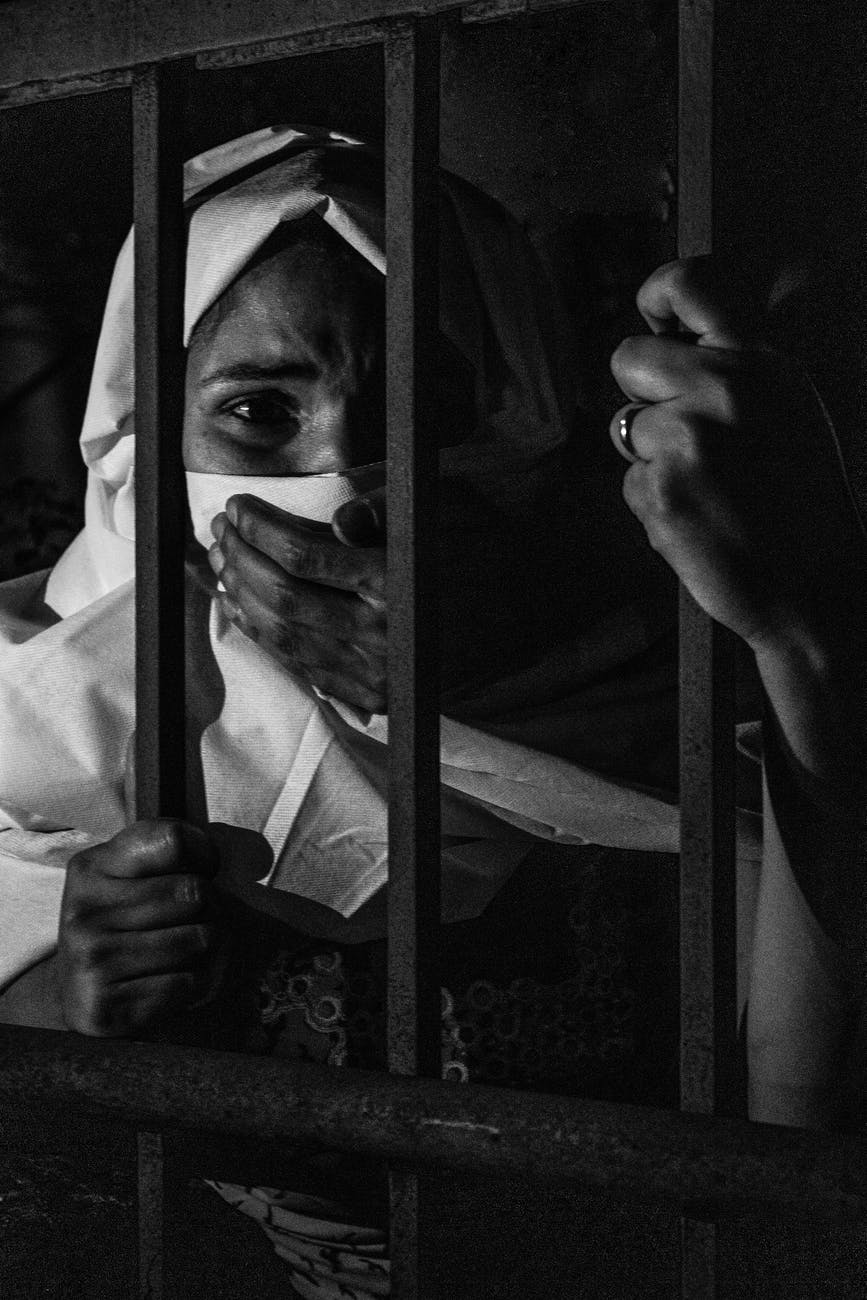
Photo by Ivan Samkov on Pexels.com

We serve a God who is BOTH– completely HOLY and Good, and Righteous, as well as merciful, gracious and compassionate. God forgives us without lowering His standards. He sent His Son to save us– While we were yet sinners! Romans 5 continues, “ Since we have now been justified by his blood, how much more shall we be saved from God’s wrath through him! For if, while we were God’s enemies, we were reconciled to him through the death of his Son, how much more, having been reconciled, shall we be saved through his life!” (Romans 5:9-10) We don’t have to be terrified of God. We don’t have to be constantly reminded of our past guilt and shame. We don’t have to fear that we will “fail” to please God if we choose to follow Him.

How Can You?!

14 But even if you should suffer for righteousness’ sake, you will be blessed. Have no fear of them, nor be troubled, 15 but in your hearts honor Christ the Lord as holy, always being prepared to make a defense to anyone who asks you for a reason for the hope that is in you; yet do it with gentleness and respect, 16 having a good conscience, so that, when you are slandered, those who revile your good behavior in Christ may be put to shame.

1 Peter 3:14-16 (ESV) via biblegateway.com

I was approached years ago by an angry non-believer, who asked me in disdainful tones how I could possibly believe in God, Jesus Christ, heaven and hell, and other Biblical tenets. At the time, I was taken aback by the vehemence and anger. I stammered an answer, heart-felt and, I hoped, theologically “correct”–I think I quoted scripture and gave a short version of my personal testimony. The other person was not impressed or convinced. I felt like I had failed. The other person sneered at my belief–and at God!

I spent weeks going over in my mind what else I might have said. I came up with clever arguments, gripping counter-questions, self-deprecating “homey” zingers, I read books on apologetics, and studied the words of great thinkers…I would be ready next time. I would not be left looking or sounding naive and unprepared. I would have the tools to “win” the argument, and God would be proud of me.

But in the years since, I have done more thinking (and reading, and praying!) And this past month, as I’ve been reading through the Old Testament prophets, I have found a new perspective. Prophets like Isaiah, Habakkuk, Amos, and Malachi spoke the very words of God to people around them. They spoke to ordinary people, and to the religious and political leaders of their day. And almost none of them listened! In fact, the prophets were hated, sneered at, smeared, imprisoned– some of them were even killed.

These prophets were prepared. They were not being ambushed with “gotcha” questions, because they were the ones presenting and challenging people with the truth. The truths they spoke were often harsh and offensive. They were truths about coming judgment and destruction, followed by restoration and revival. There was nothing “welcoming” or attractive about their message. But the people remained stubborn, sinful, and unimpressed.

We live in the post-Resurrection age. Our message contains warnings about judgment and destruction– but unlike the prophets of old, we have a message of immediate and eternal Hope and Salvation. We have centuries of prophecies that have been fulfilled; of testimonies to the power of a risen Christ and the Holy Spirit. Yet even Jesus warned us that “..in the world (you) will have tribulation. But take heart; I have overcome the world.” (John 16:33b ESV)

We often feel that if we cannot “win over” those who challenge us–if we cannot prove to their satisfaction that we are “right” in our beliefs–that we have failed. Yet we have so many examples of faithful witnesses who suffered and died without seeing the results of their faithfulness. God does not ask us to “win” every battle in convincing and decisive fashion. That’s HIS job! What He does ask is that we should be prepared to give an answer– and that we do it with gentleness and respect.

I don’t have to silence the critics. I don’t have to have “mic-drop” moments. I don’t have to “win” every debate. God calls me to be faithful, honest, and humble. My words may not change someone else’s mind. But my changed life and God-honoring attitude may plant a seed that someone else’s words and life, and the power of the Holy Spirit will cause to grow into faith– even if I never live to see it!

In answer to the question, “How can you believe?” The answer often lies, not only in what we say about our belief, but how we live it out!

No More Goodbyes

Today marks 25 years since I said “goodbye” to my father. My mother, sister, and I stood by his bedside at the hospital. The doctors had tried numerous times to re-start his heart. In the process, they had broken his sternum, and each new effort was causing additional pain and putting his lungs in danger of being punctured by bone fragments. His time was running out. We were allowed to come in and say our last words to him, before his worn-out heart finally stopped for good. I held his hand one last time, whispered that I loved him and that I would help take care of Mom. I kissed his forehead, and said a prayer. Mom and my sister did the same.

Earlier this year, I had to say goodbye to Mom as well. My sister and I were with her, and had read her mail aloud to her, as she had fallen into a coma. I was preparing to return home. I said, “goodbye;” I held her hand, kissed her cheek and turned to my sister. When I turned back around, Mom was gone–her oxygen machine was still running, but her heart had stopped beating, and she was peaceful and still. In that moment, I became an orphan.


Death is part of the curse of a fallen world. God is the source of all Life. In a fallen world, we are cut off from our life-source. Our mortal bodies must taste death. It is the consequence of Sin– our sin, and the sins of others. Disease, violence, aging, disasters, grieving, work, abuse– all conspire to drain the life out of our bodies. Life is a gift– we can’t “earn” it, and we can’t “hold on” to it indefinitely. Nor can we hold on to the lives of others–even those we love. Some day, I will lose my sister. Or she will lose me. Some day, I will lose, or be lost to my husband, my brother, my step-children, mother-in-law, grandchildren, cousins, friends, and neighbors.


And, just like leaves on the trees later this month, all of us will grow old, be changed, and fall into decay. Some will fall gently; others will be torn away by the winds of war, or crime, or cancer, or accidents. Some will fall early; others will cling to life until the last moment, but all will eventually die. More goodbyes. More grieving. More death.


But. God is the author of Life, not Death.


Death is not the end for those who have trusted their souls to God. Our bodies must still taste death. We must still say, “Goodbye” to those we love on earth. But our goodbyes are tempered with the promise that the One who conquered Death did so for US. Because Jesus was willing to die and able to rise again, we will also live again. And THIS life will be untainted and eternal. No more goodbyes. No more grieving and separation. No more fear of an unknown future that includes death. No more waiting. No more living without a father. Our Heavenly Father will never leave, never die, never suffer the ravages of age or disease, never fall. In fact, Jesus never said “Goodbye” to His disciples– it wasn’t in His vocabulary! He said that He would “Go to prepare a place…(John 14:2-3)”, and He charged His disciples to “Go into all the world…(Mark 16:15)” But He never said, “Goodbye!”

I had to say, “Goodbye,” to my wonderful parents. And I have the joy of knowing that our “goodbyes” are temporary. That I will see them again, even as I will see my Heavenly Father someday. So, while today holds in it the sadness of watching my Dad suffer in his last minutes of earthly life, it also holds the promise of reunion and restoration. My Dad will never again have to suffer; neither will my Mom. My future probably holds a few more “goodbyes.” But it also holds “Hello!” “Welcome Home!” and “I’m so happy to see you again!”

Photo by Polina Zimmerman on Pexels.com

I thank God for the lives of both my parents– for their testimonies of faith, for their good examples, and for the wisdom, laughter, and love they shared. And I thank God that their deaths were not the end of that love and joy. In fact, it will be even better to share someday what we could never have here on earth–eternal peace and freedom from grief and loss.

Twenty-five years seems like a long time, but it is a drop in the bucket of time, and nothing in light of eternity. That truth brings me great comfort as I face today. I hope you will be encouraged and comforted as well. Heaven is a place with no more “goodbyes.” And that radically changes the way I say “Goodbye” here on earth!

“I’m Praying For You!”

Each month, I want to give some practical suggestions on ways we can better pursue a lifestyle of prayer.

Photo by Tima Miroshnichenko on Pexels.com

This month, I want to encourage you to let people know you are praying for them. This seems like such a simple thing, and not necessarily a way to improve one’s prayer life. After all, didn’t Jesus teach us not to brag about our praying? Aren’t we supposed to pray in private, not calling attention to ourselves? (See Matthew 6:1-15)

There are four “do’s” and a couple of “don’t’s” when it comes to telling others about praying that I want to emphasize today. Not because I have a perfect formula, but these are things I have found true in my own experience, and I think they line up with Biblical principles:

DO:

  • When you hear a need, pray about it. Don’t put it off; don’t promise to pray at a more convenient time. Do it now. If that means stopping in the middle of a conversation and praying with someone who is pouring out their heart– do it (assuming that it is possible). Not only is this practicing obedience to the prompting of the Holy Spirit, but it is honoring the importance and value of the other person. (see Philippians 4:6; Romans 12:12; Ephesians 6:18; others…) Showing others that their needs are important and that God cares about their needs is NOT boasting or being hypocritical. Just remember to approach with humility. Don’t be offended if they refuse in the moment; don’t use the opportunity to pray “over them”– pray beside them; pray with them; pray for their needs, not your own virtue-signaling. If you are worried about your actions being misconstrued or offensive in some way, ask first. “May I pray for you right now?” “Would you mind if we just stopped and said a quick prayer about this situation?” They can always refuse to let you pray immediately, but at least they will know you sincerely want to bring their burden before God. Also, if there is practical help you can give in the moments following, don’t hold back. Maybe their need is beyond your ability, but if you can direct them to counseling, aid from a local church group or non-profit, or offer to follow-up, you should do what you honestly can. Don’t promise beyond your ability, but don’t just pray and walk away, either.
  • The same goes for on-line requests for prayer. Don’t just scroll past someone’s need. It takes three seconds or less to type, “Praying”, or “I’m praying for you.” Again, if there is practical help you can offer, this is an opportunity to do so. There is no need to go overboard– but letting others know that someone “out there” is praying can be an enormous encouragement.
  • Be specific. Generic prayers aren’t “bad,” but they are often hasty and leave something lacking. The same goes for practical help. One of the mistakes I often make is to say, “If there’s anything I can do, give me a call.” I mean it– I want to help, and don’t know just how. But this puts the burden of asking on the person you meant to help! If you don’t know what to do– say so– but give them something solid to go on. It may be a phone number or e-mail, or an idea of a service you are able to offer–“I have Wednesday afternoons off if you need someone to drive you/go with you to an appointment.” or “If you ever want to meet for coffee…” or “I know the church has a Benevolence fund for unexpected bills and expenses. I could contact someone or give you their contact information,” etc..
  • Follow through! If someone asks for prayer for an ongoing concern, make a point of checking in every so often. Call, send a note or text, stop them at church and let them know you are still thinking of them and praying for them. This can also be another opportunity to offer practical help, a hug, or other form of encouragement. Often a week or two can be time enough to reveal practical steps to meet some of the smaller needs related to a big crisis or situation.

DON’T:

  • Say you will pray and then forget to do it. I used to be bad about this on-line. It only takes three seconds to promise to pray or to type a message about prayer, but don’t say it/send it if you aren’t going to act on it. Either stop then and there to pray about it, or stop and write it down where you will see it later and act on it! Good intentions are NOT enough to bring real encouragement and change. And good intentions do not form a disciplined and growing pursuit of prayerful living. In fact, such lost opportunities can become a barrier to our prayer life AND our relationships with others.
  • Break confidences. If someone asks publicly for prayer, it is fine to respond publicly that you will pray or are praying. It is NOT fine to then share someone else’s burden with ten of your other neighbors or closest friends. It is not fine to repost someone else’s request without their permission. It is not fine to publicize others’ private burdens, confessions, or pain. You may want to ask others to join in prayer, but don’t share details and names. Even if you have permission to share a prayer request, it is not for you to pour out someone else’s feelings, relationships, or struggles. This is another area in which I’ve had to learn a lot. I tend to over-share my own struggles when asking for prayer, and I want others to be concerned, so they will pray also. But it is very easy to fall into gossip, oversharing, and speculation, which has no place in prayer– and no place in my relationships! Share only those specifics that are helpful– “S______ is battling cancer. She has an appointment with her oncologist this week and would like prayer.” It is tempting to give the time and date of the appointment– and S______ may be ok with you doing this so people can be praying “in the moment.” However, she may be concerned about too many people knowing when she will or won’t be home, which might tempt a burglar. She may not want to receive a host of phone calls later that afternoon from people wanting “updates” or wanting to “cheer her up” when she is exhausted. Respect others’ privacy.

We are commanded to pray for one another (see Galatians 6:2; Colossians 4:2, etc.) And prayer is the most powerful tool we have to help those around us. Even though I recommend “practical” help along with prayer, I do not mean to say that prayer is impractical. Prayer IS practical and powerful. It should never be dismissed as “lesser than” other forms of help. But neither should it be used as an excuse not to meet needs in others ways as God gives us resources.

Photo by Luis Quintero on Pexels.com

Making a habit of praying for others– really responding to needs immediately and faithfully in prayer– is a great way to experience its power. We will see God working through the prayers we offer– not just in the way He answers in the lives of others, but in the way He will change our hearts and minds about situations, relationships, and in growing Faith and confidence. It will train you to listen for needs, and to prepare to help. It will also train you to see needs in your own life, and make it easier to trust God with the needs in your life. You will find it easier to share your needs with others, and to accept help when you experience how much your efforts (even small ones) can encourage others. It may even encourage you to begin networking with others to meet needs and be proactive, instead of just reacting to needs after they are felt! If you are already strong in this area, be grateful for the way God is using you in the lives of others. If you are struggling in this area, I hope you will persevere. God is gracious in giving us opportunities to grow and serve!

Seasonal Prayers

Photo by David Dibert on Pexels.com

It is supposed to be springtime in my neck of the woods. We’ve had two days of snow this week, chilly winds, and frost/freeze warnings. Fruit farmers are worried about losing the fragile blossoms that we need for apples, peaches, and cherries later this year. Many of the spring flowers are also in jeopardy. People are joking that we need to “unplug” springtime and “reboot” it, because it seems not to be working! The seasons seem “out of time.”

Sometimes our lives seem the same. We expect a season of growth or warmth, only to feel the cold winds, or we experience drought when we expected rain. Our prayers will change as the seasons come and go– young parents pray for patience as their days are hectic; aging parents pray for visits from their busy children and grandchildren. We go through seasons of success, seasons of stress, seasons of forced immobility, seasons of grief, and seasons of distracted activity.

Throughout the Psalms, David and the other psalm writers sang of woes and wonders, praises and problems– sometimes within a single Psalm! We have seasons of questioning, and seasons of confidence. Sometimes, we feel close to God; other times, we wonder why He seems so far away. Our “songs” and prayers will change over the course of our lives and according to our moods and circumstances– desperate, worshipful, even indignant. Yet God hears them all– He wants us to pour out our hearts in all seasons!

Photo by Edu Carvalho on Pexels.com

Our seasons may change, but God is Eternally Loving and Sovereign. Our moods and changing circumstances cannot remove us from His watchful eye or His tender care. Our momentary anger and doubt are not beyond His willingness–even eagerness– to forgive and redeem! God is Lord of all the Seasons– seasons of snow and sunshine; seasons of joy and sorrow. Even when our seasons seem “out of time,” we can lift our voices to a God who never changes.

Photo by Konevi on Pexels.com

Be Ready!

5-9 So don’t lose a minute in building on what you’ve been given, complementing your basic faith with good character, spiritual understanding, alert discipline, passionate patience, reverent wonder, warm friendliness, and generous love, each dimension fitting into and developing the others. With these qualities active and growing in your lives, no grass will grow under your feet, no day will pass without its reward as you mature in your experience of our Master Jesus. Without these qualities you can’t see what’s right before you, oblivious that your old sinful life has been wiped off the books.

2 Peter 1:5-9 (The Message–emphasis added)
Photo by Syed Qaarif Andrabi on Pexels.com

Do you plan for emergencies? Most people have some basic idea or plan for expected circumstances; a first-aid kit for home accidents; a small store of food or water; perhaps a generator in case of a power outage… But how many of us have a plan for the unexpected? Not just a vague idea of “what if…” but a plan. Some people have a stock of toilet paper and bottled water for their house or apartment, but no plan for what to do if they need to evacuate or relocate due to a flood or hurricane, or if they lose electricity for more than three days due to a storm, or if their building should catch fire.

Photo by Roger Brown on Pexels.com

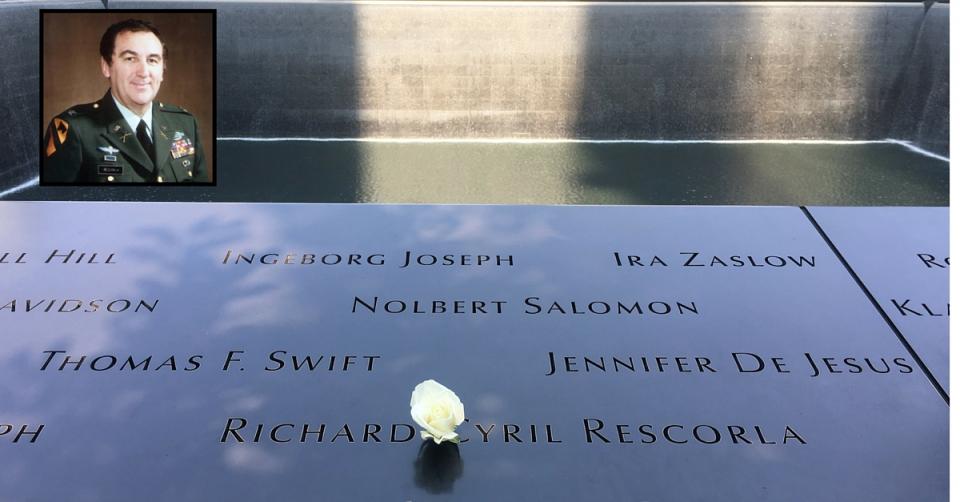
On September 11, 2001, when airplanes flew into the Twin Towers in New York City, several thousand people had to be quickly evacuated from the burning buildings. There were some plans in place; most had been misplaced or forgotten. And the chaos and confusion led to mixed messages– “stay put and wait for help…”,” don’t use the elevators…”,”get out as quickly as possible…”,” the stairways are unsafe…” But the vice president for corporate security at Dean Witter/Morgan Stanley, Richard Cyril Rescorla, was prepared for the worst. He had been planning and rehearsing for years after the failed attacks in 1993. He quickly implemented his detailed plans, ushering hundreds out of offices and into the stairwells, where they descended to safety in spite of the smoke and panic. He went back several times, checking to see who else needed help and guidance. Regardless of where they worked or who they were, Rescorla came with calm reassurance and authority, sending them into the path of rescue workers who could then offer greater assistance. Rescorla himself never made it safety– as he kept going up to get others out, he became trapped and perished when the towers fell. However, his years of planning, and his dedicated efforts on that fateful day saved the lives of hundreds, if not thousands of people. (See more here: https://www.911memorial.org/connect/blog/recognizing-war-hero-who-led-wtc-survivors-safety-911 )

We may not be called on to face another disastrous day like 9/11, but we are called to be alert and ready as we follow Christ. Those who followed Christ during His earthly ministry were called disciples. The name comes from the same root as discipline. They literally “walked” with Christ. They went where He went; they ate what He ate; they slept where He slept; they did whatever He asked them to do. If we seek to follow Christ, we must be ready to live lives of alert discipline. This comes after we take our first steps of Faith, and build on our character and understanding of God’s will. Our actions should not just be spontaneously “good” in the short-term, but patterned on the need to be prepared for the kind of challenges and trials we should expect to face. Just as Jesus was prepared for those who came to challenge Him with trick questions and false accusations, we need to be prepared to be challenged, rejected, and subjected to persecution. And we need to be prepared to respond, not with haughty complacency, outraged panic, or defensive tantrums, but with calm confidence and compassion.

The Apostle Peter, earlier in his letters, urges believers to be ready to give an answer (or a reason) for the hope that they have in Christ. (1 Peter 3:15) And this should not be a knee-jerk reaction to being challenged, or a snide commentary on doctrinal matters. We should be ready to be witnesses for the Majesty, Power, Grace, and Love of God as it has been experienced in our life and the lives of those around us. God never asked us to be His defense lawyers. He asks us to be faithful witnesses–not just of the facts about Him, but about our relationship WITH Him.

Photo by Andrea Piacquadio on Pexels.com

We also need to be prepared to be relocated or evacuated from lives of comfort, complacency, and expectation, in order to GO into the world and spread the Gospel. We will not all be called to be “missionaries” in the traditional understanding of the word, but we ARE all called to be on mission– to be ready to share our hope, our resources, our time, and our love– with others, near and far.

Photo by Porapak Apichodilok on Pexels.com

Today, I pray that God would continue to teach me as I live in obedience…that I would be alert and ready to speak, to walk, and to serve where and when and how HE sends. May I be ready to usher many others to safety as I share and live out the Gospel of Christ!

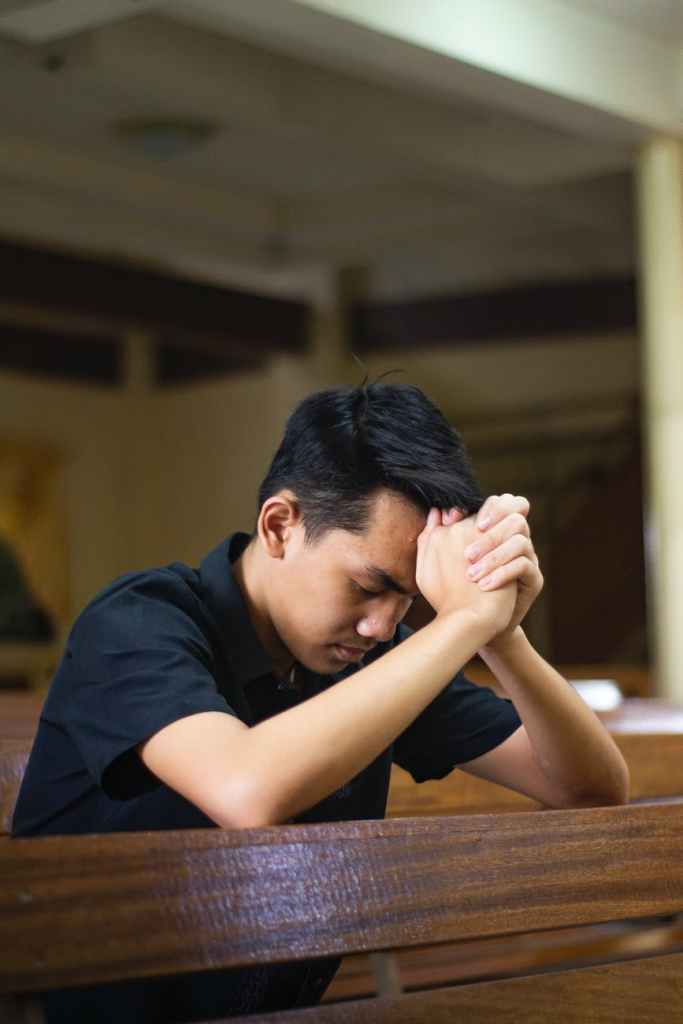
Timid Prayer

The Bible is full of examples of prayer– long prayers, elegant prayers, short prayers, confident prayers, even arrogant and angry prayers. Much has been written about praying boldly and with confidence. But I want to say just a few words about timid prayers.

Photo by Karolina Grabowska on Pexels.com

Sometimes, our awe of God is so powerful, and our awareness of our own shortcomings so deep, that it makes us pause. We “know” that God hears us; we “know” that God has made it possible to approach Him with assurance in His Love and Grace. But what we “know” and what we “feel” don’t always align. Sometimes this may make us “feel” as though our prayers are lesser, somehow– that God may still listen to our prayers, but will count them as less worthy or that they will be less effective.

Photo by Ian Panelo on Pexels.com

God listens to the spectrum of our prayers–including those when we are timid and fearful, confused and anxious, even those for which there are no words (see Romans 8:26)! Gideon (see Judges 6-8) was timid and reluctant; and yet he prayed for God’s help to strengthen his resolve. He ended up defeating a mighty army with just 300 men, and was listed in Hebrews 11 as one of the heroes of Faith. David’s psalms and prayers include many that are timid and questioning, yet God described King David as a man after His own heart. Even Moses doubted his abilities and prayed that God would send someone else to speak to Pharaoh. God answered Moses’s request, sending Aaron to help, but it was through Moses that God delivered an entire nation!

Sometimes, our timidity can be traced to our doubts or fears. Sometimes, it can be traced to guilt or shame. There are many reasons why we may “feel” timid, frightened, or unworthy to come before a Holy God, to ask for His help or guidance when we feel inadequate, or to admit that we have failed. But we must remember that NOTHING can separate us from God’s Love or from the privilege of praying to Him. A timid heart is not always a humble heart, but a humble heart is often a timid heart. And God promises to give grace to the humble (James 4:6).

Photo by Meruyert Gonullu on Pexels.com

We should rejoice with those who pray boldly (and not arrogantly). But never despise the lowly and timid prayer. After all, what makes prayer effective and powerful is not who is doing the praying or what words we use, or even how we feel– it is to WHOM we pray that makes all the difference.

Blog at WordPress.com.

Up ↑