“Seeing” Answered Prayer

God always hears our prayers. He always has an answer. But it isn’t always the answer we expect. Sometimes, God answers, “No,” or “Not yet.” Sometimes, He answers in ways that seem confusing and mysterious, and even ironic.

I remember as a young teen praying for a woman in the community who had lymphoma. In treating her condition, the doctors, trying a new experimental treatment, did permanent damage to certain muscles, leading to a progressively debilitating condition. She died a slow and painful death, unrelated to her original condition. Where was God? How could He listen to our prayers and give such a cold, cruel answer?

But God sees a bigger picture than we do. This precious woman had incredible faith and grit. She had spent years working diligently to help others and teach God’s Word. She continued her work, even in the midst of her health struggles almost to the end of her life. What might have caused some people to turn their backs on God made her more dependent on His Grace. She faced her pain and weakness with grit, strength, and hope in God’s eternal healing. God’s answer wasn’t to rescue her from the suffering, but to be present in it with her. And her example lives on to this day.

Some people would read about this and be dismissive. What a cop-out! What a delusion! But there is much more to her story than her own condition or even her response. One of the men in our church really struggled with God’s seeming indifference. He wrestled with his own faith for many months while watching her get weaker and weaker. But through his struggle, he grew in his conviction that God was present in every situation. He was inspired to do short-term mission work, partly as a result of this growth. Knowing that God would be with him, he threw himself into loving people from a different culture–different climate, different language, different work ethic– and helped build churches and other facilities for those in need. Many people were helped, inspired, and encouraged because of his dependence on God– a dependence enhanced by facing his own questions and doubts.

Family members and community members, watching her struggles, were inspired to pick up where she left off– working and teaching and reaching out to others with zeal and joy–following her marvelous example. Today, some of her family members are leaders in their churches, raising the next generations of witnesses to God’s mercy and power. Doctors, having failed in her treatment, learned from it– a difficult lesson for all, but a lesson, nonetheless. Her joyful attitude (before and during her struggles) inspired me to direct the Vacation Bible School program at our church for a few years, and to teach Sunday School when I moved to a new location. And those are just a few of the ways I have “seen” God’s answers to our prayers. God did not give our friend the physical healing we wanted. But her struggles– and her response of faith and perseverance–inspired a ripple effect far beyond her own pain and disappointment. And she has received the ultimate healing! Her pain, intense and unjust as it was, was only temporary. Her life, her legacy, her joy– they all live on!

How often do we look at a situation and think we know what is “best?” How often do we feel that God’s answers are “wrong?” Wrong timing, wrong outcome, full of hardship or pain– how can this be God’s “perfect” will for us? There was nothing about this woman’s situation that was comfortable; no reason to see a good outcome for her or her immediate family. She died. She experienced pain, with no earthly justice. Her suffering was undeserved and unmitigated. She refused to sue the hospital or the doctors– she wanted them to be able to continue to learn from her experience so they could help others NOT to suffer in the future. But her life was shortened and made grueling in the process, and she received no payout, no financial compensation, no symbolic reparation for her sacrifice. We received no “miraculous” answer to our prayers. It seemed at the time that the more we prayed for healing, the worse her condition became. We continued to pray anyway, knowing that God DID hear us, and God’s ways were not our ways– they are always better. Even when His ways seem like silence.

This all happened several decades ago, and many of the “answers” from our urgent prayers are still hidden from our eyes. Many of our questions remain unanswered. But God’s will is still active, even in these tragic circumstances. Someday in Heaven, it may be revealed to us exactly how God used this woman’s life and struggles to bring about blessings to hundreds of other people– causing them to grow strong through her weakness, drawing them to His healing and wisdom in a world of pain and confusion.

I have lost many friends to cancer. I pray for each one, and the outcomes are never exactly the same. Some go into remission, only to have the cancer return three or four years later. Others get amazing healing– surgeons are astonished and perplexed by the rapid or miraculous disappearance of cancer cells. Some go into fast decline and die almost immediately after their diagnoses. And each situation impacts people in different ways, showing God’s power and presence for those who are willing to look for them. Prayer isn’t a magic formula for immediate and total healing. Prayer is lifting up a situation that is beyond our control or understanding and trusting that God has a perfect plan beyond what we can see or understand. Cancer cannot take God by surprise. Death cannot outwit or overpower God. We live in a world where Evil can overwhelm us; our bodies can betray us; our future can be lost in the fog of uncertainty and suffering. But God is present– not only IN our suffering, but ABOVE and BEYOND our suffering.

We don’t pray for our friends and loved ones to suffer. We want them to be healed, to be free of pain and grief; to be at ease and blessed with abundance. This is normal; it is good. God wants to bless us. It doesn’t bring Him joy to watch us suffer. But He also wants us to see the blessing of His presence, His wisdom, and His power. Sometimes, we can’t see that as we look around. Sometimes, we need to look up! Even from a hospital bed (see John, chapter 9). Even from the flames of suffering (see Daniel, chapter 3). Or from the belly of a whale (see Jonah, chapter 2). And we will find that God is there.


Why Ask Why?

I’ve been asking myself “why?” a lot lately in regards to this blog.  Why am I spending my time writing about prayer?  Wouldn’t I be better served to spend my time productively– making something useful, keeping the apartment cleaner, going to the gym–even spending more time in prayer instead of dissecting it and babbling on to an invisible audience?

But the truth is that I began writing this blog in response to another question, a more basic question thrown at me (not personally, but thrown out to all who believe in the power of prayer)–  “WHY?”  They weren’t asking the question because they really wanted to know my reasons for praying; instead, they wanted to make me feel ashamed and embarrassed, to doubt God’s goodness and my faith.  In fact, they weren’t asking “WHY” so much as asking “HOW”.  How can you continue to believe in God and continue praying in light of random shootings, manifest injustices, rampant corruption, and senseless tragedies?  How can you say that God is good, when people continue to get away with evil?  If God exists, where is he, and how can you just sit back and trust in him?

The fact that I DO continue to trust God doesn’t mean I don’t have questions and concerns, and even righteous anger about the state of the world and the tragedies that fill it.  The questions come pouring out, sometimes keeping me awake at night, sometimes catching me at a raw moment– and they are important questions.  To pretend that I never wrestle or struggle with the questions is to say that good and evil, justice and mercy, that God himself– none of it really matters enough to seek an answer.  God forbid!!

But there is a vast difference in asking “Why?” and challenging God by saying “How? or How come?”

pexels-photo-1027931.jpeg

Consider a small child who asks, “Why is the sky blue?”  (Don’t you just love the inquisitiveness of small children?)  “Well…” I can explain that the sky itself isn’t really blue…I can go on to talk about scientific principals– the property of light, refraction through water molecules and dust particles, and more..I can point out that the sky doesn’t always appear blue, etc.  At the end of my long and factual discourse (assuming the child hasn’t already interrupted), s/he is likely to simply shake their head and ask, “But, why?”  WHY?  Because I haven’t really answered the heart of the question.  I explained HOW, not WHY.

Now suppose I don’t feel like being pedantic, and I simply answer “Because.”  You can guess what comes next.  The child will ask, “Because WHY?”  Because “Because” isn’t a sufficiently satisfactory answer.  The child wants more; he/she yearns for more comprehension; more understanding.

As an adult, we find this kind of questioning frustrating and annoying.  I think it is because we have been conditioned to think that questions either have a “How come” explanation that sweeps away much of the wonder and mystery, or a “because” answer that leaves us unsatisfied. We are frustrated by questions to which we already have a pat answer, and we are frustrated by questions to which we have never received a satisfactory answer.

As an adult, I may well ask, “Why is there evil in the world?”  This is an important question; one I should be asking.  Experts can and will give me all kinds of “how” answers– how the brain is wired, how emotions work, how society has failed various groups of people, how political structures create oppression, how religion teaches intolerance, how poor diet or lack of sunny days … there are a million explanation of “how” evil exists or why it persists.  And many of these explanations contradict each other, so they can’t even give a conclusive answer.  But just throwing up my hands, and saying, “just because” does nothing to answer my question OR provide understanding that could help alleviate the effects of evil in the world.  “Because” communicates my powerlessness to comprehend.

BUT

Something amazing happens when I stop merely asking people for answers to these questions and start asking God.  I don’t get a magical, comprehensive, incontrovertible answer to life’s thorny questions.  God doesn’t send me a “cheat sheet” with all the “right” answers.  I’m not suddenly an expert on good and evil or what should be done to eliminate crime and disease and poverty.  I still have to wade through the “how come” explanations and use my limited judgment to decide what course of action I can take to try to make a positive difference.  And I will make some mistakes along the way.  But when GOD says, “Because”, there is an authority, a majesty, and a wisdom that can never be present in my answer.  I say “because,” because I have no more to say; no better answer.  God says, “Because,” because HE IS the answer! And the cause!  And he gives explanations in his word for many of my questions– even if I don’t like the answers!  He doesn’t explain “how come” the sky is blue–even though science can tell me the “how come.” God doesn’t have to explain the blue sky –He causes it to be blue.  “Why is the sky blue?”  God makes it so.  “But why?”  Because He is God and I am not.  God explains “how come” there is evil in the world– it’s called SIN–but he doesn’t leave it there.  “Why?”  Because we have the free will to choose good or evil.  “Why?”  Because God wants willing obedience and loving companionship with us.  “Why?” Because God is love!  “So why does he allow evil to continue?”  Because he has a plan that involves redemption and restoration and renewal.  He is the cause of this plan, he is its author and finisher.  Moreover, he is the cause of my desire to ask “why?”, to seek for a more fulfilling answer, to yearn for a solution to the very evil that prompts my questions.

pexels-photo-490411.jpeg


I won’t stop asking “why.”  Not because I don’t have any answer, or because I don’t know the answer.  It’s just that the answer is so much bigger, so much better, so much MORE than I can handle in the shortness of this lifetime. And it’s important that I not only keep asking the question, but that I keep defending the answer. Because perhaps today, or tomorrow, or every day next week, someone may ask me WHY?


1 Peter 3:14-16 English Standard Version (ESV)

14 But even if you should suffer for righteousness’ sake, you will be blessed. Have no fear of them, nor be troubled, 15 but in your hearts honor Christ the Lord as holy, always being prepared to make a defense to anyone who asks you for a reason for the hope that is in you; yet do it with gentleness and respect, 16 having a good conscience, so that, when you are slandered, those who revile your good behavior in Christ may be put to shame.


Jesus’s Prayer List

Meanwhile, the moment we get tired in the waiting, God’s Spirit is right alongside helping us along. If we don’t know how or what to pray, it doesn’t matter. He does our praying in and for us, making prayer out of our wordless sighs, our aching groans. He knows us far better than we know ourselves, knows our pregnant condition, and keeps us present before God. That’s why we can be so sure that every detail in our lives of love for God is worked into something good. God knew what he was doing from the very beginning. He decided from the outset to shape the lives of those who love him along the same lines as the life of his Son. The Son stands first in the line of humanity he restored. We see the original and intended shape of our lives there in him. After God made that decision of what his children should be like, he followed it up by calling people by name. After he called them by name, he set them on a solid basis with himself. And then, after getting them established, he stayed with them to the end, gloriously completing what he had begun. So, what do you think? With God on our side like this, how can we lose? If God didn’t hesitate to put everything on the line for us, embracing our condition and exposing himself to the worst by sending his own Son, is there anything else he wouldn’t gladly and freely do for us? And who would dare tangle with God by messing with one of God’s chosen? Who would dare even to point a finger? The One who died for us—who was raised to life for us!—is in the presence of God at this very moment sticking up for us. Do you think anyone is going to be able to drive a wedge between us and Christ’s love for us? There is no way! Not trouble, not hard times, not hatred, not hunger, not homelessness, not bullying threats, not backstabbing, not even the worst sins listed in Scripture:
They kill us in cold blood because they hate you.
We’re sitting ducks; they pick us off one by one.
None of this fazes us because Jesus loves us. I’m absolutely convinced that nothing—nothing living or dead, angelic or demonic, today or tomorrow, high or low, thinkable or unthinkable—absolutely nothing can get between us and God’s love because of the way that Jesus our Master has embraced us. (Romans 8:26-38– The Message. Emphases added)

I keep a Prayer Journal– (for more info, click here: Prayer Journal). In my prayer journal, I have lists of names– people I pray for on their birthday or anniversary; people I pray for on the anniversary of a loved ones’ death; people who are hurting or in need at a particular time– and some days, the list seems very long. Sometimes the names on my lists are people I know well, but other names are there because I knew them well in the past, or because they are important to people I know well, but I don’t really know them personally. Often, I don’t really know how best to pray for an individual on my list. But imagine if Jesus were to keep a written prayer journal! He doesn’t just pray for people on special occasions or even in their time of trial– He prays continually for all who are His! And He knows each one intimately– He knows our every need better than we do!

You and I (if we are followers of Christ) are CONTINUALLY on His mind, and CONTINUALLY in His prayers! In fact, His Spirit even inhabits our groans and fumbled or aborted prayers. There is not a moment or a set of circumstances in which Jesus has turned His back on us or been distracted by something else. He is our Eternal Advocate, our Ever-Present Help, and our Heavenly prayer-warrior!

What a comfort to know that I don’t have to know exactly how or what to pray in order to lift up my heart-cry to God. My words may be muddled, my mind distracted by fleeting worries or doubts, but if I have placed my trust in Christ, I will never pray in vain. I may not be able to understand how or why or when God will work; I may not understand how my prayers fit into God’s overall plans. But I can pray with confidence that comes from knowing that God is Good, and Christ is my liaison with all that is Sovereign and Good. I cannot be separated from any of that by my own inadequacies or my lack of understanding. I cannot be kept apart from God by any personal failings or any forces working against me. And my fumbling prayers cannot be intercepted or twisted or negated by the enemy.

Your name is on Jesus’s prayer “list”; you are in His constant prayers before the Father. And each of your prayers is personally siphoned through the Holy Spirit and the Son to be presented– perfected– to the Father! What a captivating and encouraging thought! What an Amazing God we serve!

The Unchanging God

A few days ago, we had to reset all our clocks for “daylight savings time.” This is an artificial construct whereby we pretend that seven o’clock is really eight o’clock for several months in an attempt to “gain” more daylight hours. Several months from now, we will “move the clock back” to its “real” time. We talk about a “lost” hour which will be “regained” in the fall, but time is constant. There are still 24 hours in each day throughout the year. We are simply playing a game with time.

We live in a time of great changes. Whether it’s a “time change”, a change of government officials, climate changes, technological changes, and even physical changes as we age, we must learn to “roll with” and adapt to the many changes around us.

God does not change. All the changes in our life can leave us confused, frightened, agitated, and even angry. But God is constant. His love is constant. His nature does not change. His Word does not change. He is the same yesterday, today and forever (see Hebrews 13:8). We can trust Him to do what He has said He will do. We can rely on Him to be the same, regardless of the changes around us; regardless of the changes within us; regardless of our circumstances, our reactions, our failures, and our best efforts. Other people will let us down. Their love may be conditional or fleeting. Their promises can be broken. And the fact that we are so hurt by broken promises and sudden changes points to the reality of the unchanging God, and of our need for Him.

It can be tempting, with all the change around us, to doubt God’s faithfulness; to wonder, or even wish, that He, too, might change. Sometimes, we want Him to “bend” to fit in with our own desires, or to fit in with our society and culture. Surely, if the majority of our culture has changed, we believe that such change equals growth. We look at the past with disdain. “We just didn’t know better, then,” we say. And surely, if we know better now, God will recognize our new thoughts and attitudes as a positive change– in fact, God will change to fit our new awareness, our “better” way of thinking.

But that is not how it works. There are millions who believe that the “bad” days of slavery are behind us; others believe that the “legacy” of slavery is the greatest problem of our age. All without acknowledging that there are still millions of people who are enslaved– victims of the sex trade, victims of organ harvesting, victims of debt and war–even in our “modern” world. Abortion-on-demand still slaughters millions of human beings every year–in spite of our culture’s acceptance, and even championship of abortion as a “woman’s right.” Hundreds of thousands of young people are being mutilated because of our society’s growing belief that gender is “fluid” and God is not a good and wise creator.

While God’s unchanging nature can be a great comfort to the believer, it can be a stumbling block for those who listen to the roar of cultural voices, instead of the still small voice of the lover of their souls. And it can mean that Christians face misunderstanding and persecution as we hold God’s truths to be unchanging and unfailingly good.

I am choosing today to be grateful for God’s unchanging nature. I choose to celebrate that His promises are true; that His love never fails; that He is eternally wise; that His compassions are new every morning, and great is His faithfulness! (Lamentations 3:22-23)

What If?

As I am writing this, people in my country are voting or preparing to vote in a Presidential election.  Many of them are voting in fear, confusion, or anger, and asking, “What if my candidate/cause/political party doesn’t ‘win’ today?”  “What if I voted for the ‘wrong’ policies or people?”  “What does the future hold?”

These are not uncommon or unrealistic questions, but they are questions that can waste our time and sap our energy in hypothetical posturing.  The writer of Ecclesiastes says:

alone beach calm dawn

Ecclesiastes 11:1-6 King James Version (KJV)

11 Cast thy bread upon the waters: for thou shalt find it after many days. Give a portion to seven, and also to eight; for thou knowest not what evil shall be upon the earth. If the clouds be full of rain, they empty themselves upon the earth: and if the tree fall toward the south, or toward the north, in the place where the tree falleth, there it shall be. He that observeth the wind shall not sow; and he that regardeth the clouds shall not reap. As thou knowest not what is the way of the spirit, nor how the bones do grow in the womb of her that is with child: even so thou knowest not the works of God who maketh all. In the morning sow thy seed, and in the evening withhold not thine hand: for thou knowest not whether shall prosper, either this or that, or whether they both shall be alike good. 

woman wearing grey long sleeved top photography

It is not wrong to wonder about the future, but we cannot be sure that our actions will always produce the results we long for– especially when we have little control over other people’s actions and consequences.  The first two verses of this passage warn us not to “put all of our eggs in one basket”.  As free citizens in a democratic republic, we shouldn’t put our trust in any one political party, platform, or politician.  Nor should we live in a social or political “echo chamber”, listening only to the views and ideas with which we feel most comfortable, or least challenged.  However, we should look at the long-term consequences of proposals and the reasons behind them before we promote change just for the sake of it.

The third verse reminds us that some changes and events are beyond our knowledge or control.  It’s not that our vote “doesn’t make a difference” or that we’re on “the wrong side of history”– it may mean that history has taken a detour surrounding a certain issue.  It may mean that God is allowing for something we have not imagined (as He did in the days of Habakkuk). Get some great “Insight” into the Book of Habakkuk here.

aerial photo of buildings and roads

But there is more wisdom to come in verses 4-6.  Waiting for certainty of outcome, or being distracted by our circumstances or every “wind of change” can lead us to miss the very real opportunities for present action.  God has given us everything we need (see 2 Peter 1:3-5) for godly living and godly decision-making.  That doesn’t mean that our decisions will always reflect popular “wisdom”; it doesn’t even mean that our decisions will be the same as all other fellow believers and followers of Christ.  It DOES mean that we can make our decisions without fear.  God knows us– He understands your heart and mind better than anyone; He knows why people who agree on spiritual matters may not agree on politics.  But more than that, God KNOWS the future!  He knows all the things that we merely guess at.  So we should act in the present with the best information we have, and leave the rest to the God who knows best.

girl wearing blue denim dress shirt

Modern politics relies heavily on conjecture– polls, predictions, pledges, projections, plans, and campaign promises.  But God is still sovereign over all nations, governments, and peoples.  Instead of asking, “What if..” we should be asking of God, “What now?!”   And we need to be ready to listen and obey!  Let’s pray today for the wisdom to listen more, act with confidence, and trust our future to the one who has already seen it!

Praying in the Dark

(This post is an updated version of one that first appeared three years ago, during the COVID pandemic. I have updated a few of the references to reflect the change. There is still a lot of darkness and confusion in the world, but some of the sources have changed a bit.)

The past few days have been a dark place for me. I don’t mean that something horrible has happened, or that my life has been upended. But things seem dim and indistinct. Some things I took for granted turn out to be less than sure. Events have been chaotic and tinged with evil and sadness. The present economy seems far from certain, and rumors swirl around the upcoming elections. Many places around the world are at war, and there is violence, unrest, crime, and uncertainty nearly everywhere. Even traditionally “safe” institutions like the family and the Church are under constant attack. It is difficult to know who or what to trust– everything seems shadowed and indistinct.

I read a novel a while ago, set in the early days of World War II in London. Because of the threat of air raids from Germany, the people were required to “black out” their windows at night, and drive with no headlights. People who had driven or walked around the streets of London with confidence just weeks before were being injured or even killed because they could no longer trust the once familiar streets. Craters and rubble from bombing raids, or hastily built ditches and barricades; hidden dangers filled neighborhoods. And people could not count on streetlights, headlights, or lights in windows to guide them safely home. At the same time, thousands of people, fearing that the Germans would use deadly gas, were carrying around gas masks (just in case!), and leaving them on buses or at pubs or train stations, because they were unused to the extra responsibility. Suddenly, the gas mask they were depending on was lost, and all the extra preparation turned out to be useless, anyway.

It reminds me how often I would see people just a couple of years ago, getting ready to enter a store, only to return to their car for their required mask. Many people wore them “the wrong way:” others wore them for months longer than necessary. Still others wore the same mask for several days but failed to wash their hands. Some people stayed in their homes for weeks, even when they could have spent some time getting fresh air at a park or one their porch or stoop. Others took great risks going to stores where other customers were sick. And many workers had no choice but to report to work, knowing they would be exposed to COVID. Many people refused to get the vaccines once they became available, while others were demanding that everyone had to get the vaccine or be charged with a crime. No one was sure if they were “safe”– even with masks, vaccines, and other protocols. It was a very dark time.

Hard times and difficult situations can cause us to shift our focus and have to learn new routines–even new vocabulary! At certain times, life almost seems “normal.” At others, we seem to be tossed by every new wave that comes along. It can be easy to lose one’s way in the fog and darkness of chaos and changing times.

The Psalmist and King, David, had words of wisdom for times like these: “Thy word is a lamp unto my feet, and a light unto my path.” (Psalm 119: 105 KJV)

Even when things seem dark and it feels like I’ve lost my way, God is right beside me. If I have no other “light” to see by, God’s word will be enough to guide me on. When I pray– even in the dark–God sees me clearly, and knows the way ahead.

Photo by Pat Whelen on Pexels.com

And I needed to be reminded of that again this week.

When God Is In the Shadows

(SPOILER ALERT)– this post is about The Lord of the Rings and contains many references to plot devices. If you have not read the books or seen the movies, you will be confused and the narrative will be spoiled..

It’s no secret that I am a big fan of the Lord of the Rings by J.R.R.Tolkein. I’ve read through the trilogy several times, and I love to watch the movie version, as well. Even though it is a fantasy story, many of the situations and lessons are “true.” We may not face orcs or dragons or undead ring-wraiths, but we do face difficult challenges, such as war, grief, confusion, and oppression. We WILL face difficulties in life; we need to face them with resolve, courage, wisdom, and action. We may not have to destroy the Ring of Power, but we may have to battle addictions, habits, and relationships that threaten to destroy us.

One of the elements of the Lord of the Rings that captured my imagination from the very first readings was the “fall” of the wizards, Gandalf and Saruman. Saruman, who is introduced as one of the council of “good” wizards, and a mentor/friend of Gandalf, seems like someone who will be able to help the Fellowship in their quest to destroy the Ring of Power. But Saruman has “fallen” under the thrall of the evil Sauron. Using one of the “seeing stones,” Saruman has seen into the Dark Lord’s plans, and has decided that his own wisdom and power are enough to equal those of Sauron. His “fall” is one of self-delusion and arrogance. And his fall is described in terms of color. Where once he was called Saruman the White (the color of light when all the colors come together), Saruman becomes a prism, reflecting all the colors, but broken up, diffused, and no longer giving a true light.

Gandalf’s “fall” in the chasm as he battles the demonic Balrog is both dramatic and unexpected. Coming on the heels of Saruman’s betrayal, it sends shockwaves through all of Middle Earth. It left me devastated. After all, Gandalf is wise, good, and powerful. Having read The Hobbit, it was comforting to have a familiar guiding force to lead this new “adventure.” It is his knowledge and encouragement that has provided leadership and stability for the Fellowship of the Ring. His sudden and tragic absence leaves a gaping hole and many questions. His is a literal “fall.” He falls into blackness– fire and shadow and utter silence.

It strikes me that the wizards of The Lord of the Rings are not unlike the gods and heroes we make for ourselves. We imagine God (and often human heroes, including pastors and other religious figures) as being benign old men, walking among us, offering just enough wisdom, power, and “magic” to entertain, enlighten, and encourage us. We listen for good advice (whether or not we actually take it!), and we take comfort in the fact that they seem to know all that is going to happen. Of course, the wizards in the books are not REALLY gods–they know many things, but they cannot see all ends; they have great power, but they cannot defeat Sauron on their own (nor successfully challenge him, as Saruman learns); they are not always where they say they will be when they said they would be there.

“You’re late, Gandalf!”
“A wizards is never late, Frodo Baggins. Nor is he early. He arrives precisely when he means to.”
(From the Fellowship of the Ring)

Not only is Gandalf “late” for Bilbo’s special party (according to Frodo), but he completely misses his meeting with Frodo and the other hobbits in Bree, due to circumstances beyond his control. And, when the company seems to need him most, he falls into the great chasm and they must flee to the Elves at Imladris. Galadriel offers some encouragement, but it is tinged with dire warnings. Saruman’s “fall” highlights his shortcomings– he can only “see” victory through compromise, deception, and the machinery of war. Everything about him becomes twisted and sullied. In the books, he ends up being a two-bit tyrant, defeated in his attempt to take over the Shire. In the movies, he “falls” from his tower of Orthanc and sinks into the stinking pools festering around his ruined ambitions.

What about our visions and expectations of God? Sometimes, it seems as though He is “late” or “absent” in the midst of our difficulties. We want Him to come in and save the day– tell us exactly what to do next, or make an obstacle disappear, or bring a host of warriors to fight our battles. Other times, it seems as though our vision of God is seen through a prism…if God is really good, how could He let _______ happen? If God is really just, why is there still so much injustice around us? And what about others who follow a different “God.” Which one is real? Which one is “Right?” How can we know? In fact, those who follow Christ are following a God who faced betrayal and death– and He seemed to be defeated. And sometimes, it seems as though He has left us to the mercy of the evil that surrounds us.

God sometimes seems to be “fallen into shadow.” He seems to be absent. Or at least distant and silent. Just as in The Lord of the Rings, we can be left like the Fellowship– shocked, dismayed, left feeling lost and hopeless. Where is God in those moments?

But when I re-read the books, or when I sit down to binge-watch the movies –again– I find myself seeing things from a different perspective. Gandalf and Saruman both “fall” before even the middle of the story. Saruman’s betrayal seems not just tragic, but nearly insurmountable. Gandalf’s absence leads (indirectly) to the breaking up of the Fellowship into smaller, leaderless factions. But here’s what I see clearly in reflection– the Shadows that seem to swirl around the wizards are just that. They are shadows. There is darkness in the Land of Mordor. But Frodo and the rest of the Fellowship carry their own light. (Frodo, in fact, carries a literal light in his gift from Galadriel). They stay true to one another and true to their quest. As Sam points out at Osgiliath, they have had many chances of turning back and giving up, but they hold on to the hope that Good will win over Darkness, and Truth will defeat oppression and deceit, and yes, even the Ring of Power. Gandalf’s absence, while shocking and discouraging, is not permanent, nor is it devastating. It only seems so in the shadow of uncertainty and the chaos of war and suffering. The other members of the Fellowship actually develop their character, their strengths, and their gifts when Gandalf isn’t there to make things easier. He has already given them the wisdom they need– even if they don’t realize it. Gimli and Legolas become a team as their unlikely friendship develops. Merry and Pippin mature into warriors and diplomats. Aragorn becomes the King he was always destined to be. Frodo and Sam–unaware of Gandalf’s victory until the very end, still face all their dangers, including betrayal by Gollum, and save all of Middle Earth!

And so it is with our difficulties. We are looking around for help, wondering how we will continue if God is in the shadows; if God remains silent. We want to see His hand moving the chess pieces, or hear His voice calling out our next step. When we don’t hear it, we can make bad choices– we can give up hope, compromise with the enemy, or trust in our own power to see us through–or we can stay true to His Word and keep running the good race (see 2 Timothy 4:7-8) God does not abandon us– unlike the wizards, He is omniscient and omnipresent– but sometimes He stays in the shadows, knowing that it is for our development and maturity. I don’t have certainty about my choices and my actions, but I have the Bible and I have the Holy Spirit.. I have prayer. And I have the people God sends into my life to give advice and encouragement. I may not know if I can trust even the advice of religious leaders, but I can compare their advice with what I read in God’s Word and what I see in their actions. When I read the Bible, I read about promises God made to the nation of Israel– promises He kept. I read in Ezekiel, and Daniel, and again in Matthew and Revelation about His promises for the end of the ages.

It may look dark for the characters in The Lord of the Rings as they battle their way through Middle Earth. But I DO know how the story ends! I know that Gandalf does not stay in the shadows– he comes back more powerful than ever! And Saruman’s army of orcs is defeated; Saruman’s poisonous plot to usurp the mind and will of King Theoden is discovered and the king restored to health. And the Fellowship (excepting Boromir) is reunited after Frodo and Sam are successful in destroying the Ring. And I may not know the next step in my own story, but I know how my story will end! God may seem to be AWOL or “in the shadows” during my current circumstances– in my grieving, struggling, and pain. I may not see justice and peace in my near future– I may not see them in my lifetime– but I can KNOW that God is never late. He is never too early. He will arrive precisely when He means to. No shadow will be able to hide Him; no darkness will be able to comprehend Him. He will come in the blazing light of His Glory– and He will come to make all things new!

My Father

One of my hobbies is genealogy. I have been tracing my ancestry (along with that of my husband and my in-laws) for many years. I am fortunate, in that I know who my parents, grandparents, and even great-grandparents were, when and where they were born, and when and where they died. Most my ancestors lived in the same area for at least five generations, some for seven or eight generations.

My great grandfather and his cousin, c. 1885

I know many others who struggle with genealogy, or have lost interest in “finding their roots.” Some are adopted, or their parents were adopted. The records have been sealed, or worse, lost, and they cannot find out even the name of a parent or grandparent to trace. Others have a murky and mysterious family history– someone in their family was illegitimate or born out of wedlock and no biological father can be confirmed.

Almost everyone who works on genealogy has, as one point, “hit a wall.” There are some people whose history is lost. They moved frequently, or they lived in a city or town where records were destroyed by fire or flood; some changed their name to avoid persecution or prosecution–some where enslaved and their names erased against their will; some lived at the edge of the wilderness, where few records were kept, and fewer still survived; some died young; some were illiterate, and left no written records. Many families have boxes or albums filled with unidentified (and unidentifiable) photos.

Some genealogists “hit gold.” They find in their family history a famous person from the past– a king or queen, military hero, chieftain, statesman, scientist, artist– some person of note. Often, however, these “finds” turn out to be red herrings. Early in my research, I thought I had stumbled on to a line of descent from one of the passengers on the Mayflower. How exciting! Except I had followed the wrong line. Two men of the same name in the same town had been born just two years apart. I had found the “right” name in a book about the Mayflower descendants, but it wasn’t actually the “right” one. A similar thing happened with the name of a signer of the Declaration of Independence. I even had a cousin who insisted that this signer was our direct ancestor. But it turned out to be incorrect. We WERE related to the signer, but not descended from him. It turns out he was a great-granduncle of our ancestor.

Human genealogy can be a rewarding pursuit, or a frustrating one. But our spiritual genealogy can be crystal clear, and is full of exciting news! Our Father is the King of Kings! We don’t have to wonder who He is or whether we will be accepted and listed as a family member. His grace extends to everyone who believes on Him– and it comes with the fullness of being His Children for all eternity.

My dad

When I pray to My Father, that is not just a polite or wishful phrase. God IS my father– just like my human father, only eternal and omnipotent! I have inherited various traits from both my fathers–creativity, wonder, curiosity, a sense of purpose and responsibility, love for others and for the world around me, love of music and nature, and a love of puns(!)–and I am an heir to all the riches of my Heavenly Father’s mercy and grace. I am a descendant of all the heroes of the Faith– not physically through human birth, but by spiritual re-birth– a daughter of Abraham, Isaac, and Jacob. All that God promised to them, He shares with me. Not because I deserve them, or could ever earn them; because He has made it so.

Father’s Day is coming up this Sunday. And it can be a time of reflection on our earthly fathers– their strengths, weakness, failures, and relationships. Father’s Day can bring many poignant memories, or waves of bitterness or regret. And looking into our long family history– if we can find it– may result in finding patterns of behavior that have led to pain or progress. But whatever your genealogy today–whether you know it, or take pride in it, or despair of it–you can live in the awe of being a beloved and privileged child of the King! And He wants to chat with you today! We have much to celebrate on Father’s Day if we reflect on our wonderful Heavenly Father!

The Silence of God

I am just finishing the book of Job in my daily Bible studies. Job is an interesting book. It begins with a discussion between God and Satan, in which God seems to “set up” Job. God points out Job and his righteous life. Satan (The Accuser) fires back that Job is only enjoying God’s favor; that, given hardship and pain, Job will turn his back on God and embrace evil. God allows Satan to ruin Job’s life– taking away his property, his status, and even all his children. (Ironically, Satan doesn’t cause any harm to Job’s wife, who acts as “devil’s advocate” later, telling her husband to “Curse God and die!”)

Job passes the first test. Satan asks for a “second chance,” saying that Job is still enjoying God’s physical protection. So God allows Satan to cause a painful, wasting disease to attack Job.

But the narrative shifts dramatically at this point. The next several chapters focus on Job’s confusion; his suffering; his bitter quest for answers to the age-old question– Why does God allow bad things to happen to good people? Job’s friends, who start out sharing his sorrow, end up being of very little help and no comfort at all. They insist that God wouldn’t– couldn’t– allow bad things to happen to an innocent man. Therefore, they conclude that Job “deserves” his pain and misfortune. Job insists that God is Righteous, but he wants God to answer his questions– WHY? WHY ME? WHY THIS? WHAT HAVE I DONE TO DESERVE THIS?

And God is silent. Through several rounds of discussion and argument, God is nowhere to be found or heard. Job’s complaints and questions anger his friends, but God remains silent and seemingly unmoved. The central question is not so much about God’s righteousness, but about His Goodness. Is God Good? Can a loving God allow people to suffer– especially if it is unjust– and still be called “Good”?

Reading through the book of Job, we are aroused to the same kind of anger that Job expresses. There are times when I have questions; times when I am suffering; times when I just don’t understand– “What have I done to deserve this?”

And yet.

The Bible is full of “and yet” moments. God finally speaks, but He never answers Job’s questions directly. Job did nothing to “deserve” his suffering. And yet, God allows him to be tested, tormented, and stretched to his breaking point. Not because Job has done something wrong, but because he has been faithful! God never answers Job’s complaints– and yet, God does not leave Job without any answer. In fact, God restores Job’s fortunes and gives him more children, so that his final condition is even better than before! God justifies Job in front of his friends, restoring his status, as well. Job complains about not having a mediator to defend him before the Almighty. And yet, Job trusts that such a mediator– such a redeemer– exists. He cannot see Jesus– and yet He puts his faith in the promise of His coming!

The book of Job ends with Job praising God–BEFORE his restoration– acknowledging that God is not just Good, but that He is Great! He is Great beyond our understanding. He is Holy, and His ways are higher and greater than our ways. Job’s suffering, while painful and undeserved, allowed him to understand God in a new and deeply personal way. God allowed Job to be crushed but not destroyed; tested, but not terminated. God was silent, but never absent.

In fact, the one character who is conspicuously absent at the end of the story is Satan! He has “lost” his challenge to make Job repudiate his right living and his love of God. He has been given two chances to strike at the authority and character of God– and he has left the battlefield in contempt and defeat. He has caused Job pain and suffering, but he has not caused Job to quit.

Job’s questions throughout the book which bears his name are really prayers. He is talking about God, and talking TO God, even as he addresses his friends. He is bitter and angry and confused– AND YET– he prays!

May that be said of me today, as I face questions, trials, and suffering. I can “Take it to the Lord in Prayer.” Not just when things are going well, and I am praising God, but when life seems bitter and I am questioning God’s justice. He IS Sovereign. He IS Good. He IS listening. He DOES Love me.

I Know That God Lives

13-20 “God alienated my family from me;
    everyone who knows me avoids me.
My relatives and friends have all left;
    houseguests forget I ever existed.
The servant girls treat me like a deadbeat off the street,
    look at me like they’ve never seen me before.
I call my attendant and he ignores me,
    ignores me even though I plead with him.
My wife can’t stand to be around me anymore.
    I’m repulsive to my family.
Even street urchins despise me;
    when I come out, they taunt and jeer.
Everyone I’ve ever been close to abhors me;
    my dearest loved ones reject me.
I’m nothing but a bag of bones;
    my life hangs by a thread.
21-22 “Oh, friends, dear friends, take pity on me.
    God has come down hard on me!
Do you have to be hard on me, too?
    Don’t you ever tire of abusing me?
23-27 “If only my words were written in a book—
    better yet, chiseled in stone!
Still, I know that God lives—the One who gives me back my life—
    and eventually he’ll take his stand on earth.
And I’ll see him—even though I get skinned alive!—
    see God myself, with my very own eyes.
    Oh, how I long for that day! (Job 19:13-27 The Message)

He Knows MY Name

My first name, Lila, is not unique, but it is uncommon. Last week, when my husband and I got away for a few days for our anniversary, we visited a gift shop. I was excited to see a magnet with my name on it, so I bought it (though we don’t need any more kitchen magnets, and it was more than I would normally spend on such a trinket). My husband, David, on the other hand, has the opposite experience. He can be in a room with 20 people, and if someone calls out, “Hey, Dave,” sometimes three people will answer! He can find trinkets that say, “David,” “Dave,” and “Davey” almost anywhere.

Names can be funny that way. Almost everyone knows how to pronounce my husband’s name. And spell it. It’s a good name, a strong name– that’s one reason it’s so popular. My name is shorter by one letter, but almost no one spells it correctly– I’ve seen it spelled Lyla, Lilah, Laila, Leila, and Lily; and I’ve heard it pronounced Lee-la, Lay-la, Lill-a, as well as just misread completely as Lisa, Lilian, Lina, Lenore, Delilah, Lora, Mila…

Both David and I were named after other members of our families, and we have nieces, nephews, and cousins named David or Lila, as well. Our names have personal and family importance beyond just the normal meanings. Still, somewhere in the world, there are dozens of people who bear the same name (first, middle, and last) as my husband, while there may be one other who bears my same name.

God knows my name. He never misspells it, never mangles the pronunciation or gets me confused with someone else. And he knows “my” David, and never gets him confused with someone else or lumps him in with a group of other “Davids”. God knows why David and I were named as we were, and He knew the family members after whom we were named. He knows the names of our yet-unborn great-great-great grandchildren!

Jesus had twelve disciples. The Bible records that two of them were named James, two were named Simon, and two others were possibly named Judas. Jesus gave one of the “Simons” the new name of Peter’ the other was also known as “Simon the Zealot”. The two James were distinguished as “the elder” and “the younger” or “James the brother of John, and son of Zebedee” and “James the son of Alpheus.” Judas Iscariot was the disciple who betrayed Jesus to the authorities; there was another disciple, who went by the name Jude, or Thaddeus, or Judas the brother of James. Historians know little about “the other Judas”, and even the authors of the Gospels give different lists of names for the twelve disciples, given that some of them went by more than one name. However, Jesus knew each one from before they were even born.

Of course, God knows far more than just our names. He knows our every thought– before we even think it! God “gets” us–for better or worse. He knows our quirks and our capabilities. He knows our deepest shame, and our deepest fear; our greatest accomplishment and our most secret desire. Even more, God knows our future; He knows all that we could be and all that we will become (or fail to become). He knows “what might have been” if we had been born in a different time or place. He knows exactly how our decisions have affected us for good or ill, and how others’ actions have impacted our character.
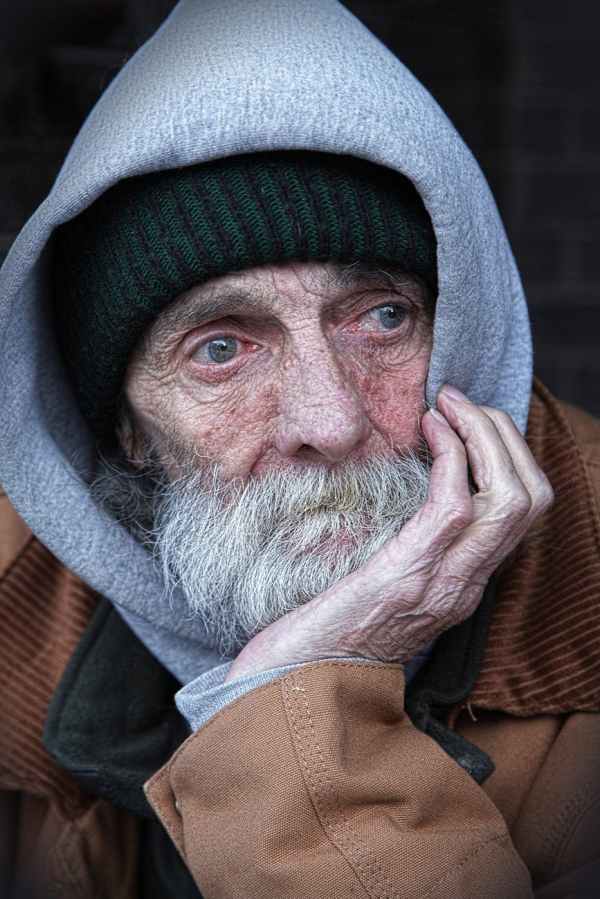
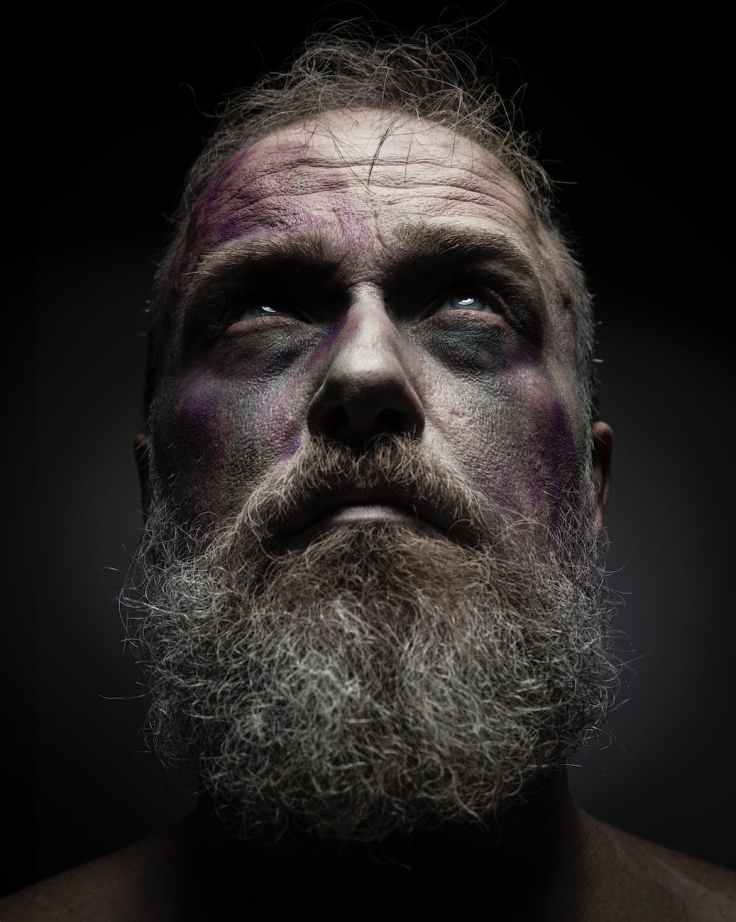
There are nearly 8 billion people alive on this planet at the current time (7.9 billion estimated as of September 2021). God knows the name and dreams and histories of each and every one! And when we pray, we are not praying to someone whose knowledge of us is limited or determined by our relation to someone He knows “better.” Imagine God having 8 billion kitchen magnets with names on each one–even if there were 100,000,000 of them with the name “David,” God would know exactly which one belonged to “my” David. And God would not confuse mine with any of the millions of similar magnets saying Lily, Lisa, Lylah, Lola, Laura, or even “Lila.”

What an amazing God! What a privilege to call on HIS Name, knowing that He knows us so intimately and loves us so thoroughly!

Blog at WordPress.com.

Up ↑