When Nebuchadnezzar is Your Boss

Have you ever worked with a “difficult” boss or co-worker? Even a job you love can become a source of tension and even torture. Maybe they are lazy. Maybe they are unreasonable and demanding. Maybe they are incompetent. Maybe they are corrupt. Maybe they just “push all your buttons.” Whatever it is, it leaves you frustrated, stressed, and questioning your future.

Photo by Mikhail Nilov on Pexels.com

I’ve worked for several bosses through the years, and most of them were wonderful. But there were a couple…I can still remember uncomfortable confrontations and unresolved issues even years later. And I know several others workers who suffered under those same managers– many of them left to take other jobs because the situation took so long to resolve. A bad boss can really hurt a company or office. They can destroy morale, decrease efficiency, and make it difficult for anyone to know what the goals and expectations are– this week!

Photo by Andrea Piacquadio on Pexels.com

One of the difficult things about working under a “bad” boss, is that, often, what makes them a “bad” boss also makes them look “successful”– at least in the short term. They manage to turn in impressive “numbers”– it looks like production is up and waste is down; it looks like everything is in order to outsiders. Those who leave are often workers who have been with the company a long time– new hires come in at a much smaller salary, and with “fresh” ideas– at least initially. If there is an overriding goal, they will pursue it with fanatical focus, making them look committed, determined, and competent. If workers can see underlying problems, other people only see what looks like focused efficiency and “sour grapes” from harassed staff members.

Photo by August de Richelieu on Pexels.com

When I worked for “bad” bosses, they seemed to last about five years, before their cruelty, arrogance, or incompetence forced them to leave. They went on to “new” positions, where they followed the same patterns.

Photo by Victor on Pexels.com

In the Bible, there was a young man (just a teen when we first meet him) named Daniel. Daniel had grown up in a noble family in the capital city of Jerusalem. But Jerusalem was besieged and fell into the hands of a tyrannical ruler named Nebuchadnezzar. Daniel was captured, exiled, and taken into Nebuchadnezzar’s service. On the surface, this may have appeared to be a “plum” position; he got to live in the palace, and he served as an advisor. He had food, clothing, advanced education, and many “creature comforts” available to him that were lost to many of the other exiles who were forced into manual labor.

But Daniel’s position was far more precarious than it appeared. Nebuchadnezzar wanted men of intelligence, culture, and breeding– and he wanted them to be clean, healthy, and confident–but he also demanded results, and often, he demanded the impossible! Field hands might have brutal masters who would beat them for minor offenses, but Nebuchadnezzar didn’t inflict punishment– he simply “eliminated” anyone who didn’t produce the desired results!

In the history books, Nebuchadnezzar looks like a successful ruler– his armies had conquered every region they attacked. And by sending the people into exile– bringing the best and brightest to Babylon, and scattering the rest–Nebuchadnezzar kept the conquered regions from rebellion and revolt. He appointed satraps and governors to help manage the empire, and it looked like nothing could stop him from conquering the world! But Daniel wasn’t reading a history book. He was living and working under one of the harshest and cruelest rulers of his time!

The book of Daniel gives us at least three examples of Daniel and his friends being put in life-and-death situations involving some of Nebuchadnezzar’s more impossible demands. And in each case, God gives miraculous rescue to Daniel and his friends as they bravely serve this unwelcome “boss.”

When we study Daniel, we tend to focus on the miracles– the fiery furnace, the writing on the wall, the lion’s den, and the answers to impossible dreams. But God didn’t just send miracles, and He didn’t rescue them from having to serve in Nebuchadnezzar’s court (or in the courts of some of the equally bad rulers who followed!)

God’s purpose in our life may involve serving with or under people who abuse their authority, or who don’t “deserve” to be leaders. But His purpose also involves teaching us to serve, as Daniel and his friends did, with integrity, dignity, and consistency. It wasn’t easy for Daniel– he was the target of jealous plots, megalomaniacal panics, and culture wars. God didn’t rescue Daniel from his situation– Daniel remained in exile, likely for the rest of his life–but God rescued Daniel from being consumed or changed by his situation. And Nebuchadnezzar wasn’t a “mistake” that God made. He was God’s chosen tool to punish Israel for its unfaithfulness, and His chosen tool to show His sovereignty OVER even the great Babylonian Empire!

Daniel was known as a man of prayer– that’s how he ended up in the lion’s den (years later under another ruler)! Praying won’t keep us from experiencing “bad” bosses, or from facing difficult situations. But prayer can help us to persevere, to endure, and to be a shining example of God’s faithfulness.

I would love to say that I behaved like Daniel when I was in a “bad” boss situation. I didn’t. I endured, but I was impatient and vocal in my displeasure. I complained, I worked grudgingly, and I even changed jobs to get away from the situations. I don’t mean to suggest that it is always God’s will that we stay in a bad situation– I was lucky to be able to change jobs, and grateful for the opportunity to continue to do good work elsewhere. But in times when we are being tested and cannot change jobs, or have to endure chaos and upheaval for a long season–we need to be willing to be like Daniel, who was faithful, loyal, patient, and trustworthy. Daniel “kept his head” because he kept his heart turned toward the source of his real success– not the King of Babylon, but the King of Kings!

Photo by Pavel Danilyuk on Pexels.com

I don’t know what situation you may be facing today– what injustices, or upheavals you are enduring. But I pray that God would give you the strength and wisdom to be a Daniel. Look past the Nebuchadnezzar in your world, and serve the King!

Chariots of Iron

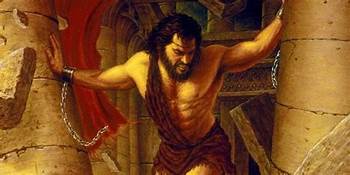
I was reading from the book of Judges today, and a curious phrase jumped out at me. The entire book of Judges is filled with the failure of the people of Israel to fully claim their promised inheritance from God. Generation after generation passes, with a cycle of sin, enslavement, and deliverance as God raises up various judges and heroes, like Gideon, Deborah, or Samson.

Already in chapter one, there is a hint of the trouble to come. The book begins with several successful battles after the death of Joshua. The people of Israel consult the Lord, who fights with them in several key battles. But in verse 19, it says: “The Lord was with the men of Judah. They took possession of the hill country, but they were unable to drive the people from the plains, because they had iron chariots.”

Say what? The Lord was with the men of Judah– the LORD! They had taken possession of the hill country– rough terrain that would have been filled with natural barriers, rocky fortresses, and literal “uphill battles.” They had destroyed massive cities like Jericho less than a generation before. They had defeated armies far larger and better positioned. They had defeated giants! And now, suddenly, they are “unable” to drive the people from the plains– because the enemy had chariots of iron?

Photo by van4er ivan on Pexels.com

https://www.biblestudytools.com/commentaries/gills-exposition-of-the-bible/judges-1-19.html I think this commentary says it well. The chariots of iron became the excuse for the Israelites’ unwillingness to obey; to trust in God’s strength instead of their own. After all, it wasn’t that long before in their history when God had drowned the entire Egyptian army, including all its chariots, in the Red Sea.

I don’t think it was about the chariots of iron. I think it was about the plains. I think sometimes it can be more difficult to fight on “the plains.” When God sends us on an “impossible” mission, we must face our own fears and acknowledge our weaknesses– we KNOW we cannot do it in our own power. But when we face an enemy on “equal footing,” we are tempted to trust in our own resources– the toughness of our armor, the skill of our generals, the speed of our horses, and the superiority of our weapons. We hope and expect God to fight for us where we cannot hope to win alone, but we don’t ask for God’s help or protection in areas where we believe our own strength should be sufficient. Israel had a fine army– seasoned veterans of battle. If they HAD iron chariots of their own, victory might have been expected– with or without God’s divine intervention. But victory eluded them, because they didn’t finish the fight!

Photo by Sora Shimazaki on Pexels.com

We do the same thing today–we fail to march into battle because the enemy has “chariots of iron.” Maybe they have more social status, more political or economic power then we have. Perhaps we see that they have the means to make our lives painful “on the plains.” We see their arrogance, and their wealth and success, and we let ourselves be intimidated. We know that God has promised never to leave us or forsake us, but He has not given us chariots of iron to match those of the enemy. We don’t pray for the courage to face their chariots, or the wisdom to trust that the battle belongs to the Lord. Instead, we make excuses for not fighting the battle at all.

The rest of the book of Judges is filled with war, slavery, corruption, death, and evil. The very last verse sums it up: “In those days Israel had no king; everyone did as he saw fit.” (Judges 21:25)

Photo by Ian Panelo on Pexels.com

Lord, help me to be courageous, and humble. May I always trust in You above all–especially above chariots of iron, and weapons of mankind.

“Discovering” Jesus

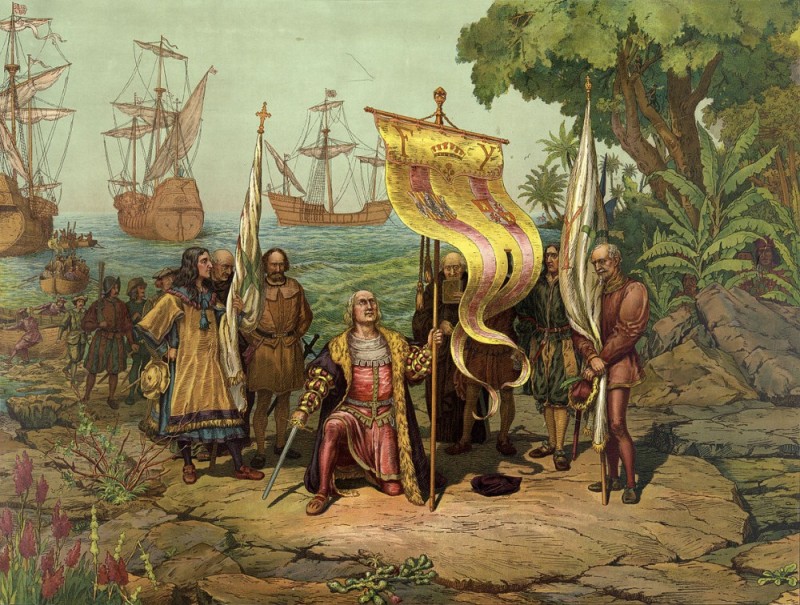
Some places in America are observing Columbus Day today. This has become a controversial subject. For many years, schoolchildren were taught that Christopher Columbus, an Italian explorer working for the Spanish, “discovered” America when he landed on the island of Hispaniola in 1492.

Modern scholars are offended by this for a variety of reasons. First, there were already people in the Americas– Columbus didn’t “discover” a new-found continent devoid of people or culture. Just because the Spanish court, and most of Europe, didn’t recognize the existence of North and South America and the Caribbean, doesn’t mean they were undiscovered. It only means they were undiscovered by the major European powers. Scholars go on to argue that Columbus and the Spanish (and the French and English and Portuguese who followed) did not so much “discover” the “New World;” they invaded and stole it from those who were living here “in peace.”

Photo by kat wilcox on Pexels.com

I disagree with the way scholars have “revised” the history of Western culture. But it causes me to think of how, over the years, we have also revised the message of the Gospel, and our concept of Christianity.

Much like the modern scholars’ version of Columbus “Discovering” America, many people like to talk about “discovering” Christianity. We “encounter” the Gospel. Maybe we join a local congregation of believers, or a Bible study group. It’s exciting– at first. It is new and amazing in its message of hope and love and grace.

Photo by Luis Quintero on Pexels.com

But then we hear ugly stories of Christians who are hateful, judgmental, condemning, greedy, hypocritical, and hurtful. “That can’t be true; that can’t be what Christianity is about,” we say. And so we vow that “our” Christianity will be different. We adapt our message to the current trends in our society. We tailor our message to our friends and neighbors, even when the it’s no longer true. We wipe out and “conquer” and reshape those verses that cause offense. We recreate Jesus into a “great teacher,” a pal or a guru, rather than a Sovereign Savior. We end up following our own gospel, rather than the Gospel of Jesus Christ.

Photo by Andrea Piacquadio on Pexels.com

Or, we double down on legalism, making our walk with Christ more like a walk with His accusers, the Pharisees. We scream and argue about the “right” way to worship, or dress, or manage money. And we seek to wipe out those who don’t follow our traditions. We remove the promise of Grace from our Christianity, and replace it with judgment.

Except it isn’t “our” Christianity. We haven’t “discovered” the Gospel to make it into a “new” and better religion. We haven’t “discovered” a Jesus who is kinder or more accepting or less judgmental than He ever was. And We don’t follow a Jesus who refuses to love those who are not perfect or forgive those who have “fallen short of the glory of God.” (Romans 3:23)

Photo by Pixabay on Pexels.com

Our “discovery” of Jesus should be a lifelong discovery– a lifelong journey of becoming who He wants us to be; becoming more like who He really is. Part of that is living out our faith in a world that refuses to understand or accept the Gospel. Part of it is living our lives according to the Bible’s principles, and not our culture’s trends. Part of it is trusting that God’s word never changes, even when the world around it does. And part of it is a consistent pursuit and practice of humble and earnest prayer. Otherwise, we may well be guilty of the same conquest and colonization as those we are condemning who came before us.

Blog at WordPress.com.

Up ↑