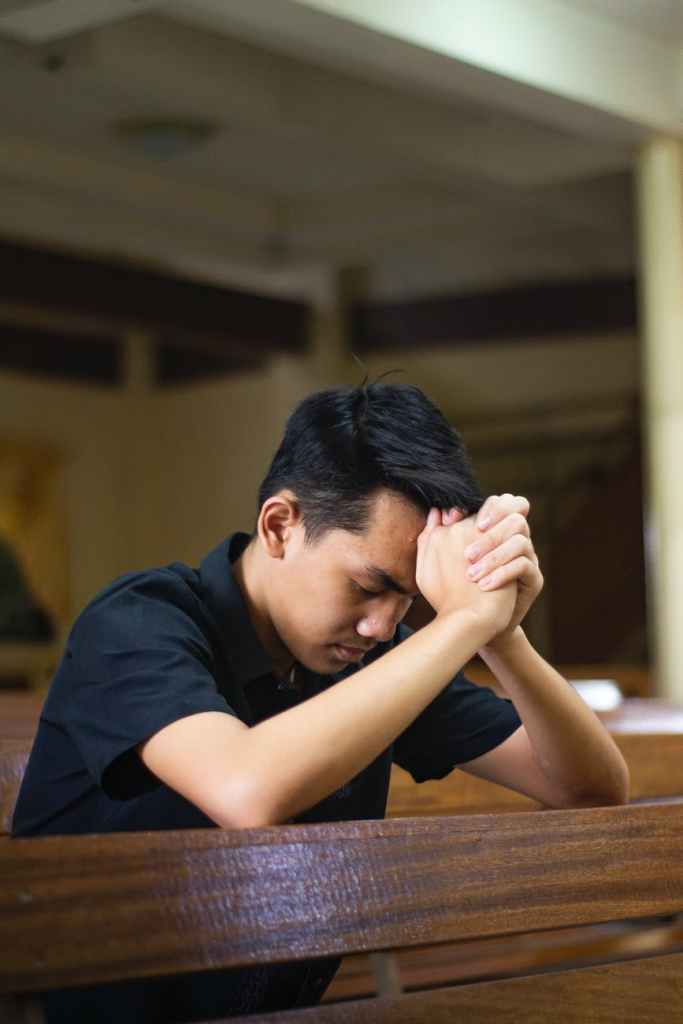
Do you pray fervently? Do you pray faithfully? I confess that sometimes I go through periods of fervent prayer, but it doesn’t always last. And, while my goal is to pray faithfully, I sometimes struggle with daily prayer seeming bland.
Thankfully, God does not demand constant fervor and faithfulness (though He does provide His Spirit to help us with both!) God wants us to come before Him exactly as we are; He KNOWS exactly what we are feeling, and He wants us to experience His presence THROUGH both the peaks and valleys. Experience has taught me that faithfulness in prayer can often lead to renewed fervor. Fervor and ardency can be influenced by our emotions. I pray most fervently when I feel needy, or when I am swept up in joy, or when I am surrounded by others who are riding a particular emotion. But I pray most faithfully when I choose to step out in spite of my emotions or circumstances.
Recently, I was reading in 2 Chronicles about “Good King Asa” of Judah. If you read chronologically through the Bible, you meet King Asa in 1 Kings (briefly in chapter 15), and again in 2 Chronicles (chapters 14-16) Both times, he is classified as a “good” king in Judah, one who “did what was right in the eyes of the Lord.” He reigned for 41 years, and was a champion of reform. He was a fervent and devoted king throughout most of his reign, and was mourned upon his death. But sadly, King Asa ended his reign in rebellion against the God he had so staunchly served for most of his life.
God had blessed Asa with astonishing military victories and years of peace and prosperity. But after 36 years of faithful and fervent service, Asa seems to have turned his back on his faith. Another army threatened to invade Judah, and Asa, instead of turning to God as before, brokered a treaty with another local king for protection. He sent silver and gold from “the treasuries of the House of the Lord” to King Ben-Hadad of Aram for help in repelling the army of King Baasha of Israel (the northern kingdom of the Jews). He bribed Ben-Hadad to break his treaty with Israel, and together, they sacked the fortifications and caused Baasha to back off.
In spite of King Asa’s victory, the Lord sent a prophet to rebuke him. King Asa, who had sought the Lord throughout more than three decades of devoted service, became so angry that he had the prophet thrown in jail. He then began oppressing his own people! Three years later, Asa developed a severe disease in his feet. But instead of calling on God, he consulted only his own court physicians. He suffered for two more years before finally dying. This “Good” King, famous for his passionate pursuit of reform and devotion to God, ended his life embittered, angry, diseased, and despotic.
God still chose to use King Asa for good– Asa’s reforms were a key ingredient in keeping Judah from suffering the fate of neighboring Israel. Asa’s reign was marked by years of peace and prosperity. Many of the faithful Jews living in Israel moved to Judah, where Asa’s reforms meant that could worship freely and fully. In fact, there was such a revival that people took extreme vows to follow God whole-heartedly. What a shame that the leader who inspired such devotion would himself fall victim to greed, pride, and bitterness, and fail to truly experience the blessings he had helped bring about!
I pursue fervent prayer. I want to serve God whole-heartedly, and I want all the joy and peace of a close relationship with Him. But I also want to serve God faithfully, even when I don’t feel the passion I had last week or last month. Because I know that God is both Eternally Fervent and Eternally Faithful!
If you are going through a season where the feelings just aren’t as “strong” as they have been in the past; if you are tempted to coast on the strength of past victories; if you are wondering why your prayer life is flagging, or lacking in the zeal you once had– DON’T GIVE UP! Don’t let your story end up like Asa’s.
We are called to FINISH the race. And yes, we want to race to “win the prize” (1 Corinthians 9:24). But remember that our strength comes from God, not our own desires.
Therefore, since we are surrounded by so great a cloud of witnesses, let us also lay aside every weight, and sin which clings so closely, and let us run with endurance the race that is set before us, looking to Jesus, the founder and perfecter of our faith, who for the joy that was set before him endured the cross, despising the shame, and is seated at the right hand of the throne of God. (Hebrews 12:1-2 ESV)
We don’t have to make a choice between fervor and faithfulness, but let’s not pursue one without the other. Let’s be fervent in the sprinting, and faithful in the long stretches. Let’s finish the race well!
I attend a weekly prayer meeting at our church. A small group of us meets one morning a week to share prayer concerns, pray for our pastors and church workers, missionaries, community members in need, etc. It usually lasts just about an hour. On a “good day,” we have about seven people.
I grew up in a small rural area, and our little country church had a weekly Wednesday evening prayer service. On a “slow night,” we might have seven people. Sometimes, we had thirty or more (nearly half the church congregation)! They lasted about an hour and a half. When I was in college, we had groups that met once a week for prayer. It wasn’t always the same group, but it met at the same time, and, again, we sometimes had as many as thirty in attendance– for prayer. Often, we met in a dorm room, so it was cramped, and many of us were sitting or kneeling on the floor. Once, we had a fire drill, and my feet had “fallen asleep” and I had to be helped as we walked to the exit!
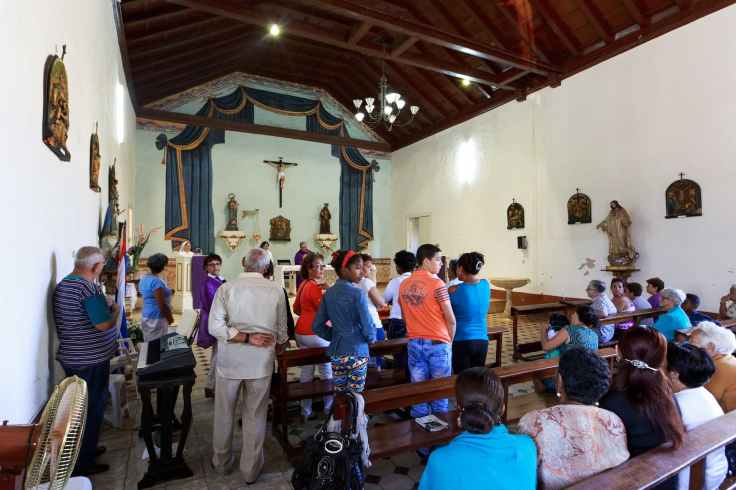
I don’t say this to disparage our current small group, but to point out some of the differences between life in the 1970s, 1980s and today. My current church has activities every Wednesday evening, and much larger attendance than the little country church ever attained. And prayer is still a small part of the Wednesday evening programming. Prayer is encouraged in small groups, individually, and we pray during service. But sustained time set aside for prayer– what the old hymn refers to as “Sweet Hour of Prayer”–in a group setting is becoming more of a rarity.
There are many reasons for it– some good, some not so good.
On the “good” side, it must be noted that corporate prayer today has expanded far beyond the traditional in-person prayer meeting. Prayer can be skyped, group-chatted, zoomed, and conference-called. Prayer can be “hosted” in one location, with satellite groups around the world praying in real time together. In such ways, thousands, and even millions of people can be joined in prayer. This is an amazing development!
And, along with such developments, prayer has become far more global, and far more immediate. I can receive a text or e-mail notifying me of a prayer request from nearly anywhere in the world, and know that I am joining with a host of other Christians when I stop and take a few moments to pray right then.
So what’s the “downside” of cyber prayer?
Speaking as one who has lived the experience of meeting with the same people at a dedicated time over many years specifically to pray, I have observed the following benefits:
In-person prayer meetings offer a more intimate time of fellowship, compassion, and service. I’m not just seeing other people on a screen, reading a text message, or even filling an auditorium seat as part of a huge “movement”– I’m sitting in a circle, breathing the same air, hearing the same hum of the furnace or fluorescent lights, the sound of others breathing, sighing, or even crying quietly around me. Sometimes, I’m holding another person’s hand, or giving them a hug. I am not just among fellow believers, I’m with family. We get to know one another in a deeper way. I know their families, their personal struggles and victories. I learn the rhythm of their prayers, and the issues closest to their hearts– and they know mine! And that can be a scary thing at first– building the kind of trust that intimate fellowship demands. But it pays off a thousand-fold!
In-person prayer meetings are also focused in a different way. Cyber prayer usually focuses on a specific need– sometimes an immediate, or even temporary issue. In-person prayer focuses on the long term discipline of praying. I have prayed with groups over years for lost relatives or unresolved health issues. And while that may seem depressing to read about, in practice it teaches patience, and deepens faith. As a group, we see God’s answers develop according to HIS timing and HIS plan. Sometimes, we see issues resolved quickly; other times, we see how God strengthens us in our trials; and still other times we see God do surprising and miraculous things just as we’ve almost given up hope. And there are some answers we may never “see.” But, primarily, we are not praying for an outcome– we are praying as a pursuit of Christian living; developing a life of prayer, faith, and obedience. We spend much of our time in prayer lifting up requests, but we also spend much of our time in praise, worship, adoration, confession, and thanksgiving– because prayer is a holistic pursuit.
Which brings me to another benefit, one that may not seem obvious at first. Meeting consistently and weekly for prayer is a habit. It builds a character of faithfulness and true compassion like very little else I’ve encountered. God can “show up” wherever two or three are gathered (see Matthew 18:20), and because God is beyond time and space, He can be present in a church meeting room, in cyberspace, or in outer space! But we are temporal. We have to learn patience, hope, and faithfulness. We learn to be trustworthy of the feelings and confidences of others by sharing our hearts. We learn to serve by the practice of serving those around us over an extended period of time. We learn patience by waiting on the Lord, stopping our busy, deadline-driven, goal-oriented lifestyle to make time for the development of our faith.
Finally, in a post-COVID society, sustained, regular, corporate prayer is also sustained, regular, corporate fellowship. We live in an increasingly isolated society. With more people on the earth than ever before, we are more lonely, depressed, anxious, and self-absorbed than ever before. Even in Church! Many people attend service regularly, but still feel unconnected and uninvolved. And others get “involved” in every activity, often burning themselves out trying to “outdo” themselves (or others). Activities that promise fellowship can sometimes fall “flat” in the face of social expectations. We attend, hoping to “get something” out of an experience. We want to be entertained, challenged, encouraged, uplifted, etc. But often, our expectations are not met. We don’t feel included, or we feel overwhelmed. We imagine we are being compared to others (or we do the comparing!), and feel that we fall short. We don’t know enough, do enough, are not “enough.” And we give up. We give up on the church, on other Christians, on God.
Committing to attend a weekly prayer meeting pulls us “out of ourselves.” We learn to pray for the needs of others. We learn to share our own needs and allow others to pray for us. We learn to be transparent and authentic. We learn to forgive.
Prayer is amazing– in any form. Communicating with the God of the Universe is an unspeakably miraculous opportunity, made possible BY God, THROUGH God, for OUR benefit. Prayer in the cyber age is diverse, global, immediate, and effective. But let’s consider the blessing of old-fashioned Prayer Meetings, and not forsake the practice of meeting together (see Hebrews 10:25) , in person, with no other goal than to spend a sweet hour in prayer!
When I was in elementary school, we learned about nutrition. Back then, we were taught that there were four basic food groups (nutrition education has gone through several “cycles” since then– food pyramid, healthy plate, “eating the rainbow”, etc.). Eating a healthy balance of foods is essential to good health. If I only eat meat, or only sweets, I will not be healthy. If I just eat whatever or whenever I feel like it, my body won’t get all the necessary nutrients to grow, fight off diseases, and stay strong.
Pursuing a healthy prayer life includes essential “building blocks” or nutrients, as well. Over the course of many years, I have seen various guidelines and acronyms to help include different building blocks in prayer. I want to share a couple of them again today. These guidelines are just that– guidelines. But they can help balance our prayer life, and help it grow.
The first acronym I learned, and the one I have used for decades, is ACTS. Here’s how it works:
Adoration/Acknowledgement– begin each prayer by acknowledging God’s Sovereignty, His Holiness, His Goodness, and other qualities worth worshipping. This helps put you in the right frame of mind when talking to God. I am not just talking to a neighbor or a “good buddy”– I am speaking with the One who holds all of Creation in His hands! And He WANTS a relationship with me! He is all-powerful: there is nothing I can ask that He cannot do! His is all-loving: there is nothing I can ask that He won’t filter through His loving wisdom and will. Even if I don’t know what to ask for; even if I ask for the “wrong” thing– God will only allow those things that He can use for good. God is beyond space and time: He knows all that has happened– all the triumphs and tragedies of my life so far, and all that is to come. He is LORD: He is in control– now and forevermore. Whatever seemingly impossible circumstances I face, they are nothing compared to the eternal, almighty plans of God.
Confession–This doesn’t mean an endless repetition of all my failures and sins from six months ago, or raking myself over the coals for not being “holy enough.” This is an honest assessment of who I am in relation to God. God is Holy and perfect. I am not. If I acknowledge God’s goodness, I must also acknowledge that I fall short. I don’t know everything. I don’t always act with the right motives. I NEED the Holy Spirit’s guidance, and I DEPEND on Christ’s finished work on Calvary for my Salvation. This should naturally lead to
Thanksgiving/Trust– I can trust God to save me, NOT because of who I am, but because of what He has done. I can see God’s hand working in and around and through me as I yield to His Spirit in me. I can recall, and acknowledge so many of the ways that God has blessed me and others around me. Once I have these building blocks in place, I can bring burdens to God through
Supplication– this is just a fancy term for asking God to work His will in specific areas– healing, guidance, encouragement, strength, understanding, submitting to His will, and following Him. I can ask for personal help, or lift up family members, neighbors, friends, and yes, even enemies! I can pray about situations great and small–from wars and famines to lost keys and short tempers.
I learned about ACTS when I was in college, and I have found it to be a great guideline. While I don’t use it for every prayer– sometimes an issue calls for immediate and direct supplication, for instance– I find that using this in daily prayer helps me grow in faith, patience, endurance, and hope. When I come to God in panic or stress, and I haven’t built up a healthy, consistent practice of prayer, my words can be anemic– lacking in faith and based on my fear or anger. I pray with my focus on problems, rather than on God’s power to overcome any circumstance. Using ACTS helps me remember that it is GOD who “acts,” and always for the best!
The second acronym I have used is PRAY. It is very similar to ACTS, but the end focus is slightly different:
Praise/Adoration– once again, it begins with praising the God who is worthy; the God who hears me, sees me, loves me, and knows what is best. I cannot live victoriously without remembering the source of hope and victory, and putting my heart in HIS hands.
Repentance– as with Confession above, this is not an act of groveling and rehearsing past shame. It is acknowledging anything that I might be holding on to that gets in the way of my worship of and submission to God’. E.M. Blaiklock, the Christian apologist from New Zealand once said: “God alone knows how to humble us without humiliating us and how to exalt us without flattering us.” Repentance is not about humiliation or holding on to guilt, but rather about staying humble and honest about our need for God’s Grace and Power. And turning from anything that might get in the way of following Jesus Christ.
Ask– once we have a right view of who God is, and who we are, we are free to ask Him whatever is on our mind, and share our questions, fears, burdens, etc., with the One who has all the answers!
Yield/ “Yes, LORD!”– The final step is making sure we are ready to listen and respond to God as we expect His answer. No matter what God’s answer may be, we should trust and obey His wisdom above our own.
I have come to value PRAY as a wonderful tool to help in my pursuit of prayer, and in my broader pursuit of Christlikeness. Both ACTS and PRAY help me pray “better.” It’s not that God grades my prayers or listens more or responds differently: but it helps me to better appreciate the power of prayer, and the power behind prayer. Individual prayers can change circumstances, but the pursuit of prayer is meant to change US as well. Prayer that shapes us, helps us grow– if that isn’t at least part of our pursuit of prayer, we are missing out on what God wants to do through us, and not just for us.
It is important, just as with nutrition, that we have a healthy balance in our prayer life. That balance consists of worship, repentance, sharing our burdens, showing gratitude, and offering ourselves in humble service. Prayer is too important to just “wing it.” We need to pursue it with the same (or better!) dedication that we give to our physical health.
10 If one falls, the other pulls him up; but if a man falls when he is alone, he’s in trouble.11 Also, on a cold night, two under the same blanket gain warmth from each other, but how can one be warm alone? 12 And one standing alone can be attacked and defeated, but two can stand back-to-back and conquer; three is even better, for a triple-braided cord is not easily broken.
Ecclesiastes 4:10-12
At least once each month this year, I want to write about practical ways to develop our Pursuit of Prayer. Today, I want to focus on seeking out a partner or prayer group.
There are many benefits of adding corporate or communal prayer to our lives. Most of our prayers will take place between just ourselves and God. We may pray during our quiet time, early in the morning, or just before bedtime. Our prayers may be short or long; full of joy or sorrow; silent or even mumbled. But when we pray with at least one other person, the following should happen:
We should be more focused. It may sound shallow or presumptuous, but praying aloud in front of a “human” audience has a tendency to keep us focused on the words we use and the thoughts we are sharing. And, while we can fall victim to the temptation to show off our eloquence, or say what we think others want to hear, we can also be sharpened by the reality that God AND others are listening! Have you ever “caught” yourself praying without really “hearing” your own thoughts? Sometimes, prayers can become rote or stale. We can pray on “automatic pilot”– repeating requests or phrases without really meaning them. Praying aloud in front of others won’t necessarily stop that from happening, but it should make us more focused.
We should learn from the prayers of others. Listening to others pray gives us insight into THEIR thoughts and hearts. It can also give us insight into how others communicate with the Father. Sometimes others have knowledge of issues and requests of which I am unaware or unburdened. Sometimes, they have a different way of relating to the Father– not “better,” but different in perspective or experience. I have been startled, convicted, encouraged, and emboldened by listening to the prayers of my brothers and sisters in Christ. And there is a “flip-side” to this, namely
We should allow others to learn from our prayers. I know many people who feel their prayers are somehow “inferior.” They use simple words, or their words don’t flow smoothly. They are ashamed to pray in public. And yet, thousands have been inspired and humbled by so-called “simple” prayers. They teach faith and humility; trust and caring; and even courage and strength. If everyone’s prayers were the same, or if everyone’s prayers were about their own abilities or eloquence, they would lose much of their power– because prayer is not about US; it is about God working THROUGH us.
We can agree in prayer. As one of us prays aloud, the other(s) can pray along silently in agreement. This may seem like a simple truth, or a trivial point, but it is not. Prayer, like the rest of our life, is meant to be done in communion with others–we are not meant to be solitary and self-sufficient. There is exponential power in communal prayer, as we come together in agreement on various issues. It is one of the reasons that so many revival experiences begin with a small group of people who pray fervently. This isn’t just a metaphysical phenomenon. Hearing others pray about the things weighing on my heart encourages me to keep praying when I am alone again. Hearing others pray with the same heart encourages my faith and resolve. Hearing others agree in prayer may even plant a seed that wasn’t there before. Conversely, hearing others pray may cause me to reevaluate my own thinking, or help us better hear faulty thinking and disagreement over certain issues, causing us to seek resolution and truth over long-held but unquestioned beliefs. Praying aloud can help bring us closer toward unity!
Our prayers become more powerful. “Where two or three are gathered…” Matthew 18:20 says that where two or three are gathered together in my (Jesus’) name, he will there in the midst of them. This verse is often taken out of context. It does NOT mean that Jesus will ONLY be with groups of two or more. Jesus promises never to leave or forsake ANYONE who puts their trust in Him. Others have taken this promise (along with its preceding verse) to mean that where two or three people pray together, Jesus is obligated to give them whatever they ask for. This is also misleading. Jesus is with us, not to give us a particular outcome or answer, but to guide us into truth and faith. It means that Jesus is with each person, AND with everyone who gathers together in HIS name. His presence is magnified; His power is magnified (if such a thing is possible…) Just as in the passage in Ecclesiastes, the power of a united group– even a small group of two or three PLUS JESUS– cannot be over-emphasized. Remember the story of Shadrach, Meshach, and Abednego? Satan does not worry when Christians gather together to protest or complain. It warms his heart to see a small group of Christians come together to gossip, boast, or argue. But he shudders when Christians meet together in Faith to pray! It is much more difficult for him to distract, distort, and discourage us when we pray together–for each other, with each other, beside each other!
We become more accountable. This happens best when we meet regularly for prayer with another/others. It doesn’t have to be daily or even weekly, but when we meet consistently, we challenge one another to be faithful, active, and accountable in our prayers and in our living. I pray more often alone when I pray more often with a friend or group! I pray with more focus and purpose. I pray more intentionally.
If you don’t have a regular prayer partner or prayer group, I encourage you to seek out a friend or a group of people who will meet regularly. Even if it is not a “Prayer” group– it may be a Bible Study group, a group of friends meeting for lunch once a month, or a neighbor who carpools or commutes with you. Make prayer part of your friendship or group on a regular basis.
At least once each month, I want to encourage you with a practical step in pursuing a life of prayer. Today, I want to talk about how you can pray globally.
What does this mean, and how does it look? Well, it means making a concerted effort to pray for different places, people groups, and issues around the world. How you do that may look very different from how I choose to do it, but I’ll give you a peek into my method. You can tool around until you find what works for you.
I mentioned in a previous post that I once found a commercially-produced “Prayer Journal” on sale at a Christian Bookstore. It was a marvelous book with a world mission focus. Each week, there was a short discussion of a different “at-risk” people group. There was information about the region(s), the population, the average life expectancy, the literacy rate, the estimated percentage of Christians (as well as percentages for other religions) in the area, and more. There were suggestions about how to pray for the people/area, and then space to write notes and other prayer requests. I have never again found such a resource in a bookstore, but I decided to make my own journal.
My journal takes up four notebooks– one for each quarter of the year– roughly ninety-two days in each notebook. Each day has a heading with a geographical location: a continent, a nation, a state or province, a city or town, even major rivers, deserts, and oceans. (In addition, I have space for the names of individuals with birthdays or anniversaries, and a space for urgent and immediate prayer requests for that day. In the front of the journal, I have a list of “Prayer Points” for the various days of the week– you can check out my page on Prayer Points here Proactive Prayer Points. The notebooks can be used from year to year, and have space on the back of every page to record answers.)
I don’t have the marvelous demographic information that was in the earlier journal, but I have an almanac or the internet if I want to dig deeper. In putting the notebooks together, I alphabetized all the names of places I wanted to include, narrowed the list down to 365, and assigned one place to each day of the year. Yesterday, I prayed for Fennville, a small town in Michigan where I used to be a student teacher. Today is Fiji, which comes next alphabetically. So I will be praying for Fiji, along with other people, places, and issues on my list. I may not know a lot about Fiji- I know it is an island republic in the South Pacific. I know that many Fijians are Christian, while others are Muslim or Hindu. But God knows everything about this group of islands– He knows if it is the rainy season there now, or if the people are battling sickness or poverty, or if they are in a season of clear skies and abundance!
So WHY do I recommend praying for Fiji (and all the other nations of the world, as well as major cities and even deserts?) Why Global Prayer?
First, it is Biblical, and it is a step in obedience. We are to “go into all the world” to preach the gospel (Mark 16:15). So we should also pray “into all the world”– pray for those who are going to other nations; pray for those who need to hear the Gospel in other nations; pray for those who are going FROM there into all the rest of the world. “For God so loved the WORLD…” (John 3:16). And so should we. Whether we can travel or not; whether we can study all the needs and factors of each nation or area or not, we should remember them in prayer.
Second, it will change your prayer life. I believe it makes my prayer life richer and more effective. Once again, it takes my focus off of me and lifts it to the God who holds the whole world in His Hands. I’m not just praying to “my” Father– I’m praying to “Our” Father. He loves me, and He listens to me, but He is big enough, powerful enough, and compassionate enough for the entire world! Once I acknowledge that, it changes the way I approach prayer.
It also is a great way to learn about the world and about other people and cultures! Imagine meeting someone from Fiji, and being able to say, “I have prayed for your homeland!” Imagine how much joy it can bring to pray for those places that have special meaning to your family and friends. I haven’t traveled the world, but I have met people from many countries. I’m still waiting to meet someone from Fiji, but if I do, I will have even more joy in praying for it next year on this day!
It brings discipline to my prayer life. Sure, I feel an urgency to pray for “hot spots” around the world– wars and famine, political upheaval and natural disasters call to mind certain areas of the world for prayer. But praying for an area without such prompts requires that I have some system in place. And who knows what God’s plans are for any given region on any given day, or what needs may arise that I can’t know about in advance?
So HOW can you pray Globally? I can recommend a few first steps:
Make a list. Maybe start with a single week. List seven locations– nations, cities, even continents or oceans (there are seven continents and “seven seas” after all). Perhaps you want to list places both near and far– local towns or villages AND faraway lands–over the course of a month or even a year.
Set up a system–you may want to use a notebook, planner, or calendar. Or you may want to set up a database. Your system can be set up weekly, monthly, yearly— whatever will work for you.
Be flexible and persistent. It has taken me nearly 20 years to settle on a system that truly works for me. Don’t be afraid to make changes or say “no” to a system just because it works for someone else.
Pray about it!
Resolve to DO IT. Many years, I spent so much time trying to “perfect” my system that I neglected to do the actual prayer! Please don’t let this happen to you. And don’t let guilt or impossible expectations keep you from your pursuit. Even if you take a step backward, forget a day, stumble through a week– Keep going!
Thank God for the opportunity to pray for others. Thank Him for loving the whole world (including you)! Praise Him for being a God who watches over every grain of sand and every drop of water in the oceans, over every bird of the air, and every precious life!
Imagine what can happen in our world if even a few of us are faithful in praying for all of us?! God is giving YOU an opportunity to be involved in HIS work throughout the world. Will you pray for Fiji today? Who can you pray for tomorrow?
Prayer can take many forms and be many different things. I write about prayer as a pursuit– something done with purpose and with some kind of discipline. Prayer is not meant to be just another discipline in the life of a believer. “Pray without ceasing,” Paul says in 1 Thessalonians 5:17; but this is not meant as an exercise to pursue quantity of prayer over quality, or to spend every waking moment consumed with prayer to the exclusion of all else.
However, we are called to be disciples– and that necessarily entails learning discipline. Any activity taken on without discipline can’t really be called a pursuit. It may be a hobby or an entertainment, but pursuit involves direction, dedication, and focus. And this includes our prayer life.
I want to be very careful in discussing this aspect of prayer, because I believe that there is a real danger of letting the discipline overshadow the purpose of prayer. HOW we pray is never more important than WHY we pray, or to WHOM we pray! But failing to make a plan for prayer can cheat us of the benefits of learning to pray deeply, consistently, and with greater focus.
With this in mind, I want to spend some time each month talking about ways to “grow” a life of prayer. Today, I want to focus on journaling as a way to pursue prayer.
As with any discipline, the key is consistency. That’s why journaling can really help. Keeping a record every day of things to pray about, of reasons for praise, of people or issues to bring before the throne of Grace, can keep us focused. It can also help us chart God’s answers and His work in our lives and the lives of others. I keep four separate notebooks– one for each quarter of the year. But there are wonderful daily journals and notebooks that can work as well. Some come pre-printed with scripture or prayer prompts for each day. Some people use a pocket calendar or calendar app on their phone or computer. The method isn’t as important as having a planned approach.
I recommend having a daily focus that is consistent from week to week. For instance, on Sunday, I focus on The Church– missions, local church congregations, persecuted churches, evangelism effort, etc.. On Monday, I focus on Family and Friends. Tuesday, I pray for the Government– local, state, federal, and leaders of other nations. Wednesday is Community–community services, schools, businesses, neighbors, even roads and parks and utilities! Thursday is Global Day– things like war and drought, natural disasters and diseases. Friday, I focus on business and finances– my own, and others. Saturday is a day to pray about cultural issues, like abortion, marriage, gender issues, etc. That doesn’t mean that I don’t pray about family members on Thursday, or about a school shooting on Sunday. But it means that I pay special attention to those matters on particular days. Here are some reasons why:
God wants to hear from me about everything. But without a plan, I tend to pray about the same few things over and over. I pray about whatever is worrying me in the moment. And only that. God wants me to be aware of all that He is doing. He also wants to remind me that He is LORD of everything; big and small, immediate and long-term, far away or around the corner.
God wants me to be consistent and persistent in praying. But that doesn’t mean praying obsessively. Obsessive prayer can become nagging, doubt-ridden, desperate pleas. God listens to our prayers. And we can trust Him, even when we don’t get immediate answers or relief. We don’t stop praying, but we also don’t stop trusting Him for the next step in the journey. God is bigger than just one aspect of my life– no matter how urgent or overwhelming that aspect may seem today. My focus needs to be on God’s sovereignty, and not just my immediate circumstances.
God works in mysterious ways. I may not feel like praying for my Governor, or my neighbor, but it may be that my faithful prayer today is what God will use to make changes in some other aspect of my life. Praying for what I have on my list, rather than just what pops into my mind may actually remind me of something else, and help me see how God is working in an area I might have missed otherwise!
By practicing this discipline in prayer, I am learning discipline in other areas of my Christian walk.
I read an interesting article on-line the other day about the late Duke of Windsor. Born as the heir to the throne of Great Britain, he was trained from an early age. His father, the King, wanted him to learn discipline and honor, so as to be prepared to assume his role. But Edward despised his father’s training. He found his father to be harsh and critical, prim and joyless. And he rebelled. He took little interest in the affairs of state, preferring to focus on his own pleasure. As his father grew older and weaker, Edward was asked to take on more royal duties. He enjoyed making appearances at parties, but despised many of the other tasks– letter writing, or visiting factories or various parts of the Commonwealth. He refused to settle down and marry, until he met Wallis Simpson, who was twice-married, and separated from her second husband. She was also an American citizen.
Edward VIII wanted to defy the laws and traditions of his own nation in order to marry. When this proved to be contentious, he decided to abdicate his throne, marry Mrs. Simpson, and live abroad. Instead, his brother became the next king (George VI), guiding his nation and the commonwealth through the difficult days of the second world war.
For many years, the myth of a king who gave up his throne to be with “the woman I love” has prevailed. But there was more to Edward’s abdication than blighted love. Edward was not incapable of ruling, but he was unfit to rule it well. His lack of dedication to his duties and citizens became evident in the very first crisis. Those who were working with him during his short reign witnessed his lack of care or concern about paperwork, and his selfish insistence on doing what he wanted to do, and not what was expected of him or of benefit to his people. He was a man without discipline and without a clear moral compass https://www.dailymail.co.uk/news/article-417388/Prince-Charmless-A-damning-portrait-Edward-VIII.html.
The Bible is filled with many examples of kings throughout the history of Israel and Judah who also failed to learn discipline or restraint. Their desire to reap the benefits of their position without learning to fulfill their responsibilities led to the moral, and eventually the physical and political collapse of their nations. They did not make a habit of seeking God, or of listening to His prophets. They sneered at good advice, and defied the laws of Moses and the rules God had given for the kings. Some of them worshiped other gods; some even sacrificed their own children to foreign gods or goddesses. They failed to keep the sacred holidays; they failed to read the Word of God; they failed to pray– except as a last resort!
We often perceive prayer as a personal practice– and it is. But how we choose to develop our prayer life may be tied to how we choose to develop the rest of our lives. We don’t need to be rigid and legalistic about it. But we do need to live– and pray– with purpose, if we wish to follow the example of Jesus and grow in our walk with Him. Not only does it impact our life and growth– it impacts our witness and our influence as well. Pursuing prayer in a disciplined way may have a far-reaching impact on our life and the lives of others– even in the generations to come. For more, see the page Why I Keep a Prayer Journal
I wrote last week that my mother was dying. She passed away on Monday afternoon. And since much of my pursuit of prayer is a reflection on the Godly example she set, I thought I should say a few words in honor of her passing from this life to Eternity.
Mom was a prayer warrior. I don’t often use that term, and don’t like to see it overused or misused. Just because someone claims to pray a lot, or just because they are active in church doesn’t make them a prayer warrior. But Mom was one. She battled to be informed of the needs of those around her (and those far away, too!). She wanted to know about every concern, every heartache, every health need, every financial need, every broken relationship– not just out of curiosity, and not for gossip or condemnation– she didn’t want to miss any opportunity to pray for someone else! She wanted to listen and offer comfort, encouragement, and, occasionally, advice.
My mom loved prayer. She loved Bible study and worship, fellowship, missions, and thanksgiving, too, but she was absolutely wild about prayer! She led various Bible studies, Sunday School classes, and Ladies groups during her long and active lifetime, and each one began and ended with prayer– prayer in the preparation, prayer in asking God to direct each meeting, prayer in follow-up–Quick prayers, fervent prayers, joyful prayers and humble prayers.
Mom prayed through her worship. Often a song sung (before she got so she couldn’t sing) was a song offered as a prayer. Even the act of attending church or a wedding or funeral was an act of prayer. She said mealtime grace, morning prayers, and bedtime prayers. Her prayers were simple and sincere. And people knew that Mom prayed. They would seek her out with their requests, knowing that she would offer real support, and not just good intentions.
But what my Mom was most known for was sending greeting cards. And each one was a small prayer– a voluntary act of asking God to bless the person who would be receiving the card. She wanted God to pour out blessing, strength, encouragement, and healing to as many people as possible. Every card was saturated in prayer and appreciation– appreciation for the person, and appreciation for what God could and would do in relation to that person’s life. She sent out around 100,000 cards in her lifetime! Each one was a small act of faith, blessing, encouragement, and love.
Mom wasn’t a “super” Christian. She was an ordinary sinner saved by Grace. She wasn’t particularly gifted with money, time, writing ability or creativity– though she had some resources in each area. But she used them well. She invested in the lives of hundreds of people– time and energy and emotion–through her prayers and actions. Not because she had something to prove or because she wanted to “earn her wings” or she just felt like sending cards. She spent countless hours organizing, gathering information and addresses, and writing out the cards and envelopes each day. But it was a labor of love because she believed that God SO LOVED the world, that He gave His only Begotten Son, that whosoever believeth in Him should not perish, but have everlasting Life (John 3:16). Her love for God was a response to His love for her, and His grace toward her…and her love for others was the overflow of the love she had received.
Mom’s passing leaves a great hole. But it also leaves an incredible opportunity. Her legacy is one of simple actions, persistent faith, and willingness to serve. God gave Mom an incredible life– nearly 90 years, and most of them full with abundant opportunities to make new friends, share God’s love, and serve her Savior.
No matter what time we have, may we have a heart to pray for others, and to grasp each opportunity to share God’s abundant and eternal love with those around us. My Mom has finished her race on Earth. It’s time for us to run the next leg!
What does it look like (or feel like) to pursue consistent, fervent prayer? Is it an endless repetition of the same words? Is it mindless pleading, mixed with angst and flowing tears? Is it rehearsing the same requests over and over in an attempt to “get the right words” that will cause God to act?
No. Jesus addressed this very issue in His Sermon on the Mount, and just before He gave us a wonderful example of how we can pray:
7 And when you pray, do not keep on babbling like pagans, for they think they will be heard because of their many words. 8 Do not be like them, for your Father knows what you need before you ask him.
If God already knows our needs, why SHOULD we practice consistent, fervent prayer in the first place? Because God desires to hear our heart cry. When something touches our heart– even though God already feels our sadness, pain, and fear–God wants to SHARE it in personal and intimate detail. What He does not want is for us to use prayer to try to manipulate a particular outcome, or to push our own desires and agenda ahead of His wisdom and sovereign will.
Instead, we should meet with God as our Father, knowing that He knows us, cares for us, and cares about the things that concern us. Consistent, fervent prayer is simply sharing our concerns with a loving God honestly over time.
Whining and “babbling” shows that we don’t trust God’s wisdom. It’s like a toddler, who keeps saying, “Please….pretty please…pretty please with sugar on top…” “But I want it…I REALLY need it… REALLY…”
Saying nothing is no better. It is closing our hearts away from the one who loves us unconditionally. Sometimes, we try to over-spiritualize, saying that because God already knows our needs, we need not mention them again.
We need to find a middle ground. We need to be humble enough to say that we need God’s help and His wisdom, and huble enough to accept that His ways and timing are not the same as ours.
So what DOES it look like? Probably a little different for each person, but I think there are some guidelines:
Consistent prayer means that we pray every day, throughout the day. About everything! Not just obsessively about our worries or needs, but about our joys and sorrows, as well as our questions, wonders, adoration, praise and confessions. Much like speaking with our best friends–the best ones are willing to listen to the same story about our cat even if we’ve told it twice before. They will cry with us next week as we share our continuing frustration with a rebellious teen or our parent’s journey with dementia. The difference is that God has a purpose and a plan in sharing our grief and our weakness beyond anything we can imagine. He is the “God of all Comfort” (2 Corinthians 1:3-5) as well as a God of healing.
Fervent prayer isn’t just anguished prayer or dramatic, emotional prayer. It is intensely humble and full of faith. The Apostle James gives an excellent example in chapter 5 of his epistle: 17 Elijah was a human being, even as we are. He prayed earnestly that it would not rain, and it did not rain on the land for three and a half years. 18 Again he prayed, and the heavens gave rain, and the earth produced its crops. (James 5:17-18 NIV) When Elijah faced the pagan prophets of Baal and Asherah, he prayed fervently, but he left the drama to the others. Elijah chided the prophets of Baal, because they prayed with raving, shouting, dancing, and cutting themselves in an effort to get Baal to hear them. Elijah’s prayer, while simple, was answered immediately and with dramatic effect. This wasn’t just a show of God’s awesome power through His chosen prophet. It was also a clear sign that Elijah was in constant communication with the One True God. He didn’t have to “get God’s attention.” He knew God was right there with Him. (See 1 Kings 18 for the whole story.)
Consistent, fervent prayer is part of a journey, not a destination. The same Elijah who was able to call down fire from Heaven, ran and hid in a cave and prayed to die! God wants us to pursue prayer the same way we pursue righteousness– knowing that God is the source of our wisdom and strength. He wants our anguished prayers as well as our prayers prayed in absolute trust– He wants them all!
I find it helpful in my personal prayer to have a journal. In it, I keep a list of people and places, concerns and requests. Each day of the week, I have a focus point for my prayers, and a list of specific people to lift up, plus a place for immediate and ongoing concerns. This does the following for me:
It allows me to put concerns into perspective. On Mondays, I concentrate on family and friends. That doesn’t mean that I don’t pray for my family on other days, but Mondays are focused on family and friends. On Wednesday, I concentrate on praying for my community. On Thursdays, I pray for global issues. This doesn’t preclude urgent requests or needs, but it keeps me from obsessing about some concerns at the expense of others. And it reminds me that God is the God of my family, AND my community, AND those suffering from a recent earthquake or famine.
A Prayer Journal gives me a place to write out my requests. Sometimes, seeing it in writing reminds me that God already knows– my concerns are written on His heart! No need to use the same words over and over again–but God may want to hear how MY heart has changed since I wrote the request. Maybe I have new information that changes my outlook. Maybe I can see how God is already working in the situation…which brings up another advantage of journaling:
I have a space in my prayer journal for answered prayer. Sometimes, I’m praying for someone from my church with a health issue. I can come back and write out God’s response– maybe He provided miraculous healing; maybe He took them “home.” Maybe He is causing them to travel a long road — giving them opportunities to bear witness to His faithfulness in every situation. Perhaps He is causing their family or caregivers to see Him in a new way!
Finally, a Prayer Journal helps me to be more consistent. I can turn to it every day for prompts and reminders of God’s love and faithfulness. God IS Fervent and Consistent– He is Faithful, and His Love is limitless. And He is the one who can teach me to be the same!
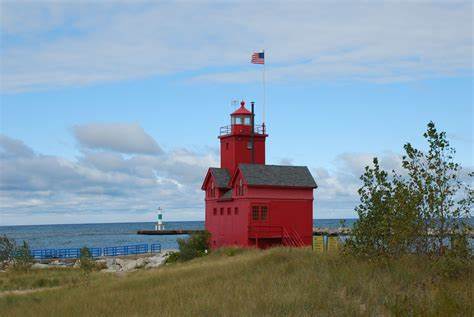
I live in an area not too far from Lake Michigan. All along the shores of this Great Lake are lighthouses. Some are small; some are tall; some are old and some use the latest technology Some are red; some are white; some are striped. Most are designed to warn ships of rocks, but others warn of shoals and hidden sand bars, as well.
Big Sable Point Lighthouse, Ludington
We think of lighthouses shining their light in the darkness, but lighthouses also shine in the daytime, through cloudy days, foggy mornings, and stormy afternoons. Most lighthouses also have fog horns, to warn ships when even the light won’t penetrate a thick fog.
This past week, a faithful lady at our church reminded us of a favorite song from childhood– “This Little Light of Mine.” We are called to be like Jesus, the “light of the world.” But what does it mean to “let our light shine”? And what does it mean to “hide it under a bushel?” (See Matthew 5:14-16)
Fresnel lens at Ponce Inlet Lighthouse, Daytona Beach, FL. Invented by French physicist Augustin-Jean Fresnel, the lens is much thinner than a conventional lens, which allows for a large aperture and short focal length at a lower weight.
Lighthouses use special lenses, called Fresnel lenses, to magnify the effect of refracted and reflected light. The resulting beam of light is stronger and can be seen for miles. Our own “little light”– our weak and imperfect faith; our limited talents and resources; our clumsy attempts– would not be enough to “save” anyone. But God magnifies our efforts as we reflect HIS radiance; His Love and Mercy. And many will be saved as we allow God to shine through us.
St. Joseph Lighthouse at sunset
Lighthouses are consistent– they don’t “turn the light off” when the weather is perfect, waiting only until someone spots a ship in danger. They don’t “dim” the light, or add extra strobe lights for the holidays or special occasions. Each lighthouse sends a consistent signal–steady and sure. But each lighthouse is unique– both in its outward appearance, and in it’s light pattern. This helps sailors tell them apart, and provides further help in navigation. As Christians, our light should also be consistent and unique. God created us with unique talents and opportunities–and we can “shine” the light of Christ in such a consistent and unique way as to help others “navigate” the trials of life. I am so thankful for the many faithful and uniquely gifted Christians who have inspired and guided me throughout my journey–and I want to be that kind of light for others!
Lighthouses are solid. They are normally built close to the shore, but not on the sandy beaches– rather on a rocky outcropping or a solid concrete and steel-reinforced foundation. As Christians, we have a solid foundation in Christ. We need to “shine our light” from that foundation– living out the Gospel of Christ– His life, death, resurrection, and imminent return. Building a bonfire on the beach may produce light, but it won’t stand out in a storm. Building our lives on any other foundation or religious “fad” may produce outward “success,” but it will not withstand storms.
Finally, and this may sound ridiculously obvious, but Lighthouses shine with purpose. They don’t twinkle or glitter; they don’t scream from the shore– “Look at ME! Look at ME!” They don’t shoot off fireworks to captivate onlookers from the shore. But they shine. They send a consistent warning, and provide consistent security to those who need it– and those who are seeking it! “This little light” may not be a blazing comet on the horizon, but without its steady pattern, there is darkness, confusion, and danger for those at sea (on lake in our case!) “No one lights a lamp and puts it in a place where it will be hidden, or under a bowl. Instead they put it on its stand, so that those who come in may see the light.” (Luke 11:33 NIV) We are commanded to shine– to Love others, to reach out with light, and hope, and yes, even a warning. To hide that light is to deny our purpose. To shine only for our own glory is to miss our purpose.
Holland (Michigan) Lighthouse
Father, help me to be a light in the darkness today. Help me to shine with Your Love, Your Mercy, and Your Goodness. Help me to be consistent, and to shine in the strength of Your Righteousness and Grace. Help me to use the unique gifts and opportunities You provide to show Your Character and Love to others.
(Please note: This is an updated post from a few years ago. Please enjoy.)
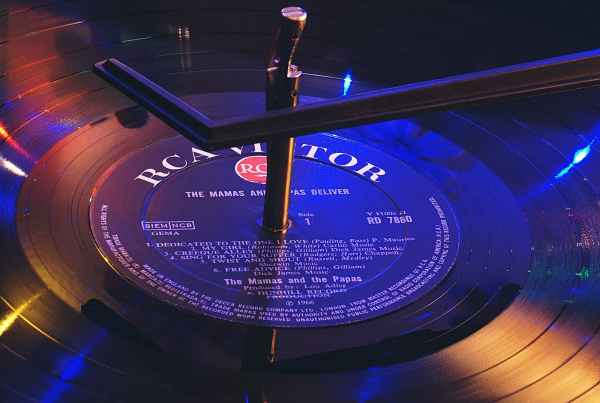
I know by writing this, I’m dating myself a bit, but when I was younger (MUCH younger!) we used to listen to a Hi-Fi stereo system. It was a piece of furniture, made of wood, complete with legs and fabric-covered speakers, and it had an enormous hinged cover that had to be locked into the “open” position or it would slam shut as your head and upper body was “inside” trying to adjust the settings! It had a turn-table for records, an AM/FM radio, and even storage for albums and other gear. It stood proudly, if awkwardly, in the living room or family room, off to the side of the other large piece of entertainment furniture, the giant television set, complete with rabbit-ear antenna. Hi-Fi stood for “High Fidelity”, reassuring us that the sounds issuing from this box were as close as we could get to “being there” for concerts, broadcasts, and other recordings. Our model was “old school”– there was no remote control, no way to record in any other medium (no tape deck or USB port), no “pause” or “mute” function– all the knobs and buttons and “arms” had to be operated by hand.
Today, we have “Wi-Fi”– a word that looks and sounds very much like the earlier “Hi-Fi.” Many people think that Wi-Fi probably stands for “Wireless Fidelity.” I looked it up– the “Wi-” does stand for wireless, meaning that information is transferred via radio waves, eliminating the need for a wire or cable connection. But the “Fi” part does NOT stand for fidelity (or anything else, exactly). It is simply a brand name for a particular wireless protocol See more about the definition of Wi-Fi here. Still, wireless communications, including cell phone service and internet, has radically changed our world, making it possible to connect with virtually anyone, anywhere, any time. It is a marvelous innovation with potential for great good. In our world and culture of global communications, we rely on Wi-Fi or wireless connections every day. We use them for information, entertainment, business, and social networking. I rely on it for this blog.
High Fidelity Prayer (as I see it) is consistent, daily prayer. Faithfully coming before God and seeking His face. Some may use a rote prayer for grace, or bedtime prayers, matins, or other standardized prayers. Others may set aside a daily time to pray–15 minutes in the morning, or an hour after breakfast, or even 10 minutes before bedtime. Some people set an alarm to pray at a certain time each day. Many even make a habit to pray with a group once or twice a week. To some, this type of prayer may seem passe, outmoded, old fashioned–after all, if God already knows our every thought, why does it matter if we pray every day or meet with the same group? It matters because fidelity matters– faithfulness, even in the “small” things, matters to God.
High Fidelity Prayer may seem awkwardly placed in the middle of our “living room”–forcing us to take time; to make and keep a commitment; to face questions or ridicule–it may seem clunky and wooden at first, even scratchy and hard to tune. And it depends on being “plugged in” to our power source! Hi-Fi prayer is meditative, deliberate, and worship-focused. We should be careful, however, of making Hi-Fi prayer a relic. Many Hi-Fi stereos from “my day” are now collecting dust, or being used to hold plants or books! Hi-Fi prayer must be practiced– even in an age of Wi-Fi lifestyles– if it is to do us any good.
Wi-Fi Prayer is not the opposite of Hi-Fi Prayer. It is not “wrong”, or illegitimate. In fact, it is great to know that we can talk to God anywhere, any time, for any reason. Wi-Fi Prayer (again, as I see it) is spontaneous prayer that is poured out to God “in the moment”. It can happen as you are driving or walking down the street (just don’t close your eyes!) It can happen alone or with a group. It can happen in response to something you overhear on a bus or a train, or read in an e-mail, or hear on the news. It is not a substitute for Hi-Fi Prayer, but it is certainly a healthy addition to it.
But Wi-Fi Prayer, just like Wi-Fi communication, can be taken for granted. Wi-Fi prayers can become “small” and “hand-held”– things we bring before God because it seems like the thing to do. We tend to put little thought, and even less grammar, into our wireless messages; we sometimes put little thought, and even less doctrine, into our Wi-Fi prayers, relying on common phrases that sound religious, but lose meaning. “Jesus just be with _____________ during this time”, “put a hedge of protection around ________________”, “I’m just claiming your promises, Lord.” There is nothing “wrong” with any of these statements, but what do we really mean? Isn’t Jesus always with us? Why is protection always a “hedge”? Which promises are you claiming? Again, there is nothing wrong with any of these phrases, and we know that the Holy Spirit can understand even our deepest utterances and wordless groaning. But just like auto-correct can mess up the simplest message, so our auto-pilot praying can mimic real communication with our Lord and Creator. There are entire comedy routines built around this kind of praying– but it creates an uncomfortably convicting kind of laughter. We should not be shamed out of Wi-Fi prayer, but we should also be careful not to let our prayer lives become a joke. Thankfully, God listens to our hearts and not just our words!
Hi-Fi or Wi-Fi, prayer is a sure connection to a faithful God.
On a final note, whether we have to turn down the knob or hit mute, there is another important “sound” principle of prayer– LISTEN! There have been some voices mocking this element of prayer, claiming that those who claim to “hear” from God are hallucinating or just plain crazy. God rarely ever speaks aloud and directly to an individual–even Jesus, while He claimed that He only did what His Father “told” Him to do– never claimed to hear the audible voice of God telling Him what to do or where to go next. There are only a few recorded instances of anyone else “hearing” the voice of God directly throughout history. But there are countless instances of people discerning the “voice” of God, and the leading of the Holy Spirit throughout the ages. How? Often through changes in circumstances, other trusted voices, new insights into scripture, or the “still small voice” of their own conscience giving confirmation. One caveat about “listening” for the voice of God– it will NEVER lead you to contradict God’s own word or act in contradiction to His character.
We have a Hi-Fi, Wi-Fi kind of God–let’s keep in tune, log in, and listen!






































 Pursuing Prayer