Do your friends pray? Do you pray for your friends and neighbors? Do you pray with your friends? Prayer is often seen as a private and very isolated activity– just you talking to God. But prayer is much more. Prayer can bind people together in a common purpose. It can encourage and embolden others as we pray together, share burdens and blessings, and seek God’s wisdom on their behalf.
Conversely, when our friends don’t pray, or discourage us from spending time in prayer, we can become weak and lose the fullness of joy that comes from a rich prayer life. When Jesus walked among us, He spent time with people– sinners, self-righteous religious leaders, friends, and strangers alike. And He often went away and alone to spend time in prayer. But He also made a habit of taking a few key friends with Him; friends who would “watch and pray” when others might have distracted Him with their questions or doubts. Throughout the Bible, there are numerous examples of others who sought out friends and companions to join them in prayer.
I belong to a small weekly prayer group. We meet for an hour each week to discuss prayer needs in our church and community, as well as needs for our nation and our world. I look forward to meeting each week. Even though we pray for many serious needs, we also come together to worship and to thank God for His many blessings– including answered prayer from previous weeks! Our church also belongs to a prayer initiative that involves a larger regional area. At least 30 churches are committed to praying “round the clock” one day each month throughout the year. Individuals sign up to pray for 15- or 30-minute increments. These prayers may happen in small groups, or in private closets, but there is value in knowing that our prayers are part of a much larger and ongoing effort. There are even short-term prayer efforts that ask everyone involved to take the same 5 or 10 minutes to pray for a particular need or issue–nationwide or worldwide! Each of these has value, and can encourage growth in our prayer life and spiritual growth.
There is a lot more I could write about this concept today, but I think it is more important to act on it. I have a journal full of names, places, and situations that require prayerful attention– people battling cancer or depression; cities facing riots and economic upheaval; families in the midst of divorce or other crises. And I have friends who share my concerns and who can join me in praying (even remotely) for them.
If you have friends who pray– connect with them and pray for and/or with them today. If you don’t– pray that you will find companions who will come alongside you as you make this journey to pursue a life of prayer. Look for opportunities to join a group– in person, or on-line–that shares prayer requests (and answers to prayer!) Best of all, pray to and with Our Father, who will never leave us or forsake us, who always listens, and who has given us the constant companion of the Holy Spirit to strengthen and encourage each of us.
Have you ever considered making a “bucket list?” A bucket list is a list of experiences or goals you want to fulfill before you “kick the bucket.” Many people challenge themselves to do 212 adventurous things or visit 100 exotic places or reach 25 life goals (or a combination of several different experiences).
Such lists can be helpful as a way to challenge ourselves to come out of our comfort zone and try new things or visit new places. But they can also produce stress, as we try to achieve some goals or challenges that may be unrealistic or overly selfish.
In pursuing prayer, I have challenged myself to do certain things. It is a sort of “prayer bucket list.” And I find it helps keep my pursuit of prayer vital and exciting.
What does a “prayer bucket list” look like? For me, it involves some key challenges to stretch the way I think about, and practice, prayer:
Develop and keep a Prayer Journal– this helps me track my prayers throughout the year. Each day, I pray for a certain region of the world. It may be a nation, a state or province, a major city, or even a major geographical feature. I also pray for people I know who are celebrating a birthday or anniversary. And I keep a running list of current requests for health issues, family issues, etc. Finally, I leave plenty of space to track God’s answers to these prayers! Over the years, I can see how God has led me to pray, and how He has responded to those prayers. See more here : Prayer Journal
Make a consistent time each day to pray– I try to pray and do Bible study first thing in the morning. But you can do it at night, or on your lunch hour, or any other time. But it helps to be consistent in taking dedicated time out of each day to visit with God one-on-one
Pray corporately–I belong to a weekly prayer group that meets for an hour every Wednesday to pray for local concerns, our church leadership, the needs of people in our church and in our families, as well as national and global issues. While prayer is also a solo endeavor, it is amazing to pray with other Christians, whether in person, or on a streaming prayer service, or at a prayer event.
Learn about and practice different “methods” of prayer– I’ve challenged myself to pray a Psalm or a hymn, to write out prayers, to pray using the ACTS method (adoration, confession, thanksgiving, and supplication) and other outlines for prayer, reciting or reading a prayer like the Prayer of St. Francis or The LORD’s Prayer, and many others.
Pray “around the neighborhood”– literally walk around the block (or drive down the street or lane) praying for the households, businesses, people, or even the trees, fields, flowers, streams, etc. that you pass along the way. For your safety, it is best to say these prayers with eyes wide open! If weather or mobility prohibits this, you can draw a map or list and pray over that instead.
Pray the phone book– (I used to do this, but we don’t have phone books like we used to, so any random list will do)–pray for people on the list. You don’t have to be acquainted with them, just pray for the name. God already knows them far better than we do, anyway!
“Thank you for…”prayers–instead of closing your eyes for prayer, keep them open and thank God for everything you can see around you: the walls of the room, the furniture, the clothes you are wearing, your fingers and hands, the floor or carpet, the ceiling or roof– if you’re outdoors, you can thank God for the grass, trees, sidewalk, cars, buildings… I’m always amazed at how much I take for granted when I do this– pencils and breath mints and stamps in my desk, for instance.
And there are a lot of other “bucket list” items you can add:
Travel prayers–say a prayer in a cathedral in a foreign city; pray while traveling in a bus or on an airplane..
Rhyming prayers–try to make your prayer rhyme– at least some of the time!
Raised hand prayers– keep your hands raised to heaven for the entirety of your prayer. You’ll end up developing some arm muscles!
“Campfire” prayers– pray in a natural setting. This is especially meaningful near sunset or in a setting with a spectacular view of God’s amazing creation.
Prayer retreat– get away for an entire day to pray and commune with God
School yearbook prayers– go through one of your old yearbooks from school. Pray for all your classmates! Thank God for your teachers (or thank Him that you passed out of their class!) This also works for staff lists and bosses at your current place of employment.
Ultimately, prayer is not about a particular list or method or “experience.” But it should be part of the challenge of the Christian Life, and something that we pursue with intention and enthusiasm. If making a “bucket list” helps, then we should consider it as a way to build our prayer life and become part of our legacy.
Many Christians are celebrating Advent by lighting candles. So I thought I’d just mention a couple of quick thoughts about how prayer is like a candle:
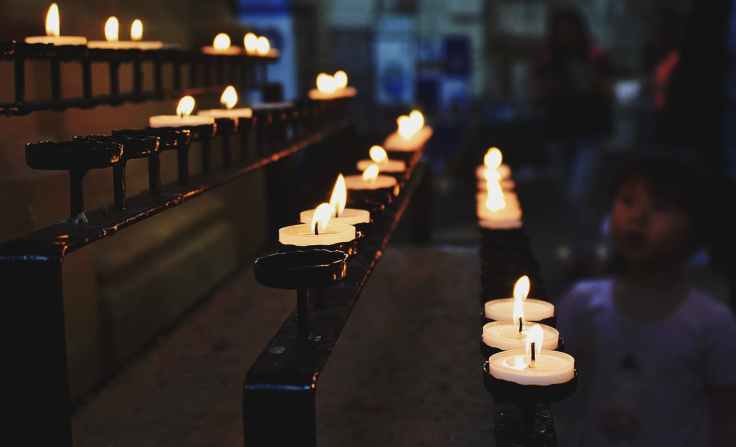
Even a small candle can provide enough light to make a real difference in the darkness. Sometimes, we feel our prayers are small and ineffective, like a single candle in a dark room. But a single candle can pierce the darkness and offer hope and focus and even warmth where there was none before. In the season of Advent, we light candles to mark the weeks of waiting for the One who is the Light of the World to come into the darkness. His light was enough to save the world from the darkness of Sin and Death. And it is This Light who hears our prayers and intercedes for us. It is This Light who empowers us to share hope and love where it is most needed right now, right where we are.
We are never a single candle! Not only do we have Christ living in us, and His Holy Spirit empowering us; God’s people around the world, through all places and times, are praying. Imagine seeing a single candle at the end of darkened room. Now, imagine how much brighter to see a long table lined with a row of candles, or a room lit by chandeliers and wall sconces with dozens of candles. Even if they are spread out– especially if they are spread out– they will fill every corner of the room with light and warmth. This is one of the reasons it is so important to pray for believers around the world, and to pray with other believers, through prayer nets, prayer meetings, prayer lists and blogs, and prayer journals.
Our prayers are powerful. Not because of our “candle”, but because of the light God provides when we pray
I attend a weekly prayer meeting at our church. A small group of us meets one morning a week to share prayer concerns, pray for our pastors and church workers, missionaries, community members in need, etc. It usually lasts just about an hour. On a “good day,” we have about seven people.
I grew up in a small rural area, and our little country church had a weekly Wednesday evening prayer service. On a “slow night,” we might have seven people. Sometimes, we had thirty or more (nearly half the church congregation)! They lasted about an hour and a half. When I was in college, we had groups that met once a week for prayer. It wasn’t always the same group, but it met at the same time, and, again, we sometimes had as many as thirty in attendance– for prayer. Often, we met in a dorm room, so it was cramped, and many of us were sitting or kneeling on the floor. Once, we had a fire drill, and my feet had “fallen asleep” and I had to be helped as we walked to the exit!
I don’t say this to disparage our current small group, but to point out some of the differences between life in the 1970s, 1980s and today. My current church has activities every Wednesday evening, and much larger attendance than the little country church ever attained. And prayer is still a small part of the Wednesday evening programming. Prayer is encouraged in small groups, individually, and we pray during service. But sustained time set aside for prayer– what the old hymn refers to as “Sweet Hour of Prayer”–in a group setting is becoming more of a rarity.
There are many reasons for it– some good, some not so good.
On the “good” side, it must be noted that corporate prayer today has expanded far beyond the traditional in-person prayer meeting. Prayer can be skyped, group-chatted, zoomed, and conference-called. Prayer can be “hosted” in one location, with satellite groups around the world praying in real time together. In such ways, thousands, and even millions of people can be joined in prayer. This is an amazing development!
And, along with such developments, prayer has become far more global, and far more immediate. I can receive a text or e-mail notifying me of a prayer request from nearly anywhere in the world, and know that I am joining with a host of other Christians when I stop and take a few moments to pray right then.
So what’s the “downside” of cyber prayer?
Speaking as one who has lived the experience of meeting with the same people at a dedicated time over many years specifically to pray, I have observed the following benefits:
In-person prayer meetings offer a more intimate time of fellowship, compassion, and service. I’m not just seeing other people on a screen, reading a text message, or even filling an auditorium seat as part of a huge “movement”– I’m sitting in a circle, breathing the same air, hearing the same hum of the furnace or fluorescent lights, the sound of others breathing, sighing, or even crying quietly around me. Sometimes, I’m holding another person’s hand, or giving them a hug. I am not just among fellow believers, I’m with family. We get to know one another in a deeper way. I know their families, their personal struggles and victories. I learn the rhythm of their prayers, and the issues closest to their hearts– and they know mine! And that can be a scary thing at first– building the kind of trust that intimate fellowship demands. But it pays off a thousand-fold!
In-person prayer meetings are also focused in a different way. Cyber prayer usually focuses on a specific need– sometimes an immediate, or even temporary issue. In-person prayer focuses on the long term discipline of praying. I have prayed with groups over years for lost relatives or unresolved health issues. And while that may seem depressing to read about, in practice it teaches patience, and deepens faith. As a group, we see God’s answers develop according to HIS timing and HIS plan. Sometimes, we see issues resolved quickly; other times, we see how God strengthens us in our trials; and still other times we see God do surprising and miraculous things just as we’ve almost given up hope. And there are some answers we may never “see.” But, primarily, we are not praying for an outcome– we are praying as a pursuit of Christian living; developing a life of prayer, faith, and obedience. We spend much of our time in prayer lifting up requests, but we also spend much of our time in praise, worship, adoration, confession, and thanksgiving– because prayer is a holistic pursuit.
Which brings me to another benefit, one that may not seem obvious at first. Meeting consistently and weekly for prayer is a habit. It builds a character of faithfulness and true compassion like very little else I’ve encountered. God can “show up” wherever two or three are gathered (see Matthew 18:20), and because God is beyond time and space, He can be present in a church meeting room, in cyberspace, or in outer space! But we are temporal. We have to learn patience, hope, and faithfulness. We learn to be trustworthy of the feelings and confidences of others by sharing our hearts. We learn to serve by the practice of serving those around us over an extended period of time. We learn patience by waiting on the Lord, stopping our busy, deadline-driven, goal-oriented lifestyle to make time for the development of our faith.
Finally, in a post-COVID society, sustained, regular, corporate prayer is also sustained, regular, corporate fellowship. We live in an increasingly isolated society. With more people on the earth than ever before, we are more lonely, depressed, anxious, and self-absorbed than ever before. Even in Church! Many people attend service regularly, but still feel unconnected and uninvolved. And others get “involved” in every activity, often burning themselves out trying to “outdo” themselves (or others). Activities that promise fellowship can sometimes fall “flat” in the face of social expectations. We attend, hoping to “get something” out of an experience. We want to be entertained, challenged, encouraged, uplifted, etc. But often, our expectations are not met. We don’t feel included, or we feel overwhelmed. We imagine we are being compared to others (or we do the comparing!), and feel that we fall short. We don’t know enough, do enough, are not “enough.” And we give up. We give up on the church, on other Christians, on God.
Committing to attend a weekly prayer meeting pulls us “out of ourselves.” We learn to pray for the needs of others. We learn to share our own needs and allow others to pray for us. We learn to be transparent and authentic. We learn to forgive.
Prayer is amazing– in any form. Communicating with the God of the Universe is an unspeakably miraculous opportunity, made possible BY God, THROUGH God, for OUR benefit. Prayer in the cyber age is diverse, global, immediate, and effective. But let’s consider the blessing of old-fashioned Prayer Meetings, and not forsake the practice of meeting together (see Hebrews 10:25) , in person, with no other goal than to spend a sweet hour in prayer!
I grew up in a church that made prayer a priority. I know many churches that still do this, but I know that some churches today just leave prayer up to the individual Christian. They may open the service with a prayer, and close with a prayer, and even offer a prayer service in the mid-week, but they do not focus on prayer as a congregation. With many churches, corporate prayer doesn’t seem very practical– they are just too large, or too focused on spending their time in worship. But I think something of value is lost when the church doesn’t come together in prayer.
Prayer IS an individual pursuit. It should be part of each Christian’s daily walk. And most of what I write (and practice) about prayer happens personally. But Jesus practiced both personal and corporate prayer. Even in His agonizing prayer in the Garden of Gethsemane, He wanted close friends to be nearby praying, rather than sleeping (see Matthew 26:36-46 and Luke 22: 39-46). When instructing His disciples in how to pray, He used the term, “Our Father,” not “My Father.” Christianity , including prayer, cannot be practiced in isolation. We need to pray for others, and with others, and be prayed for by others!
In the small country church where I grew up, prayer was woven into the service. Prayer requests would be shared, and people would take turns praying aloud, until one prayer leader would close the prayer time with an “Amen!” In the church where I currently attend, we still share prayer requests on-line, and a list of requests gets sent out once a week. Occasionally, we will break into small groups during service to pray for particular focus or a specific request. Additionally, we have a mid-week prayer meeting, where we spend an hour just praying as a small group.
Why do I emphasize the need for group or corporate prayer? Over the years, I have seen many benefits:
I love “hearing” the hearts of others. We don’t all pray exactly the same. Even if we are reciting a prayer (like The Lord’s Prayer) there are different voices, different inflections, different tones, that bring a richness and diversity to prayer. And that is a great reminder that God is the God of ALL of us, even as He is the God of EACH of us. He is OUR God, every bit as much as He is MY God.
There is comfort and even power in praying together. My personal prayer may be sincere, but it is usually silent, and may be influenced by my surroundings, my mood, my distracting thoughts, etc.. But there is a different atmosphere when two or three (or more) are taking turns praying, adding to the thoughts and prayers of others, and pouring out their hearts in concert with other believers. I get a broader perspective when I pray with others. I hear more than just my own voice and my own thoughts. It doesn’t change whether or not God listens to my prayer, but it changes the way I think and feel– it isn’t just “MY” prayer– it is “OUR” prayer.
I learn more about prayer by practicing with others. I know many people who will not pray in a group, because they feel their prayers are “lacking” somehow. And this is a dangerous way to think! I have learned amazing lessons of faith from simple prayers; amazing lessons of doctrine from eloquent prayers; amazing insight from broken and contrite prayers; and even lessons from “runaway” prayers that go on and on. And praying in a group is not about how much you say, but by how much you are present in the moment.
Corporate prayer is a rich tradition. Jewish priests would lead the entire nation of Israel in prayer during various festivals. Many of the psalms are written as prayer-songs for a congregation to sing together. The early church made prayer a part of their meeting together (see Matthew 18:20, Acts 2:40-47, Romans 15:6, others…)
Corporate prayer strengthens my faith and the faith of others. Intellectually, I “know” that God listens to and answers my prayers, but when I pray with others, it strengthens my experiential knowledge that God is listening– because I am listening, and being listened to!
Corporate prayer challenges my perspective in relation to my own sinfulness and God’s grace. Corporate prayer should not be used as a “True Confessions” session, where we try to outdo each other in confessing secret sins or wallowing in self-righteous recitations. But it should bring us into a realistic awareness of our very human nature, and of God’s amazing Grace. Corporate prayer takes us out of our “self” and focuses on God’s sovereignty in ways that personal prayer sometimes misses. Corporate prayer tends to focus on gratitude, humility, and thinking of others more highly than yourself. And that is often a stepping stone to confession and the awareness of God’s forgiveness.
Corporate prayer lends itself to structure. That’s not to take away from unstructured and spontaneous prayer, but corporate prayer tends to have a stated purpose, and sometimes a stated format. From “round robin” prayer, where people pray in a particular order around a circle; to “popcorn” prayer, where people jump in and take turns until a certain time has elapsed; to structured prayer, where people pray in a strict order and with definite purpose for a slotted time, corporate prayer tends to be more disciplined that personal prayer. That doesn’t make it better or worse, but it is a different way to pray, which can help foster discipline in other areas.
Are you part of a prayer group at your church or in your community? If so, cherish this rich opportunity. If not, make a point of connecting with other believers– at church, in your community, or even on-line. Share requests. Set aside time to pray together, or even separately, but at the same time. Live stream prayer. Pray with someone over the phone, if you don’t have a prayer group or congregation nearby.
I attend a mid-week prayer meeting. Sometimes we have a dozen or two in attendance. The other day, we had just five. But God shows up every week! There is a mystical, spiritual quality in communal prayer– voices raised in praise, thanksgiving, and intercession; voices raised in agreement, in harmony, and in support. We spend nearly an hour in prayer; some stay after to pray longer, some stay silent for most or all of the hour, just listening and giving spiritual support by their presence. We also spend some time reading scripture, sharing updates on missionaries and community outreach programs, or updates on requests from previous weeks. And, in listening to others pray, we can “hear” their hearts and get to know them a little better. But this is not meant as a social hour. We are there for one purpose– to pray. It is a commitment to pray faithfully, to pray consistently, and to pray humbly and gratefully.
We are blessed to have the opportunity to gather publicly and freely to pray. But what about those who cannot? Not everyone has the freedom in their weekly schedule to attend our prayer meeting (or other meetings that might be scheduled throughout the community). Not everyone lives in an area where public prayer is safe and encouraged. Some people are shut in. Some face persecution for their faith– public gatherings increase the risk of violence and arrest.
Most prayers happen in seclusion and isolation. And sometimes, this can lead us to believe that personal prayer is a small thing. One silent prayer in a room somewhere in Michigan may seem tiny and frail. It can seem puny and ineffective. And praying in isolation or under threat can feel even smaller and lonelier. We trust that God hears us, but we can feel so weak, so ineffectual. We long for support and communion. Praying in a group “feels” stronger, and more “important,” surrounded by fellow believers and hearing the voices chiming in with praise and heartfelt requests.
I value and appreciate meeting and praying with other believers, but most of my prayers are personal– said in silence in my own home. I pray by myself, often with my Prayer Journal in front of me; sometimes, just lying in bed, or sitting at my workspace. Yet, I never pray alone! Jesus, in The Lord’s Prayer, taught His disciples to pray to “Our Father.” But He must have known that they would also pray personal prayers. He did not teach them to say “My Father,” or “My God.” Surely, when we are alone, we can use those terms (as Jesus Himself did in the Garden of Gethsemane). But I think Jesus was acknowledging that God “inhabits the praise of His people” (Psalm 22:3)– and that when we pray, we are mystically and spiritually joined with God– Father, Son, and Spirit– and also with the family of other believers. And their prayers join with ours. When I pray, alone in a darkened room or closet, I may be physically separated from believers in Pakistan or Colombia, but I am spiritually linked with them (and they with me) in ways I don’t fully comprehend. I can’t hear their prayers; I can’t understand their language, and I don’t know their needs. Nor do they know mine. But God knows them all, and knits them all together in ways that bring Glory and Honor to Him! Praying with our Wednesday group (or any time I pray with other believers) helps me better feel this connection, but it goes beyond what we experience in corporate prayer. None of my “puny” prayers is lost in the fugue of a hundred thousand other prayers prayed in that moment– instead, they blend in with other silent cries and unspoken expressions of praise from all over the globe. They rise up like the notes of a never-ending symphony!
Prayer is so much more powerful and deeper than we imagine! Today, let’s pray–together–knowing that whatever our situation or circumstance, we will never pray alone!
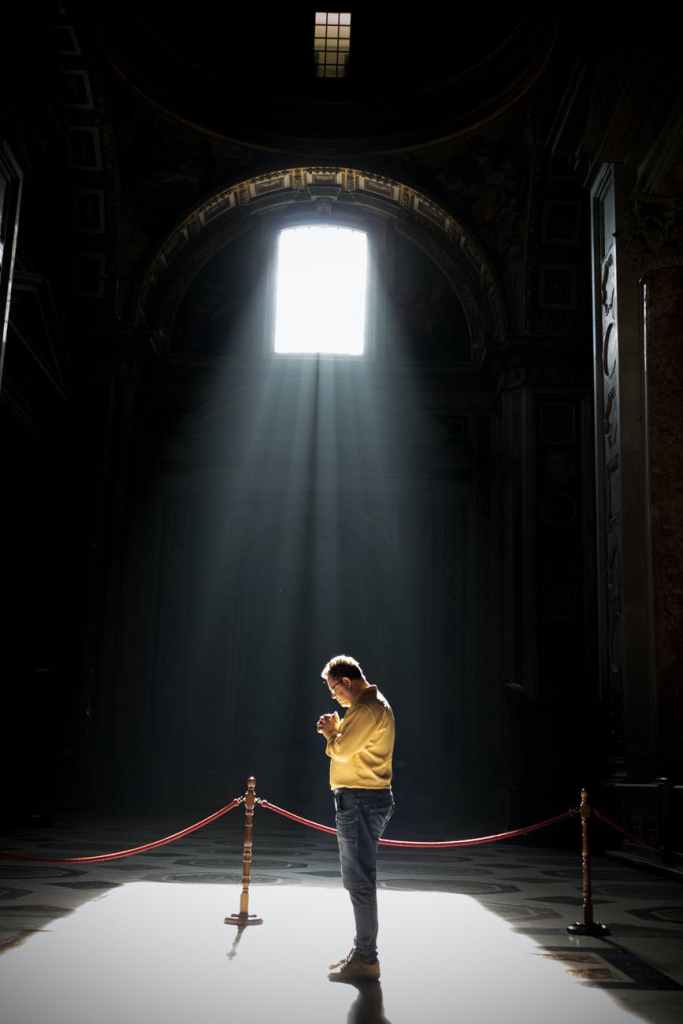
Photo by Paulo Mu00e1rcio Dos Santos on Pexels.com
It is important to spend time alone with God, but it is also necessary that we spend time with others. This may not always be possible in a physical sense. This past year of pandemic and lockdowns has kept many of us apart. Even church services, Bible study groups, and “fellowship” events have been limited or suspended. But we have other ways of being “together.” Phones, internet, and letters are just a few of the ways we can stay in touch. And prayer is another. This is nothing new, but I’ve been reminded recently that prayer is more than just a personal pursuit. It is also a corporate pursuit. We do not live alone, and we do not pray in a vacuum.
It can be tempting to feel isolated and even apathetic when we are forced by circumstances to spend more time alone. We often succumb to the lure of “escapism”– binge-watching, gaming, or other forms of mindless entertainment to pass the lonely hours. It is not “wrong” to relax or be entertained for a time, but we can lose sight of our purpose and “sleep-walk” through our days, losing opportunities to connect with others and be a blessing (and be blessed in return)!
The term, “esprit de corps” is used by tight-knit groups– military units, dance and theatre groups, etc.–to describe their unity, devotion, and camaraderie. It should be natural for us to apply this same phrase to Christ-followers. After all, we are the “corps”– the body– of Christ! To pray for and with one another should be a given, and a “core” feature of the Church. To stay in touch, to build up and encourage one another, to forgive, accept, and protect one another, to defend the honor of the Church and ALL its members– this should go without saying. But I’m saying it here, because I see so many examples of division, in-fighting, finger-pointing, shaming, and other nonsense. And I’m saying it because I see so many examples of people like me, who withdraw, stay silent, and allow ourselves to become weary and jaded, instead of reaching out and pulling together. (Hebrews 10:23-25)
I pray everyday for people from around the world– but am I willing to pray for those down the street who hurt my feelings last week? Am I willing to risk reaching out to call or write to someone who may be discouraged, or having doubts and struggles? Do I pray with gusto; eager to lift others up and bring blessing to them, even in difficult times? Do I cheer on fellow believers, even if we disagree about politics or music? Do I champion the Church, even when some believers or even congregations bring momentary shame to the name of Christ?
“Esprit de corps” is not a phrase of apathy, or discouragement. It is not just an idealistic motto. It is not a phrase of grudging duty to a group or idea. It is bold, and forward-looking. It is united and strong. Just as the Body of Christ must be in the days ahead. For more info on corporate/group prayer, see https://www.compellingtruth.org/corporate-prayer.html
BTW– There are several terrific prayer groups online–Groups that pray for your requests; groups that share requests locally; groups that pray globally for healing or intercession; groups that will connect you to local churches or Bible studies. *As with any online activity, please be careful. Not every group that calls itself “Christian” or talks about prayer is legitimate. Avoid sites that seek to get personal identifying information, or ask you to send a fee to join their group. Many local churches will be happy to add you to their “prayer chain” to pray for (and/or encourage or visit) people in your own community. Other church groups may have “Zoom” or “Skype” prayer meetings, or other corporate prayer opportunities.
I stumbled upon a site that promotes a concerted minute of prayer for our nation. In the light of upcoming mid-term elections, recent violent outbreaks in some of our cities, and other urgent issues, there are movements afoot to unite American Christians in our prayer efforts.
The National Minute of Prayer is based on an effort carried out in England during World War II. I want to be careful in promoting this idea– I DO NOT believe that God is swayed solely by people praying to Him in large numbers or at certain times– God sees our hearts and knows our minds. He wants hearts that are sincere, humble, and attuned to His will, and He will act, not on our desires, but on His own knowledge of what is truly best for our individual lives, for our nation(s), and for our world.
Still, I think this is a good idea, even though I don’t necessarily agree with all the ideas and aspects of the blog. I don’t believe there is anything magical or super spiritual about any given minute or hour of the day, so if the chosen hour of 9 p.m. (ET/8 p.m.CT, etc.) doesn’t work for you, or you can’t commit to a single minute during the day, just commit to pray for a solid minute at least once each day. I think the value of a project like this is in the commitment and the community–even as individuals search for a closet or a quiet corner to seek God’s face, the knowledge that others are doing the same adds to our commitment and our courage.
There are dozens of websites, blogs, and videos with similar programs and suggestions. Find one and consider following or joining!
And this doesn’t just apply to a particular nation facing a particular time of crisis. Christians living in Australia, Bolivia, Cambodia, Djibouti, Estonia, Fiji, Greenland, Haiti… you get the idea– can set aside one minute every day to pray for their nation and its leaders.
Think what it would mean to the heart of God to hear His children praying in unison for healing and justice to be done around the world in our home nations! Think what would happen if we set aside just one more minute to pray for the Church universal!
I grew up attending a tiny country church numbering only a few families. Church was not just a place to visit for coffee and a sermon on Sunday morning. There were no large screens, no light shows, no bands, no padded theater seats. What we didn’t have in the way of amenities, we made up for with fellowship– pot lucks, church-wide outings, bake sales to raise money for missionaries, and community-wide Christmas caroling every December. We didn’t have a big budget or slick publications. There was no website or gym; no trendy decor in the entryway, or sound system. But there was prayer– lots of it! Prayer to open Sunday School; prayer to open the service; prayer at the end of Sunday service; and Wednesday Evening Prayer Meeting. This was, for the children, an evening of games, singing, stories, and socializing with our friends, all in the church basement (painted cinder block walls, industrial fluorescent lights hanging down from beams to light up folding tables and metal folding chairs on the bare cement floor, which was sometimes home to spiders, toads and even the occasional salamander). But upstairs, it was all business. An hour of adults in the community coming together to pour their hearts out to God.
As I became a teen, I “graduated” to the upstairs–to a young teen it seemed an interminably long and slow process of sharing requests, sharing praises, and taking turns mumbling and rambling and regurgitating all that had come before, this time with eyes closed, and some of the old-timers on their knees instead sitting in the un-padded and creaky wooden pews. Sometimes, there would be two or three hymns or a short devotional to round out the hour-long service.
I know there are churches that still have mid-week (usually Wednesday night) services, and some of them are devoted to corporate prayer (my current church has one, in fact). But most of these services have died out– due, I suspect, to the view I described above. Very few of us are devoted to getting out one night every week to spend an hour kneeling on a hard floor “sharing” needs with others, only to repeat them to God. But I think somewhere we missed the point, and the value, of these gatherings. In going to Prayer Meeting, I got to hear the hearts of three generations of people across our community– farmers, construction workers, teachers, retired grandfathers, teens like me, pastors, recovering alcoholics, homemakers, business men and women–people with wildly different struggles, triumphs, and needs, and in different stages of their Christian walk. I heard the exuberance of new converts, and the steady faith of aging saints; the struggles of the brokenhearted widower, and the needs of new parents.
Perhaps the most valuable lesson from Prayer Meeting was about persistent prayer. Week after week we reported answered prayers, but other requests seemed to linger. Some who desired healing never found it (in this life). Some relationships were never restored. Some faced the same struggles with anger, or job loss, or loneliness over a period of months. Was our prayer ineffective, or our faith deficient? Did God not hear? Didn’t he care?
I believe God heard every word; every groan, every sigh. I believe he ached with every burden we brought before his throne. I believe he was (and is) in the midst of every gathering. And I believe that prayer is often like those conversations we have with our oldest and dearest friends about those same persistent problems. God has the power to deliver us without the struggle, without the wait. We don’t know why he allows some struggles to play out over years while others end in timely triumph. But I believe that for every situation that challenges our faith and endurance, he is there for every tear, every question, every ‘SMH’ moment, every stumbling step forward. And when we come together to share the burden with our neighbors, family, friends in fervent prayer– God is present, not just as the Father on his throne, but as the Son who cried out on his knees in the Garden of Gethsemane, and the Spirit who interprets our groaning when words are not enough.
I say a lot of quick prayers; sometimes urgent, and often simplistic and even easy prayers. I am slowly rediscovering the value of persistent and corporate prayer.










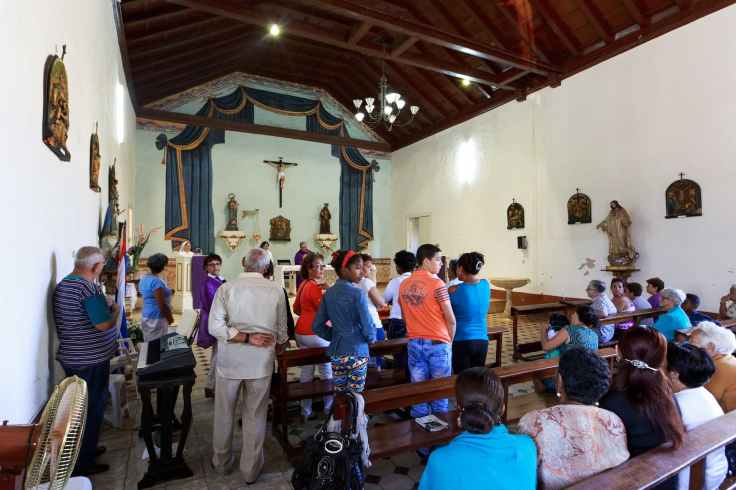














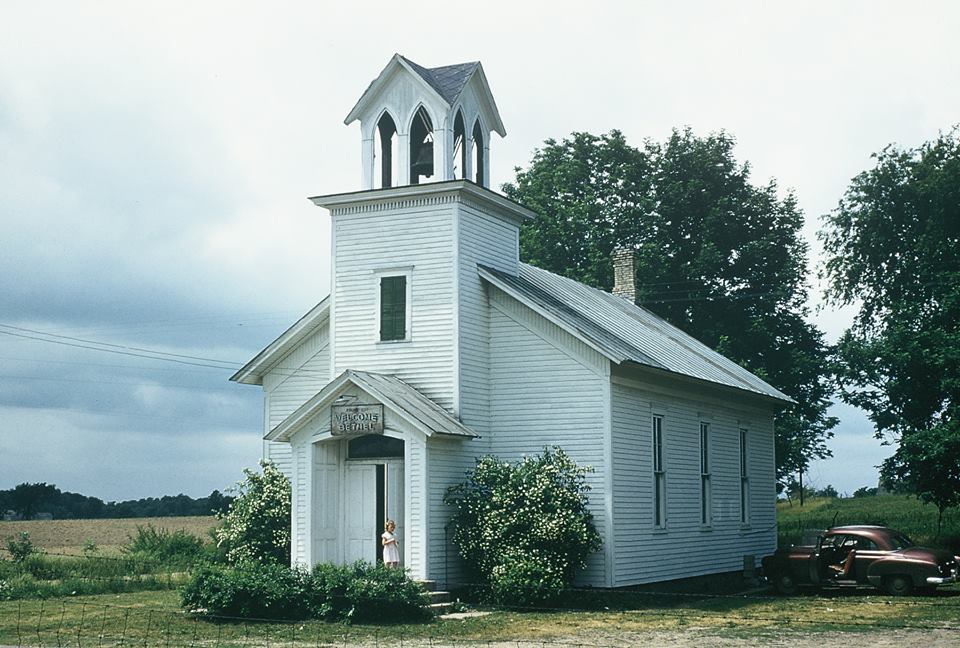 I grew up attending a tiny country church numbering only a few families. Church was not just a place to visit for coffee and a sermon on Sunday morning. There were no large screens, no light shows, no bands, no padded theater seats. What we didn’t have in the way of amenities, we made up for with fellowship– pot lucks, church-wide outings, bake sales to raise money for missionaries, and community-wide Christmas caroling every December. We didn’t have a big budget or slick publications. There was no website or gym; no trendy decor in the entryway, or sound system. But there was prayer– lots of it! Prayer to open Sunday School; prayer to open the service; prayer at the end of Sunday service; and Wednesday Evening Prayer Meeting. This was, for the children, an evening of games, singing, stories, and socializing with our friends, all in the church basement (painted cinder block walls, industrial fluorescent lights hanging down from beams to light up folding tables and metal folding chairs on the bare cement floor, which was sometimes home to spiders, toads and even the occasional salamander). But upstairs, it was all business. An hour of adults in the community coming together to pour their hearts out to God.
 Pursuing Prayer