In One Accord

I heard a riddle a few years ago, that went something like this: ”What kind of car would Jesus drive? A Honda–it says in the Bible that Jesus and his disciples were all in one Accord!”

While that pun may raise some groans, it also hints at a valid principle. Those who follow Christ should be “in one accord.” Whether we are riding together in a car, or sitting together in a service, or serving together on the mission field, we should be of one mind. But what does that actually mean in a practical sense? How does it relate to a pursuit of prayer?

To be “in accord” is to be unified, in agreement, in consensus, in harmony, with all the others of a group. It is the act of blending together for a single purpose– to match up with others in a single focus–to unite in one glorious expression. Think of a harmonic musical chord– three or more single notes being played together to make a fuller, richer, more complete burst of sound. The notes must act together– they must be in harmony within the scale, and they must be played at the same time. There is even such a concept in music of “resolving” a chord– first playing a chord in a minor key, then changing one or more of the notes to form a similar chord in a major key. The human ear is drawn to chords that “resolve”– music that ends on a “positive note.”

In human relationships, we also like resolution and harmony. As Christians, we are strongly encouraged to live in harmony and unity, living for others, so that we may “glorify the God and Father of our Lord Jesus Christ with one mind and one voice.” (Romans 15:6 CSB) We are not to insist on having things “our way,” to resist those who offer Godly correction, or to be part of creating divisions. Instead, we are to refrain from selfish ambition, to remain faithful to Christ’s teachings, and to “resolve” conflict whenever possible.

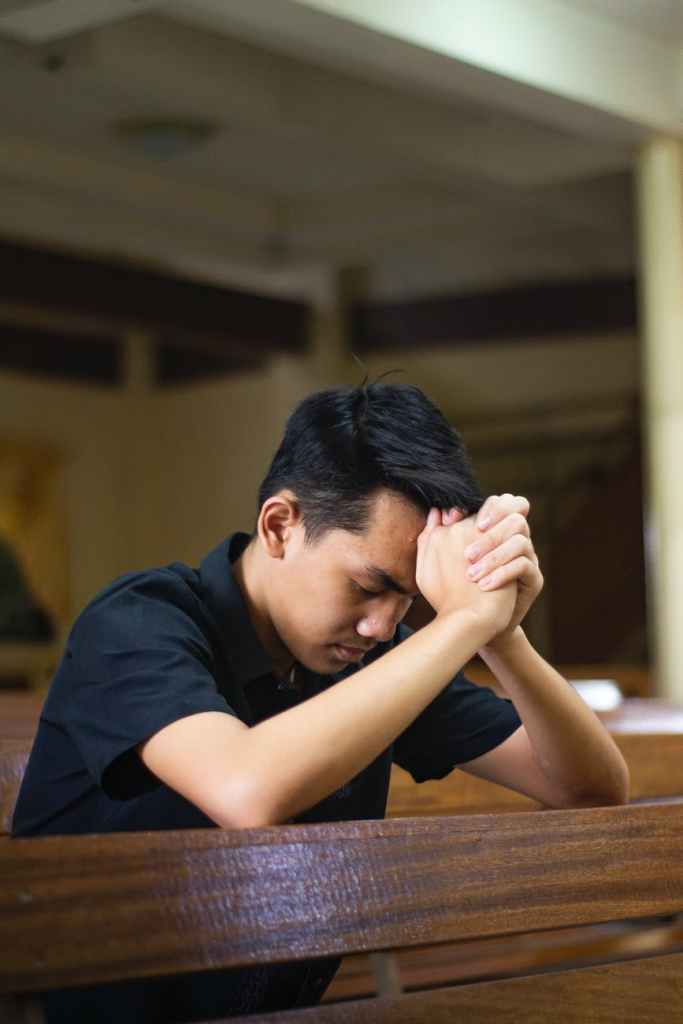
Likewise in prayer. We should echo the prayers of others, as we seek God’s will to triumph over situations and circumstances. That doesn’t mean that we all have to intone the same rote words whenever we are together. But it does mean that we should support each other in prayer, just as we would in speaking to each other and about each other.

And that involves seriously evaluating how we speak and act and think about our fellow Christians. If we gossip or spread complaints about our Brothers and Sisters in Christ, we are NOT in accord, and our prayers cannot be in harmony with theirs. If we are waiting for others to see things “our way,” we should be very careful about how we pray– it may be that WE are the ones who need to reconsider, or it may be that we need to listen before we presume to judge. Being “in one accord” involves humility, kindness, gentleness, and a willingness to accept (and sometimes to give) difficult Godly correction. The goal is not for others to see things “my way,” but for all of us to see things God’s way!

And when that happens, our prayers will be like a symphony, built of gloriously harmonious chords. Just imagine how delightful it is to pray “in one accord,” knowing that our prayers not only reach heaven, but fill it with music!

For more information on this concept, check out https://www.gotquestions.org/in-one-accord.html .

Where Does My Help Come From?

I read an on-line article the other day https://www.verywellhealth.com/perils-of-using-the-internet-to-self-diagnose-4117449 about people using the internet to find medical information, rather than seeing a doctor. The article focuses on self-diagnosis, and the dangers of using only on-line sources to diagnose and treat a chronic medical condition. But I was astonished to note that over two-thirds of American adults (according to various studies) are using the internet to get at least some of their medical advice, and many of them prefer to get their medical information in this way. Why is this?

I think there are several factors, many of which are not discussed in the article:

  • Convenience–The internet is easy, quick, and convenient. I can look up medical terms, symptoms, treatment options, find testimonials and comparisons of various medications and procedures all at the touch of a few buttons, all from the privacy of my own home. I can stay in my pajamas!
  • Cost (in both time and money)– I can save hours of sitting in waiting rooms and thousands of dollars by seeking help from the internet. I don’t need to “waste” time or money on multiple appointments in multiple locations with multiple specialists. I don’t need to spend more on medication if the internet offers alternative treatments.
  • “Confirmation Bias”– the article does discuss the idea that using the internet often helps us achieve a sense that we “know” ourselves better than our health care provider– that the information on the internet can be customized to confirm our already-held beliefs about what is wrong and how to treat it. And we can find on-line groups and sites that will confirm and support whatever we already believe about our health or treatment options, or steer us toward a course of treatment that more closely aligns with our established preferences and habits.
  • Community–One of the positive points about using the internet is that we can connect with a community of others who also suffer from similar chronic conditions. We can receive support and advice from people near and far, and connect with resources that would otherwise be unknown to us, given by those who seem to understand and sympathize.
  • Credibility–The article does NOT go into much detail about this, but many Americans (and I suspect others) no longer have a blind trust in the medical profession. Even once respected institutions, such as the National Institutes of Health, the Center for Disease Control, and the World Health Organization have lost much of their status and credibility due to their handling of COVID and other recent medical crises. We no longer trust the “experts” to give us the best medical advice. We are looking for someone (anyone) who seems to have a better answer–one that doesn’t require us to trust where we have felt disappointed or hurt.

Of course, this poses danger and risk to anyone who is trying to “go it alone” in their medical journey. We risk getting it wrong and causing more harm– even risking our lives. We may end up spending more time, energy, and money “fixing” the damage we cause by trusting the wrong people, and end up confused, frustrated, and angry at ourselves and everyone else we trusted to help us. Even “support” groups have been known to give false encouragement and even prey on people or families who are struggling with chronic illness.

But this article also reminded me that we can risk our spiritual health in the same way– going it alone instead of getting connected to a local church, or substituting on-line articles and blogs (even this one!) for daily personal prayer and Bible study. How does this happen, and WHY?

  • Do we find it more convenient to pick and choose our counsel from the abundance of resources available on-line? Do we only want to read or listen to those who tell us what we want to hear? (See 2 Timothy 4:3-5)
  • Are we trying to “cut corners” in the cost of being a Christian? Do we find it too much to spend time in church, wrestle with questions, accept correction from others, or ask for help?
  • Are we worried about “fitting in” or are we trying to create a “holy huddle” of like-minded people, regardless of our call to be part of the “Body of Christ?” (see 1 Corinthians 12:12-30)
  • Have we lost faith in the Church because of past encounters with others, or the attacks of unbelievers? Do we find it easier to “customize” our spiritual life, closing ourselves off from the kind of challenges that cause us to grow, and falling into a comfortable compromise?

The internet can be a wonderful tool, allowing us to share encouragement, testimonies, warnings, and valuable information globally with a few keystrokes! But it is not without risks. Ultimately, we need to trust, not the makers of websites, or the self-proclaimed “experts” of the world, but in the Sovereign God– the Maker of Heaven and Earth, the one who holds the future of our health (both physical and spiritual) in His Almighty Hands!

Trust in the LORD with all your heart and lean not on your own understanding;
In all your ways submit to Him, and He will make your paths straight.

Proverbs 3:5-6 (NIV)

I lift my eyes toward the mountains.
Where will my help from from?
My help comes from the LORD,
The Maker of heaven and earth.

Psalm 121:1-2

My prayer today is that we would look beyond the mountains of information we find on the internet, and fix our sight and our trust in God for our daily bread, our health, and our future. May we rely on His wisdom to help us seek the right counsel, and to learn, even from our sufferings, that His Presence and His Promises are eternal, sufficient, and sure!

Hidden Among the “Baggage”

I am always drawn by the stories in the Bible. Stories of ordinary and extraordinary people used by God– sometimes in spite of themselves–to rescue others, to teach others, to serve as examples, and to show how God wants to interact (or discipline) those He loves.

Photo by Tima Miroshnichenko on Pexels.com

One such person was a man named Saul, son of Kish. Of all the young men of Israel, God chose Saul to be their first king. This was a mixed blessing for the nation. In asking for a human king, they were saying that the did not want to be “ruled” by God or His prophets. God warned Israel through the prophet Samuel that they might come to regret having a human king. They were rejecting the pattern established by God under Moses, and asking for a system of leadership that matched the surrounding nations. This would make it easier to make treaties, do business, and interact with neighboring countries, but it would also bring some of the same problems (succession, power struggles, greed, etc.) that plagued all the other monarchies and empires around them. The choice of Saul reveals not only God’s character, but the character of Israel. God chose a man from one of the least of the families of the least of the tribes of Israel. Saul’s father, Kish, was a man of some power and wealth, but his family line was one of younger sons of younger sons. God often chooses the “least” among us to lead. He is not a respecter of rank or birth, wealth or experience. However, God also chose Saul as a man who “looked” the part. Saul was “head and shoulders” taller than others. He was good-looking and well-educated. Wasn’t this exactly was Israel wanted in a king?

Photo by fabio.tsu on Pexels.com

On the day Samuel called a great assembly to publicly anoint the new king, lots were cast to show God’s choice. Among the 12 tribes of Israel, the tribe of Benjamin was chosen– the youngest of the sons of Jacob, and the smallest of the tribes. A lesser family among the tribe was then selected. Finally, the choice was narrowed down to Saul, son of Kish. But Saul could not be found! A search ensued, and he was eventually found– hiding among the baggage! The tallest man in the kingdom– the one who already had been confirmed as God’s choice– tried to hide from his own coronation! And it was God who revealed Saul’s hiding place and forced him to face his exaltation!

The ongoing story of Saul’s reign as king is filled with both triumph and tragedy. Time and again, Saul tries to “hide” behind excuses. He fails to obey God’s command, but blames his weakness on others. God takes away His favor, and His spirit leaves Saul, who descends into paranoia, anger, and madness.

But today, I want to look at the idea that Saul thought he could hide “among the baggage.” (1 Samuel 10:22) Other translations say he was “among the stuff” or “among the supplies.” Saul did not run away from the assembly altogether; he did not reject his role. Yet he tried to hide from the gravity and responsibility of kingship. In many ways, this shows good qualities of humility and an understanding of his own limitations. Saul’s problem wasn’t that he thought he was “born to be king.” Saul wasn’t born to be king– it was an honor thrust upon him. Saul’s problem was that he wasn’t prepared to let God rule through him. Saul would be the titular King of Israel. But who would be the King over Saul’s own life and heart? Saul, like the nation he ruled, ended up rejecting God’s rule. He tried to follow the letter of the law, and the traditions of his people, but he did not always choose to follow the God who had created them, nor did he humble himself to accept God’s correction.

Photo by Pixabay on Pexels.com

We may not be chosen for a position of leadership. But what responsibilities are we hiding from today? Are we surrounding ourselves with baggage? Do we hide in the busyness of our hobbies or our job? Do we cover ourselves with “obligations” that leave us drained to no real purpose? How many hours do we spend hiding in chit-chat, or watching television, or shopping, or daydreaming? How many times are we volunteering to work with strangers in order to avoid spending time with difficult relatives or neighbors? How often do we offer up the sacrifice of generic worship instead of the sacrifice of a teachable spirit?

Saul had many gifts, which he used to strengthen his nation and expand its territory. He had the opportunity to do even more great things for God and for Israel. But he is mostly remembered for his failures– his defiance of Samuel’s orders and excuses about disobedience; his ongoing murderous pursuit of his anointed successor, David; his consultation in the dead of night with the witch of Endor; his ignoble death in battle… We too, have opportunities to do great things with God’s help and in His power. We cannot hide forever among the “stuff” of life. God will reveal our hiding places– to others, even if we don’t acknowledge them!

Today, I pray that I will come out from behind the baggage of my everyday activities, and be available for God’s good purposes!

Photo by Munmun Singh on Pexels.com

Please see these other links for more commentary:
https://jentezenfranklin.org/daily-devotions/what-are-you-hiding-behind#:~:text=%E2%80%9CHe%20is%20hiding%20among%20the%20baggage.%E2%80%9D%201Sa%2010%3A22,tackling%20the%20job%20God%20appointed%20you%20to%20do.
https://www.thekingdomcollective.com/spurgeon/sermon/3322/

God is Not On “Our Side”

Tomorrow is Election Day in the United States. It is a “mid-term” election. We will not be electing a national president, but we will be electing (or re-electing) all 435 federal Representatives to our national legislature, several Senators, some state Governors, and many state legislators. Some towns and cities will be electing mayors and council members; many school districts will be electing board members. There will also be many proposals on the ballots– in my own state, we will be voting on whether or not to change our constitution to legalize abortion, whether to change our voting laws, and whether to amend our statute on term limits for state officials.

Photo by Element5 Digital on Pexels.com

Pundits and worried voters will tell you that there is a lot at stake tomorrow. They will make it sound as though the world will end if “their” side doesn’t win–if their proposals don’t pass or their party’s candidates lose the vote count. While there IS a lot at stake in the vote, there is also a lot of hope, regardless of the outcome. No matter who “wins” or what proposals get passed, God is still on His Throne. It is God who forms nations, raises up rulers, or puts them down, and who sees the hearts and minds of all people.

Photo by Porapak Apichodilok on Pexels.com

God is not an American. He is not a Democrat or Republican. God is Sovereign over all the Earth. He does not “take sides,” in any way that we would understand. God, who promised to be the God of Abraham, Isaac, and Jacob– who promised to lead them to a land He would show them, and to establish their nation–is the same God who raised up Nebuchadnezzar to rule the Israelites during their exile. He is the same God who raised up Pharaoh, who enslaved the people of Israel, and used Pharaoh’s own stubbornness to reveal His power during the plagues and the parting of the Red Sea. God uses unlikely people to accomplish His purposes, NOT our agenda.

Photo by antonio filigno on Pexels.com

I believe that Christians have a clear duty to vote and to participate in civic matters. And I believe that Christians should be informed and critical voters, not rubber-stamping a candidate or agenda just because s/he/it “looks good.” But I also believe that Christians are to be honest people of integrity and honor, regardless of the outcome of a particular election cycle. That doesn’t mean that we can’t speak out against injustice, corruption, or deceptive campaign ads; nor does it mean that we can’t be conflicted about imperfect laws and candidates. In the final analysis, our ultimate allegiance and our ultimate trust must be found in God and in His Word. We are citizens of God’s Kingdom first, and our nation after that.

Groups, whether political or social groups, must be very careful about claiming that “God is on our side.” We must be far more concerned with whether or not WE are on GOD’S side! As individuals, are WE humble, honest, obedient, and committed to the truth? Are we working to build up our neighborhoods? Are we caring for the poor, the widows, and the fatherless among us? Are we turning a blind eye to evil in our midst, or worse, winking at corruption or excusing those in power when they abuse it in “our” favor?

Photo by Andrea Piacquadio on Pexels.com

God promises never to leave us nor forsake us (Hebrews 13:5). He promises to be by our side, all the way, all the time. But He never promised to be ON our side. It may be His will to bring judgment to our nation, our state, or our city, in the form of corruption and even failure. It may be His will to lead us through a time of hardship, chaos, and persecution. It may be His will to bring swift correction and justice where we have felt comfort and let our own moral standards grow lax. God’s will is always for us to grow, to improve, to become more disciplined in our own lives and more compassionate toward others around us. And His will is more important than our own comfort or being proved “right” over our political rivals.

Whatever God’s will is; whatever the outcome of tomorrow’s election, I pray that I will be a good citizen of His Kingdom, and a good citizen of my country. Of course, I hope that good measures and Godly candidates will prevail, but I know I can trust my Savior more than I can trust a ballot box. And His reign has no term limits!

Photo by Juhasz Imre on Pexels.com

Commissioned Prayer

Have you ever been part of something– some project or task– SO monumental and far-reaching that you wonder whether your efforts made any difference? Did you end up with “grunt” work– a seemingly insignificant part of the larger project that left you with lots of questions and very few (or no) answers? Something so tiny that most people would never even know if you did it?

Photo by Anna Shvets on Pexels.com

A couple of years ago, I took a temporary job as an enumerator for the U.S. Census Bureau. I was part of a vast team of workers who conducted “follow-up” visits, mostly to addresses that had not responded by April 1. I was excited, and a bit apprehensive; after all, the Census is a pretty big deal. These names and numbers will be part of our nation’s collective history. As someone who loves doing genealogy, the Census is invaluable for discovering information about my family history– names, ages, locations, occupations, origins and ethnicities, and so much more can be learned from Census records.

However, I soon discovered that most of my job consisted of traveling to out-of-the-way locations, and knocking on the doors of empty houses, or trying to find addresses that no longer existed. “Non-response follow-up” usually involves checking on rentals, second homes, vacation homes, and homes that have been vacated, condemned, or even demolished in the years since the previous census. It is a lonely and often frustrating exercise in trying to find what “isn’t,” rather than counting what “is.” Each day, I was given a new list of locations (including some I had already visited without success). But I was commissioned by the U.S. Government to trace each address on that list to the best of my ability, and, wherever possible, to get information about anyone who might have been in residence at that location on April 1.

Photo by Darya Sannikova on Pexels.com

Sometimes, I was able to get an interview, and document names and ages, or correct information that had been collected earlier. But much of what I did will never be included in the final Census report for 2020. My name will not appear and I will receive no recognition for my efforts(unless as a footnote with the thousands of others who did the same thing). I did get paid for my work, for the time I spent traveling and knocking on doors. And some interviews were not just fruitless, but bordered on abusive. Homeowners were annoyed, or even outraged when I showed up. They had sent in their Census form– for their primary address! Worse yet, there were some times when I showed up after ANOTHER enumerator had come– I had been sent to follow-up on the follow-up! But I was under strict orders about where to go, when to go, what to say (or not say), how to report on each interview (or non-interview). I was under a commission. I took an oath, and I followed orders, just like being commissioned in the military. Looking back, I feel good about the experience. I served my country, and I learned a great deal about the local geography, AND about human nature. For every cranky homeowner, there were others who were friendly and helpful. At the time, though, I often felt drained and dazed at the end of a shift.

Photo by Andrea Piacquadio on Pexels.com

As Christians, we are also commissioned. We are to go into all the world and preach the gospel, making disciples of every nation, teaching and baptizing, and being witnesses for Christ. (Matthew 28:16-20/Mark 16:15-18, etc.) Our commission is not to force everyone around us to become Christians, or to demand that they respect us or our message (that is the work of the Holy Spirit– our job is to go and to be witnesses, disciple-makers, teachers, encouragers, and helpers). And part of our commission is to pray–fervently and consistently– to pray for our nation and its government officials (1 Timothy 2: 1-2); to pray for believers around the world, especially for those under persecution (Hebrews 13:3), to pray for those who persecute, ridicule, or despise us (Luke 6:28; Matthew 5:44), to pray for, and interact with grace toward, those who have rejected Christ (Colossians 4:5-6), to pray for the healing and restoration of others (James 5:13-20).

Photo by Ian Panelo on Pexels.com

At times, we may not feel like praying for certain people or situations. We may not understand why God allows for corruption in our government or for neighbors to mock our faith or treat us unfairly. We may not understand why some of our prayers seem to be more about what “isn’t” that about what is. We may not understand why God sends us, where God sends us, or when God sends us to go, to act, and to pray. But God IS listening. He knows our every thought, and He sees every need– not just our needs, but the broader needs of our community and our world. May we be faithful with the commission we have been given. It’s a much bigger deal than any Census!

The Whale and the Worm

Photo by Daniel Ross on Pexels.com

God keeps calling my attention to the book of Jonah. It’s not a very lengthy or in-depth book. It has only four chapters, and it tells a single story of the prophet Jonah and his mission to preach to the people of the Assyrian capital of Nineveh. But it is filled with lessons about prayer, obedience, gratitude, repentance, and Grace. https://www.biblegateway.com/passage/?search=Jonah%201&version=NIV And we learn four important things about God: He sends, He saves, He sustains, and He suspends.

  • FIrst: God sends. The book of Jonah reminds me of reading Ernest Hemingway. It is compact, terse, and to the point. The very first verse reads, “The word of the Lord came to Jonah, son of Amittai.” There is no other intro, no back story, no conversation between Jonah and God… Yet there IS a back story: elsewhere in the Bible, Jonah is mentioned as a prophet of God. Jonah wasn’t an unlikely choice to take a prophecy to Nineveh. He wasn’t new to the whole “prophet” gig– he wasn’t a farmer or a fisherman or a young shepherd boy. He was an experienced seer and prophet.
    I mention this because God sends who HE wants to send. He didn’t have to give this message to Jonah. And when Jonah ran away, God didn’t have to chase him down and give him a second chance. There were other prophets who might have delivered the message without any fuss or drama. There were priests, soldiers, merchants, and shepherds who could have done the job (and likely done a better job!) The book of Jonah reminds us that God’s purposes are often multi-faceted. God’s purpose in sending Jonah wasn’t just about the Ninevites– He wanted to work in and around and through Jonah to reveal His character. He also sent the big fish (the Bible never says it was actually a whale), and later a gourd vine and a worm– all to minister to Jonah. They all appear in the story, but only to Jonah, not to any of the others!
    God will send us–or He will send people (or big fish) TO us. He will send people and things to bless us; and to test our patience! But God sends us what is meant for our good and His glory.
  • God saves: Each chapter contains an example of God’s salvation– In chapter one, God not only saves Jonah from drowning by sending the big fish; He also saves everyone else on the ship. An entire crew of hardened seamen are stunned by God’s power and grace. In chapter two, God rescues Jonah from the fish’s belly, and gives him another opportunity to fulfill his mission. In chapter three, God sees and hears the pleas of the Ninevites–He withholds His judgment and showers the city with amazing Grace. In the final chapter, Jonah wants to die (twice!), yet God provides comfort, compassion, and correction in response. At the end of this book, in spite of storms and raging seas, prophecies of doom and destruction, dangerous journeys, scorching sun, and disobedience, rebellion, and evil– NO ONE DIES!
Photo by Scott Webb on Pexels.com
  • God Sustains: God could have rescued Jonah without the “whale.” He could have calmed the storm. He could have caused Jonah to walk on water. He could have created a path of dry land for Jonah to walk on… But God caused Jonah to be in the belly of the fish for three days– a circumstance that Jesus used to foretell His own death and resurrection. God sustained Jonah even in the midst of his bitterness, anger, depression, and rebellion. He gave Jonah a miraculous rescue– one Jonah could have shared with the Ninevites to illustrate God’s Mercy. I find it curious that the King of Nineveh invites everyone to fast and pray, saying “Who knows..” Jonah KNEW! He was a living example of God’s Grace and Power. He could have shared this wonderful news with the people of Nineveh, yet he chose to share only the message of God’s wrath. Jonah had the biggest “fish story” in history, and he chose to keep it a secret! In spite of this, God sustained Jonah’s life– against Jonah’s own wishes! How has God sustained us in moments of crisis, doubt, and infidelity?
  • God Suspends: What does that mean? Well, in this book, it means several things. God suspends His judgment against the city of Nineveh–in later Bible books, we see that the people of Nineveh and Assyria return to their evil ways. They do not turn completely from their worship of idols and their detestable practices. Within a couple of generations, they experience the total destruction that Jonah predicted. God is Gracious and Merciful; He is also Righteous and Just. Jonah’s mistake was to despise God’s Mercy toward his enemies; the Ninevites’ mistake was to forget God’s Holiness. But God also suspends Jonah’s life– three times Jonah expresses a passive desire to die: he asks to be thrown into the sea (he does not know or expect that God will rescue him); he asks to die after the Ninevites are spared; and he asks to die when the worm destroys the gourd vine. But Jonah’s desire to die goes unfulfilled. God’s purpose is not that Jonah should die, but that Jonah should learn to LIVE and love: love his life; love his God (better); and love his former enemies. Sadly, we never find if Jonah ever learned his lesson. The author of Jonah leaves us “suspended” as well.
Photo by Artem Bali on Pexels.com

Our God sends “whales” to rescue us from our rebellious wandering, and “worms” to take away those comforts that keep us from seeing our real needs. He saves us, even though we don’t deserve a second (or third or thirtieth) chance. He sustains us, even in times of failure. And He suspends us, withholding His wrath and giving us loving compassion and correction.
Jonah is not a very lovable character– and that is a great comfort to me in times when I am faced with my own failures and missed opportunities. The people of Nineveh were despicable! They deserved justice and judgment. But God loved Jonah; and He loved the people of Nineveh. And He loves us– more than we deserve; more than we can imagine. He loves the unlovable. He loves the despicable. He loves those who cannot love themselves, and those we are convinced we cannot love.

Photo by Luis Quintero on Pexels.com

May we learn a lesson today from the “whale” and the “worm”– we can trust God for Mercy and for Justice. We can trust Him to save and sustain us; to send us and suspend us. And we can rest in His love and care–whether we find ourselves in a raging sea or caught in the scorching heat, or sent on a mission that tests our heart and soul to its limit.

Blog at WordPress.com.

Up ↑