…And the Word Was With God…

We get excited about Christmas coming–we put up trees and decorations, and often a manger scene or Creche, with Mary and Joseph and the baby Jesus in the manger. But Jesus didn’t start as a baby. Long before He ever came to Bethlehem, Jesus was one with the Father. He ruled from the heights of Heaven. He saw the first dawn of the first day on Earth. He walked in the Garden with Adam and Eve. He was a witness to all the events leading up to His own birth.
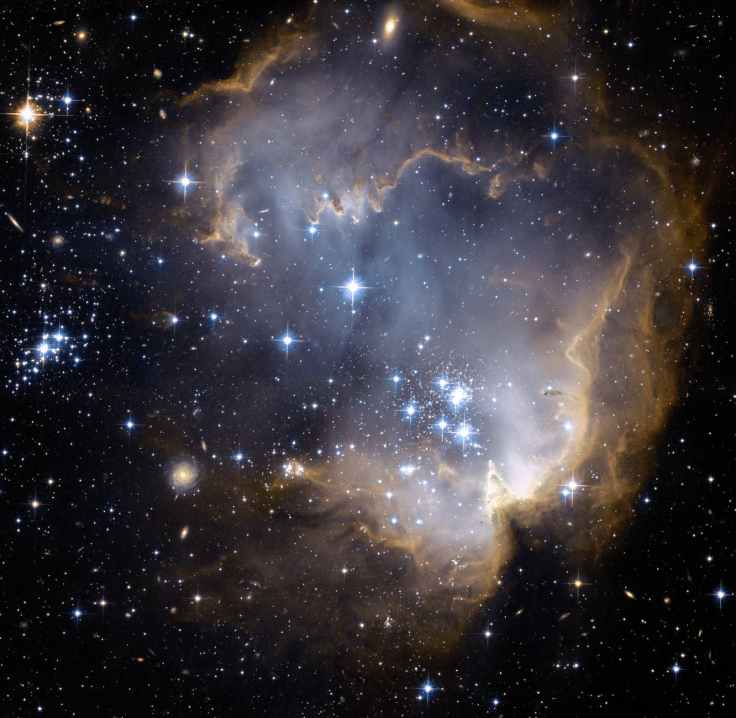
Photo by Pixabay on Pexels.com

We like to picture Jesus as a baby. We like to picture Him as a man. We like to think of Him as a good teacher. And these are all correct. But we miss the full picture if we never imagine Jesus with God before He ascended to Heaven. The Ascension was Jesus returning to His rightful place, after the work of Salvation was accomplished in chronological, Earthly time. Jesus walked with His disciples. He ate with them, He laughed and talked with them. But He spent His earthly life talking and walking and relating with His Father, too. Nothing separated them, until that moment when Jesus became Sin for us so that we could be restored to a relationship with the Father.


Photo by RFA on Pexels.com
Photo by Ivan Samkov on Pexels.com

On the Cross, Jesus cried out, “My God, My God, why have you forsaken ME?”(Matthew 27:46 or Mark 15:34). God was not just “sending” His son as an emissary or a benign sacrifice to demonstrate how much He could love us. Jesus came, fully intending to be a living sacrifice. He endured the “imposed” separation of a human body, bound by time and place, separated physically from the glories of Heaven. But this separation– this knowledge of being forsaken, banished to Hell and Death–was what Jesus came to take upon Himself. The one who had eternally existed in loving harmony with the Father and the Spirit, had to be ripped away from Himself, forsaken by the Father and Spirit as one condemned. The one who had lived a perfect life of obedience had to be shunned as one who was unclean and unworthy of life, so that WE could have the right to be adopted as sons and daughters of God. We can be “with God” because He chose to endure the inconceivable pain of the rejection that we deserved. But there is another miracle of the Birth of Jesus that we overlook.

At the moment of Jesus’ birth, He was Emmanuel– God with US. Just by entering into a human existence, God already fulfilled His promise to bring us to Himself. When Jesus ate with His disciples, God was eating with them. When He laughed with them and walked side by side with them, the fullness of God was there. By His death, He continued “with us” to the grave and beyond. There is not a single moment of life –or death– that God, through Jesus, has not experienced and shared with us. In His resurrection, Jesus broke the power of Sin and death to separate us from God. Even the power of God’s justice cannot condemn those who put their trust in the finished work of Jesus, because Jesus has paid the debt in full. There is NOTHING that can ever separate us from God’s love and His loving presence. The Word was with God– and that same Word was with us. That same Word lives with, and in, and through us throughout our days on earth. And, if we have put our faith in this same Emmanuel, we will be “with God” throughout eternity.

Photo by Marcelo Moreira on Pexels.com

I need to meditate on this truth today. Even in the Holiday season, I can feel very separated from God–surrounded by stress and worries; focused on my own struggles and goals; chasing after a temporary joy in the busyness of preparations. Jesus has not forsaken me to return to Heaven– He is no less “with me” for being once again “with God.” No, He doesn’t physically walk beside me and eat with me, or talk audibly to me. But His presence is constant, steady, and promised.

Photo by Alena Shekhovtcova on Pexels.com

The Word– the same Word that spoke galaxies into being; the same Word that conquered Death and Sin–is “with us!” Today. Every moment! We will never have to cry out, “My God, my God, why have You forsaken me?” And we know this because Jesus CAME! He didn’t just “say” it. He gave us “His Word.”


Infinite Variety

As I look out my window today, I see a wonderful palette of fall colors waving in the wind. There are trees still filled with dark green; others with variegated shades of red and orange and yellow; some have brown leaves– so brown, they are tinged with purple! Back in the spring, the trees had so many subtle shades of green– bright green, yellow-green, and un-nameable greens in between. The colors of nature are astounding in their variety and their ability to change throughout the seasons.

Photo by Taryn Elliott on Pexels.com

God loves variety– not just in colors, but in all of life. Giraffes and gerbils; elephants and eels; ladybugs and llamas; koalas and kingfishers; swans and sloths; trees and termites; roses and raccoons…different shapes and sizes, with different lifespans and different habitats. Nature is a kaleidoscope. And precious people, too. Skin tones that span a vast spectrum; different hair; different eyes; different noses; different heights. But also different speech; different ways of thinking and doing; different ways of life–people living in city apartments, isolated huts, houseboats, underground houses–infinite variety.

Photo by Kureng Workx on Pexels.com

Our prayers are also uniquely different from those of other people. And God LOVES to hear the differences as we lift up our unique praises and petitions. God created us to be uniquely ourselves– and uniquely His!

Photo by Luis Quintero on Pexels.com

Just think– at this very moment, someone is praying in a language you’ve never spoken, in a place you’ve never visited. Someone else is praying for needs you have never even imagined, and thanking God for blessings you’ve never dreamed of.

It is a wonderful exercise to pray in a group– dozens, even hundreds of God’s people speaking the same thing in agreement; raising united hearts in praise or even in pain. But there is also something wonderful about listening to others as they express their hearts, knowing that God values each of us for the unique person He made us to be. We can be just as awed by the variety of amazing people we meet as we are by the amazing colors of the autumn leaves. The same God loves to fill the world with infinite variety and beauty.

Today, let’s try to see people for who God made them to be–infinitely precious and unique. And don’t forget that person in the mirror! God loves you. He loves to hear from you. He loves to lavish His love on you and through you, in ways that only He and You can experience.

Fearfully and Wonderfully Made

I just finished reading a book about atheism– or more accurately, a book about the unreasonableness and faulty logic of modern atheism as espoused by many scientists and philosophers. https://www.goodreads.com/book/show/56614922-is-atheism-dead One of the arguments concerns the view, held by many atheists, that life exists only in the material– in other words, that only “matter” “matters.” They argue against the existence of the soul, or the uniqueness of mankind in relation to other living things. There is nothing beyond science and whatever science can explain. Therefore, there is no God. If there is no God, and we were not created in His image, they argue, then there is no Heaven or Hell, and nothing beyond what we can experience with our senses. There is no purpose for our lives; no consequences for our thoughts or actions; no higher power or authority than our own. We are simply a product of the evolutionary process and a sum of our material components. Our thoughts are simply products of brainwaves firing in a certain pattern; our emotions conditioned and triggered by no more than a series of chemical and physical reactions to stimuli.

Photo by Pixabay on Pexels.com

It is not my intention to argue or take the time to explain in the same detail that was in the book I finished, but I was struck by one of the points the author made. Without a belief in the God of creation, it is illogical and inexplicable that we should be affected emotionally by ANYTHING outside of the realm of material experience and scientific study. That means that we cannot fully explain or appreciate art, music, the grandeur of the night sky, the softness and warmth of a baby’s cheek, the thrill of a perfect sunset, the memory-evoking smell of a loved-one’s perfume or after-shave…our senses should not “move” our emotions. We can analyze a piece of artwork– it’s color or composition, the balance of light and dark, or the perfection of its perspective. But we cannot explain why it is “art,” or why it “speaks” to us (or turns us off!) We can discuss sound waves and tonality in music, but we cannot explain why certain songs move us to tears or cheer our spirits. We cannot say what makes a poem “connect” to something in our psyche, such that its lines come to us almost unbidden in times of distress.

Photo by Aron Visuals on Pexels.com

But all of this makes amazing sense in a world where God exists– a God that is the Author of Creation; of Glory; of Compassion and Wonder. God not only exists– He makes Himself known in the music of a waterfall, in the gentle fall of snowflakes, in the scent of lilacs, and in the smile of someone we love. And He has given us the ability to feel awe, and to strive to add beauty, art, and meaning to the world around us. This is unique among His creation. Birds sing; dogs romp and play; flowers bloom– but they do not fall to their knees in worship; they do not compose sonnets or build cathedrals in acts of sheer adoration. They are not moved to tears or stunned into silence by sun glinting on a spider’s web– even the spider ignores the beauty of its own functional creation.

Photo by Chase McBride on Pexels.com

We are fearfully and wonderfully made–and wonder-ful-ly made! Today is a great day to look and listen for God’s glorious touches all around us. And it’s a great day to reflect back to Him all the wonder and glory of Who He Is in praise!

The heavens declare the glory of God; and the firmament sheweth his handywork.  Day unto day uttereth speech, and night unto night sheweth knowledge. There is no speech nor language, where their voice is not heard. Their line is gone out through all the earth, and their words to the end of the world. In them hath he set a tabernacle for the sun, which is as a bridegroom coming out of his chamber, and rejoiceth as a strong man to run a race. His going forth is from the end of the heaven, and his circuit unto the ends of it: and there is nothing hid from the heat thereof.

Psalm 19:1-6
Photo by Pixabay on Pexels.com

Celebrate Variety

It’s growing and harvesting season in our area for many vegetables. Gardens have been spilling over with zucchini, cabbages, carrots, summer squash, onions, green beans, peas, tomatoes, potatoes, sweet corn, and much more. Similarly, the flower gardens are blooming with every color and variety imaginable– bright yellow sunflowers, tiny blue and white blossoms, and red cardinal flowers. I’m amazed at the variety of wonderful things God designed for us.

Photo by Solare Flares on Pexels.com

Did you know there are dozens of different varieties of just carrots?! Orange, yellow, purple, red, white, long and skinny, or short and fat, rounded ends or tapered…and that doesn’t begin to cover varieties of tomatoes, potatoes, squash, etc. Not to mention fruits, nuts, grains, herbs, flowers, fungi, and bark that are edible. Plants of every size, color, shape, taste, and texture. And many plants have other uses– medicine, fibers for clothing and rope, dyes, wood for building or burning as fuel, oils, and so much more.

Photo by Mike on Pexels.com

And that’s just the plant world. There are millions of different varieties of insects in the world, and animals ranging from bats to butterflies, pandas to pigs, geese to giraffes, wolves to whales, ocelots to octopuses, and ponies to platypuses.

God could have provided only grass or leaves for us to eat, instead of giving us such a variety of tastes and textures for our nourishment. He could have made all trees look alike with the same texture of leaves/needles, and wood. He could have made just one kind of fish to swim the lakes and oceans. In the same way, God could have created us to act and look just the same. But God loves variety. He loves for us to discover and celebrate all the uniqueness of His creation– including our neighbors and family and friends.

Photo by cottonbro on Pexels.com

We have a tendency to look down on or make fun of differences– we say that some people are a little “corny,” while others are just plain “nuts,” or go “against the grain.” But the truth is, God designed each of us to reflect His nature in all Its infinite, glorious variety. We shouldn’t try to be someone else, or belittle someone else for not being just like us. Instead, we should reach out and celebrate those fellow “human beans” who carry a unique imprint of God’s image.

Photo by Meruyert Gonullu on Pexels.com
Genesis 1:27-30 NIV
Photo by Ron Lach on Pexels.com

And God Saw That It Was Good…

Throughout the story of Creation, a certain phrase gets repeated– “And God saw that it was good..” God’s purpose and will are always to see the good. At the end of the creation process, God saw that it was “very good.” He placed mankind in a garden filled with goodness, peace, safety, plenty, and promise– a garden filled only with Good.

Photo by Cindy Gustafson on Pexels.com

The one tree that was forbidden to mankind was the Tree of the Knowledge of Good AND Evil. Humans chose to know and see and experience evil in an effort to be “like God.” We still recognize Good; but now we are surrounded by evil– lies, greed, hatred, selfishness, bitterness, addictions, compulsions, disease, destruction, and death. We cannot go back to the beginning. We cannot just close our eyes and deny, ignore, or excuse evil in our midst. And we cannot control the consequences of our evil choices. We cannot stop death or reshape the past.

Photo by Harrison Haines on Pexels.com

But we must make the choice to look for the Good– to look to the author and creator of all that is good, and true, and noble, and holy. It can be very difficult to do. The voices of this world will continuously call out all that is bad– all our past hurts and present difficulties; all our guilt and shame; everything that is ugly, diseased, unjust, lop-sided, dying, and ruined. And our knowledge of good AND evil will tempt us to justify evil means to “good” ends…

Photo by Karolina Grabowska on Pexels.com

God, who sees the end from the beginning, has looked through time and space, and pronounced His creation “Very Good.” God who redeems and resurrects, renews and transforms, has promised to make all things new in His time. God not only has the knowledge of Good and Evil– He has the power over both. Our efforts to find Good on our own will end in heartache, failure, guilt, and shame. God knows we cannot redeem our own actions, let alone the legacy of evil we’ve inherited from the past. But the Good News is that He has done it for us! Just as He saw that everything was “Good” in the Garden of Eden, He sees the end result of His redemption– and it is “Very Good.” We don’t have to keep trying and failing to achieve what only God can do. We DO have to trust in God’s ability and His willingness to keep His promises!

Photo by Evgeny Tchebotarev on Pexels.com

Through prayer, we carry all that is wrong to the One who can make it all “right.” And, through prayer, we praise God for all the Good– the good that God has created in the past; the good that we choose to see in the present; and the good He has promised that we cannot yet see.

Photo by Edu Carvalho on Pexels.com

This Little Light of Mine…

John 1:4-5 American Standard Version (ASV)
 4 In him was life; and the life was the light of men. And the light shineth in the darkness; and the darkness [a]apprehended it not.

Footnotes:John 1:5 Or, overcame.

via http://www.biblegateway.com
Photo by Pixabay on Pexels.com

I love words. But sometimes, it can be frustrating to find just the right word to express a complex idea. I’m sure the Apostle John felt the struggle as he began writing his Gospel account of the life of Christ. How can mere words describe the arrival of GOD– creator and ruler of the universe– into a darkened and sin-filled world, come to live among and serve the very lost souls He would die to save? John, of all the Gospel writers, uses the most visual metaphors to describe the Advent of Jesus (many of which he heard from the lips of Christ Himself)– He was the “Light of the World”, the “Bread of Life”, the “Living Water,” the “Way, the Truth, and the Life,” and the “Good Shepherd.”

But right away, the phrase John uses to talk about the “Light of the Life” causes modern English scholars confusion. John says that the light “shineth”, or “shines” in the darkness and the darkness “comprehended” (or apprehended, or understood, or overcame) it not. The phrase is simply too big for one word, or idea. The Greek word comes closer to expressing a dual idea, but even it can’t wrap up the totality of such an event.

Photo by Luck Galindo on Pexels.com

Consider–This Jesus, one with God from the beginning, and the “Word” of creation, spoke light into existence. Where there was darkness, He exploded– light upon light– stars and galaxies of light! Even on the darkest night we will ever know, there are millions of lights spread out across the vastness of space, including our own sun, even unseen on the other side of the planet. Darkness can never “comprehend”, let alone “overcome” the existence of light in our world.

Moreover, when we see physical light piercing the darkness, we are aware of it, but we rarely comprehend, or understand it. Whether we are blinded by a flash of light, or compelled to seek out a single hint of light in a darkened tunnel, it is not obvious at first glance (and sometimes even after diligent study) the source or scope of the light. It may be a candle, or a set of glaring headlights, or the glint of reflected light in a mirror. It could be a distant star, a satellite, or a street light shrouded in fog.

Photo by Miguel Á. Padriñán on Pexels.com

But in a spiritual sense, it is even more true that “Light has come into the world” (John 3:19), and it “shines” in the darkness, and the darkness has not understood, or apprehended, or overcome it. Jesus came as an infant to His own chosen people, people who were longing for the advent of their Messiah. But few of them recognized Him. They didn’t understand– even Jesus’ closest friends didn’t “get it” at first. And some of them tried their best to “overcome” and “apprehend” the Gospel message– zealous religious leaders like Saul tried to stop the “light” of Jesus’ message and all those who trusted in it. Saul had to be “blinded” by a light on his way to Damascus, so that he could finally “see” Christ (Acts 9).

And the light is still shining in the darkness– as followers of Christ, we are to reflect God’s love and grace to those around us. Many of them will not comprehend; many will try to overcome or even destroy the message we bring. Our light may seem small and insignificant. It may seem like we are surrounded by the vast darkness of space, or shrouded in fog. But the light of Christ cannot be extinguished, or rationalized out of existence, or contained. All the words ever spoken, written, or thought throughout all the ages of mankind cannot compare to the power of God’s “Word”, who spoke worlds into being in an instant, and yet entered His own creation with a soft cry of an infant in the middle of a dark night so long ago.

Photo by 3Motional Studio on Pexels.com

This is the “little light of mine”, and of yours if you are a follower of Christ. It pierces through the darkness of despair, hatred, addiction, injustice, greed, oppression, malice, rebellion, war, grief, loss, disease, and sin.

This season, as we anticipate the Advent, let us remember the greatness of the tiniest of lights, and the triumph of that light over the vast darkness. It is easy to get distracted by the twinkling of a thousand artificial and commercial lights this season, or blinded by the soot and smog and clouds of gloom and pain that surrounds us. It’s so important that we keep shining; continue reflecting the true light that only comes from the “Light of the World”

Photo by Lennart Wittstock on Pexels.com

“This little Light of mine–I’m gonna let it shine!
This little Light of mine– I’m gonna let it shine,
Let it shine, Let it shine!”

This is My Father’s World

Yesterday, in our Bible Fellowship class at church, we continued our series on a Christian view of “Hot” topics: we focused on Environmental issues.

“In the beginning, God created the heavens and the Earth.” (Genesis 1:1)
“The earth is the Lord’s, and the fullness thereof; the world, and they that dwell therein.” (Psalm 24:1) KJV

Our environment can become a politically and emotionally charged subject. How should we as Christians, view our environment, our environmental impact, and our attitudes toward dire reports about climate change, extinction rates, emissions, pollution, habitat reduction, natural resources, and energy needs?

The Bible gives us guidelines, warnings, and even hope!

  • Ultimately, the fate of the world does not rest on my shoulders, or yours, or our generation’s…This is MY FATHER’S world. He created it, He inhabits it, and He has a plan for it. That does not give me an excuse to ignore the problems facing our planet. It does not give me the right or the privilege of passing the problems along to someone else, where action can and should be taken. But it does remind me that God has not left us alone and helpless to stop an environmental apocalypse left to us by previous generations and accelerated by our own.
Photo by Brett Sayles on Pexels.com
  • GOD created the heavens and the Earth. God, who knows the end from the beginning. God designed our planet, our atmosphere, our universe. What even the best of our scientists know about our planet is infinitely smaller than what God knows, and what even the boldest plans of man propose are nothing to the power of God to heal and restore. That doesn’t mean we don’t need to be concerned about things that are happening– but we can’t let our concerns turn to despair and doubt. When the nation of Israel first entered the promised land, God gave them a list of blessings and curses. (Deuteronomy, chapter 28) If they obeyed, they would be blessed. If they were disobedient, they would be cursed. Many of these blessings and curses relate directly to the land and weather. God is still in control of nature, but this leads me to…
Photo by Pixabay on Pexels.com
  • God gave stewardship of the Earth to mankind. We are to be the daily caretakers of God’s Earth. That there are so many problems with our environment shows that mankind as a whole has failed to obey God in this matter. We are not under the direct blessings and curses that came to Israel in the promised land, but there is still a correlation–as Sin proliferates, so does death and destruction– including that of the world around us. That doesn’t give me the right to point the finger at others and justify my own disobedience because “at least I don’t…,” or “at least I do…”
    God expects me to act in ways that protect, preserve, or develop the environment to benefit those around me and give glory to Him. This includes the way I interact with the land, water, air, plants, animals, and other people. It includes the actions I take to destroy harmful plants and animals; to protect the soil and water; to dispose of waste; to eat; to build, or heat, or cool buildings; what I eat and drink and wear. It even includes being informed about second-hand resources that I buy and use, and whether or not those resources are being stewarded well by others. This doesn’t mean becoming an environmental Pharisee– publicly calling out all my neighbors who still use plastic bags or buy products from “that” company. And it doesn’t mean I must become a vegan, or a homesteader or give up my computer or cell phone. But what can I do to become a better steward?
  • Is it possible that my attitude toward the environment is coming from a lack of exposure to both the environment itself and its maker? Am I spending more time reading about climate change than I am spending in the climate itself? Have I thanked God for the world He created? Do I take the time to notice the beauty in a blade of grass, or the colors in a sunset, or the mystery of running water, and marvel at God’s handiwork? How would my view of Nature change if I developed my relationship with its maker?
Photo by Pixabay on Pexels.com
  • Lastly, I need to engage with others to find ways we all can become better stewards– not (necessarily) by bashing people over the head with statistics and mandates, but getting the facts– not just the hype or the denials–and sharing practical ideas.

I don’t have to save the world– that is God’s job; He’s the only one who can. But I CAN do my part to protect, preserve, develop, and enjoy all the beauty He created. And in doing so, I pray that I can help others see the One who loved us all enough to create such a beautiful home!

Blog at WordPress.com.

Up ↑