Many people look forward to Friday. For students and many workers, it marks the end of the working week and heralds the weekend. For many, it may also be payday! Fridays represent accomplishment; completion of work done, reward for recent efforts; a measure of our success. We chant “T.G.I.F.”– “Thank God it’s Friday.” But we might just as easily say, “Thank God it’s Finished!”
We’re in the Lenten season, leading up to Easter, and, of course, Good Friday. Much more significant than any ordinary Friday, Good Friday is the day we remember the Crucifixion of Jesus Christ. It was on that day that Jesus Himself cried, “It Is Finished!” just before He took his last breath.
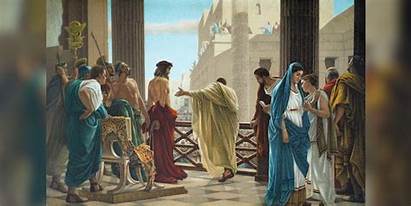
On that first “Good Friday” there seemed to be little reason for celebration. Jesus had been found guilty in a hasty, overnight trial, by the Jewish Sanhedrin for saying that He was the Son of God– Blasphemy if one is NOT God, but simple truth if one is the promised Messiah! The Roman Governor, Pontius Pilate, after examining Jesus’ claims and trying to literally “wash his hands” of the case, turns Jesus over to be crucified by the angry mobs whipped up by the Jewish leaders. And Jesus is beaten, tortured, taunted, and nailed to a cross to die a gruesome, public death. “It is finished!” For Jesus’ followers, this meant defeat, fear, and gloom, rather than accomplishment or celebration.
But Jesus knew better. Even though His death was filled with suffering and humiliation, it was the culmination of His life on earth. And it was the necessary final scene before the next Act– the Acts of the Apostles–the coming of power and hope by the release of the Holy Spirit to indwell those who had put their faith in Jesus AS the Messiah! And so it is today. We have great cause to celebrate Good Friday. Without the Pain of the Cross, there would be no Glory of the Resurrection or Promise of Eternal Life!
Even though this Friday is not Good Friday, we can spend today reflecting on the life of Jesus– the incredible example He gave of how we are to trust in God, love others as God loves, and cherish life–both now and through eternity, as God’s gift. And we can be thankful that, because of Jesus, “IT IS FINISHED!”– the battle against Sin and Death is over. We can live abundant lives, without the fear of eternal death, and we can look beyond the curse of Sin to the Glory of Restoration and Renewal.
21 “Not everyone who says to me, ‘Lord, Lord,’ will enter the kingdom of heaven, but the one who does the will of my Father who is in heaven. 22 On that day many will say to me, ‘Lord, Lord, did we not prophesy in your name, and cast out demons in your name, and do many mighty works in your name?’ 23 And then will I declare to them, ‘I never knew you; depart from me, you workers of lawlessness.’ –Matthew 7:21-23 (ESV)
As someone who spends her time “in pursuit” of prayer, I pay close attention when I hear others praying. People use many different phrases to address God when they pray– “Our Father in Heaven,” “Father God,” “Heavenly Father,” “Daddy,” “Papa God,” “Lord Jesus,” and many others. And there is no “right” phrase or “wrong” phrase to use. But there definitely IS a right and wrong mindset and heart attitude!
Jesus himself, shortly after teaching His disciples what is known as “The Lord’s Prayer,” talks about those who go around calling Him “Lord, Lord.” But they do not obey God, and they will not enter the Kingdom of Heaven. This suggests that that have “prayed” in some form or other, but it is merely a formality or a ritual, and not something that comes from a humble heart. Jesus goes on to tell of their insistence that they “deserve” to enter Heaven based on the incredible things they have done “in (your) name.” Most people, looking at their outward success and good works, would surely assume that they are sincere followers of Christ– after all, how else could they perform such miracles? They have called on the Name of Jesus and they have called Him, “Lord.” Yet, Jesus says of them, “I never knew you.”
What terror those words strike in the heart of those who desire to follow Christ! Is it possible that God will reject those who have called on His Name and believed on Him?
Well, Yes and No… Later in Matthew, Jesus is teaching His disciples about the final judgment, and He tells a similar story, but with more “context:” In the following parable, both the sheep and the goats claim to have done good works and both groups believe they will enter into the Kingdom of Heaven. It can be assumed that both groups have prayed at various times and believe themselves to be “known” to the Father…
31 “When the Son of Man comes in his glory, and all the angels with him, then he will sit on his glorious throne. 32 Before him will be gathered all the nations, and he will separate people one from another as a shepherd separates the sheep from the goats. 33 And he will place the sheep on his right, but the goats on the left. 34 Then the King will say to those on his right, ‘Come, you who are blessed by my Father, inherit the kingdom prepared for you from the foundation of the world. 35 For I was hungry and you gave me food, I was thirsty and you gave me drink, I was a stranger and you welcomed me, 36 I was naked and you clothed me, I was sick and you visited me, I was in prison and you came to me.’ 37 Then the righteous will answer him, saying, ‘Lord, when did we see you hungry and feed you, or thirsty and give you drink? 38 And when did we see you a stranger and welcome you, or naked and clothe you? 39 And when did we see you sick or in prison and visit you?’ 40 And the King will answer them, ‘Truly, I say to you, as you did it to one of the least of these my brothers, you did it to me.’ 41 “Then he will say to those on his left, ‘Depart from me, you cursed, into the eternal fire prepared for the devil and his angels. 42 For I was hungry and you gave me no food, I was thirsty and you gave me no drink, 43 I was a stranger and you did not welcome me, naked and you did not clothe me, sick and in prison and you did not visit me.’ 44 Then they also will answer, saying, ‘Lord, when did we see you hungry or thirsty or a stranger or naked or sick or in prison, and did not minister to you?’ 45 Then he will answer them, saying, ‘Truly, I say to you, as you did not do it to one of the least of these, you did not do it to me.’ 46 And these will go away into eternal punishment, but the righteous into eternal life.” –Matthew 25:31-46 (ESV)
We can call Christ “Lord” without actually making Him our LORD. We can pray to God without seeing Him for who He really IS. And we can follow “Christianity” without actually following CHRIST.
I think the phrase that Jesus uses in the first quote is very telling. The people call Him “Lord, Lord.” And then, they go into a litany of things “WE have (done) in your name” (emphasis added). They do NOT call Him “Father” or even “LORD” (In the Bible, the term, “LORD” is “Adonai”, which is the substitute for Yahweh– the actual NAME of God, sacred to the Hebrew authors. It is not like “lord” as we might use for any nobleman or someone in authority, but is reserved only for the One with ultimate authority and majesty. In other words, not “Lord, Lord” but “LORD– the ONLY LORD”). Instead, they call Him, “Lord, Lord”. And they boast of the spectacular and even superhuman things THEY have done. But one of the things they fail to mention is prayer. They have used His name, but they have not necessarily called on His name– except as a formality. They have not spent time in communion with Jesus. They have not asked for His will to be done. They have not come to Him in humility or praise for HIS mighty works, only in arrogance of how they have done miracles similar to His. Nowhere do they mention following in service, as Jesus taught His disciples, nor do they mention suffering in His Name! In the later parable, both groups (the “sheep” and the “goats”) were startled by the examples Jesus gave of what they HAD or HAD NOT done. These were simple acts– humble acts rendered to outcasts, rather than showy acts of power. They were acts that materialized (or didn’t!) out of humility and compassion, rather than power or favor.
True followers of Christ will take up His yoke. They will listen for His voice, and they will be eager to obey. They will serve like Him– they will stay yoked to Him in humility and in submission. If you wonder whether or not you are truly following Christ– this is a good test. Satan will always try to make us feel as though WE must carry the load, proving ourselves worthy. He may tempt us to compare ourselves with others who seem to be “winning” at Christian service by getting noticed or listing multiple achievements. But our eyes should not be on others or even on ourselves or our accomplishments. Our eyes should be focused on God– what He has done for us on the Cross; what He is doing in our lives as we obey Him; and what He chooses to do through us as we continue to follow Him–even when it seems that we are doing very little things. We may never know in this life how important our small acts of service really are. In God’s economy, they are huge. Heaven rejoices over such small things as giving a cup of water to a thirsty child, or smiling at a lonely person on the bus, or visiting someone in the hospital or in a jail cell. The world needs more humble servants and fewer TV evangelists. (Note: I am not saying that TV evangelists cannot be doing the work of God– but I am saying that I see very few humble celebrity pastors…just an observation.) And, as the Apostle Paul reminds us, God’s strength is shown best in our weakness. (see 2 Corinthians 12:9) As we come to Him in prayer, in dependence and in humility, God’s power is perfected. As we respond in obedience, our life is brought into conformity with His.
Today, as I pray, “Lord Jesus” or “Heavenly Father,” I pray that I will do it with the right spirit. I pray that I will be quick to praise, quick to obey, and eager to seek my Father’s face, instead of my own validation. After all– Jesus is LORD!
As I look out my window today, the sun is shining on hundreds of bare branches. The sky is blue-gray, and the branches are brown and mostly lifeless. Occasionally, a breeze will stir the thin upper branches, or the very last of the dead-looking leaves. When the snows come, the branches and twigs will glisten and stand out against the white-covered ground and slate-gray skies above.
But elsewhere in town, and in the forests and woods just outside of town, there are evergreens! Their green needles and sturdy, squat shapes may go unnoticed in spring and fall, when the other trees show off their glorious changing colors and elegant branches. Soon it will be their time to stand out. Their low branches help break the snow drifts, and increase visibility. Their greenery reminds us that life endures and continues.
I hesitated to write about Christmas Trees. There are no Christmas Trees in the Bible story of the Nativity. Decorated trees have a connection with pagan rituals from long ago. It wasn’t until the first half of the 19th century that Christmas Trees really became a tradition throughout most of Europe and spread to America. What connection do they really have with pursuing a Christian Walk? Only the ones we choose to apply…
Evergreen trees are a symbol of eternal faithfulness. They stay green year-round. They do not lose “leaves” like other trees (though they drop needles and cones). This can be a reminder to us of God’s faithfulness and His unchanging nature.
Evergreen trees are generally the “newest” trees. After a fire, for instance, pine and fir trees will be the first trees to spring up. Hardwoods take longer to recover and regenerate after a disaster. Just as the birth of Jesus represented the coming of new life and hope, an evergreen tree can symbolize new, fresh growth.
While there is no “Christmas” Tree in the birth of Christ, there is a tree in His death on a wooden cross. Hidden in the greenery and lushness of a Christmas Tree is the solid trunk that symbolizes the Cross that Jesus bore, and the Cross that bore Him. Even the needles on the tree call to mind the crown of thorns– sharp, painful, prickly. Jesus came to serve; He came to bear the shame and humiliation, the pain and suffering that WE deserve.
Christmas Trees “point” upwards. Unlike many other trees, they get narrower as you look up, and are broad near the bottom. This is a reminder that here on earth, we are to spread out–spread the Gospel, spread the Love of Christ to as many as we can. And our focus should be drawn up to God in Heaven. That is why we traditionally “crown” our trees with stars or angels– to remind us that Heaven should be our “top” focus.
This year, if you are putting up a Christmas Tree, I pray that your focus would not be on the tree itself. It may be real or artificial; green or white or some other metallic color. It may be decorated with glass bulbs, funky home-made crafts, expensive, individualized ornaments, chains of cranberries or popcorn, bright ribbons or twinkle-lights, paper chains, or even photos of loved ones. But all that can be distracting from the true meaning of a Christmas Tree and WHO it represents. And I pray that your focus would not be on the gifts placed in or around the tree, but that those gifts would truly remind us of the greatest Gift of all– Jesus! I pray that the tree would be another wonderful reminder of the one who created trees, knowing He would one day die on one! I pray that you would be encouraged to share new and enduring life and growth to others. I pray that you would be encouraged that God’s plans are eternal, and His Promises faithful and sure.
The story is told of an old, worthless-looking violin that came up for auction. No one wanted to bid on it. The auctioneer began with a modest call for three dollars. No bids. Two dollars? Nothing. One dollar? Surely someone would spend just a single dollar. The violin was in working order. It had all its strings and a bow. No one was willing to spend one dollar for an old violin?
Suddenly, an old man came forward and took the violin off the table where it lay. He picked up the bow and began to play a famous violin concerto. In the hands of a master musician, the old violin came to life. Its haunting and soaring music brought the entire room to tears. The old master came to the end of the piece, and there was a hushed silence as he lay the bow and violin back on the table and returned to his seat. Clearing his throat, the auctioneer started a new bid– one thousand dollars. Several people placed a bid. Two thousand? Three? What had been worthless in the eyes of so many just minutes ago suddenly had great value.
That’s a nice story, but it rarely happens that way in real life. I run a resale shop– antiques, collectibles, vintage and retro items, and yes, what most would probably call “junk.” People come in and look around– sometimes they find a piece or two that they like. Sometimes, it’s priced at just a dollar or two; sometimes the price is a little higher. Some people think my prices are too high; others find them on the low side. They think they are getting a real bargain, and they are convinced they will be able to resell the item for much more on-line or elsewhere. They may be right. They may be wrong. Most of them are just doing what I’ve already done– find an item that seems to be undervalued, and sell it to someone else who may value it more highly.
“One man’s junk is another man’s treasure.” That saying applies to many of the objects in my store. But it should never apply to a person. We tend to place a value on someone else based on many superficial factors. We judge people by the way they look– their clothing or their hair or the expression on their face when we first meet. Sometimes we judge them by their skin color or the way they speak– the words they use or if the have an “accent.” We judge some people to be smarter or more important based on who else pays attention to them or how much money they have (or don’t have). We judge their talents and experience based on hearsay or gossip. And we allow others to place their “value” on us. As though some people deserve more attention, more resources, or more love than others.
God sees through all the tarnish, the guilt, the low esteem, and shame that we carry around. Each one of us is equally precious in God’s eyes. There is no “junk” in God’s economy, when it comes to a human life. No matter how dirty, broken, used, misused, patched up, trampled on, or worthless we may seem to others (or to ourselves) we are priceless and cherished by our Heavenly Father.
Jesus sought out the “junk” people of his time– lepers, widows, children, the blind and lame, the sick and weary, diseased, depressed, and demon-possessed. He touched the untouchables, loved the unlovable, and forgave the unforgiveable. Even when He was condemned to die as a criminal, and rejected by His friends and followers, Jesus remembered the Father’s love for others.
In this Holy Week, I pray that I would not lose sight of God’s Amazing Love for us. When we were His enemies– fallen, ruined by Sin–“junk”, Jesus was willing to reach out, to walk with the marginalized and sick, and more than all that, to DIE in order to make us joint heirs and give us the glories of Eternal Life with Him! And when Jesus was taken down off the cross– broken, dead, and “worthless”, God raised Him to Life and gave Him a “Name that is above all names” (Philippians 2).
We pray to a God who cherishes our very thoughts–a God who delights to hear from us! What a powerful thought. What an Amazing Love!
Tomorrow is Flag Day in the United States– a day in which we honor our nation’s flag and all for which it stands. It is an odd holiday in a sense; most countries have a national day of celebration, but not a whole day just to celebrate their flag. We already have an day to celebrate our Independence, and days to honor the sacrifices of soldiers or the dates of famous military victories in our history. Why should we spend a day honoring our flag. Isn’t that arrogant? Isn’t it taking nationalism a bit too far?
Flags and banners are important to us. They are a visual representation of an idea or a series of ideas–“America,” perhaps, but also, “Freedom,” “Loyalty,” “Sacrifice,” “Honor,” “Bravery,” etc. We have national flags, state flags, organizational flags, family crests, even sports team flags and mascots. Flags can be used to rally troupes and inspire citizens, signify commitment to a cause or nationality, show pride or loyalty, and represent ideals held by those in a group. Colors, shapes, stripes, animals or plants, stars, shields, letters or single words– all represent something important or noble to those who see them on a flag or banner. And there is no real point to having a flag if you are never going to display it or let it fly high for all to see.
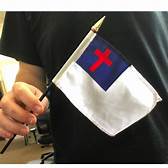
In the Song of Solomon (Song of Songs) the bride tells that her lover has brought her to a house of feasting, and that “his banner over me is love.” (Song of Solomon 2:4) The Song is an allegory that can be seen as Christ and His Church. Christ also has a banner–and it is Love–not the romantic love of the Song, but everlasting and limitless love! His Love rallies us, unites us, inspires us, and leads us. When we look for a symbol of who Christ is (and what the Church should be) we use a flag of white with a cross symbol in red on a blue (or sometimes purple) background for the corner. The white represents Christ’s purity, and the pure white robes that will be given to His saints. The blue/purple represents Christ’s majesty and authority. The red of the cross is a reminder of the blood He shed on Calvary’s cross.
Banners and flags are important. But we don’t need a flag or banner to represent Christ’s love– WE are to be His banner for the world. The world should be able to look at us and see a reflection of the limitless and unconditional Love of Christ in the way we speak and interact with others, and the way we live our lives.
Today (and tomorrow) when we happen to see a flag, let us remember that we are Christ’s ambassadors– we do more than just absorb God’s love– we are to reflect it, and be living symbols of God’s great love for the World. We should be visible testimonies that God’s love is all-important, and available to all! May that be more than just a prayer– may it be our earnest pursuit every day.
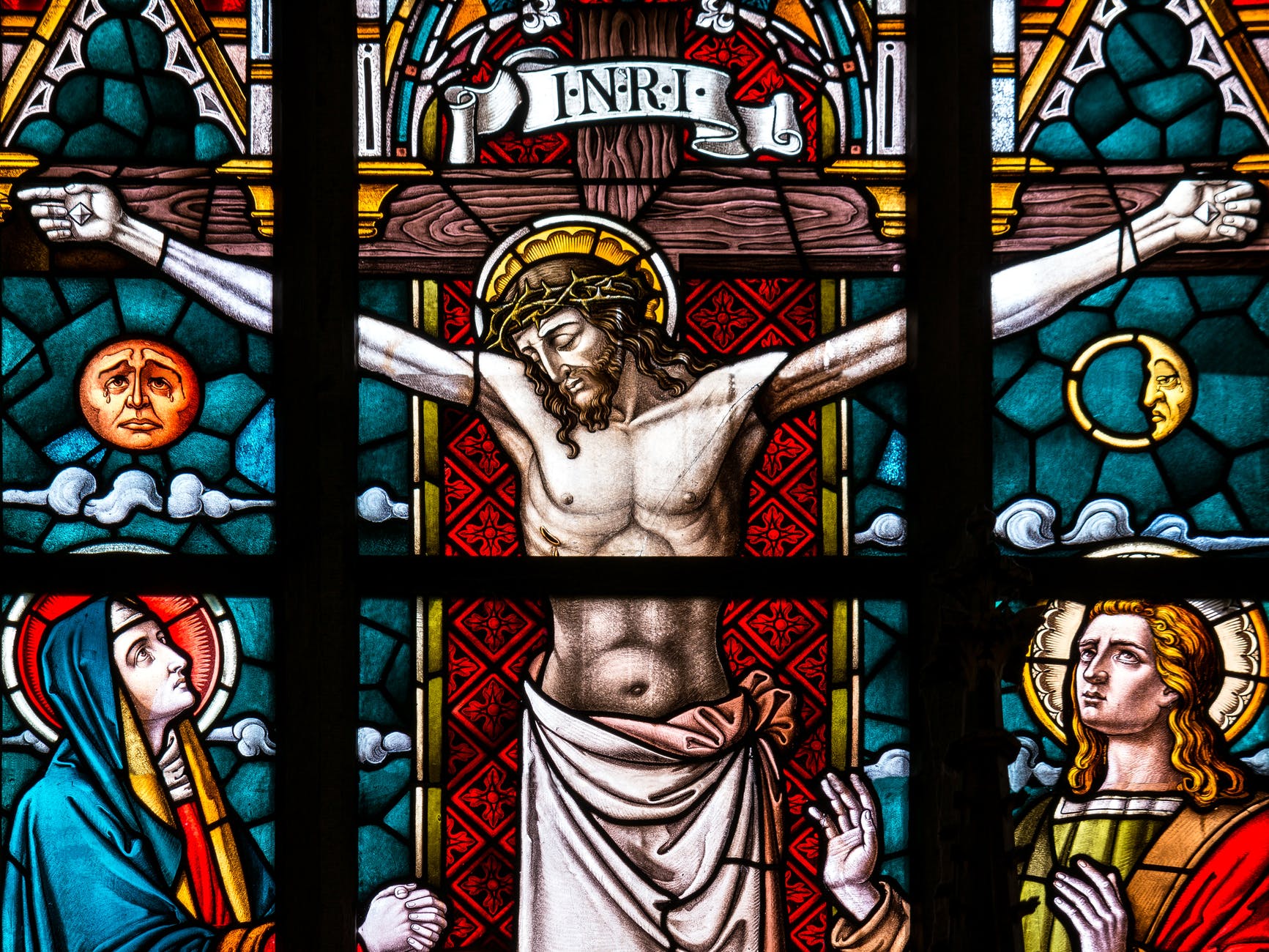
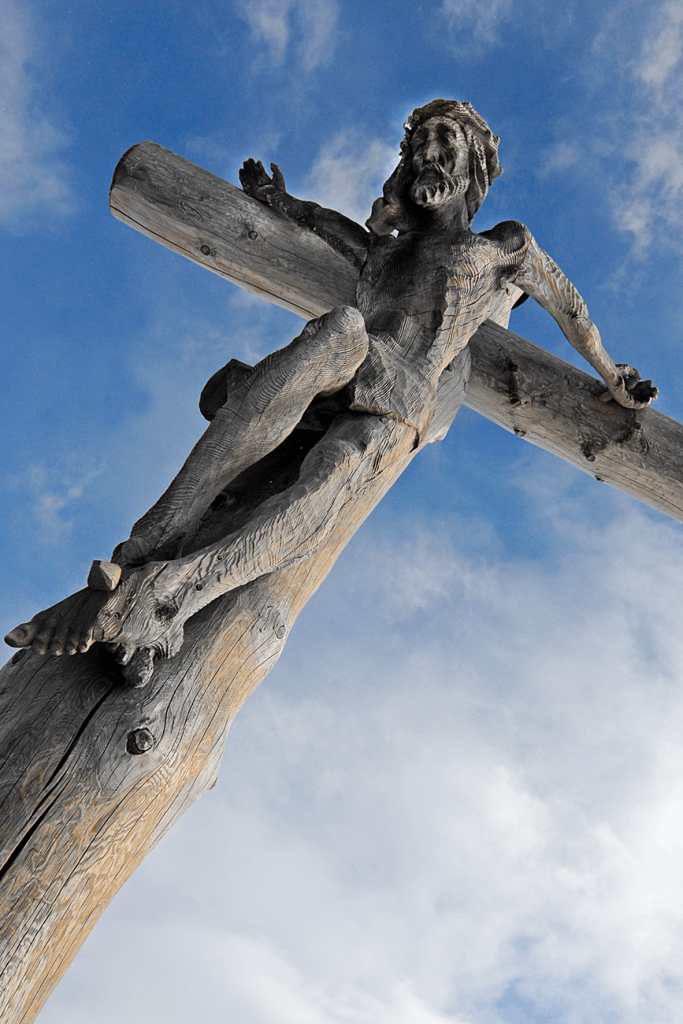
Today is a reminder of violence. “Good Friday” is filled with reminders of torture, injustice, and brutal death on a cross. There is almost nothing about this day that suggests “Peace.” And yet, it is because of this day, and this cruel and violent death, that WE can have peace with God. Jesus made peace for us by suffering at the hands of corrupt and brutal men. He could have fought back. He could have called down legions of angels to avenge each cut and bruise He suffered. With a breath or a single word, He could have slain the entire Roman Empire, freed the nation of Israel, and claimed victory and “peace.” He could have avoided the violence of beatings and death. He could have appealed to Pilate, who already was inclined to release Him. He could have argued with the Sanhedrin, or said whatever they required to secure His pardon and avoid the cross. He could have run away in the Garden, and stayed hidden and given up His ministry for safety and “peace.” But He didn’t. He didn’t fight back, He didn’t argue, He didn’t plead. He healed the ear of one of His arresting officers. He welcomed one of the thieves crucified next to Him into the Kingdom of God. He made provision for His mother’s well-being. He forgave those who accused Him and crucified Him–even from the Cross!
Jesus said that those who make peace will be called the children of God. Not those who seek peace– those who make peace. There is a difference. We tend to seek peace through avoidance. We isolate, insulate, hibernate and alienate, all in attempting to find peace. We avoid conflict. We avoid attachments that might cause us heartbreak or betrayal. Even in our prayers (and I’m speaking from personal experience), we ask for peace without pain or involvement. We want God to shower us with peace and protection, but we don’t ask for the courage or the strength to “make” peace.
Making peace involves reaching out, taking risks, being willing to suffer misunderstanding, conflict, and injustice. It means that we will “take up our cross” and be willing to die to our own comfort and safety for the sake of Christ. That does not mean that we are to be combative, aggressive, abusive, or contemptuous. But, like Jesus, we are to stand firm, even as we offer open arms to those who disagree with us, mock us, even persecute us. True peace is a gift–first from God, and passed on to others who do not deserve it. It is a gift of Grace and Love. The Children of God should be makers of peace, not avoiders of conflict. We need to meet violence and aggression with strength of purpose and positive action. And that should be reflected in our prayer life as well.
The events of Good Friday are well recorded in all four of the gospels, (see Matthew 27, Mark 15, Luke 23, and John 19 https://www.biblegateway.com/passage/?search=JOhn%2019&version=NIV ) but it is still difficult to imagine exactly what it must have been like that day. The first crow of the rooster came as Jesus was still on trial before the Sanhedrin, hours of questioning and betrayal that would continue as the sun rose and Jesus as passed on up the chain of power to Pontius Pilate for more questioning. The sun was still climbing as Jesus was beaten and paraded before the crowds. The swell of voices shouting for His execution would have echoed through the public square–“Crucify Him! Crucify Him!” “We have no king but Caesar!” The same taunting would continue as Jesus walked the long Via Dolorosa and came to Golgotha.
By nine that morning, Jesus, bloodied, whipped, exhausted, humiliated, betrayed, and struggling for every breath, was nailed to the cross. He was fully exposed to the bright morning sun, the heat, and all the stares of the angry mob who came to revel in His anguish. He was unable to wipe the blood or salty sweat that trickled from His brow and ran into His eyes; unable to swat away flies who buzzed around His face, elbows, or cheeks. He was unable to block out the noise–curses, curious questions, His Mother’s agonized cries, and, in the lull, the ordinary noises of a crowded city preparing for a celebration.
As noon approached, there would be the aromas of roasted lamb, market fish, baking bread. The crowds were quieter now, some may have left to seek out lunch or relief from the heat. But the heat and the sun disappeared as darkness rolled in. The angry energy gave way to fear and dread. The earlier shouting was now a an ominous rumbling among the remaining spectators. It was quiet enough to hear Jesus address His Mother and His disciple, John, and answer the thief on the neighboring cross, promising to see him in Paradise. It was possible to hear Jesus cry out later, His voice raspy and broken, but clearly in anguish, “Eloi, Elioi, lama sabachthani!?”
Perhaps it even got so quiet, as it sometimes does in darkness, that you could hear the three men on the crosses struggling to take each breath–their tortured muscled straining to lift their weight enough to get air past their parched lips and tongues–in and out, as distended muscles demanded more oxygen than their bodies could provide. Did the members of the crowd listen to their own heartbeats in those moments?
The unnatural darkness would have magnified the moment when Jesus, the Light of the World, breathed His last breath. And I imagine in the moment after that a silence so deafening, so complete, as the Word of God, the Creator of Life and Giver of Breath departed the Earth– as though all light and sound imploded at the loss. A split second only, but one so intensely silent that it must have taken the breath of every onlooker.
And then, the sound returned full-force– the Earth quaking, the skies crashing, Creation gasping, the Temple Veil ripping, and terrified people rediscovering their ability to cry out. Noise–piercing, and violent and sudden, bringing with it a return of the angry energy of before. But the energy is different now. Subdued. Nervous. Desperate. Empty…
Have you had “one of those” days lately? Nothing seems to go according to plan, and as the day goes on, it just seems to go from bad to worse. Something (or someone) comes along and adds insult to injury.
Next week, the Church will be remembering what seemed like the last week in the ministry of Jesus Christ on earth. First comes “Palm” Sunday, commemorating Jesus’ triumphal entry into Jerusalem. Shouts of “Hosanna!” and crowds of people cheering and waving palm branches–it was as though Jesus was a rock star or a prince of Israel. But just a few short days later, he was arrested, and convicted in a corrupt “trial” by the religious officials. The same crowds who cheered him on were screaming for his death, waving fists instead of palm branches. Pilate, to please the crowd, sentenced an innocent Messiah to one of the most brutal deaths imaginable– public, excruciating, humiliating, torturous crucifixion.
Jesus didn’t just suffer death. He was mocked, insulted, deserted by his friends, lied about and lied to by those he should have been able to trust, stripped naked and whipped, and branded as a criminal as his “fate.” In such a short time, to be so crushed and betrayed, brutalized and humiliated–none of my “bad days” can compare to what Jesus went through. His injuries were horrific; the insults and betrayals were worse. Yet He bore them all. He died in anguish; broken, bruised, beaten, and abandoned.
And He could have chosen differently. He was perfectly innocent, perfectly authorized to defend Himself, capable of calling all the Hosts of Heaven to testify on His behalf, and perfectly powerful enough to come down off the cross at any time and send all of His accusers and tormenters to oblivion! That Friday wasn’t just “one of those” days. It was not something that took Him by surprise, nor was it something He “deserved.” He chose to go through that day…it was part of His perfect plan. That day. That death. That stunning humiliation and “defeat.”
But Holy Week doesn’t end in insult, injury, defeat, or despair–because God’s ways are perfect, Jesus turned everything to Glory! We will celebrate next Friday– “Good” Friday– because only God can triumph over death, and transform horror into hope, despair into deliverance, and shame into salvation.
Even on “one of those” days, we can find peace and practice praise as we pray to the one who took “one of those” days and turned it into the greatest miracle!
On this Good Friday, it may seem redundant and unnecessary to point this out, but Jesus died. As the world around us faces a global pandemic, we are forced to face our own mortality. People are dying from COVID-19– people we know; people we know about; people we have never met. Their deaths are more than just statistics. They represent personal loss to all their friends, family, and people in their communities. Jesus’ death was more than just another execution– more than just another dead body to be disposed of before the start of the Sabbath.
Jesus. Died. Emmanuel– God with us– died. Ceased to live. Bled out and stopped breathing. His body was cold and lifeless, wrapped in burial cloths and laid in a tomb. This was not just like sleeping, or missing a heartbeat. He was gone. This is not normally cause for celebration– this was not a “Good” Friday.
Jesus was not the only religious leader to die at the hands of enemies or rivals. The fact that his followers would commemorate or memorialize his death is not unusual or incomprehensible. But Jesus wasn’t just assassinated. He was condemned to die as a criminal. His death wasn’t just shocking or violent– it was humiliating, vile, excruciatingly painful, and involved public ridicule and anguish. There is nothing glamorous or brave or victorious about a cross. Christians who wear cross necklaces or t-shirts with blood-covered spikes might just as well wear handcuffs or ankle bracelets, or a picture of Jesus in an electric chair to show their devotion to a man who died as a criminal. Even though Pilate declared that he could find nothing wrong, he still allowed the conviction and death sentence to stand. Jesus didn’t win against his enemies– he lost, and he lost everything.
In our rush to celebrate Easter, and the “rest of the story,” sometimes we lose sight of the cross. Jesus– creator of the universe, perfect in the eyes of the law, beloved by God the Father–died a cruel, humiliating, senseless death. Those who are dying today of COVID-19 are struggling for their next breath, exactly as Jesus did so long ago. Jesus did not just “give up,” he didn’t just go into a coma as a gesture, knowing he would wake up in three days anyway, so why struggle for that next breath, or push through that cramp in his arm or leg, or let the sweat and blood from his forehead run into his eyes, unable to wipe them away or keep the flies from landing around his nose or ears… Jesus died– He heaved and strove and agonized until his heart and lungs and muscles could do no more.
We talk about Jesus as the “Lamb of God, who takes away the sin of the world” (John 1:29). Earlier in Israel’s history, God rescued the entire nation of Israel from their slavery to the Egyptians. He caused the angel of death to visit all of Egypt and kill all the first-born throughout the land. (https://www.biblegateway.com/passage/?search=Exodus+12&version=ESV)
All of Passover is a foreshadowing and visual representation of what was to happen at the crucifixion. Jesus became the sacrificial lamb, whose life would be given, and his blood be used, to save us from death and destruction, and allow us to be free. His body was broken, just like the bread of the Passover, to give us life.
Just as the lamb’s blood was placed on the sides of the door posts, Jesus’ blood stained the two ends of the cross where his hands were nailed. It stained the top and bottom of the cross where his head and feet bled, just as the lamb’s blood was placed on the top of the door frame and dripped to the ground beneath.
Jesus became a metaphysical “doorway”, painted with blood, through which we can enter into a place of safety, forgiveness, and promise. But only by going through the door– only by trusting fully in the work of Jesus’ death (and resurrection)– that we can be saved.
It wasn’t merely the act of painting the lamb’s blood on a door that saved anyone– it involved going into the house, and obeying the word of the Lord. It was wrapped up in preparing for a journey in which they would leave behind their slavery and old way of life, and walk through uncharted territory, led by God’s spirit, to a land of promise they had never seen. No Egyptian, by merely smearing blood on the doorposts or wrestling with the angel of death, or wearing a mask or staying behind locked doors, could defeat the plague. No Israelite could ignore God’s instructions, and roam the streets, trusting the the blood on the doorposts would cover him three blocks away. Death–and life– came on God’s terms. Wearing a cross necklace and “looking the part” won’t substitute for true faith that results in repentance, obedience, and discipleship.
Jesus died. And he rose again! But he didn’t do it so we could sail through life on our own terms. He came to show us that God can take our slavery, our sin, our failure, our sickness and sorrow, even our death– even senseless, humiliating, forsaken death– and give victory, life, and peace to those who follow Him.
Prayer is often about burdens– the burden of need; the burden of sin and guilt; the burden of worry and distress. We bring our burdens to God, to the “throne of Grace;” we bring them “in Jesus’ Name,”, and we bring them to “Our Father.” But how often do we bring them to “Calvary?”
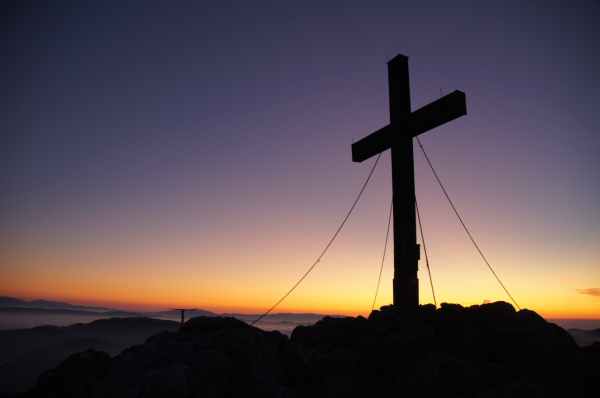
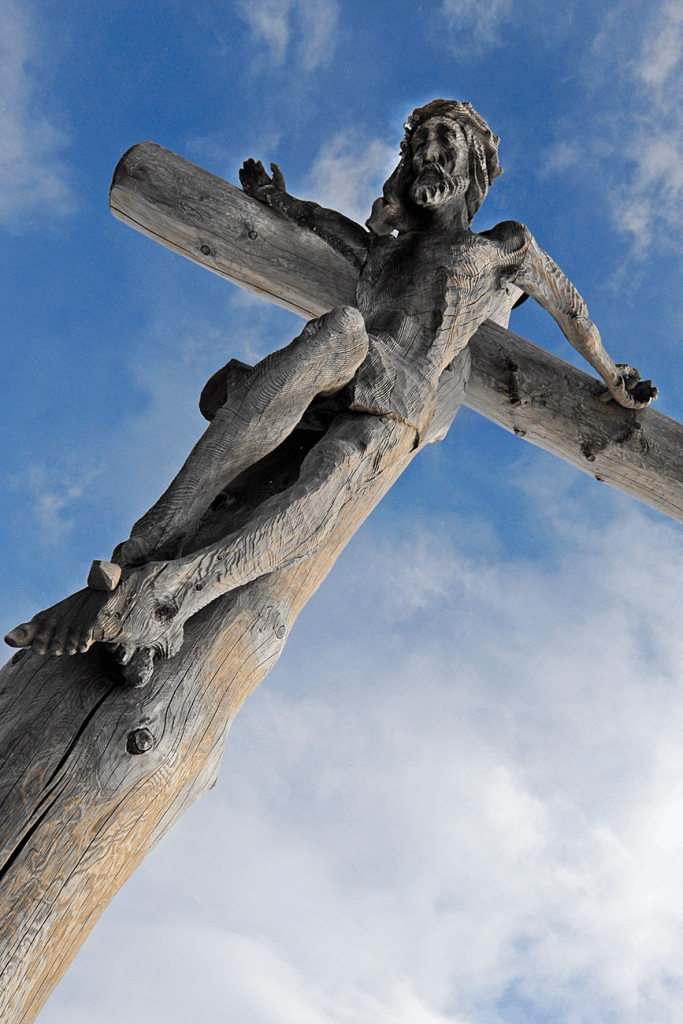
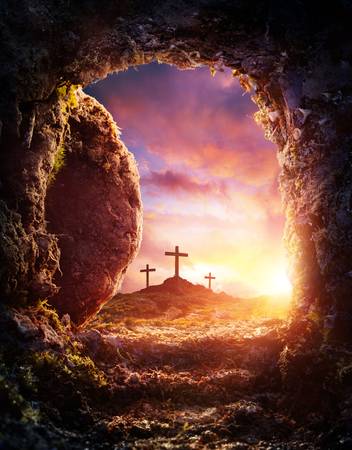
Not the victorious empty cross on the hillside with a beautiful sunset in the background, but the bloody, hot, dry and dreadful Calvary of the crucifixion? How often do we make the pilgrimage to that rocky outcropping with the smell of blood and sweat and death and agony? How often do we cry out to the one who was lifted up, struggling to breathe, pierced, wounded, broken and humiliated? When do we reach out to touch the scars and bruises he received in our place?
It is at Calvary that we get the real story of Grace, Mercy, and forgiveness–the real cost of victory and peace. It is at Calvary that we see the full extent of God’s Holiness married to the full extent of His Love. Holiness demands justice; Love demands intimacy– together, they require sacrifice.
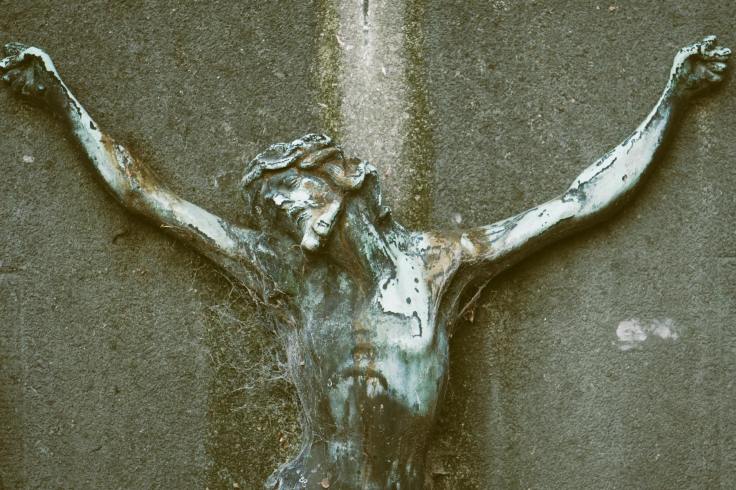
And it is at Calvary that we find, in the darkest and most hopeless of moments– God forsaking Himself, giving all He IS to bring justice and reconciliation for all we’ve done–that we trade our burdened souls, our worries, our despair for God’s embrace. Arms stretched so wide they are pulled from their sockets; blood spilled from head to toe; breathless and exposed in His passion for your soul and mine–that’s what God offers at Calvary.
Why do I pray? I am ambushed and overwhelmed and enraptured by such a love. God had no need to suffer even a moment’s discomfort. He owed nothing to His rebellious creation; no mercy, no explanation, no hints as to His character (or ours). The creator of galaxies had no need to lift a finger to save one puny planet or any of its inhabitants from His own right to un-create them and blot out even their memory. Instead, He showed the greatest act of Love across all of space and time–to me!– At Calvary!































 Pursuing Prayer