A few days ago, we had to reset all our clocks for “daylight savings time.” This is an artificial construct whereby we pretend that seven o’clock is really eight o’clock for several months in an attempt to “gain” more daylight hours. Several months from now, we will “move the clock back” to its “real” time. We talk about a “lost” hour which will be “regained” in the fall, but time is constant. There are still 24 hours in each day throughout the year. We are simply playing a game with time.
We live in a time of great changes. Whether it’s a “time change”, a change of government officials, climate changes, technological changes, and even physical changes as we age, we must learn to “roll with” and adapt to the many changes around us.
God does not change. All the changes in our life can leave us confused, frightened, agitated, and even angry. But God is constant. His love is constant. His nature does not change. His Word does not change. He is the same yesterday, today and forever (see Hebrews 13:8). We can trust Him to do what He has said He will do. We can rely on Him to be the same, regardless of the changes around us; regardless of the changes within us; regardless of our circumstances, our reactions, our failures, and our best efforts. Other people will let us down. Their love may be conditional or fleeting. Their promises can be broken. And the fact that we are so hurt by broken promises and sudden changes points to the reality of the unchanging God, and of our need for Him.
It can be tempting, with all the change around us, to doubt God’s faithfulness; to wonder, or even wish, that He, too, might change. Sometimes, we want Him to “bend” to fit in with our own desires, or to fit in with our society and culture. Surely, if the majority of our culture has changed, we believe that such change equals growth. We look at the past with disdain. “We just didn’t know better, then,” we say. And surely, if we know better now, God will recognize our new thoughts and attitudes as a positive change– in fact, God will change to fit our new awareness, our “better” way of thinking.
But that is not how it works. There are millions who believe that the “bad” days of slavery are behind us; others believe that the “legacy” of slavery is the greatest problem of our age. All without acknowledging that there are still millions of people who are enslaved– victims of the sex trade, victims of organ harvesting, victims of debt and war–even in our “modern” world. Abortion-on-demand still slaughters millions of human beings every year–in spite of our culture’s acceptance, and even championship of abortion as a “woman’s right.” Hundreds of thousands of young people are being mutilated because of our society’s growing belief that gender is “fluid” and God is not a good and wise creator.
While God’s unchanging nature can be a great comfort to the believer, it can be a stumbling block for those who listen to the roar of cultural voices, instead of the still small voice of the lover of their souls. And it can mean that Christians face misunderstanding and persecution as we hold God’s truths to be unchanging and unfailingly good.
I am choosing today to be grateful for God’s unchanging nature. I choose to celebrate that His promises are true; that His love never fails; that He is eternally wise; that His compassions are new every morning, and great is His faithfulness! (Lamentations 3:22-23)
Where are the heroes of old? Where are the role models? Where are the men and women of integrity? Where is Honor?
I look at images of sneering mobs, of angry masses. They protest in bright colors. They shout and wave their signs.
Where are those who mourn? Where are those who warn of danger, crying out a warning; Crying out for mercy?
Where are Isaiah and Jeremiah? Where is Ezekiel? Hosea? Where are the Apostles? Where are the evangelists?
Everyone is shouting– who is lamenting? Everyone is angry– who is repentant? Everyone is righteous in their own eyes. Yet no one is righteous– no, not one.
We have a generation worshipping comic book “gods”, And mocking the God of Creation. People who obsess over someone else’s right to eat an egg, While screaming for the right to kill their own child without guilt. Millions praying to their government for more food and better shelter While ignoring their hungry and homeless neighbors. While trying to bury Your Words and Your Peace.
And YOUR people, Lord… People who bear the name of Christ Are bragging about their blessings from You, While criticizing others and ignoring the lost. Those who honor You with their lips Refuse to cry out in surrender to You; Refuse to reach out help their neighbors.
Where are the servants? Where is the remnant of the Faithful? Where are the prophets? The truth-tellers? Where are those who mourn? Where is the Lament?
(I am re-posting an article from a few years ago. This first appeared in August of 2018.)
I spent the day with my granddaughter today. We went to the bakery, the bank, the grocery, and the library. Some days we visit the post office or a local cafe. We live downtown, so we walk everywhere, and say hello to people we meet along the way. At each stop, we thank the people behind the counter or desk. My granddaughter is learning manners– how to be polite in public. Her parents do a wonderful job of this, and it’s very easy for me to bask in the proud glow of people remarking on how cute and polite and engaging she is. (I may be a little biased, but they DO say such things…)
Years ago, when I worked at a library, there were always families who came in and practiced good manners– “Please” and “Thank You,” “Excuse me,” “I’m sorry,” and “May I?” Often, the children were prompted, especially when they were young. Sometimes, they didn’t understand why they were being told to say such things. A couple of times, I had other parents roll their eyes and comment negatively on such practices. “They don’t even understand what they’re saying.” “I’ll bet they don’t say any of those things at home– what hypocrites. They’re just trying to make people think they’re better than everybody else.” “You shouldn’t force kids to say such things. They’ll just resent you for it later.”
There are actually parenting articles about forcing children to say “I’m sorry.” They are well-intentioned, and some are helpful about explaining what the issues are (here’s a link to one of the articles) . Other articles advise parents not to prompt children to say, “Thank You.” (Here’s another link.) I don’t disagree with these authors. In fact, I think they make a valid point about teaching our kids “shallow” manners and neglecting the deeper values of gratitude and empathy. But I think children need both.
Manners (especially as they reflect deeper values) are important. We live in a society where manners are becoming relics–laughable reminders of a quaint culture we have long outgrown. There are pockets of the country (and the larger world) where politeness is almost an obsession. It is not polite or helpful to be facetiously “nice” or sarcastically “nice”. But what happens when we no longer dare to show gratitude or empathy without inviting ridicule and contempt? What happens when saying “Please” and “Thank you” make you a target for mockery? When and how did this happen to our culture?
With all due respect to the recent spate of articles, I think something gets lost in the hyperbolic headlines and fascination with “feelings”–manners should originate, not with feelings, but with the acknowledgement of some basic truths:
I am not the center of the universe!
Other people– all other people–have value, worth, and dignity.
I need other people, and they need me–I am not an island.
There is a God who is kind, forgiving, loving, and wise.
I am polite to others, not because I feel “nice”, but because I recognize that God created all people; He loves us all equally, and I have a duty to treat others with dignity, respect, and kindness– even if I don’t “feel” it; even if they don’t respond in kind. Do I always remember and acknowledge this, even as an adult? Sadly, no. But I practice politeness as a discipline and a reminder that this should be so. I teach it for the same reason. And the amazing thing is that it makes a huge difference. Maybe not in the moment, with all my emotions running wild…but in the quiet aftermath of knowing that I said “Thank you” instead of the hurtful and sarcastic comment. I said “I’m sorry” instead of holding on to my pride and bitterness. And I may never know the difference it made to the harried waitress, or lonely shopper, or tired mechanic to hear two or three kind words– “Thank You” (You are noticed– you matter). “I’m so sorry” (you have dignity–you are worthy of kindness) “Please” (you have value–your time, skill, or service is special)
I’m not a “nice” person– I am often hateful and stubborn and impatient. But God has been abundantly gracious and merciful to me when I don’t deserve it. Being polite is such a small thing in light of God’s eternal and boundless love toward us.
In the Dr. Seuss classic, “How the Grinch Stole Christmas!,” the bitter and devious Grinch tries to “steal” Christmas from the village of Whoville. He steals all the things the Whos of the village seem to need in order to celebrate a holiday he hates. He hates their gift exchanges, their feasting, their singing, and their general happiness, all of which serve to remind him of his own loneliness and gloom.
With mounting glee, the Grinch proceeds to pile up his hoard of goodies– presents, decorations, food, anything that could serve to make the holiday cheery and bright. He loads up all his stolen loot and takes it to the top of a mountain, where he plans to dump it. But first, he stops to savor the shock and pain he expects to hear as the Whos discover that their holiday has been ruined. He waits in the cold of a clear dawn to hear wailing and lamenting, but the sound he hears instead is singing…the Whos have come together to sing a hymn of gratitude and peace. There is no lamenting; there is no distress. Instead there is a peaceful acceptance that the new day has brought joy and goodwill that has nothing to do with all the trappings of celebration.
He hadn’t stopped Christmas from coming. It came! Somehow or other it came just the same. And the Grinch, with his Grinch-feet ice cold in the snow, Stood puzzling and puzzling, how could it be so? It came without ribbons. It came without tags. It came without packages, boxes or bags. And he puzzled and puzzled ’till his puzzler was sore. Thenthe Grinch thought of something he hadn’t before. What if Christmas, he thought, doesn’t come from a store. What if Christmas, perhaps, means a little bit more.
The first Christmas came without any of the festive trappings we’ve added over the years. There were no groups of cheery carolers; no jingle bells and tinsel; no greeting cards or candy canes. Jesus came in the dead of night, in the midst of chaos and terror, as people were groaning under the oppression of an invading empire, being forced to travel long distances to be counted and taxed by their oppressors. There were no Christmas parties, no brightly decorated trees, no stockings filled with treats, no cookies and cocoa on a cold night. The gifts would come later– and they would be followed by death threats and exile! But Jesus came! He came just the same!
This year, Christmas will come– with or without ribbons or tags. Christmas will come to those who are homeless, and those who are lonely in palaces and mansions. Christmas will come in spite of efforts to erase the holiday from our culture. It will come just like the dawn of each new day– quiet in its wonder and glorious in its simplicity. Christmas doesn’t come wrapped in shiny paper or announced with blaring horns and neon lights. Christmas comes just as Christ came so many years ago–wrapped in rags, laid in a straw bed on a cold, dark night; announced to simple people going about their business, signaled by a single star ignored by most, wondered at by others. Christmas will seep into the hearts and eyes of those with child-like faith and willing to sing when things are darkest.
God chooses to come in simplicity– He creeps like the dawning day; He sighs like a gentle breeze; He comes as a harmless infant, or a wandering teacher and healer. And when our Christmas Day comes without ribbons and boxes or feasting and lights– it will come just the same. Christ will enter darkened hotel rooms and alleys, He will sit beside hospital beds and in makeshift refugee shelters. He will sneak into homes where Christians huddle in secret, and He will knock gently on the doors of the lonely and the lost. Because Christmas DOESN’T come from a store. It doesn’t come from our bounty and our glittering decorations. It comes from the heart– the heart of God, who SO loved the world, that He came! And He will come this year, just the same!
Within the last couple of weeks, several major news stories have broken in the United States, where I live. The Supreme Court has ruled on several major cases, with “game-changing” results. Important national issues, such as gun control, abortion, and freedom of religious expression were involved, and many Americans are either elated or upset by the decisions that were rendered.
My husband and I don’t have television; no 24-hour news channels, or opinionated talk shows, or even late-night comedian commentators reminding us of the “big news” of the day. But we have internet, and radio, and we talk to people who have access to TV. We would have to live under a rock to be uninformed of what has been happening. Yet we find that many people who have access to “news” have little or no understanding of what these decisions actually mean for our nation or its citizens. The Supreme Court did not “abolish” abortion; it did not eliminate gun controls or restrictions. It did not “bring prayer back into the schools.” What we “know” and what we have heard are not always the same.
The prophet Isaiah, writing to the people of Jerusalem (Judah), repeats the phrase, “Do you not know? Have you not heard?” The Jewish people were supposed to know God’s eternal character. They were supposed to have heard His laws, and heard the stories of His faithfulness throughout the years. But the message had become garbled, distorted, and even lost. The people were going to be disciplined– they would go into exile; yet God would bring them comfort and forgiveness and restoration. Isaiah reminds his readers and listeners of God’s timeless character– His power and authority; His compassion and healing; His care and His discipline for those He loves.
21 Do you not know? Have you not heard? Has it not been told you from the beginning? Have you not understood since the earth was founded? 22 He sits enthroned above the circle of the earth, and its people are like grasshoppers. He stretches out the heavens like a canopy, and spreads them out like a tent to live in. 23 He brings princes to naught and reduces the rulers of this world to nothing. 24 No sooner are they planted, no sooner are they sown, no sooner do they take root in the ground, than he blows on them and they wither, and a whirlwind sweeps them away like chaff.
25 “To whom will you compare me? Or who is my equal?” says the Holy One. 26 Lift up your eyes and look to the heavens: Who created all these? He who brings out the starry host one by one and calls forth each of them by name. Because of his great power and mighty strength, not one of them is missing.
27 Why do you complain, Jacob? Why do you say, Israel, “My way is hidden from the Lord; my cause is disregarded by my God”? 28 Do you not know? Have you not heard? The Lord is the everlasting God, the Creator of the ends of the earth. He will not grow tired or weary, and his understanding no one can fathom. 29 He gives strength to the weary and increases the power of the weak. 30 Even youths grow tired and weary, and young men stumble and fall; 31 but those who hope in the Lord will renew their strength. They will soar on wings like eagles; they will run and not grow weary, they will walk and not be faint.
Isaiah 40:21-31 NIV
It’s not that Isaiah’s fellow citizens had never heard about God; it’s not that they had no knowledge of God’s laws or of His character. But they had become complacent; they had knowledge, but no understanding; no insight. They knew about God; they no longer KNEW God.
How often do we hear a bit of news and react without understanding all of its implications? How often do we jump to conclusions about what God is like, or what His will might be? How many times do we assume that what we think or feel comes from the Bible, without consulting it? How often do we pray, not that God’s will should be done, but that God should do our will?
Violence (including shootings), abortion, religious intolerance and persecution– all have been around for centuries. Human laws and justice have a long history of being twisted, ignored, amended, rewritten, forgotten, and supplanted. Supreme Court rulings can be overturned; laws can be rewritten or struck down; cultural expectations and trends will change. While I may feel cause to celebrate some of the Supreme Court’s recent rulings, or be discouraged by others, now or in the future, I cannot put my hope and trust in them. But I can put my hope and trust in the power and authority of God! God’s rulings are absolute and eternal.
And if I hear nothing else today; if I know nothing else for certain– I can rely on His truth and His faithfulness forever!
I have never been to Bahrain. I know very little about Bahrain. All I know is that it is a small country in the Middle East, located on a series of islands in the Persian Gulf. But I prayed for Bahrain the other day. It’s on my prayer calendar/journal. Every day of the year, I have a nation, city, or geographic region (desert, ocean, continent) to pray for. It’s somewhat random, and personal–many of the “cities” are really local small towns or places close to my heart–and it doesn’t make my prayers virtuous or important. My prayers can’t “save” the world, or any corner of it, from natural disaster or political corruption, disease, or any other malady common to our fallen world. So why do it?
First, because God loves and cares about the whole world. It’s easy for me to focus on my surrounding community; my state; my country. I know the people and language and culture here. But there is nothing exclusive about God’s love. Throughout the Bible, it is clear that our God is a global God. Sure, God “chose” Abraham and the nation of Israel to display His Holiness. But He also raised up other nations and leaders– Pharaoh, Nebuchadnezzar, the Queen of Sheba, Caesar Augustus–and sent prophetic warnings to Babylon, Edom, Assyria, Egypt, and many other nations who neither knew Him nor worshipped Him. I don’t know enough to know how many of the people of Bahrain are Christians, Muslims, Atheists, or any other religion. I don’t know how many of them are suffering from depression, domestic abuse, or disease. But I know that God knows– and cares. Even though I am praying “blind,” I am making an effort to “see” God’s heart for others.
Second, as I pray for various nations, I become more interested in them. I learn more about them. I recognize them when they are mentioned in the news, or when I hear about people who live or visit there. Again, this doesn’t make me a better person, or my prayers better than anyone else’s–but it helps me be a more informed (and hopefully more compassionate) person than I was yesterday or last year.
Praying for others reminds me of two important truths: I am very small in the scheme of things– one of more than 8 billion people on the planet! I cannot know them all; I cannot care for them all or influence them, or change their situations. But God can! I serve a God who not only knows all 8 billion individuals; He knows their thoughts, their pasts and their futures–He even knows the number of hairs on each head! The second truth that arises from that is that, small as I am, I am known by God. He cares about ME, just as He cares about each person that breathes. HE can change the small circumstances of my life, and the lives of those I know and love; AND He can raise up kingdoms and break down empires!
Pursuing prayer is about following God. Part of that is learning discipline. God isn’t “grading” me on whether or not I pray for Bahrain, or Belarus, or Boston, or the tiny local town of Baroda. He isn’t going to turn His back on me if I don’t pray for any of these places. And He won’t love me more if I do. But I will get better insight into His character as I learn to pray faithfully, consistently, and compassionately for others– wherever they are.
I’ve written a number of times about my prayer journal. In it, I pray for individuals and individual requests, as well as praying for communities and regions each day of the year. I also use what I call “Prayer Points” for each day of the week. These are broad topics– The Church, Family and Friends, Government and Politics, Community and Services, Global Health (Healthcare, Diseases, Ecology, etc.), Business and Economy, and Cultural Issues. Often, these broad topics will lend themselves to specific needs or requests (which may overlap items in my prayer journal), but there are also times when the topics seem generic and almost overly broad. I use them anyway.
It isn’t because I have any influence over such broad categories– but because God does! And I need to be reminded of that every day. God loves to hear our specific requests– heart cries and urgent needs–even bad hair days and misplaced keys. But He also loves to hear us acknowledge that “all the world” belongs to Him; that He is sovereign over our nations, our culture, His Church, our families, etc. He has authority over world economies, including all the factors we worry about– drought and famine, production, distribution, wealth (or lack thereof). He has the power to overthrow corrupt governments and bring justice. He has the power to defeat disease, and restore forests and rivers; to meet our financial needs, and to save marriages.
Moreover, He knows best in all these situations– even when I know next to nothing! My efforts to change society or fix the planet will be puny, and based on my limited knowledge and experience. Even my outlook on my own small community is limited– I don’t know all the individual people, organizations, or companies that make up my small town. I trust that God, however, knows each teacher, garbage collector, city worker, police officer, fire fighter, mail carrier, nurse’s aid, day care provider, physical therapist, food service worker, accountant, paralegal, banker, and shopkeeper (and all the other valuable members of my community)– AND He knows the number of hairs on each of their heads! It revolutionizes the way I think and the way I pray each day.
Imagine what can happen when we pray this way collectively! Imagine the way it can change our outlook, and our actions. I can be saddened by the state of our culture or the breakdown of families. But I have a Mighty Father who has both the wisdom and the power to redeem them! I know I can trust God with everything– large and small. But it is easy to take that for granted, or to “know” it only in the abstract. Keeping prayer points where I can see them and use them daily helps me to live out the truth that I already know.
So this morning, instead of worrying about our business or the larger economy, I will lift them up into the arms of One who can really make a difference! And I will pray for smaller and more personal requests– those in the hospital or grieving a recent loss; those who are discouraged; those who are celebrating birthdays or anniversaries, promotions or new opportunities; those who are lost, and those who have misplaced their keys (again).
Some places in America are observing Columbus Day today. This has become a controversial subject. For many years, schoolchildren were taught that Christopher Columbus, an Italian explorer working for the Spanish, “discovered” America when he landed on the island of Hispaniola in 1492.
Modern scholars are offended by this for a variety of reasons. First, there were already people in the Americas– Columbus didn’t “discover” a new-found continent devoid of people or culture. Just because the Spanish court, and most of Europe, didn’t recognize the existence of North and South America and the Caribbean, doesn’t mean they were undiscovered. It only means they were undiscovered by the major European powers. Scholars go on to argue that Columbus and the Spanish (and the French and English and Portuguese who followed) did not so much “discover” the “New World;” they invaded and stole it from those who were living here “in peace.”
I disagree with the way scholars have “revised” the history of Western culture. But it causes me to think of how, over the years, we have also revised the message of the Gospel, and our concept of Christianity.
Much like the modern scholars’ version of Columbus “Discovering” America, many people like to talk about “discovering” Christianity. We “encounter” the Gospel. Maybe we join a local congregation of believers, or a Bible study group. It’s exciting– at first. It is new and amazing in its message of hope and love and grace.
But then we hear ugly stories of Christians who are hateful, judgmental, condemning, greedy, hypocritical, and hurtful. “That can’t be true; that can’t be what Christianity is about,” we say. And so we vow that “our” Christianity will be different. We adapt our message to the current trends in our society. We tailor our message to our friends and neighbors, even when the it’s no longer true. We wipe out and “conquer” and reshape those verses that cause offense. We recreate Jesus into a “great teacher,” a pal or a guru, rather than a Sovereign Savior. We end up following our own gospel, rather than the Gospel of Jesus Christ.
Or, we double down on legalism, making our walk with Christ more like a walk with His accusers, the Pharisees. We scream and argue about the “right” way to worship, or dress, or manage money. And we seek to wipe out those who don’t follow our traditions. We remove the promise of Grace from our Christianity, and replace it with judgment.
Except it isn’t “our” Christianity. We haven’t “discovered” the Gospel to make it into a “new” and better religion. We haven’t “discovered” a Jesus who is kinder or more accepting or less judgmental than He ever was. And We don’t follow a Jesus who refuses to love those who are not perfect or forgive those who have “fallen short of the glory of God.” (Romans 3:23)
Our “discovery” of Jesus should be a lifelong discovery– a lifelong journey of becoming who He wants us to be; becoming more like who He really is. Part of that is living out our faith in a world that refuses to understand or accept the Gospel. Part of it is living our lives according to the Bible’s principles, and not our culture’s trends. Part of it is trusting that God’s word never changes, even when the world around it does. And part of it is a consistent pursuit and practice of humble and earnest prayer. Otherwise, we may well be guilty of the same conquest and colonization as those we are condemning who came before us.
I see a lot of articles, posts, and religious sites as I wander around the internet. And there has been a lot written and shared lately about the word Christian getting a “bad rap.” Many writers and church goers are no longer comfortable calling themselves Christians. They don’t want to be identified with “bad” Christians– hypocrites, political extremists, etc., who loudly and proudly use the label while treating others with contempt, and generally acting like bullies and/or clowns. The growing trend is to use the term “Christ-follower” to describe a lifestyle that seeks to mirror that of Jesus Christ during His life on earth.
Proponents of this practice point out that Jesus never called His followers “Christians.” Instead, He consistently invited people to “Follow me.” The term “Christian” is associated with the earliest Gentile churches and with the scattering of the persecuted church across Judea, Samaria, and Asia Minor. The term originated in Antioch a few years after Jesus’ resurrection:
19 Now those who were scattered after the persecution that arose over Stephen traveled as far as Phoenicia, Cyprus, and Antioch, preaching the word to no one but the Jews only. 20 But some of them were men from Cyprus and Cyrene, who, when they had come to Antioch, spoke to the Hellenists, preaching the Lord Jesus. 21 And the hand of the Lord was with them, and a great number believed and turned to the Lord. 22 Then news of these things came to the ears of the church in Jerusalem, and they sent out Barnabas to go as far as Antioch. 23 When he came and had seen the grace of God, he was glad, and encouraged them all that with purpose of heart they should continue with the Lord. 24 For he was a good man, full of the Holy Spirit and of faith. And a great many people were added to the Lord. 25 Then Barnabas departed for Tarsus to seek Saul. 26 And when he had found him, he brought him to Antioch. So it was that for a whole year they assembled with the church and taught a great many people. And the disciples were first called Christians in Antioch. (emphasis added)
Christian was not a positive or honorable label for the early followers of Jesus Christ. There are still many places in the world where the label “Christian” invites arrests, beatings, and death threats. There are places where the name “Christian” invites scorn and derision. What has changed (or seems to have changed) in the intervening years is that we see and hear of more and more places in the world where the label “Christian” brings up images of sneering protesters condemning gays or smug white faces spouting self-righteous phrases to justify greed, racism, and/or injustice. “Christians” are not just unwanted or misunderstood by others–Christians are unwanted by their own; misunderstood and misrepresented, at odds and at war with one another.
So what can be gained by followers of Jesus Christ in re-branding themselves as “Christ-followers?” After all, it’s just a name. In the 1960s, many Christians were condescendingly labeled “Jesus Freaks.” Jesus Freaks were viewed much like Hippies. They spoke of Peace and Love and Acceptance. They taught about kindness and unity. They were often young, and generally disillusioned with the older generation and its way of life. They acted a lot like Hippies; they just didn’t do as much experimenting with drugs and free sex. Much like the early Christians, they were labeled by those who dismissed their message and their way of life. They rejected traditional or mainstream Christianity, and were dismissed by many who called themselves Christians. Some were openly critical of previous generations of Christians. Many of those who wish to be called “Christ-followers” now are the descendants (or remnants) of the Jesus Freaks of the 60s. The mind set is very similar– disillusionment with others who have misused or abused the name of Christ, and a desire to “rescue” the reputation of the church.
There have been other groups across the centuries who have tried to re-brand and re-label their devotion to Jesus– God-fearers, Disciples, Reformers, Witnesses, Saints, Fellowships, etc.. And there is no command in Scripture that we must all call ourselves by a particular label.
But is seems odd to me that the very label, “Christian,” that came about because of persecution, that came about as a derisive, sneering, condescending term, was embraced by those it sought to shame and intimidate. Why didn’t the original “Christians” re-brand themselves to make their cause less offensive? Why has this term, “Christian,” endured over the centuries?
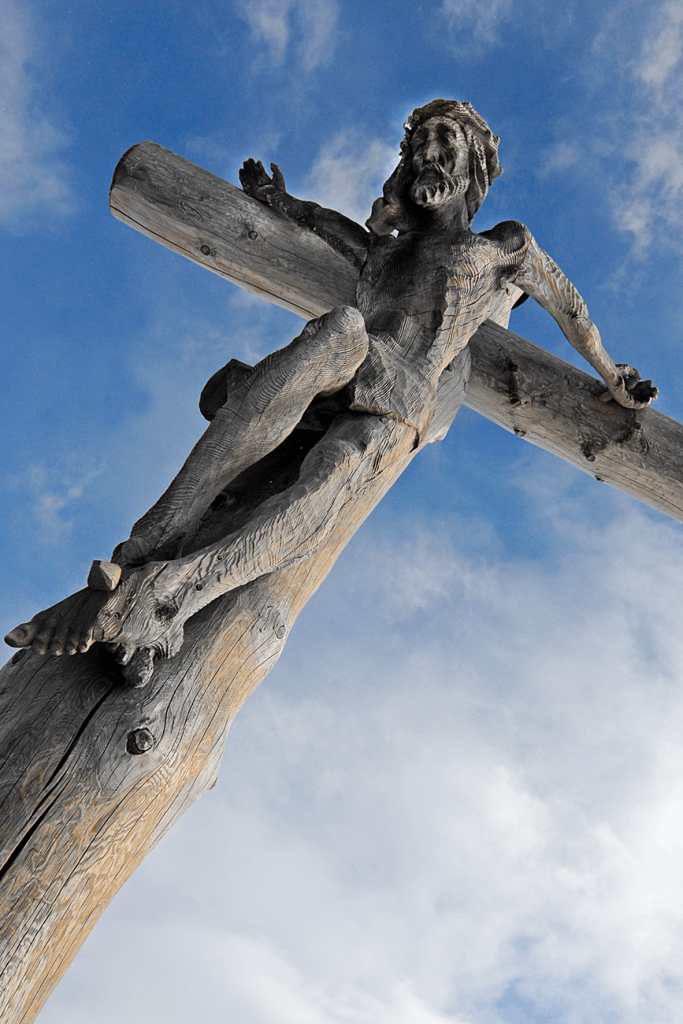
“Christians” bear the name of Christ, whatever other name they give themselves. When I say I am a Christian, I know that there are people who will compare me to others who make this claim. But I am not just a member of a group that likes the idea of Christ; I’m not just a Facebook follower of Christ, or a fan of Christ, or a student of Christ. Christ is my Lord; my life; my identity. Christ– Jesus the Christ, the Messiah. Not Joe Smith down the road who also attends my church, or a famous evangelist or Bible teacher, or even one of the Apostles, or Saints. Jesus– son of Mary and Joseph; Son of God and Son of Man. This same Christ was arrested, given a sham trial, condemned to be crucified like a common criminal, and hung, naked and tortured before a mocking crowd. He was humiliated, misunderstood, and abandoned by those who claimed to care the most. THAT is the name I willingly bear.
“Christian” is a label. I can label myself in any number of different ways– “Woman,” “American,” “Caucasian,” “College graduate.” But there are many others who can use those same labels. They may define what I am, but they don’t define who I am. I may be appalled (and I am, sometimes) at things other women do, at things other Americans say, at the history of Caucasians and their interactions with indigenous peoples in other parts of the world, at the snobbery of other college graduates…But I don’t say, “I’m no longer going be an American; I want to be known as a resident of the United States, but I have my own system of government and culture and language independent of those living in Missouri or Idaho or Chicago– they don’t represent who I am.” Of course they don’t represent who I am–they never did. We all, collectively, are Americans AND residents of the United States. I can’t decline to be a woman because I don’t like the way other women behave or speak. And I can’t choose to be “other than” a Christian…all I can do is give it another label.
Finally, who I am is not found in a name or title or label. It is the sum total of my character and the way I live my life. Jesus didn’t tell His disciples that they would be known by any particular name, but He did say they would be known and identified by their love: 34 A new commandment I give to you, that you love one another; as I have loved you, that you also love one another. 35 By this all will know that you are My disciples, if you have love for one another.” (John 13:34-35 NKJV). That doesn’t mean I have to approve of everything other “Christians” do– in fact, if they use the name Christian and do not have love for others, they prove they are liars– but it means that I must do everything in the name of Christ. I am a Christian first, before I am a woman or an American or any other label. That means that I am the co-heir and sister to a young man in India who has been rejected by his family and expelled from his school for being a Christian. I am an ambassador of Christ to the woman I meet in the grocery store whose children are taxing her patience and whose cart is blocking the aisle I want to enter. I am an example of Christ’s love to the young couple who have been victimized by other “Christians” because they are “different.” And I am a Christian in a world of “fake” Christians, and confused Christians, and faulty and very human Christians just like me, who need correction, mercy, justice, and wisdom to follow Christ, to die to self, and to bear the honor of His name. Ultimately, I can call myself a Christian, a Christ-follower, a Jesus Freak–any other label I want. Whether I AM a Christian or not will be determined by how I live, not what I call myself.





































 Pursuing Prayer