Prayers, Puzzles, and Poirot

I love puzzles and mysteries. I love word games and jigsaws, number puzzles, logic puzzles, whodunnits and scavenger hunts. I love finding solutions and seeing justice triumph. But solutions are not always available in real life. I know families who have waited decades without ever finding out who killed their loved one– or why. I know brilliant people who struggle with illnesses for which there is no cure. I watch the news, and I can’t find any logic or justice in many of the reports. And I am haunted by the constant refrain of critics and cynics who dismiss prayer– “Keep your ‘thoughts and prayers’, I don’t want them!” “What good is prayer at a time like this?” “Where was God…?” “Shouldn’t you be DOING something, instead of praying?”

Prayer may seem, in our modern society, counter-intuitive and unproductive. We are used to having answers and solutions at our fingertips. We have seen many diseases ‘conquered’ by scientific advances– vaccines and surgeries and hygienic practices. We have seen modern miracles of technology and communications. Prayer seems old-fashioned, clunky, rooted in the metaphysical, rather than rational activity. Prayer doesn’t promise that all the questions will be answered and all the mysteries solved in 180 pages. It doesn’t come with an ‘answer’ page at the end. Prayer depends on our acknowledgement that we DON’T have all the answers– that we may not even have the right questions– and that the answers may never come, or make sense to us, in this lifetime. In fact, one of the secrets of pursuing prayer is recognizing that life’s greatest mysteries are not ‘solved’ so much as ‘unfolded’ by a wise and all-knowing God.

So it is with disappointment and dismay that I find most mystery fiction dismisses, omits, or even outright mocks prayer. Many of the famous detectives of fiction are either non-religious or religious skeptics– Sherlock Holmes, Inspector Morse, Philip Marlowe, Sam Spade, Nero Wolfe, Alex Cross, Kurt Wallander, Temperence “Bones” Brennan, the Hardy Boys, Amelia Peabody, and a host of others. While many are simply non-religious, others express either ambivalence or contempt for religion– especially organized Christianity– and many of its practices, including prayer, adhering to Scripture, and depending on God rather than relying on rationality and science.

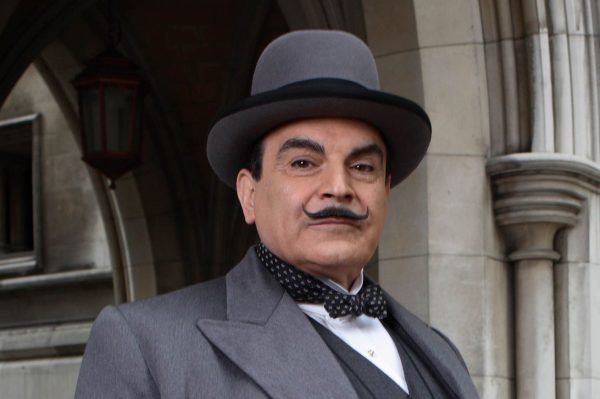
This is not universally true. Many fictional detectives and amateur sleuths ARE quite religious– Father Brown, Brother Cadfael, Sister Frevisse, and one of my all-time favorites, Hercule Poirot. Poirot is not a priest, but he is devoutly Catholic and is often described as spending time with his rosary in earnest prayer. He has a Biblical sense of morality and is often frustrated and even angry with the evil he sees around him. In spite of his arrogant boasts about his ‘little gray cells’ and his amazing success in solving mysteries, he still possesses a great curiosity and a reverence for the divine and mysterious nature of life, love, and faith. As much as he hates evil, and wants justice, Hercule Poirot avoids becoming angry and cynical about people.

How do I respond to evil? Do I spend quality time in earnest prayer? Do I use the gifts God has given to make the world a little better, or do I waste my time in anger, bitterness, and finger-pointing? Am I overly proud of my own ‘little gray cells’ when I solve a puzzle, or am I grateful for God’s gifting? Have I actually learned to ‘hate the sin, but love the sinner?’ Am I able to walk in faith, knowing that there are some mysteries I will never solve, and some prayers that God will answer in HIS time, not mine?

Puzzles and mysteries are fun to solve and challenging in ways that help develop our logic and skills. But they can become an idol and a distraction from the reverence that belongs to God alone. Mysteries remind us that God’s purposes are not to keep us in the dark, but to lead us one step at a time toward Him. And each step should include prayer.

The Ghost of Christmas Past

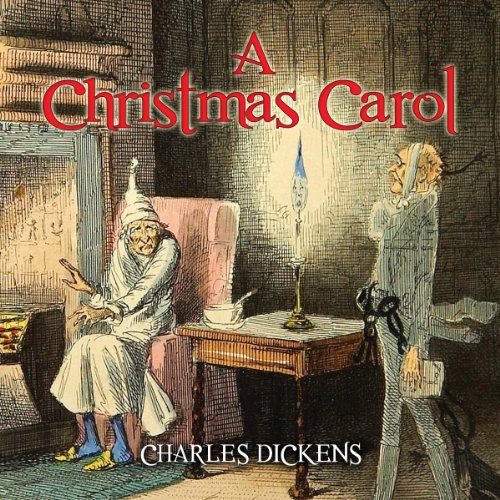
Charles Dickens wrote “A Christmas Carol”– a (literally) haunting tale of greed, bitterness, and, in the end, redemption. Set in Victorian England, the story involves a miser named Scrooge, his business partner, Marley, who has been dead for seven years, and three mysterious spirits: The Ghost of Christmas Past, the Ghost of Christmas Present, and the Ghost of Christmas Yet to Come…

Scrooge and Marley

Scrooge doesn’t really hate Christmas. He considers it a Humbug– an annoying and worthless distraction from the “reality” of making money. What bothers Scrooge– what eats at him and rules his actions– is the fear of poverty and powerlessness. He avoids relationships so that he cannot be hurt or abandoned. He avoids spending money– even for common comforts like coal to heat his office–for fear that he will fall into poverty. He does not like people because he will not trust anyone enough to risk getting hurt or used.

Scrooge’s only “friend,” his former partner Marley, lived by similar principles during his lifetime. He “visits” Scrooge on Christmas Eve to warn him of the fate that awaits those who fail to realize that there is more to life than making and keeping money. “Mankind was my business. The common welfare was my business; charity, mercy, forbearance, benevolence, were all my business. The dealings of my trade were but a drop of water in the comprehensive ocean of my business!” Marley has managed to arrange for Scrooge to be haunted by memories of the past, visions of the present, and shadows of what may be in the future.

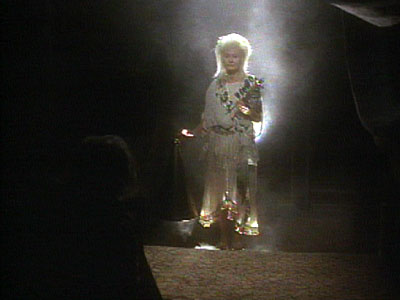
The first of these “spirits” reminds Scrooge of Christmases from his childhood and early adulthood. Some of the memories are sad– Scrooge is left to spend the holiday alone at school, as his cold and distant father refuses to show him love, mercy, or guidance. Later, Scrooge is reminded of how his decision to pursue wealth alienated the woman he could have married. But there are happier memories, too. His first boss, Mr. Fezziwig, brought happiness and a sense of camaraderie and purpose to Scrooge’s early employment. He celebrated both hard work and the joy of fellowship with his employees. Scrooge sees visions of his beloved sister and is reminded that he has a family (his sister’s son) with whom he could make and share happy memories– if only he would choose to do so.

I will write about the other visitations later, but I want to camp out here for a little bit.

What memories would the Ghost of Christmas Past bring to me? To you? Are there sad or painful memories of Christmases without loved ones? Christmases that included anger or rejection? Christmases spent with poverty, uncertainty, or sickness? Would you feel bitterness? Fear? Guilt? Regret? Or would there be nostalgia for days gone by? Longing for family members who have passed? Questions about what might have been?

It is tempting sometimes to shove our memories of Christmas past in a closet or an old trunk and try to forget them. In Dickens’ story, Scrooge ends up desperately trying to snuff out the light of Truth that the spirit is holding. He doesn’t want to remember; doesn’t want to know or deal with the pain and loss of his past.

But before we can truly live in the present, we must confront the past. We do not have to live there. Our memories– good and bad– are but shadows of the things that have been. But they can cast long and devastating shadows if we let them. Denying past pain or trauma can give us a false sense of control. Burying ourselves in work or pleasure or entertainment may feel like a solution. Being cautious and angry and cynical may seem like wisdom. We can blame others, blame ourselves, even blame God for our feelings of hurt and fear of being hurt again and again. OR we can, with the light of truth, revisit our past. We can discover the healing power of redemption and forgiveness. We can– we must– still acknowledge the pain, the injustice, the grief that lies on our past. But we also must see that the shadows of the past only fall behind us. However the past may have shaped us, damaged us, challenged us, or forged us, the present and the future can be turned in a new direction.

And that is possible because of Christmas– because of Christ!

When Scrooge first visits his past with the Ghost of Christmas Past, the first image he experiences is of his classmates from school riding in sleighs and wagons singing Christmas carols. Singing! He could not join in. As an adult he has chosen not to join others as they sing of the wonder of Christ’s birth. But the carols echo– their message endures! Christ is Born! Glory to the Newborn King!

My prayer today is that Christmas past holds some happy memories for you. But the very Good News of Christmas is that it isn’t just about the past. And our past Christmases don’t have to haunt us. Because the Light of Truth– The True Light of the World (John 1:9) –that came on that first Christmas so long ago leads the way forward!

Blog at WordPress.com.

Up ↑