Let Your Light Shine

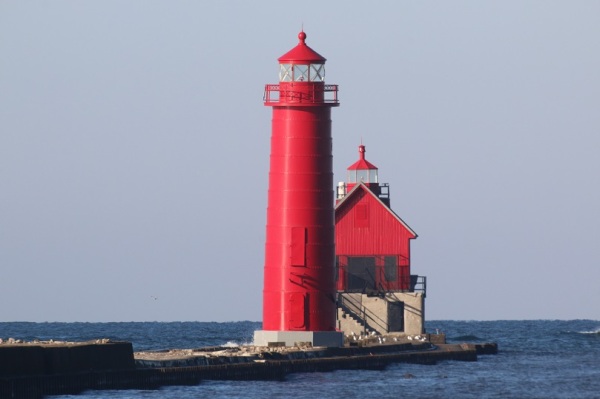
I live in an area not too far from Lake Michigan. All along the shores of this Great Lake are lighthouses. Some are small; some are tall; some are old and some use the latest technology Some are red; some are white; some are striped. Most are designed to warn ships of rocks, but others warn of shoals and hidden sand bars, as well.

Big Sable Point Lighthouse, Ludington

We think of lighthouses shining their light in the darkness, but lighthouses also shine in the daytime, through cloudy days, foggy mornings, and stormy afternoons. Most lighthouses also have fog horns, to warn ships when even the light won’t penetrate a thick fog.

This past week, a faithful lady at our church reminded us of a favorite song from childhood– “This Little Light of Mine.” We are called to be like Jesus, the “light of the world.” But what does it mean to “let our light shine”? And what does it mean to “hide it under a bushel?” (See Matthew 5:14-16)

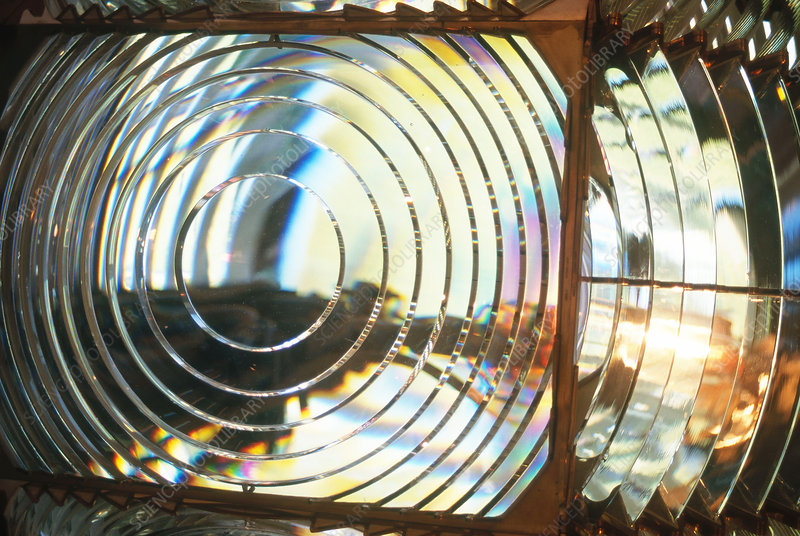
Fresnel lens at Ponce Inlet Lighthouse, Daytona Beach, FL. Invented by French physicist Augustin-Jean Fresnel, the lens is much thinner than a conventional lens, which allows for a large aperture and short focal length at a lower weight.

Lighthouses use special lenses, called Fresnel lenses, to magnify the effect of refracted and reflected light. The resulting beam of light is stronger and can be seen for miles. Our own “little light”– our weak and imperfect faith; our limited talents and resources; our clumsy attempts– would not be enough to “save” anyone. But God magnifies our efforts as we reflect HIS radiance; His Love and Mercy. And many will be saved as we allow God to shine through us.

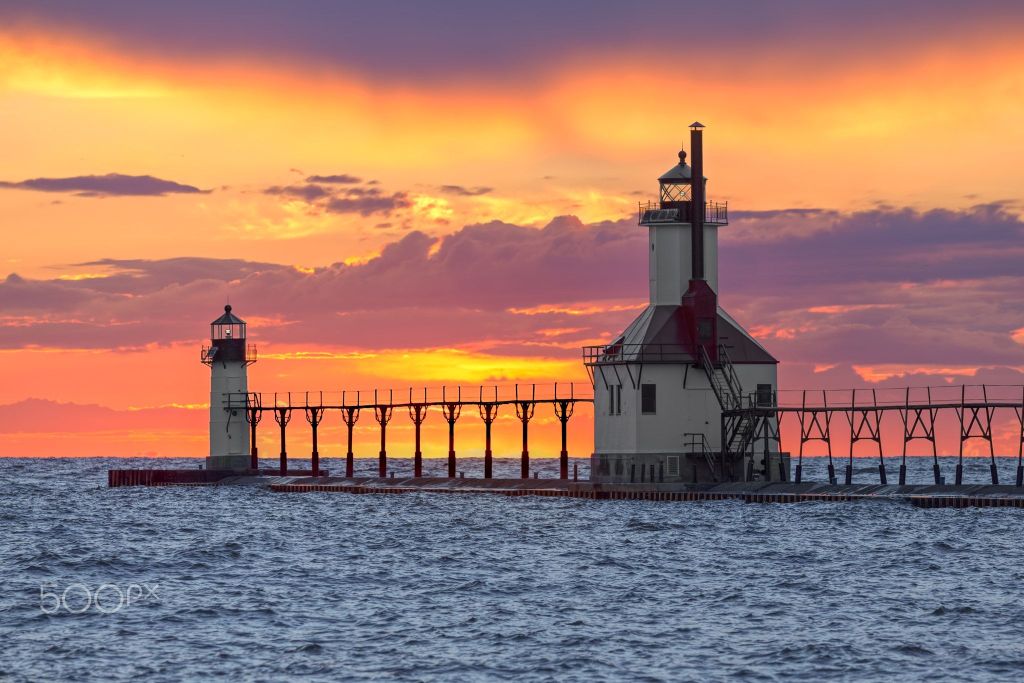
St. Joseph Lighthouse at sunset

Lighthouses are consistent– they don’t “turn the light off” when the weather is perfect, waiting only until someone spots a ship in danger. They don’t “dim” the light, or add extra strobe lights for the holidays or special occasions. Each lighthouse sends a consistent signal–steady and sure. But each lighthouse is unique– both in its outward appearance, and in it’s light pattern. This helps sailors tell them apart, and provides further help in navigation. As Christians, our light should also be consistent and unique. God created us with unique talents and opportunities–and we can “shine” the light of Christ in such a consistent and unique way as to help others “navigate” the trials of life. I am so thankful for the many faithful and uniquely gifted Christians who have inspired and guided me throughout my journey–and I want to be that kind of light for others!

Lighthouses are solid. They are normally built close to the shore, but not on the sandy beaches– rather on a rocky outcropping or a solid concrete and steel-reinforced foundation. As Christians, we have a solid foundation in Christ. We need to “shine our light” from that foundation– living out the Gospel of Christ– His life, death, resurrection, and imminent return. Building a bonfire on the beach may produce light, but it won’t stand out in a storm. Building our lives on any other foundation or religious “fad” may produce outward “success,” but it will not withstand storms.

Finally, and this may sound ridiculously obvious, but Lighthouses shine with purpose. They don’t twinkle or glitter; they don’t scream from the shore– “Look at ME! Look at ME!” They don’t shoot off fireworks to captivate onlookers from the shore. But they shine. They send a consistent warning, and provide consistent security to those who need it– and those who are seeking it! “This little light” may not be a blazing comet on the horizon, but without its steady pattern, there is darkness, confusion, and danger for those at sea (on lake in our case!) “No one lights a lamp and puts it in a place where it will be hidden, or under a bowl. Instead they put it on its stand, so that those who come in may see the light.” (Luke 11:33 NIV) We are commanded to shine– to Love others, to reach out with light, and hope, and yes, even a warning. To hide that light is to deny our purpose. To shine only for our own glory is to miss our purpose.

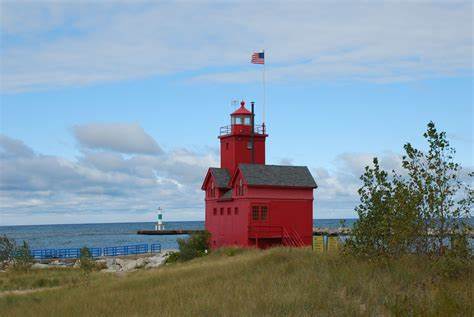
Holland (Michigan) Lighthouse

Father, help me to be a light in the darkness today. Help me to shine with Your Love, Your Mercy, and Your Goodness. Help me to be consistent, and to shine in the strength of Your Righteousness and Grace. Help me to use the unique gifts and opportunities You provide to show Your Character and Love to others.

Prayer on a Dreary Day

Father,,
Today is a dreary day.
It is not warm or sunny; it is not filled with joy or peace.
The house is a mess.
I’m not even dressed.
I feel emptied and drained.

Photo by Sofia Alejandra on Pexels.com


And yet…

Even though I can’t see
Your glory in my surroundings,
I know You can see
The glory of eternity.
You see the brighter days ahead.
You are already there,
Celebrating.

Photo by Skitterphoto on Pexels.com


You have not journeyed here to
Listen to my prayer…
Because You have always been here
Right beside me.
You are not put off by my
Dirt or disheveled appearance;
You are not unaware of my sadness–
You know my thoughts before I think them!
You know my emotions better than I know myself!

Today is a dreary day,
But it is just a speck in the fullness of
Your Eternal Light.
Shine into my darkness
Dispel the dreariness around me.
Help me to reflect, not the clouds,
But the Son!

Photo by Alena Shekhovtcova on Pexels.com


Thank you, Lord.
Even on a dreary day,
In Your presence, there is fullness of Joy–
Not the giddiness of a sunny springtime,
But the glow of a hearth-fire,
Sustaining me.

Photo by Jazlyn Oliver on Pexels.com


So my praise today may not explode
In bright colors and exclamations.
But it will be a steady and steadying
Ember–warm enough to survive
Ready for You to
Ignite tomorrow’s fresh flame!

This Little Light of Mine…

Last Friday night, my husband and I watched fireworks in honor of Independence Day. They were spectacular– bright flashes of light, followed by loud, thunderous booms–red, green, blue, purple, orange, gold, and white. Some sizzled and screamed as they threw their light across the darkened backdrop of the night. Others were almost silent; just a “whizz” and a “poof.” Some were so bright, they lit up the whole sky, showing clouds and smoke trails.

Photo by Benjamin Lehman on Pexels.com

Fireworks are exciting and flashy. But I wouldn’t want to live in a world of continual fireworks. While their light is bright and exciting, it is not steady, and it is quickly swallowed up again by night’s darkness. We don’t even light fireworks during the day, because their light is not brighter or better than the sun.

Photo by Nathan Cowley on Pexels.com

Sometimes, I try to be a “Christian” fireworks display–I try to be flashy and impressive, or sizzle, scream, and boom. That’s not entirely a bad thing– after all, we are to let out light shine, so that people can see our good works and glorify our Father in Heaven (see Matthew 5:14-16). But we should be careful. Jesus never called us to be like fireworks; He spoke of our “light” being more like a lamp or a candle.

Photo by icon0.com on Pexels.com

Some thoughts to remember:

  • We are to let our light shine for a purpose greater than display. Our lives should be a reflection of the true Light of the World. Jesus was not flashy and bombastic. He was humble, gentle, and kind. People were not amazed and impressed by Jesus’ appearance. And He didn’t draw attention to many of His miracles– He often healed people “on the road” as He traveled between towns; some of His most spectacular miracles, like walking on water, were done in front of only His closest disciples. Jesus didn’t lead others by clever arguments and flashy displays– He led by example and service.
  • Lamps and candles are steady sources of light. Our lives should not be momentary flashes of brightness, followed by clouds of smoke and a return to darkness for those around us. A quiet life of integrity may not be flashy, but it can, over a lifetime, inspire others and leave a lasting legacy that shines far longer and brighter than any fireworks display.
  • Occasionally, God will put us in a place where our light can shine a little brighter or sizzle for a bit– for His Glory. We should not be afraid to sparkle. But we must not let ourselves “burn out.” And when we see others shine in this way, we should not be envious or try to quench the Spirit; however, we must continue to reflect God’s glory, rather than trying to bask in another person’s glow.
  • Far greater than any fireworks display is the promise of God’s glory, revealed in the fullness of time– an eternal display of pure light, with no darkness to follow!
  • Our “little light” is not insignificant– it is God’s purpose. It pleases Him to see us glow, not explode!
Photo by Paulo Mu00e1rcio Dos Santos on Pexels.com

Lord, help me to shine in ways that point others to You. Help me to reflect Your gentle, faithful, and righteous light, Your Love, and Your Grace as I travel through a dark world. Amen.

A Flash in the Pan

During the era of flintlock muskets, gunpowder was ignited by a spark from a flint striking a plate. The gunpowder was held steady in a small “pan”, and the resulting explosion was supposed to propel the lead shot “ball” or bullet to its intended target. But often, the gunpowder would not explode; it would simply burn out in a brief flash of light, failing to result in a shot, and wasting the powder. This was known as a “flash in the pan.” It came to symbolize an impressive display that accomplished little or nothing of use.

Photo by Dmitrii Fursov on Pexels.com

Years later, prospectors in the California Gold Rush would see a “flash in the pan” as they looked for gold. They would take a shallow pan, dip it in a river, bring up water and silt, dirt, and rocks, and swirl it around. Sometimes, they would see the “flash” of a gold nugget or gold dust. More often, they would see a glint of something else– pyrite, or “fool’s gold” was more likely than a flash of real gold. And, as the water swirled, the tiny flash of gold could disappear amid the eddy of dirt and other dull rocks– remaining just a “flash in the pan.”

Photo by cottonbro on Pexels.com

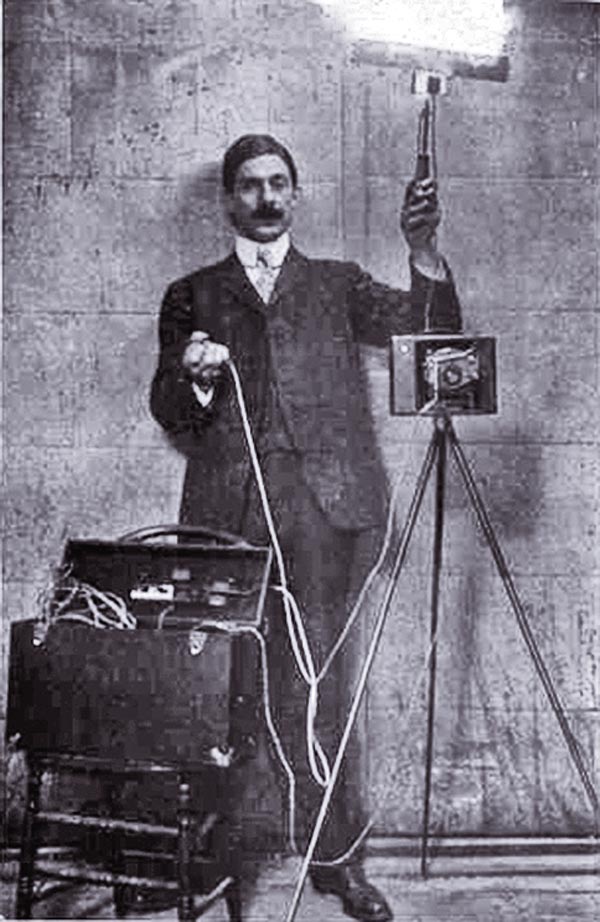
Early photographers, struggling to bring enough light into their studios, experimented with explosive powders, hoping to get a “flash” of light bright enough to create a better negative exposure, so that their subjects would not have to sit so long in the same position in order to get a clear image. They would mix powders, spread some of them on a shallow “pan,” and ignite them to create a brief, but brilliant, flash of light.

Photo by Suzy Hazelwood on Pexels.com

Our lives may sometimes seem like “a flash in the pan.” Our days are numbered, and our abilities limited. Even our brightest ideas and most explosive actions seem to be swallowed up in the larger scheme of things; our good deeds and noble intentions disappear in the swirling waters of time and the tides of injustice, disease, and evil around us.

But our lives, while brief, can be more than a “flash in the pan.” We are called to be the follow Jesus, the “Light of the World.” Jesus’s life on earth was brief, even by human life expectancy. But unlike a spark that burned itself out and ended in death and darkness, Jesus brought light and life that continues today. And He calls us to use our lives in ways that light the way for others.

Sometimes, our prayers can also seem like brief flashes, producing little of significance. But God hears each one, and it is in His power that our prayers become part of the larger “picture” of His plan.

The Sound of Silence

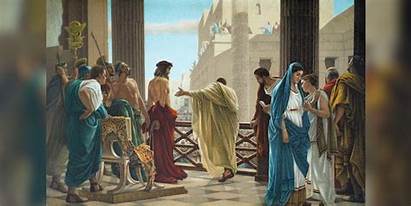
The events of Good Friday are well recorded in all four of the gospels, (see Matthew 27, Mark 15, Luke 23, and John 19 https://www.biblegateway.com/passage/?search=JOhn%2019&version=NIV ) but it is still difficult to imagine exactly what it must have been like that day. The first crow of the rooster came as Jesus was still on trial before the Sanhedrin, hours of questioning and betrayal that would continue as the sun rose and Jesus as passed on up the chain of power to Pontius Pilate for more questioning. The sun was still climbing as Jesus was beaten and paraded before the crowds. The swell of voices shouting for His execution would have echoed through the public square–“Crucify Him! Crucify Him!” “We have no king but Caesar!” The same taunting would continue as Jesus walked the long Via Dolorosa and came to Golgotha.

By nine that morning, Jesus, bloodied, whipped, exhausted, humiliated, betrayed, and struggling for every breath, was nailed to the cross. He was fully exposed to the bright morning sun, the heat, and all the stares of the angry mob who came to revel in His anguish. He was unable to wipe the blood or salty sweat that trickled from His brow and ran into His eyes; unable to swat away flies who buzzed around His face, elbows, or cheeks. He was unable to block out the noise–curses, curious questions, His Mother’s agonized cries, and, in the lull, the ordinary noises of a crowded city preparing for a celebration.

Photo by Pixabay on Pexels.com

As noon approached, there would be the aromas of roasted lamb, market fish, baking bread. The crowds were quieter now, some may have left to seek out lunch or relief from the heat. But the heat and the sun disappeared as darkness rolled in. The angry energy gave way to fear and dread. The earlier shouting was now a an ominous rumbling among the remaining spectators. It was quiet enough to hear Jesus address His Mother and His disciple, John, and answer the thief on the neighboring cross, promising to see him in Paradise. It was possible to hear Jesus cry out later, His voice raspy and broken, but clearly in anguish, “Eloi, Elioi, lama sabachthani!?”

Photo by Pixabay on Pexels.com

Perhaps it even got so quiet, as it sometimes does in darkness, that you could hear the three men on the crosses struggling to take each breath–their tortured muscled straining to lift their weight enough to get air past their parched lips and tongues–in and out, as distended muscles demanded more oxygen than their bodies could provide. Did the members of the crowd listen to their own heartbeats in those moments?

Photo by Francesco Paggiaro on Pexels.com

The unnatural darkness would have magnified the moment when Jesus, the Light of the World, breathed His last breath. And I imagine in the moment after that a silence so deafening, so complete, as the Word of God, the Creator of Life and Giver of Breath departed the Earth– as though all light and sound imploded at the loss. A split second only, but one so intensely silent that it must have taken the breath of every onlooker.

Photo by Engin Akyurt on Pexels.com

And then, the sound returned full-force– the Earth quaking, the skies crashing, Creation gasping, the Temple Veil ripping, and terrified people rediscovering their ability to cry out. Noise–piercing, and violent and sudden, bringing with it a return of the angry energy of before. But the energy is different now. Subdued. Nervous. Desperate. Empty…

Photo by Shawn on Pexels.com

This Little Light of Mine…

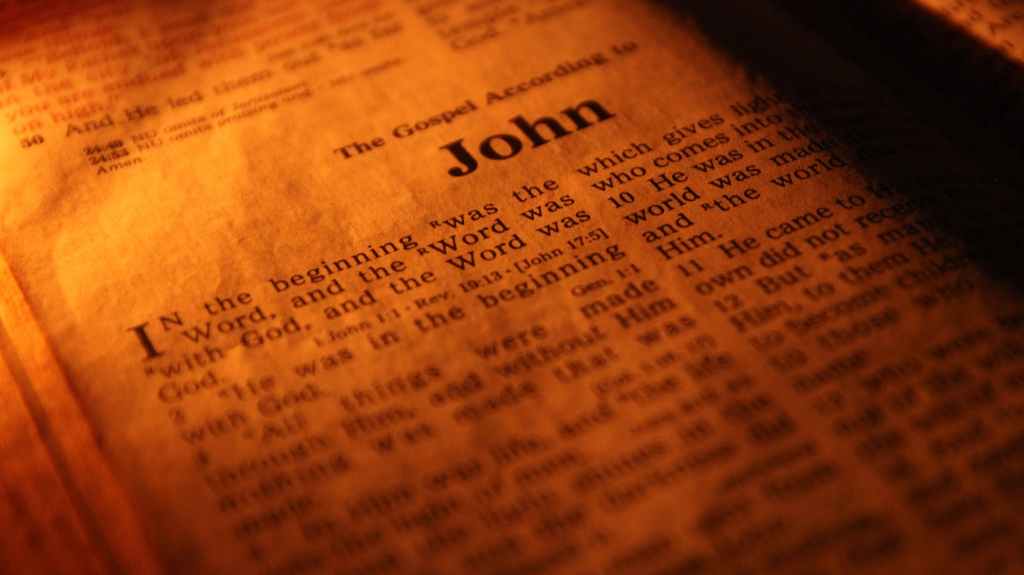
John 1:4-5 American Standard Version (ASV)
 4 In him was life; and the life was the light of men. And the light shineth in the darkness; and the darkness [a]apprehended it not.

Footnotes:John 1:5 Or, overcame.

via http://www.biblegateway.com
Photo by Pixabay on Pexels.com

I love words. But sometimes, it can be frustrating to find just the right word to express a complex idea. I’m sure the Apostle John felt the struggle as he began writing his Gospel account of the life of Christ. How can mere words describe the arrival of GOD– creator and ruler of the universe– into a darkened and sin-filled world, come to live among and serve the very lost souls He would die to save? John, of all the Gospel writers, uses the most visual metaphors to describe the Advent of Jesus (many of which he heard from the lips of Christ Himself)– He was the “Light of the World”, the “Bread of Life”, the “Living Water,” the “Way, the Truth, and the Life,” and the “Good Shepherd.”

But right away, the phrase John uses to talk about the “Light of the Life” causes modern English scholars confusion. John says that the light “shineth”, or “shines” in the darkness and the darkness “comprehended” (or apprehended, or understood, or overcame) it not. The phrase is simply too big for one word, or idea. The Greek word comes closer to expressing a dual idea, but even it can’t wrap up the totality of such an event.

Photo by Luck Galindo on Pexels.com

Consider–This Jesus, one with God from the beginning, and the “Word” of creation, spoke light into existence. Where there was darkness, He exploded– light upon light– stars and galaxies of light! Even on the darkest night we will ever know, there are millions of lights spread out across the vastness of space, including our own sun, even unseen on the other side of the planet. Darkness can never “comprehend”, let alone “overcome” the existence of light in our world.
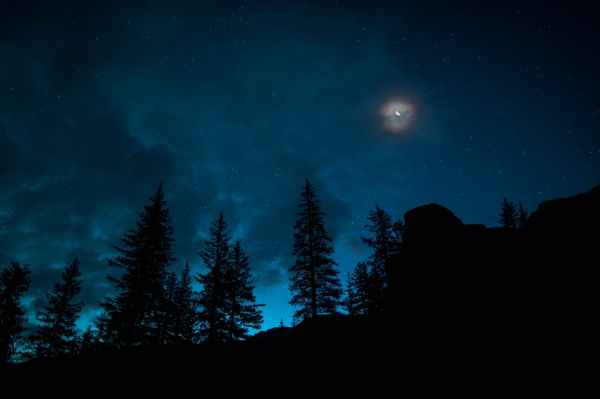
Moreover, when we see physical light piercing the darkness, we are aware of it, but we rarely comprehend, or understand it. Whether we are blinded by a flash of light, or compelled to seek out a single hint of light in a darkened tunnel, it is not obvious at first glance (and sometimes even after diligent study) the source or scope of the light. It may be a candle, or a set of glaring headlights, or the glint of reflected light in a mirror. It could be a distant star, a satellite, or a street light shrouded in fog.

Photo by Miguel Á. Padriñán on Pexels.com

But in a spiritual sense, it is even more true that “Light has come into the world” (John 3:19), and it “shines” in the darkness, and the darkness has not understood, or apprehended, or overcome it. Jesus came as an infant to His own chosen people, people who were longing for the advent of their Messiah. But few of them recognized Him. They didn’t understand– even Jesus’ closest friends didn’t “get it” at first. And some of them tried their best to “overcome” and “apprehend” the Gospel message– zealous religious leaders like Saul tried to stop the “light” of Jesus’ message and all those who trusted in it. Saul had to be “blinded” by a light on his way to Damascus, so that he could finally “see” Christ (Acts 9).

And the light is still shining in the darkness– as followers of Christ, we are to reflect God’s love and grace to those around us. Many of them will not comprehend; many will try to overcome or even destroy the message we bring. Our light may seem small and insignificant. It may seem like we are surrounded by the vast darkness of space, or shrouded in fog. But the light of Christ cannot be extinguished, or rationalized out of existence, or contained. All the words ever spoken, written, or thought throughout all the ages of mankind cannot compare to the power of God’s “Word”, who spoke worlds into being in an instant, and yet entered His own creation with a soft cry of an infant in the middle of a dark night so long ago.

Photo by 3Motional Studio on Pexels.com

This is the “little light of mine”, and of yours if you are a follower of Christ. It pierces through the darkness of despair, hatred, addiction, injustice, greed, oppression, malice, rebellion, war, grief, loss, disease, and sin.

This season, as we anticipate the Advent, let us remember the greatness of the tiniest of lights, and the triumph of that light over the vast darkness. It is easy to get distracted by the twinkling of a thousand artificial and commercial lights this season, or blinded by the soot and smog and clouds of gloom and pain that surrounds us. It’s so important that we keep shining; continue reflecting the true light that only comes from the “Light of the World”

Photo by Lennart Wittstock on Pexels.com

“This little Light of mine–I’m gonna let it shine!
This little Light of mine– I’m gonna let it shine,
Let it shine, Let it shine!”

Let All Within Us Praise His Holy Name


O holy night! 
The stars are brightly shining 
It is the night of the dear Savior’s birth! 
Long lay the world in sin and error pining 
Till he appeared and the soul felt its worth. 
A thrill of hope the weary world rejoices 
For yonder breaks a new and glorious morn!

Refrain:
Fall on your knees 
O hear the angel voices 
O night divine 
O night when Christ was born 
O night divine 
O night, O night divine

Led by the light of Faith serenely beaming 
With glowing hearts by His cradle we stand 
So led by light of a star sweetly gleaming 
Here come the wise men from Orient land 
The King of kings lay thus in lowly manger 
In all our trials born to be our friend.

Refrain
Truly He taught us to love one another 
His law is love and His gospel is peace 
Chains shall He break for the slave is our brother 
And in His name all oppression shall cease 
Sweet hymns of joy in grateful chorus raise we, 
Let all within us praise His holy name.

Refrain


From /www.songsforteaching.com/christmas/oholynight.php
Photo by Pixabay on Pexels.com

To the untrained eye, it was not a Holy Night– The streets of Bethlehem were crowded and dusty. The night, even if the stars were shining, was filled with noises and smells that fell far short of anything sacred or glorious. There were strangers clogging the city’s streets and inns and homes– extra animals to shelter, extra mouths to feed, extra waste everywhere. It was a weary world, it was in error and it was pining– but it was also noisy, angry, distracted by petty inconveniences and worried by chaos and upheaval and oppression.

Photo by Jeswin Thomas on Pexels.com

There was nothing special about the night itself. It was NOT a Holy Night until Holiness arrived in the form of a squalling infant born to a teenage mother and a carpenter/stepfather who were compelled to beg for shelter in an unfamiliar city full of squalor and resentment. People had come from all over to be nothing more than numbers in an unpopular bureaucratic nightmare. This child might have been no more than a number to the governor of the region, or to the Roman Empire, or to the Herod, the hamstrung pseudo-ruler of Judea–but His coming split history in two; it redefined the value of a single, simple soul! This was the night when the creator entered His creation AS a member of the creation– a child among other children; a helpless baby in a fallen and depraved world, vulnerable to disease, cruelty, abuse, starvation, exposure and exploitation. This God/Man would see and hear, and smell and feel the ugliness of leprosy, poverty, hunger, homelessness, despair, grief, madness, war, slavery, loneliness, betrayal, and death.

Photo by Sharefaith on Pexels.com

In His lifetime, He had no home of his own. He built no monument, founded no schools or hospitals, fought no (physical) battle, and toppled no governments. But, in the years since that otherwise ordinary night, majestic cathedrals have been built and have stood for hundreds of years; nations and governments have been transformed; hospitals, clinics, shelters, sanctuaries, universities, and institutions have served the poor, the sick, the outcasts, the weary, the forgotten, and the lost. The world is still fallen– there is still injustice, slavery, weariness, sickness and sin around us. But, because of that night, we are not waiting in utter darkness–as the Apostle John writes:

Photo by Pixabay on Pexels.com


16 For God loved the world in this way: He gave his one and only Son, so that everyone who believes in him will not perish but have eternal life… 19 This is the judgment: The light has come into the world, and people loved darkness rather than the light because their deeds were evil. 20 For everyone who does evil hates the light and avoids it, so that his deeds may not be exposed. 21 But anyone who lives by the truth comes to the light, so that his works may be shown to be accomplished by God.

John 3:16, 19-21 Christian Standard Bible
Photo by Nicholas Githiri on Pexels.com

We live on the other side of that ordinary, Holy Night– we will never know the darkness of a time without a Gospel of Peace on Earth, Goodwill to Men–we are witnesses to the power of Divine Love in human flesh. We have reason to “fall on (our) knees” and “let all within us praise His Holy Name!”

Photo by Victoria Borodinova on Pexels.com

My prayer is that we would all “hear the angel voices” this season and be able to worship in the fullness of joy this Christmas.

Be Thou My Vision

One of my favorite old hymns is the ancient Irish tune, “Be Thou My Vision.”  I have heard it jokingly referred to as “the optometrist’s hymn.”  But there’s a lot more to unpack in the title than just a plug for good eye care.

adorable blur bookcase books
Photo by Pixabay on Pexels.com

God’s word is full of references to sight, seeing, blindness, light, lamps, darkness, night, day, visions and dreams, foresight and prophecy, images and reflections, and much more.  God is both the source of our sight, and of our insight.  God sheds light on our deepest secrets of the past, and provides a lamp allowing us to see the obstacles ahead more clearly.  Jesus came to be the Light of the World, and bring sight to the blind, both physically blind and spiritually blind.

bright building candle candlelight
Photo by Mikes Photos on Pexels.com

Many times, we pray for answers– we want a quick solution to our circumstances, or a definitive direction for our next step.  But God sometimes wants to show us a bigger picture.  Sometimes, he wants to show us more intricate details.  Instead of asking for what we want God to give us, we need to ask for God to give us the vision HE has for our future.  He may not reveal every detail– or he may only reveal the next detailed step.  But God’s vision is clearer and bigger, and more glorious than we will ever know if we aren’t willing to look with His eyes to see.

abendstimmung atmospheric background beautiful
Photo by Pixabay on Pexels.com

We also need to ask God to BE our vision– that we would see him more clearly for Who He Is!  Whatever is in our focus will appear bigger and clearer than things in the periphery.  When we allow Him to be our vision, we start to see things from His perspective, which makes all the difference.  What we see on our own is often an optical illusion– problems look bigger than they really are, hurts and grievances grow larger,  and people become distorted by the lenses or mirrors we use to view them.  And we lose sight of God’s glory, wisdom, majesty, power, and everlasting love.  But God restores our focus and our perspective, so that we see problems in the light of His power to overcome; we see people who are made in His likeness and image– people who are loved by God, even if they are in rebellion against Him.  We see the glory of God’s creation as it was meant to be, even as we see the wreckage of pollution, corruption, disease and disaster.  We see God’s mercy as lives are transformed and families are mended and justice is finally achieved.  And we see the rays of hope in God’s promises fulfilled and those yet to be fulfilled.

sunset sunrise nature field
Photo by Tookapic on Pexels.com

Blog at WordPress.com.

Up ↑